



Histamine Receptor
Histamine Receptors are a class of G protein-coupled receptors with histamine as their endogenous ligand. There are four known histamine receptors: H1 receptor, H2 receptor, H3 receptor, H4 receptor. The H1 receptor is a histamine receptor belonging to the family of Rhodopsin-like G-protein-coupled receptors. This receptor, which is activated by the biogenic amine histamine, is expressed throughout the body, to be specific, in smooth muscles, on vascular endothelial cells, in the heart, and in the central nervous system. H2 receptors are positively coupled to adenylate cyclase via Gs. It is a potent stimulant of cAMP production, which leads to activation of Protein Kinase A. Histamine H3 receptors are expressed in the central nervous system and to a lesser extent the peripheral nervous system, where they act asautoreceptors in presynaptic histaminergic neurons, and also control histamine turnover by feedback inhibition of histamine synthesis and release. The Histamine H4 receptor has been shown to be involved in mediating eosinophil shape change and mast cell chemotaxis.
Histamine Receptor Isoform Specific Products
All Product Categories
-
Histamine Receptor Inhibitors
(199)
View all products
-
Histamine Receptor Agonists
(66)
View all products
-
Histamine Receptor Antagonists
(497)
View all products
-
Histamine Receptor Activators
(5)
View all products
-
Histamine Receptor Modulators
(20)
View all products
-
Histamine Receptor Controls
(9)
View all products
-
Histamine Receptor Ligands
(5)
View all products
-
Histamine Receptor Related Products (880)
Related Products (880)

-
Antibodies (2)
-
Histamine Receptor Isoform Comparison
-
(Z)-Olopatadine-d3 hydrochloride
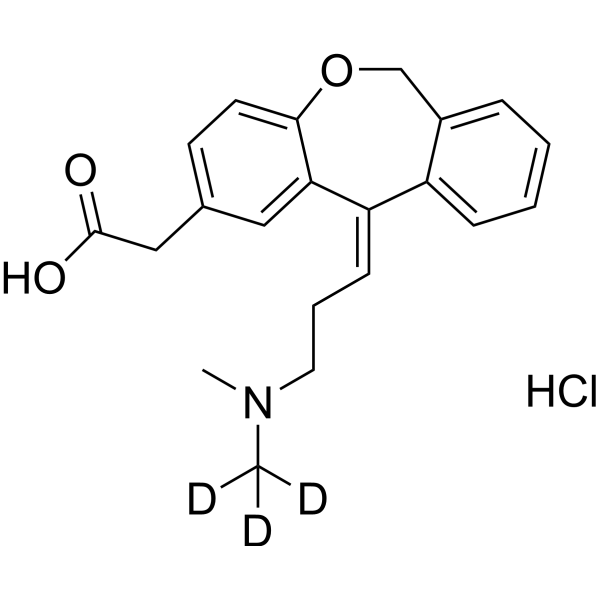 0 ImagesCat. No.: HY-B0426AS1(Z)-Olopatadine-d3 (hydrochloride) is deuterium labeled Olopatadine (hydrochloride).
-
6-O-Senesioyl plenolin
 0 ImagesCat. No.: HY-N19243CAS No.: 90042-11-86-O-Senesioyl plenolin is a sesquiterpene lactone found in Centipeda minima with antiallergic activity. 6-O-Senesioyl plenolin inhibits histamine release from mast cells (IC50 = 18 μM) and suppresses pigment exudation in passive cutaneous anaphylaxis tests. 6-O-Senesioyl plenolin can be used in research related to allergy.
-
Vapitadine hydrochloride
 0 ImagesCat. No.: HY-14939ACAS No.: 279253-83-7Vapitadine hydrochloride (Compound 3a) is a selective, orally active and nonsedating antihistamine agent, which exhibits a good binding affinity with human cloned histamine H1 receptor with a Ki of 19 nM. Vapitadine hydrochloride decreases the histamine-induced lethality (ED50 is 0.056-1.2 mg/kg), antagonizes the cutaneous reactions to histamine (ED50 is 0.51-1.4 mg/kg) in rats.
-
Famotidine-13C3
 0 ImagesCat. No.: HY-W777002CAS No.: 1185241-48-8Synonyms: MK-208-13C3Famotidine-13C3 (MK-208-13C3) is the 13C3-labeled Famotidine (HY-B0377). Famotidine (MK-208) is an orally active and highly selective histamine H2 receptor antagonist. It inhibits gastric acid secretion by blocking the Gs signaling pathway, and regulates intracellular cAMP and ERK pathways. Famotidine inhibits TLR3-mediated inflammatory pathways, and reduces the expression of various inflammatory mediators and interferon-related genes. Famotidine scavenges DPPH and nitric oxide free radicals, alleviates oxidative stress damage in gastric tissue, inhibits proMMP-9, improves vascular endothelial permeability, and restores the normal physiological functions of neutrophils and eosinophils. Famotidine crosses intestinal epithelial cells via facilitated diffusion and passive diffusion, blocks paracellular cation transport, and increases intestinal transepithelial electrical resistance. Famotidine reduces serum levels of transaminases and alkaline phosphatase, exerts analgesic effects and gastric protective effects simultaneously. Famotidine can be used in studies related to COVID-19, liver injury and acute gastric ulcer.
-
(±)-Carbinoxamine
 0 Images(±)-Carbinoxamine is a blood-brain barrier-permeable histamine H1 receptor antagonist. (±)-Carbinoxamine blocks the action of histamine on H1 receptors, reducing symptoms such as sneezing, rhinitis, rhinorrhea, erythema, pruritus and urticaria. (±)-Carbinoxamine inhibits influenza virus entry into cells via endocytosis, targets the early stage of the viral life cycle, and simultaneously reduces viral replication levels in the lungs, alleviating pathological damage and inflammatory responses in lung tissues. (±)-Carbinoxamine can be used in research on allergic rhinitis, influenza, etc.
-
Benztropine mesylate (Standard)
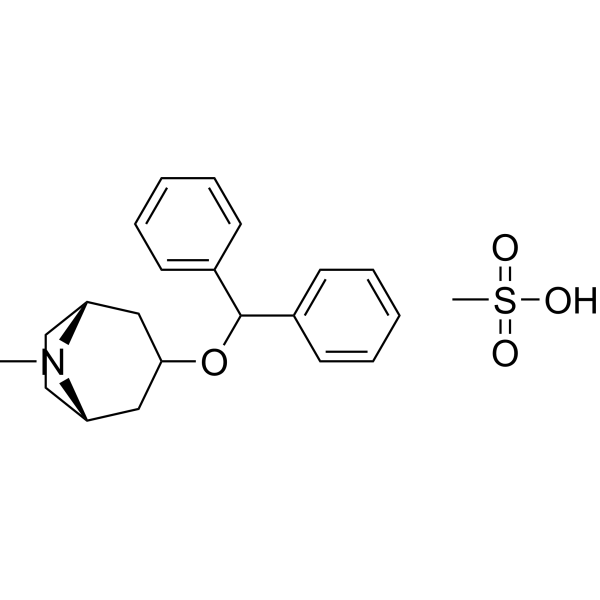 0 ImagesSynonyms: Benzatropine mesylate (Standard); Benzotropine mesylate (Standard); Benztropine methanesulfonate (Standard)Benztropine (mesylate) (Standard) is the analytical standard of Benztropine (mesylate). This product is intended for research and analytical applications. Benztropine mesylate (Benzatropine mesylate) is an orally active centrally acting anticholinergic agent that can be used for Parkinson's disease research. Benztropine mesylate is an anti-histamine agent and a dopamine re-uptake inhibitor. Benztropine mesylate is also a human D2 dopamine receptor allosteric antagonist. Benztropine mesylate also has anti-CSCs (cancer stem cells) effects.
-
Tripelennamine citrate
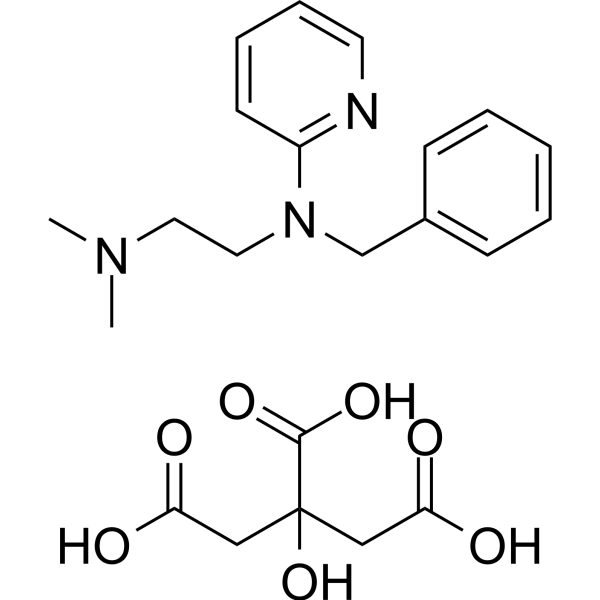 0 ImagesTripelennamine citrate is a histamine H1-receptor antagonist. Tripelennamine citrate effectively reverses histamine-induced bronchoconstriction, increased transpulmonary pressure, elevated pulmonary vascular resistance and reduced dynamic compliance. Tripelennamine citrate does not significantly affect arterial hypoxemia, hemoglobin desaturation and hypercapnia in horses undergoing short-term high-intensity exercise. Tripelennamine citrate exhibits local and central analgesic activity. Tripelennamine citrate can be used in studies related to emphysema, urticaria and acute laminitis.
-
Ketotifen-13C,d3
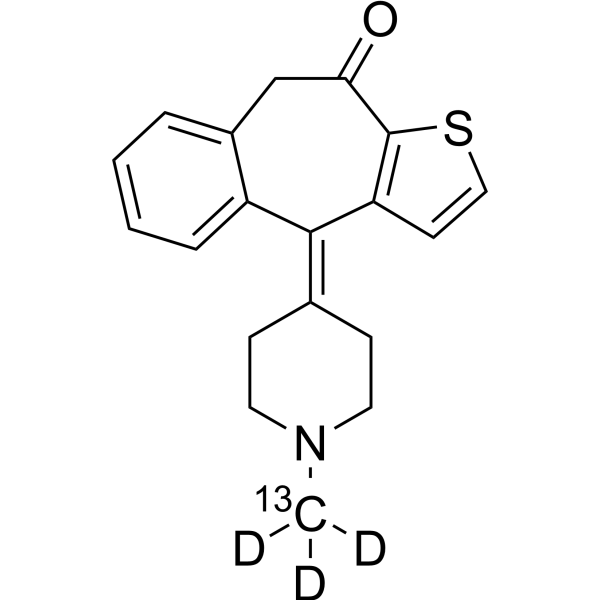 0 ImagesCat. No.: HY-B0157SCAS No.: 2748522-40-7Synonyms: HC 20-511-13C,d3Ketotifen-13C,d3 is deuterium labeled Ketotifen.
-
Chlorprothixene (Standard)
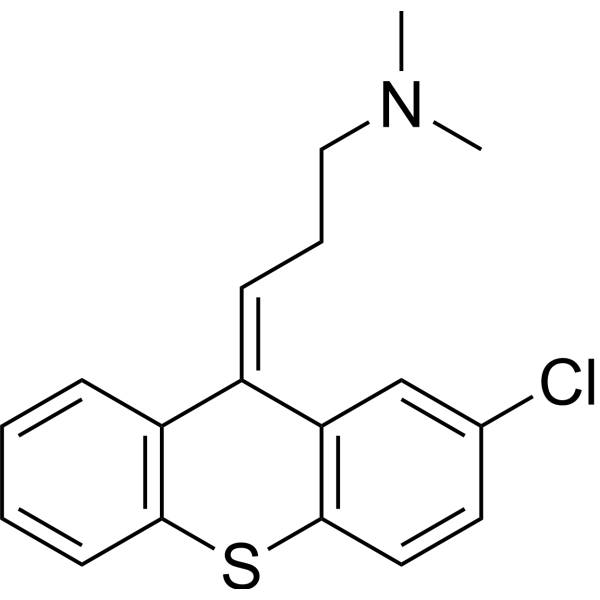 0 ImagesChlorprothixene (Standard) is the analytical standard of Chlorprothixene. This product is intended for research and analytical applications. Chlorprothixene is a dopamine and histamine receptors antagonist with Kis of 18 nM, 2.96 nM, 4.56 nM, 9 nM and 3.75 nM for hD1, hD2, hD3, hD5 and hH1 receptors, respectively. Antipsychotic activity.
-
BP1.3656B
 0 ImagesCat. No.: HY-181960CAS No.: 914302-78-6BP1.3656B is a selective, orally active, blood-brain barrier-permeable histamine H3 receptor (histamine H3 receptor) inverse agonist/antagonist, with a KB value of 0.08 nM for antagonizing agonist-induced activity and an IC50 value of 0.38 nM for directly inhibiting the basal activity of the receptor. BP1.3656B reduces alcohol consumption, alcohol-seeking behavior, alcohol self-administration, motivation to drink, alcohol relapse, alcohol-induced hyperlocomotion, and binge alcohol intake. BP1.3656B is applicable for the research of alcohol use disorder.
-
H3R antagonist 4
 0 ImagesCat. No.: HY-162812H3R antagonist 4 (compound 11L) was a dual inhibitor of cholinesterase and histamine receptor (H3R), with corresponding IC50 of 7.04 μM (eeAChE), 9.73 μM (hAChE)(reversible) and 1.09 nM (H3R) , respectively. H3R antagonist 4 inhibited the aggregation of Aβ1-42 induced by itself and Cu2+ (95.48% and 88.63%) , and degraded the Aβ1-42 fibrils induced by itself and Cu2+ (80.16% and 89.30%) . H3R antagonist 4 chelate biometals such as Cu2+, Zn2+, Al3+, and Fe2+. H3R antagonist 4 significantly reduced tau protein hyperphosphorylation induced by Aβ1-42 and inhibited RSL-3-induced apoptosis and ferroptosis in PC12 cells. H3R antagonist 4 had the best blood-brain barrier permeability and intestinal absorption in hCMEC/D3 and hPepT1-MDCK cells.H3R antagonist 4 ameliorates learning and memory impairment in a mouse model of Alzheimer's disease induced by scopolamine (HY-N0296) .
-
(Z)-Thiothixene-d8
 0 ImagesCat. No.: HY-W748758Synonyms: NSC 108165-d8; Navan-d8; Navane-d8(Z)-Thiothixene-d8 (NSC 108165-d8; Navan-d8; Navane-d8) is the deuterium labeled Thiothixene (HY-A0139). Thiothixene is a typical antipsychotic. It selectively binds to dopamine D2 over D1, D3, and D4 receptors (Kis=0.417, 338, 186.2, and 363.1 nM, respectively). Thiothixene also binds to various serotonin (5-HT), histamine H1, α1- and α2-adrenergic, muscarinic acetylcholine, and sigma receptors (Kis=15-5,754 nM) as well as the dopamine, norepinephrine, and serotonin transporters (Kis=3.16-30 μM). In vivo, thiothixene reduces spontaneous and amphetamine-induced locomotor activity in rats. It enhances latent inhibition, as measured by a decreased lick latency in response to light and foot shock stimuli, which is a measure of selective attention in rats.3 Thiothixene also increases competitive behavior in submissive mice, indicating antidepressant-like behavior.
-
Orf 17910
 0 ImagesCat. No.: HY-180397CAS No.: 87107-94-6ORF 17910 is a potent, long-acting, orally active histamine H2 receptor antagonist. ORF 17910 exhibits significant and prolonged acid-suppressing activity in dogs and rats. However, the cardiac depressant effect of ORF 17910 cannot be completely overcome at high concentrations. ORF 17910 may be used to study diseases such as gastric ulcers.
-
Levomepromazine-d6 hydrochloride
 0 ImagesCat. No.: HY-166562SSynonyms: Methotrimeprazine-d6 hydrochlorideLevomepromazine-d6 hydrochloride (Methotrimeprazine-d6 hydrochloride) is the deuterium labeled Levomepromazine hydrochloride. Levomepromazine (Methotrimeprazine) hydrochloride is an orally active antipsychotic compound and Ca2+ release inducer. Levomepromazine inhibits SERCA pump and induces an increase in cytoplasmic Ca2+ levels. Levomepromazine hydrochloride has antagonistic effects on a variety of neurotransmitter receptors, including dopamine, cholinergic, serotonin, and histamine receptors. Levomepromazine hydrochloride can induce adaptive ER stress and autophagy. In addition, Levomepromazine hydrochloride has antiviral, anti-inflammatory, neuroprotective and analgesic, sedative and anti-injurious activities. Levomepromazine hydrochloride can be used in the study psychiatric disorders and relieving nausea and vomiting.
-
KSK68
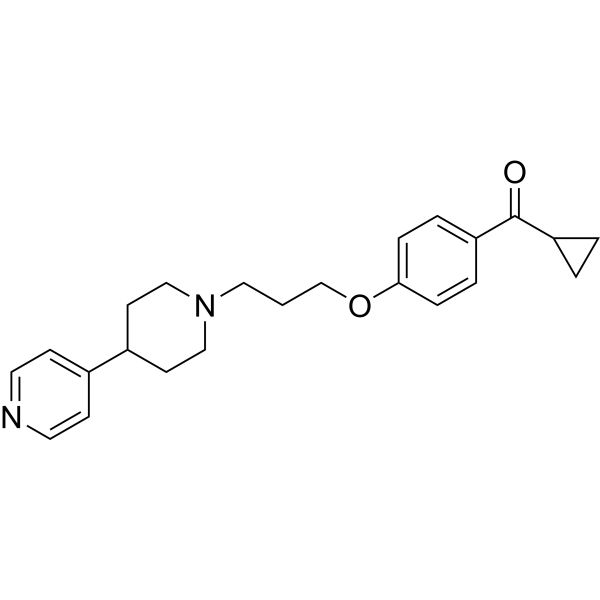 0 ImagesCat. No.: HY-155614CAS No.: 2566715-91-9KSK68 is a high-affinity dual sigma-1 and histamine H3 receptor antagonist, with Kis of 7.7, 3.6, 22.4 nM for H3 receptor, sigma-1, sigma-2 receptor respectively. KSK68 has negligible affinity at the other histamine receptor subtypes. KSK68 can be used for research of nociceptive and neuropathic pain.
-
Sigma-1 receptor antagonist 5
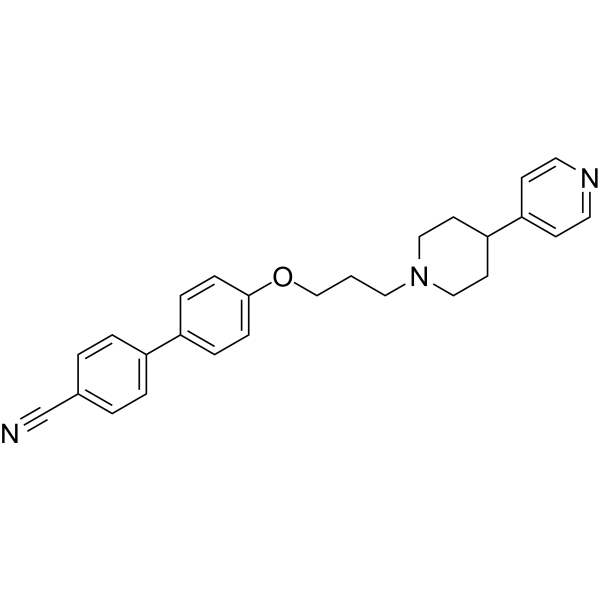 0 ImagesCat. No.: HY-149335CAS No.: 2952808-33-0Sigma-1 receptor antagonist 5 (compound 12),a 4-pyridylpiperidine derivative with analgesic activity,is an antagonist of sigma receptor (Ki=4.5 nM (σ1R),10 nM (σ2R)) and histamine H3 (hH3R,Ki=7.7 nM,IC50=215 nM). Sigma-1 receptor antagonist 5 suppresses Capsaicin-induced nociception with antinociceptive activity and shows potent efficacy in nociceptive and neuropathic pain models.
-
DA 4643 dihydrochloride
 0 ImagesCat. No.: HY-136818CAS No.: 95833-19-5DA 4643 (hydrochloride) is an H2 receptor antagonist with the chemical name 2-guanidino-4 (3-methylaminomethyleneiminophenyl) thiazole dihydrochloride. It has a weak interaction with cytochrome P-450 and has a less inhibitory effect on P-450 than cimetidine and tiotidine. DA 4643 (hydrochloride) is able to inhibit both enzymatic and non-enzymatic lipid peroxidation reactions. This inhibition may not be achieved by inhibiting agent metabolizing enzymes, but rather due to the antioxidant properties of the compound itself. Compared with other H2 receptor antagonists such as cimetidine, ranitidine and tiotidine, DA 4643 (hydrochloride) shows a unique effect in lipid peroxidation inhibition. These properties make DA 4643 (hydrochloride) a potential H2 receptor antagonist with multiple mechanisms of action.
-
Dibenzepine-d3
 0 ImagesCat. No.: HY-W741145Dibenzepine-d3 is the deuterated-labeled Dibenzepine (HY-12391). Dibenzepine is a blood-brain barrier permeable ligand of the histamine H1 receptor (Histamine H1 Receptor), with a Ki value of 0.02 μM. Dibenzepine exhibits varying degrees of affinity for multiple serotonin receptors and dopamine receptors. Dibenzepine can be used in research related to depression, schizophrenia, dementia, and non-specific agitation.
-
Fexofenadine-d3
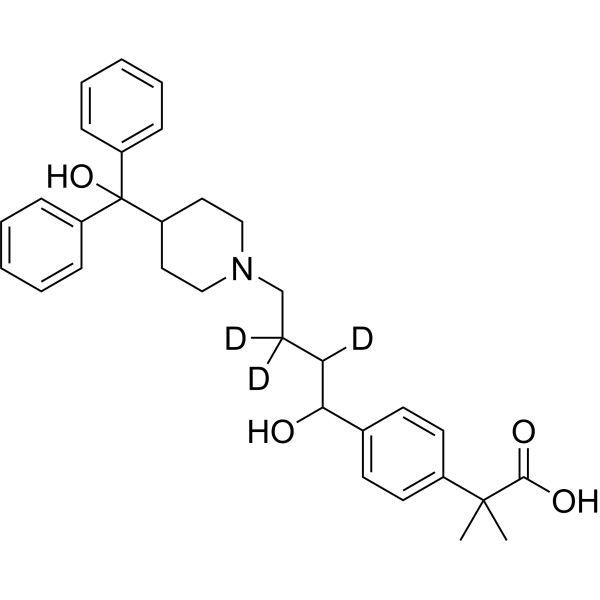 0 ImagesCat. No.: HY-B0801S2Synonyms: MDL-16455-d3; Terfenadine carboxylate-d3Fexofenadine-d3 is the deuterium labeled Fexofenadine. Fexofenadine (MDL-16455) is an orally active and nonsedative H1 receptor antagonist. Fexofenadine can be used in allergic rhinitis and chronic idiopathic urticarial research.
-
Famotidine-d4
 0 ImagesCat. No.: HY-W707517CAS No.: 2707433-64-3Synonyms: MK-208-d4Famotidine-d4 (MK-208-d4) is the deuterated-labeled Famotidine (HY-B0377). Famotidine (MK-208) is an orally active and highly selective histamine H2 receptor antagonist. It inhibits gastric acid secretion by blocking the Gs signaling pathway, and regulates intracellular cAMP and ERK pathways. Famotidine inhibits TLR3-mediated inflammatory pathways, and reduces the expression of various inflammatory mediators and interferon-related genes. Famotidine scavenges DPPH and nitric oxide free radicals, alleviates oxidative stress damage in gastric tissue, inhibits proMMP-9, improves vascular endothelial permeability, and restores the normal physiological functions of neutrophils and eosinophils. Famotidine crosses intestinal epithelial cells via facilitated diffusion and passive diffusion, blocks paracellular cation transport, and increases intestinal transepithelial electrical resistance. Famotidine reduces serum levels of transaminases and alkaline phosphatase, exerts analgesic effects and gastric protective effects simultaneously. Famotidine can be used in studies related to COVID-19, liver injury and acute gastric ulcer.




