



Histamine Receptor Modulator
- 1
-
Cimetidine
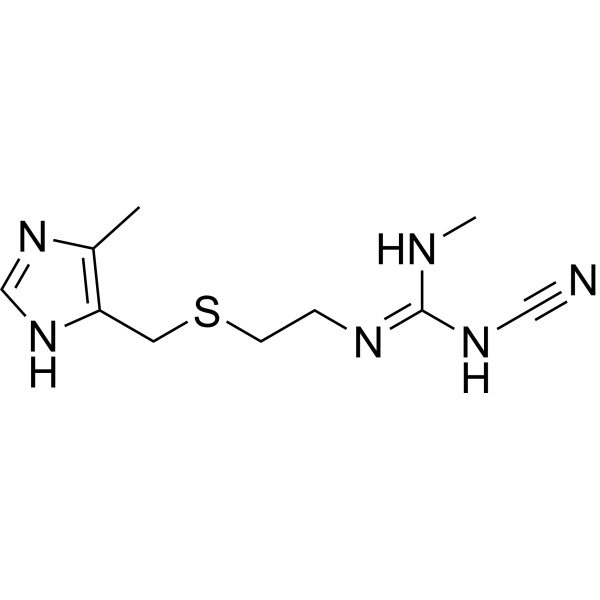 0 ImagesSynonyms: SKF-92334
Cimetidine (SKF-92334) is an orally active, inverse and BBB-permeable histamine H2 receptor antagonist with a Ki of 0.6 μM. Cimetidine is a gastric acid reducer, and can be used for duodenal and gastric ulcers research. Cimetidine has anti-cancer and anti-inflammatory activity.
-
Betahistine
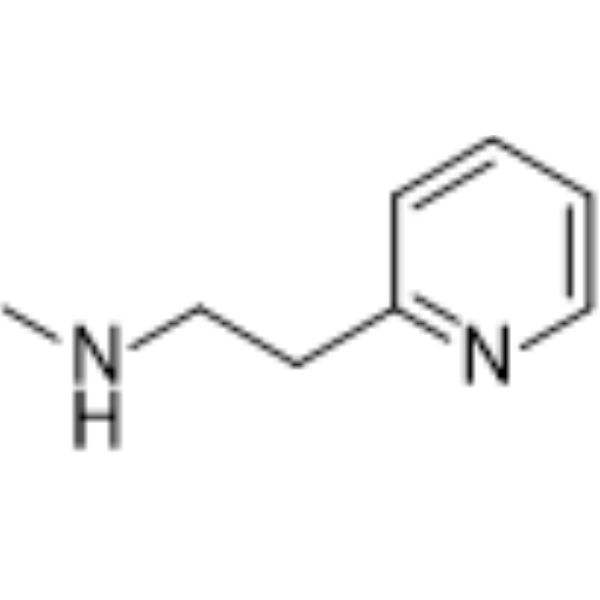 0 Images
Betahistine (OBE-101) is an orally active histamine receptor modulator with blood-brain barrier permeability. Betahistine antagonizes presynaptic H3 receptors and weakly activates H1 receptors, thereby enhancing histamine/acetylcholine release and cholinergic neurotransmission. Betahistine inhibits pro-inflammatory cytokines, RORγt/Th17 differentiation, and type II collagen-specific lymph node cell proliferation. Betahistine promotes ERK1/2 and AKT phosphorylation, upregulates PPARγ, induces CTRP1/3/6/9/12, and produces histaminergic vasodilation; it also ameliorates vestibular dysfunction. Betahistine is used in research related to neurological disorders such as cognitive impairment and inflammatory diseases such as rheumatoid arthritis and otitis media.
-
Betahistine dihydrochloride
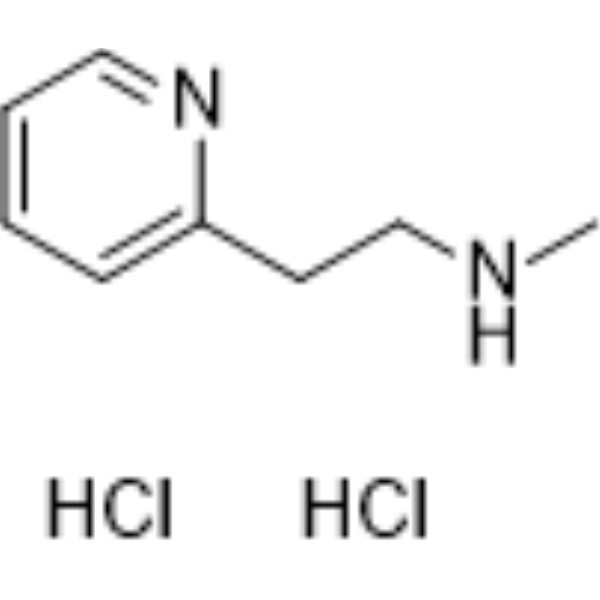 0 Images
Betahistine dihydrochloride (OBE-101 dihydrochloride) is an orally active histamine receptor modulator with blood-brain barrier permeability. Betahistine dihydrochloride antagonizes presynaptic H3 receptors and weakly activates H1 receptors, thereby enhancing histamine/acetylcholine release and cholinergic neurotransmission. Betahistine dihydrochloride inhibits pro-inflammatory cytokines, RORγt/Th17 differentiation, and type II collagen-specific lymph node cell proliferation. Betahistine dihydrochloride promotes ERK1/2 and AKT phosphorylation, upregulates PPARγ, induces CTRP1/3/6/9/12, and produces histaminergic vasodilation; it also ameliorates vestibular dysfunction. Betahistine dihydrochloride is used in research related to neurological disorders such as cognitive impairment and inflammatory diseases such as rheumatoid arthritis and otitis media.
-
Clobenpropit dihydrobromide
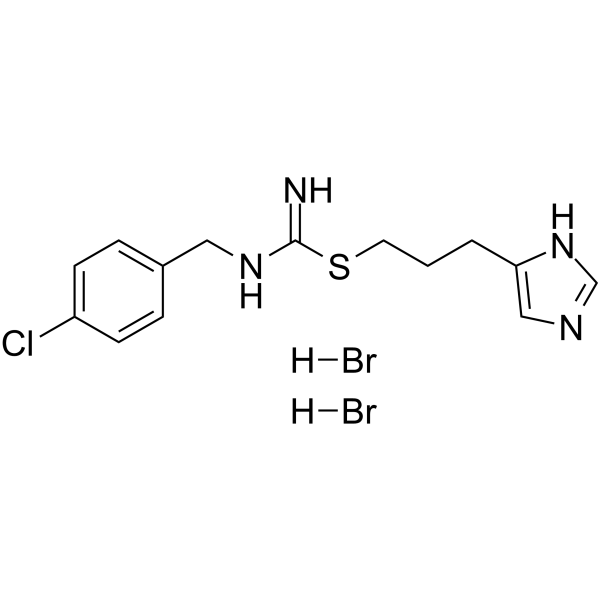 0 Images
Clobenpropit dihydrobromide is a potent histamine H3R antagonist/inverse agonist with a pEC50 of 8.07 for histamine H3LR. Clobenpropit dihydrobromide acts as partial agonist at histamine H4 receptors (Ki 13 nM). Clobenpropit dihydrobromide also binds to serotonin 5-HT3 receptors (Ki 7.4 nM) and α2A/α2C adrenoceptors (Ki 17.4/7.8 nM). Clobenpropit dihydrobromide increases apoptosis.
-
Cimetidine (Standard)
 0 ImagesSynonyms: SKF-92334 (Standard)
Cimetidine (Standard) is the analytical standard of Cimetidine. This product is intended for research and analytical applications. Cimetidine (SKF-92334) is an orally active and inverse histamine H2 receptor antagonist with a Ki of 0.6 μM. Cimetidine is a gastric acid reducer, and can be used for duodenal and gastric ulcers research. Cimetidine has anti-cancer and anti-inflammatory activity.
-
Betahistine-13C,d3 dihydrochloride
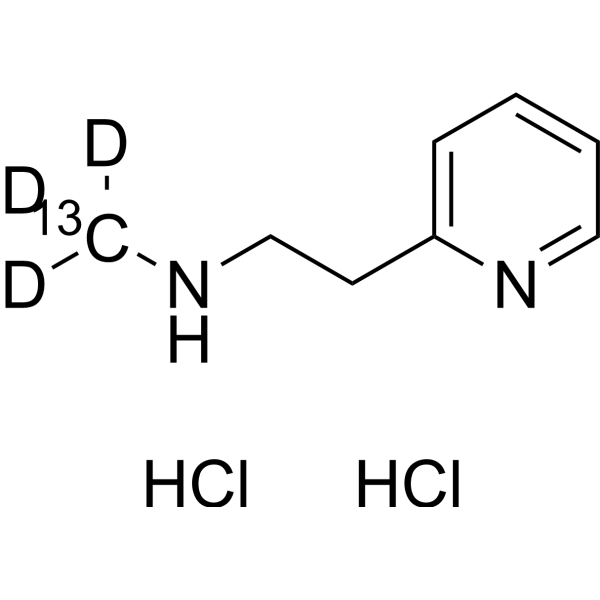 0 ImagesCat. No.: HY-B0524AS1Synonyms: OBE-101-13C,d3 dihydrochloride
Betahistine-13C,d3 dihydrochloride (OBE-101-13C,d3 dihydrochloride) is the deuterated, 13C-labeled Betahistine dihydrochloride (HY-B0524A). Betahistine dihydrochloride (OBE-101 dihydrochloride) is an orally active histamine receptor modulator with blood-brain barrier permeability. Betahistine dihydrochloride antagonizes presynaptic H3 receptors and weakly activates H1 receptors, thereby enhancing histamine/acetylcholine release and cholinergic neurotransmission. Betahistine dihydrochloride inhibits pro-inflammatory cytokines, RORγt/Th17 differentiation, and type II collagen-specific lymph node cell proliferation. Betahistine dihydrochloride promotes ERK1/2 and AKT phosphorylation, upregulates PPARγ, induces CTRP1/3/6/9/12, and produces histaminergic vasodilation; it also ameliorates vestibular dysfunction. Betahistine dihydrochloride is used in research related to neurological disorders such as cognitive impairment and inflammatory diseases such as rheumatoid arthritis and otitis media.
-
Betahistine mesylate
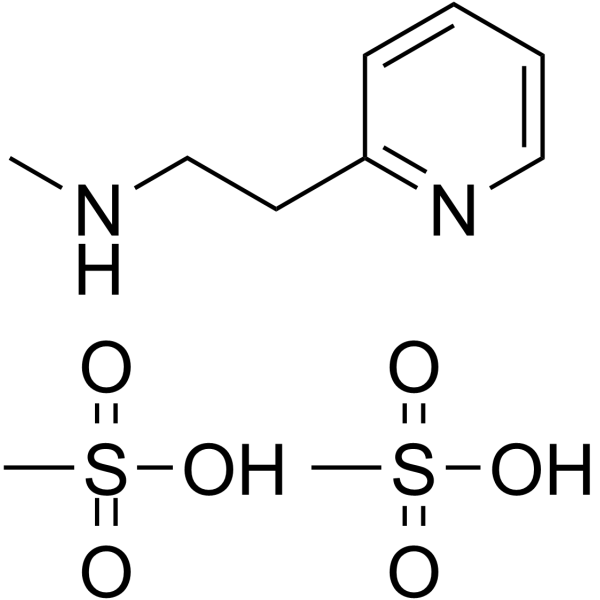 0 ImagesSynonyms: OBE-101 mesylate
Betahistine mesylate (OBE-101 mesylate) is an orally active histamine receptor modulator with blood-brain barrier permeability. Betahistine mesylate antagonizes presynaptic H3 receptors and weakly activates H1 receptors, thereby enhancing histamine/acetylcholine release and cholinergic neurotransmission. Betahistine mesylate inhibits pro-inflammatory cytokines, RORγt/Th17 differentiation, and type II collagen-specific lymph node cell proliferation. Betahistine mesylate promotes ERK1/2 and AKT phosphorylation, upregulates PPARγ, induces CTRP1/3/6/9/12, and produces histaminergic vasodilation; it also ameliorates vestibular dysfunction. Betahistine mesylate is used in research related to neurological disorders such as cognitive impairment and inflammatory diseases such as rheumatoid arthritis and otitis media.
-
Cipralisant
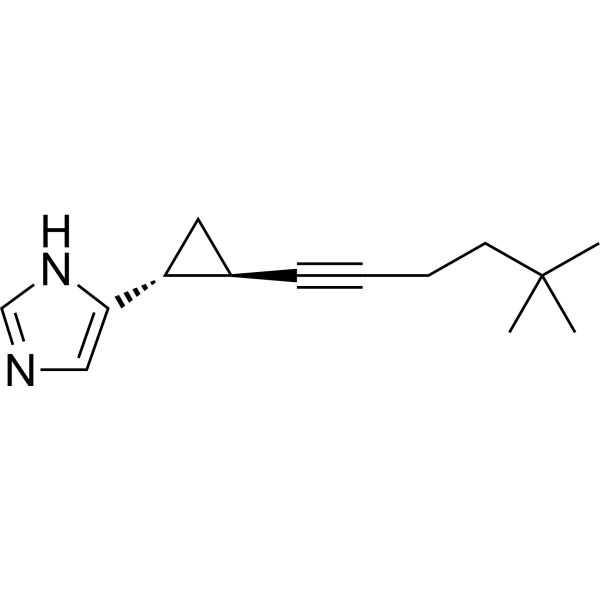 0 ImagesSynonyms: GT-2331
Cipralisant (GT-2331) is an orally active, low-toxicity, potent, selective, high affinity histamine H3 receptor full antagonist in vivo, and an agonist in vitro, with a pKi of 9.9 for histamine H3 receptor and a Ki of 0.47 nM for rat histamine H3 receptor. Cipralisant has the potential for attention-deficit hyperactivity disorder research. Cipralisant is a click chemistry reagent, it contains an Alkyne group and can undergo copper-catalyzed azide-alkyne cycloaddition (CuAAc) with molecules containing Azide groups.
-
Betahistine-d3 dihydrochloride
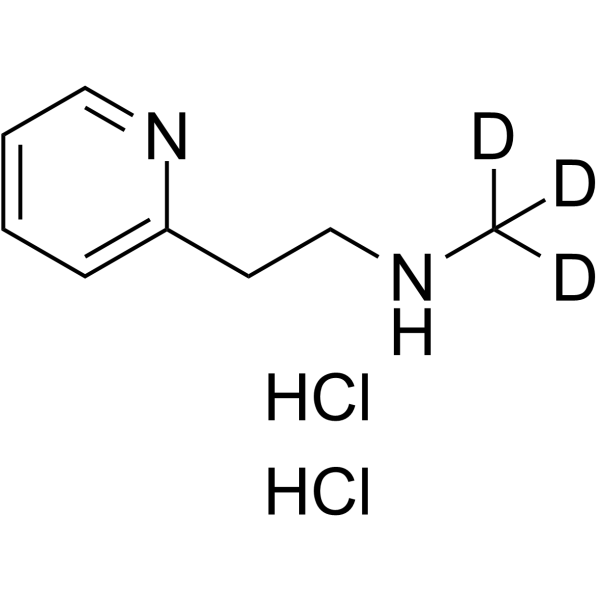 0 ImagesSynonyms: OBE-101-d3 dihydrochloride
Betahistine-d3 dihydrochloride (OBE-101-d3 dihydrochloride) is the deuterated-labeled Betahistine dihydrochloride (HY-B0524A). Betahistine dihydrochloride (OBE-101 dihydrochloride) is an orally active histamine receptor modulator with blood-brain barrier permeability. Betahistine dihydrochloride antagonizes presynaptic H3 receptors and weakly activates H1 receptors, thereby enhancing histamine/acetylcholine release and cholinergic neurotransmission. Betahistine dihydrochloride inhibits pro-inflammatory cytokines, RORγt/Th17 differentiation, and type II collagen-specific lymph node cell proliferation. Betahistine dihydrochloride promotes ERK1/2 and AKT phosphorylation, upregulates PPARγ, induces CTRP1/3/6/9/12, and produces histaminergic vasodilation; it also ameliorates vestibular dysfunction. Betahistine dihydrochloride is used in research related to neurological disorders such as cognitive impairment and inflammatory diseases such as rheumatoid arthritis and otitis media.
-
Cimetidine-d3
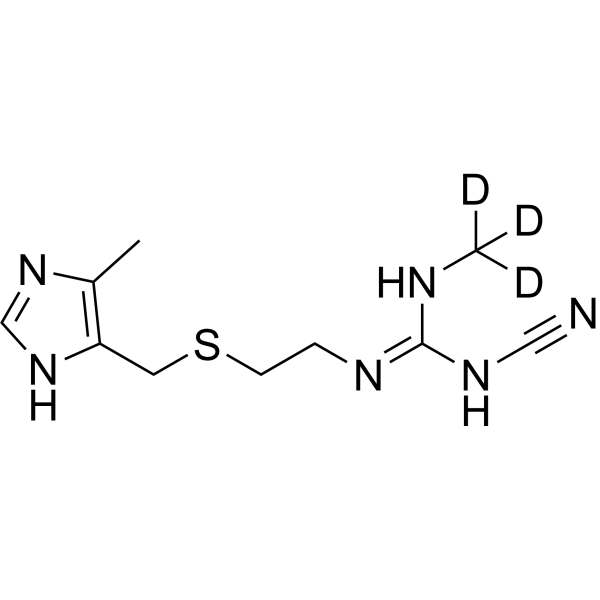 0 ImagesCat. No.: HY-14289SCAS No.: 1185237-29-9Synonyms: SKF-92334-d3
Cimetidine-d3 is the deuterium labeled Cimetidine. Cimetidine (SKF-92334) is an orally active and inverse histamine H2 receptor antagonist with a Ki of 0.6 μM. Cimetidine is an inverse agonist. Cimetidine has anti-cancer and anti-inflammatory activity.
-
Cipralisant maleate
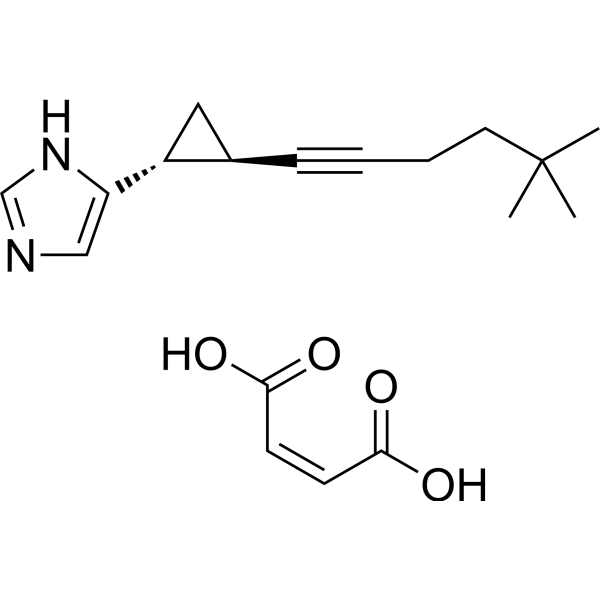 0 ImagesSynonyms: GT-2331 maleate
Cipralisant (GT-2331) (maleate) is an orally active, low-toxicity, potent, selective, high affinity histamine H3 receptor full antagonist in vivo, and an agonist in vitro, with a pKi of 9.9 for histamine H3 receptor and a Ki of 0.47 nM for rat histamine H3 receptor. Cipralisant (maleate) has the potential for attention-deficit hyperactivity disorder research. Cipralisant (maleate) is a click chemistry reagent, it contains an Alkyne group and can undergo copper-catalyzed azide-alkyne cycloaddition (CuAAc) with molecules containing Azide groups.
-
Betahistine EP Impurity C
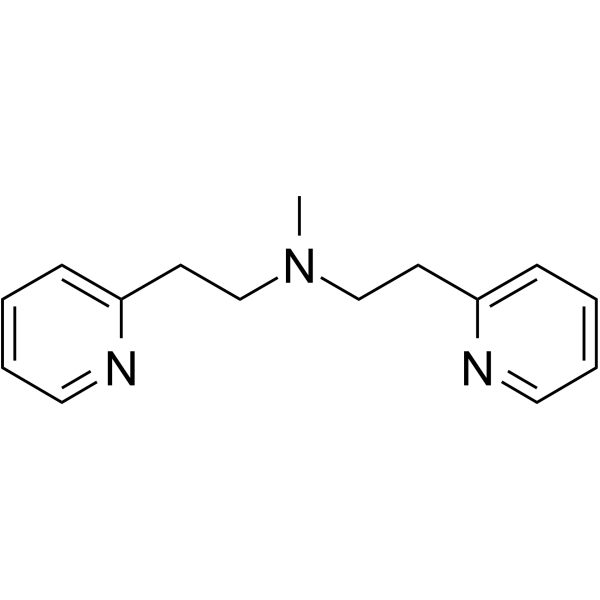 0 Images
Betahistine EP Impurity C (NSC19005) is an impurity of Betahistine. Betahistine is a potent, orally active and well-tolerated histamine H1 receptor agonist and H3 receptor antagonist used for the study of rheumatoid arthritis (RA).
-
Arpromidine
 0 ImagesCat. No.: HY-164430CAS No.: 106669-71-0Synonyms: BU-E-50
Arpromidine (BU-E-50) is the agonist for histamine H2 receptor and the antagonist for histamine H1 receptor. Arpromidine exhibits positive inotropic effect with less risks in causing arrhythmias. Arpromidine can be used in research of congestive heart failure.
-
Cipralisant maleate (Standard)
 0 ImagesCat. No.: HY-106993ARCAS No.: 223420-20-0Synonyms: GT-2331 maleate (Standard)
Cipralisant maleate (Standard) is the analytical standard of Cipralisant (maleate) (HY-106993A). This product is intended for research and analytical applications. Cipralisant (GT-2331) (maleate) is an orally active, low-toxicity, potent, selective, high affinity histamine H3 receptor full antagonist in vivo, and an agonist in vitro, with a pKi of 9.9 for histamine H3 receptor and a Ki of 0.47 nM for rat histamine H3 receptor. Cipralisant (maleate) has the potential for attention-deficit hyperactivity disorder research. Cipralisant (maleate) is a click chemistry reagent, it contains an Alkyne group and can undergo copper-catalyzed azide-alkyne cycloaddition (CuAAc) with molecules containing Azide groups.
-
Betahistine mesylate (Standard)
 0 ImagesSynonyms: OBE-101 mesylate (Standard)
Betahistine mesylate (Standard) (OBE-101 mesylate (Standard)) is the analytical standard of Betahistine mesylate (HY-D0237). This product is intended for research and analytical applications. Betahistine mesylate (OBE-101 mesylate) is an orally active histamine receptor modulator with blood-brain barrier permeability. Betahistine mesylate antagonizes presynaptic H3 receptors and weakly activates H1 receptors, thereby enhancing histamine/acetylcholine release and cholinergic neurotransmission. Betahistine mesylate inhibits pro-inflammatory cytokines, RORγt/Th17 differentiation, and type II collagen-specific lymph node cell proliferation. Betahistine mesylate promotes ERK1/2 and AKT phosphorylation, upregulates PPARγ, induces CTRP1/3/6/9/12, and produces histaminergic vasodilation; it also ameliorates vestibular dysfunction. Betahistine mesylate is used in research related to neurological disorders such as cognitive impairment and inflammatory diseases such as rheumatoid arthritis and otitis media.
-
Betahistine dihydrochloride (Standard)
 0 ImagesSynonyms: OBE-101 dihydrochloride (Standard)
Betahistine dihydrochloride (Standard) (OBE-101 dihydrochloride (Standard)) is the analytical standard of Betahistine dihydrochloride (HY-B0524A). This product is intended for research and analytical applications. Betahistine dihydrochloride (OBE-101 dihydrochloride) is an orally active histamine receptor modulator with blood-brain barrier permeability. Betahistine dihydrochloride antagonizes presynaptic H3 receptors and weakly activates H1 receptors, thereby enhancing histamine/acetylcholine release and cholinergic neurotransmission. Betahistine dihydrochloride inhibits pro-inflammatory cytokines, RORγt/Th17 differentiation, and type II collagen-specific lymph node cell proliferation. Betahistine dihydrochloride promotes ERK1/2 and AKT phosphorylation, upregulates PPARγ, induces CTRP1/3/6/9/12, and produces histaminergic vasodilation; it also ameliorates vestibular dysfunction. Betahistine dihydrochloride is used in research related to neurological disorders such as cognitive impairment and inflammatory diseases such as rheumatoid arthritis and otitis media.
-
Betahistine EP Impurity C (Standard)
 0 ImagesCat. No.: HY-107495RCAS No.: 5452-87-9Synonyms: NSC19005 (Standard)
Betahistine EP Impurity C (Standard) is the analytical standard of Betahistine EP Impurity C. This product is intended for research and analytical applications. Betahistine EP Impurity C (NSC19005) is an impurity of Betahistine. Betahistine is a potent, orally active and well-tolerated histamine H1 receptor agonist and H3 receptor antagonist used for the study of rheumatoid arthritis (RA).
-
UR-PI376
 0 ImagesCat. No.: HY-120531CAS No.: 1192559-94-6
UR-PI376 is a potent and selective histamine H4 receptor (H4R) agonist with a pEC50 value of 7.47. UR-PI376 shows negligible hH1R and hH2R activities and moderate inverse agonistic activity at the hH3R.
-
Cipralisant (Standard)
 0 ImagesCat. No.: HY-106993RCAS No.: 213027-19-1Synonyms: GT-2331 (Standard)
Cipralisant (Standard) (GT-2331 (Standard)) is the analytical standard of Cipralisant (HY-106993). This product is intended for research and analytical applications. Cipralisant (GT-2331) is an orally active, low-toxicity, potent, selective, high affinity histamine H3 receptor full antagonist in vivo, and an agonist in vitro, with a pKi of 9.9 for histamine H3 receptor and a Ki of 0.47 nM for rat histamine H3 receptor. Cipralisant has the potential for attention-deficit hyperactivity disorder research. Cipralisant is a click chemistry reagent, it contains an Alkyne group and can undergo copper-catalyzed azide-alkyne cycloaddition (CuAAc) with molecules containing Azide groups.
-
H3 receptor-MO-1
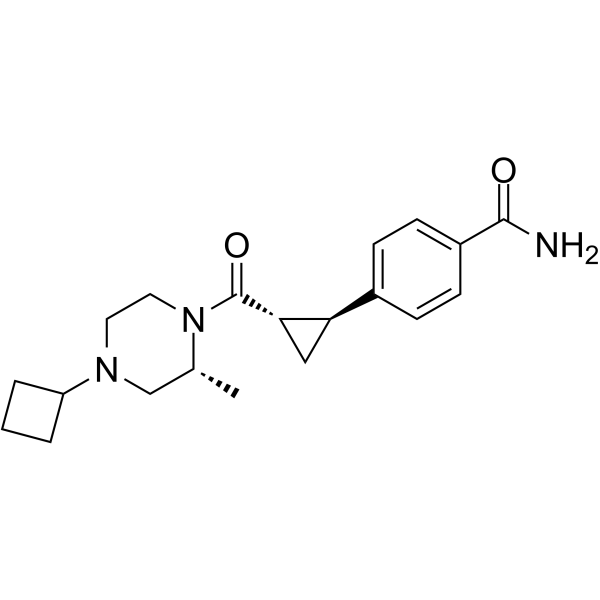 0 ImagesCat. No.: HY-U00339CAS No.: 1240914-03-7
H3 receptor-MO-1 is a modulator of histamine H3 receptor.
- 1



