



Insulin Receptor
Insulin receptor (IR), a phylogenetically ancient tyrosine kinase receptor, is a large cell surface glycoprotein that concentrates insulin at the site of action and also initiates responses to insulin. The receptor is a disulfide-linked oligomer comprised of two alpha and two beta subunits. The insulin receptor exists in two isoforms, IR-A and IR-B, expressed in different relative abundance in the various organs and tissues. The two IR isoforms have similar binding affinity for insulin but different affinity for insulin-like growth factor (IGF)-2 and proinsulin, which are bound by IR-A but not IR-B.
The insulin receptor has a crucial role in controlling glucose homeostasis, regulating lipid, protein and carbohydrate metabolism, and modulating brain neurotransmitter levels. Insulin receptor dysfunction has been associated with many diseases, including diabetes, cancer and Alzheimer's disease.
All Product Categories
-
Insulin Receptor Inhibitors
(62)
View all products
-
Insulin Receptor Agonists
(34)
View all products
-
Insulin Receptor Antagonists
(12)
View all products
-
Insulin Receptor Activators
(34)
View all products
-
Insulin Receptor Modulators
(5)
View all products
-
Insulin Receptor Inducer
(1)
View all products
-
Insulin Receptor Degrader
(1)
View all products
-
Insulin Receptor Substrates
(3)
View all products
-
Insulin Receptor Ligand
(1)
View all products
-
Insulin Receptor (INSR) Proteins
(5)
View all products
-
INSR/CD220 Proteins
(7)
View all products
-
Insulin Receptor Related Products (204)
Related Products (204)

-
Recombinant Proteins (8)
-
Antibodies (8)
-
Relsipatide
 0 ImagesCat. No.: HY-P11270CAS No.: 2843676-09-3Synonyms: BGM0504; BG128Relsipatide (BG128) is a dual gastric inhibitory polypeptide (GIP) and glucagon-like peptide 1 (GLP-1) receptor agonist. Enicepatide can be studied in antidiabetic research.
-
Visepegenatide
 0 ImagesCat. No.: HY-P10305CAS No.: 2641081-54-9Synonyms: PB-119PB-119 is a PEGylated Exenatide. PB-119 decreases glycemic levels by improving beta-cell function and insulin resistance. PB-119 can be used for research of type 2 diabetes.
-
AGT-182
 0 ImagesCat. No.: HY-P992048Synonyms: HIRMab; SHP-631; TAK-531AGT-182 (HIRMab; SHP-631; TAK-531) is a brain-penetrating anti-human insulin receptor antibody and iduronate-2-sulfatase conjugation. AGT-182 can be used for the research of mucopolysaccharidosis type II (MPS II, Hunter syndrome).
-
IRR Recombinant Human Active Protein Kinase
 0 ImagesCat. No.: HY-E70832IRR is a member of the insulin receptor (IR) family. IRR activation by alkali is determined by its N-terminal extracellular region. IRR Recombinant Human Active Protein Kinase is a recombinant IRR protein that can be used to study IRR-related functions.
-
(+)-Licarin
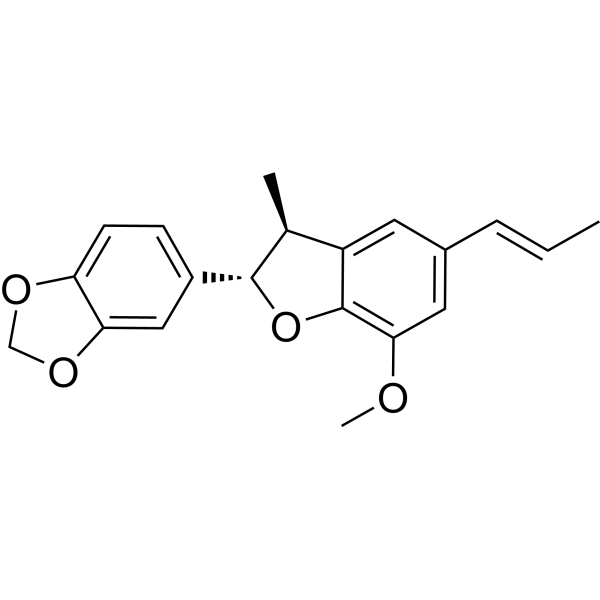 0 ImagesCat. No.: HY-N12338CAS No.: 42016-15-9(+)-Licarin (Compound 7) is a compound derived from Ocotea macrophylla Kunth. leaves octanoid neolignans.
-
ALK-IN-24
 0 ImagesCat. No.: HY-153503CAS No.: 2093414-37-8ALK-IN-24 is an orally active ALK inhibitor with an IC50 value of 1.7 nM. ALK-IN-24 also inhibits insulin receptor kinase with an IC50 value of 6 nM. ALK-IN-24 suppresses the proliferation of lung adenocarcinoma cells. ALK-IN-24 inhibits ALK-driven tumor growth in xenograft mouse models. ALK-IN-24 can be used in research related to non-small cell lung cancer.
-
Glybuzole
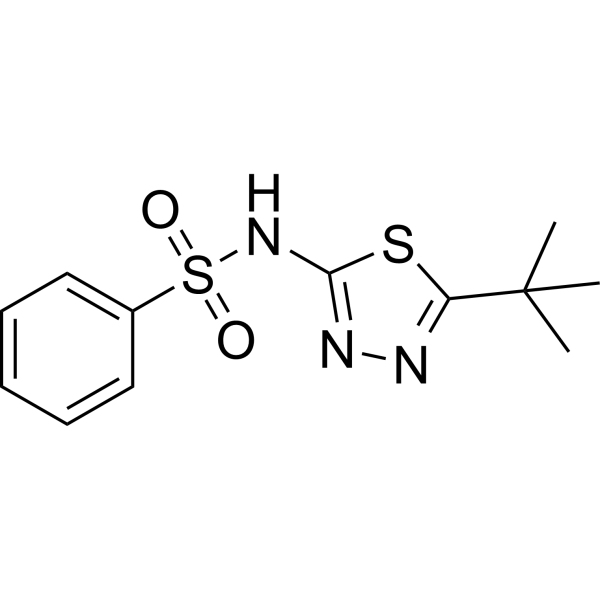 0 ImagesGlybuzole (Desaglybuzole) is an orally effective hypoglycemic agent. Glybuzole promotes insulin secretion by pancreatic β cells and inhibits glucagon secretion by pancreatic α cells. Glybuzole reduces blood glucose levels as well as arginine-stimulated plasma glucagon levels. Glybuzole can be used in diabetes-related research.
-
Gastric Inhibitory Polypeptide (1-30), porcine
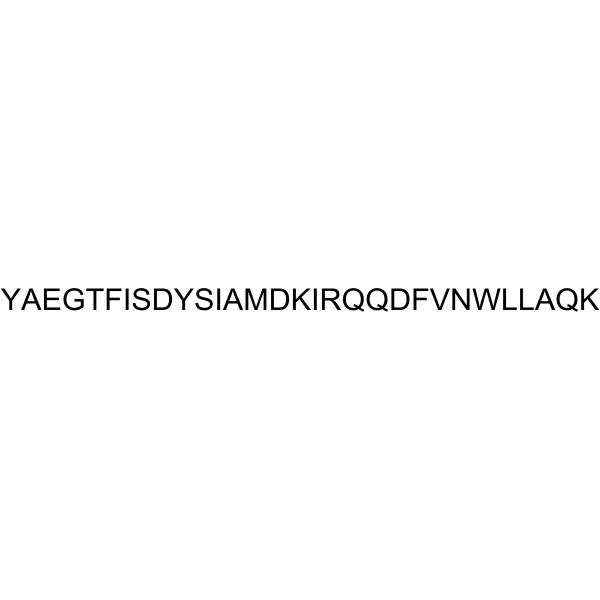 0 ImagesCat. No.: HY-P3578CAS No.: 134875-67-5Gastric Inhibitory Polypeptide (1-30), porcine lacks the C-terminal 12 amino acid residues of natural gastric inhibitory polypeptide (GIP), exhibits biologic activity by potentiating the release of insulin and somatostatin.
-
Aganirsen sodium
 0 ImagesCat. No.: HY-153479AAganirsen sodium is a 25 mer DNA antisense oligonucleotide, which silences expression of insulin receptor substrate-1 (IRS-1).
-
GIP (1-30) amide, porcine
 0 ImagesCat. No.: HY-P2541CAS No.: 134846-93-8GIP (1-30) amide, porcine is a full glucose-dependent insulinotropic polypeptide (GIP) receptor agonist with high affinity equal to native GIP(1-42). GIP (1-30) amide, porcine is a weak inhibitor of gastric acid secretion and potent stimulator of insulin.
-
Z971169476
 0 ImagesCat. No.: HY-181666CAS No.: 1356662-88-8Z971169476 is a sulfonamide-based protein-RNA interaction inhibitor targeting the KH34 region of insulin-like growth factor 2 mRNA binding protein 2 (IGF2BP2/IMP2).
-
Xenin-8
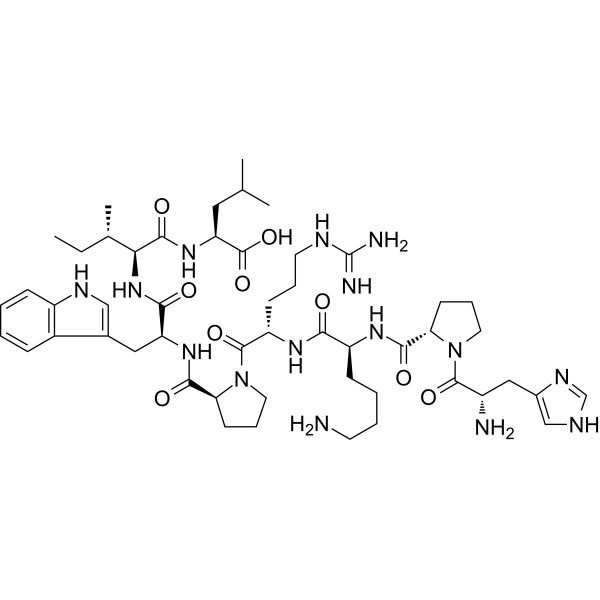 0 ImagesCat. No.: HY-P1257CAS No.: 117442-28-1Xenin-8 is the C-terminal octapeptide fragment of xenin, which belongs to the xenopsin family of peptides. Xenin-8 stimulates basal insulin secretion, dose-dependently enhances glucose (EC50 = 0.16 nM) and arginine-induced insulin release, and enhances arginine- and Carbamoylcholine chloride (HY-B1208)-induced glucagon secretion. Xenin-8 antagonizes the inhibition of glucagon release by elevated glucose. Xenin-8 can be used in research on type 2 diabetes and obesity-related glucose metabolic disorders.
-
GIP (1-30) amide,human
 0 ImagesCat. No.: HY-P2080CAS No.: 198624-01-0
-
[pTyr1146][pTyr1150][pTyr1151]Insulin Receptor (1142-1153)
![[pTyr1146][pTyr1150][pTyr1151]Insulin Receptor (1142-1153)](https://file.medchemexpress.com/product_pic/hy-p1776.gif "Click to View [pTyr1146][pTyr1150][pTyr1151]Insulin Receptor (1142-1153) Product Detail") 0 ImagesCat. No.: HY-P1776CAS No.: 141171-54-2[pTyr1146][pTyr1150][pTyr1151]Insulin Receptor (1142-1153) binds to insulin and can be used as insulin receptor tyrosine kinase substrates.
0 ImagesCat. No.: HY-P1776CAS No.: 141171-54-2[pTyr1146][pTyr1150][pTyr1151]Insulin Receptor (1142-1153) binds to insulin and can be used as insulin receptor tyrosine kinase substrates.
-
Tirzepatide (crude)
 0 ImagesCat. No.: HY-P1731CPCAS No.: 2023788-19-2Tirzepatide (LY3298176) (crude) is the crude form of Tirzepatide (HY-P1731).Tirzepatide (LY3298176) is a dual glucose-dependent insulinotropic polypeptide (GIP) and glucagon-like peptide-1 (GLP-1) receptor agonist. Tirzepatide exerts anti-apoptotic and pro-differentiation effects via the pAkt/CREB/BDNF cascade and miRNA in neurons; in the heart, it promotes BCAA catabolism and inhibits the mTOR pathway by mediating the dephosphorylation of BCKDHA; meanwhile, it effectively reduces insulin and leptin levels and suppresses inflammatory responses at the systemic level. Tirzepatide can be used for research on myocardial infarction, colon cancer, diabetes, diabetic cognitive impairment, neurodegeneration, diabetes-related neuropathy, and obesity.
-
C-Peptide 2, rat
 0 ImagesCat. No.: HY-P2534CAS No.: 41594-08-5C-Peptide 2, rat, 31-amino-acid peptide, is a component of proinsulin. C-Peptide 2, rat can inhibit glucose-induced insulin secretion.
-
Astepatide
 0 ImagesCat. No.: HY-P10952CAS No.: 2959444-13-2Astepatide is a gastric inhibitory peptide (GIP) receptor and glucagon-like peptide-1 (GLP-1) receptor agonist that can be used in anti-diabetic research.

-
Calcium mesoxalate
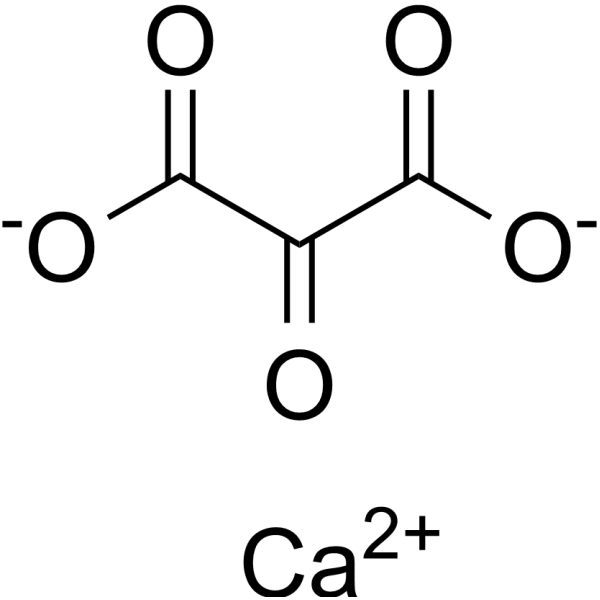 0 ImagesCat. No.: HY-W540188CAS No.: 21085-60-9Synonyms: Ketomalonic acid calcium; Mesoxalic acid calcium; Oxomalonic acid calciumCalcium mesoxalate (Ketomalonic acid calcium) is an orally active antidiabetic agent. Calcium mesoxalate increases pancreatic insulin content. Calcium mesoxalate reduces dietary hyperglycemia. Calcium mesoxalate inhibits Epinephrine-induced hyperglycemia in rabbits and exacerbates Alloxan (HY-116823)-induced hypoglycemic convulsions. Calcium mesoxalate exerts no antidiabetic effect in pancreatectomized dogs and fails to reduce the susceptibility of rabbits to Alloxan-induced diabetes. Calcium mesoxalate can be used in diabetes-related research.




