



Interleukin Related Activator
-
PROTAC HPK1 Degrader-7
 0 ImagesCat. No.: HY-179727
PROTAC HPK1 Degrader-7 (compound D02) is a potent and selective PROTAC HPK1 degrader with an DC50 of 3.07 nM. PROTAC HPK1 Degrader-7 exhibits selectivity over GLK. PROTAC HPK1 Degrader-7 induces HPK1 degradation in a CRBN- and proteasome-dependent manner. PROTAC HPK1 Degrader-7 inhibits SLP-76 phosphorylation, induces IL-2 and IFN-γ secretion in human primary T cells. PROTAC HPK1 Degrader-7 can be used for immunology research.
-
SMU-L11-R
 0 ImagesCat. No.: HY-179047CAS No.: 3040320-18-8
SMU-L11-R is a selective TLR7 agonist with an EC50 of 0.012 μM for human TLR7. SMU-L11-R specifically activates TLR7, recruits MyD88, and triggers MAPK/NF-κB pathways, leading to TNF-α/IL-1β/IL-6 secretion in both mouse and human peripheral blood mononuclear cells. SMU-L11-R promotes M1-like macrophage polarization. SMU-L11-R exhibits excellent synergistic anti-tumor effects with PD-L1 inhibitors by upregulating CD8+T cells. SMU-L11-R shows potential in colorectal cancer studies.
-
RR-171
 0 ImagesCat. No.: HY-P11935CAS No.: 2410535-57-6
RR-171 is an amino acid polypeptide and an inhibitor of the Wnt signaling pathway. RR-171 reduces the expression levels of Wnt-1, GSK3β and β-catenin. RR-171 induces apoptosis (Apoptosis) in pancreatic cancer cells, which is characterized by an increased Bax/Bcl-2 ratio, activation of Caspase-3/7/9, and increased Cleaved-PARP; this pro-apoptotic effect can be partially reversed by Z-VAD-FMK (HY-16658B). RR-171 also induces pyroptosis (Pyroptosis) in pancreatic cancer cells, which is manifested by activation of the NLRP-3 inflammasome, activation of Caspase-1, cleavage of GSDMD, upregulation of IL-1β and IL-18, and increased LDH release; this pro-pyroptotic effect can be partially reversed by VX-765 (HY-13205). RR-171 inhibits the viability, proliferation and colony formation of pancreatic cancer cells, with low cytotoxicity against normal cells. RR-171 downregulates the expression of Ki-67 and PCNA in tumor tissues in vivo, with favorable biosafety. RR-171 can be used in studies related to pancreatic cancer.
-
Tubulin polymerization-IN-90
 0 ImagesCat. No.: HY-182081CAS No.: 3006800-41-2
Tubulin polymerization-IN-90 is a tubulin polymerization inhibitor. Tubulin polymerization-IN-90 disrupts tubulin polymerization by binding to the nocodazole-binding site on β-tubulin. Tubulin polymerization-IN-90 induces the release of extracellular vesicles marked by the tetraspanin CD63. Tubulin polymerization-IN-90 induces the release of IL-8 from cells. Tubulin polymerization-IN-90 reduces the viability of cancer cells. Tubulin polymerization-IN-90 can be used in the research of cancers such as acute T-lymphoblastic leukemia.
-
SHP1-IN-2
 0 ImagesCat. No.: HY-186140
SHP1‑IN‑2 is a selective and orally active SHP1 inhibitor. SHP1‑IN‑2 covalently binds to Cys480 of SHP1. SHP1‑IN‑2 elicits potent antitumor immunity and suppresses syngeneic tumor growth. SHP1‑IN‑2 blocks tumor progression in a svngeneic cancer model by activating natural killer cells and cytotoxic CD8+ T cells, along with reduced T cel l. SHP1‑IN‑2 can be used for cancer‑related research.

-
NCGC-023
 0 ImagesCat. No.: HY-187678CAS No.: 3024011-79-5
NCGC-023 is a LATS1/2 inhibitor. NCGC-023 selectively inhibits LATS1/2, an upstream regulator of Yap in the Hippo signaling pathway, increases the expression of active Yap protein, activates Yap-dependent signaling pathways, triggers non-Yap-dependent metallothionein-mediated heavy metal responses, and upregulates IL-33-related regenerative responses. NCGC-023 can be used in studies related to gastrointestinal acute radiation syndrome (GI-ARS).
-
OSE-279
 0 ImagesCat. No.: HY-P992434
OSE-279 is a high-affinity humanized monoclonal bivalent antibody targeting PD-1, the recommended isotype control is HY-P99003. OSE-279 blocks PD-1 ligand binding, inhibits PDL1-induced SHP1 phosphorylation, restores T cell activation, and promotes reactivation of primary T cell effector functions. OSE-279 binds hFcRn receptor, predicts long half-life, induces CD4 and CD8 T cell proliferation, and promotes interleukin 2 and interferon gamma secretion. OSE-279 can be used for the research of advanced malignancies, colon cancer, hepatocarcinoma, mesothelioma.
-
ZL-1211
 0 ImagesCat. No.: HY-P992487
ZL-1211 is an anti-CLDN18.2 monoclonal antibody. ZL-1211 exhibits enhanced binding affinity to CD16A. ZL-1211 induces ADCC-mediated cell lysis and triggers the production of IFNγ, TNFα and IL6. ZL-1211 promotes antibody-dependent cellular cytotoxicity. ZL-1211 exerts anti-tumor activity in a mouse xenograft model of gastric cancer. ZL-1211 can be used for the research of gastric cancer.
-
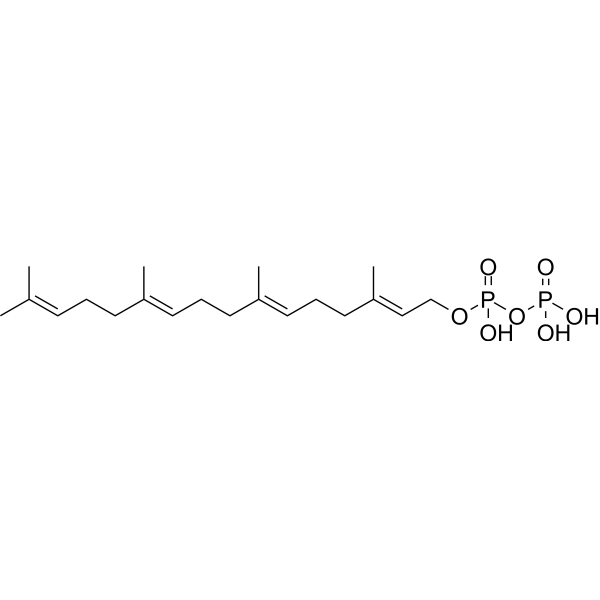
Geranylgeranyl pyrophosphate
 0 Images
Geranylgeranyl pyrophosphate is a type of isoprenoid metabolic intermediate, mainly synthesized through the mevalonate pathway. Geranylgeranyl pyrophosphate is a key precursor in various biological synthesis processes, especially as a necessary substrate for post-translational modification of proteins - geranylgeranyl phosphorylation. Geranylgeranyl pyrophosphate regulates various cellular processes and disease progression through protein geranylgeranyl phosphorylation, such as activating the YAP signaling pathway, promoting cell proliferation and inhibiting apoptosis; promoting IL-2 production and STAT5 phosphorylation; and influencing metabolic homeostasis and cancer, etc.
-
HPK1-IN-71
 0 ImagesCat. No.: HY-184745
HPK1-IN-71 is a potent and selective HPK1 inhibitor with an IC50 of 26.3 nM. HPK1-IN-71 can inhibit the phosphorylation of SLP76, promote the secretion of IL-2 and show high selectivity for other kinases and immune-targeting kinases. HPK1-IN-71 can be used in colon cancer research.
-
KRN7000 analog 3
 0 ImagesCat. No.: HY-159902CAS No.: 1384423-78-2
-
BMS-986331
 0 Images
BMS-986331 is an orally active selective N-Formyl Peptide Receptor 2 (FPR2) agonist with an EC50 of 0.5 nM in humans and 1 nM in rats. BMS-986331 activates Gαi2, GαoA, Gα12, Gα13 signaling pathways, recruits β-arrestin1 and β-arrestin2, and inhibits downstream cAMP. BMS-986331 induces the expression and release of the pro-resolution cytokine IL-10. BMS-986331 improves cardiac structure and function in a rat model of heart failure induced by permanent coronary artery occlusion. BMS-986331 can be used for the research of heart failure.
-
Potassium 1H-indol-3-yl sulfate (Standard)
 0 Images
Potassium 1H-indol-3-yl sulfate (Standard) is the analytical standard of Potassium 1H-indol-3-yl sulfate (HY-W011910). This product is intended for research and analytical applications. Potassium 1H-indol-3-yl sulfate is a metabolite of tryptophan, produced by intestinal microorganisms and combined with sulfate in the liver before entering the circulatory system. Potassium 1H-indol-3-yl sulfate is a potent endogenous agonist of the aryl hydrocarbon receptor (AhR) and a urinary toxin. Potassium 1H-indol-3-yl sulfate can be used for research on kidney diseases.
-
Propacetamol (Standard)
 0 ImagesCat. No.: HY-145453RCAS No.: 66532-85-2
Propacetamol (Standard) is the analytical standard of Propacetamol (HY-145453). This product is intended for research and analytical applications. Propacetamol is an orally active prodrug of Acetaminophen (HY-66005), which exerts antipyretic and analgesic effects after metabolism. Propacetamol reduces Aspirin (ASA) (HY-14654)-induced elevation of malondialdehyde (MDA) in gastric mucosa and plasma, regulates the levels of gastric mucosal glutathione (GSH and GSSG) to maintain cellular antioxidant defense, and increases gastric mucosal uric acid (UA) levels. Propacetamol exerts a dose-dependent protective effect against ASA-induced gastric mucosal damage in rats. Propacetamol can be used for the study of gastric mucosal injury by interfering with oxidative stress.
-
Perfluorohexane (Standard)
 0 ImagesCat. No.: HY-109540RCAS No.: 355-42-0Synonyms: AF-0150 (Standard)
Perfluorohexane (Standard) is the analytical standard of Perfluorohexane (HY-109540). This product is intended for research and analytical applications. Perfluorohexane (AF-0150) is a perfluorocarbon. Perfluorohexane is also an enhancer of high-intensity focused ultrasound (HIFU) therapy. Perfluorohexane increases HO-1 and IL-10. Perfluorohexane exerts an antioxidant effect. Perfluorohexane alleviates lung injury induced by LPS (HY-D1056A1). Perfluorohexane improves the efficiency and precision of HIFU and reduces damage to surrounding normal tissues. Perfluorohexane can be used in the study of acute lung injury.
-
Arecaidine hydrochloride (Standard)
 0 ImagesCat. No.: HY-N2368ARCAS No.: 6018-28-6
Arecaidine hydrochloride (Standard) is the analytical standard of Arecaidine hydrochloride (HY-N2368A). This product is intended for research and analytical applications. Arecaidine hydrochloride is a GABA transport system inhibitor. Arecaidine hydrochloride inhibits the proliferation of oral mucosal fibroblasts, increases the secretion of IL-6, TGF-β and TNF-α in cells, downregulates the expression of PPAR-γ and PCK1 in cells, and upregulates the expression of TGF-β1. Arecaidine hydrochloride inhibits the uptake of γ-aminobutyric acid and β-alanine by the central nervous system of cats. Arecaidine hydrochloride inhibits hPAT1-mediated L-[3H]proline uptake in cells. Arecaidine hydrochloride can be used in research related to neurological diseases.
-
Cer (t18:0/26:0)
 0 ImagesCat. No.: HY-W718206CAS No.: 182362-51-2
-
Perfluoropentanoic acid (Standard)
 0 Images
Perfluoropentanoic acid (Standard) (PFPeA (Standard)) is the analytical standard of Perfluoropentanoic acid (HY-21193). This product is intended for research and analytical applications. Perfluoropentanoic acid (PFPeA), a short-chain perfluorinated compound, serves as an important indicator of perfluorinated compound pollution in ecosystems. Perfluoropentanoic acid exhibits certain toxicity to mice.



