



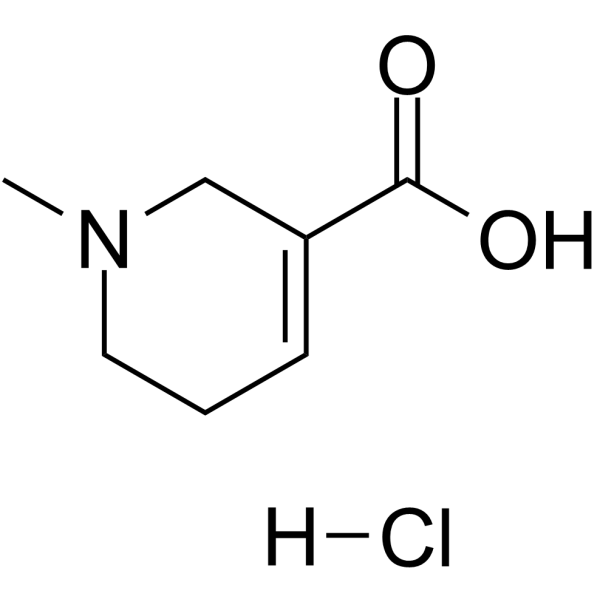
Arecaidine hydrochloride
Based on 1 publication(s) in Google Scholar
Arecaidine hydrochloride is a GABA transport system inhibitor. Arecaidine hydrochloride inhibits the proliferation of oral mucosal fibroblasts, increases the secretion of IL-6, TGF-β and TNF-α in cells, downregulates the expression of PPAR-γ and PCK1 in cells, and upregulates the expression of TGF-β1. Arecaidine hydrochloride inhibits the uptake of γ-aminobutyric acid and β-alanine by the central nervous system of cats. Arecaidine hydrochloride inhibits hPAT1-mediated L-[3H]proline uptake in cells. Arecaidine hydrochloride can be used in research related to neurological diseases.
연구목적의 판매만을 진행합니다. 환자를 대상으로 한 판매는 하지 않습니다.
- Purity : 98.0%
- CAS No.: 6018-28-6
- 화학식: C7H12ClNO2
- 분자량:177.63
-
보관:Powder -20°C, 3 years , 4°C, 2 years ; In solvent -80°C, 6 months , -20°C, 1 month

To place orders, for customer services and technical support, please contact: MedChemExpress USA
Tel: 609-228-6898 E-mail: [email protected] [email protected]


-
 Biological Activity
-
Chemical Information
-
용액&용해도
- Protocol
- 순도&문서
- References
-
 Help & FAQs


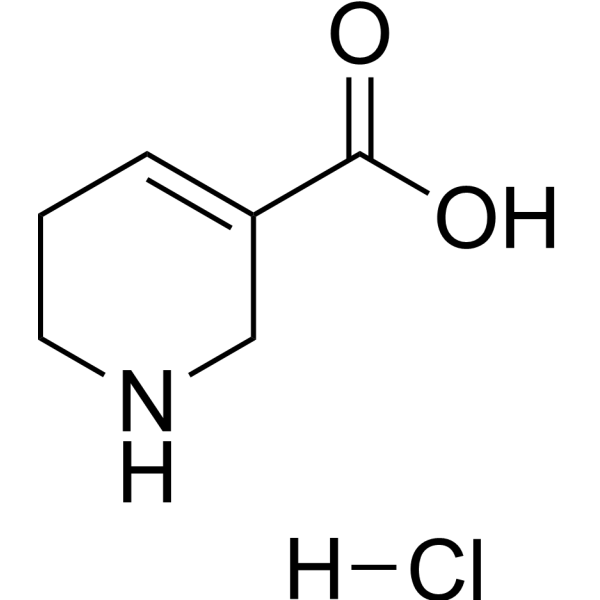
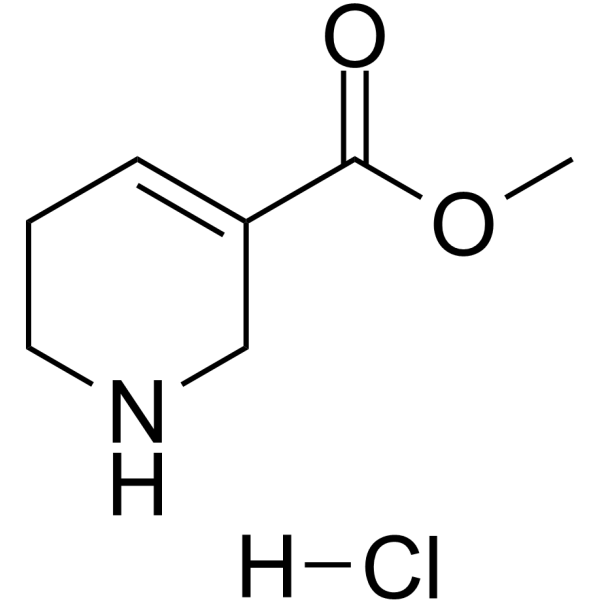
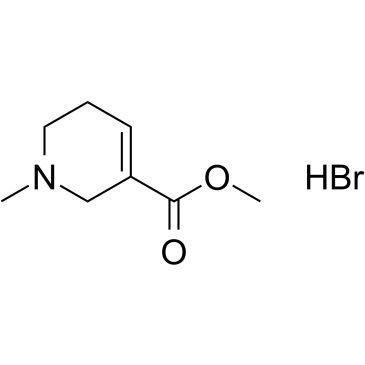
Publications Citing Use of MedChemExpress (MCE) Arecaidine hydrochloride
More

Biological Activity
제품 설명
In Vitro
Arecaidine hydrochloride exhibits strong binding affinity for PPAR-γ, PCK1 and TGF-β1 proteins, with binding energies of -5.1 kJ/mol, -5.6 kJ/mol and -5.6 kJ/mol[1].
Arecaidine (0-120 μg/mL; 24-48 h) hydrochloride inhibits the proliferation of human oral mucosal fibroblasts (hOMF) and increases the secretion of IL-6, TGF-β and TNF-α in cells[1].
Arecaidine (100-120 μg/mL; 48 h) hydrochloride downregulates the mRNA and protein expression of PPAR-γ and PCK1, while upregulates the mRNA and protein expression of TGF-β1, in human oral mucosal fibroblasts (hOMF)[1].
Arecaidine (10 min) hydrochloride inhibits the uptake of GABA and β-alanine, but not that of glycine, in cat spinal cord slices, with an IC50 of 89 μM for GABA and 193 μM for β-alanine[2].
Arecaidine (10 min) hydrochloride inhibits the uptake of GABA and β-alanine in cat cerebellar slices, with an IC50 value of 76 μM for GABA and 354 μM for β-alanine[2].
Arecaidine (10 min) hydrochloride inhibits the uptake of GABA and β-alanine in rat cerebral cortex slices, with an IC50 value of 122 μM for GABA and 208 μM for β-alanine[2].
Arecaidine (0.1-100 mM; 10 min) hydrochloride competitively inhibits hPAT1-mediated uptake of L-[3H]proline in Caco-2 cells, with a Ki value of 7.3 mM[3].
Arecaidine (0.1-100 mM; 10 min) hydrochloride inhibits hPAT1-mediated L-[3H]proline uptake in transiently transfected HeLa cells, with a Ki value of 3.8 mM[3].
MedChemExpress (MCE) has not independently confirmed the accuracy of these methods. They are for reference only. Further protocols information, click here.
-
Cell Line:human oral mucosal fibroblasts (hOMF)
-
Concentration:0, 40, 60, 80, 100, 120 μg/mL
-
Incubation Time:24 h; 48 h
-
Result:Did not significantly alter hOMF cell viability after 24 h of treatment across all tested concentrations.
Significantly inhibited hOMF cell proliferation at 100 μg/mL and 120 μg/mL after 48 h of treatment.
-
Cell Line:human oral mucosal fibroblasts (hOMF)
-
Concentration:100, 120 μg/mL
-
Incubation Time:48 h
-
Result:Significantly elevated IL-6, TGF-β, TNF-α levels.
-
Cell Line:human oral mucosal fibroblasts (hOMF)
-
Concentration:100, 120 μg/mL
-
Incubation Time:48 h
-
Result:Significantly downregulated PPAR-γ, PCK1, TGF-β1 mRNA expression.
-
Cell Line:human oral mucosal fibroblasts (hOMF)
-
Concentration:100 μg/mL
-
Incubation Time:48 h
-
Result:Significantly reduced PPAR-γ, PCK1, TGF-β1 protein expression.
In Vivo
Arecaidine (0.2 M solution; electrophoretic) hydrochloride selectively potentiates the inhibitory effects of GABA and β-alanine on cat spinal cord neurons, and enhances the effect of GABA on cat cerebellar Purkinje cells[2].
MedChemExpress (MCE) has not independently confirmed the accuracy of these methods. They are for reference only.
-
Animal Model:Sprague-Dawley (SD) (male, 6-8 weeks old, 200 g)[1]
-
Dosage:1 mg/mL
-
Administration:topical application to buccal mucosa; once daily; 16 weeks
-
Result:Reduced passive mouth opening to 23.97 mm, a statistically significant reduction compared to the control group.
Increased collagen volume fraction significantly higher than the control group.
Increased TGF-β protein expression statistically significantly compared to the control group.
Identified 100 significantly differentially expressed genes, including downregulation of PPAR-γ, PCK1, pdk4, plin5, Hmgcs2, UCP3, and Angptl4, and upregulation of TGF-β1 and FOS.
Demonstrated binding energies < -5.0 kJ/mol with PPAR-γ, PCK1, and TGF-β1, indicating strong binding affinity.
-
Animal Model:unspecified strain (anaesthetised with pentobarbitone sodium)[2]
-
Dosage:0.2M solution
-
Administration:electrophoretic; variable duration
-
Result:Selectively potentiated the inhibitory effects of GABA and β-alanine on cat spinal cord neurons, and enhanced the effect of GABA on cat cerebellar Purkinje cells.


Chemical Information
-
CAS No. 6018-28-6
-
Appearance Solid
-
분자량 177.63
-
화학식 C7H12ClNO2
-
Color White to light yellow
-
SMILES
O=C(C1=CCCN(C)C1)O.[H]Cl
-
Structure Classification
-
Initial Source
-
선적
Room temperature in continental US; may vary elsewhere.
-
보관
Powder -20°C 3 years 4°C 2 years In solvent -80°C 6 months -20°C 1 month


Publications (1)
-
Journal Impact Factor
-
Most Recent
-
Int J Mol Sci
Oxidative Stress and Endoplasmic Reticulum Stress Contributes to Arecoline and Its Secondary Metabolites-Induced Dyskinesia in Zebrafish Embryos. [Abstract]2023 Mar 28;24(7):6327. PMID: 37047326


용액&용해도
In Vitro:
H2O : 100 mg/mL (562.97 mM; Need ultrasonic)
DMSO : 25 mg/mL (140.74 mM; ultrasonic and warming and heat to 60°C; Hygroscopic DMSO has a significant impact on the solubility of product, please use newly opened DMSO)
Please refer to the solubility information to select the appropriate solvent. Once prepared, please aliquot and store the solution to prevent product inactivation from repeated freeze-thaw cycles.
Storage method and period of stock solution: -80°C, 6 months; -20°C, 1 month. When stored at -80°C, please use it within 6 months. When stored at -20°C, please use it within 1 month.
* Note: If you choose water as the stock solution, please dilute it to the working solution, then filter and sterilize it with a 0.22 μm filter before use.
Please refer to the solubility information to select the appropriate solvent. Once prepared, please aliquot and store the solution to prevent product inactivation from repeated freeze-thaw cycles.
Storage method and period of stock solution: -80°C, 6 months; -20°C, 1 month. When stored at -80°C, please use it within 6 months. When stored at -20°C, please use it within 1 month.
* Note: If you choose water as the stock solution, please dilute it to the working solution, then filter and sterilize it with a 0.22 μm filter before use.
Concentration (start) × Volume (start) = Concentration (final) × Volume (final)
In Vivo:
Select the appropriate dissolution method based on your experimental animal and administration route.
- For the following dissolution methods, please ensure to first prepare a clear stock solution using an In Vitro approach and then sequentially add co-solvents:
- To ensure reliable experimental results, the clarified stock solution can be appropriately stored based on storage conditions. As for the working solution for In Vivo experiments, it is recommended to prepare freshly and use it on the same day.
- The percentages shown for the solvents indicate their volumetric ratio in the final prepared solution. If precipitation or phase separation occurs during preparation, heat and/or sonication can be used to aid dissolution.
Add each solvent one by one: 10% DMSO 40% PEG300 5% Tween-80 45% Saline
Solubility: ≥ 2.5 mg/mL (14.07 mM); Clear solution
This protocol yields a clear solution of ≥ 2.5 mg/mL (saturation unknown).
Taking 1 mL working solution as an example, add 100 μL DMSO stock solution (25.0 mg/mL) to 400 μL PEG300, and mix evenly; then add 50 μL Tween-80 and mix evenly; then add 450 μL Saline to adjust the volume to 1 mL.
Preparation of Saline: Dissolve 0.9 g sodium chloride in ddH₂O and dilute to 100 mL to obtain a clear Saline solution.
Add each solvent one by one: 10% DMSO 90% (20% SBE-β-CD in Saline)
Solubility: ≥ 2.5 mg/mL (14.07 mM); Clear solution
This protocol yields a clear solution of ≥ 2.5 mg/mL (saturation unknown).
Taking 1 mL working solution as an example, add 100 μL DMSO stock solution (25.0 mg/mL) to 900 μL 20% SBE-β-CD in Saline, and mix evenly.
Preparation of 20% SBE-β-CD in Saline (4°C, storage for one week): 2 g SBE-β-CD powder is dissolved in 10 mL Saline, completely dissolve until clear.
In Vivo Dissolution Calculator
Please enter the basic information of animal experiments:
-
-
-
-
Recommended: Prepare an additional quantity of animals to account for potential losses during experiments.
Working solution concentration: 0.22 mg/mL
This product has good water solubility, please refer to the measured solubility data in water/PBS/Saline for details.

Protocol
-
RNA extraction experimental
By lysing cells, releasing RNA, and removing impurities such as proteins and DNA, high-purity RNA products are finally obtained. The commonly used traditional method is the guanidine isothiocyanate/phenol/chloroform method (Trizol), which is suitable for a variety of animal materials including animal tissues, microorganisms, cultured cells, etc., and most plant materials.
-
Cell Viability Determination by MTT Colorimetric Assay
The following protocol uses the MTT colorimetric assay as a classic literature-established method for assessing cell viability/metabolic activity in cultured mammalian cells. MTT[3-(4,5-dimethylthiazol-2-yl)-2,5-diphenyltetrazolium bromide] is reduced by metabolically active cells to a colored formazan product; the amount of formazan is quantified spectrophotometrically and provides an indirect measure of metabolically active viable cells. Importantly, MTT reduction reflects cellular oxidoreductase/metabolic activity rather than an absolute direct count of living cells, so changes in cellular metabolism can alter the signal independently of cell number.


순도&문서
-
Data Sheet (292 KB)
-
SDS (396 KB)
- English - EN (396 KB)
- Français - FR (396 KB)
- Deutsch - DE (396 KB)
- Norwegian - NO (396 KB)
- Español - ES (396 KB)
- Swedish - SV (396 KB)
- Italian - IT (396 KB)
- Korean - KR (396 KB)
- Portuguese - PT (396 KB)
-
Handling Instructions (2659 KB)
References
[1]. Zeng F, et al. Inhibitory role of arecaidine on PPARγ signaling in oral mucosa: Mechanistic insights from transcriptome and experimental analysis. Toxicon. 2025;262:108403. [Content Brief]
[2]. Lodge D, et al. Effects of the Areca nut constituents arecaidine and guvacine on the action of GABA in the cat central nervous system. Brain Res. 1977;136(3):513-522. [Content Brief]
[3]. Voigt V, et al. Transport of the areca nut alkaloid arecaidine by the human proton-coupled amino acid transporter 1 (hPAT1). J Pharm Pharmacol. 2013;65(4):582-590. [Content Brief]


Complete Stock Solution Preparation Table
Please refer to the solubility information to select the appropriate solvent. Once prepared, please aliquot and store the solution to prevent product inactivation from repeated freeze-thaw cycles.
Storage method and period of stock solution: -80°C, 6 months; -20°C, 1 month. When stored at -80°C, please use it within 6 months. When stored at -20°C, please use it within 1 month.
| Optional Solvent | Concentration Solvent Mass | 1 mg | 5 mg | 10 mg | 25 mg |
|---|---|---|---|---|---|
| DMSO / H2O | 1 mM | 5.6297 mL | 28.1484 mL | 56.2968 mL | 140.7420 mL |
| 5 mM | 1.1259 mL | 5.6297 mL | 11.2594 mL | 28.1484 mL | |
| 10 mM | 0.5630 mL | 2.8148 mL | 5.6297 mL | 14.0742 mL | |
| 15 mM | 0.3753 mL | 1.8766 mL | 3.7531 mL | 9.3828 mL | |
| 20 mM | 0.2815 mL | 1.4074 mL | 2.8148 mL | 7.0371 mL | |
| 25 mM | 0.2252 mL | 1.1259 mL | 2.2519 mL | 5.6297 mL | |
| 30 mM | 0.1877 mL | 0.9383 mL | 1.8766 mL | 4.6914 mL | |
| 40 mM | 0.1407 mL | 0.7037 mL | 1.4074 mL | 3.5185 mL | |
| 50 mM | 0.1126 mL | 0.5630 mL | 1.1259 mL | 2.8148 mL | |
| 60 mM | 0.0938 mL | 0.4691 mL | 0.9383 mL | 2.3457 mL | |
| 80 mM | 0.0704 mL | 0.3519 mL | 0.7037 mL | 1.7593 mL | |
| 100 mM | 0.0563 mL | 0.2815 mL | 0.5630 mL | 1.4074 mL |
* Note: If you choose water as the stock solution, please dilute it to the working solution, then filter and sterilize it with a 0.22 μm filter before use.


Arecaidine hydrochloride Related Classifications
HY-N2368A Related Classifications
 Powered by Bioz