



Itk
Interleukin-2 inducible T-cell kinase; IL2 inducible T-cell kinase
Itk (Interleukin-2-inducible T-cell kinase) is a Tec family tyrosine kinase that mediates signaling processes after T cell receptor engagement. Activation of Itk requires recruitment to the membrane via its pleckstrin homology domain, phosphorylation of Itk by the Src kinase, Lck, and binding of Itk to the SLP-76/LAT adapter complex. After activation, Itk phosphorylates and activates phospholipase C-gamma1 (PLC-gamma1), leading to production of two second messengers, DAG and IP3. IP3 and DAG stimulate the release of calcium ions from the endoplasmic reticulum and activate Protein Kinase C, respectively. In addition, Itk regulates the development of Th2 cells and their subsequent cytokine secretion, thereby modulating the immune response.
Studies have shown that ITK is involved in the pathogenesis of autoimmune diseases as well as in carcinogenesis. The loss of ITK or its activity either by mutation or by the use of inhibitors led to a beneficial outcome in experimental models of asthma, inflammatory bowel disease and multiple sclerosis among others. In humans, biallelic mutations in the ITK gene locus result in a monogenetic disorder leading to T cell dysfunction, etc. These findings put ITK in the strong focus as a target for drug development.
All Product Categories
-
Itk Related Products (36)
Related Products (36)

-
Antibodies (1)
- 1
- 2
-
PROTAC ITK degrader 1
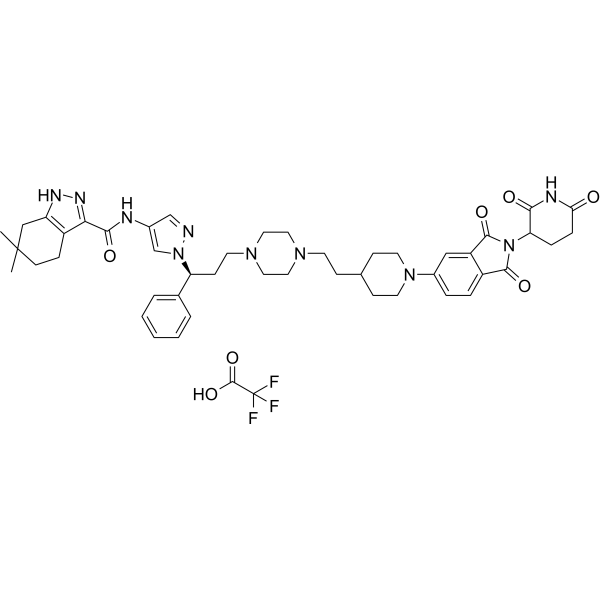 0 ImagesCat. No.: HY-149917PROTAC ITK degrader 1 is a highly selective degrader of interleukin-2-inducible T-cell kinase (ITK; DC50=3.6 nM in vivo in mice), with good plasma exposure levels. PROTAC ITK degrader 1 induces rapid, and prolonged ITK degradation and suppresses IL-2 secretion (EC50=35.2 nM, Jurkat cells) stimulated by anti-CD3 antibodyin vivo.
-
GNE-4997
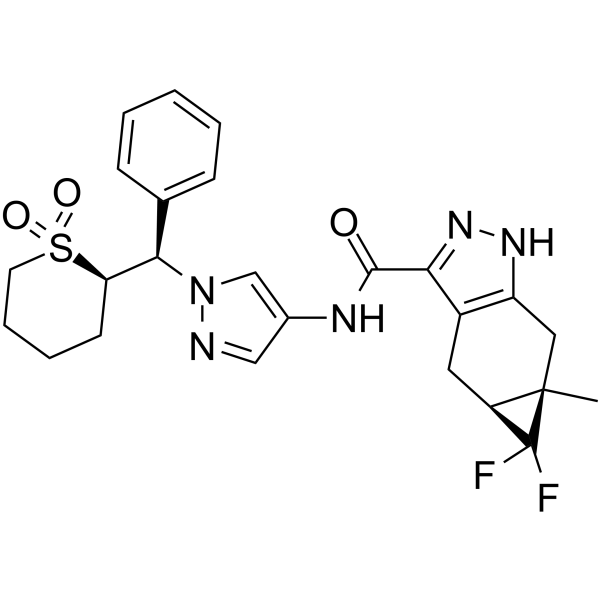 0 ImagesCat. No.: HY-16984CAS No.: 1705602-02-3GNE-4997 is a potent and selective interleukin-2-inducible T-cell kinase (ITK) inhibitor with a Ki of 0.09 nM, and the correlation between the basicity of solubilizing elements in GNE-4997 and off-target antiproliferative effects reduces cytotoxicity.
-
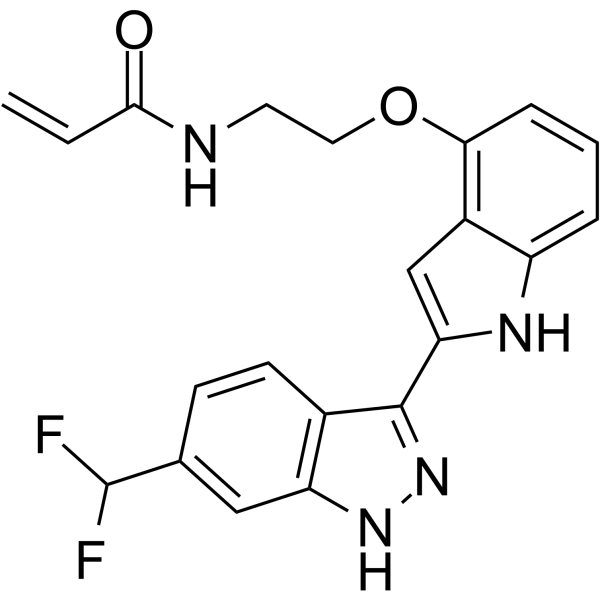
ITK Recombinant Human Active Protein Kinase
 0 ImagesCat. No.: HY-E70833ITK is the Tec family tyrosine kinase that has been implicated in T cell receptor (TCR) signaling. ITK Recombinant Human Active Protein Kinase is a recombinant ITK protein that can be used to study ITK-related functions.
-
(±)-Armepavine hydrochloride
 0 ImagesCat. No.: HY-N6857CCAS No.: 13944-21-3(±)-Armepavine hydrochloride is a compound that has demonstrated immunosuppressive effects on T lymphocytes and in lupus nephritic mice.
-
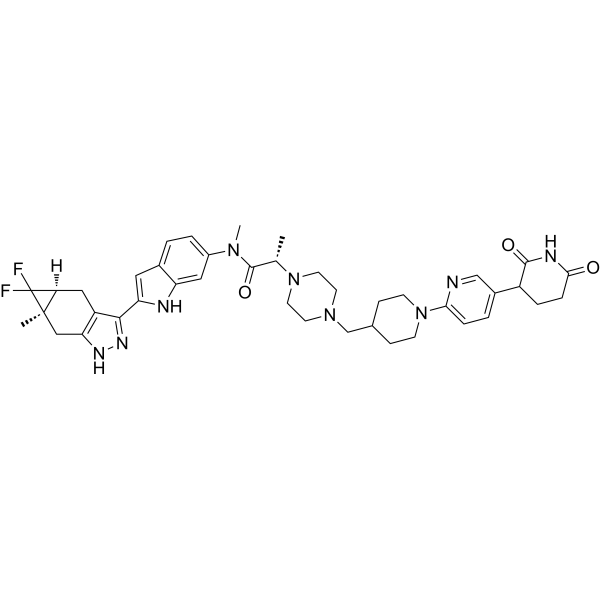
ITK/TRKA-IN-1
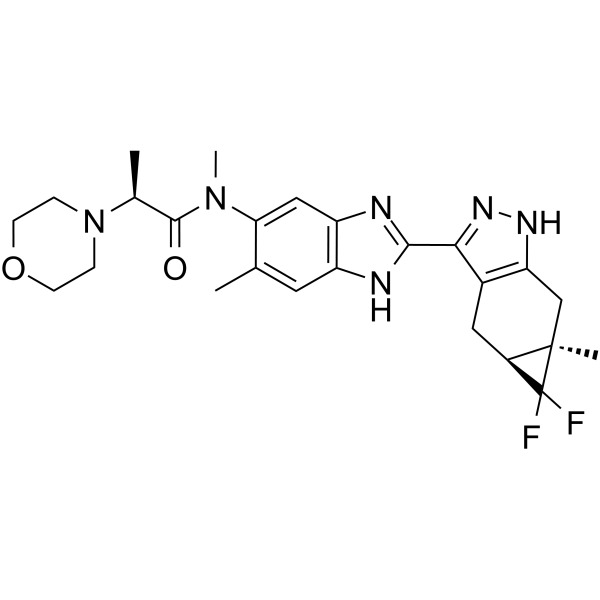 0 ImagesCat. No.: HY-141864CAS No.: 2655557-54-1
-
ITK ligand 1
 0 ImagesCat. No.: HY-168387ITK ligand 1 is a PROTAC target protein ligand (Ligand for Target Protein for PROTAC). ITK ligand 1 can be used in the synthesis of PROTACs (e.g. HY-149917).
-
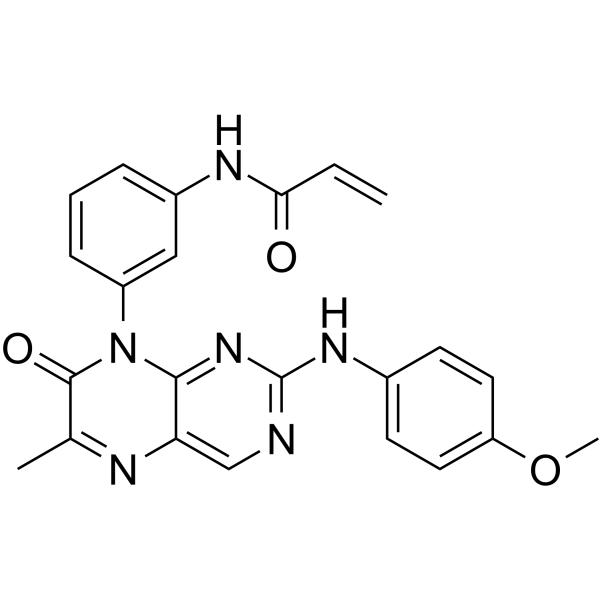
GNE-7056
 0 ImagesCat. No.: HY-189477CAS No.: 1557236-81-3GNE-7056 is an orally active interleukin-2-inducible T-cell kinase (ITK) inhibitor with a Ki of 0.2 nM against human kinase, and exhibits high selectivity over LCK kinase. GNE-7056 inhibits PLCγ-1 phosphorylation, suppresses the production of IL-2, IL-4, IL-13 and TH2 cytokines, reduces CD4+ T-cell proliferation, and inhibits activation-induced cell death of CD4+ T cells by decreasing the abundance of FasL. GNE-7056 can be used in asthma-related research.
-
PROTAC BTK Degrader-13
 0 ImagesCat. No.: HY-168963PROTAC BTK Degrader-13 is a reagent targeting BTK, with a DC50 of 0.27 μM. PROTAC BTK Degrader-13 degrades BTK in a proteasome-dependent manner and inhibits BTK-mediated downstream signaling pathways by reducing the phosphorylation levels of BTK and p38 MAPK. PROTAC BTK Degrader-13 exerts selective cytotoxic effects on BTK-overexpressing lymphoma cells and ITK-positive cells. PROTAC BTK Degrader-13 can be used in studies related to B-cell lymphoma.
-
Soquelitinib (Standard)
 0 ImagesCat. No.: HY-150298RCAS No.: 2226636-04-8Synonyms: CPI-818 (Standard)Soquelitinib (Standard) is the analytical standard of Soquelitinib (HY-150298). This product is intended for research and analytical applications. Soquelitinib (CPI-818) is an orally active and highly selective covalent interleuKin-2-inducible Kinase (ITK) inhibitor. Soquelitinib is active in six different models of T cell-mediated inflammatory and immune disease, including acute and chronic asthma, pulmonary fibrosis, systemic sclerosis (scleroderma), psoriasis, and acute graft versus host disease with Th2 cytoKine product inhibition. Soquelitinib increases tumor infiltration of normal CD8+ cells that possess enhanced T effector function.
-
Vecabrutinib (Standard)
 0 ImagesCat. No.: HY-109078RCAS No.: 1510829-06-7Synonyms: SNS-062 (Standard)Vecabrutinib (Standard) is the analytical standard of Vecabrutinib (HY-109078). This product is intended for research and analytical applications. Vecabrutinib (SNS-062) is a potent, noncovalent BTK and ITK inhibitor, with Kd values of 0.3 nM and 2.2 nM, respectively. Vecabrutinib shows an IC50 of 24 nM for ITK.
-
PF-06465469 (Standard)
 0 ImagesCat. No.: HY-108691RCAS No.: 1407966-77-1PF-06465469 (Standard) is the analytical standard of PF-06465469 (HY-108691). This product is intended for research and analytical applications. PF-06465469 is a covalent inhibitor of ITK with an IC50 of 2 nM. PF-06465469 also inhibits BTK. PF-06465469 inhibits cell migration in response to CXCL12. PF-06465469 decreases PD-1 and LAG-3 expression. PF-06465469 can be used to study leukemia and T-cell lymphoma.
-
Immepip dihydrobromide (Standard)
 0 ImagesCat. No.: HY-101321ARCAS No.: 164391-47-3Immepip (dihydrobromide) (Standard) is the analytical standard of Immepip (dihydrobromide). This product is intended for research and analytical applications. Immepip dihydrobromide is a H3 agonist. Immepip dihydrobromide can reduce cortical histamine release. Immepip dihydrobromide can be used for the research of neurological diseases.
-
BMS-509744 (Standard)
 0 ImagesCat. No.: HY-11092RCAS No.: 439575-02-7BMS-509744 (Standard) is the analytical standard of BMS-509744 (HY-11092). This product is intended for research and analytical applications. BMS-509744 is a potent, selective and ATP competitive Itk inhibitor with an IC50 of 19 nM.
- 1
- 2




