



MMP
Matrix metalloproteinases (MMPs) are zinc-dependent endopeptidases that degrade extracellular matrix components and regulate extracellular protein turnover[1]. Mechanistically, MMPs also cleave cell-surface molecules and pericellular non-matrix proteins, thereby regulating cell behavior beyond matrix degradation[1]. In disease models, abnormal MMP and TIMP regulation contributes to inflammation, tissue destruction, fibrosis, abnormal wound repair, vascular disease, and cancer progression[2]. Compared with related isoforms, MMP-2 and MMP-9 are gelatinases, while MMP-14 is a membrane-associated MT1-MMP that supports localized pericellular matrix remodeling[3]. For experimental applications, active-MMP profiling can use batimastat affinity resin to capture active MMPs and related ADAMs for mass-spectrometry identification[3].
References:
- [1]. Sternlicht MD, et al. How matrix metalloproteinases regulate cell behavior. Annu Rev Cell Dev Biol. 2001;17:463-516. [Content Brief]
- [2]. Cabral-Pacheco GA, et al. The Roles of Matrix Metalloproteinases and Their Inhibitors in Human Diseases. Int J Mol Sci. 2020 Dec 20;21(24):9739. [Content Brief]
- [3]. Chang M. Matrix metalloproteinase profiling and their roles in disease. RSC Adv. 2023 Feb 21;13(9):6304-6316. doi: 10.1039/d2ra07005g. PMID: 36825288; PMCID: PMC9942564. et al. Matrix metalloproteinase profiling and their roles in disease. RSC Adv. 2023 Feb 21;13(9):6304-6316. [Content Brief]
All Product Categories
-
MMP Related Products (446)
Related Products (446)

-
(R)-Prinomastat
 0 ImagesSynonyms: (R)-AG3340; (R)-KB-R9896
-
S-methyl-KE-298
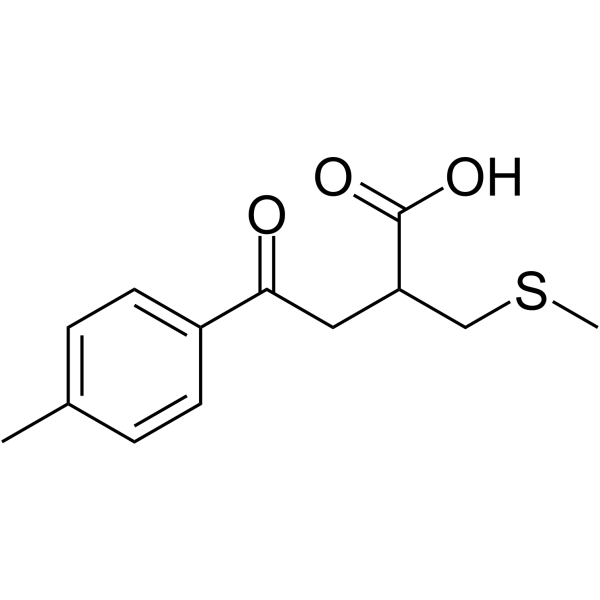 0 ImagesSynonyms: M-2S-methyl-KE-298 is an active metabolite of KE-298. KE-298 inhibits matrix metalloproteinase (MMP-1) production from rheumatoid arthritis (RA) synovial cells.
-
PAI-1-IN-1
 0 ImagesPAI-1-IN-1 is an orally active and specific PAI-1 inhibitor with an IC50 of <6.95 μM. PAI-1-IN-1 blocks the interaction between PAI-1 and serine proteases or LRP-1, and enhances plasmin generation. PAI-1-IN-1 restores macrophage efferocytosis and promotes macrophage polarization. PAI-1-IN-1 alleviates PAI-1-mediated inhibition of Furin, promotes MT1-MMP maturation, activates the NOTCH1 signaling pathway, inhibits proliferation and induces apoptosis. PAI-1-IN-1 promotes skeletal muscle regeneration and alleviates inflammation in a mouse model of skeletal muscle injury. PAI-1-IN-1 can be used in research on skeletal muscle injury-induced inflammation and chronic myeloid leukemia.
-
Edaravone solution
 0 ImagesCat. No.: HY-FLB0099CAS No.: 89-25-8Synonyms: MCI-186 solutionEdaravone solution is mainly composed of Edaravone (HY-B0099). Edaravone is a strong novel free radical scavenger, and inhibits MMP-9-related brain hemorrhage in rats treated with tissue plasminogen activator. Edaravone can improve the neurological symptoms, daily living activities and functional impairments caused by acute cerebral infarction.
-
Doxycycline-d3 (hydrochloride)
 0 ImagesCat. No.: HY-N0565ASDoxycycline-d3 hydrochloride is deuterium labeled Doxycycline hydrochloride (HY-N0565A). Doxycycline hydrochloride is an orally active highly lipophilic, tissue-permeable MMP inhibitor with broad-spectrum antibacterial activity. Doxycycline hydrochloride is also a semi-synthetic antibiotic with chelating properties, which blocks bacterial protein synthesis and inhibits extracellular matrix degradation through interactions with zinc and calcium atoms. Doxycycline hydrochloride also inhibits mitochondrial biogenesis, translation, and the expression of respiratory chain proteins. Doxycycline hydrochloride induces apoptosis, inhibits autophagy and EMT, downregulates stem cell markers, and activates the PI3K-AKT pathway, thereby effectively inhibiting the viability and proliferation of cancer cells such as breast cancer cells. Doxycycline hydrochloride also promotes the survival and self-renewal of embryonic stem cells and neural stem cells, and reduces the frequency of medium changes in culture. Doxycycline hydrochloride has been applied in studies related to breast cancer, prostate cancer, bladder cancer, and other cancers.
-
Doxycycline-13C,d3
 0 ImagesCat. No.: HY-N0565S3CAS No.: 1902958-13-7Doxycycline-13C,d3 is 13C and deuterium labeled Doxycycline (HY-N0565). Doxycycline is an orally active highly lipophilic, tissue-permeable MMP inhibitor with broad-spectrum antibacterial activity. Doxycycline is also a semi-synthetic antibiotic with chelating properties, which blocks bacterial protein synthesis and inhibits extracellular matrix degradation through interactions with zinc and calcium atoms. Doxycycline also inhibits mitochondrial biogenesis, translation, and the expression of respiratory chain proteins. Doxycycline induces apoptosis, inhibits autophagy and EMT, downregulates stem cell markers, and activates the PI3K-AKT pathway, thereby effectively inhibiting the viability and proliferation of cancer cells such as breast cancer cells. Doxycycline also promotes the survival and self-renewal of embryonic stem cells and neural stem cells, and reduces the frequency of medium changes in culture. Doxycycline has been applied in studies related to breast cancer, prostate cancer, bladder cancer, and other cancers.
-
Famotidine solution
 0 ImagesCat. No.: HY-FLB0377CAS No.: 76824-35-6Synonyms: MK-208 solutionFamotidine solution is mainly composed of Famotidine (HY-B0377). Famotidine (MK-208) is an orally active and highly selective histamine H2 receptor antagonist. It inhibits gastric acid secretion by blocking the Gs signaling pathway, and regulates intracellular cAMP and ERK pathways. Famotidine inhibits TLR3-mediated inflammatory pathways, and reduces the expression of various inflammatory mediators and interferon-related genes. Famotidine scavenges DPPH and nitric oxide free radicals, alleviates oxidative stress damage in gastric tissue, inhibits proMMP-9, improves vascular endothelial permeability, and restores the normal physiological functions of neutrophils and eosinophils. Famotidine crosses intestinal epithelial cells via facilitated diffusion and passive diffusion, blocks paracellular cation transport, and increases intestinal transepithelial electrical resistance. Famotidine reduces serum levels of transaminases and alkaline phosphatase, exerts analgesic effects and gastric protective effects simultaneously. Famotidine can be used in studies related to COVID-19, liver injury and acute gastric ulcer.
-
Anticancer agent 65
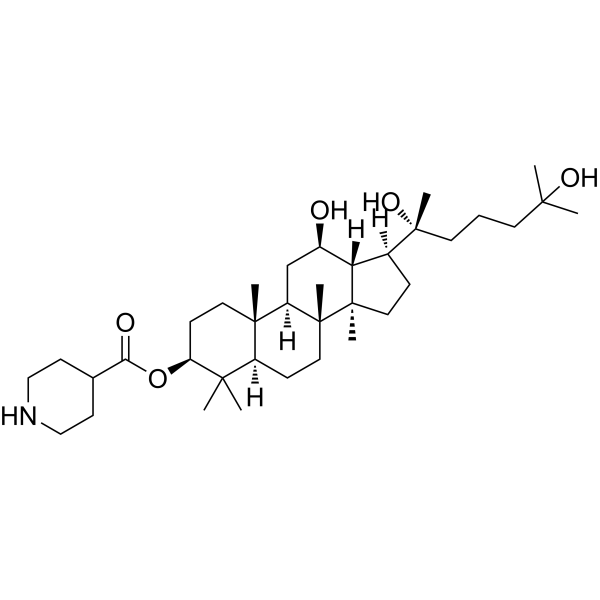 0 ImagesCat. No.: HY-146105CAS No.: 2407861-48-5Anticancer agent 65 (compound 4c) shows excellent activity in cancer cell lines, especially A549 cells, with an IC50 of 1.07 μM. Anticancer agent 65 induces S-phase arrest in A549 cells and increases the expression level of p53 and p21. Anticancer agent 65 causes apoptosis, ROS generation and collapse of MMP in A549 cells.
-
MMP-9-IN-8
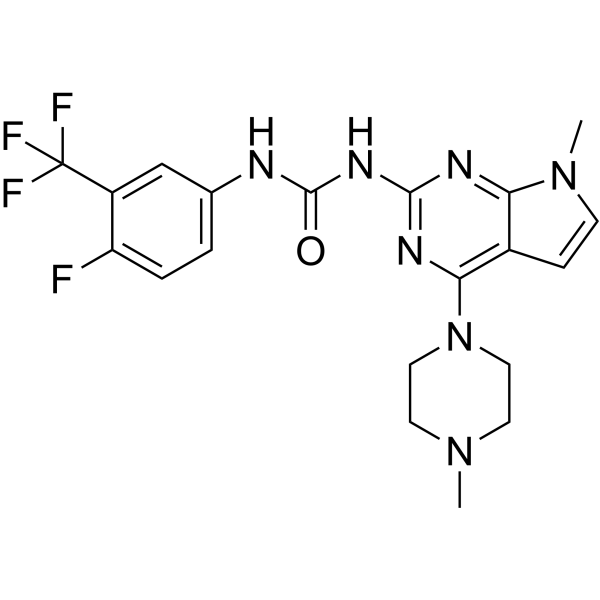 0 ImagesCat. No.: HY-157138CAS No.: 2490543-89-8MMP-9-IN-8 (Compound 3) is an MMP-9 inhibitor with inhibitory activities of 42.16% and 58.28% at 10 μM and 50 μM concentrations, respectively. MMP-9-IN-8 has anti-cancer activity and can induce apoptosis in MCF-7 cells with an IC50 value of 23.42 μM.
-
Highly purified Type XI collagen, from bovine articular cartilage
 0 ImagesCat. No.: HY-NP106Synonyms: Bovine Type XI collagen, immunization gradeHighly purified Type XI collagen, from bovine articular cartilage (Bovine Type XI collagen, immunization grade) is an immune grade collagen derived from bovine articular cartilage, which can stimulate the animal's immune system to produce specific antibodies against this collagen. Collagen is also a substrate for hydrolysis by MMPs.
-
Highly purified type II collagen, from rat sternal cartilage
 0 ImagesCat. No.: HY-NP108Synonyms: Rat Type II collagen, immunization gradeHighly purified type II collagen, from rat sternal cartilage (Rat Type II collagen, immunization grade) is an immune grade collagen derived from rat sternal cartilage, which can stimulate the animal's immune system to produce specific antibodies against this collagen. Collagen is also a substrate for hydrolysis by MMPs.
-
Highly purified Type I collagen, from canine skin
 0 ImagesCat. No.: HY-NP127Synonyms: Canine Type I collagen, immunization gradeHighly purified Type I collagen, from canine skin (Canine Type I collagen, immunization grade) is an immune grade collagen derived from canine skin, which can stimulate the animal's immune system to produce specific antibodies against this collagen. Collagen is also a substrate for hydrolysis by MMPs.
-
UE01
 0 ImagesCat. No.: HY-184501CAS No.: 486440-74-8UE01 is an orally active, selective small-molecule modulator targeting both ULK1/ERK1/2. UE01 activates hULK1 with an EC50 of 695.30 nM and a KD of 114.3 nM for ULK1; it inhibits hERK1 with an IC50 of 179.90 nM and a KD of 114 nM for ERK1; it shows weak binding to ERK2 with a KD of 2.8 mM. UE01 induces the conformational transition of ULK1 from an inactive to an active state, enhances the phosphorylation of ULK1 Ser317 and mAtg13 Ser355, and reduces the phosphorylation of ULK1 Ser757. UE01 competitively occupies the ATP-binding pocket of ERK1, inhibits ERK1 kinase activity, and reduces the activity of the ERK1/2 signaling pathway. UE01 induces complete autophagy flux and apoptosis, upregulates Atg5, Atg7, LC3-II/LC3-I, Bax, cytochrome C (Cyt c), Cleaved-Caspase 3, Cleaved-PARP1 and E-cadherin, downregulates p62, Bcl-2, MMP-2 and MMP-9, reduces the phosphorylation of Exo70 Ser250, and promotes the proteasome-dependent degradation of Cav-1, thereby inhibiting EMT-related phenotypes and extracellular matrix degradation. UE01 can be used in studies related to triple-negative breast cancer.
-
Sucrose octasulfate
 0 ImagesCat. No.: HY-137273ACAS No.: 57680-56-5Sucrose octasulfate is a wound healing promoter. Sucrose octasulfate inhibits MMP, promotes angiogenesis and improves microcirculation. Sucrose octasulfate causes mild skin irritation. Sucrose octasulfate can be used to prepare p (MMA-co-AM)/PVA@PSO hydrogels. Sucrose octasulfate is applicable to research related to diabetic wounds.
-
VDR agonist 4
 0 ImagesCat. No.: HY-178328CAS No.: 3136765-61-9VDR agonist 4 is an orally active potent VDR agonist. VDR agonist 4 exerts VDR-dependent antifibrotic activity by regulating multiple fibrosis-related genes to suppress α-SMA and collagen I production, thereby inhibiting hepatic stellate cell (HSC) activation. VDR agonist 4 improves CCl4 (HY-RS16594)-induced hepatic fibrosis in mice. VDR agonist 4 can be used for liver fibrosis research.
-
MMP2-IN-4
 0 ImagesCat. No.: HY-161707CAS No.: 92535-43-8MMP2-IN-4 (compound 3h) is a potent MMP2 inhibitor. MMP2-IN-4 inhibits MMP2, MMP9 and MMP12 with IC50s of 266.74, 402.75 and 1237.39 nM, respectively.
-
Chloramphenicol/BSA
 0 ImagesCat. No.: HY-161586Chloramphenicol/BSA is the antigen-adjuvant conjugate formed by the coupling of Chloramphenicol (HY-B0239) with Bovine Serum Albumin (BSA). By conjugating the antigen with a protein adjuvant, the production of antigen-specific antibodies in vaccine models can be enhanced. The conjugate does not affect protein folding or disrupt major epitopes, and it can enhance cross-presentation and the generation of antigen-specific T cells.
-
TAK-778
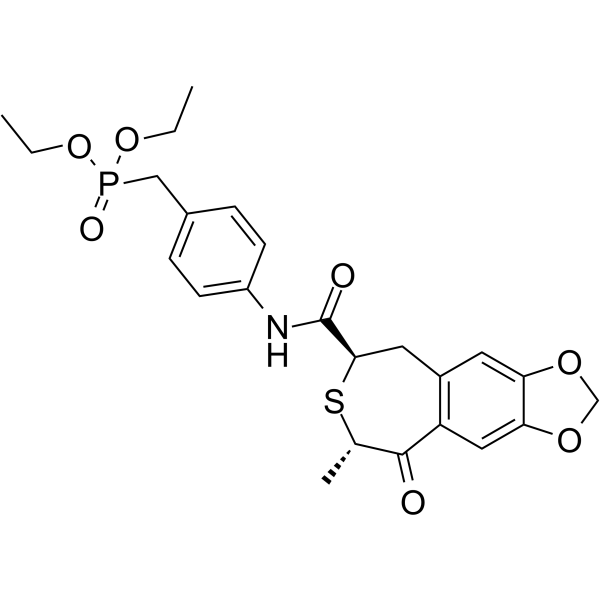 0 ImagesCat. No.: HY-100167CAS No.: 180185-61-9TAK-778 is a derivative of ipriflavone and has been shown to induce bone growth in in vitro and in vivo models.
-
Trilinolein-d5
 0 ImagesCat. No.: HY-128393S2Trilinolein-d5 is the deuterium labeled Trilinolein (HY-128393). Trilinolein is an orally active triglyceride that inhibits the PI3K/Akt, Ras/MEK/ERK signaling pathways, and MMP-2. Trilinolein can reduce oxidative stress, induce apoptosis, and inhibit cell migration. Trilinolein can be used in the research fields of cardiovascular disease, cerebrovascular disease (such as cerebral ischemia), and non-small cell lung cancer.
-
Swertiamarin (Standard)
 0 ImagesCat. No.: HY-N0807RCAS No.: 17388-39-5Swertiamarin (Standard) is the analytical standard of Swertiamarin. This product is intended for research and analytical applications. Swertiamarin is an orally active iridoid compound with hypoglycemic, hypolipidemic, anti rheumatic and antioxidant activities, which can be used in the research of diabetes and arthritis.



