



NF-κB
Nuclear factor-κB; Nuclear factor-kappaB
NF-κB (Nuclear factor kappa-light-chain-enhancer of activated B cells) is a protein complex that controls transcription of DNA. NF-κB is found in almost all animal cell types and is involved in cellular responses to stimuli such as stress, cytokines, free radicals, ultraviolet irradiation, oxidized LDL, and bacterial or viral antigens. NF-κB plays a key role in regulating the immune response to infection. Incorrect regulation of NF-κB has been linked to cancer, inflammatory, and autoimmune diseases, septic shock, viral infection, and improper immune development. NF-κB has also been implicated in processes of synaptic plasticity and memory. There are five proteins in the mammalian NF-κB family: NF-κB1, NF-κB2, RelA, RelB, c-Rel.
NF-κB Isoform Specific Products
All Product Categories
-
NF-κB Inhibitors
(1610)
View all products
-
NF-κB Agonists
(6)
View all products
-
NF-κB Antagonist
(1)
View all products
-
NF-κB Activators
(142)
View all products
-
NF-κB Modulators
(34)
View all products
-
NF-κB Inducers
(3)
View all products
-
NF-κB Degraders
(4)
View all products
-
NF-κB Controls
(7)
View all products
-
NF-κB Ligands
(2)
View all products
-
NF-κB Related Products (1943)
Related Products (1943)

-
Antibodies (32)
-
NF-κB Signaling Pathway
-
NF-κB Isoform Comparison
-
Trimebutine (Standard)
 0 ImagesTrimebutine (Standard) is the analytical standard of Trimebutine (HY-B0380). This product is intended for research and analytical applications. Trimebutine is a multi-target inhibitor and opioid receptor agonist with antimuscarinic activity. Trimebutine inhibits L-type Ca2+ channels and large-conductance calcium-activated potassium channels (BKCa channels), thereby inhibiting extracellular calcium influx and potassium ion efflux. Trimebutine also targets Toll-like receptors, inhibits Toll-like receptor 2/4/7/8/9 signals, and inhibits LPS-induced IRAK1 activation, as well as ERK1/2, JNK and NF-κB activation, thereby exerting anti-inflammatory effects. Trimebutine also induces tumor cell apoptosis by inhibiting the AKT/ERK pathway. Trimebutine also inhibits excessive contraction of smooth muscle and can be used in the study of gastrointestinal disorders such as irritable bowel syndrome (IBS).
-
Berberine
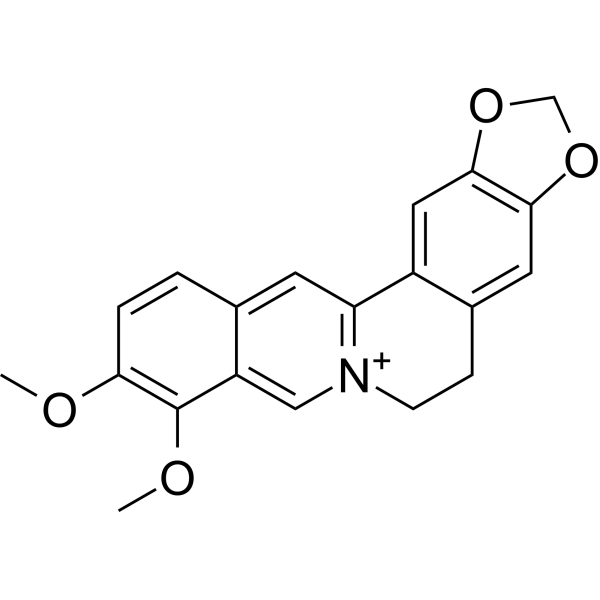 0 ImagesBerberine (Natural Yellow 18) is an alkaloid isolated from the Chinese herbal medicine Huanglian, as an antibiotic. Berberine (Natural Yellow 18) induces reactive oxygen species (ROS) generation and inhibits DNA topoisomerase. Berberine (Natural Yellow 18) has antineoplastic properties. The sulfate form (HY-N0716B) improves bioavailability.
-
Keracyanin chloride (Standard)
 0 ImagesCat. No.: HY-105935RCAS No.: 18719-76-1Synonyms: Cyanidin 3-rutinoside chloride (Standard); Cyanidin 3-O-rutinoside chloride (Standard); Sambucin chloride (Standard)Keracyanin (chloride) (Standard) is the analytical standard of Keracyanin (chloride). This product is intended for research and analytical applications. Keracyanin chloride inhibits NF-κB/FAK/MAPK signaling pathway. Keracyanin chloride exhibits antioxidant, anti-inflammatory and hypoglycemic effects, and is orally active.
-
Siegeskaurolic acid
 0 ImagesCat. No.: HY-138063CAS No.: 52645-97-3Siegeskaurolic acid is an orally active anti-inflammatory agent. Siegeskaurolic acid inhibits the productions of nitric oxide (NO), prostaglandin E(2) (PGE(2)), tumor necrosis factor-alpha (TNF-alpha) and the activationon of nuclear factor-kappaB .
-
Erioflorin
 0 ImagesCat. No.: HY-187654CAS No.: 27542-17-2Erioflorin is a sesquiterpene lactone compound originally isolated from plants of the Asteraceae family (such as Eriophyllum confertiflorum and species of the Podanthus genus). Erioflorin acts as a selective β-TrCP1 modulator. Erioflorin induces cell apoptosis by increasing intracellular reactive oxygen species (ROS) production and decreasing mitochondrial membrane potential, inhibits the NF-κB signaling pathway by blocking the phosphorylation of IκBα, and prevents the ubiquitination and degradation of the tumor suppressor Pdcd4 by inhibiting the interaction between Pdcd4 and the E3 ubiquitin ligase β-TrCP1. Erioflorin can be used in research related to breast cancer, colon cancer, advanced prostate cancer, and Chagas disease.
-
Saponarin (Standard)
 0 ImagesCat. No.: HY-N5083RCAS No.: 20310-89-8Saponarin (Standard) is the analytical standard of Saponarin (HY-N5083). This product is intended for research and analytical applications. Saponarin is an orally active flavonoid compound. Saponarin can be isolated from Gypsophila trichotoma. Saponarin inhibits ERK/p38, NF-κB and MAPK phosphorylation and activates AMPK. Saponarin reduces IL-1β and COX-2. Saponarin has antioxidant, anti-inflammatory, hepatoprotective, hypoglycemic and hypotensive effects. Saponarin improves sleep disorders.
-
Vindoline (Standard)
 0 ImagesVindoline (Standard) is an analytical standard of Vindoline (HY-N0687). This product is intended for research and analytical applications. Vindoline is an orally active vinca alkaloid. Vindoline can be extracted from the leaves of Catharanthus roseus. Vindoline has a weak inhibitory effect on the self-assembly of tubulin. Vindoline alleviates Apoptosis, inhibits p-p65 and p-ERK. Vindoline improves diabetes, bone loss, osteoarthritis, and kidney damage.
-
3'-Sialyllactose sodium (Standard)
 0 ImagesCat. No.: HY-108065ARCAS No.: 128596-80-5Synonyms: 3'-SL sodium (Standard)3'-Sialyllactose (sodium) (Standard) is the analytical standard of 3'-Sialyllactose (sodium). This product is intended for research and analytical applications. 3'-Sialyllactose (3'-SL) sodium is a prebiotic, maintains immune homeostasis and exerts anti-inflammatory and anti-arthritic effects. 3'-Sialyllactose sodium is an ordinary carbohydrate with the lowest toxicity rating, it can be used for the research of inflammation.
-
Cyclo(his-pro) TFA (Standard)
 0 ImagesCat. No.: HY-101402ARCAS No.: 936749-56-3Synonyms: Cyclohistidyl-proline TFA (Standard); Histidylproline diketopiperazine TFA (Standard)Cyclo(his-pro) (TFA) (Standard) is the analytical standard of Cyclo(his-pro) (TFA). This product is intended for research and analytical applications. Cyclo(his-pro) TFA (Cyclo(histidyl-proline) TFA) is an orally active cyclic dipeptide structurally related to tyreotropin-releasing hormone. Cyclo(his-pro) TFA could inhibit NF-κB nuclear accumulation. Cyclo(his-pro) TFA can cross the brain-blood-barrier and affect diverse inflammatory and stress responses.
-
(R)-(-)-Ibuprofen (Standard)
 0 ImagesSynonyms: (R)-Ibuprofen (Standard)(R)-(-)-Ibuprofen (Standard) is the analytical standard of (R)-(-)-Ibuprofen. This product is intended for research and analytical applications.
-
Wilforlide A (Standard)
 0 ImagesCat. No.: HY-N0476RCAS No.: 84104-71-2Synonyms: Regelide (Standard); Abruslactone A (Standard)Wilforlide A (Standard) is the analytical standard of Wilforlide A. This product is intended for research and analytical applications. Wilforlide A is a bioactive triterpene isolated from Tripterygium wilfordii Hook f. Wilforlide A has anti-inflammatory and immune suppressive effects.
-
Kuwanon G (Standard)
 0 ImagesCat. No.: HY-N4247RCAS No.: 75629-19-5Kuwanon G (Standard) is the analytical standard of Kuwanon G (HY-N4247). This product is intended for research and analytical applications. Kuwanon G is a flavonoid compound and an antagonist of the bombesin receptor. Kuwanon G has multiple activities such as bactericidal, anti-tumor, anti-inflammatory, antioxidant, anti-atherosclerotic, and neuroprotective effects. Kuwanon G exhibits strong antibacterial activity against oral pathogens, especially cariogenic bacteria and periodontal pathogens. Kuwanon G can induce apoptosis and inhibit proliferation, migration, and invasion of tumor cells. Kuwanon G can be used in the research of diseases such as gastric cancer and atherosclerosis.
-
Berkeleyacetal C
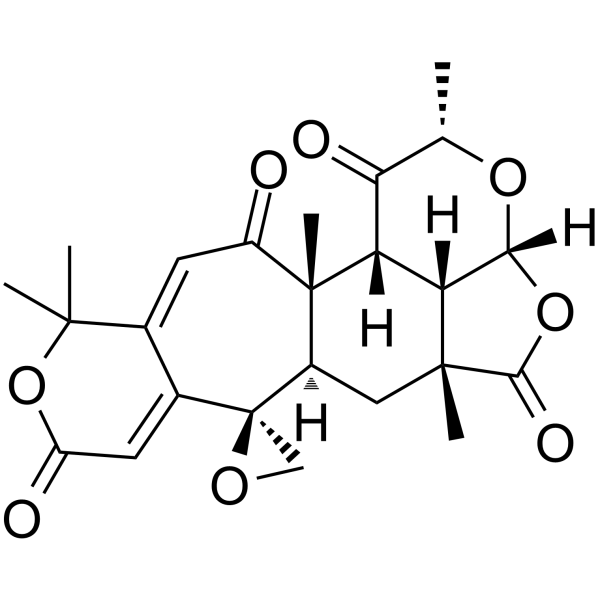 0 ImagesCat. No.: HY-N10175CAS No.: 959772-67-9keleyacetal C, a meroterpenoid compound with anti-inflammatory effects via inhibiting NF-κB, ERK1/2 and IRF3 signaling pathways. Berkeleyacetal C significantly inhibits the expression of iNOS and the following NO production by macrophages. Berkeleyacetal C inhibits expression and secretion of key pro-inflammatory factors and chemokines (TNF-α, IL-6, IL-1β, MIP-1α, and MCP-1). Berkeleyacetal C also inhibits activation of neutrophils and reactive oxygen species (ROS) production. Berkeleyacetal C can be used for the study of inflammatory disorders.
-
7,4'-Dimethoxy-3-hydroxyflavone
 0 ImagesCat. No.: HY-174829CAS No.: 13198-99-77,4'-Dimethoxy-3-hydroxyflavone is an orally active PAR4 antagonist. 7,4'-Dimethoxy-3-hydroxyflavone inhibits PAR4-mediated human platelet aggregation with an IC50 of 1.4 μM. 7,4'-Dimethoxy-3-hydroxyflavone inhibits PAR4-mediated human platelet aggregation and PAR4 signaling pathways, including NF-κB, Ca2+/protein kinase C, Akt, ERK and p38. 7,4'-Dimethoxy-3-hydroxyflavone prevents vascular PAR4 expression, endothelial dysfunction and ameliorates oxidative stress in Streptozotocin (STZ) (HY-13753)-induced diabetic mice. 7,4'-Dimethoxy-3-hydroxyflavone prevents thrombosis in mice without affecting bleeding time[1][2].
-
Olprinone (Standard)
 0 ImagesCat. No.: HY-14254ARCAS No.: 106730-54-5Synonyms: Loprinone (Standard)Olprinone (Loprinone) Standard is the analytical standard of Olprinone (HY-14254A). This product is intended for research and analytical applications. Olprinone (Loprinone) is a potent and selective phosphodiesterase 3 (PDE3) inhibitor, with IC50 values of 150, 100, 0.35, and 14 μM against PDE1, PDE2, PDE3, and PDE4, respectively. Olprinone exerts comprehensive protective effects including anti-inflammatory, antioxidant, and anti-apoptotic activities by elevating intracellular cAMP levels and inhibiting the NF-κB and MAPK signaling pathways. Olprinone can be used in studies related to lung injury, spinal cord injury, heart failure, myocardial ischemia-reperfusion injury, and cerebral ischemic injury.
-
PTP1B-IN-1 (Standard)
 0 ImagesCat. No.: HY-10704RCAS No.: 612530-44-6Synonyms: PTP1B inhibitor (Standard)PTP1B-IN-1 (Standard) (PTP1B inhibitor (Standard)) is the analytical standard of PTP1B-IN-1 (HY-10704). This product is intended for research and analytical applications. PTP1B-IN-1 (Compound 7a) is a small molecule inhibitor of PTP1B with an IC50 value of 1.6 mM. It is often used as the mother core for derivatives of analogues.
-
Bezisterim (Standard)
 0 ImagesCat. No.: HY-108039RCAS No.: 1001100-69-1Synonyms: HE 3286 (Standard); NE-3107 (Standard)Bezisterim (Standard) is the analytical standard of Bezisterim (HY-108039). This product is intended for research and analytical applications. Bezisterim (HE 3286; NE-3107) is a synthetic derivative of a natural anti-inflammatory steroid, β-AET. Bezisterim is an orally active partial NF-κB inhibitor. HE3286 reduces proinflammatory signals, including IL-6 and matrix metallopeptidase 3. Bezisterim freely penetrates the blood brain barrier in mice. Bezisterim can be used for the research of the ulcerative colitis, arthritis, experimental autoimmune encephalomyelitis. Bezisterim is a click chemistry reagent, it contains an Alkyne group and can undergo copper-catalyzed azide-alkyne cycloaddition (CuAAc) with molecules containing Azide groups.
-
Losmapimod (Standard)
 0 ImagesSynonyms: GSK-AHAB (Standard); GW856553X (Standard); SB856553 (Standard)Losmapimod (GSK-AHAB; GW856553X) (Standard) is the analytical standard of Losmapimod (HY-10402). This product is intended for research and analytical applications. Losmapimod (GSK-AHAB; GW856553X) is an orally active p38α/β MAPK inhibitor, with pKi values of 8.1 and 7.6 for p38α and p38β, respectively. Losmapimod reduces DUX4 expression, thus exerting efficacy in facioscapulohumeral muscular dystrophy. By inhibiting MAPK/NF-κB, Losmapimod reduces apoptosis of epileptiform hippocampal neurons, and exhibits anti-allodynia and anti-hyperalgesic activities. Losmapimod blocks the entry and fusion of Lassa fever virus (LASV). Losmapimod overcomes tyrosine kinase inhibitor resistance in non-small cell lung cancer (NSCLC). Losmapimod inhibits myocardial senescence and inflammation, and possesses cardioprotective activity against cardiotoxicity.
-
Talaromyketide B
 0 ImagesCat. No.: HY-N15347Talaromyketide B is a polyketide compound with anti-inflammatory activity, discovered in the soil bacterium Talaromyces sp. KYS-41. Talaromyketide B inhibits the activation of the NF-κB and MAPK signaling pathways and dose-dependently suppresses pro-inflammatory cytokines, such as IL-1β, IL-6, IL-10, and TNF-α, as well as the transcriptional activity of inflammatory mediators, including iNOS and COX-2. Talaromyketide B holds potential for research in the fields of immunity and inflammatory diseases.
-
Dihydroparadol
 0 ImagesCat. No.: HY-184337CAS No.: 143111-84-6Dihydroparadol is a iNOS inhibitor with an IC50 of 7.24 μM, and it is found in ginger. Dihydroparadol partially inhibits the catalytic activity of iNOS, blocks the nuclear translocation of NF-κB p65, reduces NF-κB activity, and attenuates lipopolysaccharide-induced degradation of IκB-α, thereby inhibiting NF-κB-mediated iNOS gene expression and protein production. Dihydroparadol inhibits lipopolysaccharide-induced nitric oxide production in macrophages and exhibits anti-inflammatory activity. Dihydroparadol increases ABCA1 protein abundance by elevating mRNA levels and reducing proteasomal degradation, and also increases ABCG1 protein abundance by enhancing protein stability. Dihydroparadol promotes cholesterol efflux from cholesterol-loaded macrophages via apolipoprotein A1-mediated and plasma-mediated pathways. Dihydroparadol inhibits PDGF-induced vascular smooth muscle cell proliferation, shows no cytotoxicity to vascular smooth muscle cells within the tested concentration range, and does not interfere with endothelial cell proliferation. Dihydroparadol can be used in the research of inflammatory diseases, atherosclerosis and cardiovascular diseases.




