



PAI-1
Plasminogen activator inhibitor-1
PAI-1 (Plasminogen activator inhibitor-1, also known as SERPINE1) is a member of serine protease inhibitor (SERPIN) family that acts as the primary inhibitor of two main mammalian plasminogen activators, urinary-type (uPA) and tissue-type (tPA). As the main negative regulator of plasminogen activation, PAI-1 is an essential factor in regulation of the physiological balance between thrombosis and fibrinolysis. PAI-1 is a labile molecule that exists in four different forms: active, latent, cleaved and target bound form.
High PAI-1 levels are associated with many cardiovascular diseases. PAI-1 also plays important roles in cell migration, adhesion, senescence, cancer invasion and tissue remodeling. Moreover, the PAI-1 level was extensively validated as the biological prognostic factor in breast cancer and as a marker of a poor prognosis in other cancers. PAI-1 is also one of the plasma biomarkers associated with nonalcoholic fatty liver disease. These associations have made PAI-1 an attractive pharmaceutical target.
All Product Categories
-
PAI-1 Related Products (84)
Related Products (84)

-
Recombinant Proteins (4)
-
Antibodies (4)
-
TM5441 sodium
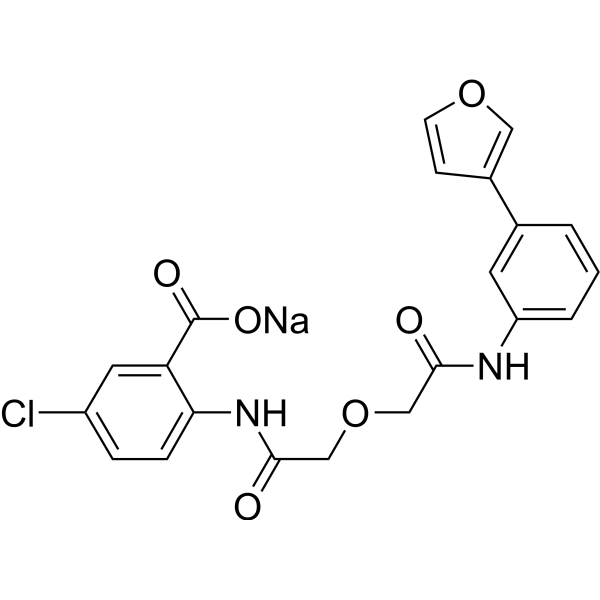 0 ImagesCat. No.: HY-101761ACAS No.: 2319722-53-5TM5441 is an orally bioavailable inhibitor of plasminogen activator inhibitor-1 (PAI-1), has IC50 values between 13.9 and 51.1 μM. TM5441 induces intrinsic apoptosis in several human cancer cell lines. TM5441 attenuates Nω-nitro-l-arginine methyl ester-induced cardiac hypertension and vascular senescence.
-
(E)-UK122 TFA
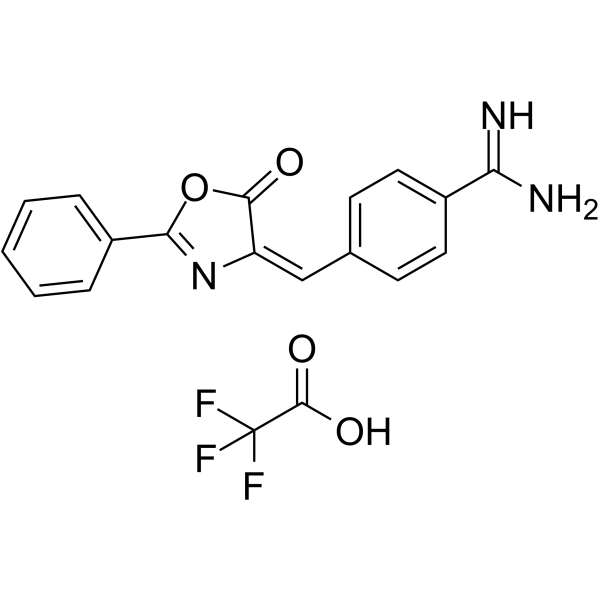 0 ImagesCat. No.: HY-135715CAS No.: 1186653-73-5(E)-UK122 TFA is the isomer of UK122 TFA. UK122 is a potent and selective urokinase-type plasminogen activator (uPA) inhibitor with an IC50 of 0.2 μM.
-
Pellitorine (Standard)
 0 ImagesCat. No.: HY-N3097RCAS No.: 18836-52-7Pellitorine (Standard) is the analytical standard of Pellitorine (HY-N3097). Pellitorine is a bioactive natural amide compound. Pellitorine can competitively antagonize the activation of TRPV1 by Capsaicin (HY-10448), thereby reducing pain signal transmission. Pellitorine improves cognitive dysfunction by upregulating the BDNF-ERK1/2-CREB and Nrf2-HO-1 pathways. Pellitorine exerts anti-inflammatory and anti-sepsis effects by inhibiting the release of high mobility group protein B1 (HMGB1) and the expression of RAGE/TLR4. Pellitorine exerts its antithrombotic effect by prolonging the clotting time, inhibiting the activity of clotting factors and thrombin. Pellitorine inhibits lipid peroxidation and resists ferroptosis by upregulating GPX4 and DHODH. Pellitorine kills Aedes aegypti mosquito larvae by inhibiting V-type H⁺-ATPase and aquaporin 4 (AaAQP4). Pellitorine exhibits anti-cancer activity (e.g., leukemia and breast cancer) and has inhibitory effects on certain bacteria.
-
H-Gly-Glu-pNA
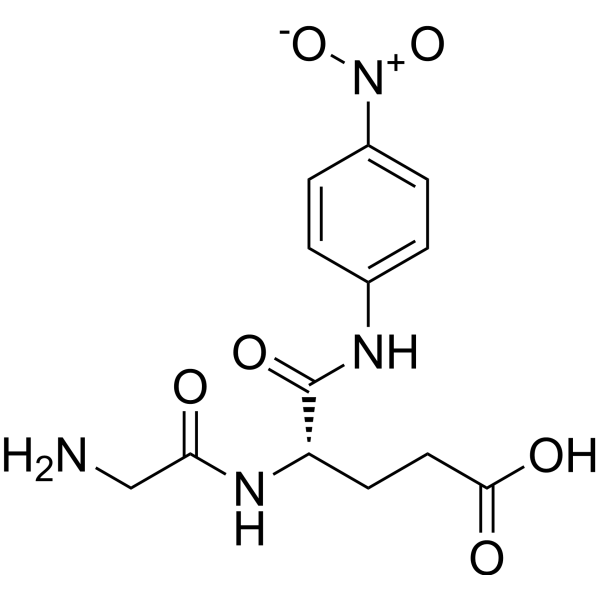 0 ImagesCat. No.: HY-P4254CAS No.: 201735-59-3H-Gly-Glu-pNA is a chromogenic peptide substrate that can be widely used in enzymatic analysis, including trypsin and urokinase-type plasminogen activator (uPA).
-
GGACK hydrochloride
 0 ImagesCat. No.: HY-137495AGGACK (H-Glu-Gly-Arg-CMK) hydrochloride is an irreversible substrate-like serine protease urokinase-type plasminogen activator (uPA) inhibitor.
-
PAI-1
 0 ImagesCat. No.: HY-P11413CAS No.: 139446-70-1PAI-1 is a serine protease inhibitor (SERPIN). PAI-1 binds to and irreversibly inhibits uPA, tPA and furin; it also interacts with vitronectin, α1-acid glycoprotein, CRT, TLR4, proteasome α-3 subunit, uPAR, LRP1, Integrin αvβ3 and thrombin. PAI-1 regulates fibrinolysis, extracellular matrix turnover, cell migration, angiogenesis, inflammatory response and tissue remodeling; it mediates epithelial-mesenchymal transition (EMT)/endothelial-mesenchymal transition (EndMT), apoptosis and thrombus stabilization. PAI-1 can be used in research related to sepsis, acute lung injury, cardiovascular diseases, tissue fibrosis, diabetic nephropathy, obstructive nephropathy and non-insulin-dependent diabetes mellitus.
-
APC8696
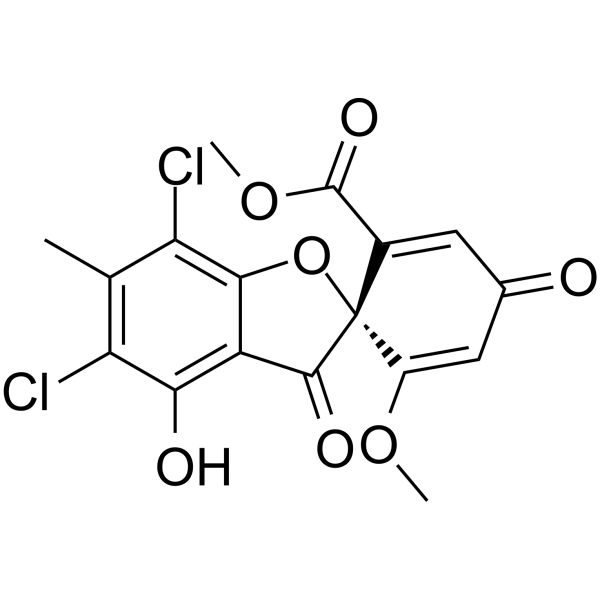
 0 ImagesCat. No.: HY-155607CAS No.: 277312-42-2APC8696 is a reversible uPA inhibitor, with a Ki of 8 nM.
-
ZK824859
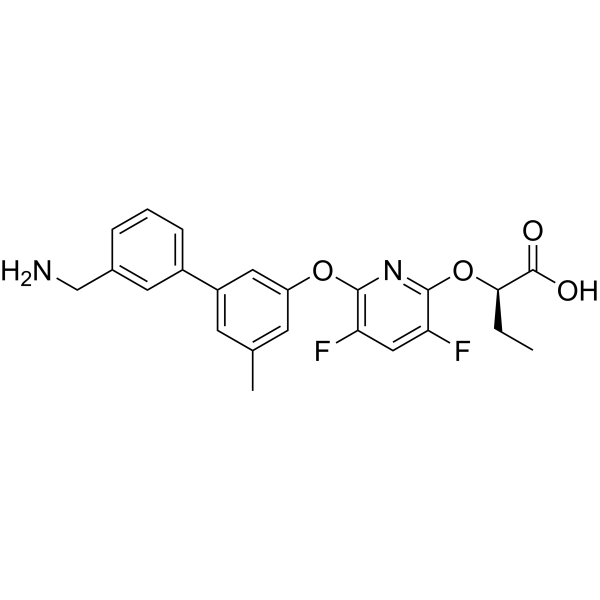 0 ImagesCat. No.: HY-114330CAS No.: 2271122-53-1ZK824859 is an oral available and selective urokinase plasminogen activator (uPA) inhibitor with IC50s of 79 nM, 1580 nM and 1330 nM for human uPA, tPA, and plasmin, respectively.
-
JNK3-IN-11
 0 ImagesCat. No.: HY-181993JNK3-IN-11 is a selective JNK3 inhibitor with an IC50 of 2.08 nM. JNK3-IN-11 binds to the JNK3 ATP-binding pocket, forming conserved hydrogen bonds with Met149 and a water-mediated hydrogen bond with Lys93. JNK3-IN-11 suppresses TGF-β1-induced c-Jun phosphorylation, reduces profibrotic markers COL1A1 and PAI-1, restores E-cadherin expression, and has protection against podocyte injure. JNK3-IN-11 can be used for the research of chronic kidney disease.
-
28-O-β-D-Glucopyranosyl pomolic acid
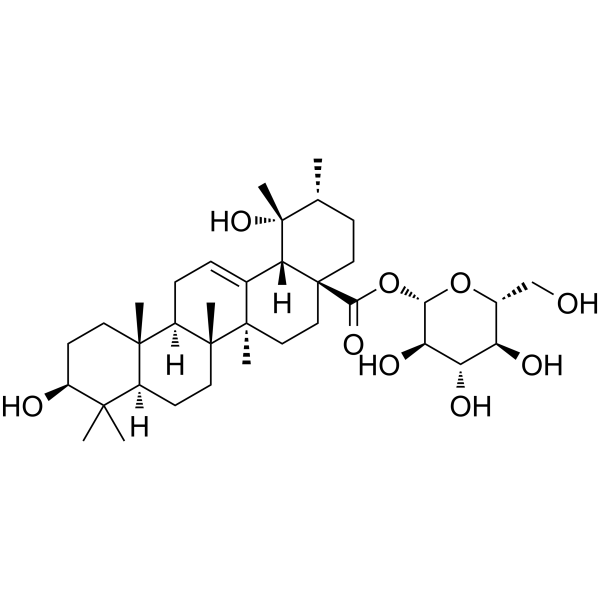 0 ImagesCat. No.: HY-N1533CAS No.: 83725-24-028-O-β-D-Glucopyranosyl pomolic acid is a urokinase plasminogen activator inhibitor with IC50 at 37.82 μM.
-
AS3288802
 0 ImagesCat. No.: HY-P992313
-
6-Aminocaproic acid-d10 hydrochloride
 0 ImagesCat. No.: HY-W701541CAS No.: 1246819-49-7Synonyms: EACA-d10 hydrochloride; Epsilon-Amino-n-caproic Acid-d10 hydrochloride; 6-Aminohexanoic acid-d10 hydrochloride6-Aminocaproic acid-d10 hydrochloride (EACA-d10 hydrochloride; Epsilon-Amino-n-caproic Acid-d10 hydrochloride; 6-Aminohexanoic acid-d10 hydrochloride) is the deuterium labeled 6-Aminocaproic acid hydrochloride (HY-B0236A). 6-Aminocaproic acid hydrochloride, a monoamino carboxylic acid, is a potent and orally active inhibitor of plasmin and plasminogen. 6-Aminocaproic acid is a potent antifibrinolytic agent. 6-Aminocaproic acid prevents clot lysis through the competitive binding of lysine residues on plasminogen, inhibiting plasmin formation and reducing fibrinolysis. 6-Aminocaproic acid can be used for the research of bleeding disorders.


-
Vernodalin
 0 ImagesCat. No.: HY-N19029CAS No.: 21871-10-3Vernodalin is an orally active, cytotoxic sesquiterpene lactone with a Kd value of 9.55 μM for p38 MAPK. Vernodalin downregulates the expression of phosphorylated ERK, JNK, AKT, PI3K, mTOR, p38MAPK, FAK, MMP-2, MMP-9, and uPA, while upregulates the expression of TIMP-1 and TIMP-2. Vernodalin increases ROS production, upregulates the expression of Bax and caspase 3, downregulates the expression of Bcl-2, and induces apoptosis (apoptosis), oxidative stress response and cell cycle arrest. Vernodalin inhibits the proliferation, adhesion and metastasis of cancer cells. Vernodalin enhances the activity of VEGF-B, AMPK and eNOS signaling pathways. Vernodalin alleviates myocardial injury and restores hemodynamic parameters. Vernodalin inhibits the growth of Trypanosoma brucei rhodesiense. Vernodalin can be used in research related to various cancers including gastric cancer, colorectal cancer and lung cancer, as well as African human trypanosomiasis and myocardial infarction.
-
Flavanone (Standard)
 0 ImagesFlavanone (Standard) is the analytical standard of Flavanone. This product is intended for research and analytical applications. Flavanone is a naturally occurring flavone. Flavanone has inhibitory activity for human estrogen synthetase (aromatase). lavanone is the inhibitor for ERK/p38/NF-κB signaling pathway. Flavanone exhibits oral activity and antitumor efficacy.
-
D-Val-Leu-Arg-pNA
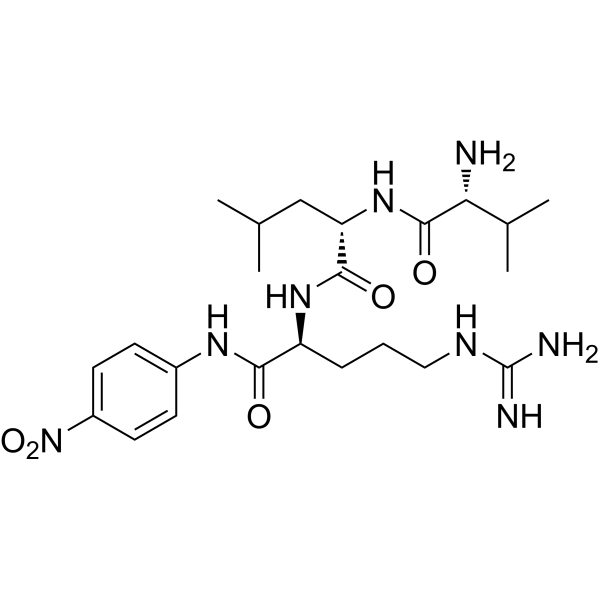 0 ImagesCat. No.: HY-114150CAS No.: 64816-14-4D-Val-Leu-Arg-pNA is a glandular kininoreleasing enzyme substrate that also acts as a substrate for tissue-type plasminogen activator (t-PA) with no apparent affinity for fibrin.
-
MEDI-579
 0 ImagesCat. No.: HY-P992410MEDI-579 is a fully human monoclonal antibody against PAI-1, with a KD value of 6 pM for human PAI-1 and 105 pM for rat PAI-1. MEDI-579 restores renal plasmin activity and inhibits PAI-1-mediated intracellular signal transduction. MEDI-579 reduces albuminuria, glomerulosclerosis severity, TGF-β1 expression level, and phosphorylated Smad2 level induced in diabetic mice. MEDI-579 decreases the levels of active PAI-1 in plasma and kidneys, and increases plasma plasmin level in a mouse model of lupus nephritis. MEDI-579 can be used in research related to diabetic nephropathy and lupus nephritis. The recommended isotype control is human IgG1 kappa (HY-P99001).
-
BT-114143
 0 ImagesCat. No.: HY-173272CAS No.: 2796343-04-7BT-114143 is a plasminogen activation inhibitor, with an IC50 of 8.42 μM. BT-114143 can be used in the research of hemorrhagic diseases caused by hyperfibrinolysis, such as traumatic bleeding, severe menstrual bleeding, postpartum hemorrhage, and complications of hemophilia.




