



PI3K
Phosphoinositide 3-kinase
PI3K (Phosphoinositide 3-kinase), via phosphorylation of the inositol lipid phosphatidylinositol 4,5-bisphosphate (PI(4,5)P2), forms the second messenger molecule phosphatidylinositol (3,4,5)-trisphosphate (PI(3,4,5)P3) which recruits and activates pleckstrin homology domain containing proteins, leading to downstream signalling events crucial for proliferation, survival and migration. Class I PI3K enzymes consist of four distinct catalytic isoforms, PI3Kα, PI3Kβ, PI3Kδ and PI3Kγ.
There are three major classes of PI3K enzymes, being class IA widely associated to cancer. Class IA PI3K are heterodimeric lipid kinases composed of a catalytic subunit (p110α, p110β, or p110δ; encoded by PIK3CA, PIK3CB, and PIK3CD genes, respectively) and a regulatory subunit (p85).
The PI3K pathway plays an important role in many biological processes, including cell cycle progression, cell growth, survival, actin rearrangement and migration, and intracellular vesicular transport.
PI3K Isoform Specific Products
-
PI3Kα
(235)
View all products
-
PI3Kβ
(161)
View all products
-
PI3Kγ
(181)
View all products
-
PI3Kδ
(201)
View all products
-
PI3KC2α
(8)
View all products
-
PI3KC2β
(12)
View all products
-
PI3KC2γ
(4)
View all products
-
Vps34
(24)
View all products
-
PI3K
(661)
View all products
-
PI3KC3
(1)
View all products
-
p120γ
(1)
View all products
All Product Categories
-
PI3K Inhibitors
(859)
View all products
-
PI3K Agonists
(9)
View all products
-
PI3K Antagonist
(1)
View all products
-
PI3K Activators
(129)
View all products
-
PI3K Modulators
(23)
View all products
-
PI3K Inducers
(3)
View all products
-
PI3K Degraders
(7)
View all products
-
PI3K Controls
(4)
View all products
-
PI3K Substrate
(1)
View all products
-
PI3K Ligands
(9)
View all products
-
PI3K Related Products (1108)
Related Products (1108)

-
Antibodies (16)
-
PI3K Signaling Pathway
-
PI3K Isoform Comparison
-
Umckalin
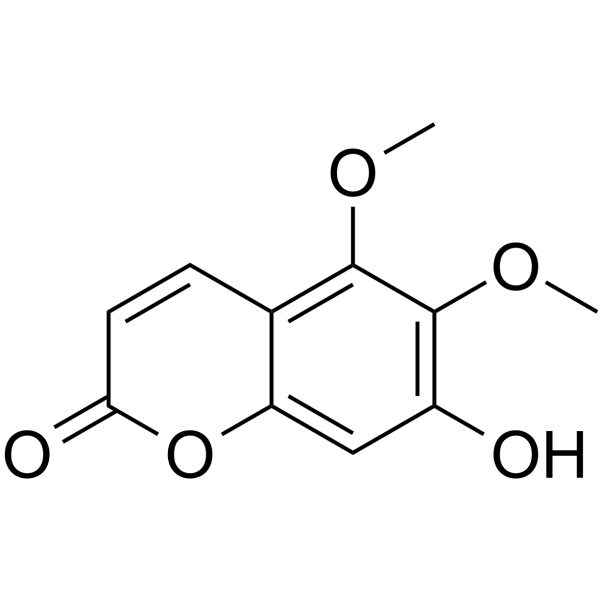 0 ImagesCat. No.: HY-N8712CAS No.: 43053-62-9
-
PI3K-IN-23
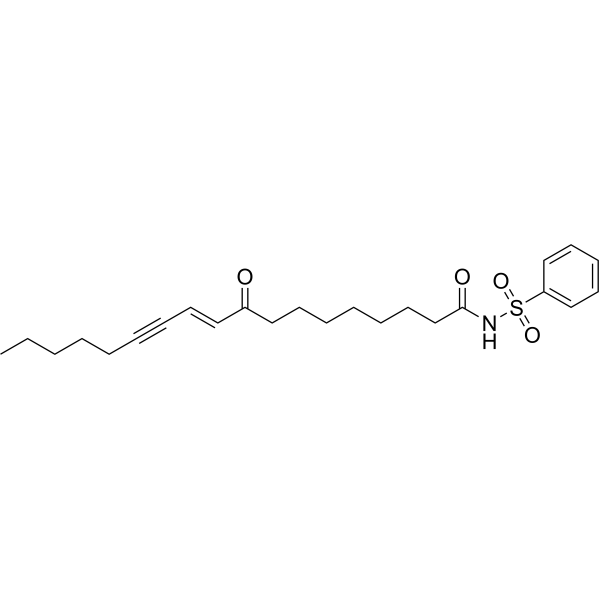 0 ImagesCat. No.: HY-132898CAS No.: 2755651-17-1PI3K-IN-23 is an (E)-9-oxooctadec-10-en-12-ynoic acid analogue to promote glucose uptake with an EC50 value of 7.00 μM. PI3K-IN-23 is a click chemistry reagent, it contains an Alkyne group and can undergo copper-catalyzed azide-alkyne cycloaddition (CuAAc) with molecules containing Azide groups.
-
EpskA21
 0 ImagesCat. No.: HY-161858EpskA21 is an inhibitor for PI3K/AKT signaling pathway, and inhibits the proliferation of cancer cells MCF-7, A549, MIA-PaCa-2, Panc-1 and HepG2, with IC50 of 1.3-7.24 μM. EpskA21 inhibits the cell migration, arrests the cell cycle at G2/M (MCF-7) and S (MIA-PaCa-2) phase, and induces apoptosis in MCF-7 and MIA-PaCa-2. EpskA21 causes the mitochondrial dysfunction.
-
D-Allose (Standard)
 0 ImagesCat. No.: HY-128741RCAS No.: 2595-97-3D-Allose (Standard) is the analytical standard of D-Allose (HY-128741). This product is intended for research and analytical applications. D-Allose exhibits antitumor activity against various cancer cells. D-Allose scavenges reactive oxygen species (ROS) and reduces oxidative stress damage. D-Allose exhibits anti-inflammatory and neuroprotective through inhibition of TLR4/PI3K/AKT signaling pathway. D-Allose exhibits antihypertensive, cryoprotective, and anti-osteoporotic activities.
-
Brevianamide F (Standard)
 0 ImagesCat. No.: HY-100385RCAS No.: 38136-70-8Synonyms: Cyclo(L-Pro-L-Trp) (Standard)Rebaudioside C (Standard) is the analytical standard of Rebaudioside C. This product is intended for research and analytical applications. Rebaudioside C (Dulcoside B) is a natural sweetener that can be used in controlled diets for diabetic patients.
-
WNY1613
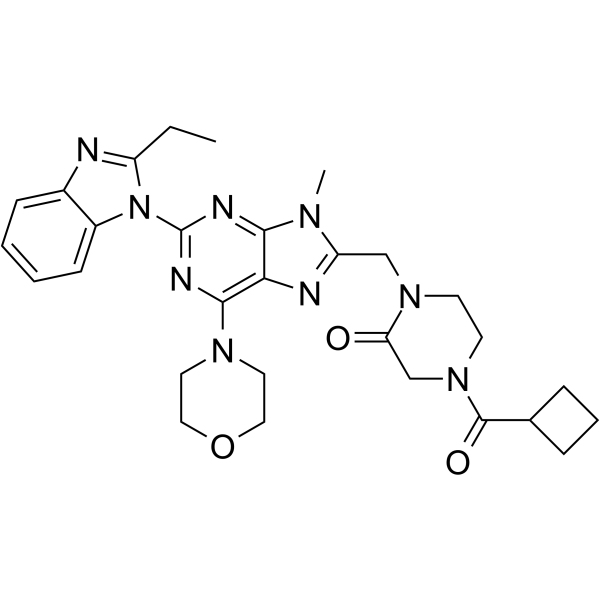 0 ImagesCat. No.: HY-147792CAS No.: 2650546-39-5WNY1613 is a potent and selective PI3Kδ inhibitor with piperazinone-containing purine scaffold. WNY1613 induces cancer cell apoptosis and inhibits the phosphorylation of PI3K downstream components in NHL cell lines. WNY1613 exhibits anti-NHL activity in vitro and in vivo.
-
Vernodalin
 0 ImagesCat. No.: HY-N19029CAS No.: 21871-10-3Vernodalin is an orally active, cytotoxic sesquiterpene lactone with a Kd value of 9.55 μM for p38 MAPK. Vernodalin downregulates the expression of phosphorylated ERK, JNK, AKT, PI3K, mTOR, p38MAPK, FAK, MMP-2, MMP-9, and uPA, while upregulates the expression of TIMP-1 and TIMP-2. Vernodalin increases ROS production, upregulates the expression of Bax and caspase 3, downregulates the expression of Bcl-2, and induces apoptosis (apoptosis), oxidative stress response and cell cycle arrest. Vernodalin inhibits the proliferation, adhesion and metastasis of cancer cells. Vernodalin enhances the activity of VEGF-B, AMPK and eNOS signaling pathways. Vernodalin alleviates myocardial injury and restores hemodynamic parameters. Vernodalin inhibits the growth of Trypanosoma brucei rhodesiense. Vernodalin can be used in research related to various cancers including gastric cancer, colorectal cancer and lung cancer, as well as African human trypanosomiasis and myocardial infarction.
-
MEK/PI3K-IN-1
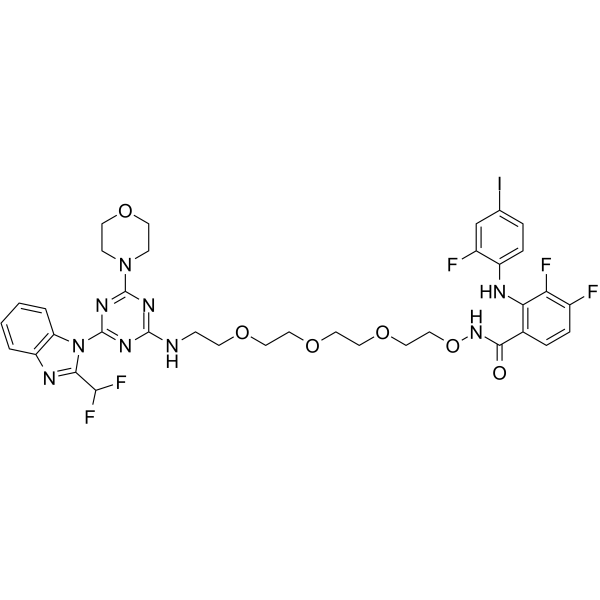 0 ImagesCat. No.: HY-144692CAS No.: 2281803-28-7
-
HYS-072
 0 ImagesCat. No.: HY-172175HYS-072 is an orally active derivative of chrysin (HY-14589) with antitumor activity. HYS-072 induces apoptosis and autophagy by inhibiting the PI3K/AKT/mTOR signaling pathway and suppresses tumor growth in vivo in xenograft models by modulating autophagy-related pathways. HYS-072 can be used in the research of triple-negative breast cancer.
-
PI3K-IN-49
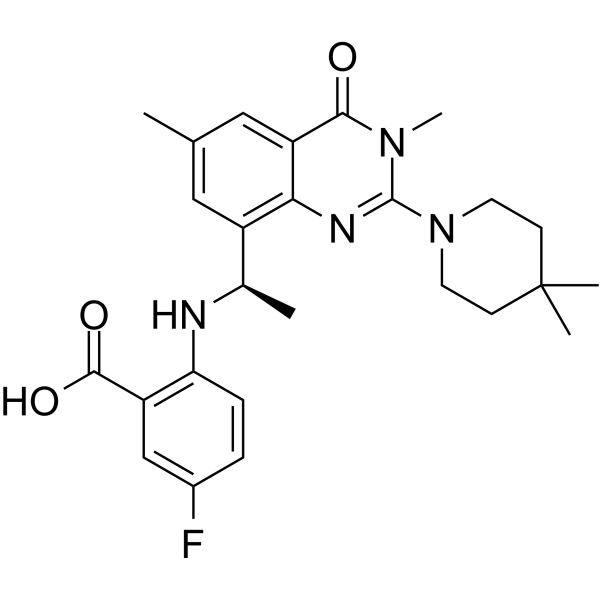 0 ImagesCat. No.: HY-160282CAS No.: 2922415-69-6PI3K-IN-49 is a potent PI3K inhibitor. PI3K-IN-49 shows antiproliferative activity for Avg T-47D and Avg SKBR3 cells (WO2023239710A1; example 29).
-
Anticancer agent 271
 0 ImagesCat. No.: HY-173367Anticancer agent 271 (compound 5C) has antiproliferative activity against lung (A549), colon (Caco-2) cancer cell lines, and human lung fibroblast (WI38) with an IC50 value of 9.18 μM on A549 cells. Anticancer agent 271 downregulates PI3K and mTOR gene expression that can be used for cancer research.
-
PI3K/mTOR-IN-22
 0 ImagesCat. No.: HY-183327PI3K/mTOR-IN-22 is an orally active PI3K/mTOR kinase dual inhibitor with IC50 values of 400.5 nM and 8.2 nM. PI3K/mTOR-IN-22 downregulates phosphorylation of the AKT and mTOR, upregulates pro-apoptotic proteins Bax and caspase-3 and downregulates anti-apoptotic protein Bcl-2. PI3K/mTOR-IN-22 exhibits antiproliferative activity against cancer cells, induces apoptosis and ROS production, and reduces mitochondrial membrane potential. PI3K/mTOR-IN-22 exhibits antitumor activity in breast cancer mice models.
-
SRX3305
 0 ImagesCat. No.: HY-182671CAS No.: 2409965-28-0SRX3305 is an BTK/PI3K/BRD4 inhibitor with IC50s of 6.5 nM, 15 nM, and 4 nM toward BTK, PI3Kɑ and PI3Kδ, respectively. SRX3305 attenuates chronic lymphocytic leukemia (CLL) and mantle cell lymphoma (MCL) cell proliferation and promotes apoptosis in a dose-dependent fashion. SRX3305 yields potent anti-tumor effects but spares healthy bystander cells. SRX3305 inhibits the activation-induced proliferation of primary CLL cells in vitro and effectively blocks microenvironment-mediated survival signals. SRX3305 blocks CLL cell migration toward CXCL-12 and CXCL-13. SRX3305 maintains its anti-tumor effects in Ibrutinib (HY-10997)-resistant CLL cells. SRX3305 can be used for research in CLL, diffuse large B-cell lymphoma (DLBCL) and MCL.
-
COH-19
 0 ImagesCat. No.: HY-184167COH-19 is a potent mTOR inhibitor. COH-19 binds to the ATP-binding pocket of mTOR, reduces mTOR protein levels, and suppresses the PI3K/Akt/mTOR signaling pathway. COH-19 induces apoptosis via the mitochondrial pathway. COH-19 causes G0/G1 phase cell cycle arrest and suppresses cancer cell proliferation. COH-19 can be used for the research of breast cancer.
-
BYBC-1
 0 ImagesCat. No.: HY-181284CAS No.: 2563902-57-6BYBC‑1 is a selective G4‑RNA‑targeting ligand with high affinity forKRAS and NRAS G4‑RNAs (Kd = 0.05-0.28 μM). BYBC‑1 stabilizes G4‑RNA structures in KRAS and NRAS mRNA, blocks thePI3K/AKT and MAPK/ERK pathways, activates the DNA damage response (DDR), suppresses energy metabolism, and induces S‑phase arrest and apoptosis. BYBC‑1 exhibits high selectivity over non‑malignant fibroblasts and significantly inhibits the growth of HCT‑116 xenograft tumors in vivo. BYBC‑1 can be used for the study of colorectal cancer.
-
CDK8-IN-19
 0 ImagesCat. No.: HY-176282CDK8-IN-19 (Compound 3d) is a CDK8 inhibitor with an IC50 of 25.08 nM. CDK8-IN-19 has a broad-spectrum anticancer activity, such as leukemia, melanoma and breast cancer, without significant cytotoxic effect on the normal Vero cells (mean IC50s of 2.87, 3.65, 3.79 and 45.48 μM, respectively).
-
Kukoamine B-d5 dihydrochloride
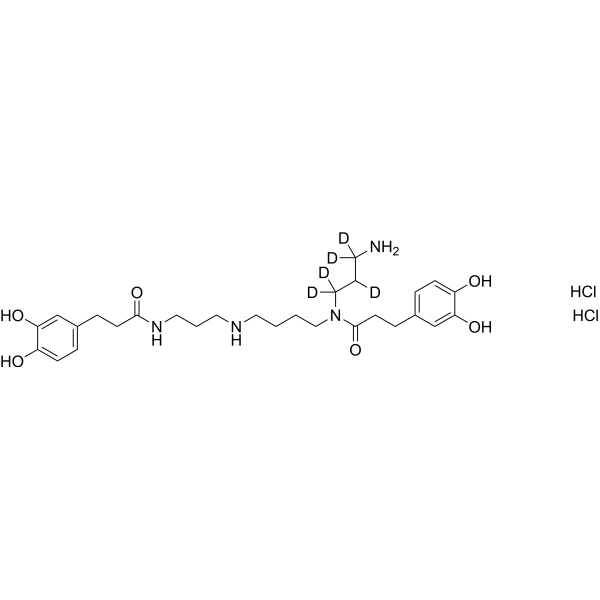 0 ImagesCat. No.: HY-N2393SKukoamine B, a spermine alkaloid, is a potent dual LPS and CpG DNA inhibitor with Kd values of 1.23 µM and 0.66 µM, respectively. Kukoamine B exerts anti-inflammatory, anti-diabetic, anti-oxidant, anti-osteoporotic and neuroprotective effects. Kukoamine B has the potential for the study of sepsis. .
-
Taurolithocholic acid-d4-1 sodium
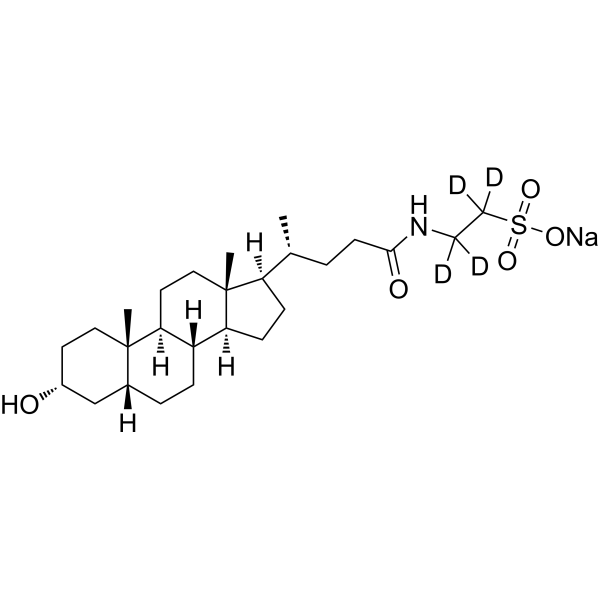 0 ImagesCat. No.: HY-113308AS2Taurolithocholic acid-d4-1 (sodium) is the deuterium labeled Taurolithocholic acid. Taurolithocholic acid sodium is an orally active bile acid and antiviral agent. Taurolithocholic acid sodium upregulates FADS2 by activating the TGR5-PI3K/AKT-SREBP2 signaling axis, inhibits SFTSV-induced ferroptosis, viral replication and viral entry of HBV/HDV, while reducing the release of IL-1β, lipid ROS and LDH. While exerting antiviral protective effects, Taurolithocholic acid sodium also stimulates the recycling of hepatocellular membrane transporters, impairs canalicular bile acid secretion function, and induces hepatocyte cholestasis, apoptosis and acute hepatocellular injury. Taurolithocholic acid sodium serves as an experimental model compound for hepatocellular cholestasis. At concentrations ≤200 μM, Taurolithocholic acid sodium shows no cytotoxicity and does not activate the interferon pathway. Taurolithocholic acid sodium not only protects mice from lethal SFTSV infection but also is suitable for studies related to severe fever with thrombocytopenia syndrome and cholestasis.
-
FASN-IN-8
 0 ImagesCat. No.: HY-181801FASN-IN-8 is a fatty acid synthase (FASN) inhibitor. FASN-IN-8 inhibits FASN-mediated de novo lipogenesis. FASN-IN-8 blocks PI3K/AKT pathway activation, inhibits cancer cells proliferation, migration and invasion. FASN-IN-8 induces apoptosis and ROS production. FASN-IN-8 can be used for the research of hepatocellular carcinoma.
-
Astringin (Standard)
 0 ImagesCat. No.: HY-N4093RCAS No.: 29884-49-9Synonyms: trans-Astringin (Standard)Astringin (trans-Astringin) (Standard) is the analytical standard of Astringin (HY-N4093). This product is intended for research and analytical applications. Astringin (trans-Astringin) is an orally active natural flavonoid compound. Astringin can inhibit the production of oxidative stress, inflammatory factors, etc. Astringin has multiple activities such as anti-oxidation, anti-inflammation, and anti-apoptosis. Astringin is also an inhibitor of ferroptosis. Astringin can be used in the research of diseases such as acute lung injury.




