



TNF Receptor
Tumor Necrosis Factor Receptor; TNFR
Tumor necrosis factor (TNF) is a major mediator of apoptosis as well as inflammation and immunity, and it has been implicated in the pathogenesis of a wide spectrum of human diseases, including sepsis, diabetes, cancer, osteoporosis, multiple sclerosis, rheumatoid arthritis, and inflammatory bowel diseases.
TNF-α is a 17-kDa protein consisting of 157 amino acids that is a homotrimer in solution. In humans, the gene is mapped to chromosome 6. Its bioactivity is mainly regulated by soluble TNF-α–binding receptors. TNF-α is mainly produced by activated macrophages, T lymphocytes, and natural killer cells. Lower expression is known for a variety of other cells, including fibroblasts, smooth muscle cells, and tumor cells. In cells, TNF-α is synthesized as pro-TNF (26 kDa), which is membrane-bound and is released upon cleavage of its pro domain by TNF-converting enzyme (TACE).
Many of the TNF-induced cellular responses are mediated by either one of the two TNF receptors, TNF-R1 and TNF-R2, both of which belong to the TNF receptor super-family. In response to TNF treatment, the transcription factor NF-κB and MAP kinases, including ERK, p38 and JNK, are activated in most types of cells and, in some cases, apoptosis or necrosis could also be induced. However, induction of apoptosis or necrosis is mainly achieved through TNFR1, which is also known as a death receptor. Activation of the NF-κB and MAPKs plays an important role in the induction of many cytokines and immune-regulatory proteins and is pivotal for many inflammatory responses.
TNF Receptor Isoform Specific Products
-
TNF Receptor
(684)
View all products
-
TNFRSF1A/
CD120a (8)View all products
-
TNFRSF3/
CD18 (1)View all products
-
TNFRSF4
(5)
View all products
-
TNFRSF5/
CD40 (117)View all products
-
TNFRSF6/
Fas/ (2)CD95 View all products
-
TNFRSF7/
CD27 (2)View all products
-
TNFRSF8/
CD30 (3)View all products
-
TNFRSF9/
4-1BB/ (3)CD137 View all products
-
TNFRSF10B/
DR5/ (1)CD262 View all products
-
TNFRSF12A/
TWEAK (5)View all products
-
TNFRSF16/
NGF Receptor/ (1)CD271 View all products
-
TNFRSF18/
GITR/ (6)CD357 View all products
All Product Categories
-
TNF Receptor Inhibitors
(866)
View all products
-
TNF Receptor Agonists
(35)
View all products
-
TNF Receptor Antagonists
(25)
View all products
-
TNF Receptor Activators
(72)
View all products
-
TNF Receptor Modulators
(8)
View all products
-
TNF Receptor Inducers
(10)
View all products
-
TNF Receptor Controls
(4)
View all products
-
TNF Receptor Ligands
(2)
View all products
-
TNF Receptor Superfamily Proteins
(282)
View all products
-
TNF Receptor Related Products (1218)
Related Products (1218)

-
Recombinant Proteins (282)
-
Antibodies (23)
-
TNF Receptor Signaling Pathway
-
TNF Receptor Isoform Comparison
-
Tulinercept
 0 ImagesCat. No.: HY-P99543CAS No.: 1623177-41-2Synonyms: OPRX-106; PRX-106; TNFR-FcTulinercept (OPRX-106) is a recombinant TNF receptor fusion protein fused to an IgG1 Fc domain.
-
Tributyrin (Standard)
 0 ImagesSynonyms: Glyceryl tributyrate (Standard)Tributyrin (Glyceryl tributyrate), a neutral short-chain fatty acid triglyceride, is a stable and rapidly absorbed proagent of Butyric Acid. Tributyrin diffuses through biological membranes and is metabolized by intracellular lipases, releasing effective butyrate directly into the cell in vivo. Tributyrin has potent antiproliferative, proapoptotic and differentiation-inducing effects.
-
TNF-α-IN-28
 0 ImagesCat. No.: HY-182006CAS No.: 3118012-34-0
-
STING-IN-19
 0 ImagesCat. No.: HY-187227STING-IN-19 is a STING inhibitor with a Kd value of 2.31 μM for human STING. STING-IN-19 inhibits the activation of TBK1 and IRF3 by binding to STING, thereby suppressing the activation of downstream signaling pathways. STING-IN-19 reduces the levels of key inflammatory cytokines IL-1β, IL-6 and TNF-α in colonic tissues and serum of mice with ulcerative colitis. STING-IN-19 can be used in studies related to ulcerative colitis.
-
HLX51
 0 ImagesCat. No.: HY-P992368HLX51 is a regulatory T cell inhibitor and OX40/CD134/TNFRSF4 agonist with tumour growth inhibitory activity. HLX51 inhibits regulatory T cell differentiation and activity, relieves tumour microenvironment immunosuppression, enhances effector T cell function. HLX51 competitively binds OX40, activates OX40, promotes immune cell proliferation and T cell killing ability. HLX51 modulates immune cell function to inhibit tumour growth. HLX51 can be used for the research of advanced/metastatic solid tumours and lymphomas.
-
Sargachromanol E
 0 ImagesCat. No.: HY-123364CAS No.: 856414-54-5Sargachromanol E is an apoptosis inducer, anti-inflammatory agent, and anti-aging agent. Sargachromanol E activates caspase-3, mediates PARP cleavage, downregulates Bcl-xL and upregulates Bax levels, and drives sub-G1 phase cell cycle arrest, inhibits LPS-induced COX-2 and iNOS transcription and expression (NO: IC50 = 6.99 μg/mL), reduces p38 MAPK and ERK1/2 phosphorylation levels, and suppresses the release of pro-inflammatory mediators such as TNF-α, IL-1β, and prostaglandin E2 (PGE2). Sargachromanol E can be used for research on skin aging, leukemia, oral squamous cell carcinoma, and inflammation-related studies.
-
GW-3333
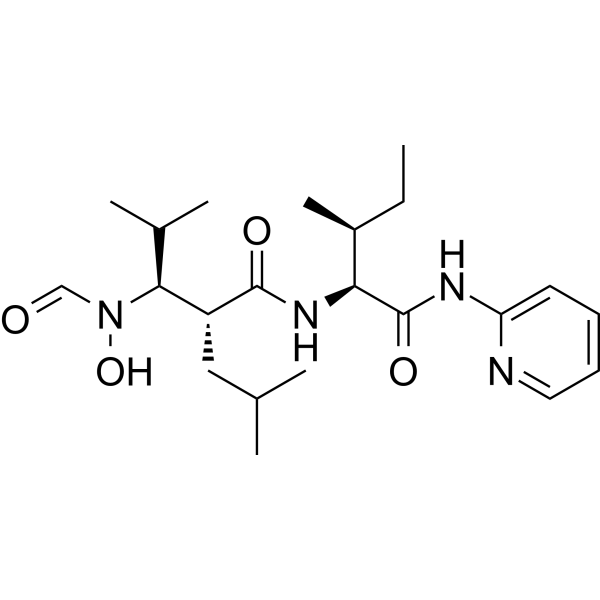 0 ImagesCat. No.: HY-115351CAS No.: 212609-68-2GW-3333 is a potent and orally active TNF-alpha-converting enzyme (TACE) and matrix metalloproteinases (MMP) inhibitor. GW-3333 inhibits tumor necrosis factor-alpha (TNF-alpha) production. GW-3333 can be used in research of arthritis.
-
Eps8 peptide 327
 0 ImagesCat. No.: HY-P10994CAS No.: 1988684-26-9Synonyms: Eps8(327-335)Eps8 peptide 327 is an HLA-A*2402-restricted peptide antigen derived from Eps8 protein. Eps8 peptide 327 has potent antitumor activity with significant cytotoxicity. Eps8 peptide 327 effectively inhibits cancer cells proliferation, induces apoptosis and disrupts EGFR signal pathway by inhibiting downstream signals (such as IL-2, TNF-α and IFN-γ) expression and the Eps8/EGFR interaction. Eps8 peptide 327 significantly inhibits tumor growth in HT-29 xenograft mcie models.
-
Cynaropicrin (Standard)
 0 ImagesCat. No.: HY-N2350RCAS No.: 35730-78-0Cynaropicrin (Standard) is the analytical standard of Cynaropicrin. This product is intended for research and analytical applications. Cynaropicrin is a sesquiterpene lactone which can inhibit tumor necrosis factor (TNF-α) release with IC50s of 8.24 and 3.18 μM for murine and human macrophage cells, respectively. Cynaropicrin also inhibits the increase of cartilage degradation factor (MMP13) and suppresses NF-κB signaling.
-
Mumefural
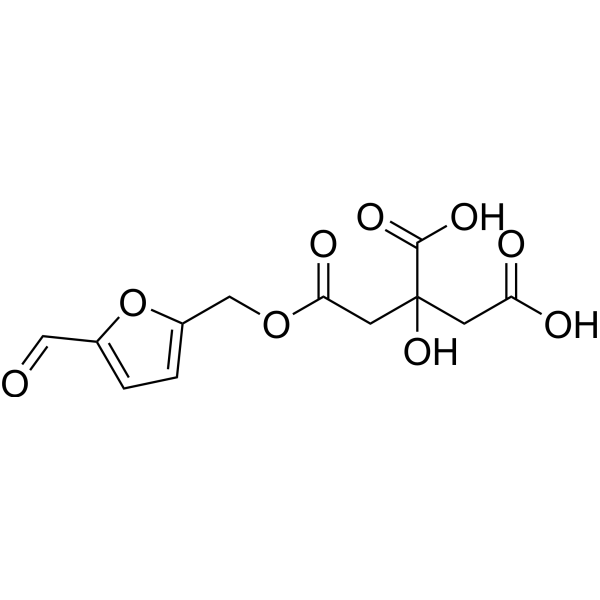 0 ImagesCat. No.: HY-N8903CAS No.: 222973-44-6Mumefural is a bioactive component of the processed fruit of Prunus mume Sieb. Mumefural inhibits platelet aggregation. Mumefural shows anti-thrombotic effects and ameliorates cognitive impairment.
-
Neuroprotective agent 10
 0 ImagesCat. No.: HY-172604Neuroprotective agent 10 is an orally active, blood-brain barrier permeable neuroprotective agent. Neuroprotective agent 10 scavenges ABTS, DPPH and superoxide anion free radicals. Neuroprotective agent 10 inhibits abnormal electrical discharges. At the cellular level, Neuroprotective agent 10 alleviates H2O2-induced oxidative damage and LPS (HY-D1056)-induced neuroinflammation, and relieves epileptic symptoms and oxidative damage in mice. Neuroprotective agent 10 can be used in the research of epilepsy.
-
PDE4-IN-15
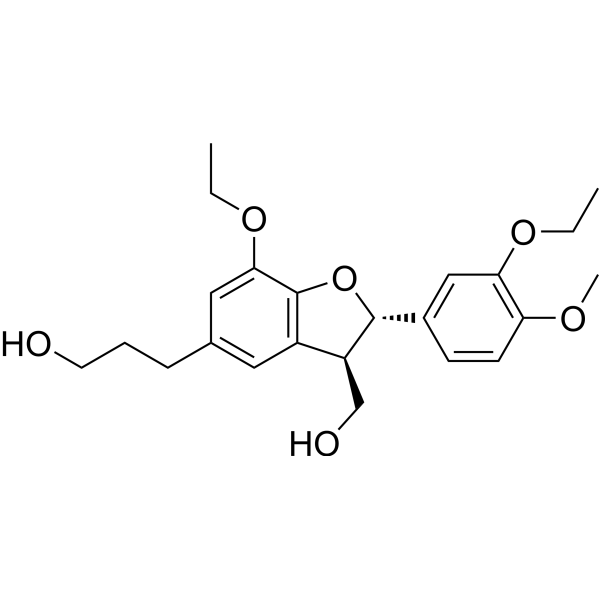 0 ImagesCat. No.: HY-161381CAS No.: 3034837-89-0PDE4-IN-15 (compound 7b-1) is an inhibitor of PDE4 (IC50 = 0.17 μM) and has anti-TNF-α activity (EC50 = 0.19 μM). PDE4-IN-15 has a good skin permeability.
-
Anti-inflammatory agent 17
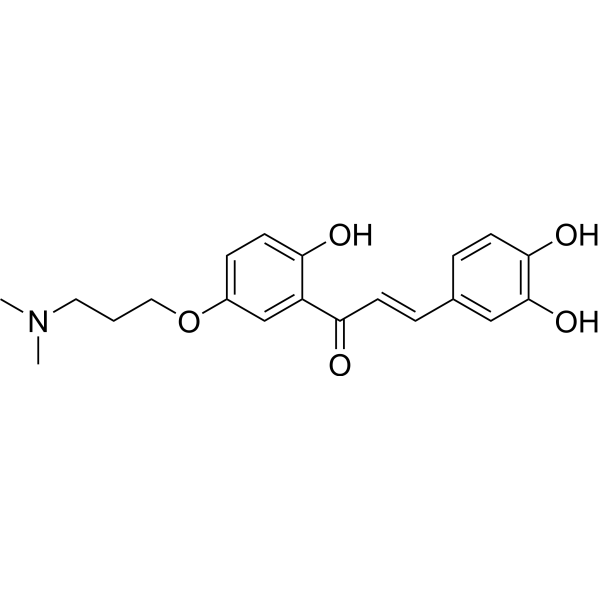 0 ImagesCat. No.: HY-146547CAS No.: 2763226-84-0Anti-inflammatory agent 17 is a potent and orally active anti-inflammatory agent. Anti-inflammatory agent 17 inhibits the release of IL-6 and TNF-α in vitro experiments without cytotoxicity. Anti-inflammatory agent 17 exhibits anti-inflammatory activity in vivo. Anti-inflammatory agent 17 has the potential for the research of Acute lung injury (ALI).
-
GB-223
 0 ImagesCat. No.: HY-P991362GB-223 is a human monoclonal antibody (mAb) targeting TNFSF11/RANKL/CD254. GB-223 can be used in Giant cell tumour of bone and Postmenopausal osteoporosis research.
-
NSC 15830 hydrochloride
 0 ImagesCat. No.: HY-19570ACAS No.: 2508026-62-6Synonyms: S-(1,2-Dichlorovinyl)-L-cysteine hydrochlorideNSC 15830 (S-(1,2-Dichlorovinyl)-L-cysteine) hydrochloride is a nephrotoxin and metabolite of trichloroethylene. NSC 15830 hydrochloride inhibits pathogen-stimulated TNF-α.
-
(6R,7R)-Epoxy-1-oleanen-3-ol
 0 ImagesCat. No.: HY-N17395CAS No.: 1609645-89-7(6R,7R)-Epoxy-1-oleanen-3-ol is a triterpenoid that can be found in Boswellia ovalifoliolata, exhibiting anti-inflammatory activity. (6R,7R)-Epoxy-1-oleanen-3-ol inhibits TNF-α, IL-6, IL-8, and NO production in LPS (HY-D1056)-activated murine neutrophils. (6R,7R)-Epoxy-1-oleanen-3-ol can be used for the research on inflammatory conditions.
-
Iminostilbene-d10
 0 ImagesCat. No.: HY-W753956CAS No.: 3044090-39-0Iminostilbene-d10 is the deuterium labeled Iminostilbene (HY-N7064). Iminostilbene is a chemical precursor of carbamazepine. Additionally, Iminostilbene is an orally active inhibitor of PKM2 (Pyruvate Kinase M2) and COX2 (Cyclooxygenase-2). Iminostilbene exerts its effects by inhibiting PKM2 and its interaction with HIF-1α and STAT3, reducing COX2 and iNOS expression, and decreasing LPS-induced release of IL-1β, IL-6, TNF-α, and MCP-1, thereby suppressing macrophage-mediated inflammatory responses and improving myocardial ischemia/reperfusion (MI/R) injury. Iminostilbene holds promise for research in inflammation regulation, cardiovascular diseases (such as MI/R injury), and macrophage-mediated immune-related diseases.
-
Ceftiofur hydrochloride (Standard)
 0 ImagesCat. No.: HY-B0026RCAS No.: 103980-44-5Ceftiofur hydrochloride (Standard) is the analytical standard of Ceftiofur hydrochloride (HY-B0026). This product is intended for research and analytical applications. Ceftiofur hydrochloride is a cell wall synthesis inhibitor that targets bacterial penicillin-binding proteins (PBPs) and has anti-inflammatory effects in endotoxemia. Ceftiofur hydrochloride exerts bactericidal effects by inhibiting the synthesis of bacterial cell wall peptidoglycan, leading to bacterial cell lysis. Ceftiofur hydrochloride also inhibits the activation of NF-κB and MAPKs, thereby reducing the secretion of pro-inflammatory cytokines such as TNF-α, IL-1β, and IL-6.
-
8-(6,7-Dihydroxy-3,7-dimethyl-2E-octenyloxy)psoralen
 0 ImagesCat. No.: HY-N15589CAS No.: 889112-17-88-(6,7-Dihydroxy-3,7-dimethyl-2E-octenyloxy)psoralen is a compound found in Citrus grandis. 8-(6,7-Dihydroxy-3,7-dimethyl-2E-octenyloxy)psoralen has significant anti-inflammatory activity, which mainly works by inhibiting the secretion of inflammatory factors IL-1β, PGE2 and TNF-α. 8-(6,7-Dihydroxy-3,7-dimethyl-2E-octenyloxy)psoralen can be used in the study of inflammation.
-
NO-Pravastatin
 0 ImagesCat. No.: HY-184354CAS No.: 733034-46-3NO-Pravastatin is a derivative of Pravastatin (HY-B0165) covalently linked with an NO donor moiety, endowing it with dual functions of HMG-CoA reductase (HMGCR) inhibition and exogenous nitric oxide (NO) release. NO-Pravastatin activates PPARα/γ and ABCA1, and inhibits LPS (HY-D1056)-induced TNFα production. NO-Pravastatin can be used in research related to gallstones and cardiovascular diseases.




