



Drug Derivative
Drug derivative
Drug derivatives are derived from parent compounds. They replace or add atoms and groups through chemical reactions to optimize the various properties of the parent compound and reduce side effects. The application of drug derivatives provides a diverse compound library for drug research and development and accelerates the discovery of new drugs. For example, urea derivatives Glibenclamide can prolong the blood sugar-lowering effect of anti-diabetic drugs.
References:
- [1]. Vardanyan RS, et al. Fentanyl-related compounds and derivatives: current status and future prospects for pharmaceutical applications. Future Med Chem. 2014 Mar;6(4):385-412.x
- [2]. Ghosh AK, et al. Urea Derivatives in Modern Drug Discovery and Medicinal Chemistry. J Med Chem. 2020 Mar 26;63(6):2751-2788.x
All Product Categories
-
Drug Derivative Inhibitors
(12)
View all products
-
Drug Derivative Agonist
(1)
View all products
-
Drug Derivative Activator
(1)
View all products
-
Drug Derivative Chemical
(1)
View all products
-
Drug Derivative Inducer
(1)
View all products
-
Drug Derivative Controls
(38)
View all products
-
Drug Derivative Substrate
(1)
View all products
-
Drug Derivative Related Products (4021)
Related Products (4021)

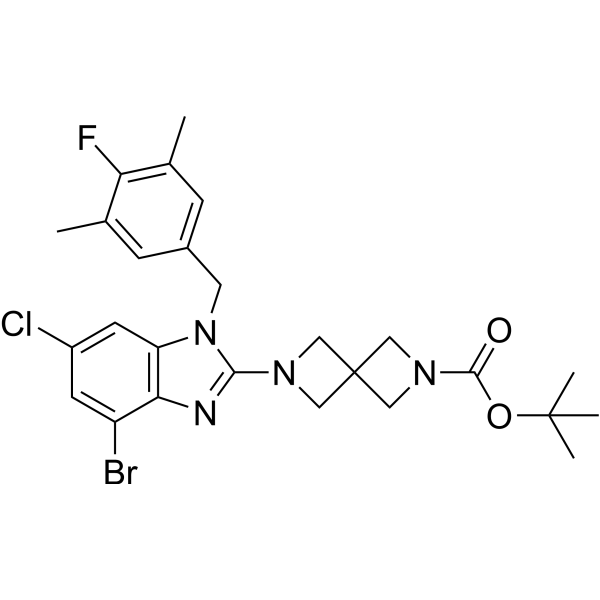
-
3,6-Dihydroxyxanthone
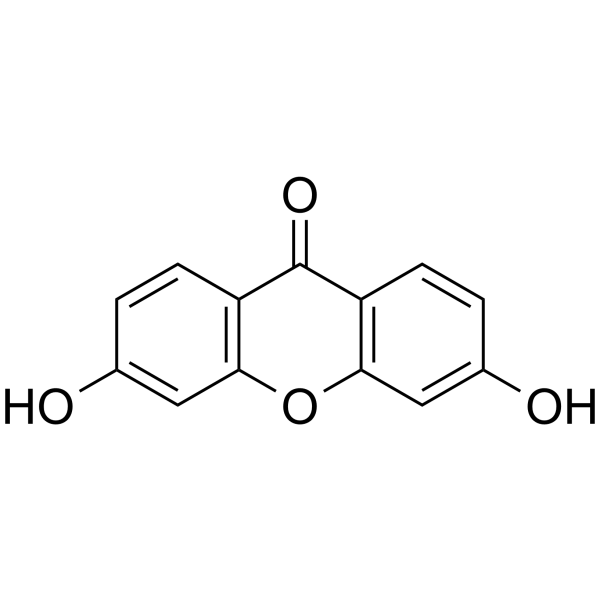 0 Images3,6-Dihydroxyxanthone (compound 3) is a xanthone derivatives. 3,6-Dihydroxyxanthone (compound 3) has anticancer activity. 3,6-Dihydroxyxanthone (compound 3) can be used for cancer research.
-
Hexafluoro-diallylhexaflurobisphenol
 0 ImagesHexafluoro-diallylhexaflurobisphenol is a Honokiol analogue (HA). Honokiol is a bioactive, biphenolic phytochemical that possesses potent antioxidative, anti-inflammatory, antiangiogenic, and anticancer activities by targeting a variety of signaling molecules.
-
Eicosatetraynoic acid
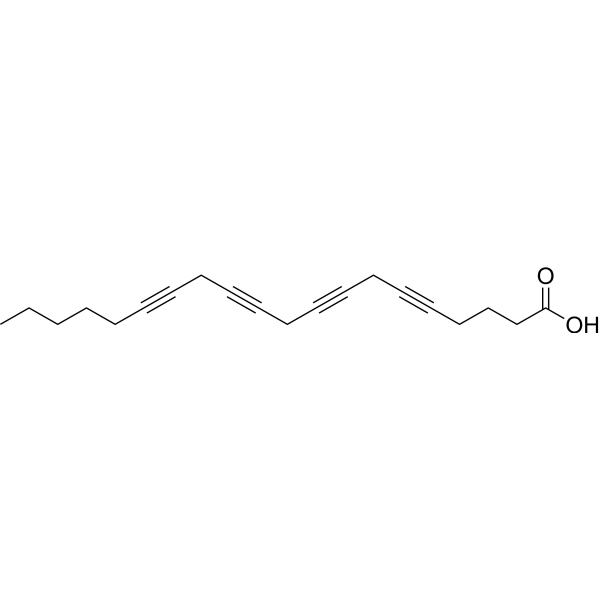 0 ImagesEicosatetraynoic acid (ETYA) is a non-metabolizable analog of Arachidonic acid (HY-109590) and also an inhibitor of the lipoxygenase (LOX)/cyclooxygenase (COX) pathway (ID50 = 8 μM and 4 μM). Eicosatetraynoic acid acts as a suicide substrate to inhibit the production of inflammatory mediators such as leukotrienes and prostaglandins. Eicosatetraynoic acid acts directly on cell membranes and membrane proteins to exert a wide range of effects, including blocking potassium channels, increasing cell membrane fluidity, elevating intracellular calcium levels, inhibiting DNA synthesis in tumor cells, inducing differentiation of certain cells, and specifically inhibiting the assembly and replication of orthopoxviruses. Eicosatetraynoic acid alleviates acute lung injury induced by chemicals such as phosgene.
-
DOCK2-IN-1
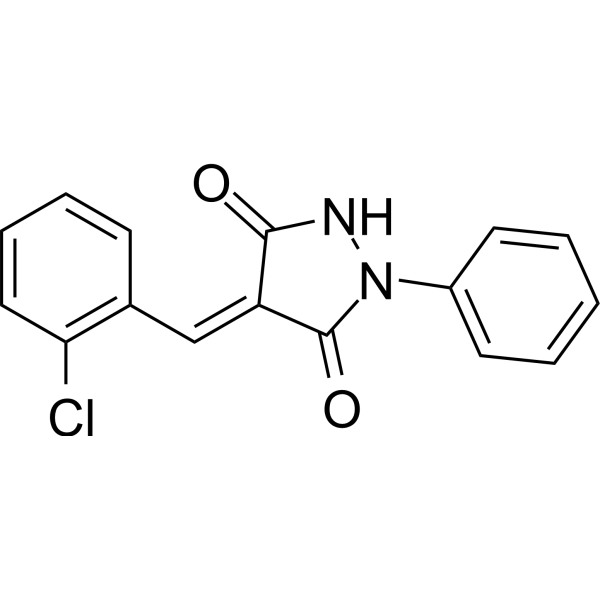 0 ImagesDOCK2-IN-1 (Compound 3) is an analog of CPYPP (HY-110100) and a DOCK2 inhibitor (IC50 = 19.1 μM). DOCK2-IN-1 binds to the DHR-2 domain of DOCK2 and inhibits its mediated Rac guanine nucleotide exchange factor activity. DOCK2-IN-1 blocks chemokine receptor- and antigen receptor-mediated activation of Rac in lymphocytes. DOCK2-IN-1 significantly inhibits chemotaxis and T cell activation. DOCK2-IN-1 can be used in the research of transplant rejection and organ-specific autoimmune diseases.
-
PG-11047 tetrahydrochloride
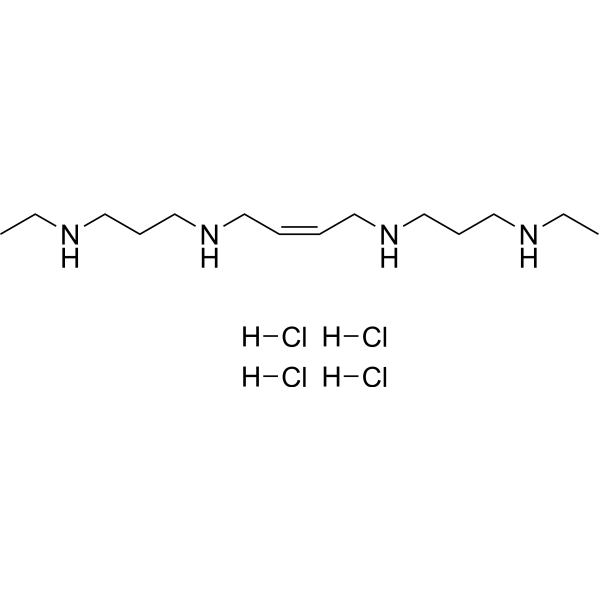 0 ImagesSynonyms: CGC-11047 tetrahydrochloridePG-11047 (CGC-11047), a polyamine analogue, is a nonfunctional competitor of the natural polyamine spermine. PG-11047 has broad spectrum anticancer activities.
-
Methylnissolin-3-O-glucoside
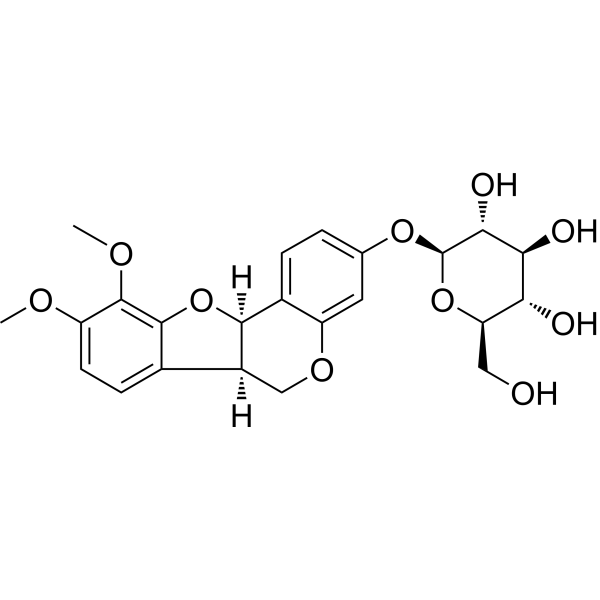 0 ImagesMethylnissolin-3-O-glucoside is a flavonoid glycoside derivative of Methylnissolin (HY-N2484). Methylnissolin-3-O-glucoside is isolated from plants of the genus Astragalus (Leguminosae). Methylnissolin-3-O-glucoside effectively induces the expression of AKT/Nrf2 and its downstream target genes HO-1 and NQO1. Methylnissolin-3-O-glucoside inhibits TNF-α-induced phosphorylation of MEK and ERK. Methylnissolin-3-O-glucoside exhibits free radical scavenging activity. Methylnissolin-3-O-glucoside inhibits cell proliferation and cell migration. Methylnissolin-3-O-glucoside is used in research on esophageal squamous cell carcinoma.
-
Isomyosmine
 0 ImagesCat. No.: HY-W701069CAS No.: 53844-46-5Synonyms: MyMD-1Isomyosmine is a nitrate reductase inhibitor. Isomyosmine is a nicotine related alkaloid present in solanecea plants containing nicotine. Isomyosmine can be used for research of inflammation and age-related disorders
-
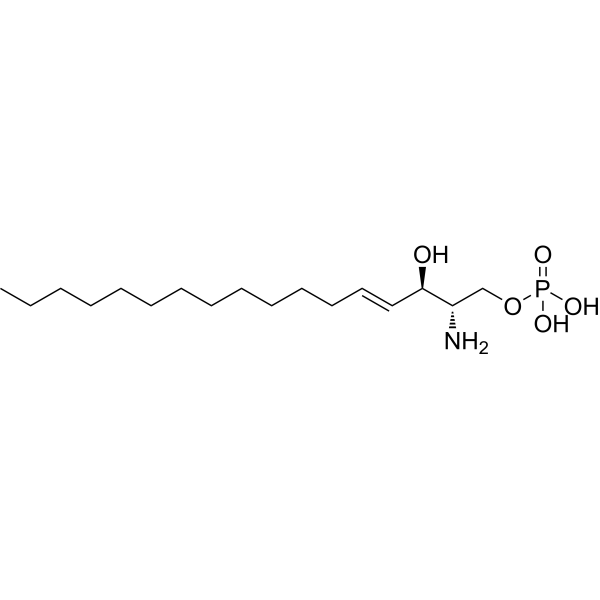
7,8-Dihydro-2,5(1H,6H)-quinolinedione
 0 Images7,8-Dihydro-2,5(1H,6H)-quinolinedione (compound SF32) is a positive inotropic agent.

-
QP5
 0 ImagesQP5 is an Amelogenin (HY-P71627)-derived peptide. QP5 binds to hydroxyapatite and demineralized enamel surfaces, temporarily stabilizes amorphous calcium phosphate (ACP), and regulates the crystallization of hydroxyapatite. QP5 promotes remineralization of artificial enamel caries in vitro, and acts synergistically with fluoride to enhance enamel caries remineralization. QP5 can be used in studies related to enamel caries and early enamel caries.
-
Prenderol
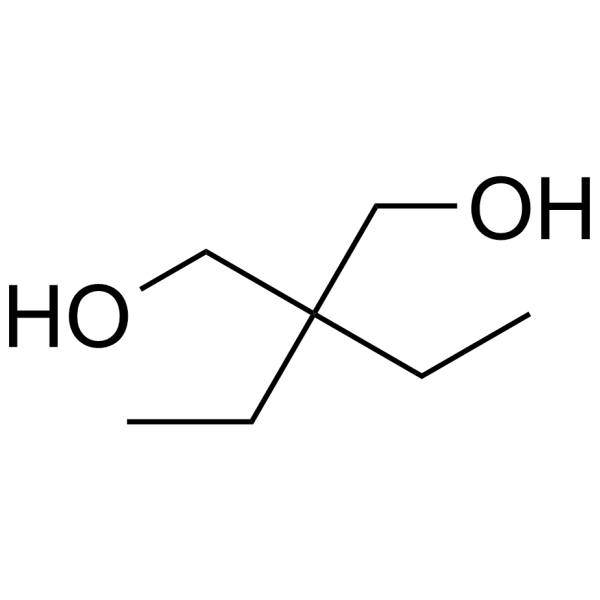 0 ImagesSynonyms: 2,2-Diethyl-1,3-propanediolPrenderol is a potent central-nervous-system depressant. Prenderol has anticonvulsant activity.
-
(R)-3-Hydroxytetradecanoic acid
 0 Images(R)-3-Hydroxytetradecanoic acid is an ester product.
-
6-Methylheptanoic acid
 0 ImagesCat. No.: HY-W101588CAS No.: 929-10-26-Methylheptanoic acid is an ester product.

-
Spiromesifen
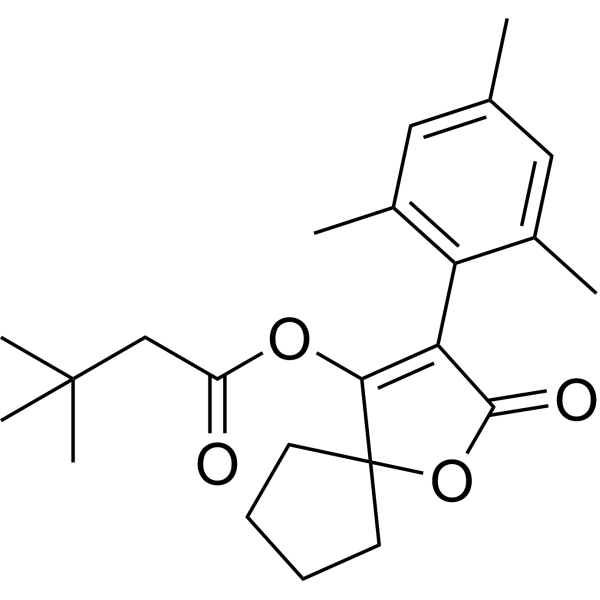 0 ImagesSynonyms: BSN 2060Spiromesifen (BSN 2060) is a broad-spectrum tetrachloro acid derivative acaricide. Spiromesifen reduces lipid biosynthesis via inhibition of acetyl-CoA carboxylase, and has no cross-resistance to any resistant mite or whitefly populations.
-
1-Phenylindole
 0 Images1-Phenylindole (Compound 8) is a 1-Phenylbenzimidazole analogue. 1-Phenylindole shows IC50 values of >50 μM and >50 μM for PDGFR and FGFR, respectively. 1-Phenylbenzimidazole is a selective PDGFR inhibitor.
-
Dihydralazine sulfate
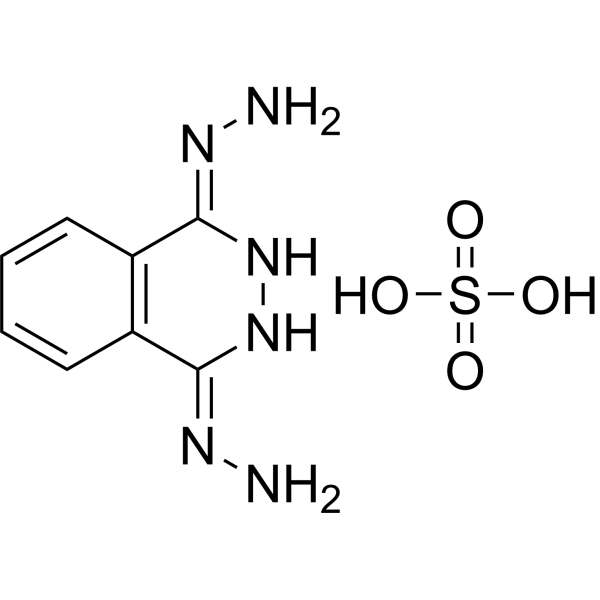 0 ImagesDihydralazine sulfate is an antihypertensive hydrazine derivative and also a low-potency genotoxic agent. Dihydralazine sulfate is a direct-acting mutagen with a mixed gene mutation mechanism, which induces DNA fragmentation in the lung, kidney and spleen of mice, and induces sister chromatid exchange in mouse bone marrow cells. Dihydralazine sulfate specifically kills DNA repair-deficient bacteria. Dihydralazine sulfate is a vasodilator and antihypertensive agent that reduces systemic vascular resistance, increases cardiac output and heart rate, thereby lowering blood pressure. Dihydralazine sulfate can be used in research related to hypertension and severe early-onset preeclampsia.
-
TMX-4113
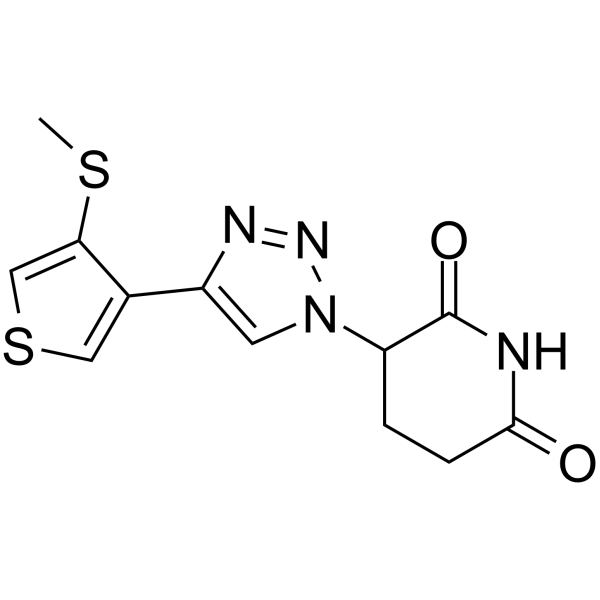 0 ImagesTMX-4113 is a FPFT-2216 (HY-145319) (Molecular glue) analog and degrader of PDE6D and CK1α. TMX-4113 does not inhibit the growth of KRASG12C-dependent cancer cells. TMX-4113 can be used in the research of multiple myeloma, pancreatic ductal adenocarcinoma, non-small cell lung cancer and gastric adenocarcinoma.



