



Early 2 Factor (E2F) Inhibitor
-
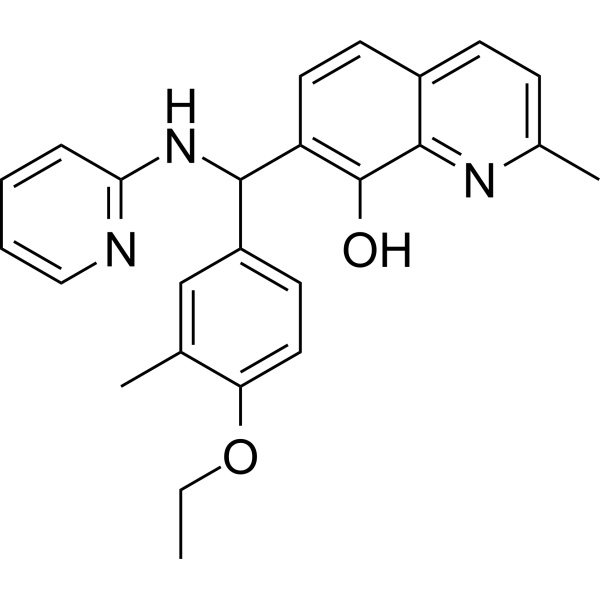
HLM006474
 0 Images
HLM006474 is a pan E2F inhibitor, which inhibits E2F4 DNA-binding with an IC50 of 29.8 μM in A375 cells.
-
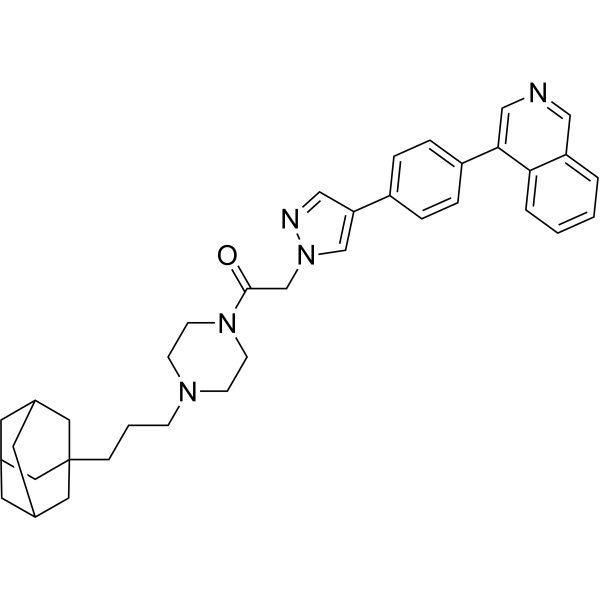
LL-K8-22
 0 Images
LL-K8-22 is a dual degrader of CDK8 and cyclin C HyT, with DC50 values of 2.52 μM and 2.64 μM, respectively. LL-K8-22 inhibits phosphorylation of STAT1 Ser 727, phosphorylation of the C-terminal domain Ser 2/5 of RNA polymerase II, and phosphorylation of Rb. LL-K8-22 represses E2F- and MYC-driven transcriptional programs and exhibits antiproliferative effects. LL-K8-22 synchronously induces proteasome-dependent selective degradation of CDK8 and cyclin C without degrading CDK19, other CDK family members, or other cyclins. LL-K8-22 can be used in the research of triple-negative breast cancer and colon cancer.
-
Q901
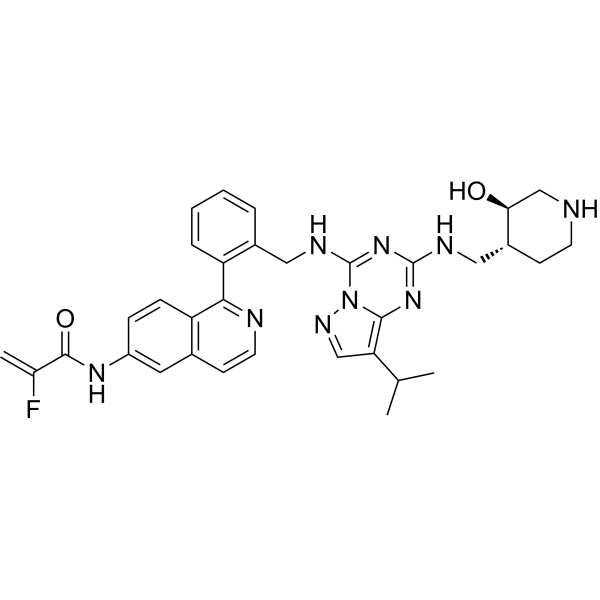 0 ImagesCat. No.: HY-153278CAS No.: 2766124-39-2Synonyms: CDK7-IN-21
Q901 (CDK7-IN-21) is a selective and potent CDK7 inhibitor with an IC50 of 10 nM. Q901 disrupts MYC and E2FTOP1-DPCs and sensitizes tumor to TOP1 inhibitors by suppressing RNAPII transition from initiation to elongation. Q901 can inhibit tumor growth and significantly enhances tumor growth inhibition combined with TOP1 inhibitors. Q901 can be used for the research of cancer, such as colon cancer and lung cancer.
-
Q901 TFA
 0 ImagesCat. No.: HY-153278APurity: 98.55%Synonyms: CDK7-IN-21 TFA
Q901 (CDK7-IN-21) TFA is a selective and potent CDK7 inhibitor with an IC50 of 10 nM. Q901 TFA disrupts MYC and E2FTOP1-DPCs and sensitizes tumor to TOP1 inhibitors by suppressing RNAPII transition from initiation to elongation. Q901 TFA can inhibit tumor growth and significantly enhances tumor growth inhibition combined with TOP1 inhibitors. Q901 TFA can be used for the research of cancer, such as colon cancer and lung cancer.
-
Ly101-4B
 0 ImagesCat. No.: HY-164184CAS No.: 1415728-94-7
Ly101-4B is an apoptosis inducer and multi-target inhibitor with antiproliferative, antitumor and cycytotoxic effects. Ly101-4B reduces HSF1 expression, inhibits microRNA-214 synthesis, downregulates HSP27, HSP70 and HSP90 expression, while suppressing E2F-dependent transcriptional activity and downregulating its target genes. Ly101-4B induces caspase 3/7-mediated apoptosis by reducing DNA synthesis, inhibiting the cell cycle and G1/S phase transition, without affecting RNA synthesis or inducing necrosis. Ly101-4B is selective for pancreatic ductal adenocarcinoma cells with different genotypes and varying degrees of E2F dependence. Ly101-4B can be used in research related to epithelial ovarian cancer and pancreatic ductal adenocarcinoma.
-
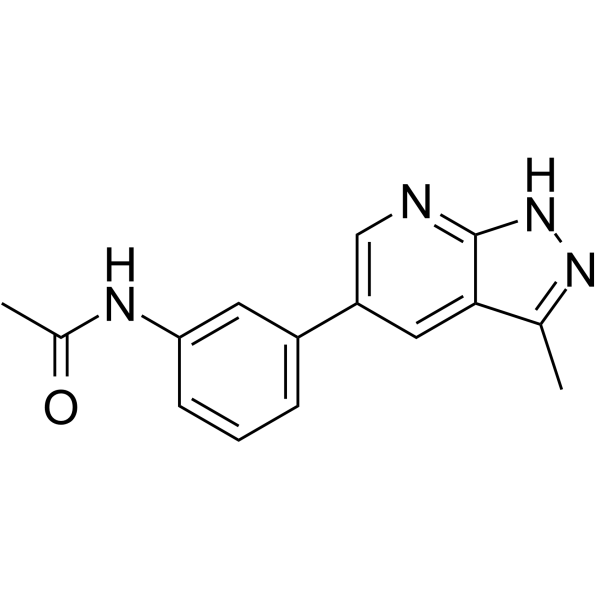
JR4-187
 0 ImagesCat. No.: HY-182241CAS No.: 2446965-01-9
JR4-187 is an orally active, copper-dependent anticancer agent. JR4-187 downregulates genes involved in oxidative phosphorylation, MYC targets and E2F targets in cancer cells, while upregulates genes involved in the TNF-α signaling pathway, p53 pathway and KRAS signaling pathway, and downregulates CTR1 protein. JR4-187 induces ROS production, apoptosis, copper-dependent cytotoxicity, and exhibits selective cytotoxicity against KRAS-mutant cancer cells. JR4-187 is well tolerated in mouse models of pancreatic cancer. JR4-187 can be used in research related to cancers such as pancreatic ductal adenocarcinoma, colon cancer and rectal cancer.
-
Edifoligide
 0 ImagesCat. No.: HY-177627CAS No.: 328538-04-1Synonyms: CGT 003
Edifoligide is a decoy oligonucleotide that binds to and inhibits E2F transcription factors and thus may prevent neointimal hyperplasia and vein graft failure
-
Edifoligide sodium
 0 ImagesCat. No.: HY-177627ASynonyms: CGT 003 sodium
Edifoligide sodium is a decoy oligonucleotide that binds to and inhibits E2F transcription factors and thus may prevent neointimal hyperplasia and vein graft failure
-
JAS239
 0 ImagesCat. No.: HY-123612
JAS239 is a blood-brain barrier-permeable ChoK inhibitor. JAS239 inhibits phosphocholine synthesis and reduces the expression level of E2F1 protein. JAS239 exhibits near-infrared fluorescence properties. JAS239 exerts anti-tumor activity against glioblastoma. JAS239 can be used in studies related to glioblastoma.



