



MNK
MAP kinase-interacting kinase MNK comprises MNK1 and MNK2, which control mRNA translation through eIF4E phosphorylation and integrate ERK1/2 or p38 MAPK signaling[1][2]. Mechanistically, MNK binds eIF4G and phosphorylates eIF4E, linking cap-dependent translation to stress, growth-factor, cytokine, and hormone responses[1][3]. MNK activity selectively affects translation of capped mRNAs containing a 5′-UTR hairpin, including transcripts involved in cell cycle, cancer progression, and cell survival[3]. In cancer models, MNK1/2 support oncogenic translation, tumorigenicity, invasion, and drug resistance through eIF4E and additional substrates[2][4]. In soft tissue sarcoma, depletion of either MNK1 or MNK2 suppresses cell viability, anchorage-independent growth, and tumorigenicity[5]. Compared with related isoforms, MNK1a/b and MNK2a/b arise from two genes by alternative splicing and differ in C-terminal regions, MAPK-binding capacity, activity, regulation, and localization[4]. MNK1b is constitutively active, MAPK-independent, and associated with poor prognosis in triple-negative breast cancer[6]. For experimental applications, CGP57380, ETC-168, tomivosertib, and eFT-508 are used to block MNK-eIF4E signaling in translation, cancer, chemotherapy sensitization, and fibrosis models[3][5][7][8].
Verweise:
- [1]. Shveygert M, et al. Regulation of eukaryotic initiation factor 4E (eIF4E) phosphorylation by mitogen-activated protein kinase occurs through modulation of Mnk1-eIF4G interaction. Mol Cell Biol. 2010 Nov;30(21):5160-7. [Content Brief]
- [2]. Joshi S, et al. Mnk kinase pathway: Cellular functions and biological outcomes. World J Biol Chem. 2014 Aug 26;5(3):321-33. [Content Brief]
- [3]. Korneeva NL, et al. Inhibition of Mitogen-activated Protein Kinase (MAPK)-interacting Kinase (MNK) Preferentially Affects Translation of mRNAs Containing Both a 5'-Terminal Cap and Hairpin. J Biol Chem. 2016 Feb 12;291(7):3455-67. [Content Brief]
- [4]. Buxade M, et al. The Mnks: MAP kinase-interacting kinases (MAP kinase signal-integrating kinases). Front Biosci. 2008 May 1;13:5359-73. [Content Brief]
- [5]. Ke XY, et al. MNK1 and MNK2 enforce expression of E2F1, FOXM1, and WEE1 to drive soft tissue sarcoma. Oncogene. 2021 Mar;40(10):1851-1867. [Content Brief]
- [6]. Pinto-Díez C, et al. Increased expression of MNK1b, the spliced isoform of MNK1, predicts poor prognosis and is associated with triple-negative breast cancer. Oncotarget. 2018 Feb 5;9(17):13501-13516. [Content Brief]
- [7]. Yang X, et al. Inhibition MNK-eIF4E-β-catenin preferentially sensitizes gastric cancer to chemotherapy. Fundam Clin Pharmacol. 2022 Aug;36(4):712-720. [Content Brief]
- [8]. Walker NM, et al. MNK-driven eIF4E phosphorylation regulates the fibrogenic transformation of mesenchymal cells and chronic lung allograft dysfunction. J Clin Invest. 2024 Aug 15;134(16):e168393. [Content Brief]
-
MNK Verwandte Produkte (14)
Verwandte Produkte (14)

- 1
-
HG-10-102-01
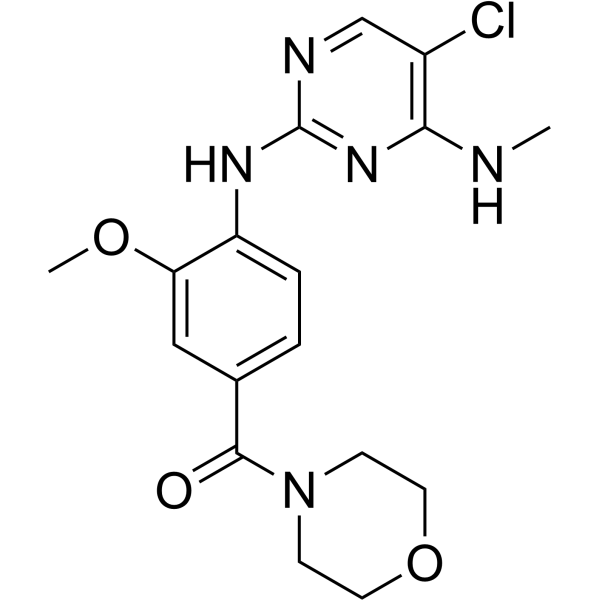 0 ImagesHG-10-102-01 is a highly potent, selective, and brain-penetrable LRRK2 inhibitor, with IC50 values of 20.3 and 3.2 nM against wild-type LRRK2 and LRRK2[G2019S], respectively. HG-10-102-01 also inhibits MNK2 and MLK1, with IC50 values of 0.6 and 2.1 μM. HG-10-102-01 can be used for Parkinson's disease (PD) research.
-
QL-X-138
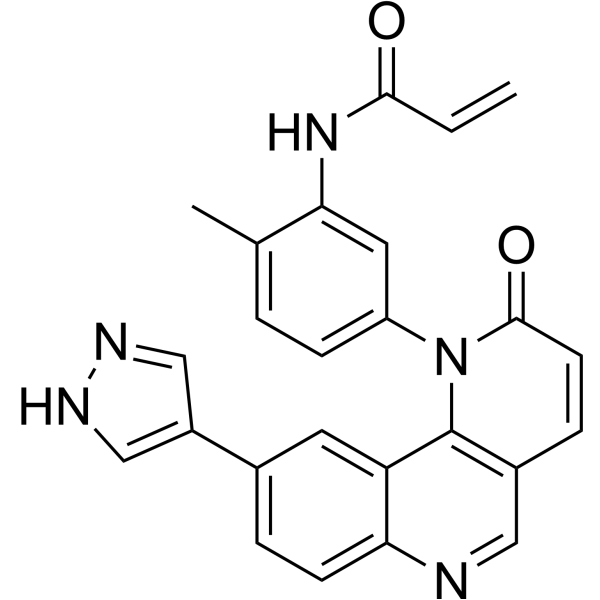 0 ImagesQL-X-138 is a potent and selective BTK/MNK dual kinase inhibitor, exhibits covalent binding to BTK and non-covalent binding to MNK. QL-X-138 shows IC50s of 9.4 nM, 107.4 nM and 26 nM for BTK, MNK1 and MNK2 kinases respectively. QL-X-138 also shows anti-dengue virus 2 activity, with an IC50 of 3.5 μM. QL-X-138 can be used for the research of B-cell malignancies.
-
VNPP433-3β
 0 ImagesSynonyms: Galeterone 3β-imidazoleVNPP433-3β (Galeterone 3β-imidazole) is an orally active molecular glue degrader, which degrades androgen receptor (AR) and its splice variants (AR-Vs) and MAP kinase-interacting serine/threonine protein kinase Mnk1/2. VNPP433-3β induces cell apoptosis. VNPP433-3β inhibits tumor growth in the CWR22Rv1 xenograft mouse model. VNPP433-3β can be used for the study of castration resistant prostate cancer (CRPC) and pancreatic ductal adenocarcinoma (PDAC).
-
Cercosporamide
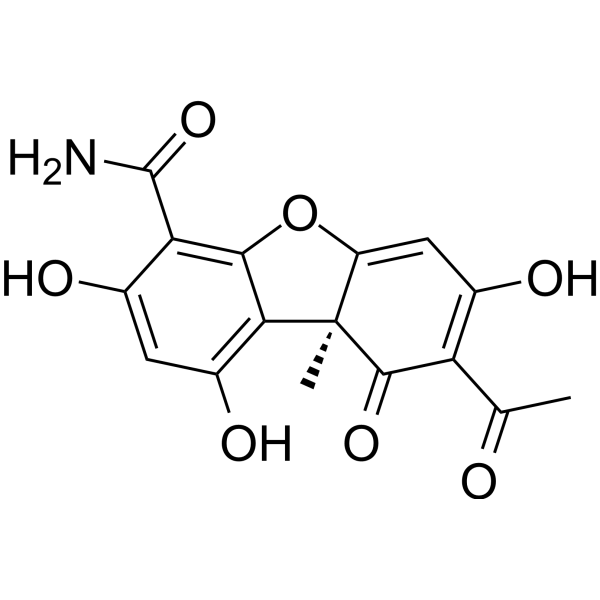 0 ImagesArt. -Nr.: HY-16982CAS. Nr.: 131436-22-1Synonyms: (-)-Cercosporamide
-
MNK-IN-5
 0 ImagesArt. -Nr.: HY-W171935CAS. Nr.: 97310-93-5
-
MNK/PIM-IN-2
 0 ImagesArt. -Nr.: HY-182957CAS. Nr.: 3081482-46-1MNK/PIM-IN-2 is a Mnk/Pim kinase inhibitor with an IC50 of 32 nM for Mnk1, 3 nM for Mnk2, and 37 nM for Pim1. MNK/PIM-IN-2 reduces the levels of p-eIF4E and p-4EBP1. MNK/PIM-IN-2 induces cell cycle arrest, apoptosis (apoptosis) and exerts antiproliferative effects in leukemia cells. MNK/PIM-IN-2 can be used in studies related to leukemia.
-
MNK1/2-IN-5
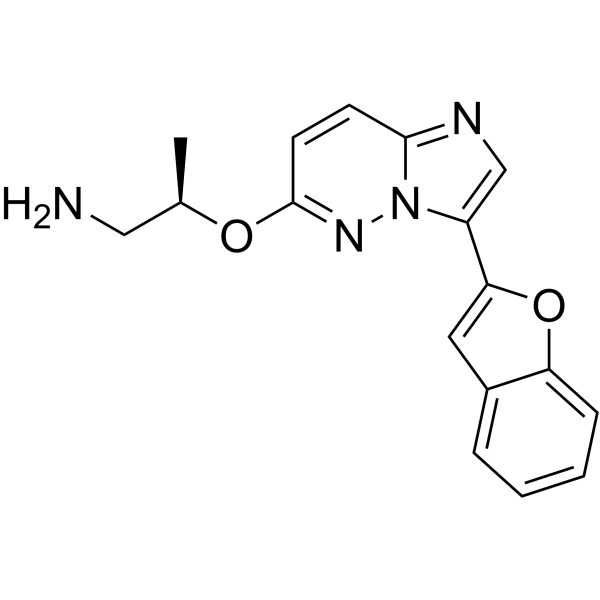 0 ImagesMNK1/2-IN-5 is a potent and selective MNK1/2 inhibitor as a therapeutic agent.
-
Tomivosertib hydrochloride
 0 ImagesArt. -Nr.: HY-100022ACAS. Nr.: 1849590-02-8Synonyms: eFT508 hydrochlorideTomivosertib hydrochlorideis a potent, highly selective, and orally active MNK1 and MNK2 inhibitor, with IC50s of 1-2 nM against both isoforms. Tomivosertib hydrochloride treatment leads to a dose-dependent reduction in eIF4E phosphorylation at serine 209 (IC50=2-16 nM) in tumor cell lines. Tomivosertib hydrochloride also dramatically downregulates PD-L1 protein abundance.
-
VNPP433-3β dihydrochloride
 0 ImagesArt. -Nr.: HY-160777ACAS. Nr.: 3026905-92-7Synonyms: Galeterone 3β-imidazole dihydrochlorideVNPP433-3β (Galeterone 3β-imidazole) dihydrochloride is an orally active molecular glue degrader, which degrades androgen receptor (AR) and its splice variants (AR-Vs) and MAP kinase-interacting serine/threonine protein kinase Mnk1/2. VNPP433-3β dihydrochloride induces cell apoptosis. VNPP433-3β dihydrochloride inhibits tumor growth in the CWR22Rv1 xenograft mouse model. VNPP433-3β dihydrochloride can be used for the study of castration resistant prostate cancer (CRPC) and pancreatic ductal adenocarcinoma (PDAC).
-
MNK-IN-4
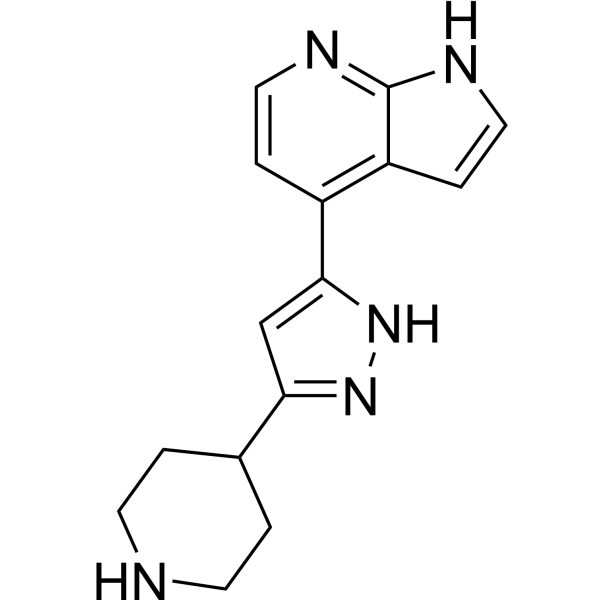 0 ImagesArt. -Nr.: HY-162260CAS. Nr.: 3032671-06-7MNK-IN-4 (compound D25) is a potent and selective MNK inhibitor for the study of sepsis-related acute splenic injury.
-
ETC-501
 0 ImagesArt. -Nr.: HY-181627CAS. Nr.: 3094990-88-9ETC-501 is a blood-brain barrier-permeable, orally active, and selective MNK1/MNK2 inhibitor, with an IC50 of 0.033 μM against MNK1 and 0.111 μM against MNK2. ETC-501 inhibits glioblastoma cell proliferation, impairs DNA damage repair function, delays cell cycle progression, and suppresses ribosome biogenesis. ETC-501 enhances Temozolomide (HY-17364)-induced cellular senescence, attenuates the senescence-associated secretory phenotype, and increases cellular sensitivity to Navitoclax (HY-10087). ETC-501 is applicable to research related to glioblastoma.
-
Multi-kinase-IN-12
 0 ImagesArt. -Nr.: HY-18692CAS. Nr.: 597544-21-3Multi-kinase-IN-12 is a non-selective multi-target inhibitor, with IC50 values against human targets as follows: Flt3 < 0.001 μM, c-Src 0.002 μM, KDR 0.004 μM, Eph-A2, MNK-1 and Flt1 0.011 μM, Lck 0.016 μM, Rsk1 0.21 μM, and α2 subunit of AMPK 0.041 μM. Multi-kinase-IN-12 can be used in research related to solid tumors.
-
CGP 57380 (Standard)
 0 ImagesArt. -Nr.: HY-10520RCAS. Nr.: 522629-08-9CGP 57380 (Standard) is the analytical standard of CGP 57380 (HY-10520). This product is intended for research and analytical applications. CGP 57380 is a cell-permeable pyrazolo-pyrimidine compound that acts as a selective inhibitor of Mnk1 with IC50 of 2.2 μM, but has no inhibitory activity against p38, JNK1, ERK1/2, PKC, or Src-like kinases.
-
MNK-IN-6
 0 ImagesArt. -Nr.: HY-181259CAS. Nr.: 2891441-39-5
- 1



