2438 Results for "

decrease

" in MedChemExpress (MCE) Product Catalog:
Products (2438)

2438 Results for "decrease" in MCE Product Catalog:

Cat. No.: HY-183780
FGFR-IN-27 is an orally active, broad-spectrum FGFR inhibitor, with an IC50 of 0.24 nM against human FGFR1, 0.71 nM against FGFR2, 0.87 nM against FGFR3, and 6.50 nM against FGFR4. FGFR-IN-27 inhibits cancer cell proliferation and blocks tumor growth. FGFR-IN-27 reduces the phosphorylation levels of AKT and ERK, induces apoptosis and ferroptosis, increases ROS levels, and decreases GSH levels. FGFR-IN-27 can be used in the research of hepatocellular carcinoma .
loading...
    loading...
Cat. No.: HY-187995
Target:  

Cannabinoid Receptor

Research Areas:  

Neurological Disease

RTICBM-303 is a blood-brain barrier-penetrant cannabinoid receptor type 1 (CB1) inhibitor. RTICBM-303 concentration-dependently decreases the Emax of the agonist CP55,940, increases the binding of [ 3H]CP55,940, and inhibits CB1 receptor signaling. RTICBM-303 selectively reduces cue-induced and drug-priming-induced drug-seeking relapse behaviors in rats. RTICBM-303 can be used in studies related to addictive behaviors .
loading...
    loading...
Cat. No.: HY-189130
CAS No.: 2699091-14-8
Target:  

CDK c-Myc

Research Areas:  

Cancer

CDK4/6-IN-30 is a selective, orally active CDK4 and CDK6 inhibitor with IC50 values of 10 nM and 16 nM, respectively. CDK4/6-IN-30 induces cell cycle arrest at G1 phase, inhibits RB phosphorylation, and decreases c-MYC and Cyclin D1 levels. CDK4/6-IN-30 exhibits anticancer activity against breast cancer. CDK4/6-IN-30 can be used for research on breast cancer .
loading...
    loading...
Cat. No.: HY-18981R
CAS No.: 5928-25-6
Synonyms: (+)-Decursin (Standard)
Decursin (Standard) is the analytical standard of Decursin. This product is intended for research and analytical applications. Decursin ((+)-Decursin) is a potent anti-tumor agent. Decursin also is a cytotoxic agent and a potent protein kinase C activator. Decursin induces apoptosis and cell cycle arrest at G1 phase. Decursin decreases the expression of CDK2, CDK4, CDK6, cyclin D1 protein at 48 h. Decursin inhibits cell proliferation and migration. Decursin shows anti-tumor, anti-inflammatory and analgesic activities [4].
loading...
    loading...
Cat. No.: HY-201403
CAS No.: 1628160-15-5
LY2775240 is an orally active phosphodiesterase 4 (PDE4) inhibitor with potent inhibitory activity against PDE4A (IC50 = 0.09 nM), PDE4B (IC50 = 0.09 nM) and PDE4D (IC50 = 0.14 nM), and exhibits an IC50 of 2.4 nM against PDE4C. LY2775240 is a highly selective agent that reduces TNFα production upon immune activation. LY2775240 decreases TNFα production in rodent and rhesus monkey models. LY2775240 can be used in the research of psoriasis .
loading...
    loading...
Cat. No.: HY-32351BR
CAS No.: 73809-05-9
Synonyms: 3-epi-25-hydroxy Cholecalciferol (Standard)
Research Areas:  

Endocrinology

3-epi-Calcifediol (Standard) is the analytical standard of 3-epi-Calcifediol. This product is intended for research and analytical applications. 3-epi-25-hydroxy Vitamin D3 is the C-3 epimer of 25-hydroxy vitamin D3.1 Dietary administration of 3-epi-25-hydroxy vitamin D3 (0.5 and 1 IU/g) decreases levels of serum parathyroid hormone (PTH) in male, but not female, weanling rats.
loading...
    loading...
Cat. No.: HY-A0113
CAS No.: 90139-06-3
Synonyms: Ro 31-3113
Cilazaprilat is an inhibitor of angiotensin-converting enzyme (ACE; IC50=0.7 nM for the rat enzyme) and an active metabolite of Cilazapril (HY-A0043). It decreases creatine kinase release in primary neonatal rat cardiac myocytes in an in vitro model of ischemia-reperfusion injury induced by hypoxia and reoxygenation when used at a concentration of 10 μM.3 Intra-arterial administration of cilazaprilat (3 μg/kg per minute) increases coronary blood flow and fractional shortening in a dog model of coronary hypoperfusion-induced myocardial ischemia.
loading...
    loading...
Cat. No.: HY-B0219S1
Allopurinol- 13C, 15N2 is the 13C- and 15N-labeled labeled Allopurinol (HY-B0219). Allopurinol is a potent and orally active xanthine oxidase inhibitor with an IC50 value of 0.2-50 μM. Allopurinol can be used in the research of hyperuricemia and gout. Allopurinol decreases the expression of HIF-1α and HIF-2α protein. Allopurinol shows anti-depressant and anti-nociception activity. Anti-leishmanial effect .
loading...
    loading...
Cat. No.: HY-B0523S
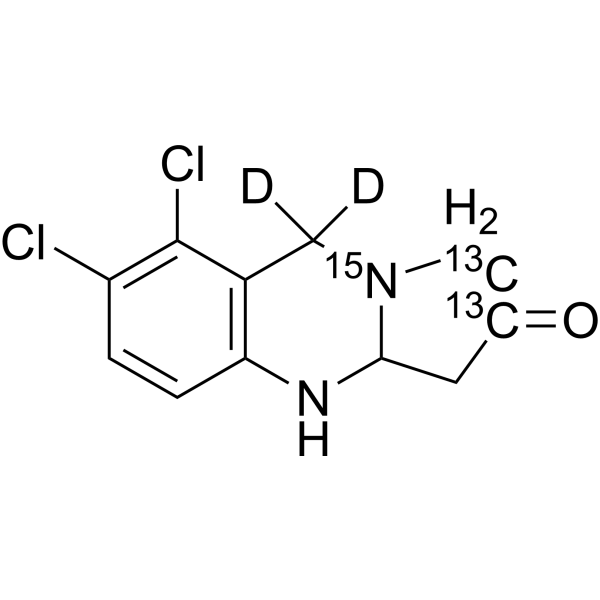
Anagrelide- 13C2, 15N,d2 is 15N and deuterated labeled Anagrelide (HY-B0523). Anagrelide is a potent inhibitor of phosphodiesterase type III (PDE3) (IC50=36 nM). Anagrelide, an imidazoquinazoline derivative, acts as an inhibitor of platelet aggregation. Anagrelide inhibits bone marrow megakaryocytopoiesis. Anagrelide decreases gastrointestinal stromal tumor (GIST) cell proliferation and promotes their apoptosis in vitro. Anagrelide is a platelet-lowering agent and plays in the antithrombopoietic action .
loading...
    loading...
Cat. No.: HY-B1202R
CAS No.: 51411-04-2
Synonyms: AY-22284 (Standard)
Research Areas:  

Metabolic Disease

Alrestatin (AY-22284) Standard is the analytical standard of Alrestatin (HY-B1202). This product is intended for research and analytical applications. Alrestatin (AY-22284) is an aldose reductase inhibitor. Alrestatin reduces fructose levels in the uterine fluid of mice. Alrestatin interferes with sperm capacitation and impairs fertilization function in mice. Alrestatin decreases basal and tyramine-induced norepinephrine release in rat pancreatic specimens in vitro. Alrestatin enhances glucose- and arginine-stimulated insulin secretion in vivo. Alrestatin can be used in studies related to diabetes and reproductive diseases.
loading...
    loading...
Cat. No.: HY-B1232A
CAS No.: 908-35-0
Synonyms: Su-4885 Tartrate
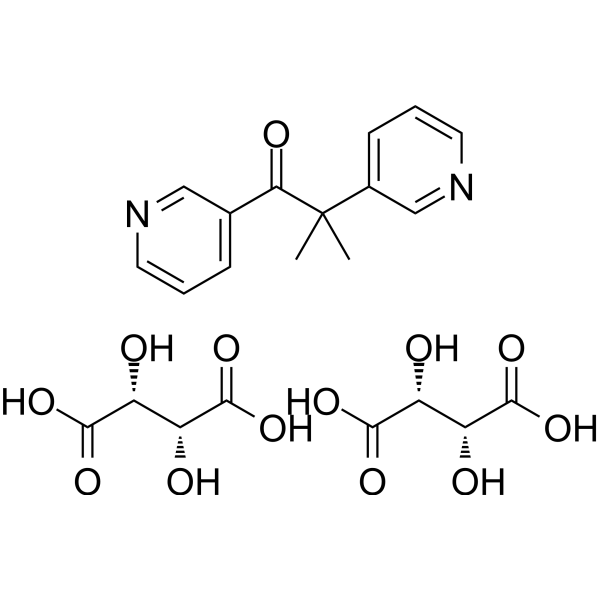
Metyrapone (Su-4885) Tartrate is a potent and orally active 11β-hydroxylase inhibitor and an autophagy activator, also inhibits the production of aldosterone. Metyrapone Tartrate inhibits synthesis of endogenous adrenal corticosteroid, decreases glucocorticoid levels, and also affects behavior and emotion. In addition, Metyrapone Tartrate increases the efficiency of autophagic process via downregulation of mTOR pathway, and interacts with Pseudomonas putida cytochrome P-450. Metyrapone Tartrate can be used for researching Cushing's syndrome and depression .
loading...
    loading...
Cat. No.: HY-B2078
CAS No.: 10402-90-1
Target:  

Neurokinin Receptor

Research Areas:  

Inflammation/Immunology

Eprazinone can enhance lung function and arterial oxygen levels and can be used in the study of chronic bronchitis. Higher doses of eprazinone increased phospholipid levels and decreased neutral lipid content in bronchoalveolar lavage (BAL) fluid, but had no effect on protein and cell levels in BAL. Eprazinone dose-dependently reduced short-circuit current (Isc), primarily by reducing chloride secretion at lower concentrations and affecting sodium and chloride transport at higher doses. Eprazinone may exert its anti-inflammatory effects by regulating BAL lipid composition and airway ion transport .
loading...
    loading...
Cat. No.: HY-D2963
R-MA-SLM is an Aβ-targeted and blood-brain barrier-permeable ratiometric H2O2-responsive fluorescent probe. When excited at 490 nm, the fluorescence intensity of the R-MA-SLM gradually decreases at 574 nm, while the emission intensity gradually increases at 661 nm. R-MA-SLM can detect and exhibits a ratiometric response to Aβ-induced endogenous H2O2. R-MA-SLM can be used in the research of Alzheimer's disease .
loading...
    loading...
Cat. No.: HY-D3398
FlavAc is a fluorescent dye (with an excitation wavelength of 980 nm) for real-time in vivo imaging of lipid metabolism disorders, including early fatty liver disease and atherosclerotic plaques. FlavAc specifically integrates into endogenous lipoproteins, primarily low-density lipoprotein (LDL), and shows no brightness enhancement when bound to albumin. FlavAc forms aggregates in aqueous solutions, leading to fluorescence quenching; however, when integrated into lipoproteins, such aggregation decreases, forming stable fluorescent complexes with enhanced brightness. FlavAc can selectively illuminate LDL upon laser irradiation .
loading...
    loading...
Cat. No.: HY-D3422
Target:  

Fluorescent Dye

Research Areas:  

Others

AM1-44 is a fixable, cationic styryl fluorescent dye primarily used for labeling nerve terminals and synaptic vesicles. In its free state, AM1-44 exhibits extremely weak fluorescence; upon insertion into the cell membrane, its fluorescence increases, and after endocytosis into vesicles and release via exocytosis, its fluorescence decreases. Therefore, it can be used to study synaptic activity, synaptic vesicle cycling, neurotransmitter release, and synaptic plasticity (Ex/Em = 480/598-600 nm in membrane environment) .
loading...
    loading...
Cat. No.: HY-E70599
Research Areas:  

Metabolic Disease

Human CES2 Enzyme is a carboxylesterase involved in drug metabolism and lipid homeostasis. Human CES2 Enzyme hydrolyzes triglycerides, cholesteryl esters and retinyl esters to regulate lipid metabolism and energy homeostasis. Human CES2 Enzyme improves glucose tolerance and insulin sensitivity, reduces hepatic lipid accumulation, alleviates white adipose tissue steatitis, decreases plasma cholesterol levels, and reduces body weight and white adipose tissue weight. Human CES2 Enzyme can be used in the research of metabolic syndrome .
loading...
    loading...
Cat. No.: HY-N0619R
CAS No.: 102841-42-9
Mulberroside A (Standard) is the analytical standard of Mulberroside A. This product is intended for research and analytical applications. Mulberroside A is one of the main bioactive constituent in mulberry (Morus alba L.) . Mulberroside A decreases the expressions of TNF-α, IL-1β, and IL-6 and inhibits the activation of NALP3, caspase-1, and NF-κB and the phosphorylation of ERK, JNK, and p38, exhibiting anti-inflammatory antiapoptotic effects . Mulberroside A shows inhibitory activity against mushroom tyrosinase with an IC50 of 53.6 μM .
loading...
    loading...
Cat. No.: HY-N0702R
CAS No.: 20183-47-5
Tenuifolin (Standard) is the analytical standard of Tenuifolin. This product is intended for research and analytical applications. Tenuifolin is effective and has a protective action. Tenuifolin inhibits β-secretase decreases Aβ protein secretion, suppresses Aβ25-35 secretion, and subsequently caspase-3 and caspase-9 become active. Tenuifolin's ability to lower AChE activity, increase at the same time, increase the ability of the upper glands, and improve the ability to read and remember. Research on tenuifolin's potential for use in urinary disease (AD) .
loading...
    loading...
Cat. No.: HY-N0811
CAS No.: 139051-27-7
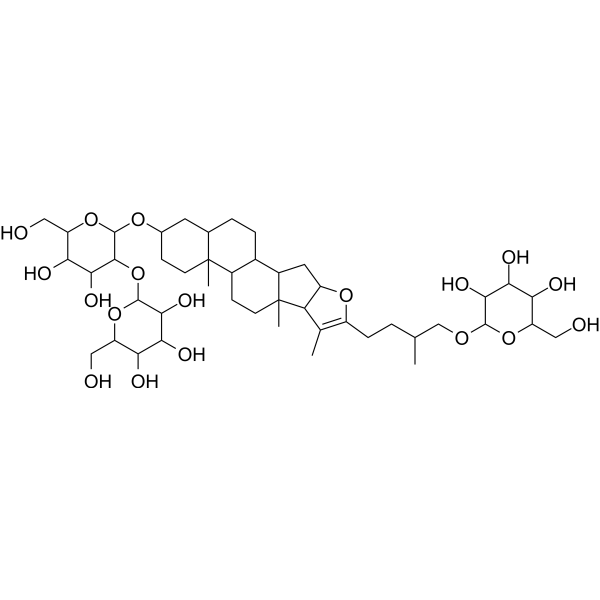
Anemarsaponin B is a steroidal saponin. Anemarsaponin B decreases the protein and mRNA levels of iNOS and COX-2. Anemarsaponin B reduces the expressions and productions of pro-inflammatory cytokines, including TNF-a and IL-6. Anemarsaponin B inhibits the nuclear translocation of the p65 subunit of NF-κB by blocking the phosphorylation of IκBα. Anemarsaponin B also inhibits the phosphorylation of MAP kinase kinases 3/6 (MKK3/6) and mixed lineage kinase 3 (MLK3). Anti-inflammatory effect .
loading...
    loading...
Cat. No.: HY-N11908
CAS No.: 115-71-9
Synonyms: cis-α-Santalol
α-Santalol (cis-α-Santalol), a naturally occurring sesquiterpene, is an orally active anticancer agent and apoptosis inducer. α-Santalol activates caspase-3 to drive apoptotic processes. >α-Santalol induces apoptosis, decreases cell viability, and causes PARP cleavage in human prostate cancer cells. α-santalol inhibits Akt/Survivin pathway to induce cell death. α-Santalol can be used for the research of prostate cancer and diabetes mellitus .
loading...
    loading...

