



8RK64

Based on 1 Customer Validation
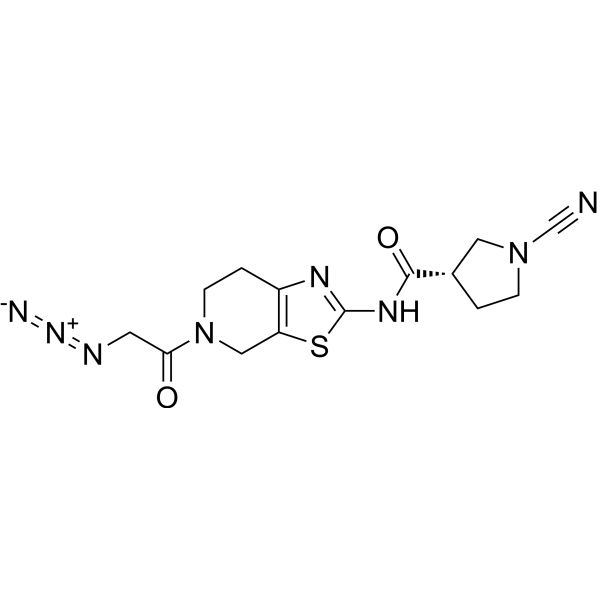
8RK64 is a UCHL1 inhibitor that covalently binds the active-site cysteine residue to form an isothiourea adduct, with selectivity over UCHL3, UCHL5, and other cysteine DUBs. 8RK64 inhibits human UCHL1 with an IC50 of 0.32 μM. 8RK64 is an azide-containing precursor usable as a two-step activity-based probe via click chemistry. 8RK64 can be used for the research of Parkinson's disease.
For research use only. We do not sell to patients.
- Purity : 99.50%
- CAS No.: 2705841-52-5
- Formula: C14H16N8O2S
- Molecular Weight:360.39
-
Storage:Powder -20°C, 3 years , 4°C, 2 years ; In solvent -80°C, 6 months , -20°C, 1 month

To place orders, for customer services and technical support, please contact: MedChemExpress USA
Tel: 609-228-6898 E-mail: [email protected] [email protected]


-
 Biological Activity
-
Chemical Information
-
Solvent & Solubility
- Protocols
- Purity & Documentation
- References
-
 Help & FAQs


-
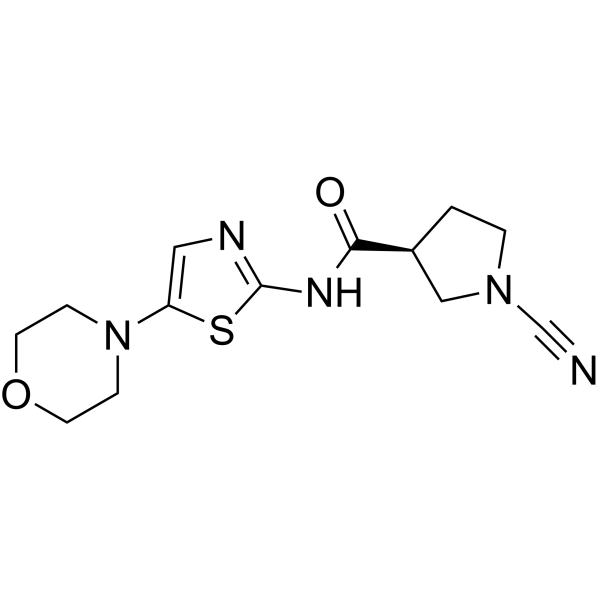
HY-133118
6RK73UCHL1 Inhibitor -
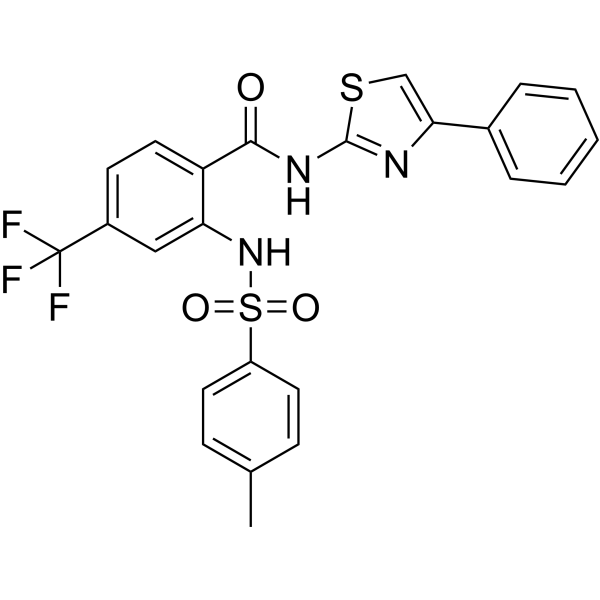
HY-100900
ML364USP2 Inhibitor -
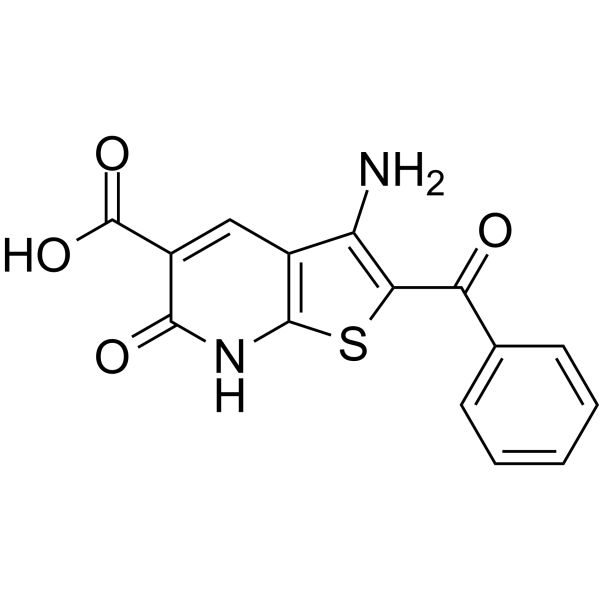
HY-12989
LDN-91946UCH-L1 Inhibitor -
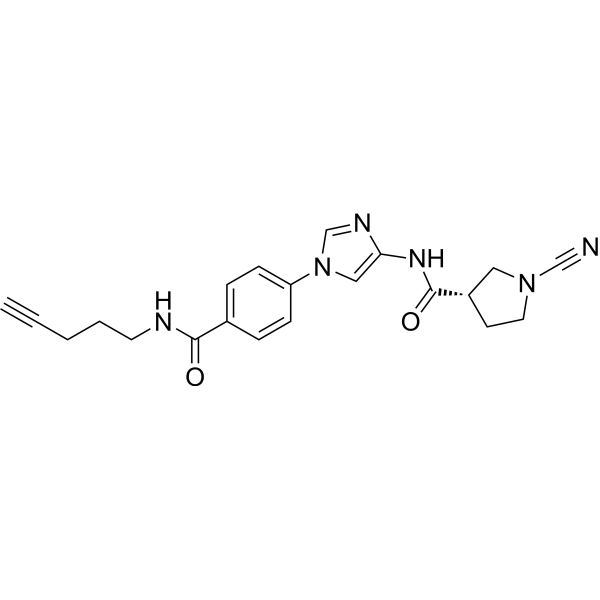
HY-153627
GK13SUCHL1 Inhibitor -
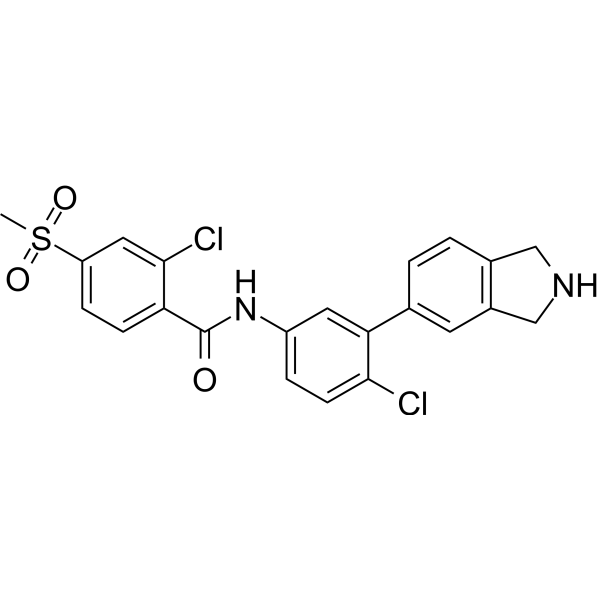
HY-149230
USP28-IN-4USP28 Inhibitor -
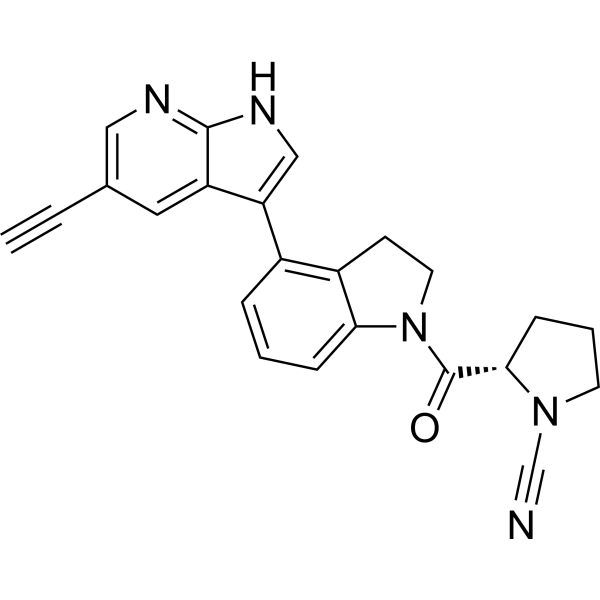
HY-138995
IMP-1710UCHL1 Inhibitor -
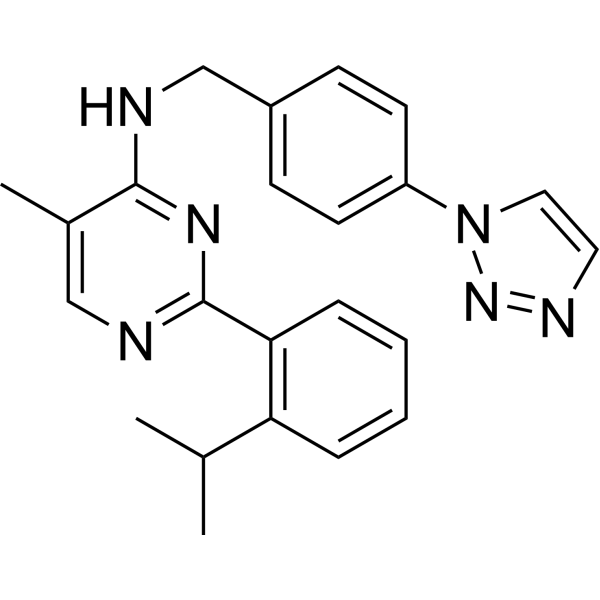
HY-17543
ML-323USP1-UAF1 Inhibitor -
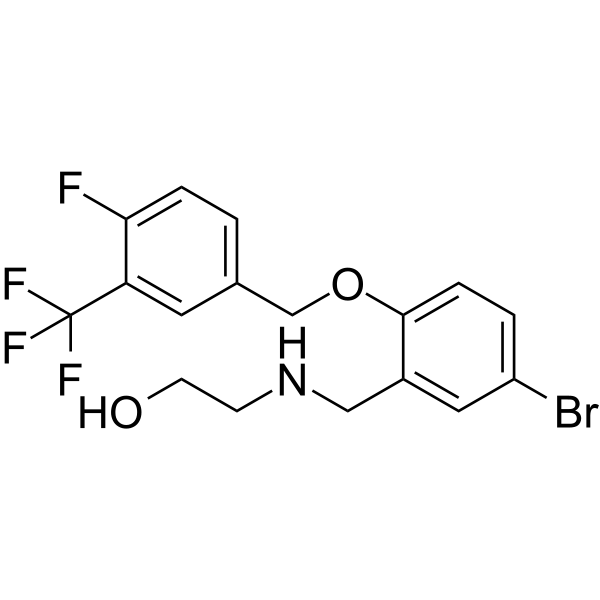
HY-117370
USP25/28 inhibitor AZ1Deubiquitinase Inhibitor -

HY-130544
5-Azidopentanoic acidCrosslinker -

HY-100900R
ML364 (Standard)USP2 Inhibitor -
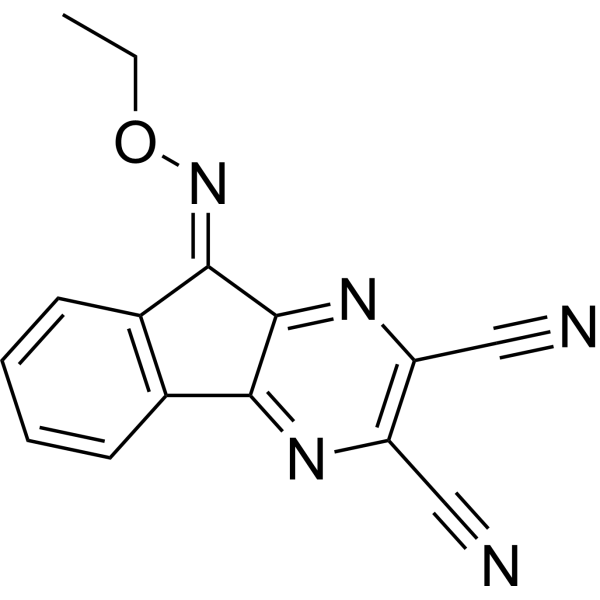
HY-50737A
DUB-IN-2Deubiquitinase Inhibitor -
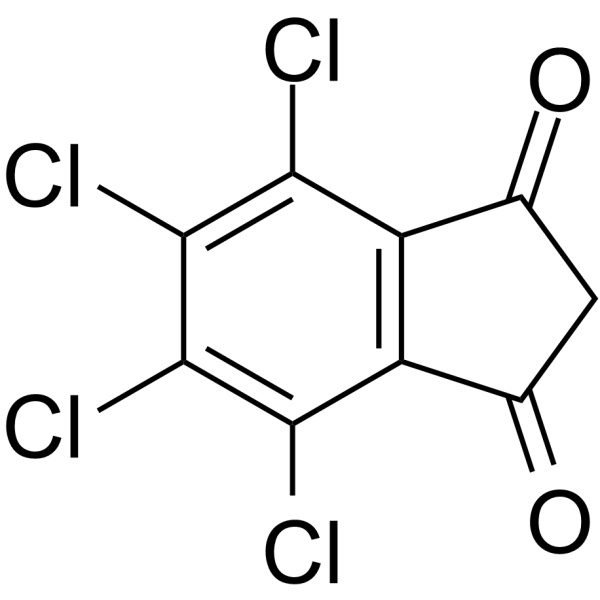
HY-18638
TCIDUCH-L3 Inhibitor


Biological Activity
Description
IC50 & Target
[1]|
UCHL1 0.32 μM (IC50) |
UCHL3 216 μM (IC50) |
In Vitro
8RK64 (0.05-200 μM; 30 min) inhibits UCHL1 in an in vitro DUB biochemical activity assay with an IC50 of 0.32 μM; the IC50 values for UCHL3 and UCHL5 are 216 μM and >1 mM, respectively, demonstrating selectivity for UCHL1[1].
8RK64 (5 μM; 24 h) inhibits UCHL1 activity in HEK293T cells, and Cy5-Ub-PA DUB profiling shows reduced residual intracellular UCHL1 deubiquitinase activity[1].
8RK64 (5 μM; 1 h) inhibits UCHL1 activity in HEK293T cell lysates; other DUB bands remain unchanged in Cy5-Ub-PA profiling, demonstrating its selectivity relative to other DUBs[1].
8RK64 (140 μM; 30 min) forms a covalent complex after incubation with recombinant human UCHL1, and LC-MS analysis confirms the covalent binding of 8RK64 to UCHL1[1].
8RK64 (5 μM; 24 h; CuAAC with biotin-alkyne after lysis) makes UCHL1 the most enriched protein relative to the DMSO control in a two-step ABP pull-down/proteomics experiment in HEK293T cells; PARK7 is another enriched protein detected simultaneously[1].
MedChemExpress (MCE) has not independently confirmed the accuracy of these methods. They are for reference only.


Chemical Information
-
CAS No. 2705841-52-5
-
Appearance Solid
-
Molecular Weight 360.39
-
Formula C14H16N8O2S
-
Color White to off-white
-
SMILES
N#CN1CC[C@@H](C1)C(NC2=NC3=C(S2)CN(CC3)C(CN=[N+]=[N-])=O)=O
-
Shipping
Room temperature in continental US; may vary elsewhere.
-
Storage
Powder -20°C 3 years 4°C 2 years In solvent -80°C 6 months -20°C 1 month


Solvent & Solubility
In Vitro:
DMSO : 100 mg/mL (277.48 mM; Need ultrasonic; Hygroscopic DMSO has a significant impact on the solubility of product, please use newly opened DMSO)
Please refer to the solubility information to select the appropriate solvent. Once prepared, please aliquot and store the solution to prevent product inactivation from repeated freeze-thaw cycles.
Storage method and period of stock solution: -80°C, 6 months; -20°C, 1 month. When stored at -80°C, please use it within 6 months. When stored at -20°C, please use it within 1 month.
Please refer to the solubility information to select the appropriate solvent. Once prepared, please aliquot and store the solution to prevent product inactivation from repeated freeze-thaw cycles.
Storage method and period of stock solution: -80°C, 6 months; -20°C, 1 month. When stored at -80°C, please use it within 6 months. When stored at -20°C, please use it within 1 month.
Concentration (start) × Volume (start) = Concentration (final) × Volume (final)


Purity & Documentation
-
Data Sheet (278 KB)
-
SDS (254 KB)
- English - EN (254 KB)
- Français - FR (254 KB)
- Deutsch - DE (254 KB)
- Norwegian - NO (254 KB)
- Español - ES (254 KB)
- Swedish - SV (254 KB)
- Italian - IT (254 KB)
- Korean - KR (254 KB)
- Portuguese - PT (254 KB)
-
Handling Instructions (2659 KB)
References


Complete Stock Solution Preparation Table
Please refer to the solubility information to select the appropriate solvent. Once prepared, please aliquot and store the solution to prevent product inactivation from repeated freeze-thaw cycles.
Storage method and period of stock solution: -80°C, 6 months; -20°C, 1 month. When stored at -80°C, please use it within 6 months. When stored at -20°C, please use it within 1 month.
| Optional Solvent | Concentration Solvent Mass | 1 mg | 5 mg | 10 mg | 25 mg |
|---|---|---|---|---|---|
| DMSO | 1 mM | 2.7748 mL | 13.8739 mL | 27.7477 mL | 69.3693 mL |
| 5 mM | 0.5550 mL | 2.7748 mL | 5.5495 mL | 13.8739 mL | |
| 10 mM | 0.2775 mL | 1.3874 mL | 2.7748 mL | 6.9369 mL | |
| 15 mM | 0.1850 mL | 0.9249 mL | 1.8498 mL | 4.6246 mL | |
| 20 mM | 0.1387 mL | 0.6937 mL | 1.3874 mL | 3.4685 mL | |
| 25 mM | 0.1110 mL | 0.5550 mL | 1.1099 mL | 2.7748 mL | |
| 30 mM | 0.0925 mL | 0.4625 mL | 0.9249 mL | 2.3123 mL | |
| 40 mM | 0.0694 mL | 0.3468 mL | 0.6937 mL | 1.7342 mL | |
| 50 mM | 0.0555 mL | 0.2775 mL | 0.5550 mL | 1.3874 mL | |
| 60 mM | 0.0462 mL | 0.2312 mL | 0.4625 mL | 1.1562 mL | |
| 80 mM | 0.0347 mL | 0.1734 mL | 0.3468 mL | 0.8671 mL | |
| 100 mM | 0.0277 mL | 0.1387 mL | 0.2775 mL | 0.6937 mL |


8RK64 Related Classifications
HY-148254 Related Classifications
 Powered by Bioz