



Netarsudil dimesylate
Based on 1 publication(s) in Google Scholar
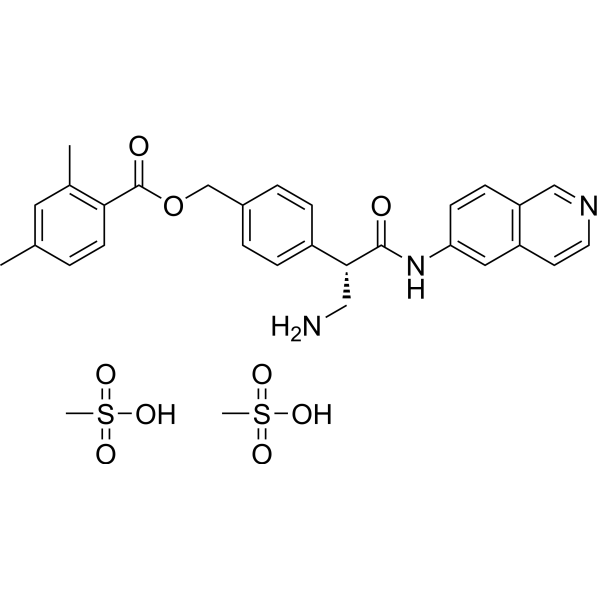
Netarsudil (AR-13324) dimesylate is a competitive inhibitor of Rho-associated protein kinases (ROCK I and ROCK II) and a reversible inhibitor of the norepinephrine transporter (NET). Netarsudil dimesylate reduces intraocular pressure by inhibiting ROCK, causing relaxation of trabecular meshwork cells and dilation of episcleral veins, thereby increasing the ease of aqueous humor outflow, while inhibiting NET to reduce aqueous humor production. Netarsudil dimesylate is mainly used in the study of ocular hypertension and primary open-angle glaucoma.
For research use only. We do not sell to patients.
- Purity : 99.90%
- CAS No.: 1422144-42-0
- Formula: C30H35N3O9S2
- Molecular Weight:645.74
-
Storage:
4°C, sealed storage, away from moisture
* In solvent : -80°C, 6 months; -20°C, 1 month (sealed storage, away from moisture)

To place orders, for customer services and technical support, please contact: MedChemExpress USA
Tel: 609-228-6898 E-mail: [email protected] [email protected]


-
 Biological Activity
-
Chemical Information
-
Solvent & Solubility
- Protocols
- Purity & Documentation
- References
-
 Help & FAQs


-
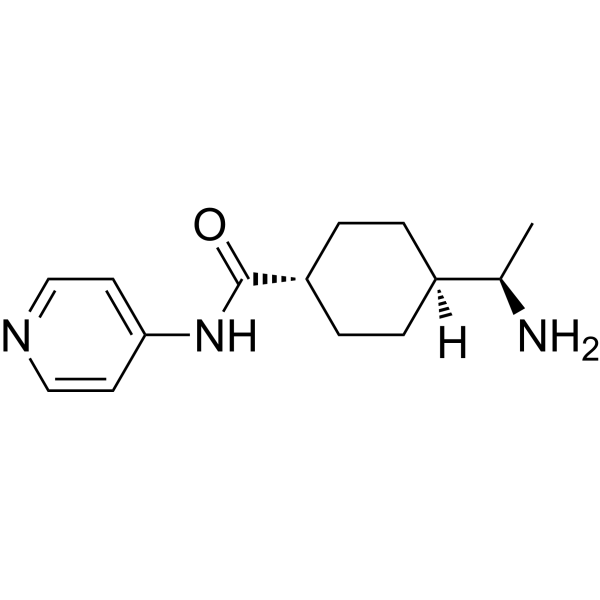
HY-10071
Y-27632ROCK Inhibitor -
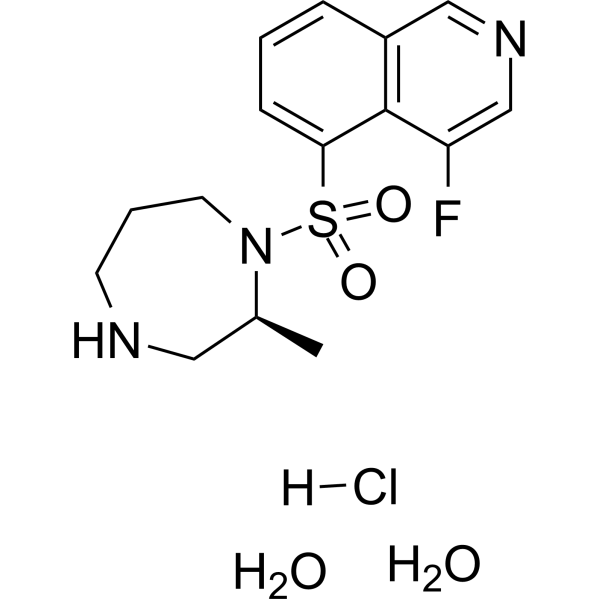
HY-15685
RipasudilROCK Inhibitor -
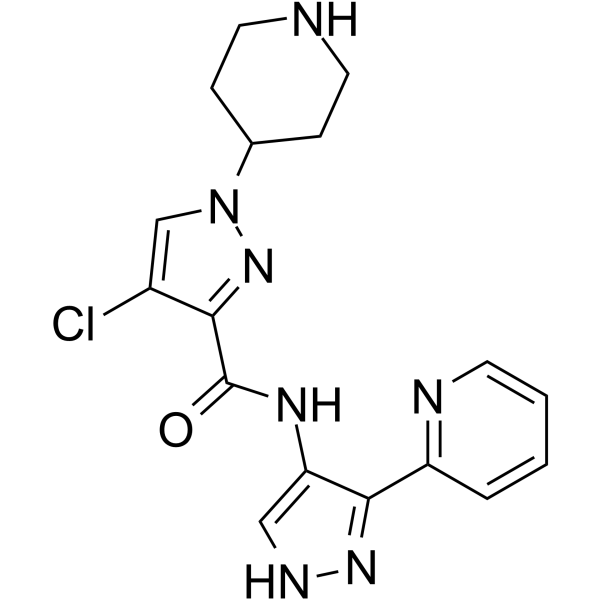
HY-12437
BDP5290ROCK/MRCK Inhibitor -
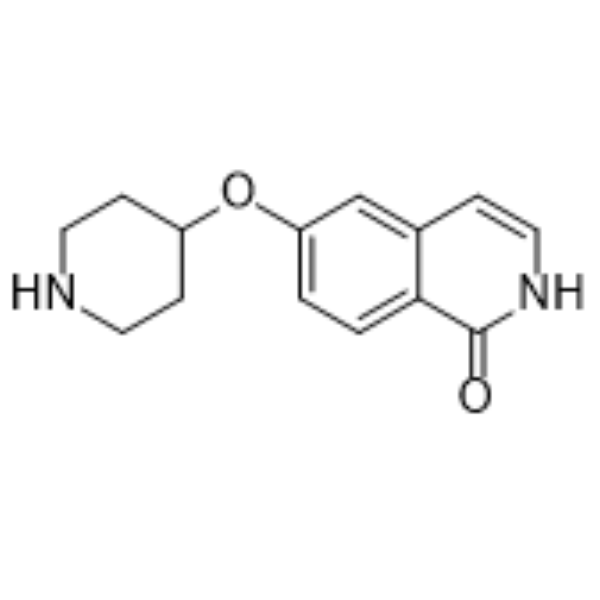
HY-15687A
SAR407899ROCK Inhibitor -
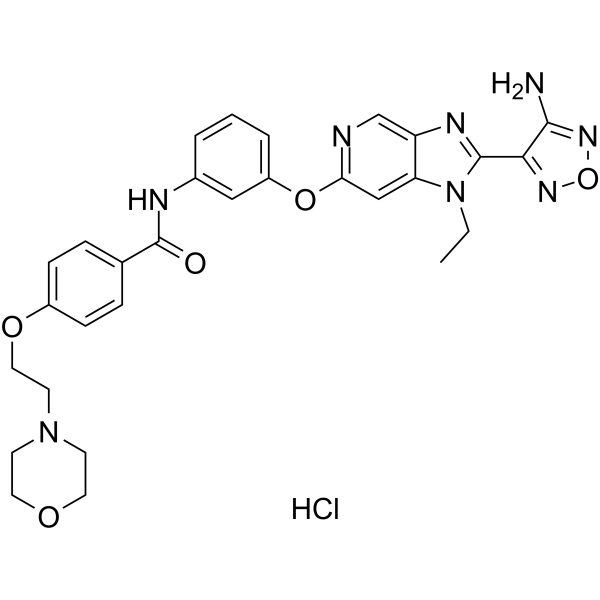
HY-15556A
GSK269962A hydrochloride -
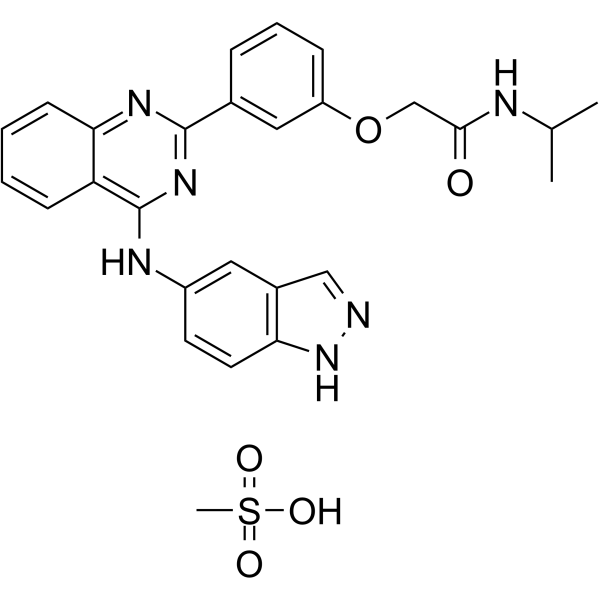
HY-15307A
Belumosudil mesylateROCK2 Inhibitor -
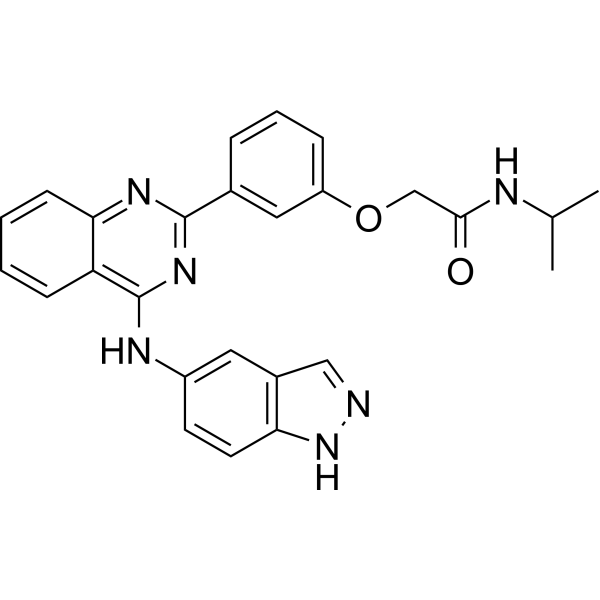
HY-15307
BelumosudilROCK2 Inhibitor -
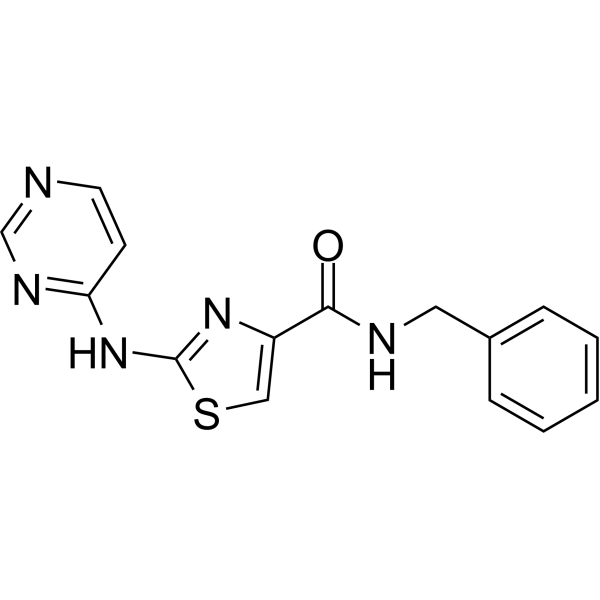
HY-13257
ThiazovivinROCK Inhibitor -
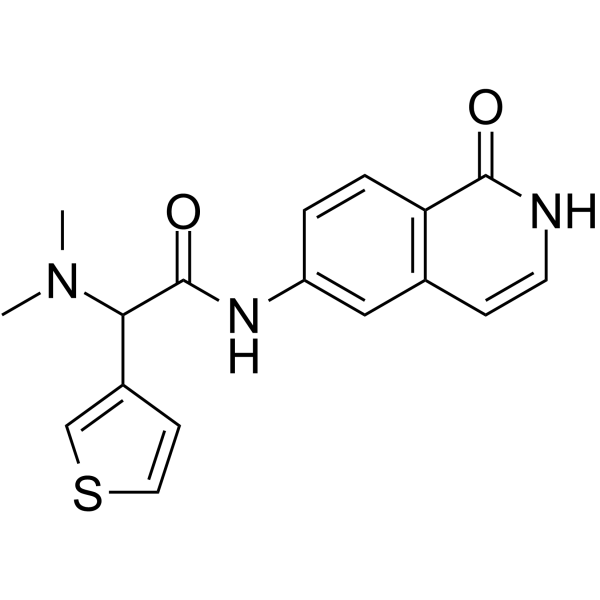
HY-16758
VerosudilROCK Inhibitor -
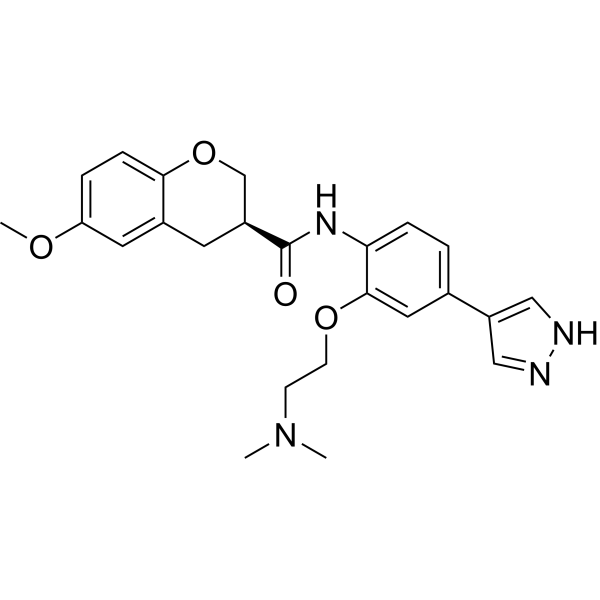
HY-15392
Chroman 1ROCK2 Inhibitor -
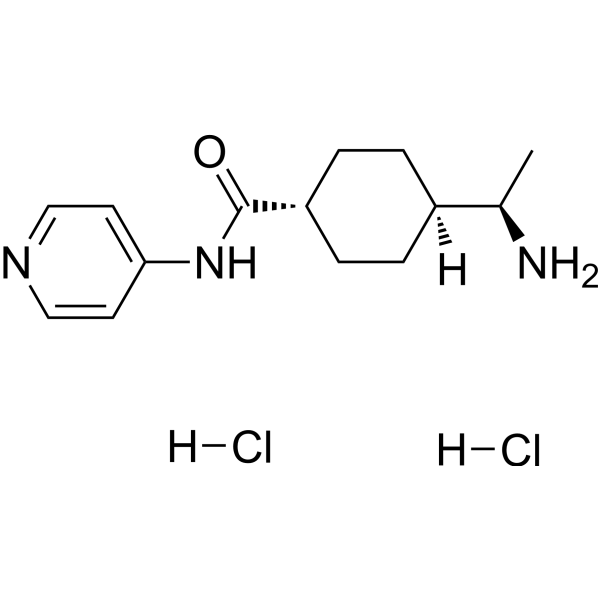
HY-10583
Y-27632 dihydrochlorideROCK Inhibitor -
HY-11000
GSK429286AROCK Inhibitor
Publications Citing Use of MedChemExpress (MCE) Netarsudil dimesylate
More

Biological Activity
Description
In Vitro
Netarsudil dimesylate exerts its effects by metabolizing to the active compound Netarsudil-M1. Netarsudil-M1 (0.3 μM; 3 h) significantly increases aqueous humor outflow ease in human ocular tissue perfusion experiments and increases effective filtration length (PEFL) by dilating the trabecular meshwork (TM) and episcleral veins (ESV)[1].
MedChemExpress (MCE) has not independently confirmed the accuracy of these methods. They are for reference only.
-
Cell Line:Human trabecular meshwork cells
-
Concentration:0.3 μM Netarsudil-M1
-
Incubation Time:24 h
-
Result:Actin Stress Fibers: Reduced formation of actin stress fibers and focal adhesions, accompanied by cell rounding and detachment, indicative of relaxed cell contractility.
Immunofluorescence Staining: Decreased phosphorylation of myosin light chain (MLC), a marker of ROCK-mediated contraction, confirming inhibition of the Rho-kinase pathway.
In Vivo
Netarsudil dimesylate (0.04% eye drops; topical instillation; once daily; 3 days) significantly reduces intraocular pressure and episcleral venous pressure in male Dutch DB rabbits without affecting arterial pressure, heart rate, and carotid blood flow[3].
MedChemExpress (MCE) has not independently confirmed the accuracy of these methods. They are for reference only.
-
Animal Model:Male Dutch Belted rabbits (2.15±0.09 kg, male) episcleral venous pressure (EVP) and IOP measurement model[3]
-
Dosage:0.04% Netarsudil ophthalmic solution (aqueous solution with 0.015% benzalkonium chloride).
-
Administration:Topical instillation of 1 drop once daily for 3 days.
-
Result:Baseline values: IOP 34±4 mmHg, EVP 17±2 mmHg, arterial pressure (AP) 105±3 mmHg, carotid blood flow (BFcar) 35±1 mL/min, heart rate (HR) 337±9 bpm.
Three hours after the final dose, IOP decreased by 39% to 19±2 mmHg, EVP decreased by 35% to 11±1 mmHg.
AP, BFcar, and HR showed no significant changes throughout the experiment, indicating no systemic hemodynamic effects.
-
Animal Model:Female cynomolgus monkeys (3-5 kg, female, adult) aqueous humor dynamics model[2]
-
Dosage:0.04% Netarsudil ophthalmic solution (aqueous formulation).
-
Administration:Opical instillation of 50 μL (25 μL×2) as a single dose.
-
Result:Six hours post-treatment, outflow facility (C) increased by 53% compared to baseline, from 0.58±0.07 to 0.90±0.11 μL/min/mmHg.
Aqueous humor flow rate (F) decreased by 23% compared to baseline, from 1.60±0.11 to 1.25±0.19 μL/min.
IOP was reduced by 25% compared to baseline, with no significant changes observed in contralateral vehicle-treated eyes.


Chemical Information
-
CAS No. 1422144-42-0
-
Appearance Solid
-
Molecular Weight 645.74
-
Formula C30H35N3O9S2
-
Color White to yellow
-
SMILES
CC1=CC(C)=C(C(OCC2=CC=C([C@@H](CN)C(NC3=CC(C=CN=C4)=C4C=C3)=O)C=C2)=O)C=C1.CS(=O)(O)=O.CS(=O)(O)=O
-
Synonyms
AR-13324 dimesylate
-
Shipping
Room temperature in continental US; may vary elsewhere.
-
Storage
4°C, sealed storage, away from moisture
* In solvent : -80°C, 6 months; -20°C, 1 month (sealed storage, away from moisture)


Publications (1)
-
Journal Impact Factor
-
Most Recent
-
Microbiol Spectr
Repurposing flufenamic acid as a putative PmrB-directed adjuvant to restore colistin activity in Klebsiella pneumoniae. [Abstract]2026 Mar 17:e0362025. PMID: 41842337


Solvent & Solubility
In Vitro:
DMSO : 100 mg/mL (154.86 mM; Need ultrasonic; Hygroscopic DMSO has a significant impact on the solubility of product, please use newly opened DMSO)
Please refer to the solubility information to select the appropriate solvent. Once prepared, please aliquot and store the solution to prevent product inactivation from repeated freeze-thaw cycles.
Storage method and period of stock solution: -80°C, 6 months; -20°C, 1 month (sealed storage, away from moisture). When stored at -80°C, please use it within 6 months. When stored at -20°C, please use it within 1 month.
Please refer to the solubility information to select the appropriate solvent. Once prepared, please aliquot and store the solution to prevent product inactivation from repeated freeze-thaw cycles.
Storage method and period of stock solution: -80°C, 6 months; -20°C, 1 month (sealed storage, away from moisture). When stored at -80°C, please use it within 6 months. When stored at -20°C, please use it within 1 month.
Concentration (start) × Volume (start) = Concentration (final) × Volume (final)
In Vivo:
Select the appropriate dissolution method based on your experimental animal and administration route.
- For the following dissolution methods, please ensure to first prepare a clear stock solution using an In Vitro approach and then sequentially add co-solvents:
- To ensure reliable experimental results, the clarified stock solution can be appropriately stored based on storage conditions. As for the working solution for In Vivo experiments, it is recommended to prepare freshly and use it on the same day.
- The percentages shown for the solvents indicate their volumetric ratio in the final prepared solution. If precipitation or phase separation occurs during preparation, heat and/or sonication can be used to aid dissolution.
Add each solvent one by one: 10% DMSO 40% PEG300 5% Tween-80 45% Saline
Solubility: ≥ 2.5 mg/mL (3.87 mM); Clear solution
This protocol yields a clear solution of ≥ 2.5 mg/mL (saturation unknown).
Taking 1 mL working solution as an example, add 100 μL DMSO stock solution (25.0 mg/mL) to 400 μL PEG300, and mix evenly; then add 50 μL Tween-80 and mix evenly; then add 450 μL Saline to adjust the volume to 1 mL.
Preparation of Saline: Dissolve 0.9 g sodium chloride in ddH₂O and dilute to 100 mL to obtain a clear Saline solution.
Add each solvent one by one: 10% DMSO 90% (20% SBE-β-CD in Saline)
Solubility: ≥ 2.5 mg/mL (3.87 mM); Clear solution
This protocol yields a clear solution of ≥ 2.5 mg/mL (saturation unknown).
Taking 1 mL working solution as an example, add 100 μL DMSO stock solution (25.0 mg/mL) to 900 μL 20% SBE-β-CD in Saline, and mix evenly.
Preparation of 20% SBE-β-CD in Saline (4°C, storage for one week): 2 g SBE-β-CD powder is dissolved in 10 mL Saline, completely dissolve until clear.
In Vivo Dissolution Calculator
Please enter the basic information of animal experiments:
-
-
-
-
Recommended: Prepare an additional quantity of animals to account for potential losses during experiments.
Please enter your animal formula composition:
-
%DMSO +
Recommended: Keep the proportion of DMSO in working solution below 2% if your animal is weak.
-
%+
-
+%Tween-80 + +
-
%Saline +
The co-solvents required include: DMSO, . All of co-solvents are available by MedChemExpress (MCE). , Tween 80. All of co-solvents are available by MedChemExpress (MCE).
Working solution concentration: 0.22 mg/mL
Method for preparing stock solution: mg drug dissolved in μL DMSO. Stock solution concentration: mg/mL. * In solvent : -80°C, 6 months; -20°C, 1 month (sealed storage, away from moisture)
1. Take μL DMSO stock solution;
2. Add μL .
μL , mix evenly;
3. Then add μL Tween 80, mix evenly;
4. Then add μL
Please ensure that the stock solution in the first step is dissolved to a clear state, and add co-solvents in sequence. You can use ultrasonic heating (ultrasonic cleaner, recommended frequency 20-40 kHz), vortexing, etc. to assist dissolution.


Purity & Documentation
-
Data Sheet (279 KB)
-
SDS (393 KB)
- English - EN (393 KB)
- Français - FR (393 KB)
- Deutsch - DE (393 KB)
- Norwegian - NO (393 KB)
- Español - ES (393 KB)
- Swedish - SV (393 KB)
- Italian - IT (393 KB)
- Korean - KR (393 KB)
- Portuguese - PT (393 KB)
-
Handling Instructions (2659 KB)
References
[1]. Ren R, et al. Netarsudil Increases Outflow Facility in Human Eyes Through Multiple Mechanisms. Invest Ophthalmol Vis Sci. 2016 Nov 1;57(14):6197-6209. [Content Brief]
[2]. Wang RF, et al. Effect of 0.04% AR-13324, a ROCK, and norepinephrine transporter inhibitor, on aqueous humor dynamics in normotensive monkey eyes. J Glaucoma. 2015 Jan;24(1):51-54. [Content Brief]
[3]. Kiel JW, et al. Effect of AR-13324 on episcleral venous pressure in Dutch belted rabbits. J Ocul Pharmacol Ther. 2015 Apr;31(3):146-151. [Content Brief]
[4]. Chen S, et al. Dose-dependent effects of netarsudil, a Rho-kinase inhibitor, on the distal outflow tract. Graefes Arch Clin Exp Ophthalmol. 2020 Jun;258(6):1211-1216. [Content Brief]


Complete Stock Solution Preparation Table
Please refer to the solubility information to select the appropriate solvent. Once prepared, please aliquot and store the solution to prevent product inactivation from repeated freeze-thaw cycles.
Storage method and period of stock solution: -80°C, 6 months; -20°C, 1 month (sealed storage, away from moisture). When stored at -80°C, please use it within 6 months. When stored at -20°C, please use it within 1 month.
| Optional Solvent | Concentration Solvent Mass | 1 mg | 5 mg | 10 mg | 25 mg |
|---|---|---|---|---|---|
| DMSO | 1 mM | 1.5486 mL | 7.7431 mL | 15.4861 mL | 38.7153 mL |
| 5 mM | 0.3097 mL | 1.5486 mL | 3.0972 mL | 7.7431 mL | |
| 10 mM | 0.1549 mL | 0.7743 mL | 1.5486 mL | 3.8715 mL | |
| 15 mM | 0.1032 mL | 0.5162 mL | 1.0324 mL | 2.5810 mL | |
| 20 mM | 0.0774 mL | 0.3872 mL | 0.7743 mL | 1.9358 mL | |
| 25 mM | 0.0619 mL | 0.3097 mL | 0.6194 mL | 1.5486 mL | |
| 30 mM | 0.0516 mL | 0.2581 mL | 0.5162 mL | 1.2905 mL | |
| 40 mM | 0.0387 mL | 0.1936 mL | 0.3872 mL | 0.9679 mL | |
| 50 mM | 0.0310 mL | 0.1549 mL | 0.3097 mL | 0.7743 mL | |
| 60 mM | 0.0258 mL | 0.1291 mL | 0.2581 mL | 0.6453 mL | |
| 80 mM | 0.0194 mL | 0.0968 mL | 0.1936 mL | 0.4839 mL | |
| 100 mM | 0.0155 mL | 0.0774 mL | 0.1549 mL | 0.3872 mL |


Netarsudil dimesylate Related Classifications
HY-12798A Related Classifications
 Powered by Bioz