



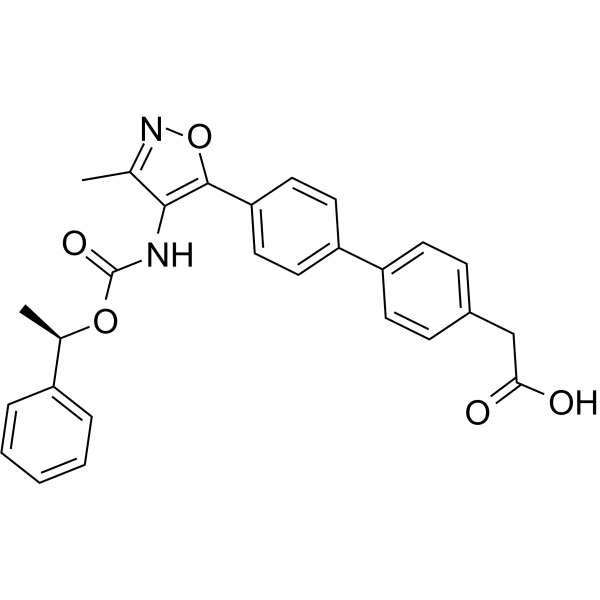
AM966
Based on 21 publication(s) in Google Scholar
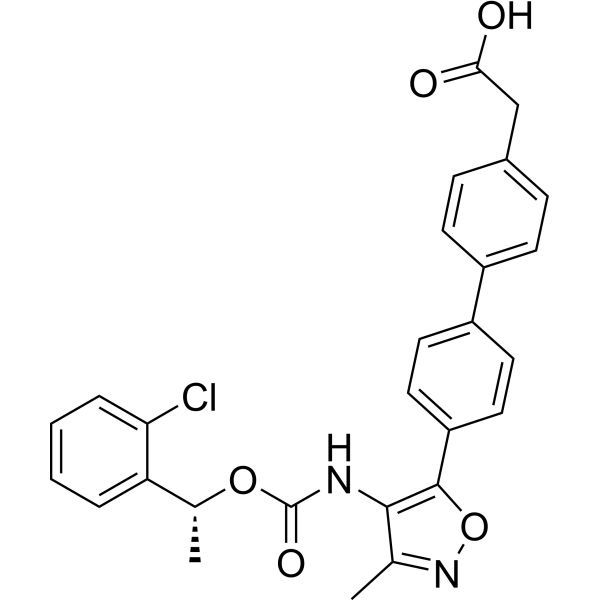
AM966 is a high affinity, selective, oral LPA1-antagonist, inhibits LPA-stimulated intracellular calcium release (IC50=17 nM).
Nur für Forschungszwecke. Wir verkaufen nicht an Patienten.
- Reinheit : 98.91%
- CAS. Nr.: 1228690-19-4
- Formel: C27H23ClN2O5
- Molecular Weight:490.93
-
Speicherung:Powder -20°C, 3 years , 4°C, 2 years ; In solvent -80°C, 2 years , -20°C, 1 year

To place orders, for customer services and technical support, please contact: MedChemExpress USA
Tel: 609-228-6898 E-mail: [email protected] [email protected]


-
 Biologische Aktivität
-
Chemical Information
-
Lösungsmittel & Löslichkeit
- Protokoll
- Reinheit & Dokumentation
- Verweise
-
 Help & FAQs


-
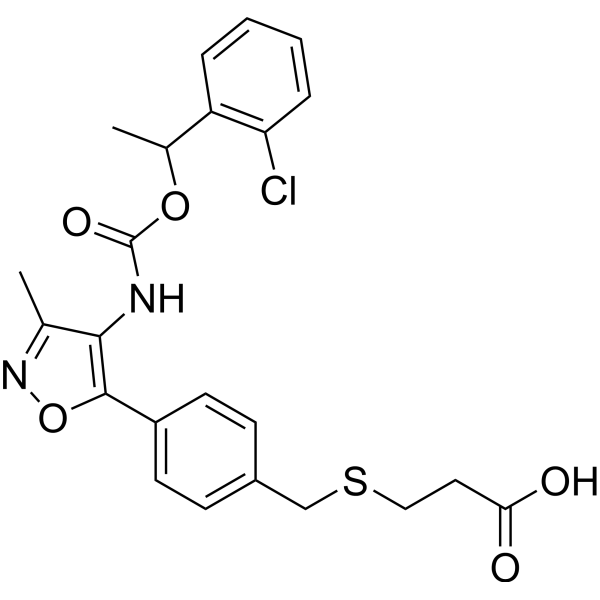
HY-13285
Ki16425LPA1/3 Antagonist -
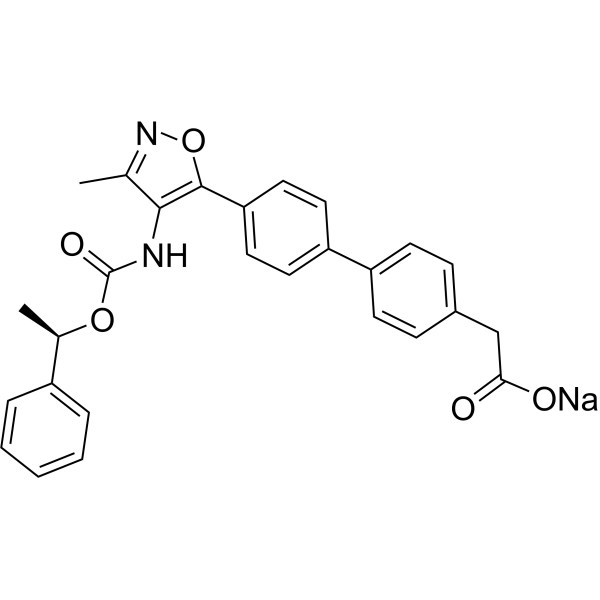
HY-16039
AM095LPA1 Antagonist -
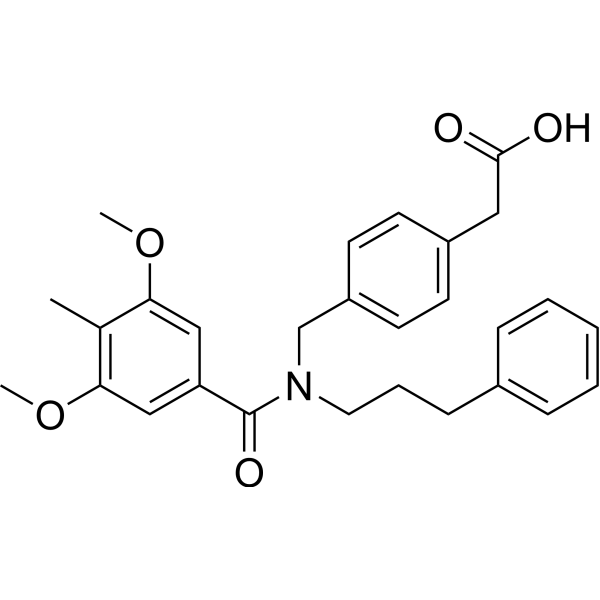
HY-100882
ONO-7300243LPA1 Antagonist -
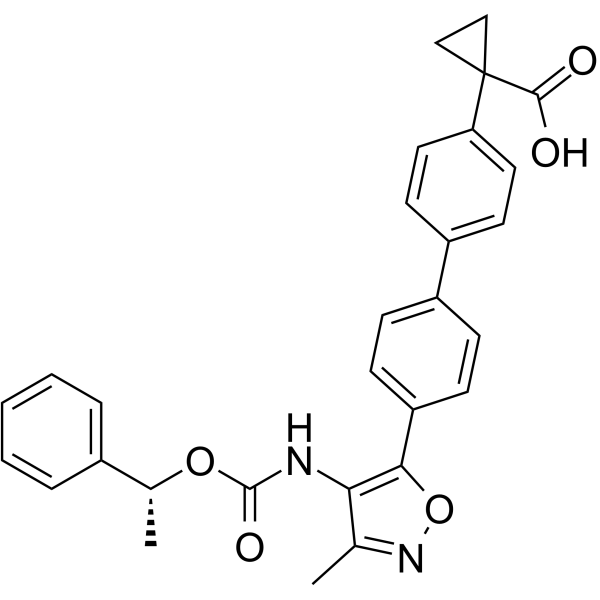
HY-100619
BMS-986020LPA1 Antagonist -
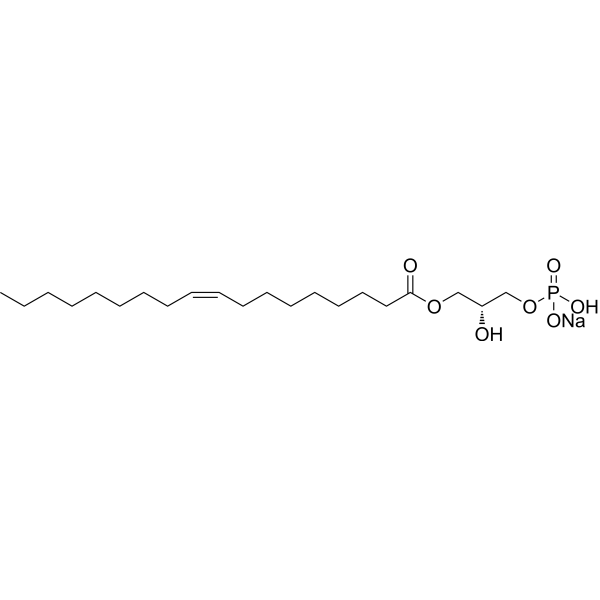
HY-107614
1-Oleoyl lysophosphatidic acid sodiumLPA Receptor Activator -
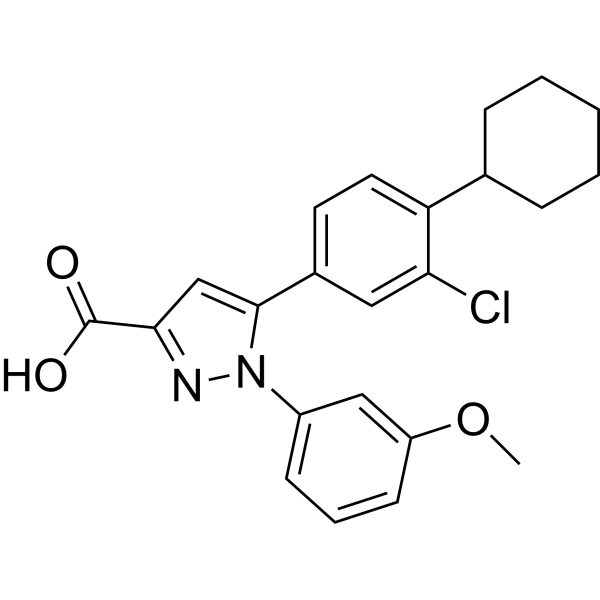
HY-107615
TC LPA5 4LPA5/GPR92 Antagonist -
HY-16040
AM095 free acid -
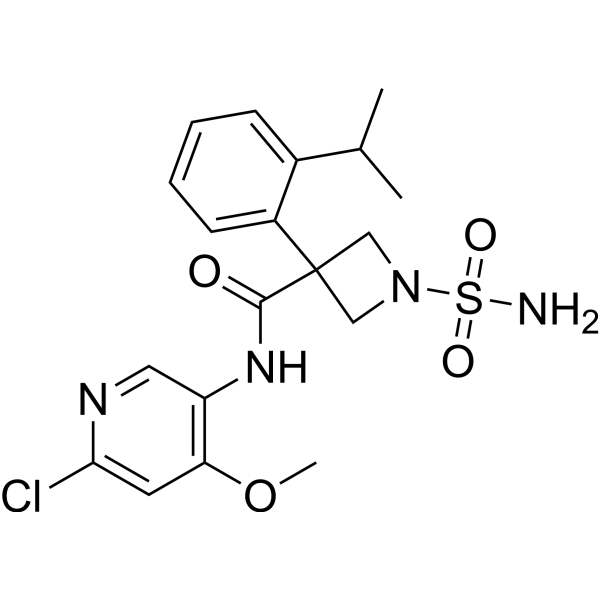
HY-138453
ACT-1016-0707LPA1 Receptor Antagonist -
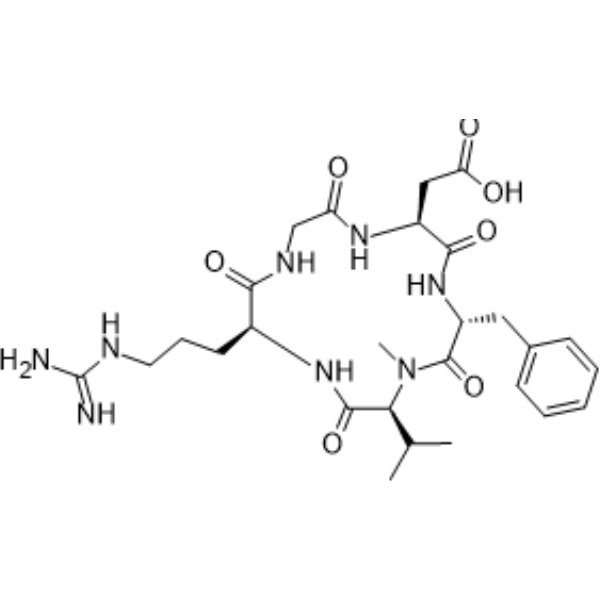
HY-16141
CilengitideIntegrin Inhibitor -
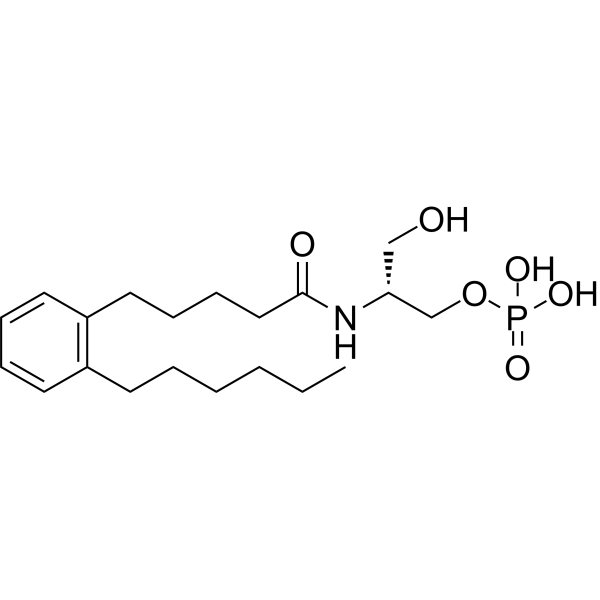
HY-150204
ONO-0740556LPA1 Agonist -
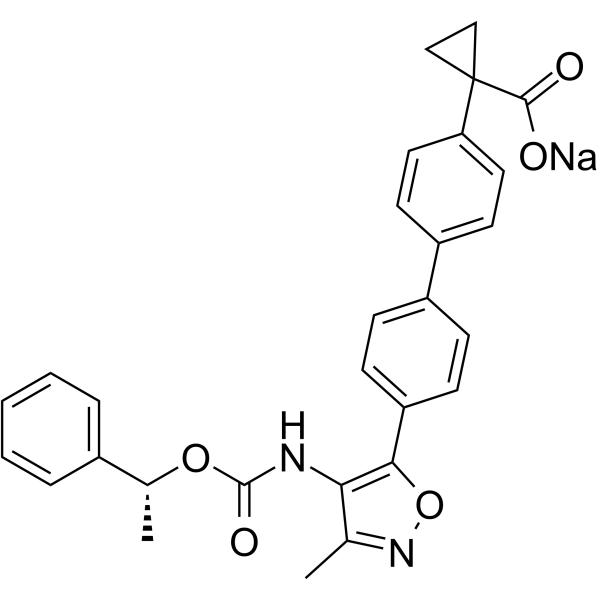
HY-100619A
BMS-986020 sodiumLPA1 Antagonist -
HY-117444
ONO-9780307LPA1 Antagonist
Publications Citing Use of MedChemExpress (MCE) AM966
More- Cell Metab. 2022 Apr 5;34(4):615-633.e8. [Abstract]
- Autophagy. 2022 Oct;18(10):2459-2480. [Abstract]
- Cell Commun Signal. 2023 Sep 25;21(1):257. [Abstract]
- Apoptosis. 2019 Jun;24(5-6):478-498. [Abstract]
- Neuropsychopharmacol Rep. 2019 Sep;39(3):156-163. [Abstract]
- Biochem Pharmacol. 2015 Jun 15;95(4):311-23. [Abstract]
- Eur J Pharmacol. 2022 Jun 15;925:174986. [Abstract]
- Eur J Pharmacol. 2020 Apr 15:873:172963. [Abstract]
- Eur J Pharmacol. 2019 Oct 5:860:172539. [Abstract]
- J Lipid Res. 2026 Mar 3;67(4):101014. [Abstract]
- J Neurochem. 2021 Aug;158(4):849-864. [Abstract]
- J Pharmacol Exp Ther. 2016 Nov;359(2):340-353. [Abstract]
- J Pharmacol Exp Ther. 2016 Oct;359(1):124-33. [Abstract]
- J Biol Chem. 2016 Dec 30;291(53):27364-27370. [Abstract]
- Cell Mol Bioeng. 2025 Oct 13;18(6):577-588. [Abstract]
- J Clin Med. 2016 Jan 26;5(2):16. [Abstract]
- Acta Histochem. 2025 May 23;127(3):152268. [Abstract]
- Res Sq. 2026 Sep 20.
- The Ohio State University. 2025.
- Seoul National University. 2024 Feb.
- Washington State University. 2015 May.
 Customer Validation & Images

-
WB
-
WB
-
WB
-
WB


Biologische Aktivität
Beschreibung
IC50 & Target
LPA1[1]
Cellular Effect
|
Cell Line

|
Type | Value | Description | References |
|---|---|---|---|---|
| CHO | IC50 |
1600 nM
Compound: 29
|
Antagonist activity at human LPA3 receptor expressed in CHO cells assessed as inhibition of LPA-induced calcium mobilization preincubated for 30 mins followed by LPA induction by FLIPR Calcium 4 dye-based fluorometric analysis
Antagonist activity at human LPA3 receptor expressed in CHO cells assessed as inhibition of LPA-induced calcium mobilization preincubated for 30 mins followed by LPA induction by FLIPR Calcium 4 dye-based fluorometric analysis
|
10.1039/C4MD00333K |
| CHO | IC50 |
17 nM
Compound: 29
|
Antagonist activity at human LPA1 receptor expressed in CHO cells assessed as inhibition of LPA-induced calcium mobilization preincubated for 30 mins followed by LPA induction by FLIPR Calcium 4 dye-based fluorometric analysis
Antagonist activity at human LPA1 receptor expressed in CHO cells assessed as inhibition of LPA-induced calcium mobilization preincubated for 30 mins followed by LPA induction by FLIPR Calcium 4 dye-based fluorometric analysis
|
10.1039/C4MD00333K |
| CHO | IC50 |
1700 nM
Compound: 29
|
Antagonist activity at human LPA2 receptor expressed in CHO cells assessed as inhibition of LPA-induced calcium mobilization preincubated for 30 mins followed by LPA induction by FLIPR Calcium 4 dye-based fluorometric analysis
Antagonist activity at human LPA2 receptor expressed in CHO cells assessed as inhibition of LPA-induced calcium mobilization preincubated for 30 mins followed by LPA induction by FLIPR Calcium 4 dye-based fluorometric analysis
|
10.1039/C4MD00333K |
In Vitro
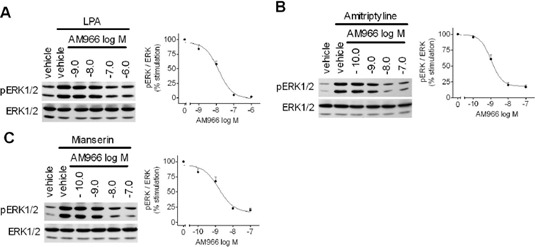
AM966 is a potent, selective, orally bioavailable LPA1 receptor antagonist. AM966 inhibits LPA1-mediated chemotaxis of human A2058 melanoma cells (IC50=138±43 nM), IMR-90 human lung fibroblasts (IC50=182±86 nM) and CHO mLPA1 cells (IC50=469±54 nM)[1]. LPA-induced ERK1/2 activation is completely blocked by AM966 (100 nM), which selectively antagonizes LPA1 over LPA2-5, with an IC50 value of 3.8±0.4 nM. Pre-treatment with AM966 (100 nM) completely blocks ERK1/2 phosphorylation induced by Mianserin[2].
MedChemExpress (MCE) has not independently confirmed the accuracy of these methods. They are for reference only.
In Vivo
MedChemExpress (MCE) has not independently confirmed the accuracy of these methods. They are for reference only.


Chemical Information
-
CAS. Nr. 1228690-19-4
-
Appearance Solid
-
Molecular Weight 490.93
-
Formel C27H23ClN2O5
-
Color White to off-white
-
SMILES
O=C(O)CC1=CC=C(C2=CC=C(C3=C(NC(O[C@@H](C4=CC=CC=C4Cl)C)=O)C(C)=NO3)C=C2)C=C1
-
Versand
Room temperature in continental US; may vary elsewhere.
-
Speicherung
Powder -20°C 3 years 4°C 2 years In solvent -80°C 2 years -20°C 1 year


Publications (21)
-
Journal Impact Factor
-
Most Recent
-
Cell Metab
Secreted phospholipase A2 modifies extracellular vesicles and accelerates B cell lymphoma. [Abstract]2022 Apr 5;34(4):615-633.e8. PMID: 35294862 -
Autophagy
A defective lysophosphatidic acid-autophagy axis increases miscarriage risk by restricting decidual macrophage residence. [Abstract]2022 Oct;18(10):2459-2480. PMID: 35220880 -
Cell Commun Signal
LPA1-mediated inhibition of CXCR4 attenuates CXCL12-induced signaling and cell migration. [Abstract]2023 Sep 25;21(1):257. PMID: 37749552 -
Apoptosis
Inhibition of TNF-α-induced neuronal apoptosis by antidepressants acting through the lysophosphatidic acid receptor LPA1. [Abstract]2019 Jun;24(5-6):478-498. PMID: 30840161 -
Neuropsychopharmacol Rep
Antidepressant amitriptyline-induced matrix metalloproteinase-9 activation is mediated by Src family tyrosine kinase, which leads to glial cell line-derived neurotrophic factor mRNA expression in rat astroglial cells. [Abstract]2019 Sep;39(3):156-163. PMID: 31025529 -
Biochem Pharmacol
Antidepressants activate the lysophosphatidic acid receptor LPA(1) to induce insulin-like growth factor-I receptor transactivation, stimulation of ERK1/2 signaling and cell proliferation in CHO-K1 fibroblasts. [Abstract]2015 Jun 15;95(4):311-23. PMID: 25888927
AM966 purchased from MedChemExpress. Usage Cited in: Biochem Pharmacol. 2015 Jun 15;95(4):311-23. [Abstract]
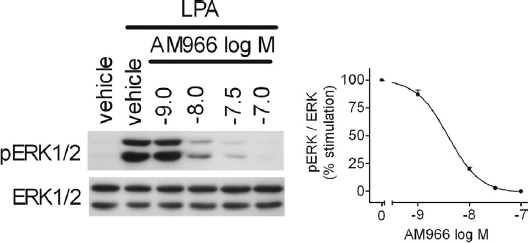
CHO-K1 cells express LPA1 receptors coupled to ERK1/2 phosphorylation. Inhibition of LPA-induced phospho-ERK1/2 by AM966. Cells are pre-incubated with either vehicle or the indicated concentrations of AM966 for 30 min and then treated with LPA (300 nM) for 15 min. Values are expressed as percent of p-ERK stimulation elicited by LPA in the absence of antagonist and are the mean ± SEM of three experiments.
-
Eur J Pharmacol
Downregulation of connexin 43 potentiates amitriptyline-induced brain-derived neurotrophic factor expression in primary astrocytes through lysophosphatidic acid receptor1/3, Src, and extracellular signal-regulated kinase. [Abstract]2022 Jun 15;925:174986. PMID: 35490723 -
Eur J Pharmacol
Antidepressants induce profibrotic responses via the lysophosphatidic acid receptor LPA1. [Abstract]2020 Apr 15:873:172963. PMID: 32007501 -
Eur J Pharmacol
Mirtazapine increases glial cell line-derived neurotrophic factor production through lysophosphatidic acid 1 receptor-mediated extracellular signal-regulated kinase signaling in astrocytes. [Abstract]2019 Oct 5:860:172539. PMID: 31306636 -
J Lipid Res
EBV promotes alveolar trabecula resorption via extracellular vesicle remodeling by group IIA secreted phospholipase A2. [Abstract]2026 Mar 3;67(4):101014. PMID: 41786250 -
J Neurochem
Lysophosphatidic acid induces thrombospondin-1 production in primary cultured rat cortical astrocytes. [Abstract]2021 Aug;158(4):849-864. PMID: 33118159 -
J Pharmacol Exp Ther
LPA1 Mediates Antidepressant-Induced ERK1/2 Signaling and Protection from Oxidative Stress in Glial Cells. [Abstract]2016 Nov;359(2):340-353. PMID: 27605627
AM966 purchased from MedChemExpress. Usage Cited in: J Pharmacol Exp Ther. 2016 Nov;359(2):340-353. [Abstract]
Concentration-dependent effects of LPA receptor antagonists on antidepressant- and LPA-induced ERK1/2 phosphorylation in C6 glioma cells. Cells are pre-incubated with either vehicle or the indicated concentrations of AM966 for 10 min and then exposed to either vehicle or 1 μM LPA (A), 15 μM Amitriptyline (C) or 5 μM Mianserin (E) for 10 min.
-
J Pharmacol Exp Ther
Positive and Negative Cross-Talk between Lysophosphatidic Acid Receptor 1, Free Fatty Acid Receptor 4, and Epidermal Growth Factor Receptor in Human Prostate Cancer Cells. [Abstract]2016 Oct;359(1):124-33. PMID: 27474750 -
J Biol Chem
Identification of Lysophosphatidic Acid Receptor 1 in Astroglial Cells as a Target for Glial Cell Line-derived Neurotrophic Factor Expression Induced by Antidepressants. [Abstract]2016 Dec 30;291(53):27364-27370. PMID: 27864362
AM966 purchased from MedChemExpress. Usage Cited in: J Biol Chem. 2016 Dec 30;291(53):27364-27370. [Abstract]
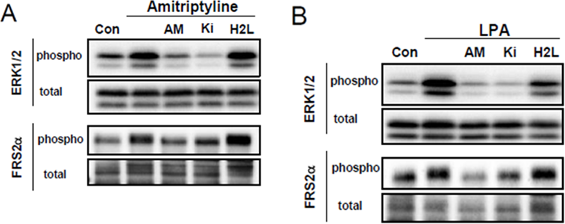
Effect of LPAR antagonists on ERK1/2 phosphorylation and FRS2 phosphorylation evoked by either amitriptyline (A) or LPA (B).
-
Cell Mol Bioeng
Lysophosphatidic Acid (LPA) Receptor Signaling Promotes the Adaptation of Malignant Cellular Functions in Highly Migratory Osteosarcoma Cells Under Hypoxic and Low-Glucose Conditions. [Abstract]2025 Oct 13;18(6):577-588. PMID: 41328303 -
J Clin Med
Eicosopentaneoic Acid and Other Free Fatty Acid Receptor Agonists Inhibit Lysophosphatidic Acid- and Epidermal Growth Factor-Induced Proliferation of Human Breast Cancer Cells. [Abstract]2016 Jan 26;5(2):16. PMID: 26821052 -
Acta Histochem
Lysophosphatidic acid (LPA) receptor signaling enhances malignant potential in highly migratory lung cancer cells under hypoxic conditions. [Abstract]2025 May 23;127(3):152268. PMID: 40412000 -
-
-
-
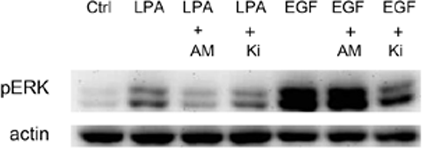
AM966 purchased from MedChemExpress. Usage Cited in: Washington State University. 2015 May.
Effects of LPAR antagonists on growth factor-induced phosphorylation of ERK in DU145 cells. Serum starved DU145 cells are incubated with 10 μM LPA, with or without either 100 nM AM966 or 10 μM Ki16425 for 10 minutes. Whole-cell extracts, equalized for protein, are immunoblotted for phospho-ERK (pERK) and for actin (loading control).


Lösungsmittel & Löslichkeit
In Vitro:
DMSO : 100 mg/mL (203.70 mM; Need ultrasonic; Hygroscopic DMSO has a significant impact on the solubility of product, please use newly opened DMSO)
Please refer to the solubility information to select the appropriate solvent. Once prepared, please aliquot and store the solution to prevent product inactivation from repeated freeze-thaw cycles.
Storage method and period of stock solution: -80°C, 2 years; -20°C, 1 year. When stored at -80°C, please use it within 2 years. When stored at -20°C, please use it within 1 year.
Please refer to the solubility information to select the appropriate solvent. Once prepared, please aliquot and store the solution to prevent product inactivation from repeated freeze-thaw cycles.
Storage method and period of stock solution: -80°C, 2 years; -20°C, 1 year. When stored at -80°C, please use it within 2 years. When stored at -20°C, please use it within 1 year.
Konzentration (Stammlösung) × Volumen (Stammlösung) = Konzentration (Ziellösung) × Volumen (Ziellösung)
In Vivo:
Select the appropriate dissolution method based on your experimental animal and administration route.
- For the following dissolution methods, please ensure to first prepare a clear stock solution using an In Vitro approach and then sequentially add co-solvents:
- To ensure reliable experimental results, the clarified stock solution can be appropriately stored based on storage conditions. As for the working solution for In Vivo experiments, it is recommended to prepare freshly and use it on the same day.
- The percentages shown for the solvents indicate their volumetric ratio in the final prepared solution. If precipitation or phase separation occurs during preparation, heat and/or sonication can be used to aid dissolution.
Add each solvent one by one: 10% DMSO 40% PEG300 5% Tween-80 45% Saline
Solubility: 2.5 mg/mL (5.09 mM); Suspended solution; Need ultrasonic
This protocol yields a suspended solution of 2.5 mg/mL. Suspended solution can be used for oral and intraperitoneal injection.
Taking 1 mL working solution as an example, add 100 μL DMSO stock solution (25.0 mg/mL) to 400 μL PEG300, and mix evenly; then add 50 μL Tween-80 and mix evenly; then add 450 μL Saline to adjust the volume to 1 mL.
Preparation of Saline: Dissolve 0.9 g sodium chloride in ddH₂O and dilute to 100 mL to obtain a clear Saline solution.
For the following dissolution methods, please prepare the working solution directly:
It is recommended to prepare fresh solutions and use them promptly within a short period of time.
The percentages shown for the solvents indicate their volumetric ratio in the final prepared solution. If precipitation or phase separation occurs during preparation, heat and/or sonication can be used to aid dissolution.
Add each solvent one by one: 50% PEG300 50% Saline
Solubility: 10 mg/mL (20.37 mM); Suspended solution; Need ultrasonic
In Vivo Dissolution Calculator
Please enter the basic information of animal experiments:
-
-
-
-
Recommended: Prepare an additional quantity of animals to account for potential losses during experiments.
Please enter your animal formula composition:
-
%DMSO +
Recommended: Keep the proportion of DMSO in working solution below 2% if your animal is weak.
-
%+
-
+%Tween-80 + +
-
%Saline +
The co-solvents required include: DMSO, . All of co-solvents are available by MedChemExpress (MCE). , Tween 80. All of co-solvents are available by MedChemExpress (MCE).
Working solution concentration: 0.22 mg/mL
Method for preparing stock solution: mg drug dissolved in μL DMSO. Stock solution concentration: mg/mL.
1. Take μL DMSO stock solution;
2. Add μL .
μL , mix evenly;
3. Then add μL Tween 80, mix evenly;
4. Then add μL
Please ensure that the stock solution in the first step is dissolved to a clear state, and add co-solvents in sequence. You can use ultrasonic heating (ultrasonic cleaner, recommended frequency 20-40 kHz), vortexing, etc. to assist dissolution.


Reinheit & Dokumentation
-
Data Sheet (284 KB)
-
SDS (254 KB)
- English - EN (254 KB)
- Français - FR (254 KB)
- Deutsch - DE (254 KB)
- Norwegian - NO (254 KB)
- Español - ES (254 KB)
- Swedish - SV (254 KB)
- Italian - IT (254 KB)
- Korean - KR (254 KB)
- Portuguese - PT (254 KB)
-
Handling Instructions (2659 KB)
Verweise
[1]. Swaney, JS, et al. A novel, orally active LPA1 receptor antagonist inhibits lung fibrosis in the mouse bleomycin model. Br J Pharmacol. 2010 Aug;160(7):1699-713. [Content Brief]
[2]. Olianas MC, et al. Antidepressants activate the lysophosphatidic acid receptor LPA(1) to induce insulin-like growth factor-I receptor transactivation, stimulation of ERK1/2 signaling and cell proliferation in CHO-K1 fibroblasts. Biochem Pharmacol. 2015 Jun 15;95(4):311-23. [Content Brief]


Complete Stock Solution Preparation Table
Please refer to the solubility information to select the appropriate solvent. Once prepared, please aliquot and store the solution to prevent product inactivation from repeated freeze-thaw cycles.
Storage method and period of stock solution: -80°C, 2 years; -20°C, 1 year. When stored at -80°C, please use it within 2 years. When stored at -20°C, please use it within 1 year.
| Optional Solvent | Concentration Solvent Mass | 1 mg | 5 mg | 10 mg | 25 mg |
|---|---|---|---|---|---|
| DMSO | 1 mM | 2.0370 mL | 10.1848 mL | 20.3695 mL | 50.9238 mL |
| 5 mM | 0.4074 mL | 2.0370 mL | 4.0739 mL | 10.1848 mL | |
| 10 mM | 0.2037 mL | 1.0185 mL | 2.0370 mL | 5.0924 mL | |
| 15 mM | 0.1358 mL | 0.6790 mL | 1.3580 mL | 3.3949 mL | |
| 20 mM | 0.1018 mL | 0.5092 mL | 1.0185 mL | 2.5462 mL | |
| 25 mM | 0.0815 mL | 0.4074 mL | 0.8148 mL | 2.0370 mL | |
| 30 mM | 0.0679 mL | 0.3395 mL | 0.6790 mL | 1.6975 mL | |
| 40 mM | 0.0509 mL | 0.2546 mL | 0.5092 mL | 1.2731 mL | |
| 50 mM | 0.0407 mL | 0.2037 mL | 0.4074 mL | 1.0185 mL | |
| 60 mM | 0.0339 mL | 0.1697 mL | 0.3395 mL | 0.8487 mL | |
| 80 mM | 0.0255 mL | 0.1273 mL | 0.2546 mL | 0.6365 mL | |
| 100 mM | 0.0204 mL | 0.1018 mL | 0.2037 mL | 0.5092 mL |


AM966 Related Classifications
HY-15277 Related Classifications
 Powered by Bioz