



Antineoplaston A10

Based on 1 Customer Validation
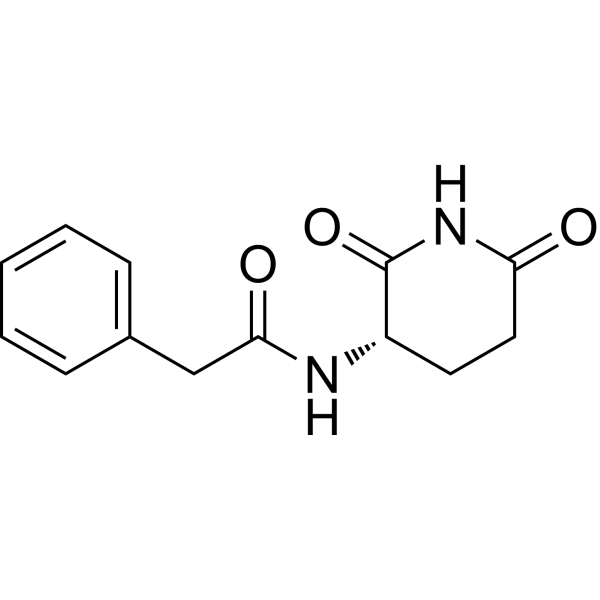
Antineoplaston A10 is an antineoplaston that inhibits the growth of human hepatoma cells by inducing apoptosis. Antineoplaston A10 can be used in the study of liver cancer and breast cancer.
Nur für Forschungszwecke. Wir verkaufen nicht an Patienten.
- Reinheit : 99.84%
- CAS. Nr.: 91531-30-5
- Formel: C13H14N2O3
- Molecular Weight:246.26
-
Speicherung:Powder -20°C, 3 years , 4°C, 2 years ; In solvent -80°C, 2 years , -20°C, 1 year

To place orders, for customer services and technical support, please contact: MedChemExpress USA
Tel: 609-228-6898 E-mail: [email protected] [email protected]


-
 Biologische Aktivität
-
Chemical Information
-
Lösungsmittel & Löslichkeit
- Protokoll
- Reinheit & Dokumentation
- Verweise
-
 Help & FAQs


-
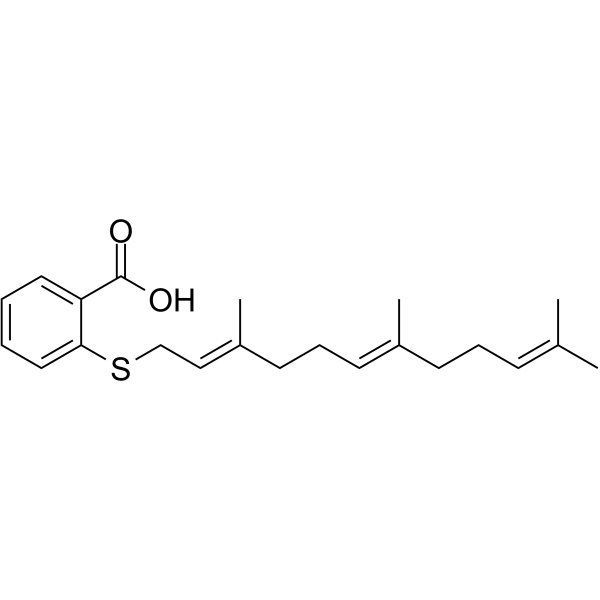
HY-14754
SalirasibRas Inhibitor -
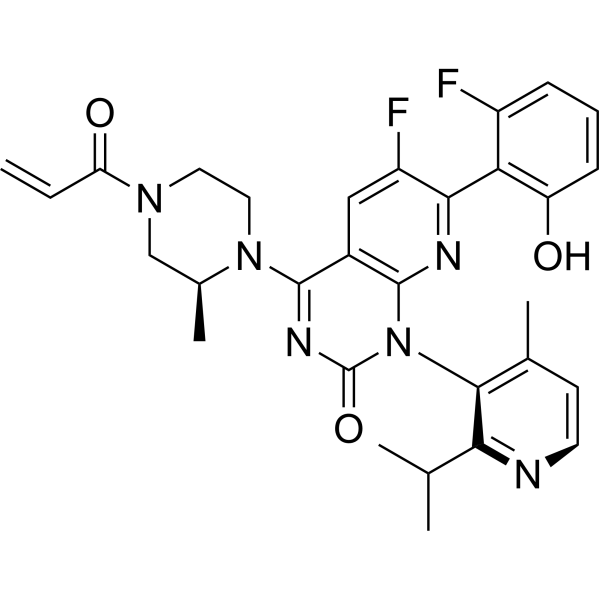
HY-114277
SotorasibKRAS G12C Inhibitor -
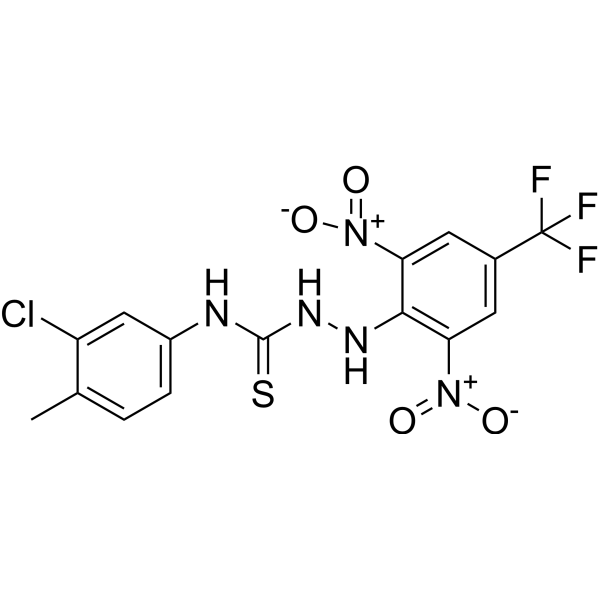
HY-15716
Kobe0065Apoptosis Inducer -
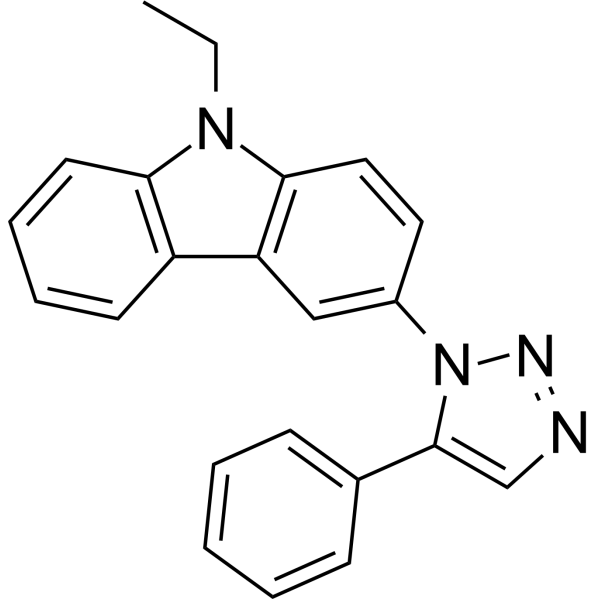
HY-112842
MBQ-167Rac/Cdc42 Inhibitor -

HY-114277R
Sotorasib (Standard)KRAS G12C Inhibitor -
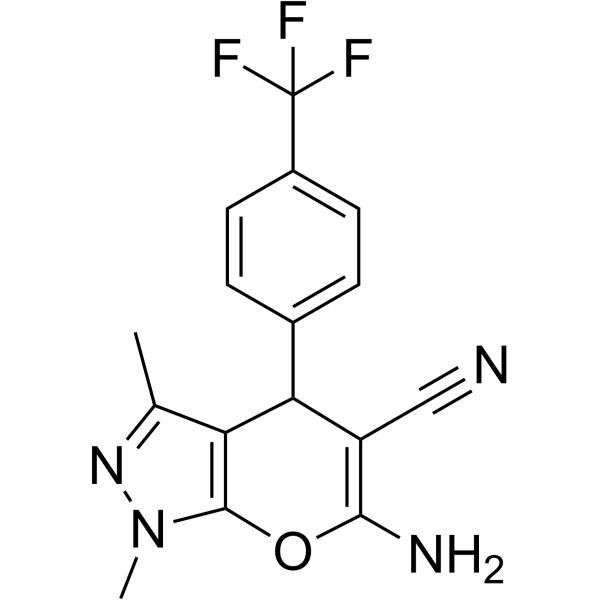
HY-12875
BQU57Ral Inhibitior -
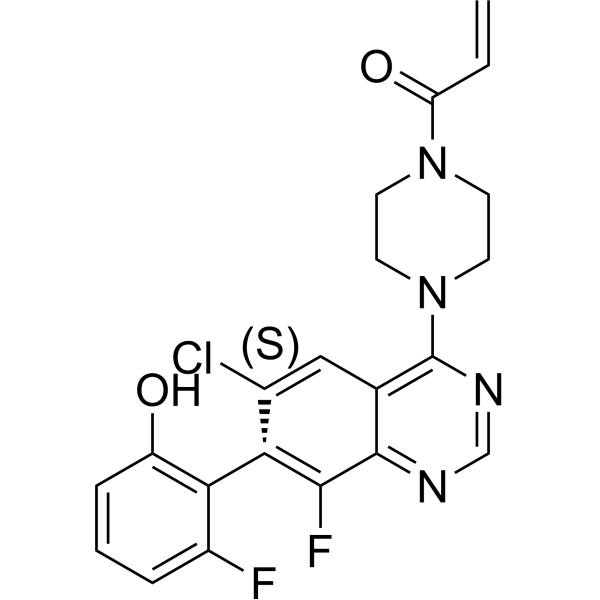
HY-U00418
ARS-1620 -
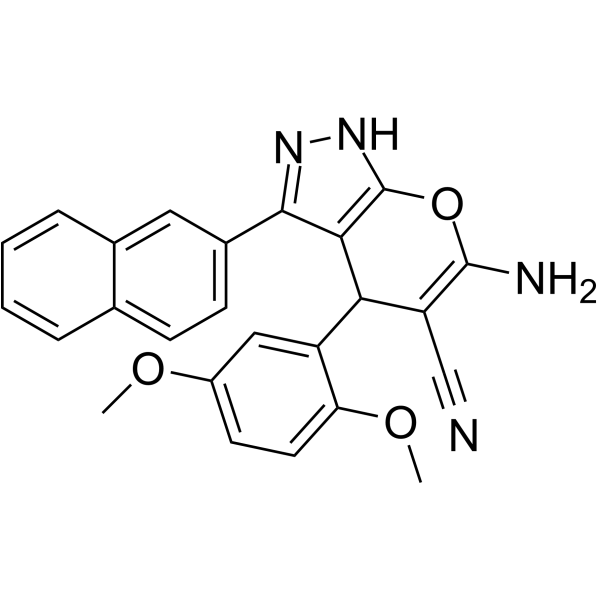
HY-12873
RBC8RALA/RALB Inhibitor -
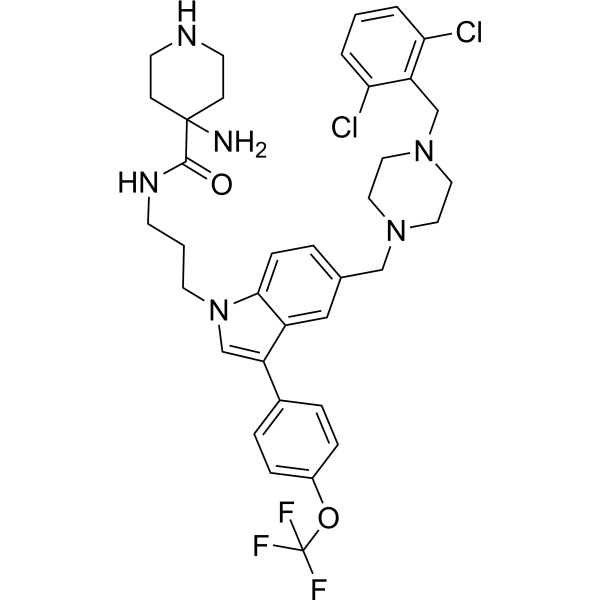
HY-101295
Pan-RAS-IN-1Ras Inhibitor -
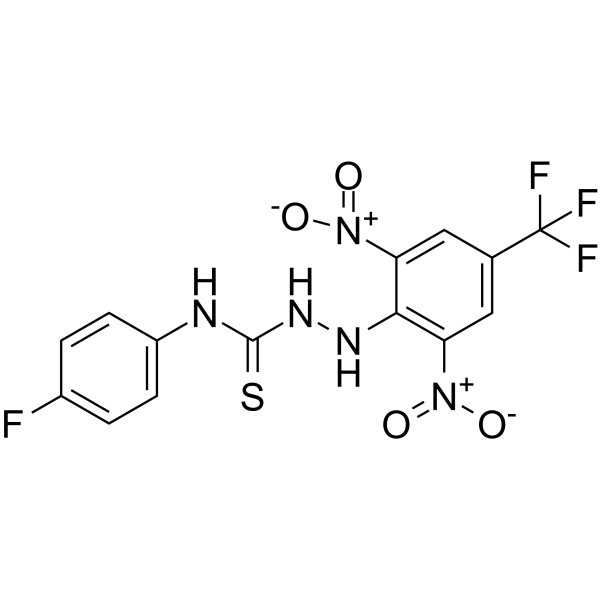
HY-15717
Kobe2602Ras-Raf Interaction Inhibitor -
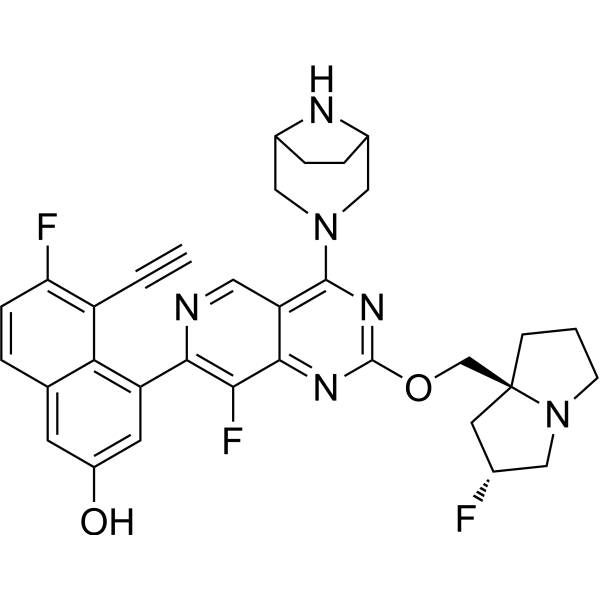
HY-134813
MRTX1133KRAS G12D Inhibitor -
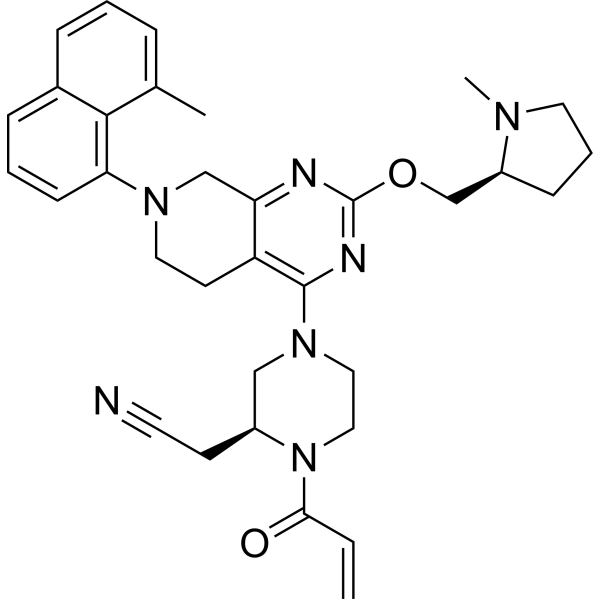
HY-114436
MRTX-1257KRAS G12C Inhibitor
Alle Endogenous Metabolite Isoform-spezifische Produkte anzeigen
More

Biologische Aktivität
Beschreibung
IC50 & Target
Ras[1].
In Vitro
Antineoplaston A10 (10-400 μg/ml; 0-120 h) inhibits the growth of human hepatoma cell lines HepG2 and HLE in a dose- and time-dependent manner and induces apoptosis[1].
MedChemExpress (MCE) has not independently confirmed the accuracy of these methods. They are for reference only.
-
Cell Line:HepG2 and HLE cell lines
-
Concentration:10, 50, 100, 200 and 400 μg/ml
-
Incubation Time:0-120 h
-
Result:The cell growth inhibition rate was less than 10% at a dose of 10 μg/ml after incubation for 120 h, while the cell growth inhibition rate was 34.9% at a dose of 200 μg/ml after incubation for 120 h.
-
Cell Line:HepG2 and HLE cell lines
-
Concentration:10, 50, 100, 200 and 400 μg/ml
-
Incubation Time:0-120 h
-
Result:Induced apoptosis in HepG2 cells at a dose of 50 μg/ml for 48 h.
In Vivo
MedChemExpress (MCE) has not independently confirmed the accuracy of these methods. They are for reference only.
-
Animal Model:Balb/c athymic (nu+/nu+) female mice with hepatocellular carcinoma xenografts[1].
-
Dosage:0, 150, 300 and 600 mg/kg
-
Administration:Oral gavage (p.o.) 6 days per week for 5 weeks
-
Result:Reduced the expression of bcl-2 in the cytoplasm, and the bcl-2 positive cell rates decreased to 82.9, 69.4 and 56.3%, respectively. Increased the expression of p53 in the nucleus, and the p53 positive cell rates increased to 20.6%, 36.2 and 60.5%, respectively.
Clinical Trial
| NCT Number | Sponsor | Condition | Start Date |
Phase

|
|---|---|---|---|---|
| NCT01329991 | Plexxikon| | 2011-05 | PHASE1 |


Chemical Information
-
CAS. Nr. 91531-30-5
-
Appearance Solid
-
Molecular Weight 246.26
-
Formel C13H14N2O3
-
Color White to off-white
-
SMILES
O=C(N[C@@H](CC1)C(NC1=O)=O)CC2=CC=CC=C2
-
Structure Classification
-
Initial Source
-
Versand
Room temperature in continental US; may vary elsewhere.
-
Speicherung
Powder -20°C 3 years 4°C 2 years In solvent -80°C 2 years -20°C 1 year


Lösungsmittel & Löslichkeit
In Vitro:
DMSO : 175 mg/mL (710.63 mM; Need ultrasonic; Hygroscopic DMSO has a significant impact on the solubility of product, please use newly opened DMSO)
Please refer to the solubility information to select the appropriate solvent. Once prepared, please aliquot and store the solution to prevent product inactivation from repeated freeze-thaw cycles.
Storage method and period of stock solution: -80°C, 2 years; -20°C, 1 year. When stored at -80°C, please use it within 2 years. When stored at -20°C, please use it within 1 year.
Please refer to the solubility information to select the appropriate solvent. Once prepared, please aliquot and store the solution to prevent product inactivation from repeated freeze-thaw cycles.
Storage method and period of stock solution: -80°C, 2 years; -20°C, 1 year. When stored at -80°C, please use it within 2 years. When stored at -20°C, please use it within 1 year.
Konzentration (Stammlösung) × Volumen (Stammlösung) = Konzentration (Ziellösung) × Volumen (Ziellösung)
In Vivo:
Select the appropriate dissolution method based on your experimental animal and administration route.
- For the following dissolution methods, please ensure to first prepare a clear stock solution using an In Vitro approach and then sequentially add co-solvents:
- To ensure reliable experimental results, the clarified stock solution can be appropriately stored based on storage conditions. As for the working solution for In Vivo experiments, it is recommended to prepare freshly and use it on the same day.
- The percentages shown for the solvents indicate their volumetric ratio in the final prepared solution. If precipitation or phase separation occurs during preparation, heat and/or sonication can be used to aid dissolution.
Add each solvent one by one: 10% DMSO 40% PEG300 5% Tween-80 45% Saline
Solubility: ≥ 2.08 mg/mL (8.45 mM); Clear solution
This protocol yields a clear solution of ≥ 2.08 mg/mL (saturation unknown).
Taking 1 mL working solution as an example, add 100 μL DMSO stock solution (20.8 mg/mL) to 400 μL PEG300, and mix evenly; then add 50 μL Tween-80 and mix evenly; then add 450 μL Saline to adjust the volume to 1 mL.
Preparation of Saline: Dissolve 0.9 g sodium chloride in ddH₂O and dilute to 100 mL to obtain a clear Saline solution.
Add each solvent one by one: 10% DMSO 90% (20% SBE-β-CD in Saline)
Solubility: ≥ 2.08 mg/mL (8.45 mM); Clear solution
This protocol yields a clear solution of ≥ 2.08 mg/mL (saturation unknown).
Taking 1 mL working solution as an example, add 100 μL DMSO stock solution (20.8 mg/mL) to 900 μL 20% SBE-β-CD in Saline, and mix evenly.
Preparation of 20% SBE-β-CD in Saline (4°C, storage for one week): 2 g SBE-β-CD powder is dissolved in 10 mL Saline, completely dissolve until clear.
In Vivo Dissolution Calculator
Please enter the basic information of animal experiments:
-
-
-
-
Recommended: Prepare an additional quantity of animals to account for potential losses during experiments.
Please enter your animal formula composition:
-
%DMSO +
Recommended: Keep the proportion of DMSO in working solution below 2% if your animal is weak.
-
%+
-
+%Tween-80 + +
-
%Saline +
The co-solvents required include: DMSO, . All of co-solvents are available by MedChemExpress (MCE). , Tween 80. All of co-solvents are available by MedChemExpress (MCE).
Working solution concentration: 0.22 mg/mL
Method for preparing stock solution: mg drug dissolved in μL DMSO. Stock solution concentration: mg/mL.
1. Take μL DMSO stock solution;
2. Add μL .
μL , mix evenly;
3. Then add μL Tween 80, mix evenly;
4. Then add μL
Please ensure that the stock solution in the first step is dissolved to a clear state, and add co-solvents in sequence. You can use ultrasonic heating (ultrasonic cleaner, recommended frequency 20-40 kHz), vortexing, etc. to assist dissolution.


Reinheit & Dokumentation
-
Data Sheet (273 KB)
-
SDS (393 KB)
- English - EN (393 KB)
- Français - FR (393 KB)
- Deutsch - DE (393 KB)
- Norwegian - NO (393 KB)
- Español - ES (393 KB)
- Swedish - SV (393 KB)
- Italian - IT (393 KB)
- Korean - KR (393 KB)
- Portuguese - PT (393 KB)
-
Handling Instructions (2659 KB)
Verweise
[1]. Qu XJ, et al. Induction of apoptosis in human hepatocellular carcinoma cells by synthetic antineoplaston A10. Anticancer Res. 2007 Jul-Aug;27(4B):2427-31. [Content Brief]
[2]. Tsuda, et al. "Inhibitory effect of antineoplaston A-10 on breast cancer transplanted to athymic mice and human hepatocellular carcinoma cell lines." The Kurume Medical Journal 37.2 (1990): 97-104. [Content Brief]


Complete Stock Solution Preparation Table
Please refer to the solubility information to select the appropriate solvent. Once prepared, please aliquot and store the solution to prevent product inactivation from repeated freeze-thaw cycles.
Storage method and period of stock solution: -80°C, 2 years; -20°C, 1 year. When stored at -80°C, please use it within 2 years. When stored at -20°C, please use it within 1 year.
| Optional Solvent | Concentration Solvent Mass | 1 mg | 5 mg | 10 mg | 25 mg |
|---|---|---|---|---|---|
| DMSO | 1 mM | 4.0607 mL | 20.3037 mL | 40.6075 mL | 101.5187 mL |
| 5 mM | 0.8121 mL | 4.0607 mL | 8.1215 mL | 20.3037 mL | |
| 10 mM | 0.4061 mL | 2.0304 mL | 4.0607 mL | 10.1519 mL | |
| 15 mM | 0.2707 mL | 1.3536 mL | 2.7072 mL | 6.7679 mL | |
| 20 mM | 0.2030 mL | 1.0152 mL | 2.0304 mL | 5.0759 mL | |
| 25 mM | 0.1624 mL | 0.8121 mL | 1.6243 mL | 4.0607 mL | |
| 30 mM | 0.1354 mL | 0.6768 mL | 1.3536 mL | 3.3840 mL | |
| 40 mM | 0.1015 mL | 0.5076 mL | 1.0152 mL | 2.5380 mL | |
| 50 mM | 0.0812 mL | 0.4061 mL | 0.8121 mL | 2.0304 mL | |
| 60 mM | 0.0677 mL | 0.3384 mL | 0.6768 mL | 1.6920 mL | |
| 80 mM | 0.0508 mL | 0.2538 mL | 0.5076 mL | 1.2690 mL | |
| 100 mM | 0.0406 mL | 0.2030 mL | 0.4061 mL | 1.0152 mL |


Antineoplaston A10 Related Classifications
HY-128553 Related Classifications
 Powered by Bioz