



SR1664

Based on 1 Customer Validation
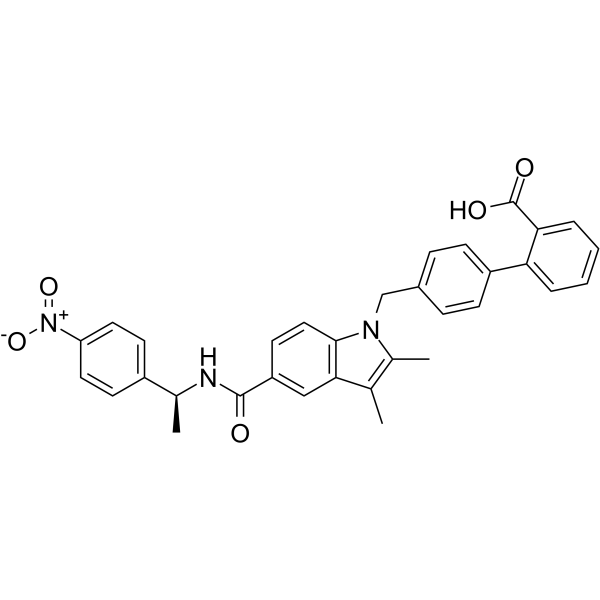
SR1664 is a PPARγ antagonist. SR1664 binds to PPARγ and potently inhibits Cdk5-mediated PPARγ phosphorylation (IC50=80 nM; Ki= 28.67 nM).
Nur für Forschungszwecke. Wir verkaufen nicht an Patienten.
- Reinheit : 98.12%
- CAS. Nr.: 1338259-05-4
- Formel: C33H29N3O5
- Molecular Weight:547.60
-
Speicherung:Powder -20°C, 3 years , 4°C, 2 years ; In solvent -80°C, 6 months , -20°C, 1 month

To place orders, for customer services and technical support, please contact: MedChemExpress USA
Tel: 609-228-6898 E-mail: [email protected] [email protected]


-
 Biologische Aktivität
-
Chemical Information
-
Lösungsmittel & Löslichkeit
- Protokoll
- Reinheit & Dokumentation
- Verweise
-
 Help & FAQs


-
HY-17386
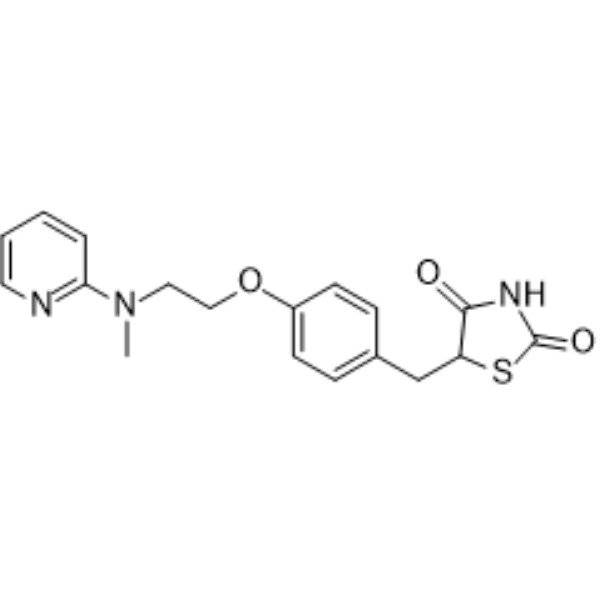
RosiglitazonePPARγ Agonist -
HY-13956
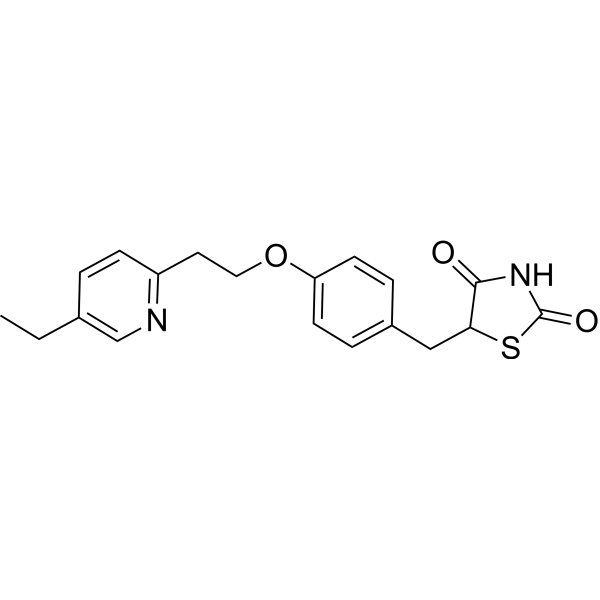
PioglitazonePPARγ Agonist -
HY-15655
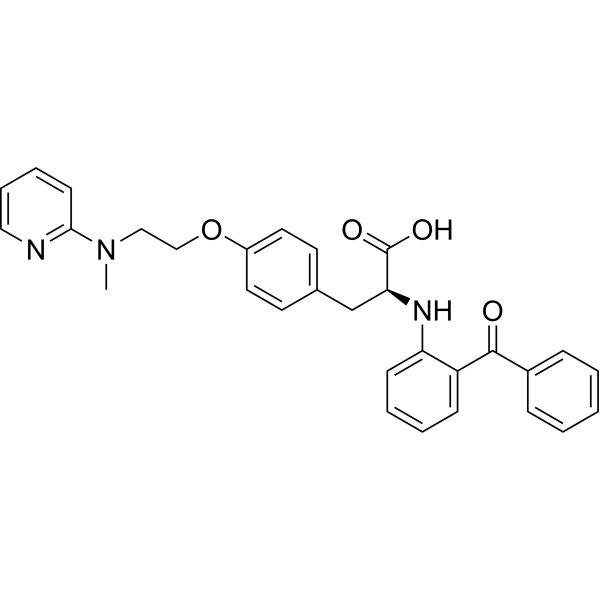
GW1929PPARγ Agonist -
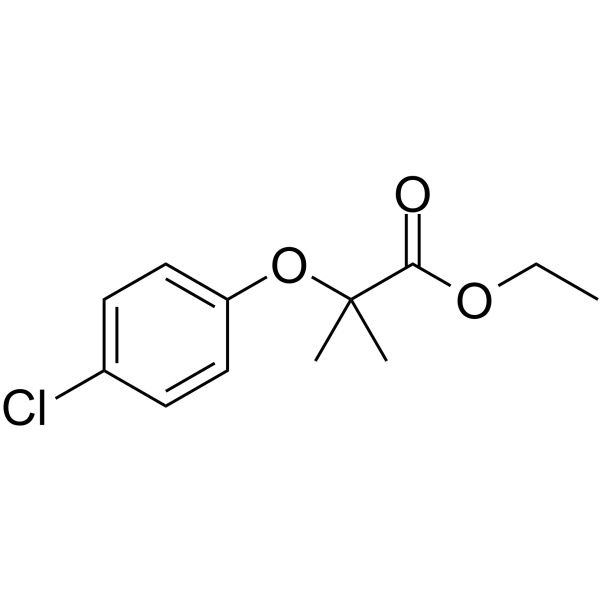
HY-B0287
ClofibratePPAR Agonist -
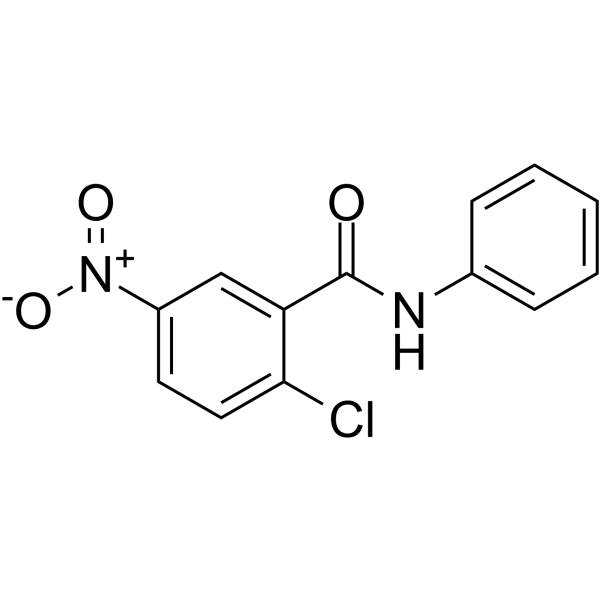
HY-16578
GW9662PPARγ Antagonist -
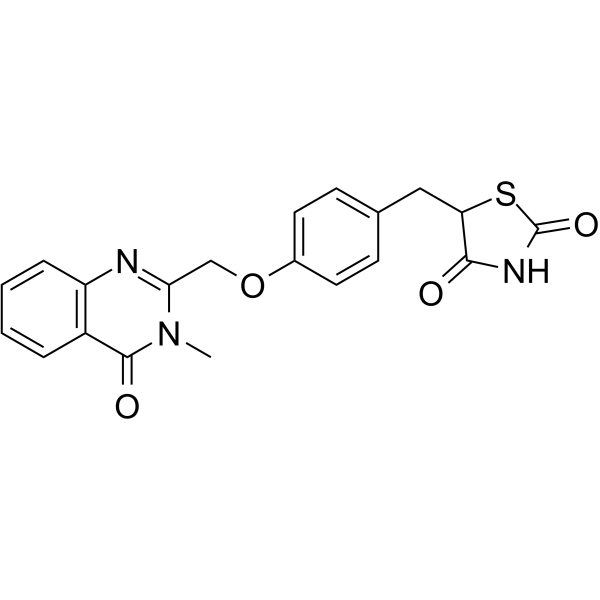
HY-16086
Balaglitazone -
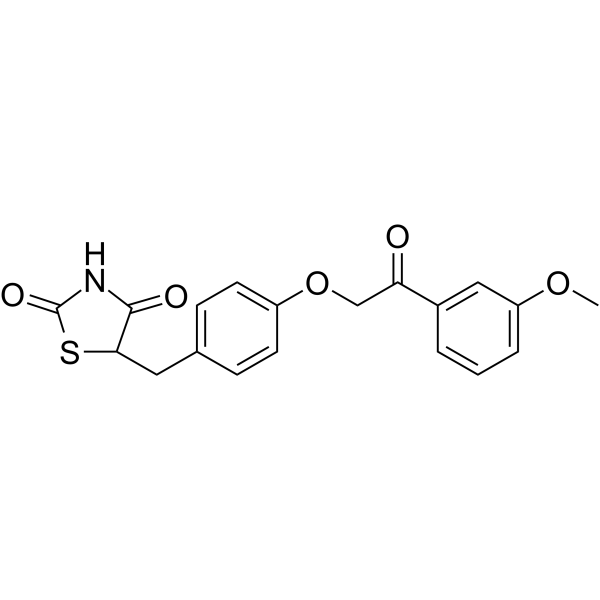
HY-108022
AzemiglitazoneMPC Inhibitor -
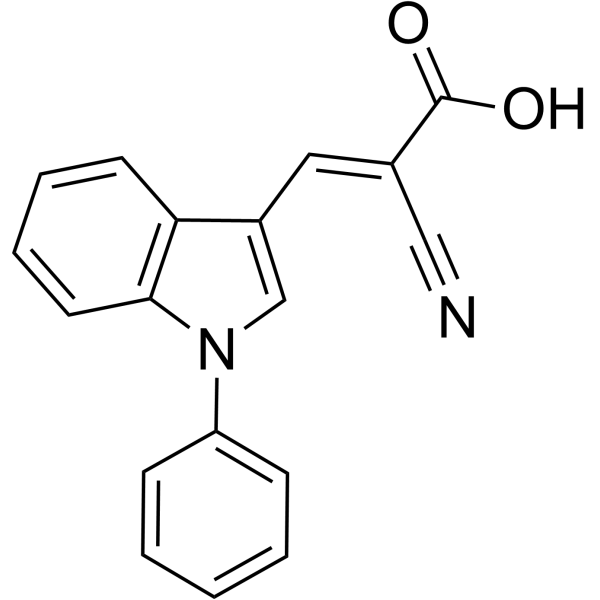
HY-15475
UK-5099Mitochondrial Pyruvate Carrier Inhibitor -

HY-108567
Bisphenol A diglycidyl etherEmbedding Agent -
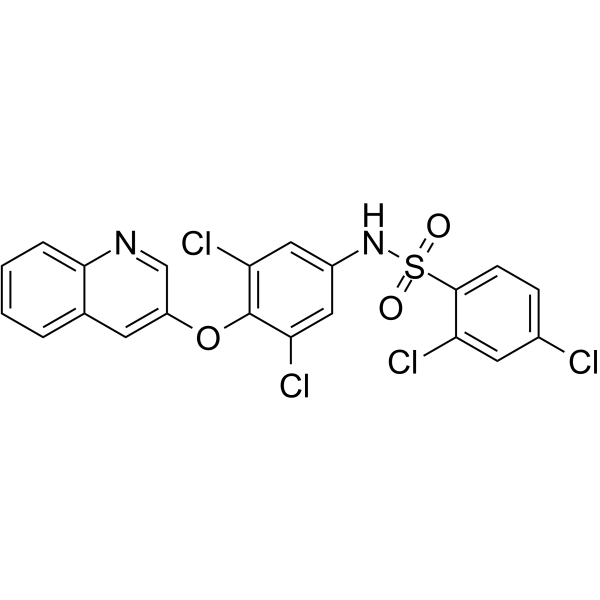
HY-117103
AMG131PPARγ Agonist -
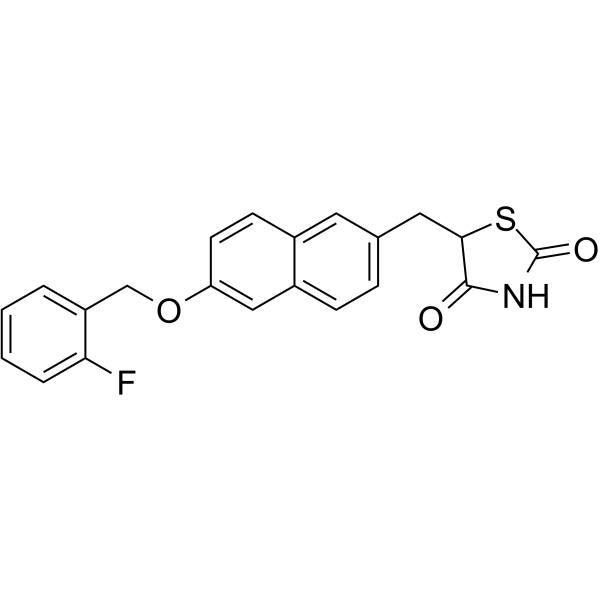
HY-100428
NetoglitazonePPARγ Ligand -
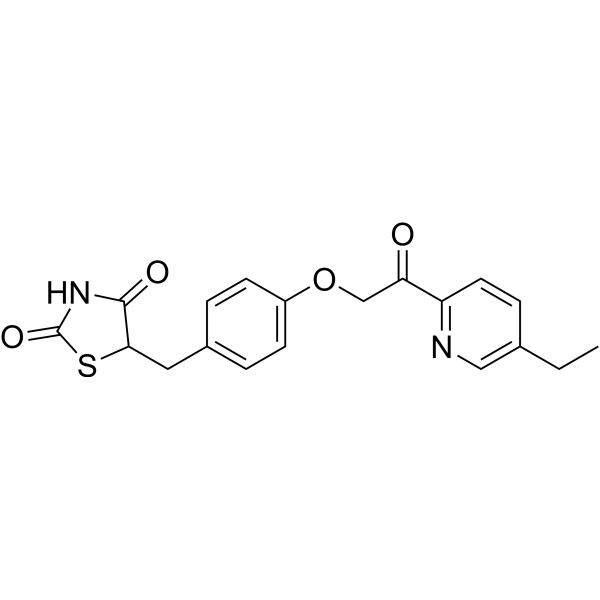
HY-100550
MSDC 0160Insulin Sensitizer


Biologische Aktivität
Beschreibung
IC50 & Target
|
PPAR-γ 80 nM (IC50) |
Cellular Effect
|
Cell Line

|
Type | Value | Description | References |
|---|---|---|---|---|
| HEK-293T | EC50 |
4288 nM
Compound: SR1664
|
Transactivation of human PPARgamma in HEK293T cells after 18 hrs by luciferase reporter gene assay
Transactivation of human PPARgamma in HEK293T cells after 18 hrs by luciferase reporter gene assay
|
[PMID: 26396687] |
In Vitro


Chemical Information
-
CAS. Nr. 1338259-05-4
-
Appearance Solid
-
Molecular Weight 547.60
-
Formel C33H29N3O5
-
Color Light yellow to green yellow
-
SMILES
O=C(C1=CC=CC=C1C2=CC=C(CN3C(C)=C(C)C4=C3C=CC(C(N[C@H](C5=CC=C([N+]([O-])=O)C=C5)C)=O)=C4)C=C2)O
-
Versand
Room temperature in continental US; may vary elsewhere.
-
Speicherung
Powder -20°C 3 years 4°C 2 years In solvent -80°C 6 months -20°C 1 month


Lösungsmittel & Löslichkeit
In Vitro:
DMSO : 100 mg/mL (182.62 mM; Need ultrasonic; Hygroscopic DMSO has a significant impact on the solubility of product, please use newly opened DMSO)
Please refer to the solubility information to select the appropriate solvent. Once prepared, please aliquot and store the solution to prevent product inactivation from repeated freeze-thaw cycles.
Storage method and period of stock solution: -80°C, 6 months; -20°C, 1 month. When stored at -80°C, please use it within 6 months. When stored at -20°C, please use it within 1 month.
Please refer to the solubility information to select the appropriate solvent. Once prepared, please aliquot and store the solution to prevent product inactivation from repeated freeze-thaw cycles.
Storage method and period of stock solution: -80°C, 6 months; -20°C, 1 month. When stored at -80°C, please use it within 6 months. When stored at -20°C, please use it within 1 month.
Konzentration (Stammlösung) × Volumen (Stammlösung) = Konzentration (Ziellösung) × Volumen (Ziellösung)
In Vivo:
Select the appropriate dissolution method based on your experimental animal and administration route.
- For the following dissolution methods, please ensure to first prepare a clear stock solution using an In Vitro approach and then sequentially add co-solvents:
- To ensure reliable experimental results, the clarified stock solution can be appropriately stored based on storage conditions. As for the working solution for In Vivo experiments, it is recommended to prepare freshly and use it on the same day.
- The percentages shown for the solvents indicate their volumetric ratio in the final prepared solution. If precipitation or phase separation occurs during preparation, heat and/or sonication can be used to aid dissolution.
Add each solvent one by one: 10% DMSO 40% PEG300 5% Tween-80 45% Saline
Solubility: ≥ 2.5 mg/mL (4.57 mM); Clear solution
This protocol yields a clear solution of ≥ 2.5 mg/mL (saturation unknown).
Taking 1 mL working solution as an example, add 100 μL DMSO stock solution (25.0 mg/mL) to 400 μL PEG300, and mix evenly; then add 50 μL Tween-80 and mix evenly; then add 450 μL Saline to adjust the volume to 1 mL.
Preparation of Saline: Dissolve 0.9 g sodium chloride in ddH₂O and dilute to 100 mL to obtain a clear Saline solution.
In Vivo Dissolution Calculator
Please enter the basic information of animal experiments:
-
-
-
-
Recommended: Prepare an additional quantity of animals to account for potential losses during experiments.
Please enter your animal formula composition:
-
%DMSO +
Recommended: Keep the proportion of DMSO in working solution below 2% if your animal is weak.
-
%+
-
+%Tween-80 + +
-
%Saline +
The co-solvents required include: DMSO, . All of co-solvents are available by MedChemExpress (MCE). , Tween 80. All of co-solvents are available by MedChemExpress (MCE).
Working solution concentration: 0.22 mg/mL
Method for preparing stock solution: mg drug dissolved in μL DMSO. Stock solution concentration: mg/mL.
1. Take μL DMSO stock solution;
2. Add μL .
μL , mix evenly;
3. Then add μL Tween 80, mix evenly;
4. Then add μL
Please ensure that the stock solution in the first step is dissolved to a clear state, and add co-solvents in sequence. You can use ultrasonic heating (ultrasonic cleaner, recommended frequency 20-40 kHz), vortexing, etc. to assist dissolution.


Reinheit & Dokumentation
-
Data Sheet (272 KB)
-
SDS (251 KB)
- English - EN (251 KB)
- Français - FR (251 KB)
- Deutsch - DE (251 KB)
- Norwegian - NO (251 KB)
- Español - ES (251 KB)
- Swedish - SV (251 KB)
- Italian - IT (251 KB)
- Korean - KR (251 KB)
- Portuguese - PT (251 KB)
-
Handling Instructions (2659 KB)
Verweise
[1]. Marciano DP, Kuruvilla DS, Boregowda SV, et al. Pharmacological repression of PPARγ promotes osteogenesis. Nat Commun. 2015;6:7443. Published 2015 Jun 12. [Content Brief]
[2]. Choi JH, et al. Antidiabetic actions of a non-agonist PPARγ ligand blocking Cdk5-mediated phosphorylation. Nature. 2011;477(7365):477-481. Published 2011 Sep 4. [Content Brief]


Complete Stock Solution Preparation Table
Please refer to the solubility information to select the appropriate solvent. Once prepared, please aliquot and store the solution to prevent product inactivation from repeated freeze-thaw cycles.
Storage method and period of stock solution: -80°C, 6 months; -20°C, 1 month. When stored at -80°C, please use it within 6 months. When stored at -20°C, please use it within 1 month.
| Optional Solvent | Concentration Solvent Mass | 1 mg | 5 mg | 10 mg | 25 mg |
|---|---|---|---|---|---|
| DMSO | 1 mM | 1.8262 mL | 9.1308 mL | 18.2615 mL | 45.6538 mL |
| 5 mM | 0.3652 mL | 1.8262 mL | 3.6523 mL | 9.1308 mL | |
| 10 mM | 0.1826 mL | 0.9131 mL | 1.8262 mL | 4.5654 mL | |
| 15 mM | 0.1217 mL | 0.6087 mL | 1.2174 mL | 3.0436 mL | |
| 20 mM | 0.0913 mL | 0.4565 mL | 0.9131 mL | 2.2827 mL | |
| 25 mM | 0.0730 mL | 0.3652 mL | 0.7305 mL | 1.8262 mL | |
| 30 mM | 0.0609 mL | 0.3044 mL | 0.6087 mL | 1.5218 mL | |
| 40 mM | 0.0457 mL | 0.2283 mL | 0.4565 mL | 1.1413 mL | |
| 50 mM | 0.0365 mL | 0.1826 mL | 0.3652 mL | 0.9131 mL | |
| 60 mM | 0.0304 mL | 0.1522 mL | 0.3044 mL | 0.7609 mL | |
| 80 mM | 0.0228 mL | 0.1141 mL | 0.2283 mL | 0.5707 mL | |
| 100 mM | 0.0183 mL | 0.0913 mL | 0.1826 mL | 0.4565 mL |


SR1664 Related Classifications
HY-12483 Related Classifications
 Powered by Bioz