



Motesanib
Based on 4 publication(s) in Google Scholar
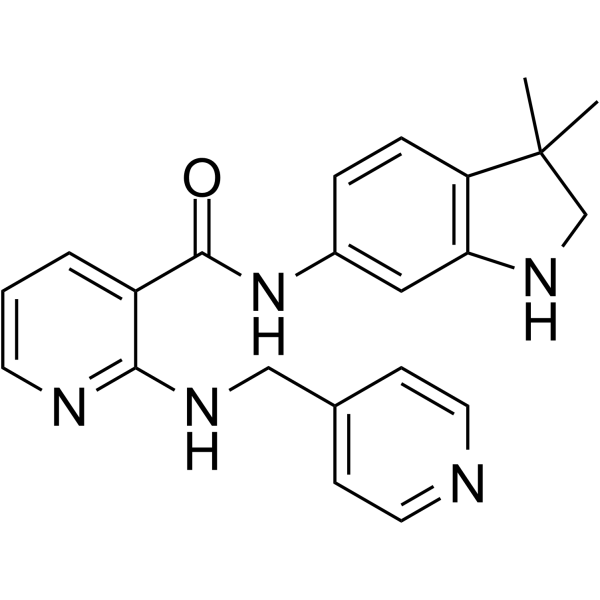
Motesanib (AMG 706) is a potent ATP-competitive inhibitor of VEGFR1/2/3 with IC50s of 2 nM/3 nM/6 nM, respectively, and has similar activity against Kit, and is appr 10-fold more selective for VEGFR than PDGFR and Ret.
Nos produits utilisent uniquement pour la recherche. Nous ne vendons pas aux patients.
- Pureté : 99.96%
- CAS No.: 453562-69-1
- Formule: C22H23N5O
- Masse moléculaire:373.45
-
Stockage:Powder -20°C, 3 years , 4°C, 2 years ; In solvent -80°C, 2 years , -20°C, 1 year

To place orders, for customer services and technical support, please contact: MedChemExpress USA
Tel: 609-228-6898 E-mail: [email protected] [email protected]


-
 Activité biologique
-
Chemical Information
-
Solvant et solubilité
- Pureté et documentation
- Références
-
 Help & FAQs


-
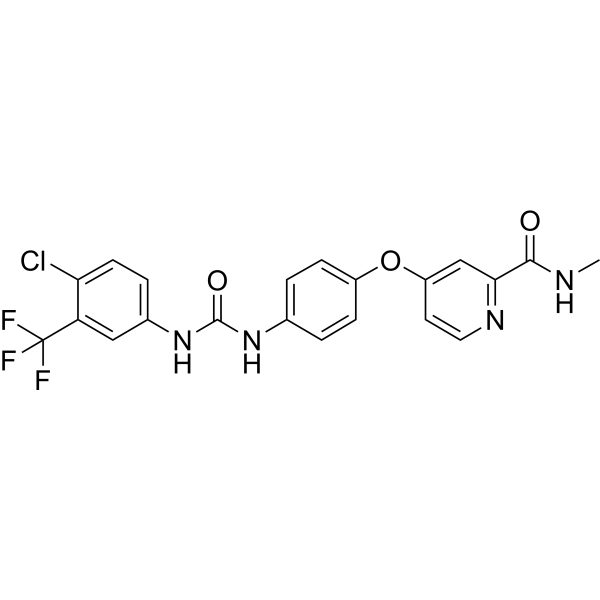
HY-10201
SorafenibMultikinase Inhibitor -
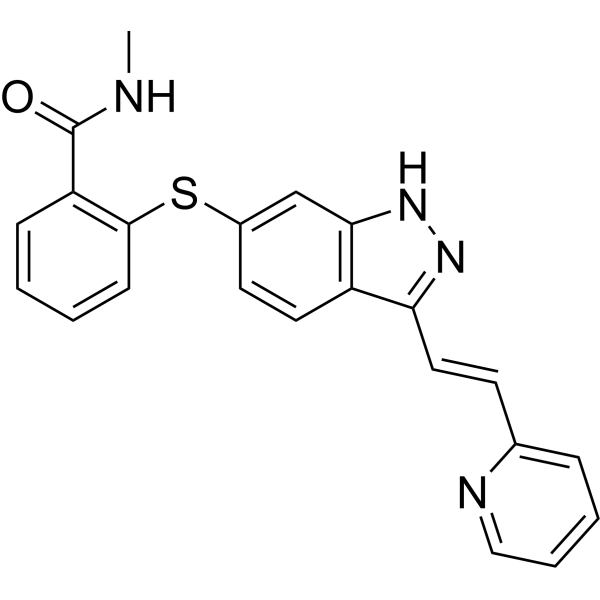
HY-10065
AxitinibTyrosine Kinase Inhibitor -
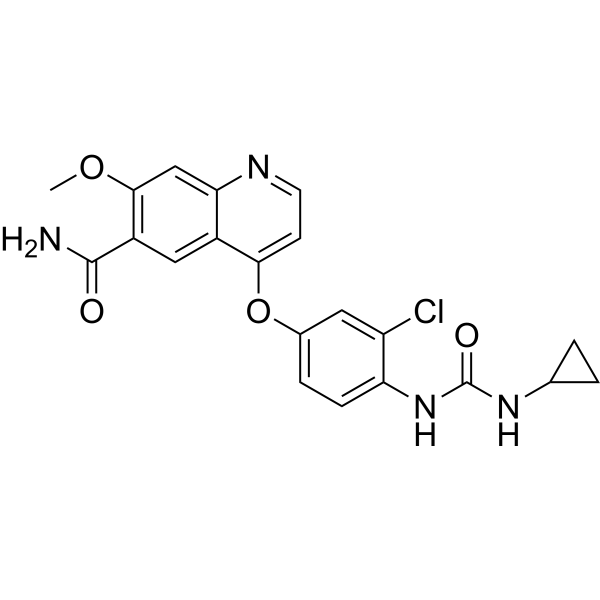
HY-10981
LenvatinibVEGFR/FGFR Inhibitor -
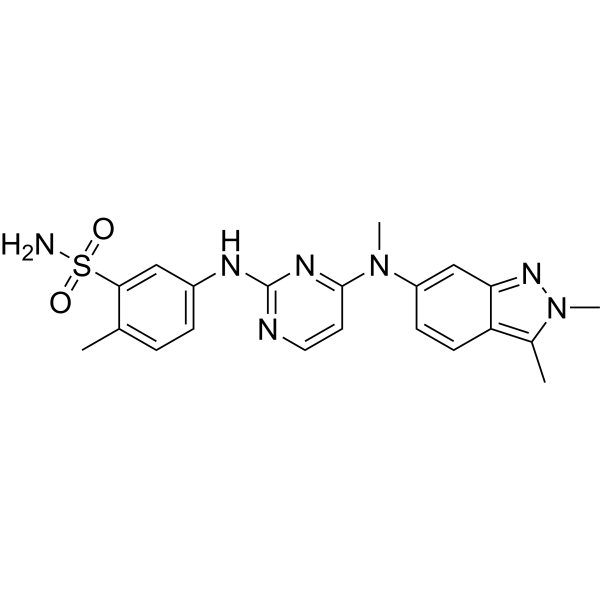
HY-10208
PazopanibVEGFR Inhibitor -
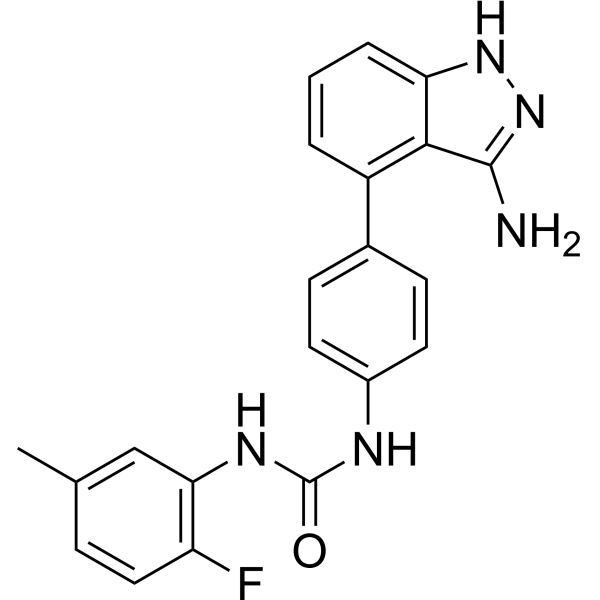
HY-50751
LinifanibMulti-Targeted RTK Inhibitor -
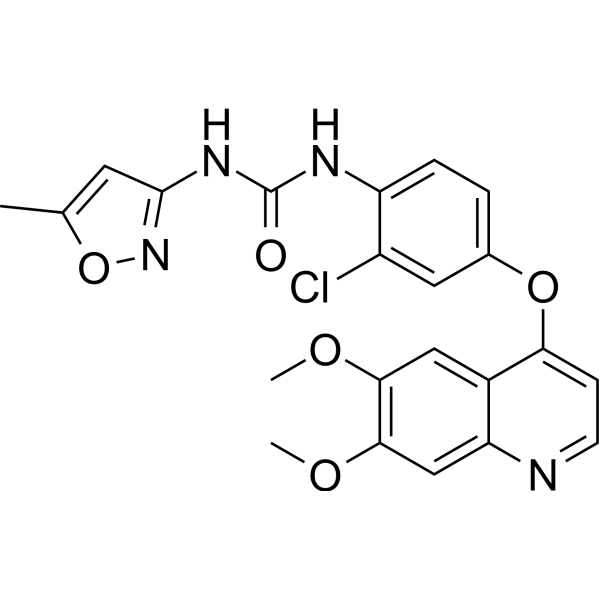
HY-10977
TivozanibVEGFR inhibitor -
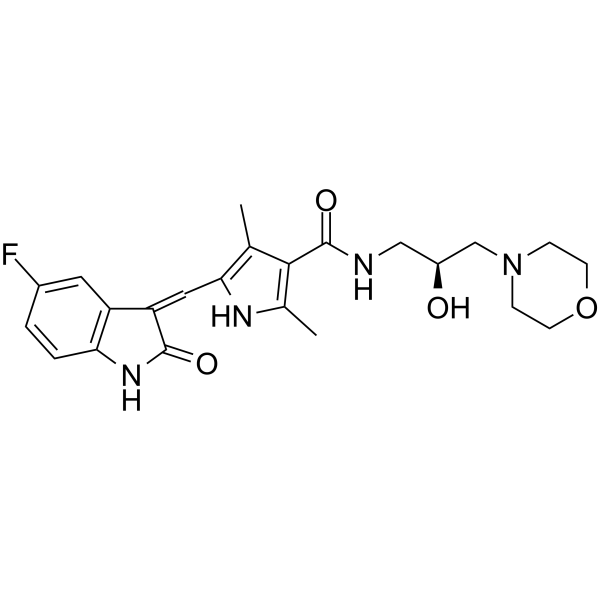
HY-10501
SU14813Multiple RTK Inhibitor -
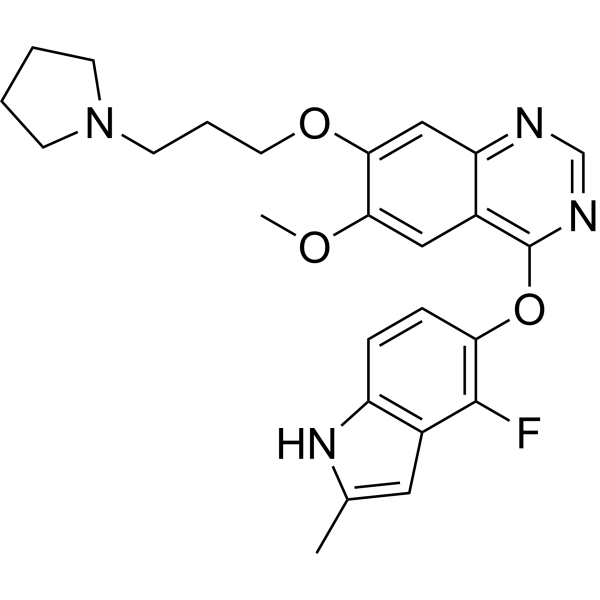
HY-10205
CediranibVEGFR2 Inhibitor -
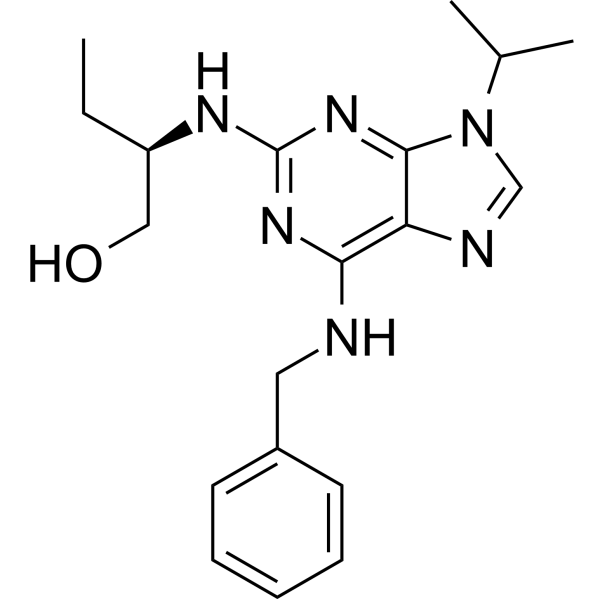
HY-30237
(R)-RoscovitineCDKs Inhibitor -
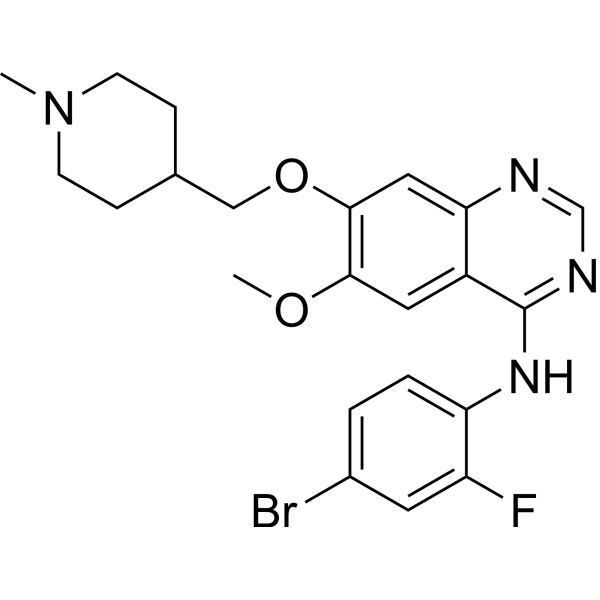
HY-10260
VandetanibVEGFR2/3 Inhibitor -
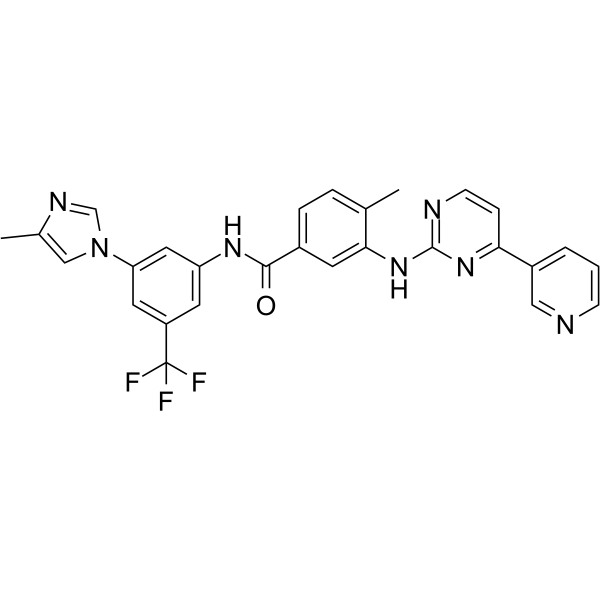
HY-10159
NilotinibBcr-Abl Inhibitor -
HY-15463
ImatinibTyrosine Kinases Inhibitor
Publications Citing Use of MedChemExpress (MCE) Motesanib
More Customer Validation & Images

-
IF
Voir tous les produits spécifiques à Isoform VEGFR
More

Activité biologique
Description
IC50 & Target
[1]|
VEGFR1 2 nM (IC50) |
VEGFR2 3 nM (IC50) |
VEGFR3 6 nM (IC50) |
Cellular Effect
|
Cell Line

|
Type | Value | Description | References |
|---|---|---|---|---|
| A-431 | IC50 |
>25 μM
Compound: AMG 706
|
Inhibition of EGF-induced EGF receptor phosphorylation in human A-431 cells preincubated for 2 hrs measured after 10 mins of EGF treatment by radioimmunoprecipitation assay
Inhibition of EGF-induced EGF receptor phosphorylation in human A-431 cells preincubated for 2 hrs measured after 10 mins of EGF treatment by radioimmunoprecipitation assay
|
[PMID: 16951187] |
| HUVEC | IC50 |
>3000 nM
Compound: AMG 706
|
Inhibition of bFGF-induced proliferation of HUVEC cells preincubated for 2 hrs measured after 72 hrs of VEGF challenge by CyQuant dye assay
Inhibition of bFGF-induced proliferation of HUVEC cells preincubated for 2 hrs measured after 72 hrs of VEGF challenge by CyQuant dye assay
|
[PMID: 16951187] |
| HUVEC | IC50 |
10 nM
Compound: AMG 706
|
Inhibition of VEGF-induced proliferation of HUVEC cells preincubated for 2 hrs measured after 72 hrs of VEGF challenge by CyQuant dye assay
Inhibition of VEGF-induced proliferation of HUVEC cells preincubated for 2 hrs measured after 72 hrs of VEGF challenge by CyQuant dye assay
|
[PMID: 16951187] |
In Vitro
Motesanib has broad activity against the human VEGFR family, and displays > 1000 selectivity against EGFR, Src, and p38 kinase. Motesanib significantly inhibits VEGF-induced cellular proliferation of HUVECs with an IC50 of 10 nM, while displaying little effect at bFGF-induced proliferation with an IC50 of >3,000 nM. Motesanib also potently inhibits PDGF-induced proliferation and SCF-induced c-kit phosphorylation with IC50 of 207 nM and 37 nM, respectively, but not effective against the EGF-induced EGFR phosphorylation and cell viability of A431 cells[1]. Althouth displaying little antiproliferative activity on cell growth of HUVECs alone, Motesanib treatment significantly sensitizes the cells to fractionated radiation[2].
MedChemExpress (MCE) has not independently confirmed the accuracy of these methods. They are for reference only.
In Vivo
MedChemExpress (MCE) has not independently confirmed the accuracy of these methods. They are for reference only.
Essai clinique
| NCT Number | Sponsor | Condition | Start Date |
Phase
|
|---|---|---|---|---|
| NCT01329991 | 2011-05 | PHASE1 |


Chemical Information
-
CAS No. 453562-69-1
-
Appearance Solid
-
Masse moléculaire 373.45
-
Formule C22H23N5O
-
Color White to khaki
-
SMILES
O=C(C1=CC=CN=C1NCC2=CC=NC=C2)NC3=CC(NCC4(C)C)=C4C=C3
-
Synonyms
AMG 706
-
Livraison
Room temperature in continental US; may vary elsewhere.
-
Stockage
Powder -20°C 3 years 4°C 2 years In solvent -80°C 2 years -20°C 1 year


Publications (4)
-
Journal Impact Factor
-
Most Recent
-
Sci Transl Med
PP2A inhibition is a druggable MEK inhibitor resistance mechanism in KRAS-mutant lung cancer cells. [Abstract]2018 Jul 18;10(450):eaaq1093. PMID: 30021885 -
J Cell Biochem
Vascular endothelial growth factor enhances tendon-bone healing by activating Yes-associated protein for angiogenesis induction and rotator cuff reconstruction in rats. [Abstract]2020 Mar;121(3):2343-2353. PMID: 31633245 -
Cell Physiol Biochem
VEGF-A and VEGF-B Coordinate the Arteriogenesis to Repair the Infarcted Heart with Vagus Nerve Stimulation. [Abstract]2018;48(2):433-449. PMID: 30016789
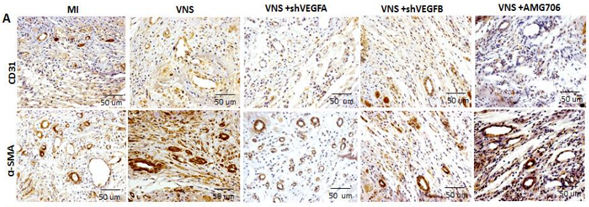
Motesanib purchased from MedChemExpress. Usage Cited in: Cell Physiol Biochem. 2018;48(2):433-449. [Abstract]
Immunostaining of CD31 and α-SMA for the analysis of vessel density in infarcted heart.
-
Oncotarget
Induction of VEGFA and Snail-1 by meningitic Escherichia coli mediates disruption of the blood-brain barrier. [Abstract]2016 Sep 27;7(39):63839-63855. PMID: 27588479


Solvant et solubilité
In Vitro:
DMSO : ≥ 100 mg/mL (267.77 mM; Hygroscopic DMSO has a significant impact on the solubility of product, please use newly opened DMSO)
* "≥" means soluble, but saturation unknown.
Please refer to the solubility information to select the appropriate solvent. Once prepared, please aliquot and store the solution to prevent product inactivation from repeated freeze-thaw cycles.
Storage method and period of stock solution: -80°C, 2 years; -20°C, 1 year. When stored at -80°C, please use it within 2 years. When stored at -20°C, please use it within 1 year.
Please refer to the solubility information to select the appropriate solvent. Once prepared, please aliquot and store the solution to prevent product inactivation from repeated freeze-thaw cycles.
Storage method and period of stock solution: -80°C, 2 years; -20°C, 1 year. When stored at -80°C, please use it within 2 years. When stored at -20°C, please use it within 1 year.
Concentration (start) × Volume (start) = Concentration (final) × Volume (final)
In Vivo:
Select the appropriate dissolution method based on your experimental animal and administration route.
- For the following dissolution methods, please ensure to first prepare a clear stock solution using an In Vitro approach and then sequentially add co-solvents:
- To ensure reliable experimental results, the clarified stock solution can be appropriately stored based on storage conditions. As for the working solution for In Vivo experiments, it is recommended to prepare freshly and use it on the same day.
- The percentages shown for the solvents indicate their volumetric ratio in the final prepared solution. If precipitation or phase separation occurs during preparation, heat and/or sonication can be used to aid dissolution.
Add each solvent one by one: 10% DMSO 40% PEG300 5% Tween-80 45% Saline
Solubility: ≥ 2.5 mg/mL (6.69 mM); Clear solution
This protocol yields a clear solution of ≥ 2.5 mg/mL (saturation unknown).
Taking 1 mL working solution as an example, add 100 μL DMSO stock solution (25.0 mg/mL) to 400 μL PEG300, and mix evenly; then add 50 μL Tween-80 and mix evenly; then add 450 μL Saline to adjust the volume to 1 mL.
Preparation of Saline: Dissolve 0.9 g sodium chloride in ddH₂O and dilute to 100 mL to obtain a clear Saline solution.
Add each solvent one by one: 10% DMSO 90% (20% SBE-β-CD in Saline)
Solubility: ≥ 2.5 mg/mL (6.69 mM); Clear solution
This protocol yields a clear solution of ≥ 2.5 mg/mL (saturation unknown).
Taking 1 mL working solution as an example, add 100 μL DMSO stock solution (25.0 mg/mL) to 900 μL 20% SBE-β-CD in Saline, and mix evenly.
Preparation of 20% SBE-β-CD in Saline (4°C, storage for one week): 2 g SBE-β-CD powder is dissolved in 10 mL Saline, completely dissolve until clear.
In Vivo Dissolution Calculator
Please enter the basic information of animal experiments:
-
-
-
-
Recommended: Prepare an additional quantity of animals to account for potential losses during experiments.
Please enter your animal formula composition:
-
%DMSO +
Recommended: Keep the proportion of DMSO in working solution below 2% if your animal is weak.
-
%+
-
+%Tween-80 + +
-
%Saline +
The co-solvents required include: DMSO, . All of co-solvents are available by MedChemExpress (MCE). , Tween 80. All of co-solvents are available by MedChemExpress (MCE).
Working solution concentration: 0.22 mg/mL
Method for preparing stock solution: mg drug dissolved in μL DMSO. Stock solution concentration: mg/mL.
1. Take μL DMSO stock solution;
2. Add μL .
μL , mix evenly;
3. Then add μL Tween 80, mix evenly;
4. Then add μL
Please ensure that the stock solution in the first step is dissolved to a clear state, and add co-solvents in sequence. You can use ultrasonic heating (ultrasonic cleaner, recommended frequency 20-40 kHz), vortexing, etc. to assist dissolution.


Pureté et documentation
-
Fiche technique (284 KB)
-
SDS (393 KB)
- English - EN (393 KB)
- Français - FR (393 KB)
- Deutsch - DE (393 KB)
- Norwegian - NO (393 KB)
- Español - ES (393 KB)
- Swedish - SV (393 KB)
- Italian - IT (393 KB)
- Korean - KR (393 KB)
- Portuguese - PT (393 KB)
-
Instruction de manipulation (2659 KB)
Références
[1]. Polverino A, et al. AMG 706, an oral, multikinase inhibitor that selectively targets vascular endothelial growth factor, platelet-derived growth factor, and kit receptors, potently inhibits angiogenesis and induces regression in tumor xenografts. Cancer R [Content Brief]
[2]. Kruser TJ, et al. Augmentation of radiation response by motesanib, a multikinase inhibitor that targets vascular endothelial growth factor receptors. Clin Cancer Res, 2010, 16(14), 3639-3647. [Content Brief]
[3]. Coxon A, et al. Broad antitumor activity in breast cancer xenografts by motesanib, a highly selective, oral inhibitor of vascular endothelial growth factor, platelet-derived growth factor, and Kit receptors. Clin Cancer Res, 2009, 15(1), 110-118. [Content Brief]


Complete Stock Solution Preparation Table
Please refer to the solubility information to select the appropriate solvent. Once prepared, please aliquot and store the solution to prevent product inactivation from repeated freeze-thaw cycles.
Storage method and period of stock solution: -80°C, 2 years; -20°C, 1 year. When stored at -80°C, please use it within 2 years. When stored at -20°C, please use it within 1 year.
| Optional Solvent | Concentration Solvent Mass | 1 mg | 5 mg | 10 mg | 25 mg |
|---|---|---|---|---|---|
| DMSO | 1 mM | 2.6777 mL | 13.3887 mL | 26.7773 mL | 66.9434 mL |
| 5 mM | 0.5355 mL | 2.6777 mL | 5.3555 mL | 13.3887 mL | |
| 10 mM | 0.2678 mL | 1.3389 mL | 2.6777 mL | 6.6943 mL | |
| 15 mM | 0.1785 mL | 0.8926 mL | 1.7852 mL | 4.4629 mL | |
| 20 mM | 0.1339 mL | 0.6694 mL | 1.3389 mL | 3.3472 mL | |
| 25 mM | 0.1071 mL | 0.5355 mL | 1.0711 mL | 2.6777 mL | |
| 30 mM | 0.0893 mL | 0.4463 mL | 0.8926 mL | 2.2314 mL | |
| 40 mM | 0.0669 mL | 0.3347 mL | 0.6694 mL | 1.6736 mL | |
| 50 mM | 0.0536 mL | 0.2678 mL | 0.5355 mL | 1.3389 mL | |
| 60 mM | 0.0446 mL | 0.2231 mL | 0.4463 mL | 1.1157 mL | |
| 80 mM | 0.0335 mL | 0.1674 mL | 0.3347 mL | 0.8368 mL | |
| 100 mM | 0.0268 mL | 0.1339 mL | 0.2678 mL | 0.6694 mL |


Motesanib Related Classifications
HY-10228 Related Classifications
 Powered by Bioz