



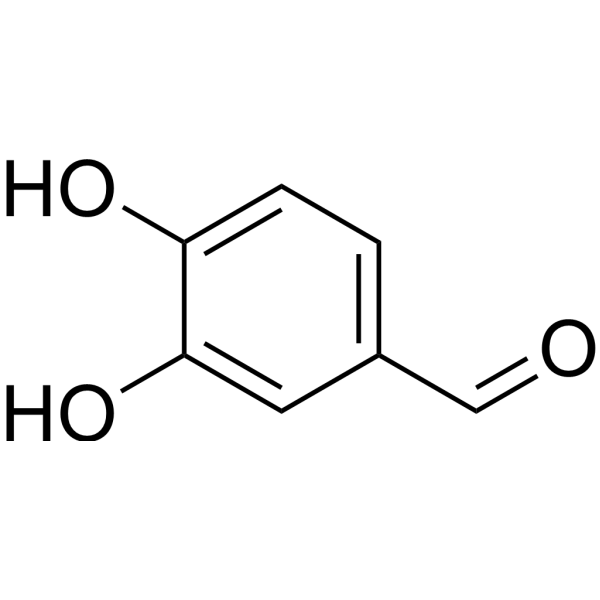
Protocatechualdehyde
Based on 5 publication(s) in Google Scholar
Protocatechualdehyde (Catechaldehyde), a natural polyphenol compound isolated from the roots of radix Salviae Miltiorrhizae, is associated with a wide variety of biological activities and has been widely used in medicine as an antioxidant, anti-aging, an antibacterial and anti-inflammatory agent.
Nos produits utilisent uniquement pour la recherche. Nous ne vendons pas aux patients.
- Pureté : 99.87%
- CAS No.: 139-85-5
- Formule: C7H6O3
- Masse moléculaire:138.12
-
Stockage:
4°C, stored under nitrogen
* In solvent : -80°C, 6 months; -20°C, 1 month (stored under nitrogen)

To place orders, for customer services and technical support, please contact: MedChemExpress USA
Tel: 609-228-6898 E-mail: [email protected] [email protected]


-
 Activité biologique
-
Chemical Information
-
Solvant et solubilité
- Protocole
- Pureté et documentation
- Références
-
 Help & FAQs


-
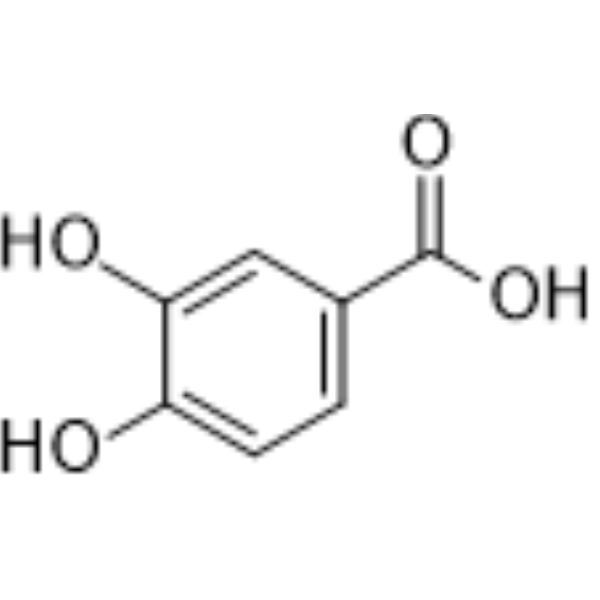
HY-N0294
Protocatechuic acidEndogenous Metabolite -
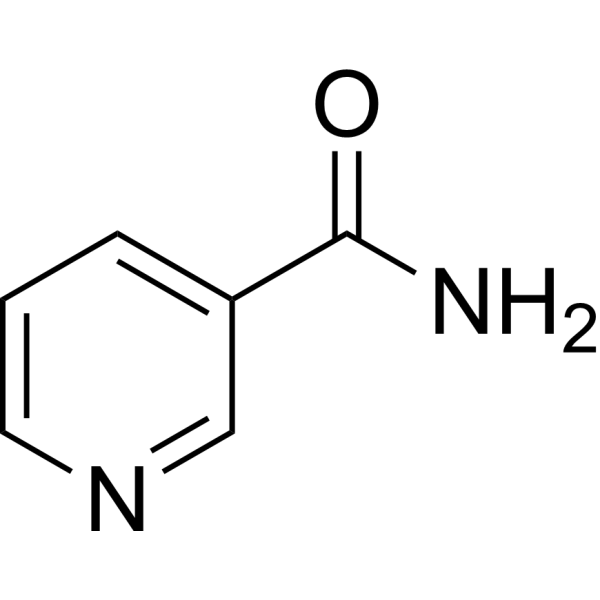
HY-B0150
NicotinamideSIRT Inhibitor -
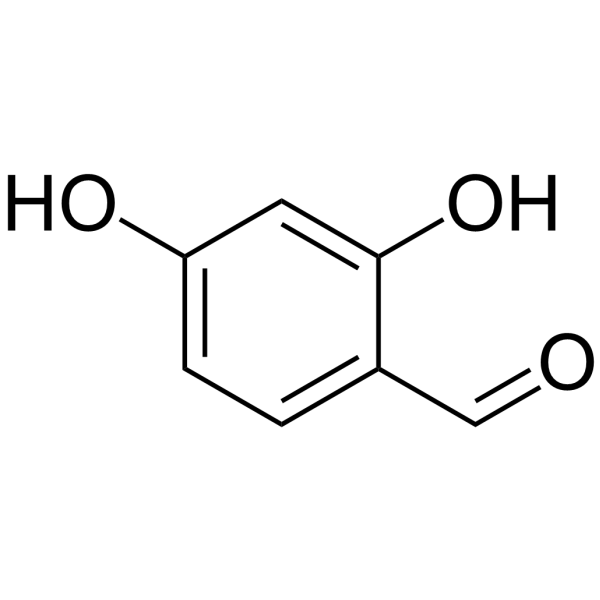
HY-W007539
2,4-DihydroxybenzaldehydeDrug Intermediate -
HY-W017389
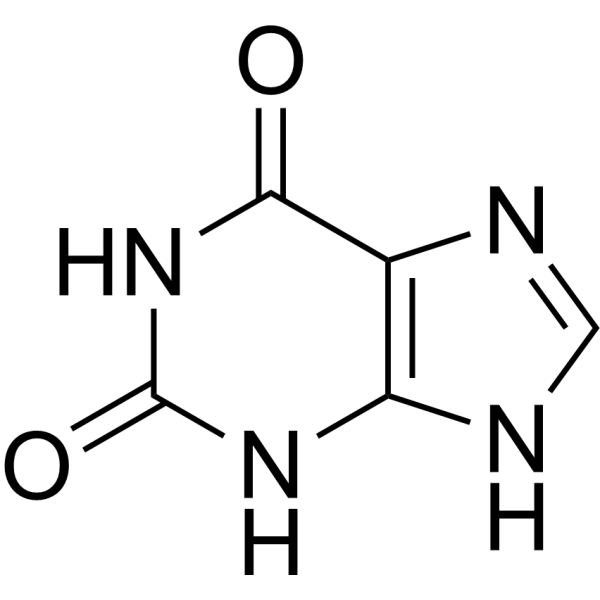
Xanthine -
HY-N1362
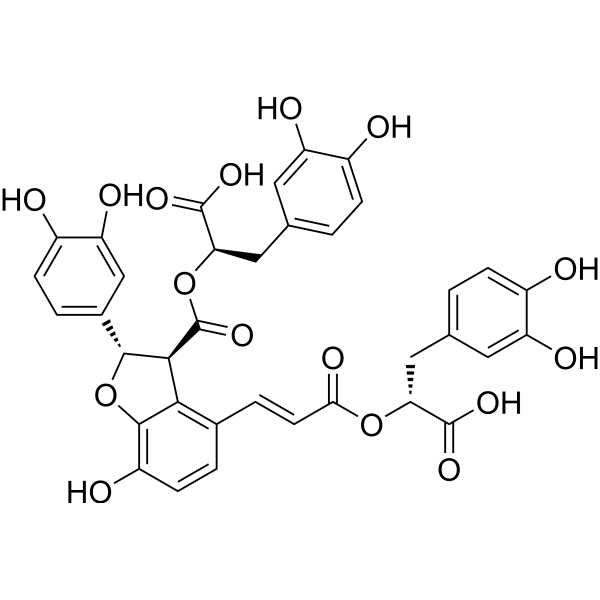
Salvianolic acid BAntioxidant -
HY-N0109
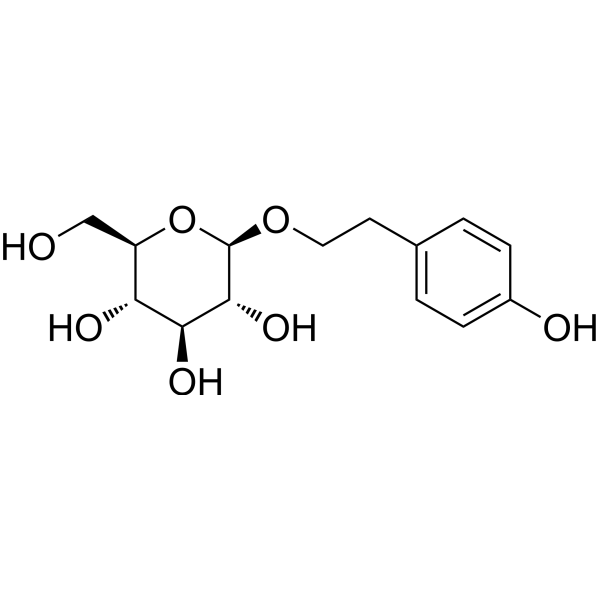
SalidrosideProlyl Endopeptidase Inhibitor -
HY-N0001
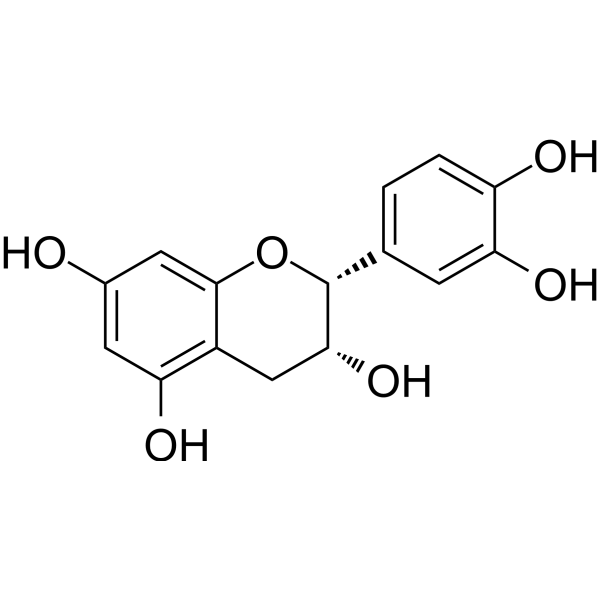
(-)-EpicatechinCOX Inhibitor -
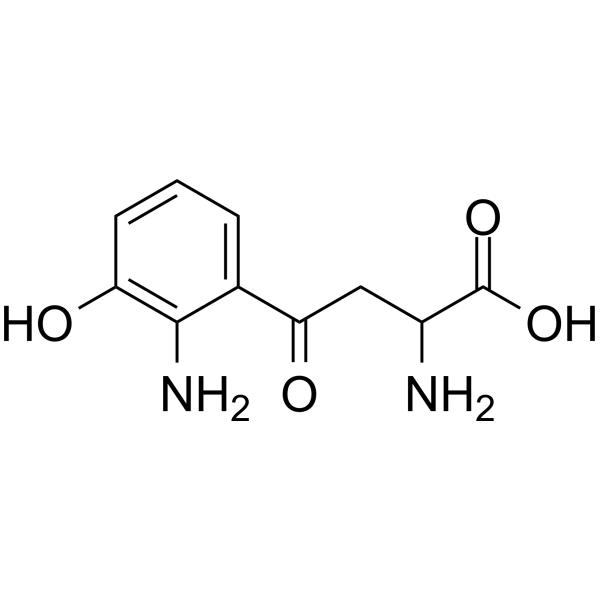
HY-113294
3-HydroxykynurenineEndogenous Neurotoxin -
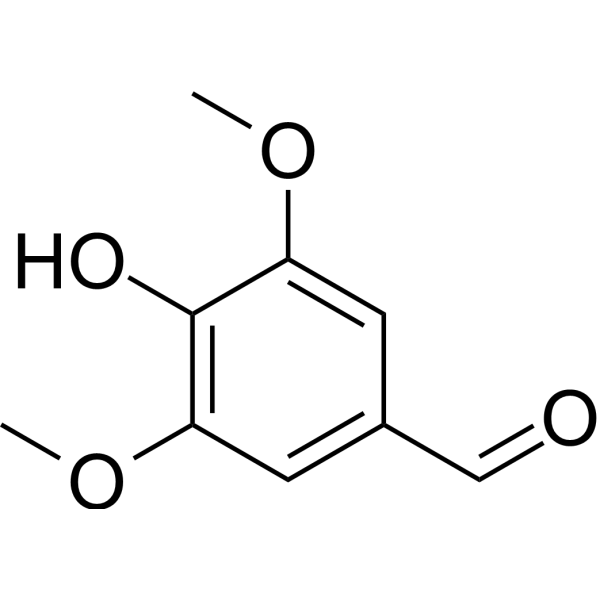
HY-N1390
SyringaldehydeCOX-2 Inhibitor -
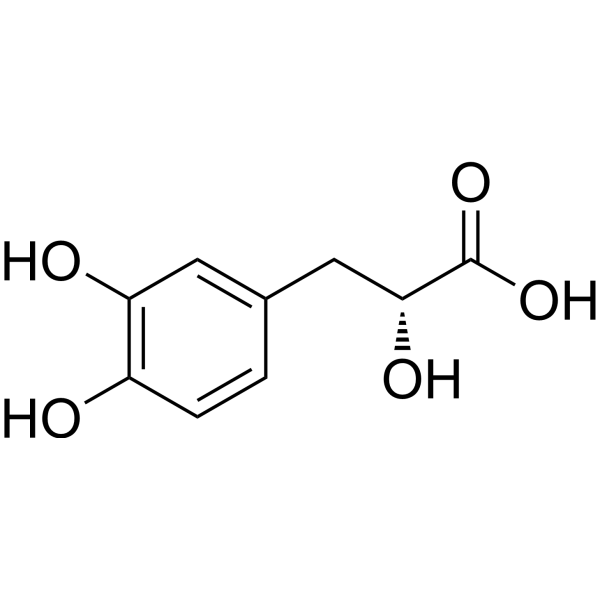
HY-N1913
DanshensuNrf2/HO-1 Activator -
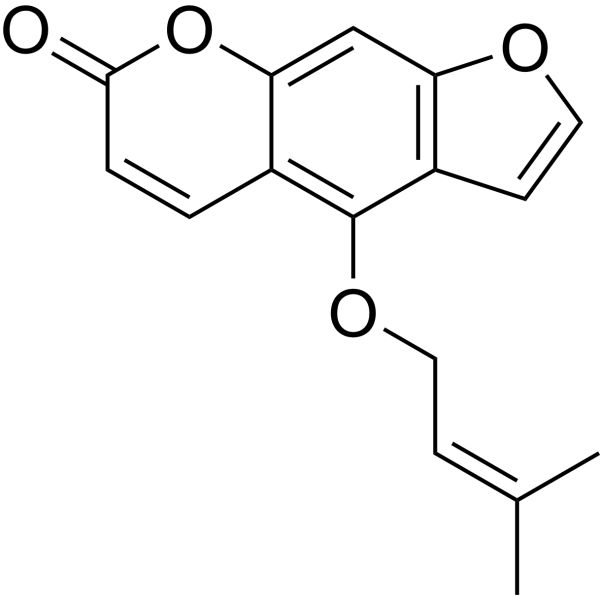
HY-N0286
IsoimperatorinCholinesterase (ChE) Inhibitor -
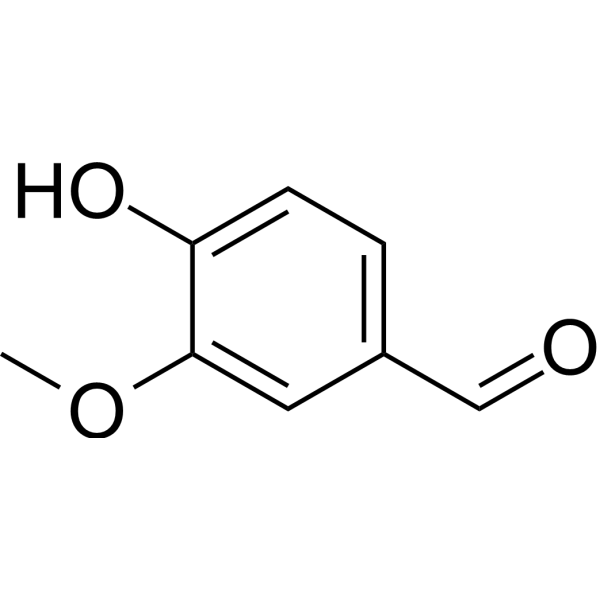
HY-N0098
VanillinPhenolic Aldehyde
Publications Citing Use of MedChemExpress (MCE) Protocatechualdehyde
MoreVoir tous les produits spécifiques à Isoform Endogenous Metabolite
More

Activité biologique
Description
Cellular Effect
|
Cell Line

|
Type | Value | Description | References |
|---|---|---|---|---|
| A549 | IC50 |
3.1 μM
Compound: 17
|
Cytotoxicity against human A549 cells after 4 days by MTT assay
Cytotoxicity against human A549 cells after 4 days by MTT assay
|
[PMID: 24359303] |
| A549 | IC50 |
>10 μM
Compound: 22
|
Cytotoxicity against human A549 cells after 48 hrs by MTT assay
Cytotoxicity against human A549 cells after 48 hrs by MTT assay
|
[PMID: 25710081] |
| A549 | GI50 |
42 μM
Compound: 2
|
Antiproliferative activity against human A549 cells after 48 hrs by sulforhodamine B assay
Antiproliferative activity against human A549 cells after 48 hrs by sulforhodamine B assay
|
[PMID: 25752525] |
| B16-4A5 | IC50 |
17 μM
Compound: 36
|
Inhibition of theophylline-stimulated melanogenesis in mouse B16-4A5 cells after 72 hrs
Inhibition of theophylline-stimulated melanogenesis in mouse B16-4A5 cells after 72 hrs
|
[PMID: 20189399] |
| Bel-7402 | IC50 |
3.7 μM
Compound: 17
|
Cytotoxicity against human Bel7402 cells after 4 days by MTT assay
Cytotoxicity against human Bel7402 cells after 4 days by MTT assay
|
[PMID: 24359303] |
| BMDM | IC50 |
15 μM
Compound: 6
|
Inhibition of M-CSF/RANKL-induced osteoclast differentiation in C57BL/6 mouse bone marrow macrophage assessed as reduction in multinucleated TRAP+ cells incubated for 6 days with fresh media replacement on day 3 and measured on day 6 by TRAP staining-base
Inhibition of M-CSF/RANKL-induced osteoclast differentiation in C57BL/6 mouse bone marrow macrophage assessed as reduction in multinucleated TRAP+ cells incubated for 6 days with fresh media replacement on day 3 and measured on day 6 by TRAP staining-base
|
[PMID: 31257875] |
| BV-2 | IC50 |
>100 μM
Compound: 26
|
Antineuroinflammatory activity in mouse BV2 cells assessed as inhibition of LPS-induced NO production after 24 hrs in presence of LPS by Griess reaction based assay
Antineuroinflammatory activity in mouse BV2 cells assessed as inhibition of LPS-induced NO production after 24 hrs in presence of LPS by Griess reaction based assay
|
[PMID: 28911817] |
| DLD-1 | IC50 |
70 μM
Compound: 4
|
Cytotoxicity against human DLD1 cells after 96 hrs by MTT assay
Cytotoxicity against human DLD1 cells after 96 hrs by MTT assay
|
[PMID: 15387639] |
| DLD-1 | IC50 |
70 μmol
Compound: 4
|
Cytotoxicity against human DLD1 cells after 96 hrs by MTT assay
Cytotoxicity against human DLD1 cells after 96 hrs by MTT assay
|
[PMID: 15387639] |
| HBL-100 | GI50 |
>100 μM
Compound: 2
|
Antiproliferative activity against human HBL100 cells after 48 hrs by sulforhodamine B assay
Antiproliferative activity against human HBL100 cells after 48 hrs by sulforhodamine B assay
|
[PMID: 25752525] |
| HeLa | GI50 |
49 μM
Compound: 2
|
Antiproliferative activity against human HeLa cells after 48 hrs by sulforhodamine B assay
Antiproliferative activity against human HeLa cells after 48 hrs by sulforhodamine B assay
|
[PMID: 25752525] |
| HepG2 2.2.15 | EC50 |
2.46 μg/mL
Compound: 61
|
Antiviral activity against Hepatitis B virus infected in human HepG2.2.15 cells assessed as decrease in HBV e antigen secretion by ELISA
Antiviral activity against Hepatitis B virus infected in human HepG2.2.15 cells assessed as decrease in HBV e antigen secretion by ELISA
|
[PMID: 24549242] |
| HepG2 2.2.15 | EC50 |
3.94 μg/mL
Compound: 61
|
Antiviral activity against Hepatitis B virus infected in human HepG2.2.15 cells assessed as decrease in HBV surface antigen secretion by ELISA
Antiviral activity against Hepatitis B virus infected in human HepG2.2.15 cells assessed as decrease in HBV surface antigen secretion by ELISA
|
[PMID: 24549242] |
| HepG2 2.2.15 | IC50 |
4.17 μg/mL
Compound: 61
|
Antiviral activity against Hepatitis B virus infected in human HepG2.2.15 cells assessed as decrease in HBV DNA production by quantitative RT-PCR analysis
Antiviral activity against Hepatitis B virus infected in human HepG2.2.15 cells assessed as decrease in HBV DNA production by quantitative RT-PCR analysis
|
[PMID: 24549242] |
| K562 | IC50 |
>10 μM
Compound: 22
|
Cytotoxicity against human K562 cells after 48 hrs by MTT assay
Cytotoxicity against human K562 cells after 48 hrs by MTT assay
|
[PMID: 25710081] |
| KB | IC50 |
>10 μM
Compound: 17
|
Cytotoxicity against human KB cells after 4 days by MTT assay
Cytotoxicity against human KB cells after 4 days by MTT assay
|
[PMID: 24359303] |
| N9 | IC50 |
>100 μM
Compound: 31
|
Antineuroinflammatory activity in mouse N9 cells assessed as inhibition of LPS-induced nitric oxide production after 24 hrs by Griess assay
Antineuroinflammatory activity in mouse N9 cells assessed as inhibition of LPS-induced nitric oxide production after 24 hrs by Griess assay
|
[PMID: 28073678] |
| SW1573 | GI50 |
54 μM
Compound: 2
|
Antiproliferative activity against human SW1573 cells after 48 hrs by sulforhodamine B assay
Antiproliferative activity against human SW1573 cells after 48 hrs by sulforhodamine B assay
|
[PMID: 25752525] |
| T47D | GI50 |
>100 μM
Compound: 2
|
Antiproliferative activity against human T47D cells after 48 hrs by sulforhodamine B assay
Antiproliferative activity against human T47D cells after 48 hrs by sulforhodamine B assay
|
[PMID: 25752525] |
| WiDr | GI50 |
>100 μM
Compound: 2
|
Antiproliferative activity against human WiDr cells after 48 hrs by sulforhodamine B assay
Antiproliferative activity against human WiDr cells after 48 hrs by sulforhodamine B assay
|
[PMID: 25752525] |
In Vitro
Protocatechualdehyde (PCA) (50, 100 μM, 24/48 hours ) treated MCF-7 cells significantly decrease cell growth by 11% and 20% in 24 hours and by 22% and 27% in 48 hours, respectively[2].
Protocatechualdehyde (50, 100 μM, 24 hours) treated MCF-7 cells are increased by 1.9-fold and 2.6-fold in the concentrations of 50 μM and 100 μM, respectively. PCA suppresses proliferation of estrogen receptor (ER)-positive (MCF-7) breast cancer cells, but not ER-negative (MDA-MB-231) breast cancer cells[2].
Protocatechualdehyde (0, 100, 200 μM, 48 hours in HCT116 and SW480 cells) affects the enzyme activity of HDAC and observed that PCA treatment resulted in inhibition of HDAC activity in dose-dependent manner[3].
MedChemExpress (MCE) has not independently confirmed the accuracy of these methods. They are for reference only.
-
Cell Line:Human breast cancer cell (MCF-7 and MDA-MB-231)
-
Concentration:0, 5, 10, 25, 50, and 100 μM
-
Incubation Time:24, 48 hours
-
Result:Inhibited MCF-7 cells cell growth.
-
Cell Line:Human breast cancer cell (MCF-7 and MDA-MB-231)
-
Concentration:0, 5, 10, 25, 50, and 100 μM
-
Incubation Time:24, 48 hours
-
Result:Increased apoptosis in MCF-7 cells.


Chemical Information
-
CAS No. 139-85-5
-
Appearance Solid
-
Masse moléculaire 138.12
-
Formule C7H6O3
-
Color Light yellow to brown
-
SMILES
O=CC1=CC=C(O)C(O)=C1
-
Synonyms
Catechaldehyde; Protocatechuic aldehyde; Rancinamycin IV
-
Structure Classification
-
Initial Source
-
Livraison
Room temperature in continental US; may vary elsewhere.
-
Stockage
4°C, stored under nitrogen
* In solvent : -80°C, 6 months; -20°C, 1 month (stored under nitrogen)


Publications (5)
-
Journal Impact Factor
-
Most Recent


Solvant et solubilité
In Vitro:
DMSO : ≥ 50 mg/mL (362.00 mM; Hygroscopic DMSO has a significant impact on the solubility of product, please use newly opened DMSO)
* "≥" means soluble, but saturation unknown.
Please refer to the solubility information to select the appropriate solvent. Once prepared, please aliquot and store the solution to prevent product inactivation from repeated freeze-thaw cycles.
Storage method and period of stock solution: -80°C, 6 months; -20°C, 1 month (stored under nitrogen). When stored at -80°C, please use it within 6 months. When stored at -20°C, please use it within 1 month.
Please refer to the solubility information to select the appropriate solvent. Once prepared, please aliquot and store the solution to prevent product inactivation from repeated freeze-thaw cycles.
Storage method and period of stock solution: -80°C, 6 months; -20°C, 1 month (stored under nitrogen). When stored at -80°C, please use it within 6 months. When stored at -20°C, please use it within 1 month.
Concentration (start) × Volume (start) = Concentration (final) × Volume (final)
In Vivo:
Select the appropriate dissolution method based on your experimental animal and administration route.
- For the following dissolution methods, please ensure to first prepare a clear stock solution using an In Vitro approach and then sequentially add co-solvents:
- To ensure reliable experimental results, the clarified stock solution can be appropriately stored based on storage conditions. As for the working solution for In Vivo experiments, it is recommended to prepare freshly and use it on the same day.
- The percentages shown for the solvents indicate their volumetric ratio in the final prepared solution. If precipitation or phase separation occurs during preparation, heat and/or sonication can be used to aid dissolution.
Add each solvent one by one: 10% DMSO 40% PEG300 5% Tween-80 45% Saline
Solubility: ≥ 2.5 mg/mL (18.10 mM); Clear solution
This protocol yields a clear solution of ≥ 2.5 mg/mL (saturation unknown).
Taking 1 mL working solution as an example, add 100 μL DMSO stock solution (25.0 mg/mL) to 400 μL PEG300, and mix evenly; then add 50 μL Tween-80 and mix evenly; then add 450 μL Saline to adjust the volume to 1 mL.
Preparation of Saline: Dissolve 0.9 g sodium chloride in ddH₂O and dilute to 100 mL to obtain a clear Saline solution.
Add each solvent one by one: 10% DMSO 90% (20% SBE-β-CD in Saline)
Solubility: ≥ 2.5 mg/mL (18.10 mM); Clear solution
This protocol yields a clear solution of ≥ 2.5 mg/mL (saturation unknown).
Taking 1 mL working solution as an example, add 100 μL DMSO stock solution (25.0 mg/mL) to 900 μL 20% SBE-β-CD in Saline, and mix evenly.
Preparation of 20% SBE-β-CD in Saline (4°C, storage for one week): 2 g SBE-β-CD powder is dissolved in 10 mL Saline, completely dissolve until clear.
In Vivo Dissolution Calculator
Please enter the basic information of animal experiments:
-
-
-
-
Recommended: Prepare an additional quantity of animals to account for potential losses during experiments.
Please enter your animal formula composition:
-
%DMSO +
Recommended: Keep the proportion of DMSO in working solution below 2% if your animal is weak.
-
%+
-
+%Tween-80 + +
-
%Saline +
The co-solvents required include: DMSO, . All of co-solvents are available by MedChemExpress (MCE). , Tween 80. All of co-solvents are available by MedChemExpress (MCE).
Working solution concentration: 0.22 mg/mL
Method for preparing stock solution: mg drug dissolved in μL DMSO. Stock solution concentration: mg/mL. * In solvent : -80°C, 6 months; -20°C, 1 month (stored under nitrogen)
1. Take μL DMSO stock solution;
2. Add μL .
μL , mix evenly;
3. Then add μL Tween 80, mix evenly;
4. Then add μL
Please ensure that the stock solution in the first step is dissolved to a clear state, and add co-solvents in sequence. You can use ultrasonic heating (ultrasonic cleaner, recommended frequency 20-40 kHz), vortexing, etc. to assist dissolution.


Pureté et documentation
-
Fiche technique (277 KB)
-
SDS (394 KB)
- English - EN (394 KB)
- Français - FR (394 KB)
- Deutsch - DE (394 KB)
- Norwegian - NO (394 KB)
- Español - ES (394 KB)
- Swedish - SV (394 KB)
- Italian - IT (394 KB)
- Korean - KR (394 KB)
- Portuguese - PT (394 KB)
-
Instruction de manipulation (2659 KB)
Références
[1]. Li S, et al. Evaluation of the Antibacterial Effects and Mechanism of Action of Protocatechualdehyde against Ralstonia solanacearum. Molecules. 2016 Jun 9;21(6). [Content Brief]
[2]. Choi J, et al. Anticancer activity of protocatechualdehyde in human breast cancer cells. J Med Food. 2014 Aug;17(8):842-8. [Content Brief]
[3]. Jeong JB, et al. Protocatechualdehyde possesses anti-cancer activity through downregulating cyclin D1 and HDAC2 in human colorectal cancer cells. Biochem Biophys Res Commun. 2013 Jan 4;430(1):381-6. [Content Brief]


Complete Stock Solution Preparation Table
Please refer to the solubility information to select the appropriate solvent. Once prepared, please aliquot and store the solution to prevent product inactivation from repeated freeze-thaw cycles.
Storage method and period of stock solution: -80°C, 6 months; -20°C, 1 month (stored under nitrogen). When stored at -80°C, please use it within 6 months. When stored at -20°C, please use it within 1 month.
| Optional Solvent | Concentration Solvent Mass | 1 mg | 5 mg | 10 mg | 25 mg |
|---|---|---|---|---|---|
| DMSO | 1 mM | 7.2401 mL | 36.2004 mL | 72.4008 mL | 181.0020 mL |
| 5 mM | 1.4480 mL | 7.2401 mL | 14.4802 mL | 36.2004 mL | |
| 10 mM | 0.7240 mL | 3.6200 mL | 7.2401 mL | 18.1002 mL | |
| 15 mM | 0.4827 mL | 2.4134 mL | 4.8267 mL | 12.0668 mL | |
| 20 mM | 0.3620 mL | 1.8100 mL | 3.6200 mL | 9.0501 mL | |
| 25 mM | 0.2896 mL | 1.4480 mL | 2.8960 mL | 7.2401 mL | |
| 30 mM | 0.2413 mL | 1.2067 mL | 2.4134 mL | 6.0334 mL | |
| 40 mM | 0.1810 mL | 0.9050 mL | 1.8100 mL | 4.5251 mL | |
| 50 mM | 0.1448 mL | 0.7240 mL | 1.4480 mL | 3.6200 mL | |
| 60 mM | 0.1207 mL | 0.6033 mL | 1.2067 mL | 3.0167 mL | |
| 80 mM | 0.0905 mL | 0.4525 mL | 0.9050 mL | 2.2625 mL | |
| 100 mM | 0.0724 mL | 0.3620 mL | 0.7240 mL | 1.8100 mL |


Protocatechualdehyde Related Classifications
HY-N0295 Related Classifications
 Powered by Bioz