



Seclidemstat
Based on 11 publication(s) in Google Scholar
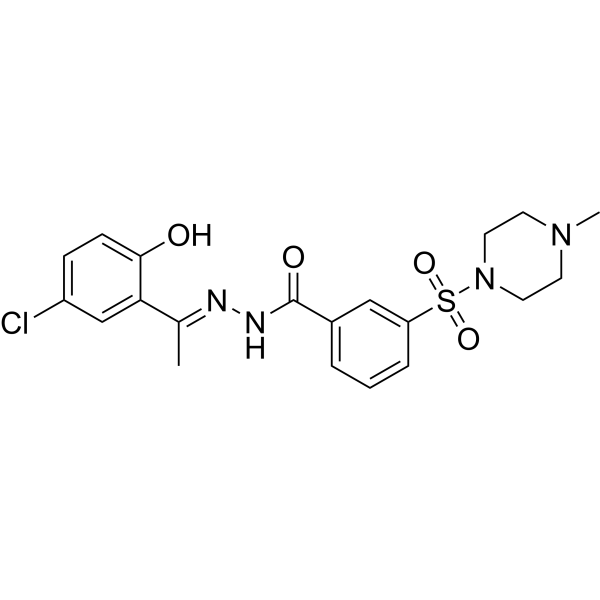
Seclidemstat is a potent noncompetitive and reversible KDM1A (LSD1) inhibitor (Ki=31 nM, IC50=13 nM). Seclidemstat promotes antitumor immunity in switch/sucrose nonfermentable (SWI/SNF) complex mutated ovarian cancer, as well as inhibit virus production, viral DNA replication, and late gene expression. Seclidemstat can be used for the research of Ewing Sarcoma.
Nos produits utilisent uniquement pour la recherche. Nous ne vendons pas aux patients.
- Pureté : 99.77%
- CAS No.: 1423715-37-0
- Formule: C20H23ClN4O4S
- Masse moléculaire:450.94
-
Stockage:Powder -20°C, 3 years , 4°C, 2 years ; In solvent -80°C, 6 months , -20°C, 1 month

To place orders, for customer services and technical support, please contact: MedChemExpress USA
Tel: 609-228-6898 E-mail: [email protected] [email protected]


-
 Activité biologique
-
Chemical Information
-
Solvant et solubilité
- Protocole
- Pureté et documentation
- Références
-
 Help & FAQs


-
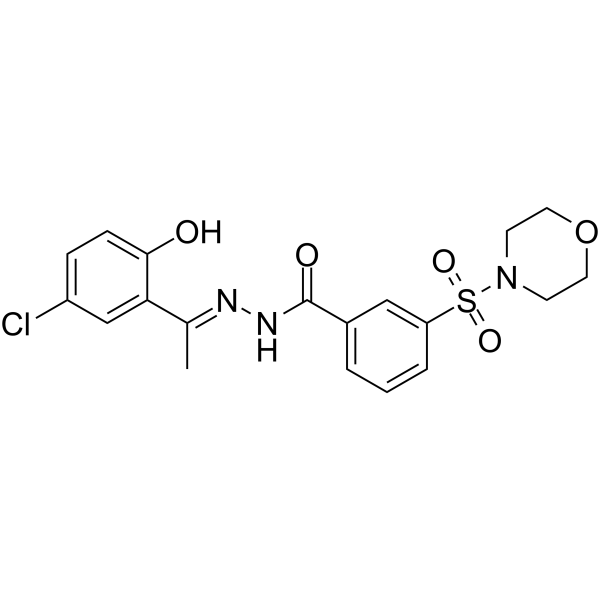
HY-12635
SP2509LSD1 Antagonist -
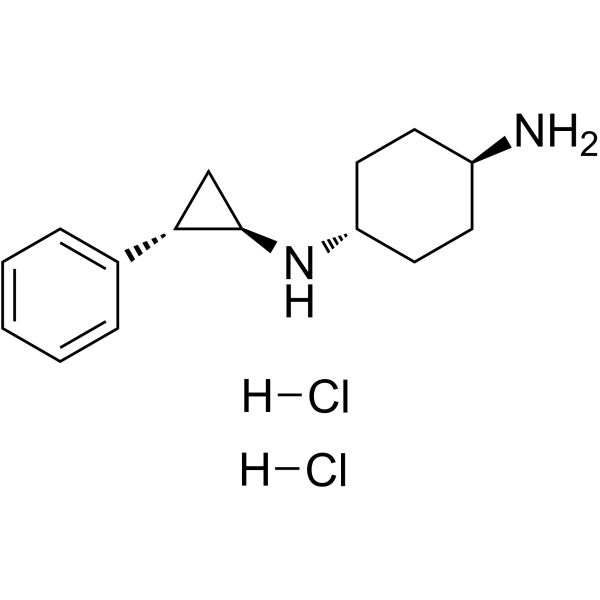
HY-12782T
Iadademstat dihydrochlorideKDM1A Inhibitor -
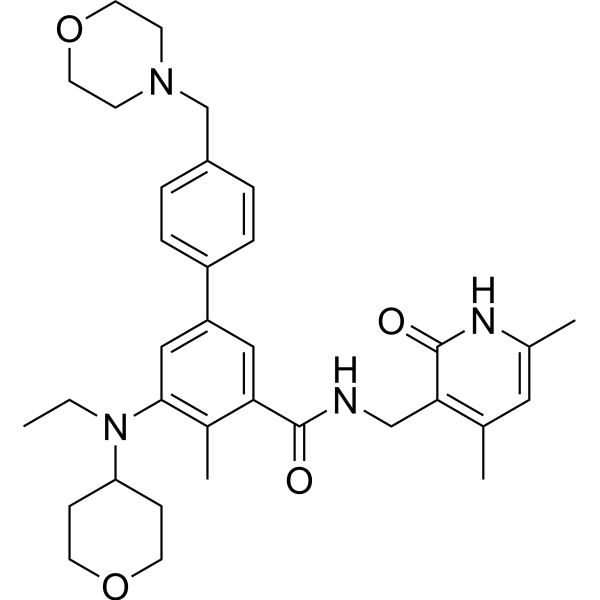
HY-13803
TazemetostatEZH2 Inhibitor -
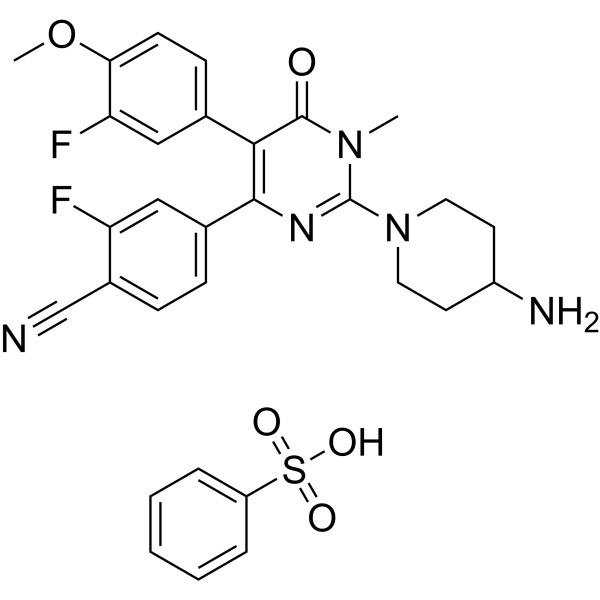
HY-129388B
Pulrodemstat benzenesulfonateLSD1 Inhititor -
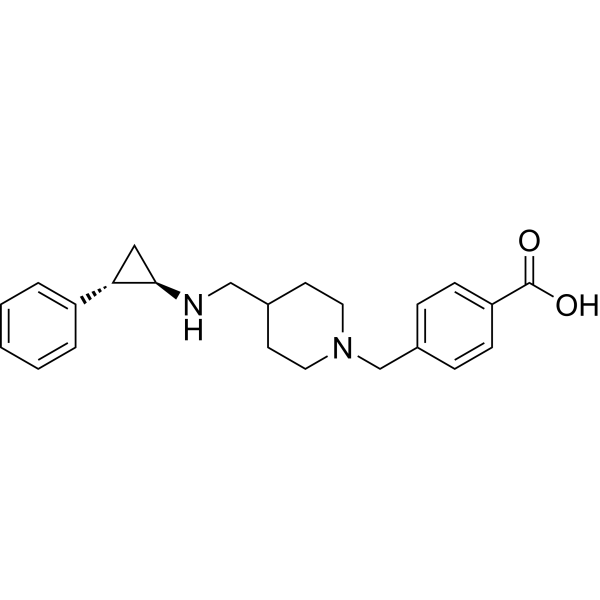
HY-18632
GSK2879552LSD1 Inhibitor -
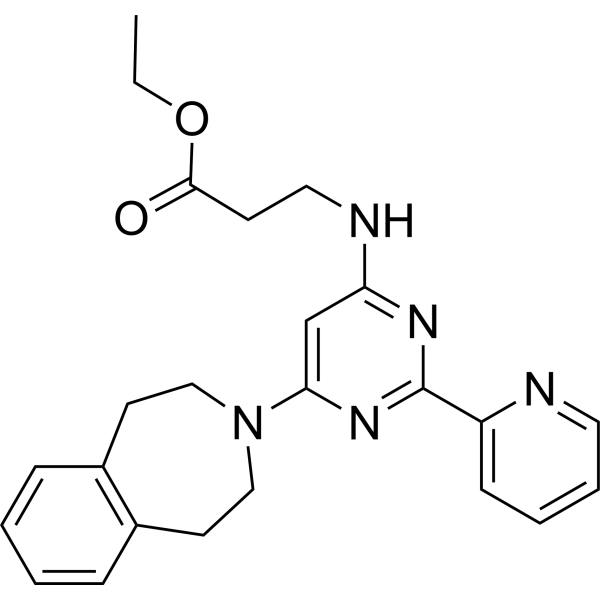
HY-15648B
GSK-J4JMJD3/UTX Inhibitor -
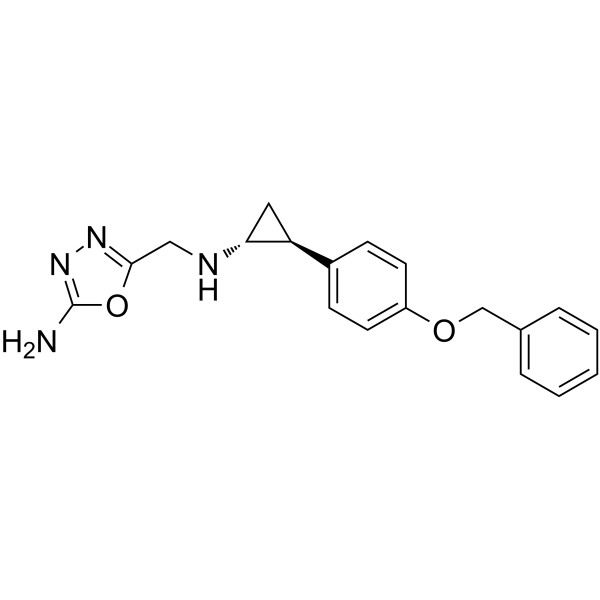
HY-112623
VafidemstatLSD1 Inhibitor -
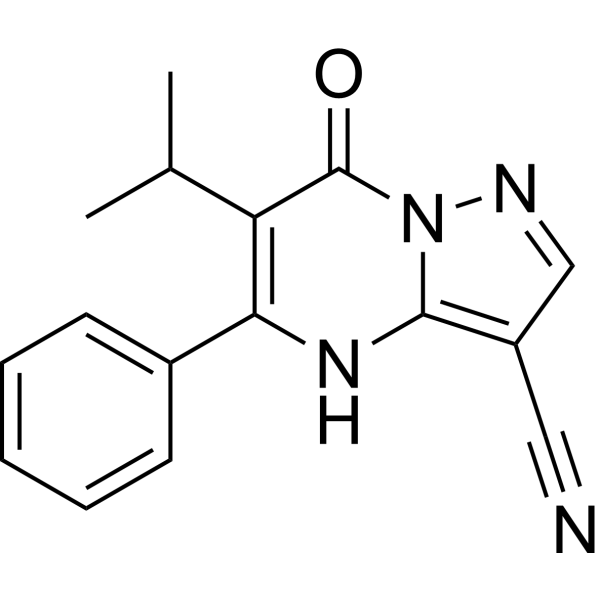
HY-100421
CPI-455KDM5 Inhibitor -
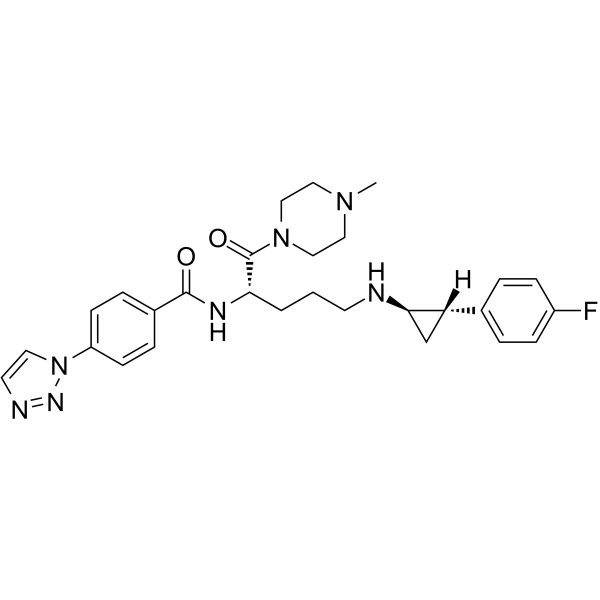
HY-109169
BomedemstatLSD1 Inhibitor -
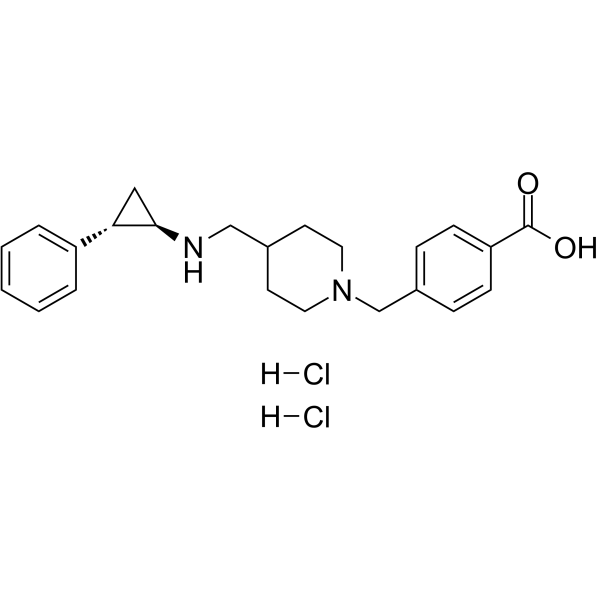
HY-18632A
GSK2879552 dihydrochlorideLSD1/KDM1A Inhibitor -
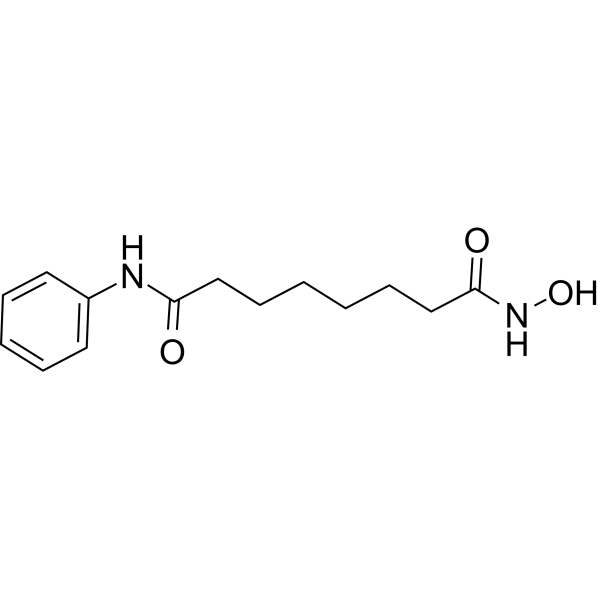
HY-10221
VorinostatHDAC Inhibitor -
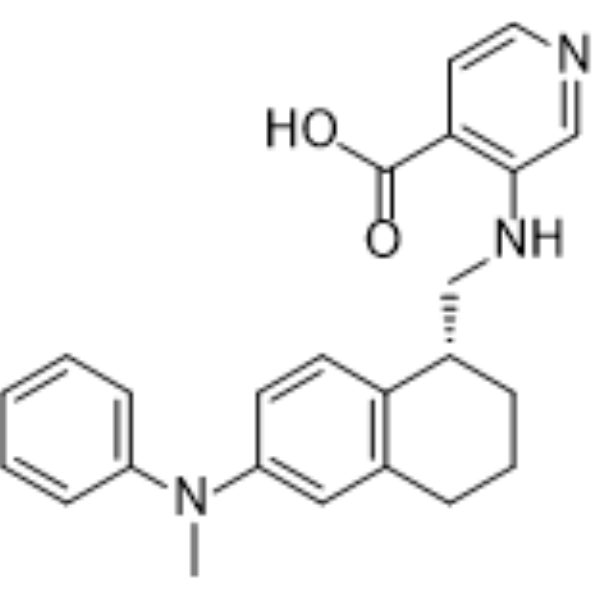
HY-104048
QC6352KDM4 Inhibitor
Publications Citing Use of MedChemExpress (MCE) Seclidemstat
More- Mol Cancer. 2025 Apr 23;24(1):122. [Abstract]
- Nat Cell Biol. 2022 Mar;24(3):373-383. [Abstract]
- Cancer Lett. 2024 Sep 28:600:217182. [Abstract]
- Clin Exp Med. 2025 Nov 25;26(1):33. [Abstract]
- Mol Divers. 2024 Dec;28(6):4403-4424. [Abstract]
- ACS Pharmacol Transl Sci. 2021 Nov 12;4(6):1818-1834. [Abstract]
- Biochem Biophys Res Commun. 2025 Mar 1:750:151330. [Abstract]
- Boston University. 2025.
- Indiana University. 2025.
- bioRxiv. 2024 October 29.
- bioRxiv. 2020 May.


Activité biologique
Description
IC50 & Target
|
KDM1/LSD1 |
In Vitro
Seclidemstat (72 hours) inhibits SWI/SNF-mutation-dependent tumor cell proliferation with IC50 ranging from 0.013 to 2.819 μM (COV434, BIN67, SCCOHT-1, TOV21G, SKOV3, A427, H522, A549, H1299, G401, G402, HCC15 cells)[2].
?
Seclidemstat (72 hours) promotes endogenous retroviruses (ERVs) expression and activation of IFNβ pathway in SCCOHT cell lines (SCCOHT-1, BIN67, and COV434 cells)[2].
?
Seclidemstat (3 μM) promotes PD-L1 expression in SCCOHT COV 434 pIND 20 BRG1-2.7 cell line[2].
MedChemExpress (MCE) has not independently confirmed the accuracy of these methods. They are for reference only.
Essai clinique
| NCT Number | Sponsor | Condition | Start Date |
Phase

|
|---|---|---|---|---|
| NCT01329991 | Plexxikon| | 2011-05 | PHASE1 |


Chemical Information
-
CAS No. 1423715-37-0
-
Appearance Solid
-
Masse moléculaire 450.94
-
Formule C20H23ClN4O4S
-
Color Off-white to yellow
-
SMILES
O=C(N/N=C(C1=CC(Cl)=CC=C1O)\C)C2=CC=CC(S(=O)(N3CCN(C)CC3)=O)=C2
-
Synonyms
SP-2577
-
Livraison
Room temperature in continental US; may vary elsewhere.
-
Stockage
Powder -20°C 3 years 4°C 2 years In solvent -80°C 6 months -20°C 1 month


Publications (11)
-
Journal Impact Factor
-
Most Recent
-
Mol Cancer
LSD1 inhibition attenuates targeted therapy-induced lineage plasticity in BRAF mutant colorectal cancer. [Abstract]2025 Apr 23;24(1):122. PMID: 40264166 -
Nat Cell Biol
YAP/TAZ drives cell proliferation and tumour growth via a polyamine-eIF5A hypusination-LSD1 axis. [Abstract]2022 Mar;24(3):373-383. PMID: 35177822 -
Cancer Lett
Restoration of TFPI2 by LSD1 inhibition suppresses tumor progression and potentiates antitumor immunity in breast cancer. [Abstract]2024 Sep 28:600:217182. PMID: 39154703 -
Clin Exp Med
Corin: a dual inhibitor for KDM1A/HDAC1, suppresses hepatocellular carcinoma by triggering cuproptosis. [Abstract]2025 Nov 25;26(1):33. PMID: 41286164 -
Mol Divers
Exploring host epigenetic enzymes as targeted therapies for visceral leishmaniasis: in silico design and in vitro efficacy of KDM6B and ASH1L inhibitors. [Abstract]2024 Dec;28(6):4403-4424. PMID: 38522046 -
ACS Pharmacol Transl Sci
Comprehensive in Vitro Characterization of the LSD1 Small Molecule Inhibitor Class in Oncology. [Abstract]2021 Nov 12;4(6):1818-1834. PMID: 34927013 -
Biochem Biophys Res Commun
Histone lysine demethylase 1A inhibitors, seclidemstat and tranylcypromine, induce astrocytogenesis in rat neural stem cells. [Abstract]2025 Mar 1:750:151330. PMID: 39899938 -
-
-
-


Solvant et solubilité
In Vitro:
DMSO : 50 mg/mL (110.88 mM; ultrasonic and warming and heat to 80°C; Hygroscopic DMSO has a significant impact on the solubility of product, please use newly opened DMSO)
Please refer to the solubility information to select the appropriate solvent. Once prepared, please aliquot and store the solution to prevent product inactivation from repeated freeze-thaw cycles.
Storage method and period of stock solution: -80°C, 6 months; -20°C, 1 month. When stored at -80°C, please use it within 6 months. When stored at -20°C, please use it within 1 month.
Please refer to the solubility information to select the appropriate solvent. Once prepared, please aliquot and store the solution to prevent product inactivation from repeated freeze-thaw cycles.
Storage method and period of stock solution: -80°C, 6 months; -20°C, 1 month. When stored at -80°C, please use it within 6 months. When stored at -20°C, please use it within 1 month.
Concentration (start) × Volume (start) = Concentration (final) × Volume (final)
In Vivo:
Select the appropriate dissolution method based on your experimental animal and administration route.
- For the following dissolution methods, please ensure to first prepare a clear stock solution using an In Vitro approach and then sequentially add co-solvents:
- To ensure reliable experimental results, the clarified stock solution can be appropriately stored based on storage conditions. As for the working solution for In Vivo experiments, it is recommended to prepare freshly and use it on the same day.
- The percentages shown for the solvents indicate their volumetric ratio in the final prepared solution. If precipitation or phase separation occurs during preparation, heat and/or sonication can be used to aid dissolution.
Add each solvent one by one: 10% DMSO 40% PEG300 5% Tween-80 45% Saline
Solubility: ≥ 2.08 mg/mL (4.61 mM); Clear solution
This protocol yields a clear solution of ≥ 2.08 mg/mL (saturation unknown).
Taking 1 mL working solution as an example, add 100 μL DMSO stock solution (20.8 mg/mL) to 400 μL PEG300, and mix evenly; then add 50 μL Tween-80 and mix evenly; then add 450 μL Saline to adjust the volume to 1 mL.
Preparation of Saline: Dissolve 0.9 g sodium chloride in ddH₂O and dilute to 100 mL to obtain a clear Saline solution.
Add each solvent one by one: 1.6% DMA 5% Ethanol 45% PEG400 48.4% PBS
Solubility: 2 mg/mL (4.44 mM); Clear solution; Need ultrasonic and warming and heat to 60°C
For the following dissolution methods, please prepare the working solution directly:
It is recommended to prepare fresh solutions and use them promptly within a short period of time.
The percentages shown for the solvents indicate their volumetric ratio in the final prepared solution. If precipitation or phase separation occurs during preparation, heat and/or sonication can be used to aid dissolution.
Add each solvent one by one: 0.5% CMC-Na/saline water
Solubility: 10 mg/mL (22.18 mM); Suspended solution; Need ultrasonic
In Vivo Dissolution Calculator
Please enter the basic information of animal experiments:
-
-
-
-
Recommended: Prepare an additional quantity of animals to account for potential losses during experiments.
Please enter your animal formula composition:
-
%DMSO +
Recommended: Keep the proportion of DMSO in working solution below 2% if your animal is weak.
-
%+
-
+%Tween-80 + +
-
%Saline +
The co-solvents required include: DMSO, . All of co-solvents are available by MedChemExpress (MCE). , Tween 80. All of co-solvents are available by MedChemExpress (MCE).
Working solution concentration: 0.22 mg/mL
Method for preparing stock solution: mg drug dissolved in μL DMSO. Stock solution concentration: mg/mL.
1. Take μL DMSO stock solution;
2. Add μL .
μL , mix evenly;
3. Then add μL Tween 80, mix evenly;
4. Then add μL
Please ensure that the stock solution in the first step is dissolved to a clear state, and add co-solvents in sequence. You can use ultrasonic heating (ultrasonic cleaner, recommended frequency 20-40 kHz), vortexing, etc. to assist dissolution.


Pureté et documentation
-
Fiche technique (273 KB)
-
SDS (393 KB)
- English - EN (393 KB)
- Français - FR (393 KB)
- Deutsch - DE (393 KB)
- Norwegian - NO (393 KB)
- Español - ES (393 KB)
- Swedish - SV (393 KB)
- Italian - IT (393 KB)
- Korean - KR (393 KB)
- Portuguese - PT (393 KB)
-
Instruction de manipulation (2659 KB)
Références
[1]. Dai XJ, et al. Reversible Lysine Specific Demethylase 1 (LSD1) Inhibitors: A Promising Wrench to Impair LSD1 [published correction appears in J Med Chem. 2021 May 13;64(9):6410-6411]. J Med Chem. 2021;64(5):2466-2488. [Content Brief]
[2]. Soldi R, et al. The novel reversible LSD1 inhibitor SP-2577 promotes anti-tumor immunity in SWItch/Sucrose-NonFermentable (SWI/SNF) complex mutated ovarian cancer. PLoS One. 2020;15(7):e0235705. Published 2020 Jul 10. [Content Brief]


Complete Stock Solution Preparation Table
Please refer to the solubility information to select the appropriate solvent. Once prepared, please aliquot and store the solution to prevent product inactivation from repeated freeze-thaw cycles.
Storage method and period of stock solution: -80°C, 6 months; -20°C, 1 month. When stored at -80°C, please use it within 6 months. When stored at -20°C, please use it within 1 month.
| Optional Solvent | Concentration Solvent Mass | 1 mg | 5 mg | 10 mg | 25 mg |
|---|---|---|---|---|---|
| DMSO | 1 mM | 2.2176 mL | 11.0879 mL | 22.1759 mL | 55.4397 mL |
| 5 mM | 0.4435 mL | 2.2176 mL | 4.4352 mL | 11.0879 mL | |
| 10 mM | 0.2218 mL | 1.1088 mL | 2.2176 mL | 5.5440 mL | |
| 15 mM | 0.1478 mL | 0.7392 mL | 1.4784 mL | 3.6960 mL | |
| 20 mM | 0.1109 mL | 0.5544 mL | 1.1088 mL | 2.7720 mL | |
| 25 mM | 0.0887 mL | 0.4435 mL | 0.8870 mL | 2.2176 mL | |
| 30 mM | 0.0739 mL | 0.3696 mL | 0.7392 mL | 1.8480 mL | |
| 40 mM | 0.0554 mL | 0.2772 mL | 0.5544 mL | 1.3860 mL | |
| 50 mM | 0.0444 mL | 0.2218 mL | 0.4435 mL | 1.1088 mL | |
| 60 mM | 0.0370 mL | 0.1848 mL | 0.3696 mL | 0.9240 mL | |
| 80 mM | 0.0277 mL | 0.1386 mL | 0.2772 mL | 0.6930 mL | |
| 100 mM | 0.0222 mL | 0.1109 mL | 0.2218 mL | 0.5544 mL |


Seclidemstat Related Classifications
HY-103713 Related Classifications
 Powered by Bioz