



Escin
Based on 3 publication(s) in Google Scholar
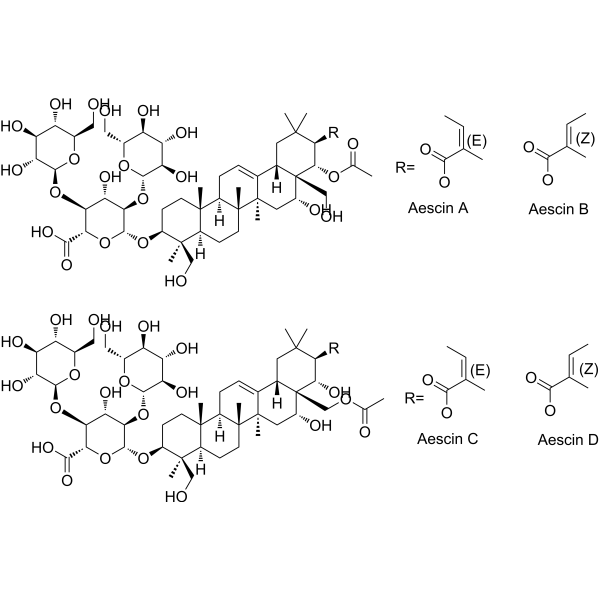
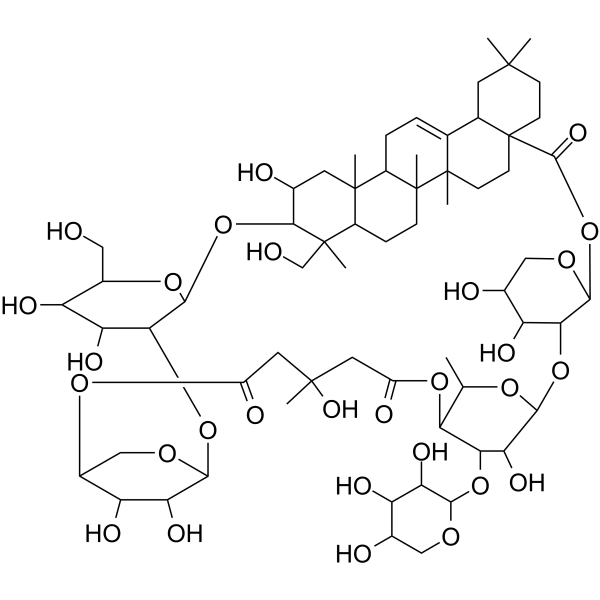
Escin, a natural compound of triterpenoid saponins that can be isolated from horse chestnut (Aesculus hippocastanum) seeds, can be used as a vasoprotective anti-inflammatory, anti-edematous and anti-nociceptive agent.
Nos produits utilisent uniquement pour la recherche. Nous ne vendons pas aux patients.
- Pureté : 96.6%
- CAS No.: 6805-41-0
- Formule: C55H86O24
- Masse moléculaire:1131.25
-
Stockage:
4°C, protect from light
* In solvent : -80°C, 6 months; -20°C, 1 month (protect from light)

To place orders, for customer services and technical support, please contact: MedChemExpress USA
Tel: 609-228-6898 E-mail: [email protected] [email protected]


-
 Activité biologique
-
Chemical Information
-
Solvant et solubilité
- Protocole
- Pureté et documentation
- Références
-
 Help & FAQs


Publications Citing Use of MedChemExpress (MCE) Escin
More Customer Validation & Images

-
Cell Proliferation/Viability Assay
-
Flow Cytometry


Activité biologique
Description
In Vitro
Escin (1 μM, 0-5 h) stimulates phosphorylation of the GR in CFTL-12 murine mast cells[1].
Escin (0.1-1 µg/mL, 24 h) protects cells from OGD/R and rt-PA stimulaed cell damage in bEnd.3 cells[2].
Escin (0-100 μg/mL, 12-48 h) induces cell cycle arrest and apoptosis, and inhibits tumor cell proliferation in HCT116 and HCT8 cells[5].
Escin (0-80 μg/mL, 12-24 h) induces DNA damage, and upregulates p-ATM and γH2AX in HCT116 and HCT8 cells[5].
Escin (0-50 μM, 24 h) decreases mitochondrial membrane potential and induces cytochrome C release via generation of ROS, and induces apoptosis of bladder cancer cells (T24 and J82 cells )[6].
MedChemExpress (MCE) has not independently confirmed the accuracy of these methods. They are for reference only. Further protocols information, click here.
-
Cell Line:OGD/R and rt-PA stimulated bEnd.3 cells
-
Concentration:0.1, 0.5 and 1 µg/mL
-
Incubation Time:24 h
-
Result:Upregulated the expression of ZO-1 and Occludin.
In Vivo
Escin (0.5 and 1 mg/kg, i.v.) attenuates recombinant tissue plasminogen activator (rt-PA) induced hemorrhagic transformation (HT) in mice[2].
Escin (10 mg/kg, p.o., 4 days) shows antioxidant, anti-inflammatory, antinecrotic, and anti-apoptotic effects against Con A-induced immune-mediated hepatitis in mice[3].
Escin (5-20 mg/kg, p.o., once a day, after 6 weeks of diabetes induction, for next 4 weeks) alleviates peripheral neuropathy in Streptozotocin (HY-13753) induced diabetes in rats[4].
MedChemExpress (MCE) has not independently confirmed the accuracy of these methods. They are for reference only.
-
Animal Model:Con A-induced immune-mediated hepatitis mice[3]
-
Dosage:10 mg/kg
-
Administration:p.o., 4 days
-
Result:Decreased the peak activities of ALT (p < 0.01), AST (p < 0.001), and LDH.
Ameliorated hepatic pathological abnormalities.
Limited Con A-induced elevation in Ly6G-positive cell in liver.
Essai clinique
| NCT Number | Sponsor | Condition | Start Date |
Phase

|
|---|---|---|---|---|
| NCT01329991 | Plexxikon| | 2011-05 | PHASE1 |


Chemical Information
-
CAS No. 6805-41-0
-
Appearance Solid
-
Masse moléculaire 1131.25
-
Formule C55H86O24
-
Color White to yellow
-
SMILES
OC[C@]12[C@](CC(C)([C@H]([C@@H]2OC(C)=O)[R])C)([H])C3=CC[C@@]([C@@]4([C@@]([C@](C)([C@H](CC4)O[C@H]5[C@@H]([C@H]([C@@H]([C@H](O5)C(O)=O)O[C@@H]6O[C@@H]([C@H]([C@@H]([C@H]6O)O)O)CO)O)O[C@@H]7O[C@@H]([C@H]([C@@H]([C@H]7O)O)O)CO)CO)([H])CC8)C)([H])[C@]8(C)[C@@]3(C[C@H]1O)C.CC(OC[C@]9%10[C@](CC(C)([C@H]([C@@H]%10O)[R])C)([H])C%11=CC[C@@]([C@@]%12([C@@]([C@](C)([C@H](CC%12)O[C@H]%13[C@@H]([C@H]([C@@H]([C@H](O%13)C(O)=O)O[C@@H]%14O[C@@H]([C@H]([C@@H]([C@H]%14O)O)O)CO)O)O[C@@H]%15O[C@@H]([C@H]([C@@H]([C@H]%15O)O)O)CO)CO)([H])CC%16)C)([H])[C@]%16(C)[C@@]%11(C[C@H]9O)C)=O.[O]C(/C(C)=C\C)=O.[O]C(/C(C)=C/C)=O.[O]C(/C(C)=C\C)=O.[O]C(/C(C)=C/C)=O.[Aescin A].[Aescin B].[(E)].[(Z)].[Aescin C].[Aescin D].[(Z)].[(E)]
-
Structure Classification
-
Initial Source
-
Livraison
Room temperature in continental US; may vary elsewhere.
-
Stockage
4°C, protect from light
* In solvent : -80°C, 6 months; -20°C, 1 month (protect from light)


Publications (3)
-
Journal Impact Factor
-
Most Recent
-
Stem Cells Int
Escin Preincubation Enhances the Therapeutic Effect of Umbilical Cord-Derived Mesenchymal Stem Cells in a Rat Model of Myocardial Infarction. [Abstract]2025 Nov 21:2025:1115668. PMID: 41323777
Escin purchased from MedChemExpress. Usage Cited in: Stem Cells Int. 2025 Nov 21:2025:1115668. [Abstract]
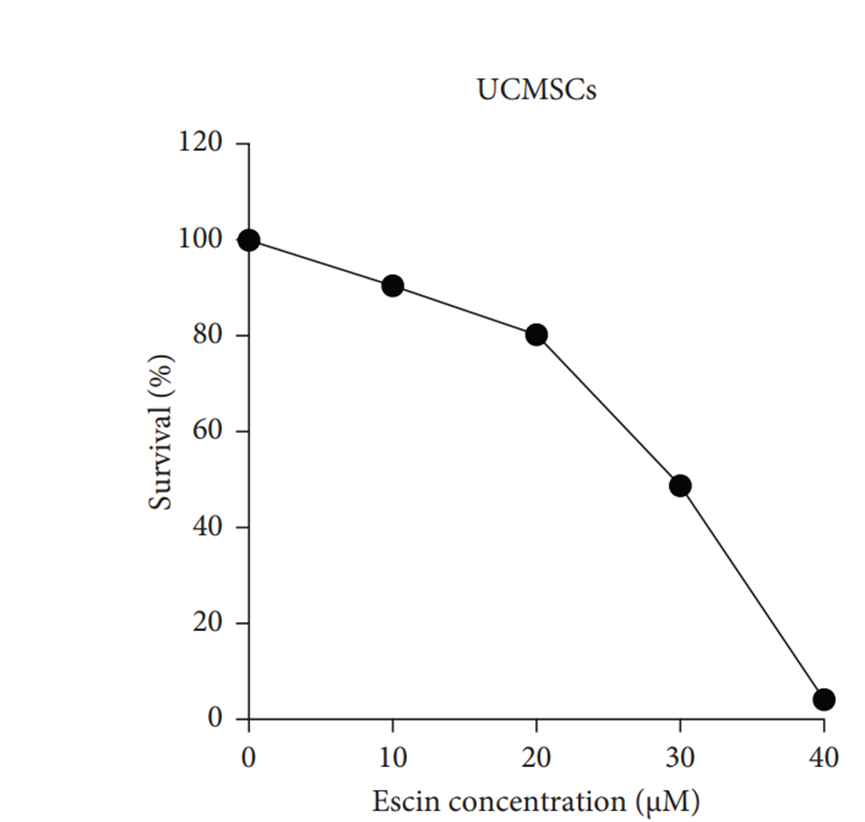
CCK-8 was used to detect the activity of UCMSCs after treatment with different concentrations of Escin (10, 20, 30, 40 μM) at 72 h.
Escin purchased from MedChemExpress. Usage Cited in: Stem Cells Int. 2025 Nov 21:2025:1115668. [Abstract]
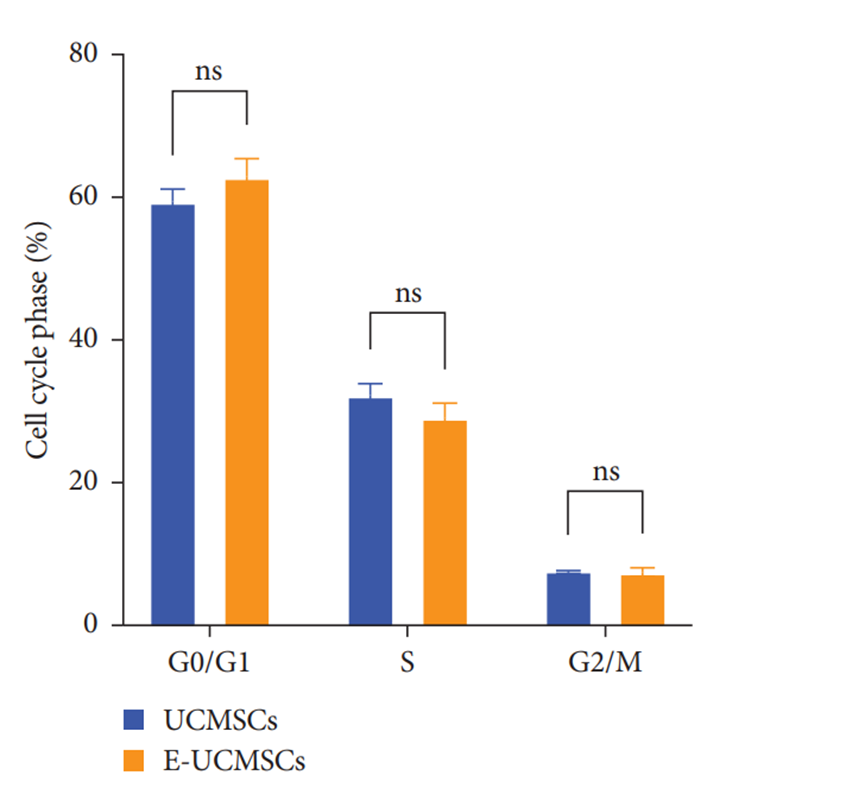
Cell cycle distribution of UCMSCs after Escin treatment.
-
-


Solvant et solubilité
In Vitro:
DMSO : 100 mg/mL (88.40 mM; ultrasonic and warming and heat to 60°C; Hygroscopic DMSO has a significant impact on the solubility of product, please use newly opened DMSO)
Please refer to the solubility information to select the appropriate solvent. Once prepared, please aliquot and store the solution to prevent product inactivation from repeated freeze-thaw cycles.
Storage method and period of stock solution: -80°C, 6 months; -20°C, 1 month (protect from light). When stored at -80°C, please use it within 6 months. When stored at -20°C, please use it within 1 month.
Please refer to the solubility information to select the appropriate solvent. Once prepared, please aliquot and store the solution to prevent product inactivation from repeated freeze-thaw cycles.
Storage method and period of stock solution: -80°C, 6 months; -20°C, 1 month (protect from light). When stored at -80°C, please use it within 6 months. When stored at -20°C, please use it within 1 month.
Concentration (start) × Volume (start) = Concentration (final) × Volume (final)
In Vivo:
Select the appropriate dissolution method based on your experimental animal and administration route.
- For the following dissolution methods, please ensure to first prepare a clear stock solution using an In Vitro approach and then sequentially add co-solvents:
- To ensure reliable experimental results, the clarified stock solution can be appropriately stored based on storage conditions. As for the working solution for In Vivo experiments, it is recommended to prepare freshly and use it on the same day.
- The percentages shown for the solvents indicate their volumetric ratio in the final prepared solution. If precipitation or phase separation occurs during preparation, heat and/or sonication can be used to aid dissolution.
Add each solvent one by one: 10% DMSO 40% PEG300 5% Tween-80 45% Saline
Solubility: ≥ 5 mg/mL (4.42 mM); Clear solution
This protocol yields a clear solution of ≥ 5 mg/mL (saturation unknown).
Taking 1 mL working solution as an example, add 100 μL DMSO stock solution (50.0 mg/mL) to 400 μL PEG300, and mix evenly; then add 50 μL Tween-80 and mix evenly; then add 450 μL Saline to adjust the volume to 1 mL.
Preparation of Saline: Dissolve 0.9 g sodium chloride in ddH₂O and dilute to 100 mL to obtain a clear Saline solution.
In Vivo Dissolution Calculator
Please enter the basic information of animal experiments:
-
-
-
-
Recommended: Prepare an additional quantity of animals to account for potential losses during experiments.
Please enter your animal formula composition:
-
%DMSO +
Recommended: Keep the proportion of DMSO in working solution below 2% if your animal is weak.
-
%+
-
+%Tween-80 + +
-
%Saline +
The co-solvents required include: DMSO, . All of co-solvents are available by MedChemExpress (MCE). , Tween 80. All of co-solvents are available by MedChemExpress (MCE).
Working solution concentration: 0.22 mg/mL
Method for preparing stock solution: mg drug dissolved in μL DMSO. Stock solution concentration: mg/mL. * In solvent : -80°C, 6 months; -20°C, 1 month (protect from light)
1. Take μL DMSO stock solution;
2. Add μL .
μL , mix evenly;
3. Then add μL Tween 80, mix evenly;
4. Then add μL
Please ensure that the stock solution in the first step is dissolved to a clear state, and add co-solvents in sequence. You can use ultrasonic heating (ultrasonic cleaner, recommended frequency 20-40 kHz), vortexing, etc. to assist dissolution.

Protocole
-
Research Protocol for Inflammation-related Diseases
The NLRP3 inflammasome is a cytosolic innate immune signaling platform that integrates priming signals and danger-signal activation to promote caspase-1 activation, maturation of IL-1β and IL-18, and gasdermin D-mediated pyroptotic cell death. The core experimental logic is to determine whether inflammatory disease phenotypes are driven by increased NLRP3 expression, ASC-containing inflammasome assembly, caspase-1 cleavage, GSDMD cleavage, and extracellular release of IL-1β/IL-18 rather than by nonspecific cell injury alone. The pathway is strongly linked to inflammation-related disease phenotypes because monosodium urate crystals activate NALP3/NLRP3 inflammasome signaling in gout-like crystal inflammation, cholesterol crystals activate NLRP3 inflammasomes in atherogenesis models, and DSS-induced intestinal inflammation has been reported to involve NLRP3 inflammasome activity. However, experimental colitis studies also show context-dependent protective effects of NLRP3 inflammasome co


Pureté et documentation
-
Fiche technique (293 KB)
-
SDS (563 KB)
- English - EN (563 KB)
- Français - FR (563 KB)
- Deutsch - DE (563 KB)
- Norwegian - NO (563 KB)
- Español - ES (563 KB)
- Swedish - SV (563 KB)
- Italian - IT (563 KB)
- Korean - KR (563 KB)
- Portuguese - PT (563 KB)
-
Instruction de manipulation (2659 KB)
Références
[1]. Sipos W, et al. Escin inhibits type I allergic dermatitis in a novel porcine model. Int Arch Allergy Immunol. 2013;161(1):44-52. [Content Brief]
[2]. Sun X, et al. Escin avoids hemorrhagic transformation in ischemic stroke by protecting BBB through the AMPK/Cav-1/MMP-9 pathway. Phytomedicine. 2023 Nov;120:155071. [Content Brief]
[3]. Elshal M, Hazem SH. Escin suppresses immune cell infiltration and selectively modulates Nrf2/HO-1, TNF-α/JNK, and IL-22/STAT3 signaling pathways in concanavalin A-induced autoimmune hepatitis in mice. Inflammopharmacology. 2022 Dec;30(6):2317-2329. [Content Brief]
[4]. Suryavanshi SV, Kulkarni YA. Escin alleviates peripheral neuropathy in streptozotocin induced diabetes in rats. Life Sci. 2020 Aug 1;254:117777. [Content Brief]
[5]. Wang Z, et al. Escin-induced DNA damage promotes escin-induced apoptosis in human colorectal cancer cells via p62 regulation of the ATM/γH2AX pathway. Acta Pharmacol Sin. 2018 Oct;39(10):1645-1660. [Content Brief]
[6]. Cheng CL, et al. Escin induces apoptosis in human bladder cancer cells: An in vitro and in vivo study. Eur J Pharmacol. 2018 Dec 5;840:79-88. [Content Brief]


Complete Stock Solution Preparation Table
Please refer to the solubility information to select the appropriate solvent. Once prepared, please aliquot and store the solution to prevent product inactivation from repeated freeze-thaw cycles.
Storage method and period of stock solution: -80°C, 6 months; -20°C, 1 month (protect from light). When stored at -80°C, please use it within 6 months. When stored at -20°C, please use it within 1 month.
| Optional Solvent | Concentration Solvent Mass | 1 mg | 5 mg | 10 mg | 25 mg |
|---|---|---|---|---|---|
| DMSO | 1 mM | 0.8840 mL | 4.4199 mL | 8.8398 mL | 22.0994 mL |
| 5 mM | 0.1768 mL | 0.8840 mL | 1.7680 mL | 4.4199 mL | |
| 10 mM | 0.0884 mL | 0.4420 mL | 0.8840 mL | 2.2099 mL | |
| 15 mM | 0.0589 mL | 0.2947 mL | 0.5893 mL | 1.4733 mL | |
| 20 mM | 0.0442 mL | 0.2210 mL | 0.4420 mL | 1.1050 mL | |
| 25 mM | 0.0354 mL | 0.1768 mL | 0.3536 mL | 0.8840 mL | |
| 30 mM | 0.0295 mL | 0.1473 mL | 0.2947 mL | 0.7366 mL | |
| 40 mM | 0.0221 mL | 0.1105 mL | 0.2210 mL | 0.5525 mL | |
| 50 mM | 0.0177 mL | 0.0884 mL | 0.1768 mL | 0.4420 mL | |
| 60 mM | 0.0147 mL | 0.0737 mL | 0.1473 mL | 0.3683 mL | |
| 80 mM | 0.0110 mL | 0.0552 mL | 0.1105 mL | 0.2762 mL |


Escin Related Classifications
HY-B2114 Related Classifications
 Powered by Bioz