



KGP94

Based on 1 Customer Validation
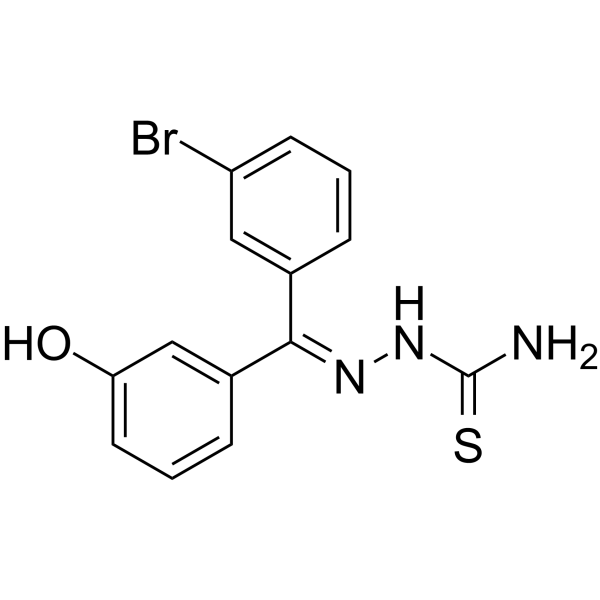
KGP94 is a selective inhibitor of cathepsin L with an IC50 of 189 nM. KGP94 inhibits migration and invasion of metastatic carcinoma and shows low cytotoxicity (GI50=26.9 µM) against various human cell lines.
Nos produits utilisent uniquement pour la recherche. Nous ne vendons pas aux patients.
- Pureté : 99.77%
- CAS No.: 1131456-28-4
- Formule: C14H12BrN3OS
- Masse moléculaire:350.23
-
Stockage:Powder -20°C, 3 years , 4°C, 2 years ; In solvent -80°C, 6 months , -20°C, 1 month

To place orders, for customer services and technical support, please contact: MedChemExpress USA
Tel: 609-228-6898 E-mail: [email protected] [email protected]


-
 Activité biologique
-
Chemical Information
-
Solvant et solubilité
- Protocole
- Pureté et documentation
- Références
-
 Help & FAQs


-
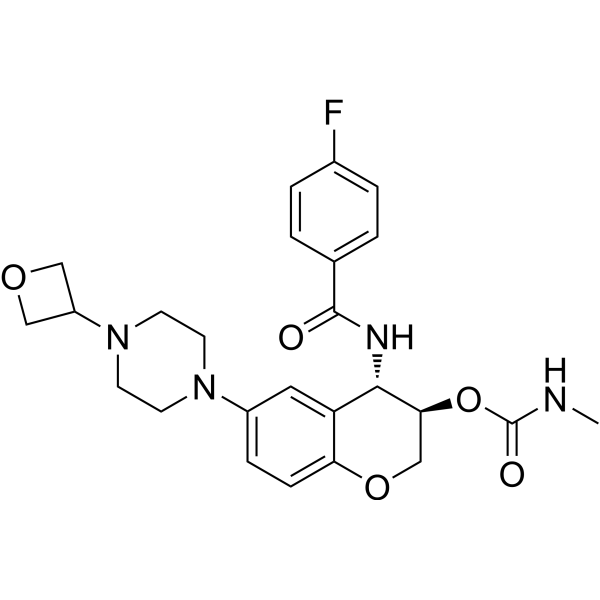
HY-15533
LY 3000328Cathepsin S Inhibitor -
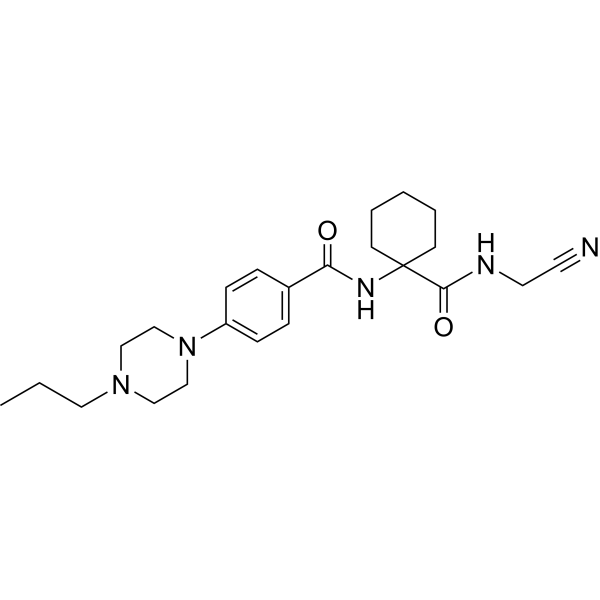
HY-15100
BalicatibCathepsin K Inhibitor -
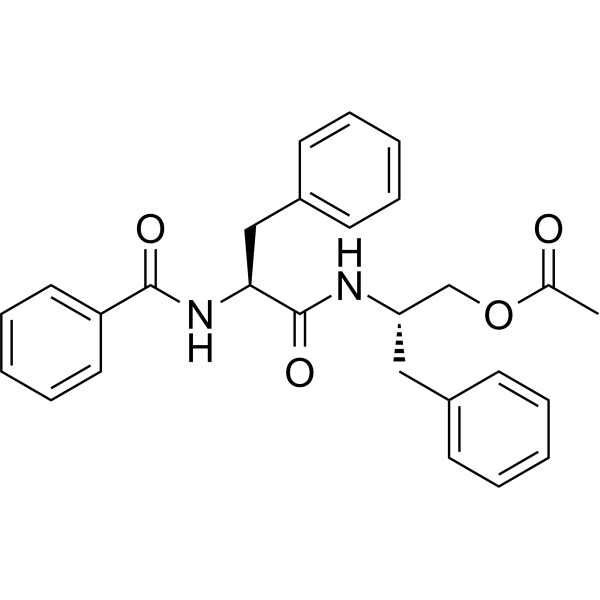
HY-N2905
Aurantiamide acetateCathepsin Inhibitor -
HY-D0843
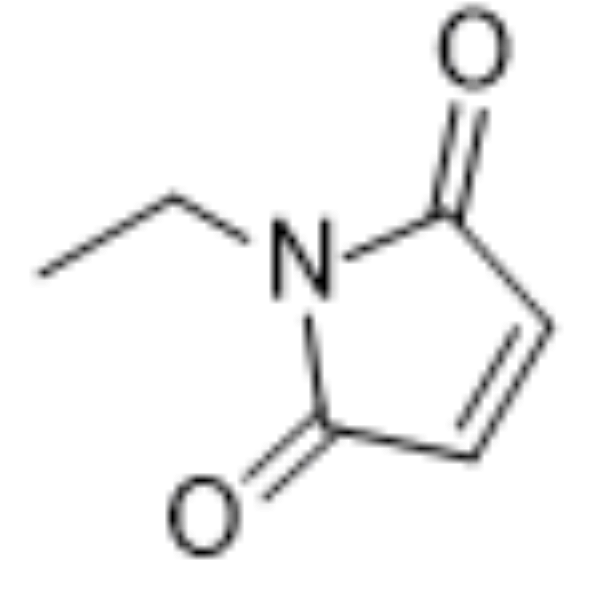
N-EthylmaleimideCysteine Residues Modifier -
HY-148905
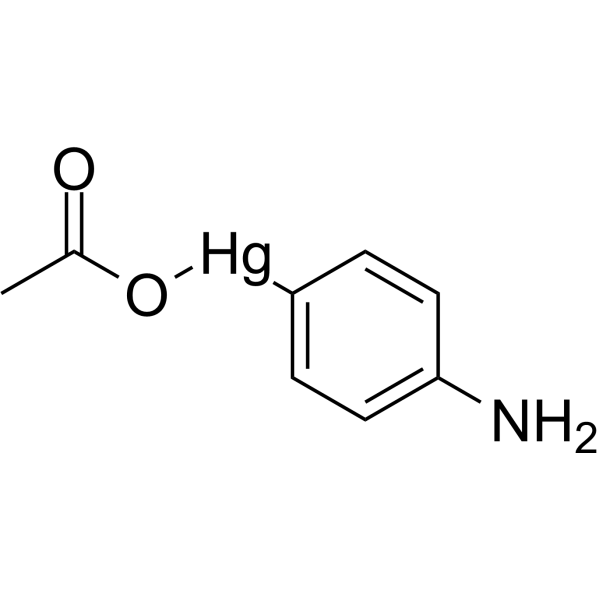
p-Aminophenylmercuric acetateMatrix Metalloproteinases Activator -
HY-100350
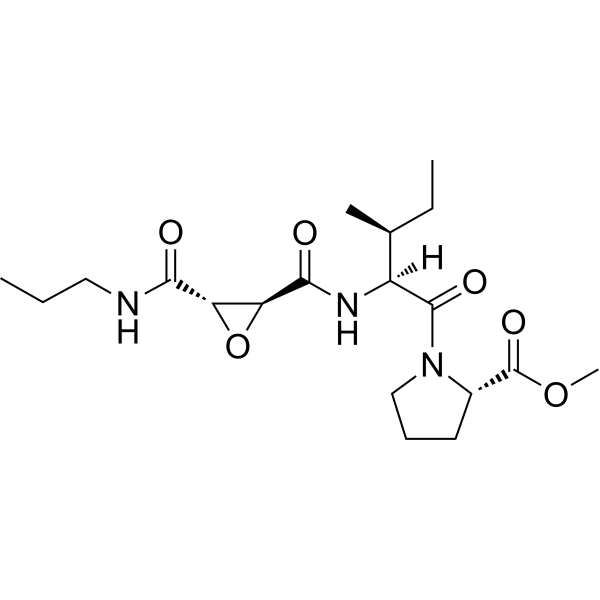
CA-074 methyl esterCathepsin B Inhibitor -
HY-10042
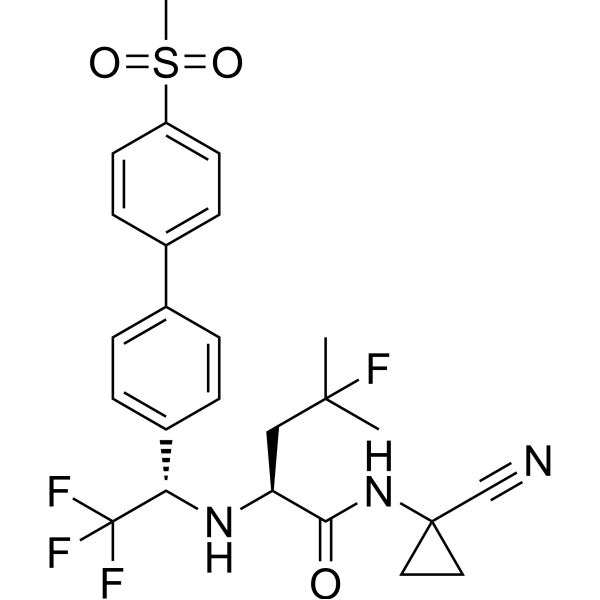
OdanacatibCathepsin K Inhibitor -
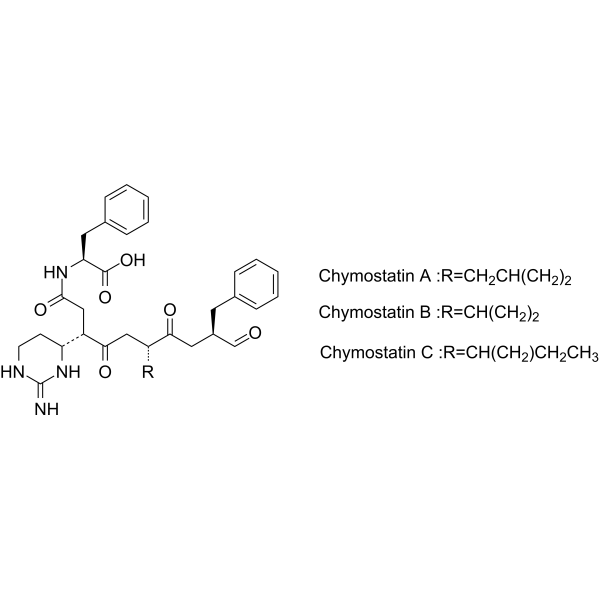
HY-P3042
ChymostatinCathepsin G Inhibitor -
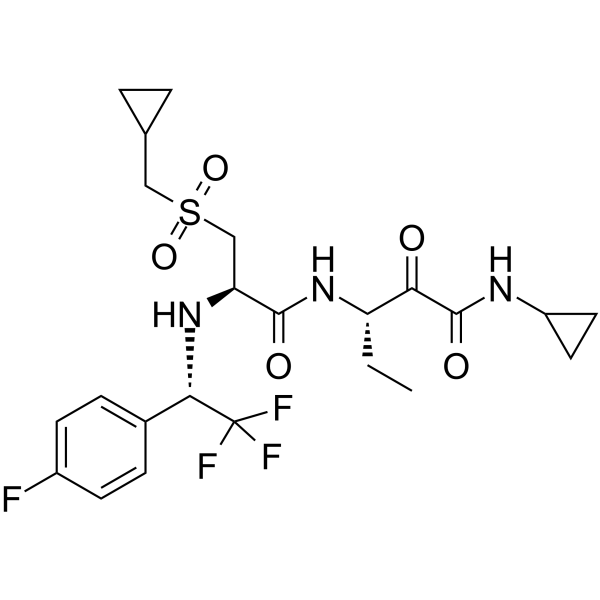
HY-15958
VBY-825Cathepsin Inhibitor -
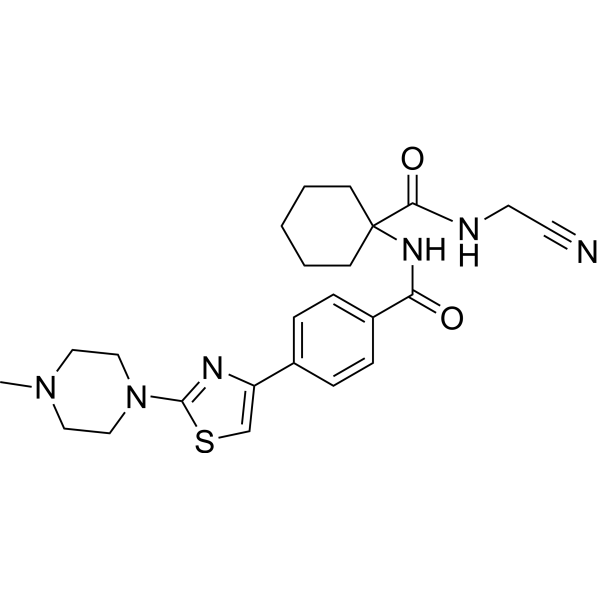
HY-103352
L-006235Cathepsin K Inhibitor -
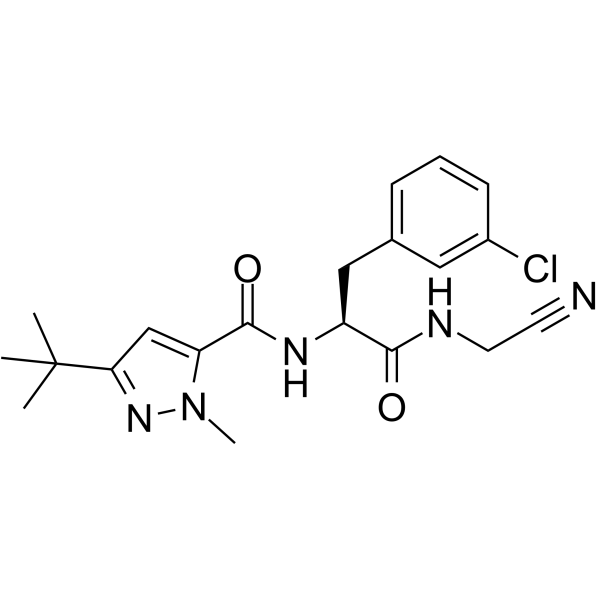
HY-100231
Cathepsin inhibitor 1Cathepsin Inhibitor -
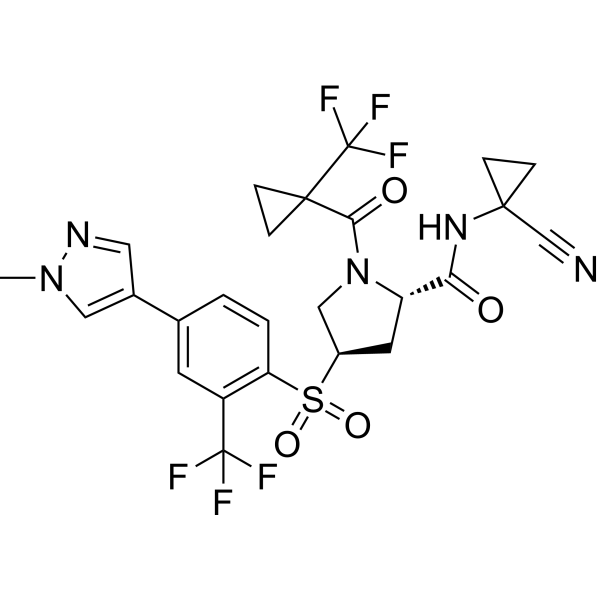
HY-109069
PetesicatibCathepsin S Inhibitor
Voir tous les produits spécifiques à Isoform Cathepsin
More

Activité biologique
Description
IC50 & Target
189 nM (cathepsin L)[1]
Cellular Effect
|
Cell Line

|
Type | Value | Description | References |
|---|---|---|---|---|
| DU-145 | GI50 |
21.6 μM
Compound: 2
|
Cytotoxicity against human DU145 cells after 48 hrs by SRB assay
Cytotoxicity against human DU145 cells after 48 hrs by SRB assay
|
[PMID: 20933415] |
| NCI-H460 | GI50 |
23.3 μM
Compound: 2
|
Cytotoxicity against human NCI-H460 cells after 48 hrs by SRB assay
Cytotoxicity against human NCI-H460 cells after 48 hrs by SRB assay
|
[PMID: 20933415] |
In Vitro
KGP94 (10 or 20 μM, 24 h) reduces expression of M2 (macrophage) markers (Arginase-1 and CD206) and cells invasion of primary bone marrow-derived macrophages or Raw264.7[3].
KGP94 (25 μM, 24 h) impairs the incasive capacities of both prostate and breat cancer cells by 53% and 88%, respectively[4].
KGP94 (25 μM, 24 h) suppresses secreted CTSL activity by 94% and 92% in PC-3ML and MDA-MB-231, repsectively[4].
MedChemExpress (MCE) has not independently confirmed the accuracy of these methods. They are for reference only.
-
Cell Line:PC-3ML, MDA-MB-231
-
Concentration:10 μM, 25 μM
-
Incubation Time:24 hours
-
Result:Attenuated migration and invasion of prostate and breast cancer cells.
In Vivo
MedChemExpress (MCE) has not independently confirmed the accuracy of these methods. They are for reference only.
-
Animal Model:NCR nu/nu male mice[5]
-
Dosage:20 mg/kg
-
Administration:Intraperitoneal injection; once daily for 3 days
-
Result:Reduced 65% in metastatic tumor burden and 58% in tumor angiogenesis, improved survival of bone metastases bearing mice.


Chemical Information
-
CAS No. 1131456-28-4
-
Appearance Solid
-
Masse moléculaire 350.23
-
Formule C14H12BrN3OS
-
Color White to off-white
-
SMILES
S=C(N/N=C(C1=CC(O)=CC=C1)\C2=CC(Br)=CC=C2)N
-
Livraison
Room temperature in continental US; may vary elsewhere.
-
Stockage
Powder -20°C 3 years 4°C 2 years In solvent -80°C 6 months -20°C 1 month


Solvant et solubilité
In Vitro:
DMSO : ≥ 100 mg/mL (285.53 mM; Hygroscopic DMSO has a significant impact on the solubility of product, please use newly opened DMSO)
* "≥" means soluble, but saturation unknown.
Please refer to the solubility information to select the appropriate solvent. Once prepared, please aliquot and store the solution to prevent product inactivation from repeated freeze-thaw cycles.
Storage method and period of stock solution: -80°C, 6 months; -20°C, 1 month. When stored at -80°C, please use it within 6 months. When stored at -20°C, please use it within 1 month.
Please refer to the solubility information to select the appropriate solvent. Once prepared, please aliquot and store the solution to prevent product inactivation from repeated freeze-thaw cycles.
Storage method and period of stock solution: -80°C, 6 months; -20°C, 1 month. When stored at -80°C, please use it within 6 months. When stored at -20°C, please use it within 1 month.
Concentration (start) × Volume (start) = Concentration (final) × Volume (final)
In Vivo:
Select the appropriate dissolution method based on your experimental animal and administration route.
- For the following dissolution methods, please ensure to first prepare a clear stock solution using an In Vitro approach and then sequentially add co-solvents:
- To ensure reliable experimental results, the clarified stock solution can be appropriately stored based on storage conditions. As for the working solution for In Vivo experiments, it is recommended to prepare freshly and use it on the same day.
- The percentages shown for the solvents indicate their volumetric ratio in the final prepared solution. If precipitation or phase separation occurs during preparation, heat and/or sonication can be used to aid dissolution.
Add each solvent one by one: 10% DMSO 40% PEG300 5% Tween-80 45% Saline
Solubility: ≥ 2.5 mg/mL (7.14 mM); Clear solution
This protocol yields a clear solution of ≥ 2.5 mg/mL (saturation unknown).
Taking 1 mL working solution as an example, add 100 μL DMSO stock solution (25.0 mg/mL) to 400 μL PEG300, and mix evenly; then add 50 μL Tween-80 and mix evenly; then add 450 μL Saline to adjust the volume to 1 mL.
Preparation of Saline: Dissolve 0.9 g sodium chloride in ddH₂O and dilute to 100 mL to obtain a clear Saline solution.
In Vivo Dissolution Calculator
Please enter the basic information of animal experiments:
-
-
-
-
Recommended: Prepare an additional quantity of animals to account for potential losses during experiments.
Please enter your animal formula composition:
-
%DMSO +
Recommended: Keep the proportion of DMSO in working solution below 2% if your animal is weak.
-
%+
-
+%Tween-80 + +
-
%Saline +
The co-solvents required include: DMSO, . All of co-solvents are available by MedChemExpress (MCE). , Tween 80. All of co-solvents are available by MedChemExpress (MCE).
Working solution concentration: 0.22 mg/mL
Method for preparing stock solution: mg drug dissolved in μL DMSO. Stock solution concentration: mg/mL.
1. Take μL DMSO stock solution;
2. Add μL .
μL , mix evenly;
3. Then add μL Tween 80, mix evenly;
4. Then add μL
Please ensure that the stock solution in the first step is dissolved to a clear state, and add co-solvents in sequence. You can use ultrasonic heating (ultrasonic cleaner, recommended frequency 20-40 kHz), vortexing, etc. to assist dissolution.


Pureté et documentation
-
Fiche technique (275 KB)
-
SDS (479 KB)
- English - EN (479 KB)
- Français - FR (479 KB)
- Deutsch - DE (479 KB)
- Norwegian - NO (479 KB)
- Español - ES (479 KB)
- Swedish - SV (479 KB)
- Italian - IT (479 KB)
- Korean - KR (479 KB)
- Portuguese - PT (479 KB)
-
Instruction de manipulation (2659 KB)
Références
[1]. Parker EN, et al. Synthesis and biological evaluation of a water-soluble phosphate prodrug salt and structural analogues of KGP94, a lead inhibitor of cathepsin L. Bioorg Med Chem Lett. 2017 Mar 1. 27(5):1304-1310. [Content Brief]
[2]. Munikishore R, et al. An efficient and concise synthesis of a selective small molecule non-peptide inhibitor of cathepsin L: KGP94. Bioorg Chem. 2021 Nov. 116:105317. [Content Brief]
[3]. Dykes SS, et al. Cathepsin L secretion by host and neoplastic cells potentiates invasion. Oncotarget. 2019 Sep 17. 10(53):5560-5568. [Content Brief]
[4]. Sudhan DR, et al. Cathepsin L inhibition by the small molecule KGP94 suppresses tumor microenvironment enhanced metastasis associated cell functions of prostate and breast cancer cells. Clin Exp Metastasis. 2013 Oct. 30(7):891-902. [Content Brief]
[5]. Sudhan DR, et al. Cathepsin L inactivation leads to multimodal inhibition of prostate cancer cell dissemination in a preclinical bone metastasis model. Int J Cancer. 2016 Jun 1;138(11):2665-77. [Content Brief]


Complete Stock Solution Preparation Table
Please refer to the solubility information to select the appropriate solvent. Once prepared, please aliquot and store the solution to prevent product inactivation from repeated freeze-thaw cycles.
Storage method and period of stock solution: -80°C, 6 months; -20°C, 1 month. When stored at -80°C, please use it within 6 months. When stored at -20°C, please use it within 1 month.
| Optional Solvent | Concentration Solvent Mass | 1 mg | 5 mg | 10 mg | 25 mg |
|---|---|---|---|---|---|
| DMSO | 1 mM | 2.8553 mL | 14.2763 mL | 28.5527 mL | 71.3817 mL |
| 5 mM | 0.5711 mL | 2.8553 mL | 5.7105 mL | 14.2763 mL | |
| 10 mM | 0.2855 mL | 1.4276 mL | 2.8553 mL | 7.1382 mL | |
| 15 mM | 0.1904 mL | 0.9518 mL | 1.9035 mL | 4.7588 mL | |
| 20 mM | 0.1428 mL | 0.7138 mL | 1.4276 mL | 3.5691 mL | |
| 25 mM | 0.1142 mL | 0.5711 mL | 1.1421 mL | 2.8553 mL | |
| 30 mM | 0.0952 mL | 0.4759 mL | 0.9518 mL | 2.3794 mL | |
| 40 mM | 0.0714 mL | 0.3569 mL | 0.7138 mL | 1.7845 mL | |
| 50 mM | 0.0571 mL | 0.2855 mL | 0.5711 mL | 1.4276 mL | |
| 60 mM | 0.0476 mL | 0.2379 mL | 0.4759 mL | 1.1897 mL | |
| 80 mM | 0.0357 mL | 0.1785 mL | 0.3569 mL | 0.8923 mL | |
| 100 mM | 0.0286 mL | 0.1428 mL | 0.2855 mL | 0.7138 mL |


KGP94 Related Classifications
HY-118762 Related Classifications
 Powered by Bioz