



ML351
Based on 4 publication(s) in Google Scholar
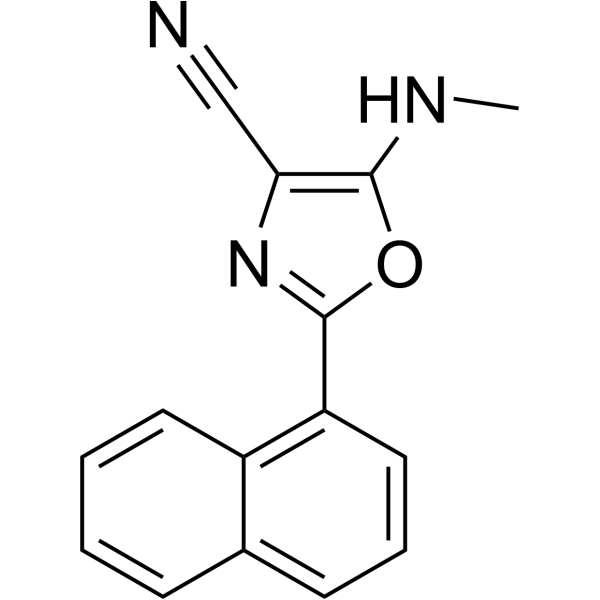
ML351 is a potent and highly specific 15-LOX-1 inhibitor with an IC50 of 200 nM. ML351 shows excellent selectivity (>250-fold) versus the related isozymes, 5-LOX, platelet 12-LOX, 15-LOX-2, ovine COX-1, and human COX-2. ML351 prevents dysglycemia and reduces β-cell oxidative stress in nonobese diabetic mouse model of T1D.
Nos produits utilisent uniquement pour la recherche. Nous ne vendons pas aux patients.
- Pureté : 99.16%
- CAS No.: 847163-28-4
- Formule: C15H11N3O
- Masse moléculaire:249.27
-
Stockage:Powder -20°C, 3 years , 4°C, 2 years ; In solvent -80°C, 6 months , -20°C, 1 month

To place orders, for customer services and technical support, please contact: MedChemExpress USA
Tel: 609-228-6898 E-mail: [email protected] [email protected]


-
 Activité biologique
-
Chemical Information
-
Solvant et solubilité
- Protocole
- Pureté et documentation
- Références
-
 Help & FAQs


-
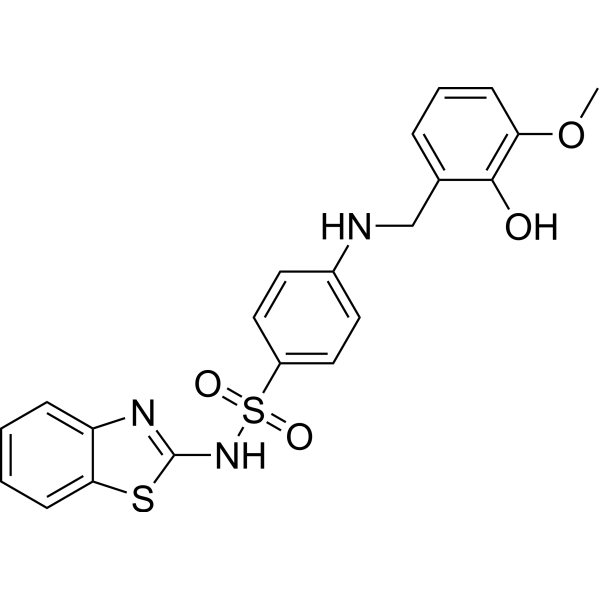
HY-12341
Onvoloxastat12-LOX Inhibitor -
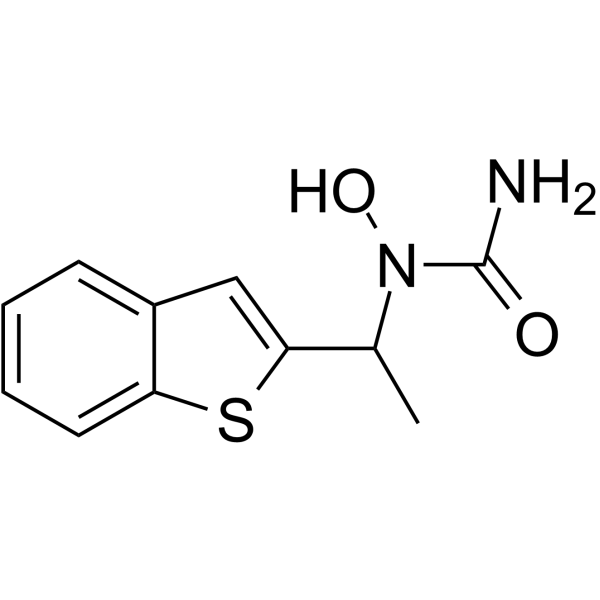
HY-14164
Zileuton5-Lipoxygenase Inhibitor -
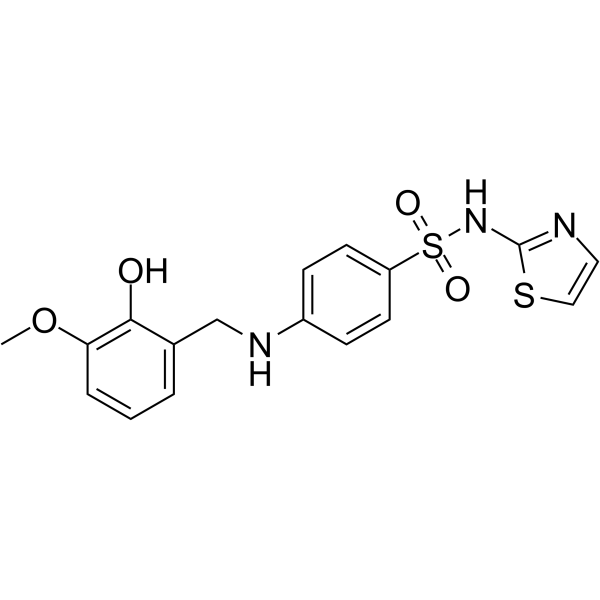
HY-121585
CAY1069812-LOX Inhibitor -
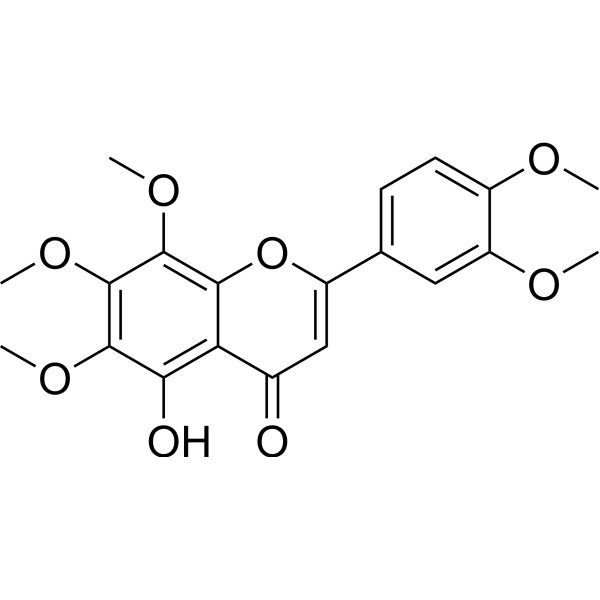
HY-N1942
5-O-Demethylnobiletin5-LOX Inhibitor -
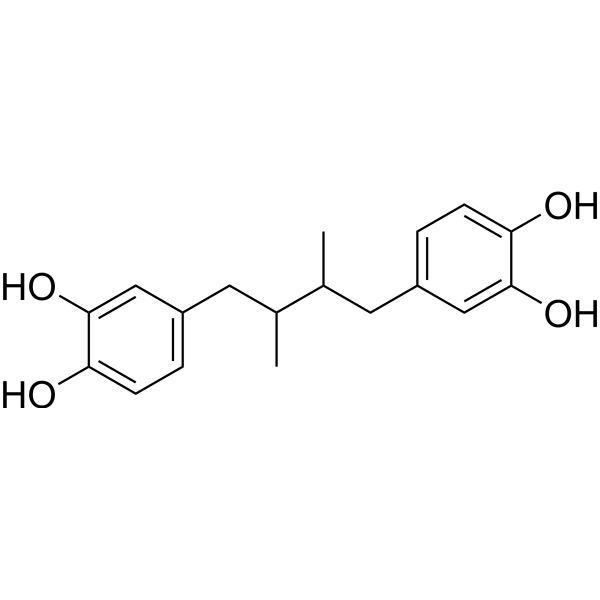
HY-N0198
Nordihydroguaiaretic acidAutophagy Inducer -
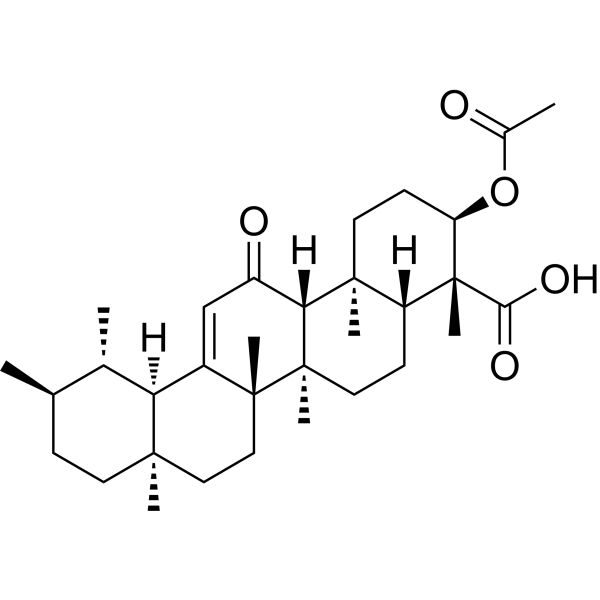
HY-N0892
AKBANrf2 Activator -

HY-N0892R
AKBA (Standard)Nrf2 Activator -
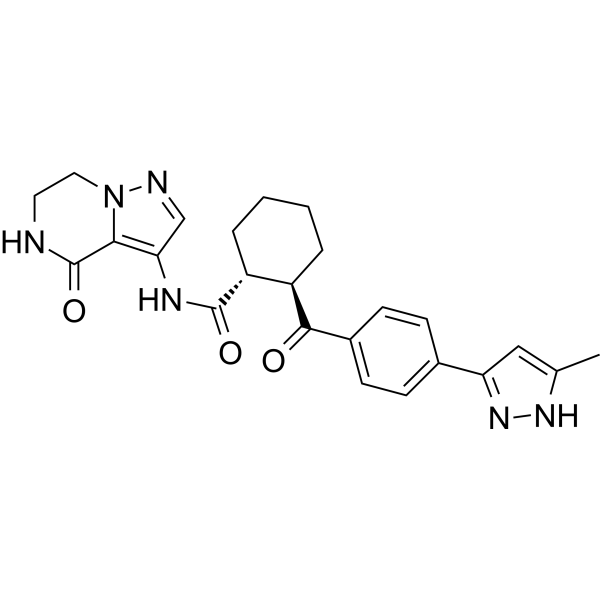
HY-122908
AtuliflaponFLAP Inhibitor -
HY-138688
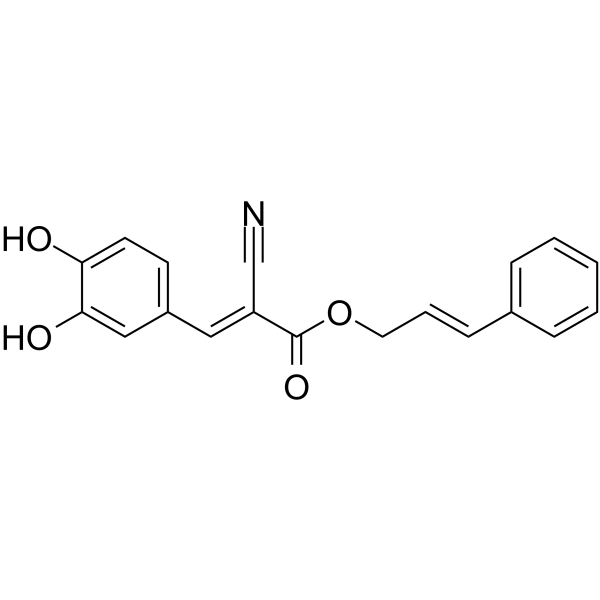
Cinnamyl-3,4-dihydroxy-α-cyanocinnamate12/15-Lipoxygenases Inhibitor -
HY-103157
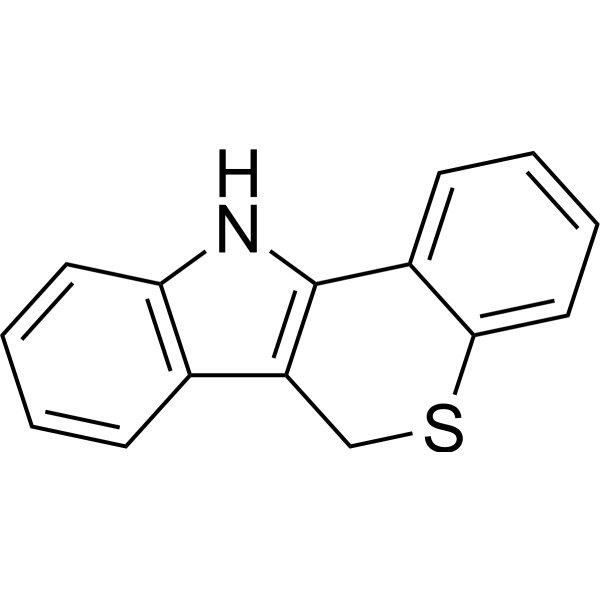
PD14617615-LO Inhibitor -
HY-14164R
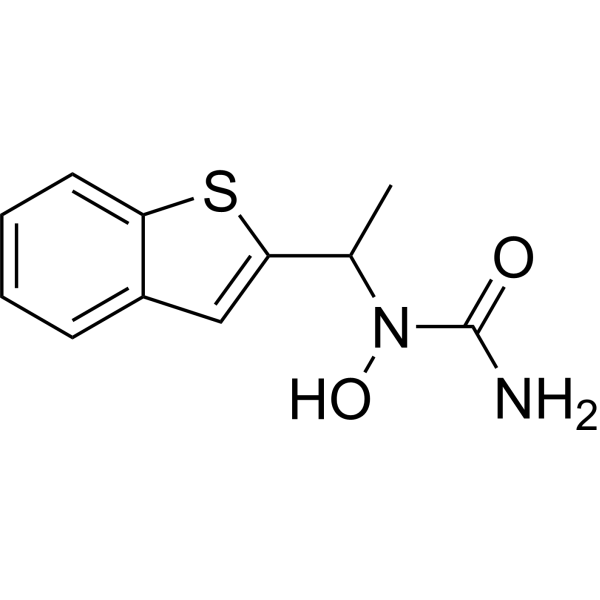
Zileuton (Standard)5-Lipoxygenase Inhibitor -
HY-101051
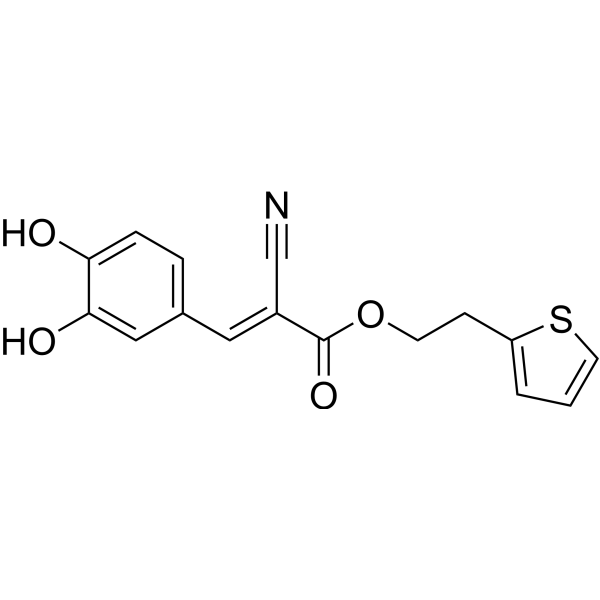
2-TEDC5/12/15-Lipoxygenase Inhibitor
Publications Citing Use of MedChemExpress (MCE) ML351
More

Activité biologique
Description
Cellular Effect
|
Cell Line

|
Type | Value | Description | References |
|---|---|---|---|---|
| Sf9 | IC50 |
0.12 μM
Compound: ML351
|
Inhibition of human N-terminal His6-tagged 15-LOX-1 R402L mutant expressed in sf9 cells using arachidonic acid or linoleic acid as substrate by UV-Visible spectrophotometric analysis
Inhibition of human N-terminal His6-tagged 15-LOX-1 R402L mutant expressed in sf9 cells using arachidonic acid or linoleic acid as substrate by UV-Visible spectrophotometric analysis
|
[PMID: 27647374] |
| Sf9 | IC50 |
0.18 μM
Compound: ML351
|
Inhibition of human N-terminal His6-tagged 15-LOX-1 I417A mutant expressed in sf9 cells using arachidonic acid or linoleic acid as substrate by UV-Visible spectrophotometric analysis
Inhibition of human N-terminal His6-tagged 15-LOX-1 I417A mutant expressed in sf9 cells using arachidonic acid or linoleic acid as substrate by UV-Visible spectrophotometric analysis
|
[PMID: 27647374] |
| Sf9 | IC50 |
0.26 μM
Compound: ML351
|
Inhibition of human N-terminal His6-tagged 15-LOX-1 R404L mutant expressed in sf9 cells using arachidonic acid or linoleic acid as substrate by UV-Visible spectrophotometric analysis
Inhibition of human N-terminal His6-tagged 15-LOX-1 R404L mutant expressed in sf9 cells using arachidonic acid or linoleic acid as substrate by UV-Visible spectrophotometric analysis
|
[PMID: 27647374] |
| Sf9 | IC50 |
0.3 μM
Compound: ML351
|
Inhibition of human N-terminal His6-tagged 15-LOX-1 Q547L mutant expressed in sf9 cells using arachidonic acid as substrate by UV-Visible spectrophotometric analysis
Inhibition of human N-terminal His6-tagged 15-LOX-1 Q547L mutant expressed in sf9 cells using arachidonic acid as substrate by UV-Visible spectrophotometric analysis
|
[PMID: 27647374] |
| Sf9 | IC50 |
0.33 μM
Compound: ML351
|
Inhibition of wild type human N-terminal His6-tagged 15-LOX-1 expressed in sf9 cells using arachidonic acid or linoleic acid as substrate by UV-Visible spectrophotometric analysis
Inhibition of wild type human N-terminal His6-tagged 15-LOX-1 expressed in sf9 cells using arachidonic acid or linoleic acid as substrate by UV-Visible spectrophotometric analysis
|
[PMID: 27647374] |
| Sf9 | IC50 |
0.39 μM
Compound: ML351
|
Inhibition of human N-terminal His6-tagged 15-LOX-1 L407A mutant expressed in sf9 cells using arachidonic acid as substrate by UV-Visible spectrophotometric analysis
Inhibition of human N-terminal His6-tagged 15-LOX-1 L407A mutant expressed in sf9 cells using arachidonic acid as substrate by UV-Visible spectrophotometric analysis
|
[PMID: 27647374] |
| Sf9 | IC50 |
0.77 μM
Compound: ML351
|
Inhibition of human N-terminal His6-tagged 15-LOX-1 F414W mutant expressed in sf9 cells using arachidonic acid as substrate by UV-Visible spectrophotometric analysis
Inhibition of human N-terminal His6-tagged 15-LOX-1 F414W mutant expressed in sf9 cells using arachidonic acid as substrate by UV-Visible spectrophotometric analysis
|
[PMID: 27647374] |
| Sf9 | IC50 |
0.87 μM
Compound: ML351
|
Inhibition of human N-terminal His6-tagged 15-LOX-1 E356Q mutant expressed in sf9 cells using arachidonic acid as substrate by UV-Visible spectrophotometric analysis
Inhibition of human N-terminal His6-tagged 15-LOX-1 E356Q mutant expressed in sf9 cells using arachidonic acid as substrate by UV-Visible spectrophotometric analysis
|
[PMID: 27647374] |
| Sf9 | IC50 |
4.1 μM
Compound: ML351
|
Inhibition of human N-terminal His6-tagged 15-LOX-1 F414I mutant expressed in sf9 cells using arachidonic acid or linoleic acid as substrate by UV-Visible spectrophotometric analysis
Inhibition of human N-terminal His6-tagged 15-LOX-1 F414I mutant expressed in sf9 cells using arachidonic acid or linoleic acid as substrate by UV-Visible spectrophotometric analysis
|
[PMID: 27647374] |
In Vitro
ML351 (1-50 μM; 24 hours) displays no deleterious effects on cellular apoptosis (by caspase activity assay)[2].ML351 (10-50 μM; 24 h) protects mouse islets in a T1D model in vitro. Islets exposed to proinflammatory cytokines exhibits increased insulin release at 2.5 mM glucose and impaired insulin release in response to 25 mM glucose. However, ML351 restores insulin secretion at 2.5 mmol/L glucose to control levels, and insulin release in response to 25 mM glucose is significantly improved compared with treatment with proinflammatory cytokines alone[2].ML351 reverses the stimulation of ROS production in mouse islets in response to proinflammatory cytokines in vitro[2].
MedChemExpress (MCE) has not independently confirmed the accuracy of these methods. They are for reference only.
In Vivo
MedChemExpress (MCE) has not independently confirmed the accuracy of these methods. They are for reference only.
-
Animal Model:Nine-week-old male C57BL/6J mice[2]
-
Dosage:0 mg/kg; 24 mg/kg; 48 mg/kg;
-
Administration:Intraperitoneal injection before the beginning of the STZ series and concluding 5 days after the last dose of STZ
-
Result:Protected against diabetes development in an STZ β-cell injury model that mimics the inflammation seen in T1D.
-
Animal Model:Female NOD mice develop spontaneous autoimmune diabetes between 12 and 24 weeks of age[2]
-
Dosage:0 mg/kg; 24 mg/kg; 48 mg/kg;
-
Administration:Intraperitoneal injection before the beginning of the STZ series and concluding 5 days after the last dose of STZ
-
Result:Protected Against Early Glycemic Deterioration in NOD Mice.


Chemical Information
-
CAS No. 847163-28-4
-
Appearance Solid
-
Masse moléculaire 249.27
-
Formule C15H11N3O
-
Color White to light yellow
-
SMILES
N#CC1=C(NC)OC(C2=C3C=CC=CC3=CC=C2)=N1
-
Livraison
Room temperature in continental US; may vary elsewhere.
-
Stockage
Powder -20°C 3 years 4°C 2 years In solvent -80°C 6 months -20°C 1 month


Publications (4)
-
Journal Impact Factor
-
Most Recent
-
J Nanobiotechnology
A therapeutic relay strategy enabled by spatiotemporally programmable nanoplatforms for multilayered cardioprotection against MI/RI. [Abstract]2026 May 27. PMID: 42204698 -
Phytomedicine
Molecular mechanisms of shenhong tongluo formula against myocardial ischemia-reperfusion injury: Insights from RNA sequencing, bioinformatics, reverse network pharmacology, molecular docking, and molecular dynamics simulations combined with experimental studies. [Abstract]2026 Jun:155:157896. PMID: 41921237 -
-
bioRxiv
Chronic intermittent ethanol produces nociception through endocannabinoid-independent mechanisms in mice. [Abstract]2025 Feb 4:2024.11.08.622656. PMID: 39975399


Solvant et solubilité
In Vitro:
DMSO : 50 mg/mL (200.59 mM; ultrasonic and warming and heat to 60°C; Hygroscopic DMSO has a significant impact on the solubility of product, please use newly opened DMSO)
Please refer to the solubility information to select the appropriate solvent. Once prepared, please aliquot and store the solution to prevent product inactivation from repeated freeze-thaw cycles.
Storage method and period of stock solution: -80°C, 6 months; -20°C, 1 month. When stored at -80°C, please use it within 6 months. When stored at -20°C, please use it within 1 month.
Please refer to the solubility information to select the appropriate solvent. Once prepared, please aliquot and store the solution to prevent product inactivation from repeated freeze-thaw cycles.
Storage method and period of stock solution: -80°C, 6 months; -20°C, 1 month. When stored at -80°C, please use it within 6 months. When stored at -20°C, please use it within 1 month.
Concentration (start) × Volume (start) = Concentration (final) × Volume (final)
In Vivo:
Select the appropriate dissolution method based on your experimental animal and administration route.
- For the following dissolution methods, please ensure to first prepare a clear stock solution using an In Vitro approach and then sequentially add co-solvents:
- To ensure reliable experimental results, the clarified stock solution can be appropriately stored based on storage conditions. As for the working solution for In Vivo experiments, it is recommended to prepare freshly and use it on the same day.
- The percentages shown for the solvents indicate their volumetric ratio in the final prepared solution. If precipitation or phase separation occurs during preparation, heat and/or sonication can be used to aid dissolution.
For the following dissolution methods, please prepare the working solution directly:
It is recommended to prepare fresh solutions and use them promptly within a short period of time.
The percentages shown for the solvents indicate their volumetric ratio in the final prepared solution. If precipitation or phase separation occurs during preparation, heat and/or sonication can be used to aid dissolution.
Add each solvent one by one: 0.5% CMC-Na/saline water
Solubility: 5 mg/mL (20.06 mM); Suspended solution; Need ultrasonic
In Vivo Dissolution Calculator
Please enter the basic information of animal experiments:
-
-
-
-
Recommended: Prepare an additional quantity of animals to account for potential losses during experiments.
Please enter your animal formula composition:
-
%DMSO +
Recommended: Keep the proportion of DMSO in working solution below 2% if your animal is weak.
-
%+
-
+%Tween-80 + +
-
%Saline +
The co-solvents required include: DMSO, . All of co-solvents are available by MedChemExpress (MCE). , Tween 80. All of co-solvents are available by MedChemExpress (MCE).
Working solution concentration: 0.22 mg/mL
Method for preparing stock solution: mg drug dissolved in μL DMSO. Stock solution concentration: mg/mL.
1. Take μL DMSO stock solution;
2. Add μL .
μL , mix evenly;
3. Then add μL Tween 80, mix evenly;
4. Then add μL
Please ensure that the stock solution in the first step is dissolved to a clear state, and add co-solvents in sequence. You can use ultrasonic heating (ultrasonic cleaner, recommended frequency 20-40 kHz), vortexing, etc. to assist dissolution.


Pureté et documentation
-
Fiche technique (282 KB)
-
SDS (479 KB)
- English - EN (479 KB)
- Français - FR (479 KB)
- Deutsch - DE (479 KB)
- Norwegian - NO (479 KB)
- Español - ES (479 KB)
- Swedish - SV (479 KB)
- Italian - IT (479 KB)
- Korean - KR (479 KB)
- Portuguese - PT (479 KB)
-
Instruction de manipulation (2659 KB)
Références
[1]. Thomas Gaberel, et al. Impact of 12/15-Lipoxygenase on Brain Injury After Subarachnoid Hemorrhage. Stroke. 2019 Feb;50(2):520-523. [Content Brief]
[2]. Ganesha Rai, et al. Discovery of ML351, a Potent and Selective Inhibitor of Human 15-Lipoxygenase-1 [Content Brief]
[3]. Marimar Hernandez-Perez, et al. Inhibition of 12/15-Lipoxygenase Protects Against β-Cell Oxidative Stress and Glycemic Deterioration in Mouse Models of Type 1 Diabetes. Diabetes. 2017 Nov;66(11):2875-2887. [Content Brief]


Complete Stock Solution Preparation Table
Please refer to the solubility information to select the appropriate solvent. Once prepared, please aliquot and store the solution to prevent product inactivation from repeated freeze-thaw cycles.
Storage method and period of stock solution: -80°C, 6 months; -20°C, 1 month. When stored at -80°C, please use it within 6 months. When stored at -20°C, please use it within 1 month.
| Optional Solvent | Concentration Solvent Mass | 1 mg | 5 mg | 10 mg | 25 mg |
|---|---|---|---|---|---|
| DMSO | 1 mM | 4.0117 mL | 20.0586 mL | 40.1171 mL | 100.2929 mL |
| 5 mM | 0.8023 mL | 4.0117 mL | 8.0234 mL | 20.0586 mL | |
| 10 mM | 0.4012 mL | 2.0059 mL | 4.0117 mL | 10.0293 mL | |
| 15 mM | 0.2674 mL | 1.3372 mL | 2.6745 mL | 6.6862 mL | |
| 20 mM | 0.2006 mL | 1.0029 mL | 2.0059 mL | 5.0146 mL | |
| 25 mM | 0.1605 mL | 0.8023 mL | 1.6047 mL | 4.0117 mL | |
| 30 mM | 0.1337 mL | 0.6686 mL | 1.3372 mL | 3.3431 mL | |
| 40 mM | 0.1003 mL | 0.5015 mL | 1.0029 mL | 2.5073 mL | |
| 50 mM | 0.0802 mL | 0.4012 mL | 0.8023 mL | 2.0059 mL | |
| 60 mM | 0.0669 mL | 0.3343 mL | 0.6686 mL | 1.6715 mL | |
| 80 mM | 0.0501 mL | 0.2507 mL | 0.5015 mL | 1.2537 mL | |
| 100 mM | 0.0401 mL | 0.2006 mL | 0.4012 mL | 1.0029 mL |


ML351 Related Classifications
HY-111310 Related Classifications
 Powered by Bioz