



CZL55
Based on 1 publication(s) in Google Scholar
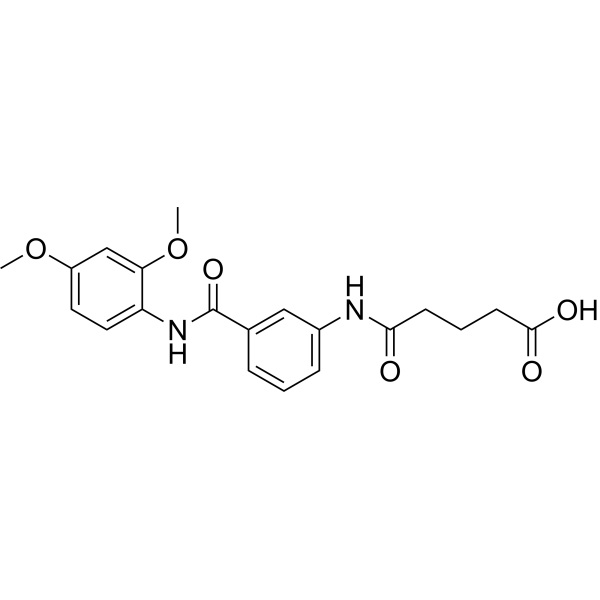
CZL55 is a caspase-1 inhibitor. CZL55 can be used for the research of febrile seizures (FS).
For research use only. We do not sell to patients.
- Purity : 98.92%
- CAS No.: 667408-87-9
- Formula: C20H22N2O6
- Molecular Weight:386.40
-
Storage:
4°C, sealed storage, away from moisture
* In solvent : -80°C, 6 months; -20°C, 1 month (sealed storage, away from moisture)

To place orders, for customer services and technical support, please contact: MedChemExpress USA
Tel: 609-228-6898 E-mail: [email protected] [email protected]


-
 Biological Activity
-
Chemical Information
-
Solvent & Solubility
- Protocols
- Purity & Documentation
- References
-
 Help & FAQs


-
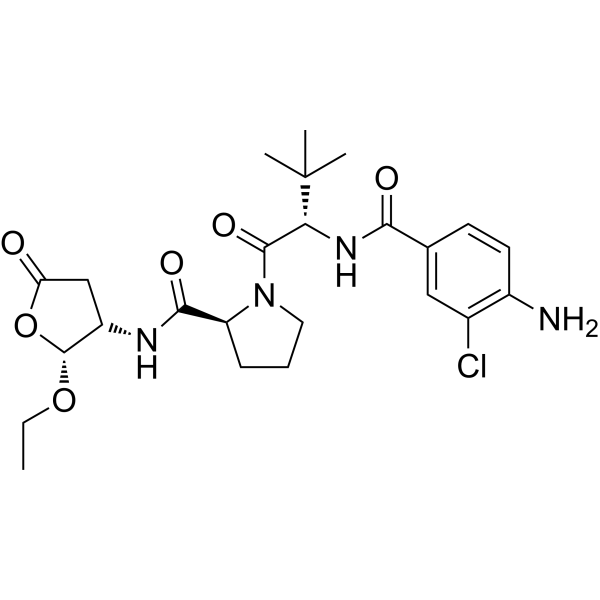
HY-13205
BelnacasanCaspase-1 Inhibitor -
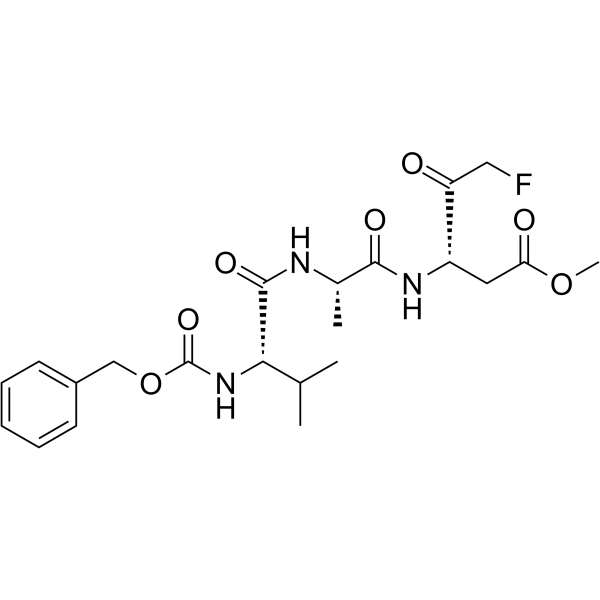
HY-16658
Z-VAD(OMe)-FMKPan-caspase Inhibitor -
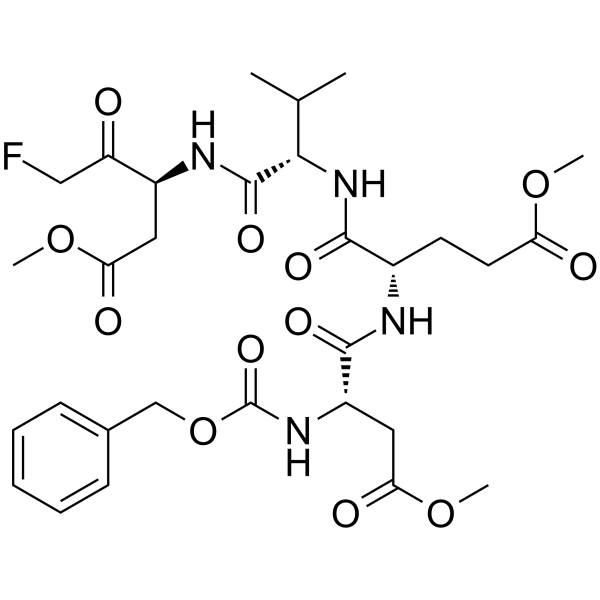
HY-12466
Z-DEVD-FMKCaspase-3 Inhibitor -
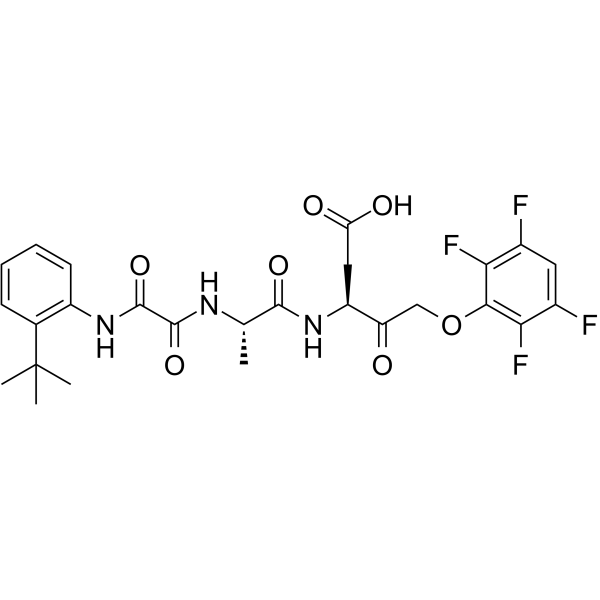
HY-10396
Emricasanpan-Caspase Inhibitor -
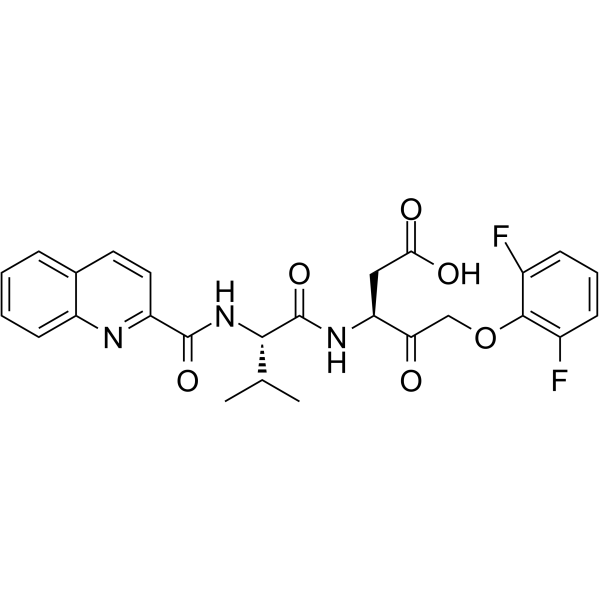
HY-12305
Q-VD-OPhPan-caspase Inhibitor -
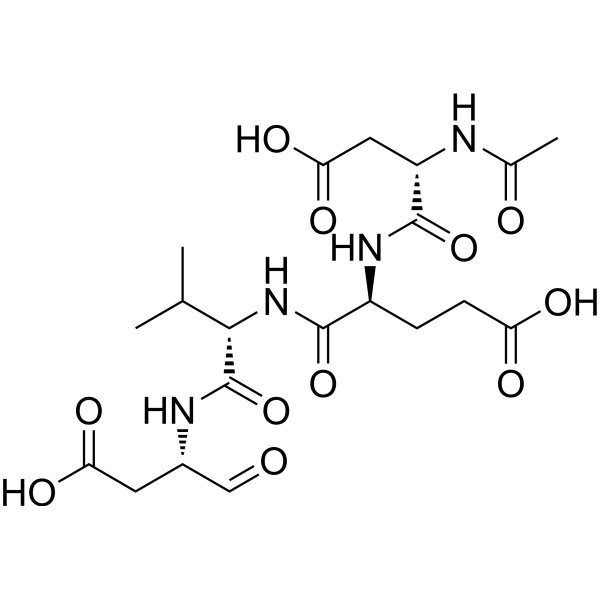
HY-P1001
Ac-DEVD-CHOCaspase-3 Inhibitor -
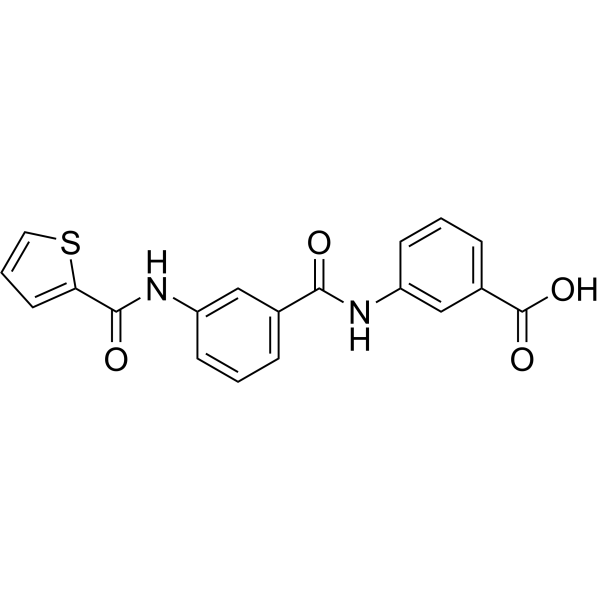
HY-131204
CZL80Caspase-1 Inhibitor -
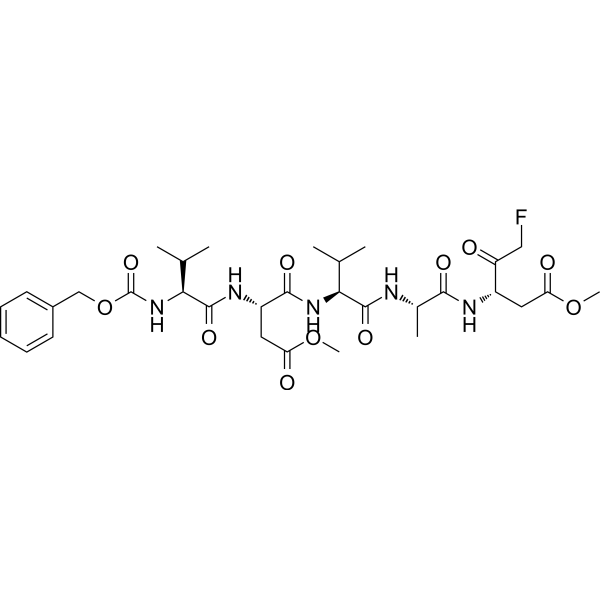
HY-P1008
Z-VDVAD-FMKCaspase-2 Inhibitor -
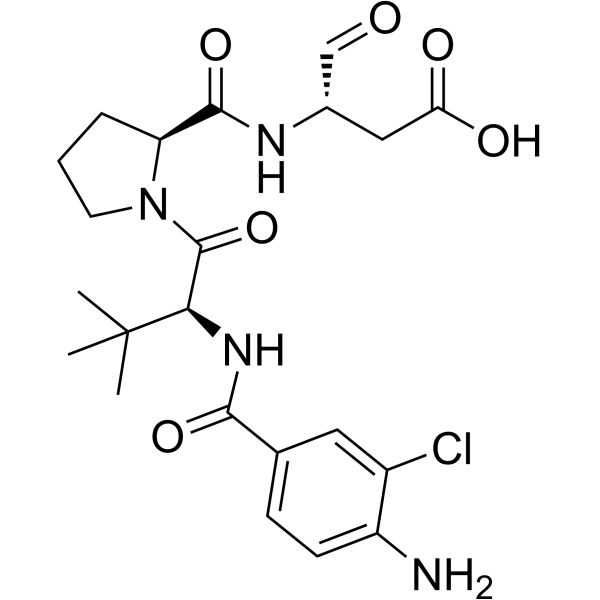
HY-112226
VRT-043198Caspase-1/4 Inhibitor -
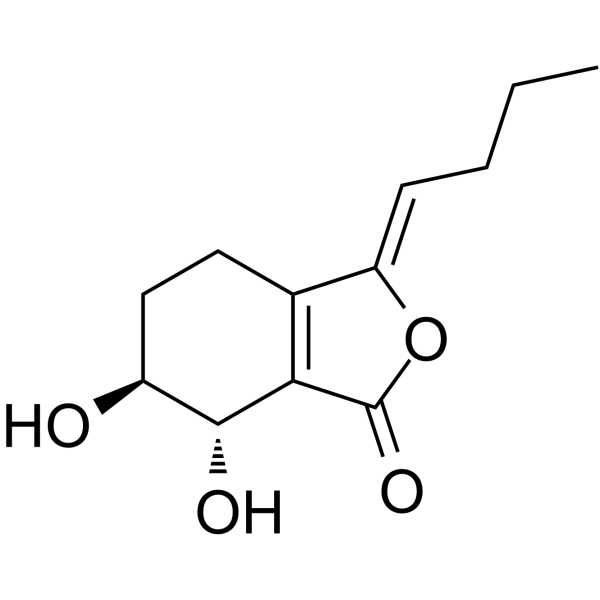
HY-N0745
Senkyunolide IMetabolite of Z-ligustilide -
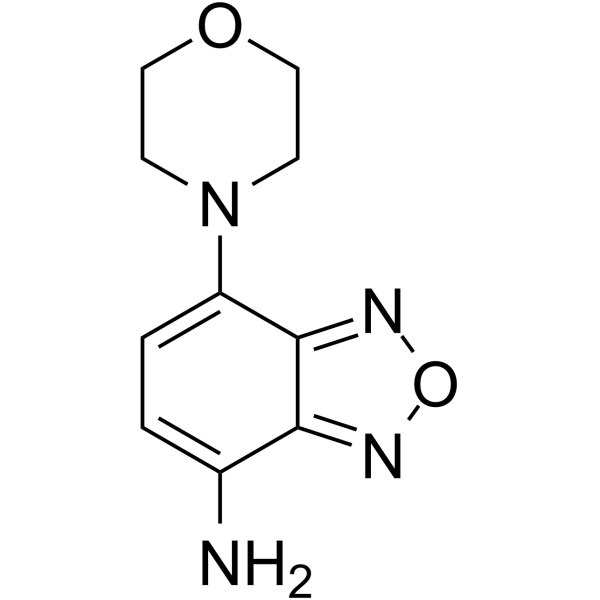
HY-124832
δ-Secretase inhibitor 11δ-Secretase Inhibitor -
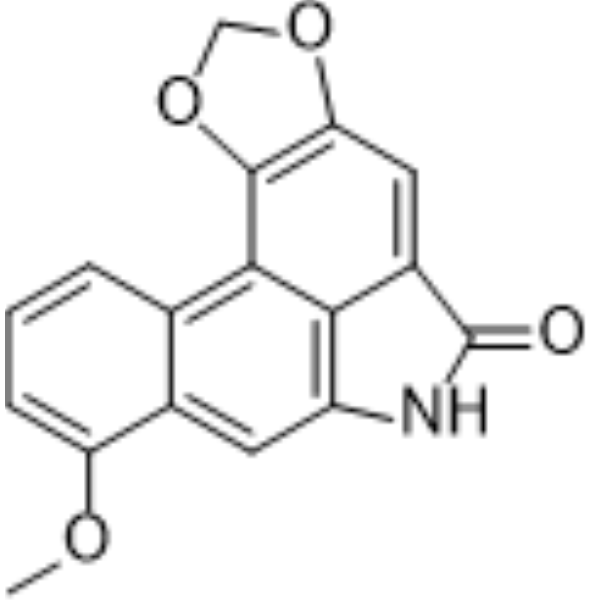
HY-N2013
Aristolactam IAQP1 Inhibitor
Publications Citing Use of MedChemExpress (MCE) CZL55
MoreAll Caspase Isoforms
More

Biological Activity
Description
IC50 & Target
[1]|
Caspase-1 24 nM (IC50) |
In Vitro
CZL55 (0.024 μM; 2.4 μM (toxicity assessment)) potently inhibits caspase-1 activity in LPS-pretreated human PBMCs with an IC50 of 0.024 μM and exhibits low cellular toxicity[1].
MedChemExpress (MCE) has not independently confirmed the accuracy of these methods. They are for reference only.


Chemical Information
-
CAS No. 667408-87-9
-
Appearance Solid
-
Molecular Weight 386.40
-
Formula C20H22N2O6
-
Color White to off-white
-
SMILES
O=C(O)CCCC(NC1=CC=CC(C(NC2=CC=C(OC)C=C2OC)=O)=C1)=O
-
Shipping
Room temperature in continental US; may vary elsewhere.
-
Storage
4°C, sealed storage, away from moisture
* In solvent : -80°C, 6 months; -20°C, 1 month (sealed storage, away from moisture)


Publications (1)
-
Journal Impact Factor
-
Most Recent


Solvent & Solubility
In Vitro:
DMSO : 125 mg/mL (323.50 mM; Need ultrasonic; Hygroscopic DMSO has a significant impact on the solubility of product, please use newly opened DMSO)
Please refer to the solubility information to select the appropriate solvent. Once prepared, please aliquot and store the solution to prevent product inactivation from repeated freeze-thaw cycles.
Storage method and period of stock solution: -80°C, 6 months; -20°C, 1 month (sealed storage, away from moisture). When stored at -80°C, please use it within 6 months. When stored at -20°C, please use it within 1 month.
Please refer to the solubility information to select the appropriate solvent. Once prepared, please aliquot and store the solution to prevent product inactivation from repeated freeze-thaw cycles.
Storage method and period of stock solution: -80°C, 6 months; -20°C, 1 month (sealed storage, away from moisture). When stored at -80°C, please use it within 6 months. When stored at -20°C, please use it within 1 month.
Concentration (start) × Volume (start) = Concentration (final) × Volume (final)


Purity & Documentation
-
Data Sheet (268 KB)
-
SDS (252 KB)
- English - EN (252 KB)
- Français - FR (252 KB)
- Deutsch - DE (252 KB)
- Norwegian - NO (252 KB)
- Español - ES (252 KB)
- Swedish - SV (252 KB)
- Italian - IT (252 KB)
- Korean - KR (252 KB)
- Portuguese - PT (252 KB)
-
Handling Instructions (2659 KB)
References


Complete Stock Solution Preparation Table
Please refer to the solubility information to select the appropriate solvent. Once prepared, please aliquot and store the solution to prevent product inactivation from repeated freeze-thaw cycles.
Storage method and period of stock solution: -80°C, 6 months; -20°C, 1 month (sealed storage, away from moisture). When stored at -80°C, please use it within 6 months. When stored at -20°C, please use it within 1 month.
| Optional Solvent | Concentration Solvent Mass | 1 mg | 5 mg | 10 mg | 25 mg |
|---|---|---|---|---|---|
| DMSO | 1 mM | 2.5880 mL | 12.9400 mL | 25.8799 mL | 64.6998 mL |
| 5 mM | 0.5176 mL | 2.5880 mL | 5.1760 mL | 12.9400 mL | |
| 10 mM | 0.2588 mL | 1.2940 mL | 2.5880 mL | 6.4700 mL | |
| 15 mM | 0.1725 mL | 0.8627 mL | 1.7253 mL | 4.3133 mL | |
| 20 mM | 0.1294 mL | 0.6470 mL | 1.2940 mL | 3.2350 mL | |
| 25 mM | 0.1035 mL | 0.5176 mL | 1.0352 mL | 2.5880 mL | |
| 30 mM | 0.0863 mL | 0.4313 mL | 0.8627 mL | 2.1567 mL | |
| 40 mM | 0.0647 mL | 0.3235 mL | 0.6470 mL | 1.6175 mL | |
| 50 mM | 0.0518 mL | 0.2588 mL | 0.5176 mL | 1.2940 mL | |
| 60 mM | 0.0431 mL | 0.2157 mL | 0.4313 mL | 1.0783 mL | |
| 80 mM | 0.0323 mL | 0.1617 mL | 0.3235 mL | 0.8087 mL | |
| 100 mM | 0.0259 mL | 0.1294 mL | 0.2588 mL | 0.6470 mL |


CZL55 Related Classifications
HY-153068 Related Classifications
 Powered by Bioz