



Sinomenine
Based on 23 publication(s) in Google Scholar
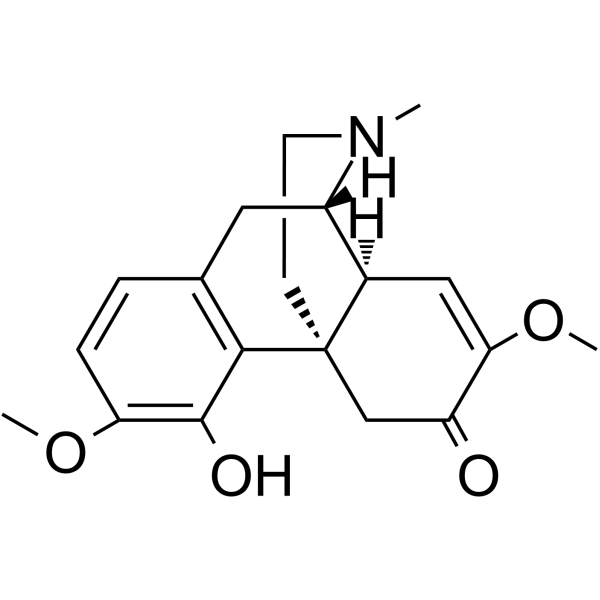
Sinomenine, an alkaloid extracted from Sinomenium acutum, is a blocker of the NF-κB activation. Sinomenine also is an activator of μ-opioid receptor.
For research use only. We do not sell to patients.
- Purity : 99.96%
- CAS No.: 115-53-7
- Formula: C19H23NO4
- Molecular Weight:329.39
-
Storage:
4°C, protect from light
* In solvent : -80°C, 6 months; -20°C, 1 month (protect from light)

To place orders, for customer services and technical support, please contact: MedChemExpress USA
Tel: 609-228-6898 E-mail: [email protected] [email protected]


-
 Biological Activity
-
Chemical Information
-
Solvent & Solubility
- Protocols
- Purity & Documentation
- References
-
 Help & FAQs


-
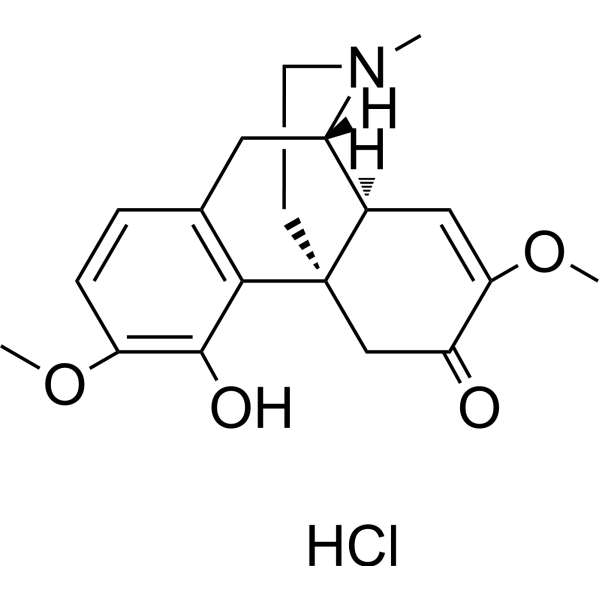
HY-15122A
Sinomenine hydrochlorideAutophagy Inducer -
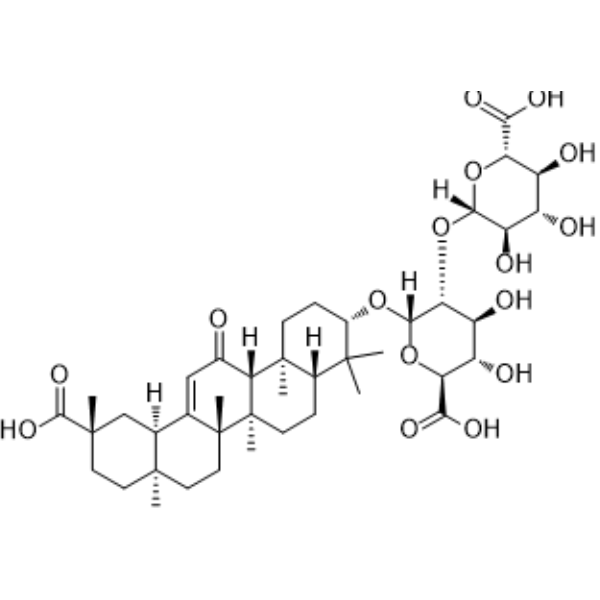
HY-N0184
Glycyrrhizic acidHMGB1 Antagonist -
HY-K0301
Cell Counting Kit-8 -
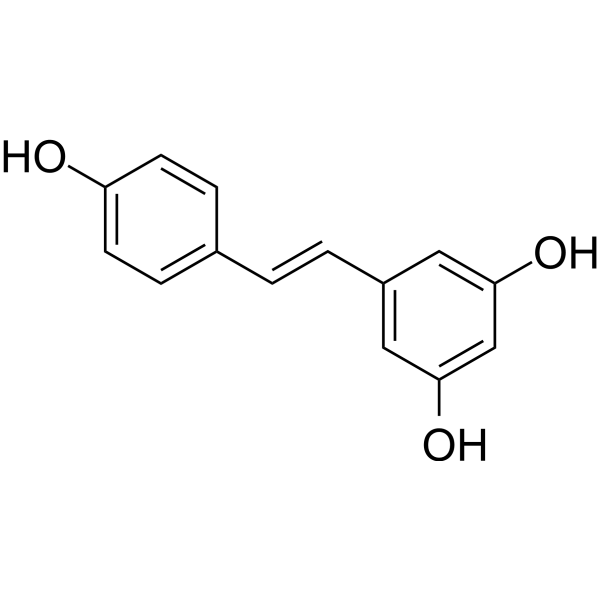
HY-16561
ResveratrolPolyphenolic Phytoalexin -
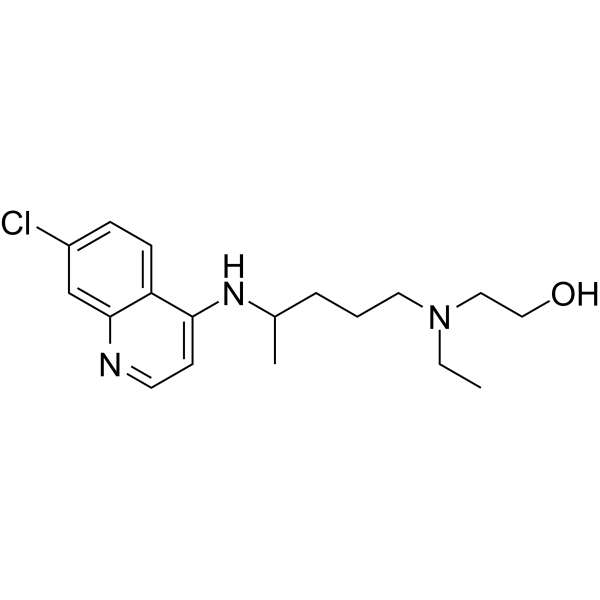
HY-W031727
HydroxychloroquineAntimalarial Agent -
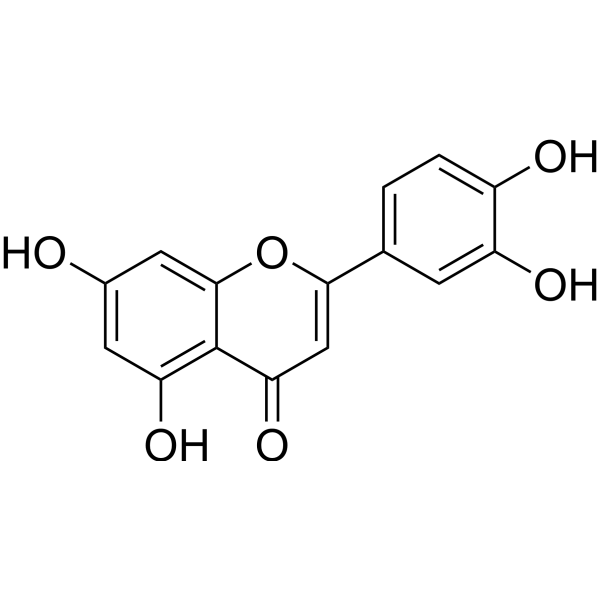
HY-N0162
LuteolinNrf2 Inhibitor -

HY-D1056
Lipopolysaccharides, from E. coli O55:B5Endotoxin -

HY-15122R
Sinomenine (Standard)NF-κB -
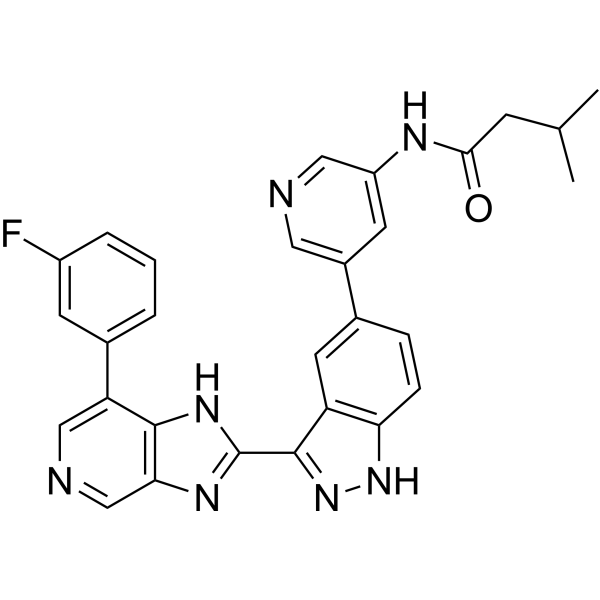
HY-109049
AdavivintWnt Pathway Inhibitor -

HY-15122AR
Sinomenine hydrochloride (Standard)Autophagy Inducer
Publications Citing Use of MedChemExpress (MCE) Sinomenine
More- Acta Pharm Sin B. 2021 Nov;11(11):3465-3480. [Abstract]
- Phytomedicine. 2025 May:140:156484. [Abstract]
- Phytother Res. 2023 Aug;37(8):3323-3341. [Abstract]
- Free Radic Biol Med. 2018 Aug 20:124:205-213. [Abstract]
- Anal Chem. 2025 Dec 19. [Abstract]
- PLoS Biol. 2024 Jun 27;22(6):e3002672. [Abstract]
- Life Sci. 2026 Mar 1:388:124199. [Abstract]
- Drug Des Devel Ther. 2024 Aug 6:18:3523-3545. [Abstract]
- Eur J Pharmacol. 2026 Jun 11:1030:178976. [Abstract]
- Eur J Pharmacol. 2026 May 10:1023:178881. [Abstract]
- Int Immunopharmacol. 2026 Oct 1:186:117153.
- Arab J Chem. 2026:19;14522025.
- World J Stem Cells. 2024 May 26;16(5):486-498. [Abstract]
- J Dairy Sci. 2025 Nov 7:S0022-0302(25)00911-7. [Abstract]
- J Inflamm Res. 2023 Oct 20:16:4777-4791. [Abstract]
- FASEB J. 2026 Jul 15;40(13):e72090.
- Naunyn Schmiedebergs Arch Pharmacol. 2025 May 17. [Abstract]
- Immun Inflamm Dis. 2024 Jun;12(6):e1271. [Abstract]
- Chem Biol Drug Des. 2023 Sep;102(3):434-443. [Abstract]
- Tissue Cell. 2026 Jul 9;104(Pt 1):103766.
- Exp Ther Med. 2021 Jun;21(6):647. [Abstract]
- Heliyon. 2024 Jun 24;10(13):e33314. [Abstract]
- bioRxiv. 2024 Apr 3:2023.06.02.542933. [Abstract]
 Customer Validation & Images

-
Cell Proliferation/Viability Assay
-
Flow Cytometry
-
RT-PCR
-
WB
-
Histological Imaging/Staining
All Opioid Receptor Isoforms
More

Biological Activity
Description
IC50 & Target
|
μ Opioid Receptor/MOR |
Cellular Effect
|
Cell Line

|
Type | Value | Description | References |
|---|---|---|---|---|
| A549 | IC50 |
>50 μM
Compound: 1
|
Antiproliferative activity against human A549 cells by CCK8 assay
Antiproliferative activity against human A549 cells by CCK8 assay
|
[PMID: 37939862] |
| HCT-116 | IC50 |
>50 μM
Compound: SIN
|
Cytotoxicity against human HCT-116 cells assessed as inhibition of cell growth incubated for 48 hrs by CCK-8 assay
Cytotoxicity against human HCT-116 cells assessed as inhibition of cell growth incubated for 48 hrs by CCK-8 assay
|
[PMID: 38417218] |
| HepG2 | IC50 |
>50 μM
Compound: 1
|
Antiproliferative activity against human HepG2 cells by CCK8 assay
Antiproliferative activity against human HepG2 cells by CCK8 assay
|
[PMID: 37939862] |
| HT-29 | IC50 |
>50 μM
Compound: SIN
|
Cytotoxicity against human HT-29 cells assessed as inhibition of cell growth incubated for 48 hrs by CCK-8 assay
Cytotoxicity against human HT-29 cells assessed as inhibition of cell growth incubated for 48 hrs by CCK-8 assay
|
[PMID: 38417218] |
| K562 | IC50 |
37.24 μM
Compound: 1
|
Antiproliferative activity against human K562 cells by CCK8 assay
Antiproliferative activity against human K562 cells by CCK8 assay
|
[PMID: 37939862] |
| KB | IC50 |
>759 μM
Compound: Sinomenine
|
Cytotoxicity against human KB cells after 72 hrs
Cytotoxicity against human KB cells after 72 hrs
|
[PMID: 11141105] |
| MCF7 | IC50 |
>50 μM
Compound: 1
|
Antiproliferative activity against human MCF7 cells by CCK8 assay
Antiproliferative activity against human MCF7 cells by CCK8 assay
|
[PMID: 37939862] |
| MDA-MB-231 | IC50 |
>50 μM
Compound: 1
|
Antiproliferative activity against human MDA-MB-231 cells by CCK8 assay
Antiproliferative activity against human MDA-MB-231 cells by CCK8 assay
|
[PMID: 37939862] |
| NCM460 | IC50 |
>50 μM
Compound: SIN
|
Cytotoxicity against human NCM460 cells assessed as inhibition of cell growth incubated for 48 hrs by CCK-8 assay
Cytotoxicity against human NCM460 cells assessed as inhibition of cell growth incubated for 48 hrs by CCK-8 assay
|
[PMID: 38417218] |
| NIH3T3 | IC50 |
>100 μM
Compound: 1
|
Cytotoxicity against mouse NIH/3T3 cells assessed as growth inhibition after 24 hrs by MTT assay
Cytotoxicity against mouse NIH/3T3 cells assessed as growth inhibition after 24 hrs by MTT assay
|
[PMID: 23357309] |
| PANC-1 | IC50 |
>50 μM
Compound: 1
|
Antiproliferative activity against human PANC-1 cells by CCK8 assay
Antiproliferative activity against human PANC-1 cells by CCK8 assay
|
[PMID: 37939862] |
| RAW264.7 | IC50 |
>100 μM
Compound: 1
|
Cytotoxicity against mouse RAW264.7 cells after 24 hrs by MTT assay
Cytotoxicity against mouse RAW264.7 cells after 24 hrs by MTT assay
|
[PMID: 21530276] |
| RAW264.7 | IC50 |
>200 μM
Compound: 1
|
Antiinflammatory activity in mouse RAW264.7 cells assessed as inhibition of LPS-induced nitric oxide production after 24 hrs by Griess method
Antiinflammatory activity in mouse RAW264.7 cells assessed as inhibition of LPS-induced nitric oxide production after 24 hrs by Griess method
|
[PMID: 22325804] |
| RAW264.7 | IC50 |
>200 μM
Compound: 1
|
Cytotoxicity against mouse RAW264.7 cells after 24 hrs by MTT assay
Cytotoxicity against mouse RAW264.7 cells after 24 hrs by MTT assay
|
[PMID: 22325804] |
In Vitro
Cell viability gradually decreased with increasing Sinomenine concentration. The migration ability of MDA-MB-231 cells is significantly weakened by 0.25, 0.5, and 1 mM of Sinomenine treatment. The wound-healing assay reveals that 0.25 and 0.5 mM Sinomenine significantly suppress the healing of the wound. When the MDA-MB-231 cells are treated with 0.5 mM Sinomenine, the healing progress is about 50%, but in the group treated with 0.25 mM Sinomenine and the untreated control, the healing is about 80% and nearly 95%, respectively. The IB assay following inhibitor of NF-κB (IκB) antibody IP shows that the binding of NF-κB to IκB is inhibited by Sinomenine treatment in a dose-dependent manne[1].
MedChemExpress (MCE) has not independently confirmed the accuracy of these methods. They are for reference only.
In Vivo
MedChemExpress (MCE) has not independently confirmed the accuracy of these methods. They are for reference only.


Chemical Information
-
CAS No. 115-53-7
-
Appearance Solid
-
Molecular Weight 329.39
-
Formula C19H23NO4
-
Color White to off-white
-
SMILES
OC(C1=C2C[C@@]3([H])[C@](C=C4OC)([H])[C@@]1(CCN3C)CC4=O)=C(C=C2)OC
-
Structure Classification
-
Initial Source
-
Shipping
Room temperature in continental US; may vary elsewhere.
-
Storage
4°C, protect from light
* In solvent : -80°C, 6 months; -20°C, 1 month (protect from light)


Publications (23)
-
Journal Impact Factor
-
Most Recent
-
Acta Pharm Sin B
Sinomenine ester derivative inhibits glioblastoma by inducing mitochondria-dependent apoptosis and autophagy by PI3K/AKT/mTOR and AMPK/mTOR pathway. [Abstract]2021 Nov;11(11):3465-3480. PMID: 34900530 -
Phytomedicine
Fangchinoline suppresses nasopharyngeal carcinoma progression by inhibiting SQLE to regulate the PI3K/AKT pathway dysregulation. [Abstract]2025 May:140:156484. PMID: 40090046 -
Phytother Res
Cognitive protection of sinomenine in type 2 diabetes mellitus through regulating the EGF/Nrf2/HO-1 signaling, the microbiota-gut-brain axis, and hippocampal neuron ferroptosis. [Abstract]2023 Aug;37(8):3323-3341. PMID: 37036428 -
Free Radic Biol Med
Cold atmospheric plasma conveys selectivity on triple negative breast cancer cells both in vitro and in vivo. [Abstract]2018 Aug 20:124:205-213. PMID: 29870749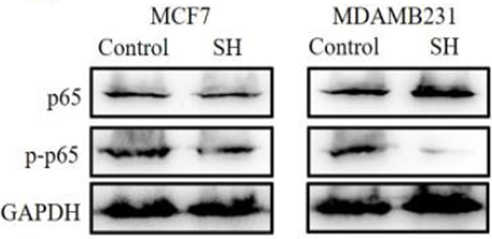
Sinomenine purchased from MedChemExpress. Usage Cited in: Free Radic Biol Med. 2018 Aug 20:124:205-213. [Abstract]
Total and phosphorylation levels of p65 in MCF7 and MDAMB231 after Sinomenine hydrochloride (SH) treatment at 24 h.
-
Anal Chem
Noninvasive Dynamic Cell Viability Monitoring Based on Diffraction Height Fingerprint Spectra. [Abstract]2025 Dec 19. PMID: 41417584 -
PLoS Biol
2024 Jun 27;22(6):e3002672. PMID: 38935621 -
Life Sci
Sinomenine ameliorates myocardial ischemia/reperfusion injury by inhibiting mitochondrial oxidative stress-mediated PANoptosis and ferroptosis via α7nAChR. [Abstract]2026 Mar 1:388:124199. PMID: 41520699 -
Drug Des Devel Ther
Sinomenine Alleviates Rheumatoid Arthritis by Suppressing the PI3K-Akt Signaling Pathway, as Demonstrated Through Network Pharmacology, Molecular Docking, and Experimental Validation. [Abstract]2024 Aug 6:18:3523-3545. PMID: 39135759 -
Eur J Pharmacol
Sinomenine alleviates ulcerative colitis by targeting FXR to regulate arachidonic acid metabolism and Th17/Treg homeostasis. [Abstract]2026 Jun 11:1030:178976. PMID: 42269904 -
Eur J Pharmacol
Sinomenine modulates autoantigen-specific immune responses by inhibiting dendritic cell activation in experimental arthritis. [Abstract]2026 May 10:1023:178881. PMID: 42000020 -
-
-
World J Stem Cells
Sinomenine increases osteogenesis in mice with ovariectomy-induced bone loss by modulating autophagy. [Abstract]2024 May 26;16(5):486-498. PMID: 38817333 -
J Dairy Sci
Sinomenine hydrochloride ameliorates fatty acid-induced bovine mammary epithelial cells' oxidative stress and inflammation via enhancing autophagy activity. [Abstract]2025 Nov 7:S0022-0302(25)00911-7. PMID: 41207443 -
J Inflamm Res
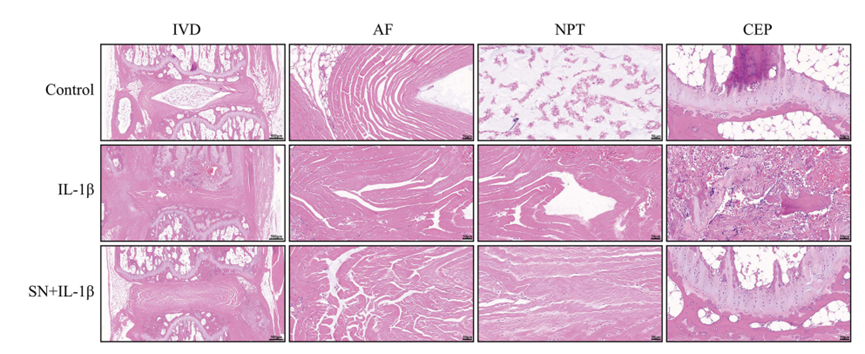
Sinomenine Ameliorates IL-1β-Induced Intervertebral Disc Degeneration in Rats Through Suppressing Inflammation and Oxidative Stress via Keap1/Nrf2/NF-κB Signaling Pathways. [Abstract]2023 Oct 20:16:4777-4791. PMID: 37881650
Sinomenine purchased from MedChemExpress. Usage Cited in: J Inflamm Res. 2023 Oct 20:16:4777-4791. [Abstract]
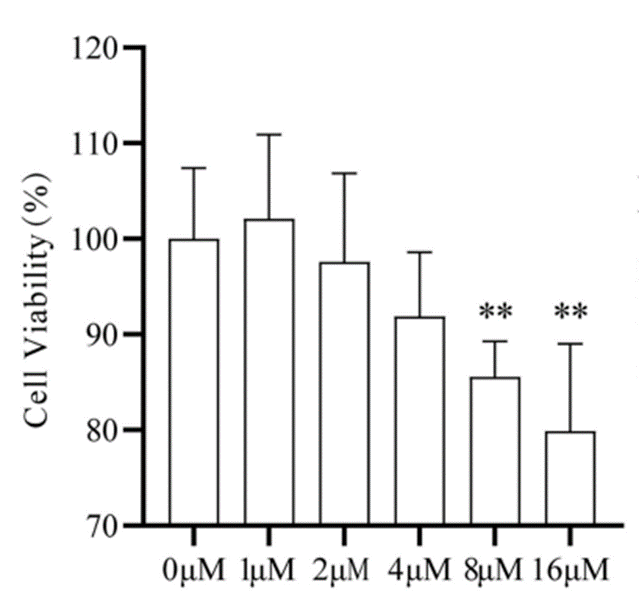
Effect of Sinomenine (SN) (1, 2, 4, 8, 16 μM) on the activity of NPCs.
Sinomenine purchased from MedChemExpress. Usage Cited in: J Inflamm Res. 2023 Oct 20:16:4777-4791. [Abstract]
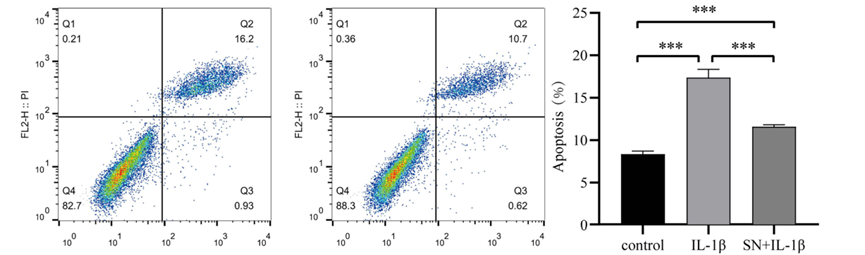
Pretreatment with Sinomenine (SN) (4 μM) for 8 hours decreased ROS content and apoptosis.
Sinomenine purchased from MedChemExpress. Usage Cited in: J Inflamm Res. 2023 Oct 20:16:4777-4791. [Abstract]
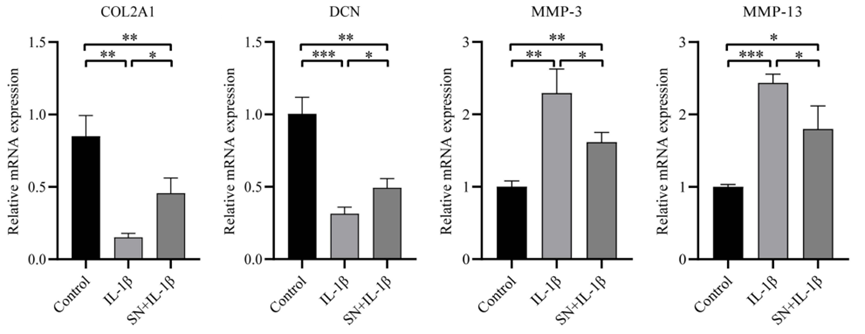
Pre-treatment with Sinomenine (SN) (4 μM) for 8 hours reversed IL-1β induced the expression of DCN and COL2A1 by RT-PCR.
Sinomenine purchased from MedChemExpress. Usage Cited in: J Inflamm Res. 2023 Oct 20:16:4777-4791. [Abstract]
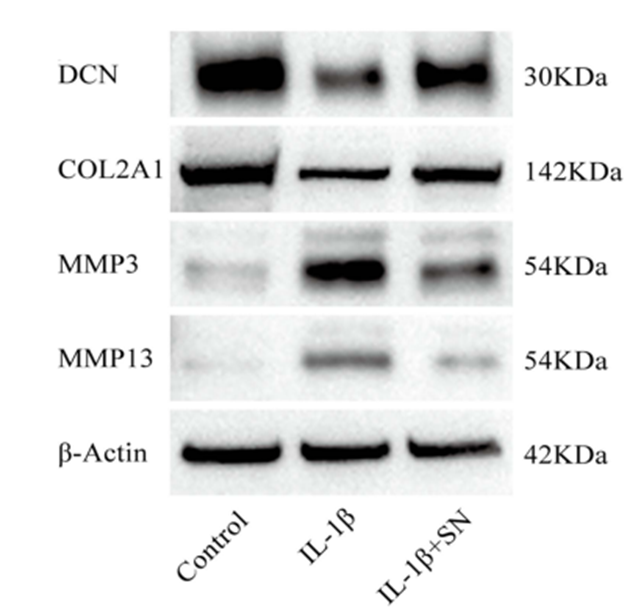
Pre-treatment with Sinomenine (SN) (4 μM) for 8 hours reversed IL-1β induced the expression of DCN and COL2A1 by Western Blot.
Sinomenine purchased from MedChemExpress. Usage Cited in: J Inflamm Res. 2023 Oct 20:16:4777-4791. [Abstract]
HE staining showed that Sinomenine (SN) improves IDD by suppressing the inflammatory response.
-
-
Naunyn Schmiedebergs Arch Pharmacol
Sinomenine alleviates gouty inflammation by inhibiting macrophage M1 polarization and neutrophil extracellular trap formation. [Abstract]2025 May 17. PMID: 40381009 -
Immun Inflamm Dis
High-dose sinomenine attenuates ischemia/reperfusion-induced hepatic inflammation and oxidative stress in rats with diabetes mellitus. [Abstract]2024 Jun;12(6):e1271. PMID: 38888355 -
Chem Biol Drug Des
Sinomenine attenuates lipopolysaccharide-induced inflammation and apoptosis of WI-38 cells by reducing GSTM1 expression. [Abstract]2023 Sep;102(3):434-443. PMID: 36303295 -
-
Exp Ther Med
Sinomenine activation of Nrf2 signaling prevents inflammation and cerebral injury in a mouse model of ischemic stroke. [Abstract]2021 Jun;21(6):647. PMID: 33968178 -
Heliyon
Sinomenine ameliorates bleomycin-induced pulmonary fibrosis by inhibiting the differentiation of fibroblast into myofibroblast. [Abstract]2024 Jun 24;10(13):e33314. PMID: 39050413 -
bioRxiv
An efficient behavioral screening platform classifies natural products and other chemical cues according to their chemosensory valence in C. elegans. [Abstract]2024 Apr 3:2023.06.02.542933. PMID: 37333363


Solvent & Solubility
In Vitro:
DMSO : 50 mg/mL (151.80 mM; Need ultrasonic; Hygroscopic DMSO has a significant impact on the solubility of product, please use newly opened DMSO)
1M HCl : 25 mg/mL (75.90 mM; ultrasonic and adjust pH to 1 with HCl)
Please refer to the solubility information to select the appropriate solvent. Once prepared, please aliquot and store the solution to prevent product inactivation from repeated freeze-thaw cycles.
Storage method and period of stock solution: -80°C, 6 months; -20°C, 1 month (protect from light). When stored at -80°C, please use it within 6 months. When stored at -20°C, please use it within 1 month.
Please refer to the solubility information to select the appropriate solvent. Once prepared, please aliquot and store the solution to prevent product inactivation from repeated freeze-thaw cycles.
Storage method and period of stock solution: -80°C, 6 months; -20°C, 1 month (protect from light). When stored at -80°C, please use it within 6 months. When stored at -20°C, please use it within 1 month.
Concentration (start) × Volume (start) = Concentration (final) × Volume (final)
In Vivo:
Select the appropriate dissolution method based on your experimental animal and administration route.
- For the following dissolution methods, please ensure to first prepare a clear stock solution using an In Vitro approach and then sequentially add co-solvents:
- To ensure reliable experimental results, the clarified stock solution can be appropriately stored based on storage conditions. As for the working solution for In Vivo experiments, it is recommended to prepare freshly and use it on the same day.
- The percentages shown for the solvents indicate their volumetric ratio in the final prepared solution. If precipitation or phase separation occurs during preparation, heat and/or sonication can be used to aid dissolution.
Add each solvent one by one: 10% DMSO 40% PEG300 5% Tween-80 45% Saline
Solubility: ≥ 2.5 mg/mL (7.59 mM); Clear solution
This protocol yields a clear solution of ≥ 2.5 mg/mL (saturation unknown).
Taking 1 mL working solution as an example, add 100 μL DMSO stock solution (25.0 mg/mL) to 400 μL PEG300, and mix evenly; then add 50 μL Tween-80 and mix evenly; then add 450 μL Saline to adjust the volume to 1 mL.
Preparation of Saline: Dissolve 0.9 g sodium chloride in ddH₂O and dilute to 100 mL to obtain a clear Saline solution.
Add each solvent one by one: 10% DMSO 90% (20% SBE-β-CD in Saline)
Solubility: ≥ 2.5 mg/mL (7.59 mM); Clear solution
This protocol yields a clear solution of ≥ 2.5 mg/mL (saturation unknown).
Taking 1 mL working solution as an example, add 100 μL DMSO stock solution (25.0 mg/mL) to 900 μL 20% SBE-β-CD in Saline, and mix evenly.
Preparation of 20% SBE-β-CD in Saline (4°C, storage for one week): 2 g SBE-β-CD powder is dissolved in 10 mL Saline, completely dissolve until clear.
In Vivo Dissolution Calculator
Please enter the basic information of animal experiments:
-
-
-
-
Recommended: Prepare an additional quantity of animals to account for potential losses during experiments.
Please enter your animal formula composition:
-
%DMSO +
Recommended: Keep the proportion of DMSO in working solution below 2% if your animal is weak.
-
%+
-
+%Tween-80 + +
-
%Saline +
The co-solvents required include: DMSO, . All of co-solvents are available by MedChemExpress (MCE). , Tween 80. All of co-solvents are available by MedChemExpress (MCE).
Working solution concentration: 0.22 mg/mL
Method for preparing stock solution: mg drug dissolved in μL DMSO. Stock solution concentration: mg/mL. * In solvent : -80°C, 6 months; -20°C, 1 month (protect from light)
1. Take μL DMSO stock solution;
2. Add μL .
μL , mix evenly;
3. Then add μL Tween 80, mix evenly;
4. Then add μL
Please ensure that the stock solution in the first step is dissolved to a clear state, and add co-solvents in sequence. You can use ultrasonic heating (ultrasonic cleaner, recommended frequency 20-40 kHz), vortexing, etc. to assist dissolution.


Purity & Documentation
-
Data Sheet (284 KB)
-
SDS (394 KB)
- English - EN (394 KB)
- Français - FR (394 KB)
- Deutsch - DE (394 KB)
- Norwegian - NO (394 KB)
- Español - ES (394 KB)
- Swedish - SV (394 KB)
- Italian - IT (394 KB)
- Korean - KR (394 KB)
- Portuguese - PT (394 KB)
-
Handling Instructions (2659 KB)
References
[1]. Song L, et al. Sinomenine inhibits breast cancer cell invasion and migration by suppressing NF-κB activation mediated by IL-4/miR-324-5p/CUEDC2 axis. Biochem Biophys Res Commun. 2015 Aug 28;464(3):705-10. [Content Brief]
[2]. Wang MH, et al. Activation of opioid mu-receptor by sinomenine in cell and mice.Neurosci Lett. 2008 Oct 10;443(3):209-12. [Content Brief]
[3]. Gao T, et al. Analgesic effect of sinomenine in rodents after inflammation and nerve injury. Eur J Pharmacol. 2013 Dec 5;721(1-3):5-11. [Content Brief]
[4]. Zhu Q, et al. Antinociceptive effects of sinomenine in a rat model of neuropathic pain. Sci Rep. 2014 Dec 1;4:7270. [Content Brief]


Complete Stock Solution Preparation Table
Please refer to the solubility information to select the appropriate solvent. Once prepared, please aliquot and store the solution to prevent product inactivation from repeated freeze-thaw cycles.
Storage method and period of stock solution: -80°C, 6 months; -20°C, 1 month (protect from light). When stored at -80°C, please use it within 6 months. When stored at -20°C, please use it within 1 month.
| Optional Solvent | Concentration Solvent Mass | 1 mg | 5 mg | 10 mg | 25 mg |
|---|---|---|---|---|---|
| 1M HCl / DMSO | 1 mM | 3.0359 mL | 15.1796 mL | 30.3591 mL | 75.8979 mL |
| 5 mM | 0.6072 mL | 3.0359 mL | 6.0718 mL | 15.1796 mL | |
| 10 mM | 0.3036 mL | 1.5180 mL | 3.0359 mL | 7.5898 mL | |
| 15 mM | 0.2024 mL | 1.0120 mL | 2.0239 mL | 5.0599 mL | |
| 20 mM | 0.1518 mL | 0.7590 mL | 1.5180 mL | 3.7949 mL | |
| 25 mM | 0.1214 mL | 0.6072 mL | 1.2144 mL | 3.0359 mL | |
| 30 mM | 0.1012 mL | 0.5060 mL | 1.0120 mL | 2.5299 mL | |
| 40 mM | 0.0759 mL | 0.3795 mL | 0.7590 mL | 1.8974 mL | |
| 50 mM | 0.0607 mL | 0.3036 mL | 0.6072 mL | 1.5180 mL | |
| 60 mM | 0.0506 mL | 0.2530 mL | 0.5060 mL | 1.2650 mL | |
| DMSO | 80 mM | 0.0379 mL | 0.1897 mL | 0.3795 mL | 0.9487 mL |
| 100 mM | 0.0304 mL | 0.1518 mL | 0.3036 mL | 0.7590 mL |


Sinomenine Related Classifications
HY-15122 Related Classifications
 Powered by Bioz