



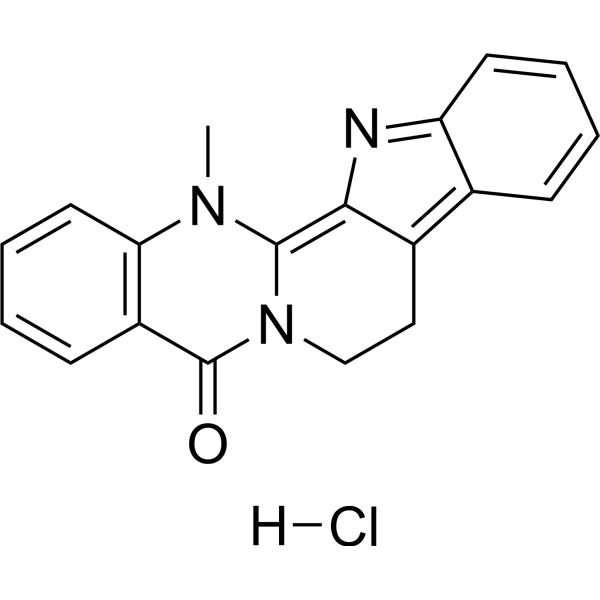
Dehydroevodiamine hydrochloride
Based on 3 publication(s) in Google Scholar
Dehydroevodiamine hydrochloride is a blood-brain barrier-permeable, orally effective AChE and BACE1 inhibitor (IC50 = 40.96 μM). Dehydroevodiamine hydrochloride is isolated and extracted from Evodia rutaecarpa. Dehydroevodiamine hydrochloride attenuates neurotoxicity through multiple targets by inhibiting BACE1 to block Aβ production, inhibiting AChE activity, scavenging ROS, and suppressing calcium influx. Dehydroevodiamine hydrochloride can be used for research on Alzheimer's disease, cerebral ischemia, vascular dementia, and other cognitive disorder-related diseases.
For research use only. We do not sell to patients.
- Purity : 99.80%
- CAS No.: 111664-82-5
- Formula: C19H16ClN3O
- Molecular Weight:337.80
-
Storage:
4°C, sealed storage, away from moisture and light
* In solvent : -80°C, 6 months; -20°C, 1 month (sealed storage, away from moisture and light)

To place orders, for customer services and technical support, please contact: MedChemExpress USA
Tel: 609-228-6898 E-mail: [email protected] [email protected]


-
 Biological Activity
-
Chemical Information
-
Solvent & Solubility
- Protocols
- Purity & Documentation
- References
-
 Help & FAQs


-
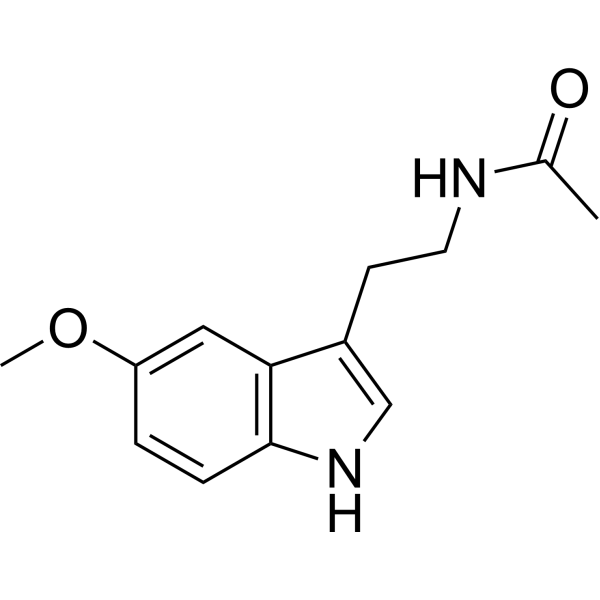
HY-B0075
MelatoninMelatonin Receptor Activator -

HY-N6029R
Dehydroevodiamine hydrochloride (Standard)Reference Standard -
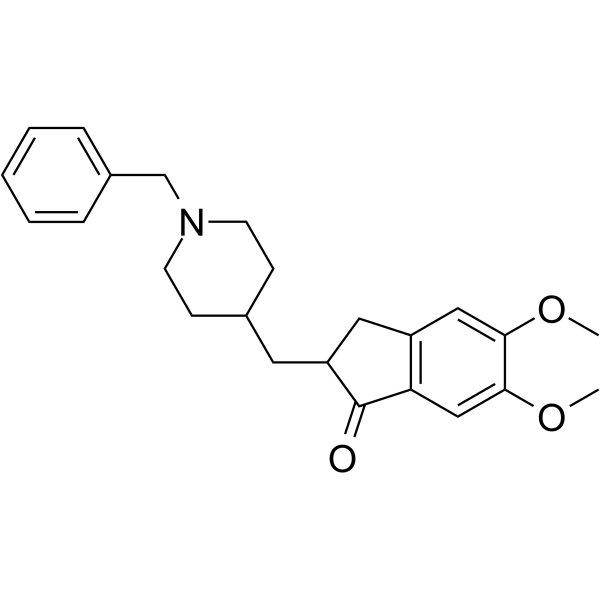
HY-14566
DonepezilSpecific AChE Inhibitor -
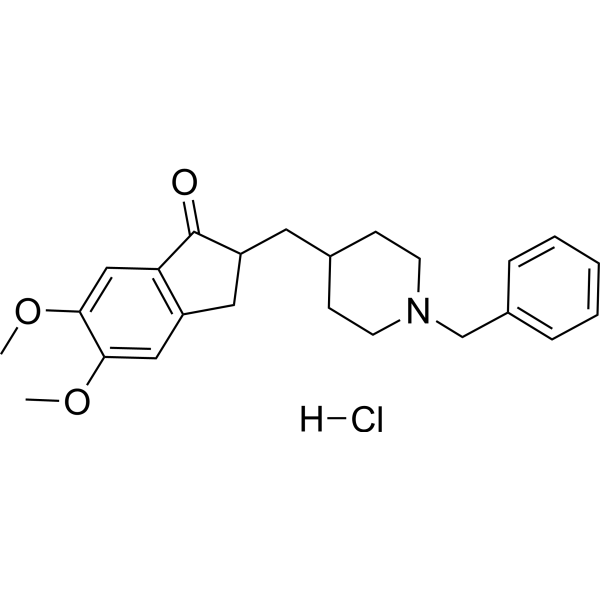
HY-B0034
Donepezil HydrochlorideAChE Inhibitor -
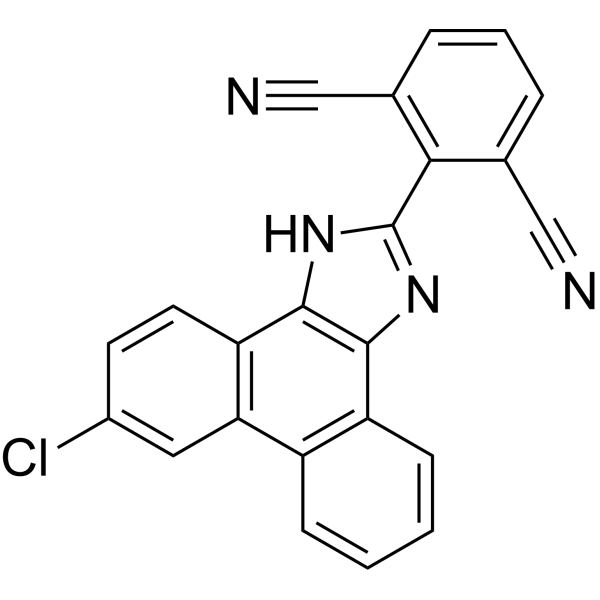
HY-13283
MF63MF63 Inhibitor -
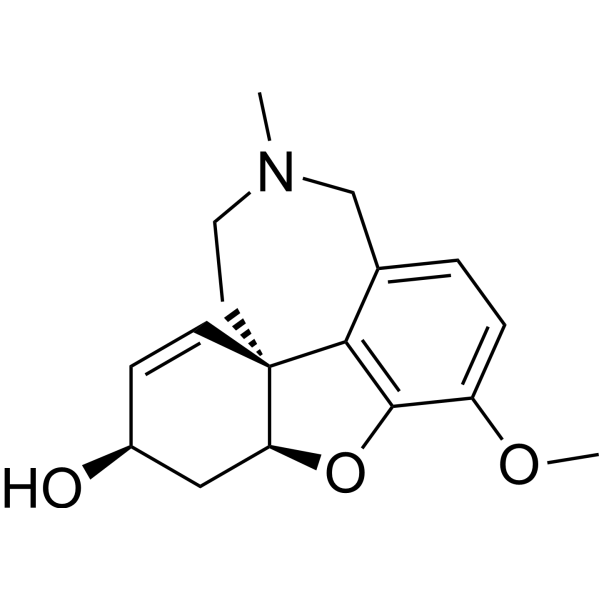
HY-76299
GalanthamineCholinesterase (ChE) Inhibitor -
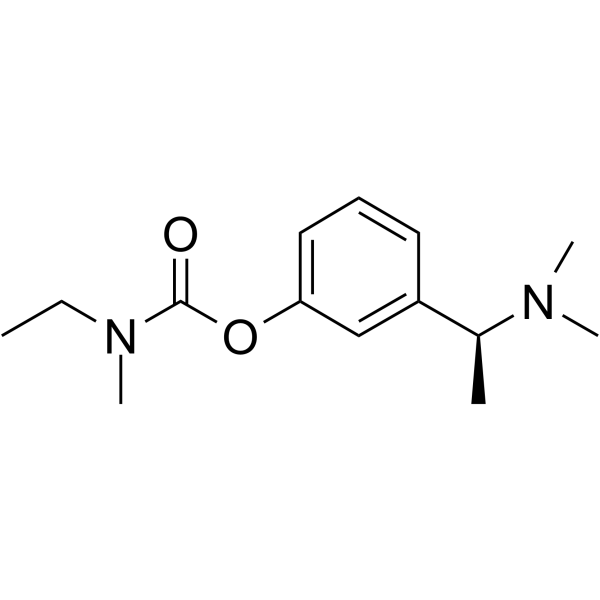
HY-17368
RivastigmineCholinesterase Inhibitor -
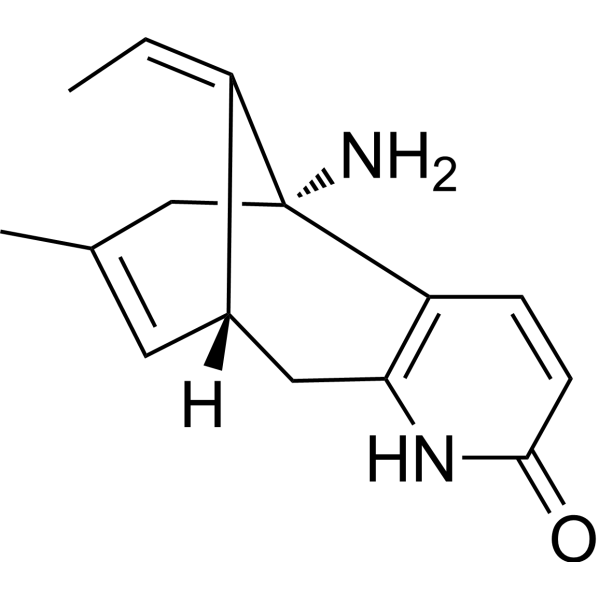
HY-17387
(-)-Huperzine AAChE/NMDA Receptor Inhibitor -
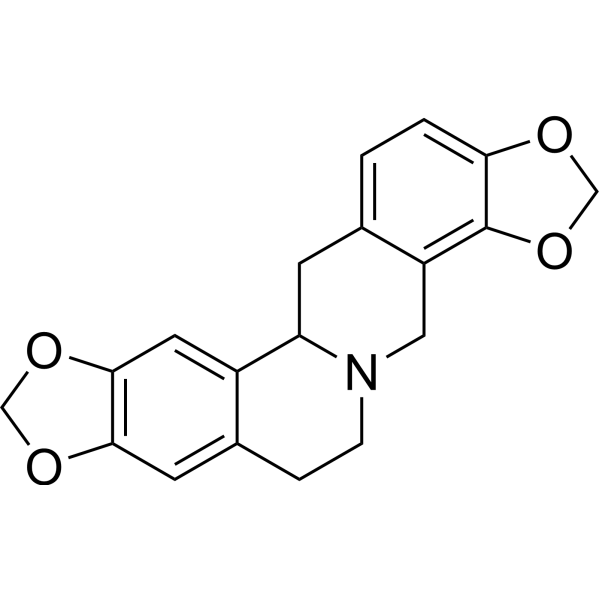
HY-N0924
(±)-StylopineAlkaloid -
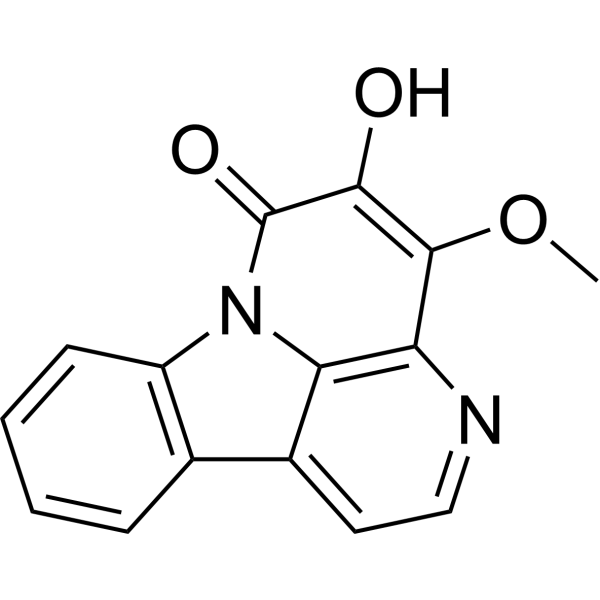
HY-N2128
NigakinoneFXR Activator/NLRP3 Inhibitor -
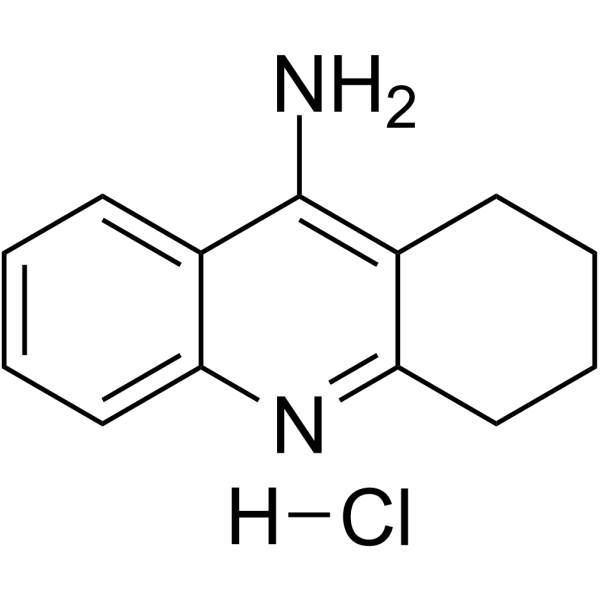
HY-B1488
Tacrine hydrochlorideCholinesterase Inhibitor -
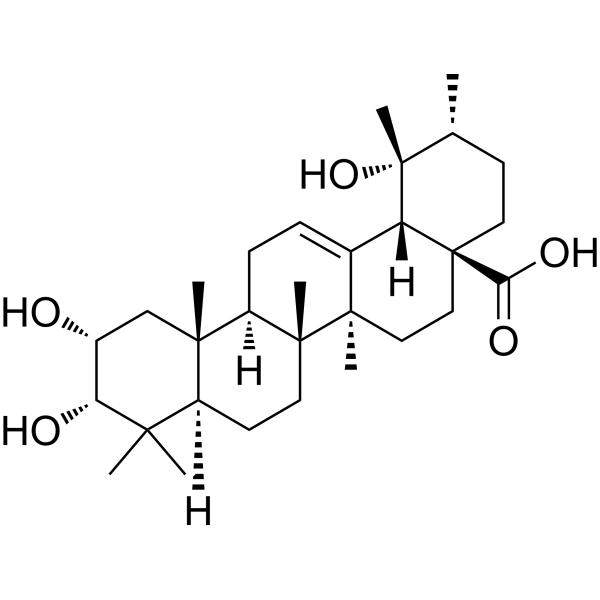
HY-N2566
Euscaphic acidApoptosis Inducer
Publications Citing Use of MedChemExpress (MCE) Dehydroevodiamine hydrochloride
MoreAll Endogenous Metabolite Isoforms
More

Biological Activity
Description
IC50 & Target
[1]|
BACE1 40.96 μM (IC50) |
AChE |
In Vitro
Dehydroevodiamine hydrochloride (0.5-4 μM; 4 h) attenuates Aβ1-42 (HY-P1362)-induced neurotoxicity and reduces ROS production in primary cortical neurons in a dose-dependent manner[3].
Dehydroevodiamine (hydrochloride) (10 μM; 5 min) reduces the KCl-dependent increase in intracellular calcium levels in primary cortical neurons[3].
Dehydroevodiamine hydrochloride (25-100 µM; 1 h) acts as a competitive inhibitor of BACE1 in mouse brain homogenates, with an IC50 of 40.96 µM[2].
MedChemExpress (MCE) has not independently confirmed the accuracy of these methods. They are for reference only. Further protocols information, click here.
-
Cell Line:Primary cortical neurons from embryonic day 18 Sprague-Dawley rat embryos
-
Concentration:0.5, 1, 2, 4 μM
-
Incubation Time:4 h
-
Result:Reduced cell viability by approximately 60% following exposure to 25 μM Aβ1-42 peptide.
Enhanced cell viability in a dose-dependent manner with values of 55.89% at 2 μM and 57.84% at 4 μM compared to Aβ1-42-exposed neurons.
In Vivo
Dehydroevodiamine hydrochloride (10 mg/kg; p.o.; single administration) ameliorates spatial memory impairment in the Scopolamine (HY-N0296)-induced amnesia model in Wistar rats[3].
Dehydroevodiamine hydrochloride (10 mg/kg; p.o.; once daily; 21 days) ameliorates learning and spatial memory impairment in an Aβ1-42 intracerebroventricular infusion-induced Wistar rat model[3].
Dehydroevodiamine hydrochloride (10-20 mg/kg (p.o.) or 6.25 mg/kg (i.p.); single dose or once daily for 7 consecutive days) reverses memory acquisition and spatial working memory deficits in Scopolamine-induced Sprague-Dawley rat models[4].
Dehydroevodiamine hydrochloride (6.25 mg/kg; i.p.; single administration 30 min before ischemia or once daily for 7 consecutive days after ischemia) reduces cerebral infarct size and attenuates neuronal damage in the hippocampus and cognitive deficits in a middle cerebral artery occlusion (MCA)-induced focal cerebral ischemia model in Sprague-Dawley rats[4].
Dehydroevodiamine hydrochloride (6.25 mg/kg; i.p.; once daily; for 7 consecutive days) significantly reduces neuronal death in the hippocampus and dentate gyrus and ameliorates memory impairment in a Sprague-Dawley rat model of electrolytic lesion of the entorhinal cortex (EC)[4].
Dehydroevodiamine hydrochloride (0.03-0.3 mg/kg; i.v.; single administration; observation for 1-10 min) selectively increases cerebral cortical blood flow without affecting other cardiopulmonary functions in anesthetized adult cats[1].
MedChemExpress (MCE) has not independently confirmed the accuracy of these methods. They are for reference only.
-
Animal Model:Wistar rats (7-week-old)[3]
-
Dosage:10 mg/kg
-
Administration:p.o.; once daily; 21 days
-
Result:Reduced escape latency to 4.4 sec.
Increased passive avoidance latency to 204.85 sec.
-
Animal Model:Sprague-Dawley (Male, 200-250 g, middle cerebral artery occlusion)[4]
-
Dosage:6.25 mg/kg
-
Administration:i.p.; once daily; for 7 days
-
Result:Decreased the number of damaged neurons in the CA1 region of the hippocampus to 4.3% compared with 42.3% in the nontreated group.
Recovered the latency time to the sham control level in the passive avoidance test.
-
Animal Model:Sprague-Dawley (Male, 200-250 g, unilateral electrolytic lesion of the entorhinal cortex)[4]
-
Dosage:6.25 mg/kg
-
Administration:i.p.; once daily; for 7 days
-
Result:Increased the latency time significantly.
Reduced neuronal damage to 9.23% in CA1, 4.2% in CA3, and 13.2% in the dentate gyrus.
-
Animal Model:Adult cats (either sex, 2.3-3.5 kg, anesthetized)[1]
-
Dosage:0.03, 0.1, and 0.3 mg/kg
-
Administration:i.v.; single dose; 1-10 min
-
Result:Selectively increased cerebral cortical blood flow without affecting other cardiopulmonary functions.
-
Animal Model:Tg2576 (transgenic, over-expressing human APP695 with the Swedish double mutation K670N, M671L, 7 months old at start, mixed gender)[2]
-
Dosage:0.5 mg/kg
-
Administration:i.p.; once daily; 4 months
-
Result:Ameliorated memory impairment and reduced cortical soluble Aβ and amyloid plaques.


Chemical Information
-
CAS No. 111664-82-5
-
Appearance Solid
-
Molecular Weight 337.80
-
Formula C19H16ClN3O
-
Color White to yellow
-
SMILES
O=C1N2C(N(C)C3=C1C=CC=C3)=C4C(CC2)=C5C=CC=CC5=N4.[H]Cl
-
Structure Classification
-
Initial Source
-
Shipping
Room temperature in continental US; may vary elsewhere.
-
Storage
4°C, sealed storage, away from moisture and light
* In solvent : -80°C, 6 months; -20°C, 1 month (sealed storage, away from moisture and light)


Publications (3)
-
Journal Impact Factor
-
Most Recent
-
BMC Complement Med Ther
Hepatotoxicity prediction for traditional Chinese medicine: a two-step in silico framework integrating network and machine learning approaches. [Abstract]2026 Apr 2;26(1):177. PMID: 41923057 -
Chem Biol Drug Des
CD163 and TYROBP Are Two Therapeutic Targets for Hyperglycemia-Induced Mesangial Cell Stress. [Abstract]2025 Dec;106(6):e70213. PMID: 41329505 -
J Anim Physiol Anim Nutr
Dihydromyricetin Suppresses Lipopolysaccharide-Induced Intestinal Injury Through Reducing Reactive Oxygen Species Generation and NOD-Like Receptor Pyrin Domain Containing 3 Inflammasome Activation. [Abstract]2025 Mar;109(2):610-622. PMID: 39618421


Solvent & Solubility
In Vitro:
DMSO : 12.5 mg/mL (37.00 mM; Need ultrasonic; Hygroscopic DMSO has a significant impact on the solubility of product, please use newly opened DMSO)
H2O : 1.43 mg/mL (4.23 mM; ultrasonic and warming and heat to 60°C)
Please refer to the solubility information to select the appropriate solvent. Once prepared, please aliquot and store the solution to prevent product inactivation from repeated freeze-thaw cycles.
Storage method and period of stock solution: -80°C, 6 months; -20°C, 1 month (sealed storage, away from moisture and light). When stored at -80°C, please use it within 6 months. When stored at -20°C, please use it within 1 month.
* Note: If you choose water as the stock solution, please dilute it to the working solution, then filter and sterilize it with a 0.22 μm filter before use.
Please refer to the solubility information to select the appropriate solvent. Once prepared, please aliquot and store the solution to prevent product inactivation from repeated freeze-thaw cycles.
Storage method and period of stock solution: -80°C, 6 months; -20°C, 1 month (sealed storage, away from moisture and light). When stored at -80°C, please use it within 6 months. When stored at -20°C, please use it within 1 month.
* Note: If you choose water as the stock solution, please dilute it to the working solution, then filter and sterilize it with a 0.22 μm filter before use.
Concentration (start) × Volume (start) = Concentration (final) × Volume (final)
In Vivo:
Select the appropriate dissolution method based on your experimental animal and administration route.
- For the following dissolution methods, please ensure to first prepare a clear stock solution using an In Vitro approach and then sequentially add co-solvents:
- To ensure reliable experimental results, the clarified stock solution can be appropriately stored based on storage conditions. As for the working solution for In Vivo experiments, it is recommended to prepare freshly and use it on the same day.
- The percentages shown for the solvents indicate their volumetric ratio in the final prepared solution. If precipitation or phase separation occurs during preparation, heat and/or sonication can be used to aid dissolution.
Add each solvent one by one: 10% DMSO 40% PEG300 5% Tween-80 45% Saline
Solubility: ≥ 1.25 mg/mL (3.70 mM); Clear solution
This protocol yields a clear solution of ≥ 1.25 mg/mL (saturation unknown).
Taking 1 mL working solution as an example, add 100 μL DMSO stock solution (12.5 mg/mL) to 400 μL PEG300, and mix evenly; then add 50 μL Tween-80 and mix evenly; then add 450 μL Saline to adjust the volume to 1 mL.
Preparation of Saline: Dissolve 0.9 g sodium chloride in ddH₂O and dilute to 100 mL to obtain a clear Saline solution.
Add each solvent one by one: 10% DMSO 90% (20% SBE-β-CD in Saline)
Solubility: ≥ 1.25 mg/mL (3.70 mM); Clear solution
This protocol yields a clear solution of ≥ 1.25 mg/mL (saturation unknown).
Taking 1 mL working solution as an example, add 100 μL DMSO stock solution (12.5 mg/mL) to 900 μL 20% SBE-β-CD in Saline, and mix evenly.
Preparation of 20% SBE-β-CD in Saline (4°C, storage for one week): 2 g SBE-β-CD powder is dissolved in 10 mL Saline, completely dissolve until clear.
In Vivo Dissolution Calculator
Please enter the basic information of animal experiments:
-
-
-
-
Recommended: Prepare an additional quantity of animals to account for potential losses during experiments.
Please enter your animal formula composition:
-
%DMSO +
Recommended: Keep the proportion of DMSO in working solution below 2% if your animal is weak.
-
%+
-
+%Tween-80 + +
-
%Saline +
The co-solvents required include: DMSO, . All of co-solvents are available by MedChemExpress (MCE). , Tween 80. All of co-solvents are available by MedChemExpress (MCE).
Working solution concentration: 0.22 mg/mL
Method for preparing stock solution: mg drug dissolved in μL DMSO. Stock solution concentration: mg/mL. * In solvent : -80°C, 6 months; -20°C, 1 month (sealed storage, away from moisture and light)
1. Take μL DMSO stock solution;
2. Add μL .
μL , mix evenly;
3. Then add μL Tween 80, mix evenly;
4. Then add μL
Please ensure that the stock solution in the first step is dissolved to a clear state, and add co-solvents in sequence. You can use ultrasonic heating (ultrasonic cleaner, recommended frequency 20-40 kHz), vortexing, etc. to assist dissolution.

Protocols
-
Neurotoxicity Study
This protocol assesses in vitro neurotoxicity by combining neuronal viability, mitochondrial/metabolic activity, neurite outgrowth, and optional neuronal network function readouts. Calcein-AM or resazurin/PrestoBlue readouts estimate viable or metabolically active cells; βIII-tubulin immunofluorescence detects neuronal morphology and neurite networks; TMRE detects mitochondrial membrane potential; and MEA recordings detect functional changes in neuronal network activity.
-
Cell Cytotoxicity Assay
Cytotoxicity assays are usually based on the assessment of cell membrane damage, which can also be indirectly detected by measuring cell viability. Detection methods include MTT assay, CKK-8 assay, LDH assay and ATP assay, etc.
-
ROS/oxidative-stress fluorescent staining
ROS/oxidative-stress fluorescent staining uses cell-permeant fluorogenic probes that become fluorescent after oxidation inside cells or tissues; commonly used examples include DCFH-DA/DCFDA for broad cellular oxidant detection, DHE for superoxide-related signal detection, MitoSOX for mitochondrial superoxide-related signal detection, and CellROX probes for oxidative-stress-associated fluorescence readouts. The assay detects probe oxidation rather than a single ROS species unless the probe and analysis method have been chemically validated for that species. DCFH-DA enters cells, is deacetylated by intracellular esterases to DCFH, and produces fluorescent DCF after oxidation, so the readout is used as an operational measure of total cellular oxidative stress rather than a species-specific ROS measurement. DHE and MitoSOX can report superoxide-related oxidation, but red fluorescence alone can include non-specific ethidium-like oxidation products; HPLC or optimized spectral approaches are
-
Ca2+ Staining Technique
Ca2+ staining is an experimental technique that utilizes specific fluorescent probes (such as Fluo-4 AM, Fura-2, etc.) to qualitatively or quantitatively detect dynamic changes in intracellular Ca2+ concentrations; this is achieved by monitoring the changes in fluorescent signals generated when these probes bind to free intracellular calcium ions. The underlying principle relies primarily on the presence of chelating groups within the probe's molecular structure that possess high affinity for calcium ions.
-
Alzheimer’s Disease Modeling
Alzheimer’s Disease (AD) is a neurodegenerative disorder characterized by a progressive decline in cognitive functions and loss of specific types of neurons and synapses. Alzheimer's symptoms can be simulated in mice by injecting drugs (such as Aβ) or genetically modified.


Purity & Documentation
-
Data Sheet (301 KB)
-
SDS (393 KB)
- English - EN (393 KB)
- Français - FR (393 KB)
- Deutsch - DE (393 KB)
- Norwegian - NO (393 KB)
- Español - ES (393 KB)
- Swedish - SV (393 KB)
- Italian - IT (393 KB)
- Korean - KR (393 KB)
- Portuguese - PT (393 KB)
-
Handling Instructions (2659 KB)
References
[1]. Haji A, et al. Increased feline cerebral blood flow induced by dehydroevodiamine hydrochloride from Evodia rutaecarpa. Journal of natural products. 1994 Mar;57(3):387-9. [Content Brief]
[3]. Shin KY, et al. Dehydroevodiamine·HCl enhances cognitive function in memory-impaired rat models. The Korean journal of physiology & pharmacology : official journal of the Korean Physiological Society and the Korean Society of Pharmacology. 2017 Jan;21(1):55-64. [Content Brief]


Complete Stock Solution Preparation Table
Please refer to the solubility information to select the appropriate solvent. Once prepared, please aliquot and store the solution to prevent product inactivation from repeated freeze-thaw cycles.
Storage method and period of stock solution: -80°C, 6 months; -20°C, 1 month (sealed storage, away from moisture and light). When stored at -80°C, please use it within 6 months. When stored at -20°C, please use it within 1 month.
| Optional Solvent | Concentration Solvent Mass | 1 mg | 5 mg | 10 mg | 25 mg |
|---|---|---|---|---|---|
| H2O / DMSO | 1 mM | 2.9603 mL | 14.8017 mL | 29.6033 mL | 74.0083 mL |
| DMSO | 5 mM | 0.5921 mL | 2.9603 mL | 5.9207 mL | 14.8017 mL |
| 10 mM | 0.2960 mL | 1.4802 mL | 2.9603 mL | 7.4008 mL | |
| 15 mM | 0.1974 mL | 0.9868 mL | 1.9736 mL | 4.9339 mL | |
| 20 mM | 0.1480 mL | 0.7401 mL | 1.4802 mL | 3.7004 mL | |
| 25 mM | 0.1184 mL | 0.5921 mL | 1.1841 mL | 2.9603 mL | |
| 30 mM | 0.0987 mL | 0.4934 mL | 0.9868 mL | 2.4669 mL |
* Note: If you choose water as the stock solution, please dilute it to the working solution, then filter and sterilize it with a 0.22 μm filter before use.


Dehydroevodiamine hydrochloride Related Classifications
HY-N6029 Related Classifications
 Powered by Bioz