



Efalizumab
Based on 1 publication(s) in Google Scholar
Efalizumab is a targeted T cell modulator, and is a humanized monoclonal antibody of CD11a, the α subunit of LFA-1. Efalizumab inhibits T cell activation, cutaneous T cell trafficking, and T cell adhesion to keratinocytes, can be used for plaque psoriasis research.
For research use only. We do not sell to patients.
- Purity : 99.00%
- CAS No.: 214745-43-4
- Molecular Weight:146.238 kDa
-
Storage:
Please store the product under the recommended conditions in the Certificate of Analysis.


To place orders, for customer services and technical support, please contact: MedChemExpress USA
Tel: 609-228-6898 E-mail: [email protected] [email protected]


-
 Biological Activity
-
Chemical Information
- Protocols
- Purity & Documentation
- References
-
 Help & FAQs


-
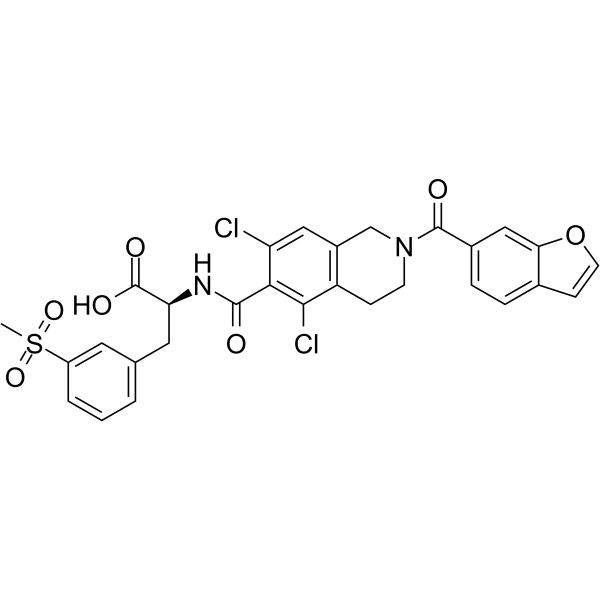
HY-19344
LifitegrastLFA-1/ICAM-1 Antagonist -

HY-P99336
EnlimomabAnti-ICAM-1 Antibody -

HY-108831
NatalizumabAnti-α4 Integrin Monoclonal Antibody -

HY-108738
DaclizumabCD25 Blocker -

HY-P99001
Human IgG1 kappa, Isotype ControlIgG1κ Isotype Control -
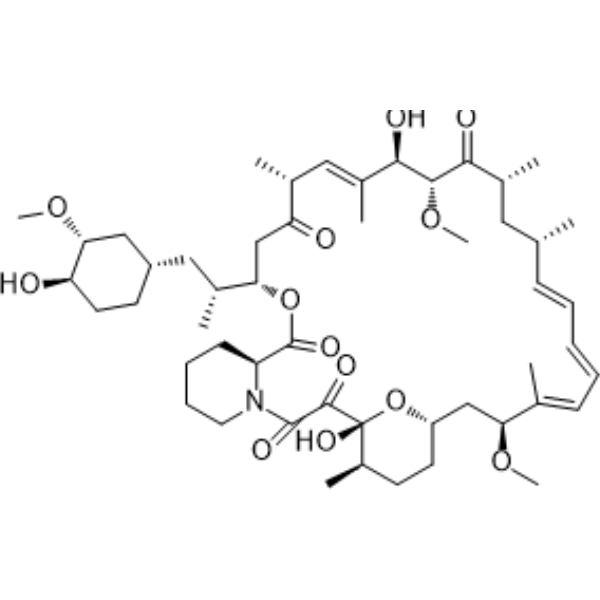
HY-10219
RapamycinmTOR Inhibitor -

HY-P9906
BevacizumabVEGF-A Inhibitor -

HY-P9913
RituximabCD20 Inhibitor -

HY-108810
CanakinumabAnti-IL-1β Monoclonal Antibody -

HY-P9922
OlaratumabAnti-PDGFRα Antibody -

HY-108852
BasiliximabAnti-IL-2R mAb -
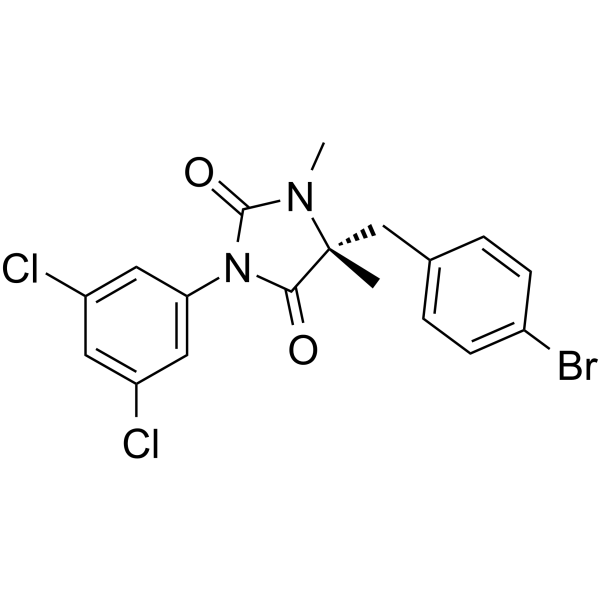
HY-110117
BIRT 377LFA-1 Inhibitor
Publications Citing Use of MedChemExpress (MCE) Efalizumab
More

Biological Activity
Description
Isotype
Human IgG1 kappa
Recommend Isotype Controls
Species Reactivity
Human
IC50 & Target
CD11a/LFA-1α
In Vitro
Efalizumab (78 ng/mL-5 mg/mL) induces a leukocytosis and downregulates LFA-1 expression on T cells in the peripheral blood[3].
Efalizumab (78 ng/mL-5 mg/mL) downregulates plate-bound, anti-CD3-stimulated proliferation of PBMC[3].
MedChemExpress (MCE) has not independently confirmed the accuracy of these methods. They are for reference only. Further protocols information, click here.
In Vivo
MedChemExpress (MCE) has not independently confirmed the accuracy of these methods. They are for reference only.
Clinical Trial
| NCT Number | Sponsor | Condition | Start Date |
Phase

|
|---|---|---|---|---|
| NCT01329991 | Plexxikon| | 2011-05 | PHASE1 |
Gene ID
Accession
Conjugated
Unconjugated
Reconsititution
The product can be reconstituted/diluted with sterile PBS or saline.
Format
-
Human IgG1 kappa
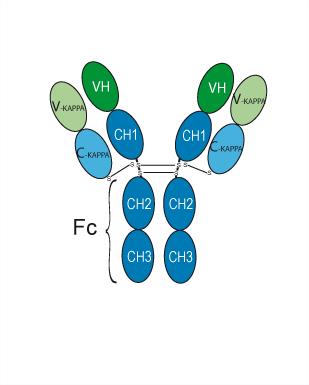
Application
ELISA, FACS, Functional assay


Chemical Information
-
CAS No. 214745-43-4
-
Appearance Liquid
-
Molecular Weight 146.238 kDa
-
Color Colorless to light yellow
-
SMILES
[Efalizumab]
-
Shipping
Shipping with dry ice.
-
Formulation
Please refer to the lot-specific COA for specific buffer information.
-
Storage
Please store the product under the recommended conditions in the Certificate of Analysis.


Publications (1)
-
Journal Impact Factor
-
Most Recent

Protocols
-
Imiquimod-Induced Psoriasiform Dermatitis
Imiquimod (IMQ)-induced psoriasiform dermatitis is a widely used murine model in which topical application of IMQ, a Toll-like receptor 7 (TLR7) agonist, triggers innate immune activation in the skin and induces a psoriasis-like inflammatory cascade characterized by epidermal hyperplasia, immune cell infiltration, and cytokine production dominated by the IL-23/IL-17 axis. This inflammatory response is mediated through activation of dendritic cells and downstream induction of IL-23, IL-17A, IL-22, and related pro-inflammatory mediators, recapitulating key features of human plaque psoriasis and enabling mechanistic and therapeutic studies. The model is commonly induced using Aldara (5% IMQ cream) applied topically to murine skin, resulting in rapid onset of erythema, scaling, and thickening that can be quantified as disease severity indices and validated histologically.
-
Research Protocol for Cancer Immunology
Cancer immunology studies how the immune system recognizes, suppresses, edits, or fails to eliminate malignant cells through tumor antigen release, antigen presentation, T-cell priming, immune trafficking, tumor-cell killing, and feedback inhibition in the tumor microenvironment. The cancer-immunity cycle links tumor antigenicity, dendritic-cell priming, CD8+ T-cell infiltration, cytotoxic function, and immune-checkpoint regulation to tumor rejection or immune escape. Immune-checkpoint pathways such as PD-1/PD-L1 and CTLA-4 suppress antitumor T-cell activity and can be therapeutically blocked, but many tumors remain resistant because of poor antigen presentation, weak T-cell infiltration, suppressive myeloid cells, regulatory T cells, and tumor-intrinsic immune-exclusion programs. Unresolved questions include which immune-cell states predict response, how tumor-intrinsic pathways exclude immune cells, how myeloid suppression limits checkpoint blockade, and which combination strategies


Purity & Documentation
-
Data Sheet (260 KB)
-
SDS (251 KB)
- English - EN (251 KB)
- Français - FR (251 KB)
- Deutsch - DE (251 KB)
- Norwegian - NO (251 KB)
- Español - ES (251 KB)
- Swedish - SV (251 KB)
- Italian - IT (251 KB)
- Korean - KR (251 KB)
- Portuguese - PT (251 KB)
-
Inhibitory Antibodies User Guide (603 KB)
References
[1]. Leonardi CL. Efalizumab: an overview. J Am Acad Dermatol. 2003 Aug;49(2 Suppl):S98-104. [Content Brief]
[2]. Berger JR, et al. Monoclonal antibodies and progressive multifocal leukoencephalopathy. MAbs. 2009 Nov-Dec;1(6):583-9. [Content Brief]
[3]. Koszik F, et al. Efalizumab modulates T cell function both in vivo and in vitro. J Dermatol Sci. 2010 Dec;60(3):159-66. [Content Brief]

Calculators
Concentration (start) × Volume (start) = Concentration (final) × Volume (final)


Efalizumab Related Classifications
HY-P9947 Related Classifications
 Powered by Bioz