



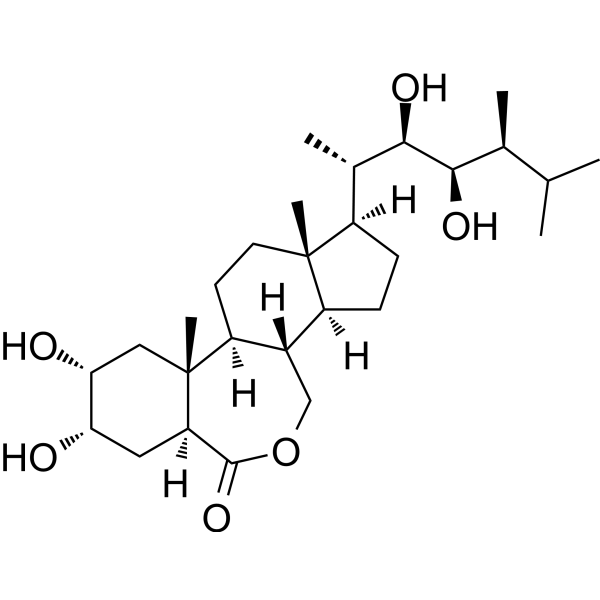
Brassinolide
Based on 5 publication(s) in Google Scholar
Brassinolide is a predominant plant growth modulator that regulate plant cell elongation.
Para uso exclusivo en investigación. No vendemos a pacientes.
- Pureza: 99.23%
- No. CAS: 72962-43-7
- Fòrmula: C28H48O6
- Peso molecular:480.68
-
Almacenamiento:Powder -20°C, 3 years , 4°C, 2 years ; In solvent -80°C, 1 year , -20°C, 6 months

To place orders, for customer services and technical support, please contact: MedChemExpress USA
Tel: 609-228-6898 E-mail: [email protected] [email protected]


-
 Actividad biológica
-
Chemical Information
-
Solvente y solubilidad
- Protocolo
- Pureza y Documentación
- Referencias
-
 Help & FAQs
-

Apoptosis Compound Library
HY-L003
-
Natural Product Library
HY-L021
-
Anti-Cancer Compound Library
HY-L025
-
Lipid Compound Library
HY-L043
-
Traditional Chinese Medicine Active Compound Library
HY-L065
-
Food-Sourced Compound Library
HY-L094
-
Anti-Cancer Natural Product Library
HY-L107
-
Plant-Sourced Natural Product Library
HY-L115
-
Human Metabolite Library
HY-L123
-
Cell Death Library
HY-L162
-
Bioactive Compound Library Max
HY-L181
-
MCE Bioactive Compound Library
HY-L001V
-
Natural Product Library Plus
HY-L021P
-
Natural Product and Natural Product-Like Compound Library
HY-L021M
-
Bioactive Compound Library
HY-L001
-
Pesticide Compound Library
HY-L183
-
Non-Alcoholic Fatty Liver Disease (NAFLD) Compound Library
HY-L199
-
RO5 Drug-like Natural Product Library
HY-L200
-
High-Throughput Bioactive Compound Library
HY-L205
-
High-Throughput Natural Product Library
HY-L206
-
Mass Spectrometry Human Metabolite Library
HY-L215
-
Plant Hormone Library
HY-L240
-
Chinese Baijiu Compound Library
HY-L241
-
Mass Spectrometry Natural Product Library
HY-L262


Publications Citing Use of MedChemExpress (MCE) Brassinolide
More Customer Validation & Images

-
RT-PCR
-
Bio/Physico-chemical Assay
-
Bio/Physico-chemical Assay
-
WB
-
WB


Actividad biológica
plant growth modulator[1]
Brassinolide is a plant sterol first isolated from pollen of rape (Brassica napus L.). Brassinolide can induce a time and concentration-dependent cytotoxicity in PC-3 cells. The mode of cell death appears to be predominately apoptosis, as shown by flow-cytometric analysis, fluorescence and transmission electron microscopes. Caspase-3 activity is obviously increased after Brassinolide treatment. Western blot studies indicate that treatment with Brassinolide triggered a time-dependent decrease in the expression of anti-apoptotic protein Bcl-2, which suggests that Brassinolide can induce cytotoxicity in PC-3 cells by triggering apoptosis. Brassinolide might therefore be a promising candidate for the treatment of prostate cancer[1]. Brassinolide is a plant growth modulator, on multidrug resistance (MDR) of human T lymphoblastoid cell line CCRF-VCR 1000 which is obtained by progressively addition of vincristine (VCR) to sensitive CCRF-CEM cells, and to explore preliminarily the mechanism of reversing action. After treatment of Brassinolide under the concentration of 0.001-10 μg/mL, the resistance of CCRF-VCR is reversed partly with the reversing folds respectively as 4.4-11.6. The intracellular accumulation of rhodamine 123 is significantly reduced in the resistant cells. After treatment of Brassinolide, the accumulation increased, the level of fluorescent dye is situated between resistant cells and sensitive cells. No alteration of the catalytic activity of topoisomerase II is found among three groups. The level of protein expression of p53 in resistant cells is higher than that of sensitive cells. After Brassinolide treatment, the expression of p53 in CCRF-VCR cells restored to the level of sensitive cells. Brassinolide can effectively reverse the resistance of CCRF-VCR cells by inhibiting the effusion of drug transported by P-glucoprotein. To down regulate the abnormal expression of p53 maybe one of the mechanisms of reversing MDR for Brassinolide[2].
MedChemExpress (MCE) has not independently confirmed the accuracy of these methods. They are for reference only.


Chemical Information
-
No. CAS 72962-43-7
-
Appearance Solid
-
Peso molecular 480.68
-
Fòrmula C28H48O6
-
Color White to off-white
-
SMILES
O[C@H]1[C@@H](O)C[C@@](C(OC[C@]2([H])[C@]3([H])CC[C@@]4(C)[C@]2(CC[C@]4([H])[C@H](C)[C@@H](O)[C@H](O)[C@H](C(C)C)C)[H])=O)([H])[C@]3(C)C1
-
Synonyms
Brassin lactone
-
Structure Classification
-
Initial Source
-
Envío
Room temperature in continental US; may vary elsewhere.
-
Almacenamiento
Powder -20°C 3 years 4°C 2 years In solvent -80°C 1 year -20°C 6 months


Publications (5)
-
Journal Impact Factor
-
Most Recent
-
Int J Biol Macromol
Identification and functional analysis of the remorin gene TaREM4.3-A from wheat (Triticum aestivum L.). [Abstract]2026 May:360:151942. PMID: 41967548 -
Int J Biol Macromol
Brassinosteroid-induced S-nitrosylation of fructose-1,6-bisphosphate aldolase increased ATP synthesis under low temperatures in mini Chinese cabbage seedlings. [Abstract]2025 Mar 30:142626. PMID: 40169041
Brassinolide purchased from MedChemExpress. Usage Cited in: Int J Biol Macromol. 2025 Mar 30:142626. [Abstract]
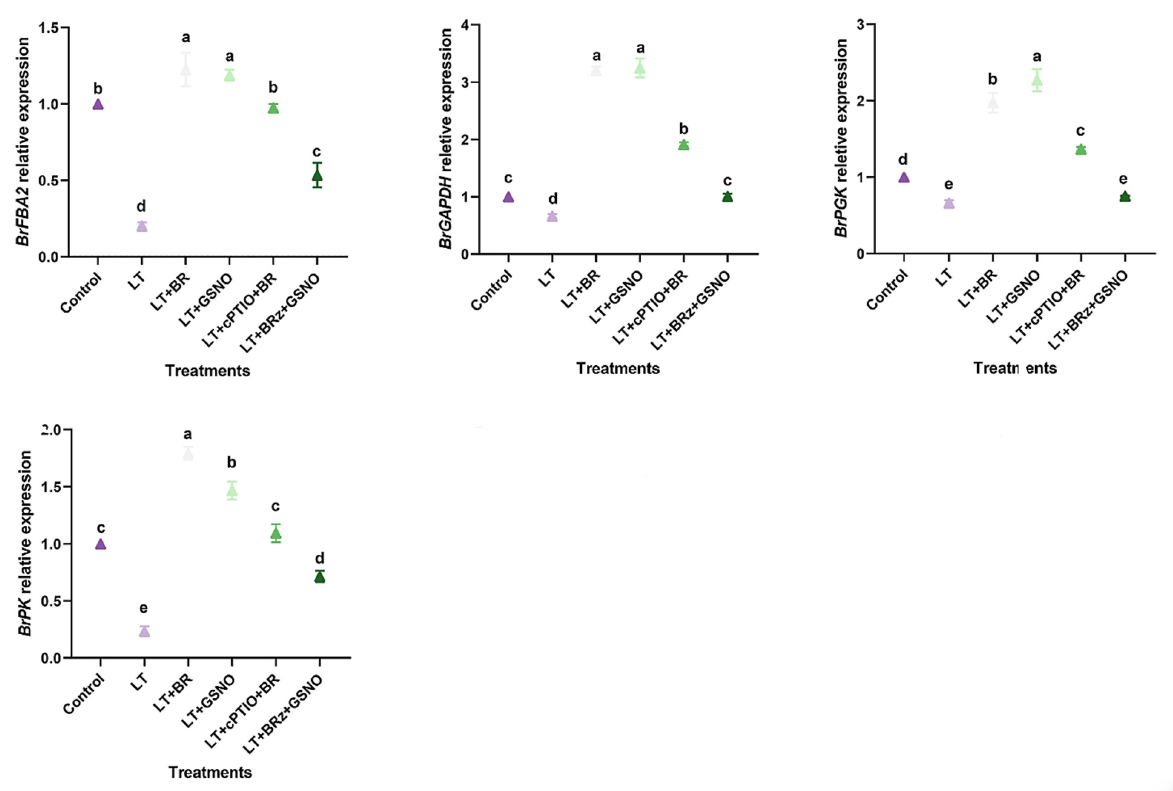
The exogenous application of Brassinolide (BR) (0.05 mg/L; once daily for 3 d) significantly upregulated the transcript levels of BrFBA2, BrGADPH, BrPGK, and BrPK in baby Chinese cabbage seedlings at low temperature.
Brassinolide purchased from MedChemExpress. Usage Cited in: Int J Biol Macromol. 2025 Mar 30:142626. [Abstract]
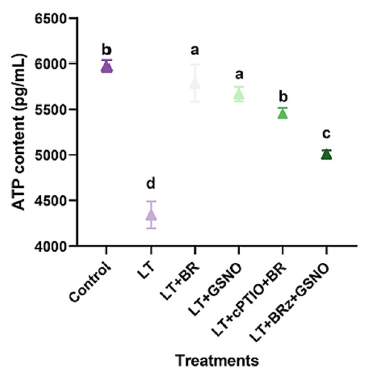
Brassinolide (BR) (0.05 mg/L; once daily for 3 d) enhanced the release of ATP by 33.23 % in baby Chinese cabbage seedlings at low temperature.
Brassinolide purchased from MedChemExpress. Usage Cited in: Int J Biol Macromol. 2025 Mar 30:142626. [Abstract]
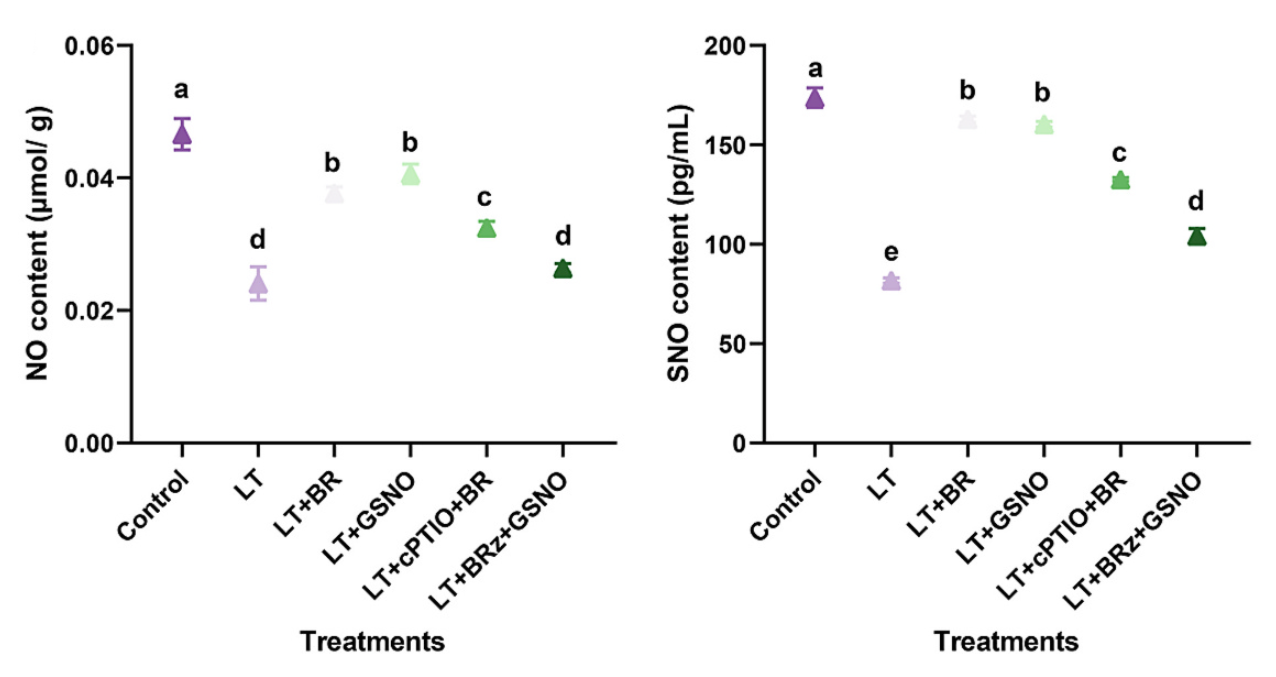
Exogenous Brassinolide (BR) (0.05 mg/L; once daily for 3 d) substantially increased the levels of endogenous NO and SNO by 1.56 and 1.99 times in baby Chinese cabbage seedlings at low temperatures.
Brassinolide purchased from MedChemExpress. Usage Cited in: Int J Biol Macromol. 2025 Mar 30:142626. [Abstract]
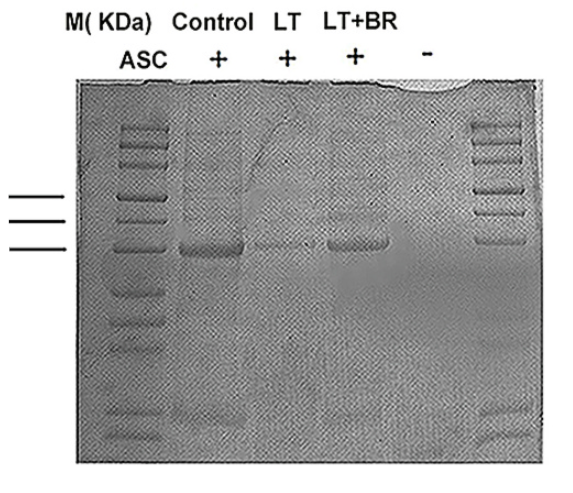
Exogenous Brassinolide (BR) (0.05 mg/L; once daily for 3 d) application significantly increased the level of total S-nitrosylated protein in baby Chinese cabbage seedlings at low temperatures.
Brassinolide purchased from MedChemExpress. Usage Cited in: Int J Biol Macromol. 2025 Mar 30:142626. [Abstract]
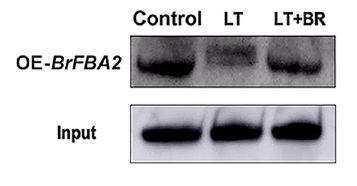
Exogenous Brassinolide (BR) (0.05 mg/L; once daily for 3 d) reversed the reduction of the level of FBA2 protein S-nitrosylation induced by low-temperature stress in the OE-BrFBA2 Chinese cabbage seedlings.
-
New Phytol
The antisense CircRNA VvcircABH controls salt tolerance and the brassinosteroid signaling response by suppressing cognate mRNA splicing in grape. [Abstract]2025 Feb;245(4):1563-1576. PMID: 39627650 -
Structure
2025 May 1;33(5):903-915.e5. PMID: 40101709 -


Solvente y solubilidad
DMSO : 100 mg/mL (208.04 mM; Need ultrasonic; Hygroscopic DMSO has a significant impact on the solubility of product, please use newly opened DMSO)
Ethanol : 14.29 mg/mL (29.73 mM; Need ultrasonic)
Please refer to the solubility information to select the appropriate solvent. Once prepared, please aliquot and store the solution to prevent product inactivation from repeated freeze-thaw cycles.
Storage method and period of stock solution: -80°C, 1 year; -20°C, 6 months. When stored at -80°C, please use it within 1 year. When stored at -20°C, please use it within 6 months.
Please refer to the solubility information to select the appropriate solvent. Once prepared, please aliquot and store the solution to prevent product inactivation from repeated freeze-thaw cycles.
Storage method and period of stock solution: -80°C, 1 year; -20°C, 6 months. When stored at -80°C, please use it within 1 year. When stored at -20°C, please use it within 6 months.
Concentration (start) × Volume (start) = Concentration (final) × Volume (final)
Select the appropriate dissolution method based on your experimental animal and administration route.
- For the following dissolution methods, please ensure to first prepare a clear stock solution using an In Vitro approach and then sequentially add co-solvents:
- To ensure reliable experimental results, the clarified stock solution can be appropriately stored based on storage conditions. As for the working solution for In Vivo experiments, it is recommended to prepare freshly and use it on the same day.
- The percentages shown for the solvents indicate their volumetric ratio in the final prepared solution. If precipitation or phase separation occurs during preparation, heat and/or sonication can be used to aid dissolution.
Add each solvent one by one: 10% DMSO 90% (20% SBE-β-CD in Saline)
Solubility: ≥ 2.5 mg/mL (5.20 mM); Clear solution
This protocol yields a clear solution of ≥ 2.5 mg/mL (saturation unknown).
Taking 1 mL working solution as an example, add 100 μL DMSO stock solution (25.0 mg/mL) to 900 μL 20% SBE-β-CD in Saline, and mix evenly.
Preparation of 20% SBE-β-CD in Saline (4°C, storage for one week): 2 g SBE-β-CD powder is dissolved in 10 mL Saline, completely dissolve until clear.
Please enter the basic information of animal experiments:
-
-
-
-
Recommended: Prepare an additional quantity of animals to account for potential losses during experiments.
Please enter your animal formula composition:
-
%DMSO +
Recommended: Keep the proportion of DMSO in working solution below 2% if your animal is weak.
-
%+
-
+%Tween-80 + +
-
%Saline +
The co-solvents required include: DMSO, . All of co-solvents are available by MedChemExpress (MCE). , Tween 80. All of co-solvents are available by MedChemExpress (MCE).
Working solution concentration: 0.22 mg/mL
Method for preparing stock solution: mg drug dissolved in μL DMSO. Stock solution concentration: mg/mL.
1. Take μL DMSO stock solution;
2. Add μL .
μL , mix evenly;
3. Then add μL Tween 80, mix evenly;
4. Then add μL
Please ensure that the stock solution in the first step is dissolved to a clear state, and add co-solvents in sequence. You can use ultrasonic heating (ultrasonic cleaner, recommended frequency 20-40 kHz), vortexing, etc. to assist dissolution.

Protocolo
MTT method is used to detect the resistant factor of resistant cell line and the reversing fold after addition of Brassinolide. The intracellular accumulation of rhodamine 123, a fluorescent dye transported by P-glycoprotein is detected by flow cytometry, the catalytic activity of topoisomerase II is assessed by Sulliven method to find the effect of Brassinolide on resistance. The protein expression of p53 is measured using Western blotting in the sensitive cells and resistant cells to explore the effect of Brassinolide[2].
MedChemExpress (MCE) has not independently confirmed the accuracy of these methods. They are for reference only.


Pureza y Documentación
-
Ficha de datos (281 KB)
-
SDS (251 KB)
- English - EN (251 KB)
- Français - FR (251 KB)
- Deutsch - DE (251 KB)
- Norwegian - NO (251 KB)
- Español - ES (251 KB)
- Swedish - SV (251 KB)
- Italian - IT (251 KB)
- Korean - KR (251 KB)
- Portuguese - PT (251 KB)
-
Instrucciones de manejo (2659 KB)
Referencias
[1]. Wu YD, et al. Brassinolide, a plant sterol from pollen of Brassica napus L., induces apoptosis in human prostate cancer PC-3 cells. Pharmazie. 2007 May;62(5):392-5. [Content Brief]
[2]. Xian LJ, et al. Reversing effect of brassinolide on multidrug resistance of-CCRF-VCR1000 cells and a preliminary investigation on its mechanisms. Yao Xue Xue Bao. 2005 Feb;40(2):117-21. [Content Brief]


Complete Stock Solution Preparation Table
Please refer to the solubility information to select the appropriate solvent. Once prepared, please aliquot and store the solution to prevent product inactivation from repeated freeze-thaw cycles.
Storage method and period of stock solution: -80°C, 1 year; -20°C, 6 months. When stored at -80°C, please use it within 1 year. When stored at -20°C, please use it within 6 months.
| Optional Solvent | Concentration Solvent Mass | 1 mg | 5 mg | 10 mg | 25 mg |
|---|---|---|---|---|---|
| Ethanol / DMSO | 1 mM | 2.0804 mL | 10.4019 mL | 20.8039 mL | 52.0097 mL |
| 5 mM | 0.4161 mL | 2.0804 mL | 4.1608 mL | 10.4019 mL | |
| 10 mM | 0.2080 mL | 1.0402 mL | 2.0804 mL | 5.2010 mL | |
| 15 mM | 0.1387 mL | 0.6935 mL | 1.3869 mL | 3.4673 mL | |
| 20 mM | 0.1040 mL | 0.5201 mL | 1.0402 mL | 2.6005 mL | |
| 25 mM | 0.0832 mL | 0.4161 mL | 0.8322 mL | 2.0804 mL | |
| DMSO | 30 mM | 0.0693 mL | 0.3467 mL | 0.6935 mL | 1.7337 mL |
| 40 mM | 0.0520 mL | 0.2600 mL | 0.5201 mL | 1.3002 mL | |
| 50 mM | 0.0416 mL | 0.2080 mL | 0.4161 mL | 1.0402 mL | |
| 60 mM | 0.0347 mL | 0.1734 mL | 0.3467 mL | 0.8668 mL | |
| 80 mM | 0.0260 mL | 0.1300 mL | 0.2600 mL | 0.6501 mL | |
| 100 mM | 0.0208 mL | 0.1040 mL | 0.2080 mL | 0.5201 mL |


Brassinolide Related Classifications
HY-N0273 Related Classifications
 Powered by Bioz