



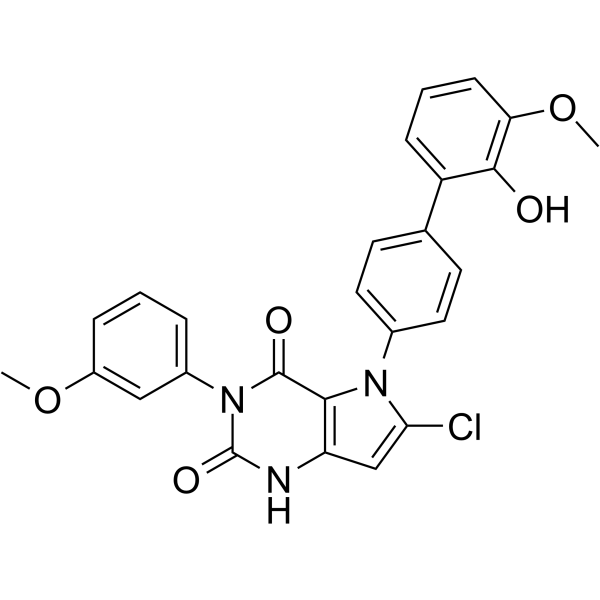
GSK621
Based on 10 publication(s) in Google Scholar
GSK621 is a specific AMPK activator, with IC50 values of 13-30 μM for AML cells. GSK621 induces autophagy and apoptosis. GSK621 induces eiF2α phosphorylation-a hallmark of UPR activation.
연구목적의 판매만을 진행합니다. 환자를 대상으로 한 판매는 하지 않습니다.
- Purity : 98.03%
- CAS No.: 1346607-05-3
- 화학식: C26H20ClN3O5
- 분자량:489.91
-
보관:Powder -20°C, 3 years , 4°C, 2 years ; In solvent -80°C, 2 years , -20°C, 1 year

To place orders, for customer services and technical support, please contact: MedChemExpress USA
Tel: 609-228-6898 E-mail: [email protected] [email protected]


-
 Biological Activity
-
Chemical Information
-
용액&용해도
- Protocol
- 순도&문서
- References
-
 Help & FAQs


-
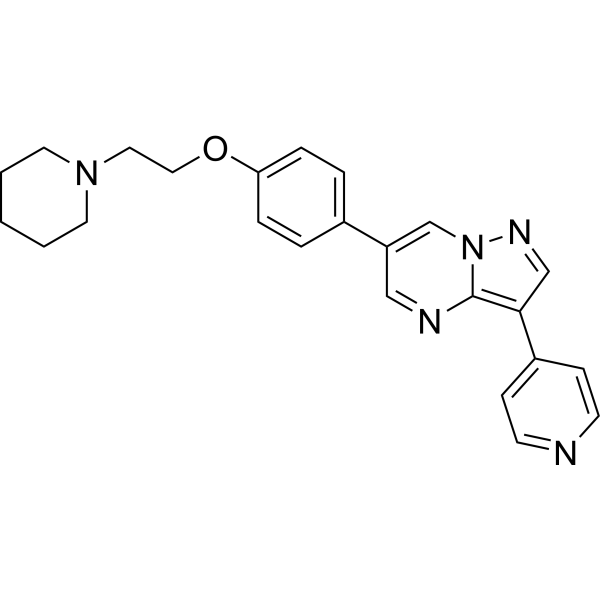
HY-13418A
DorsomorphinAMPK Inhibitor -
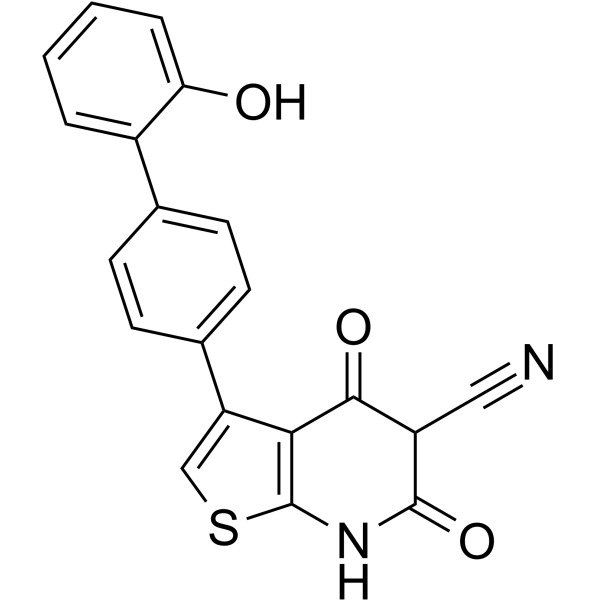
HY-50662
A-769662AMPK Activator -
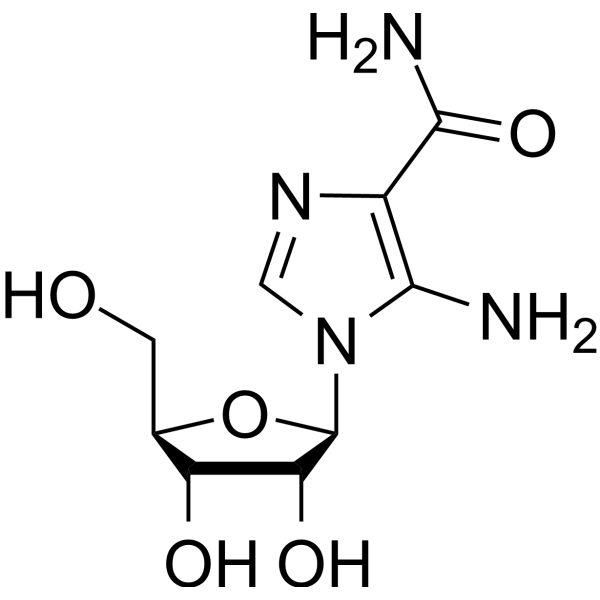
HY-13417
AICARAMPK Activator -
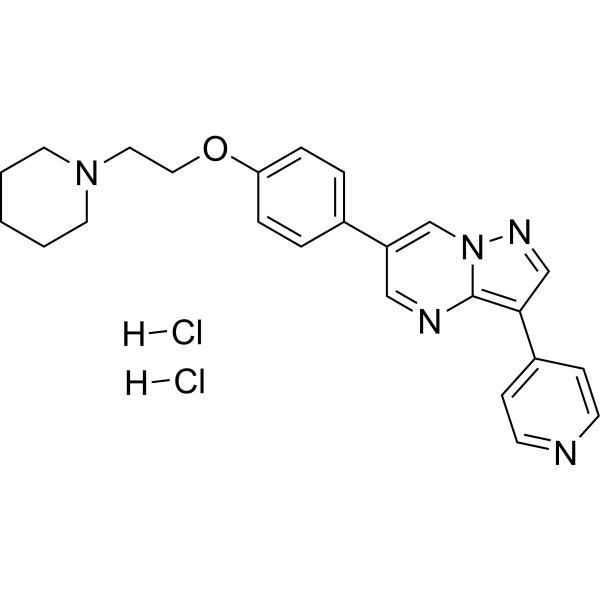
HY-13418
Dorsomorphin dihydrochlorideAMPK Inhibitor -
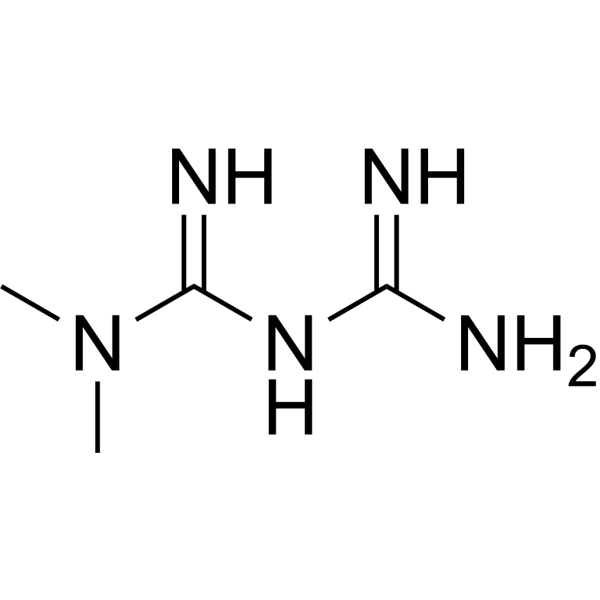
HY-B0627
MetforminAntihyperglycemic Agent -
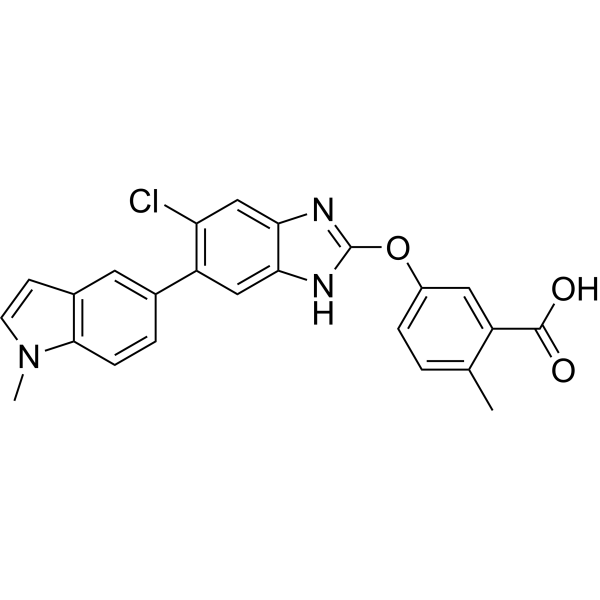
HY-112769
EX229AMPK Activator -
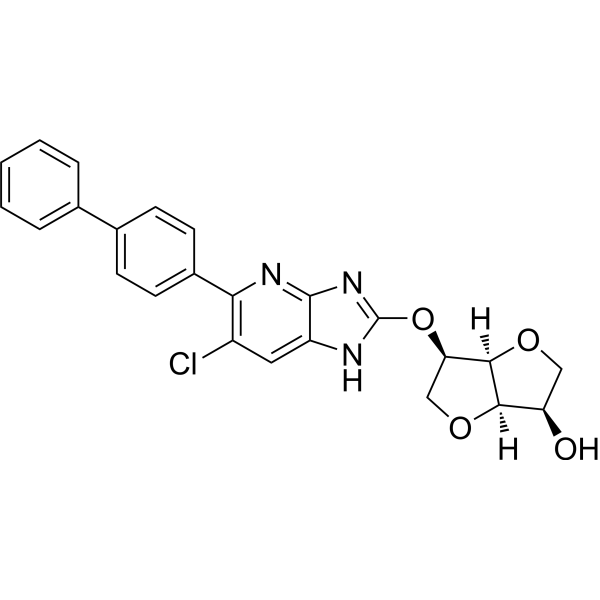
HY-111363
MK8722AMPK Activator -
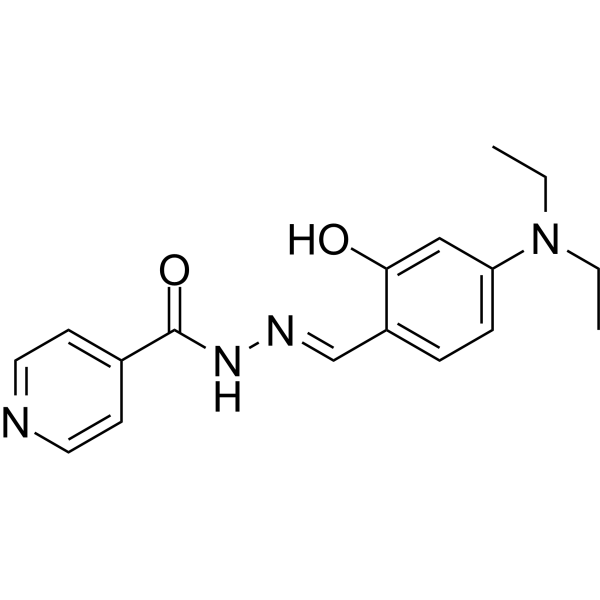
HY-103238
RSVA405AMPK Activator -
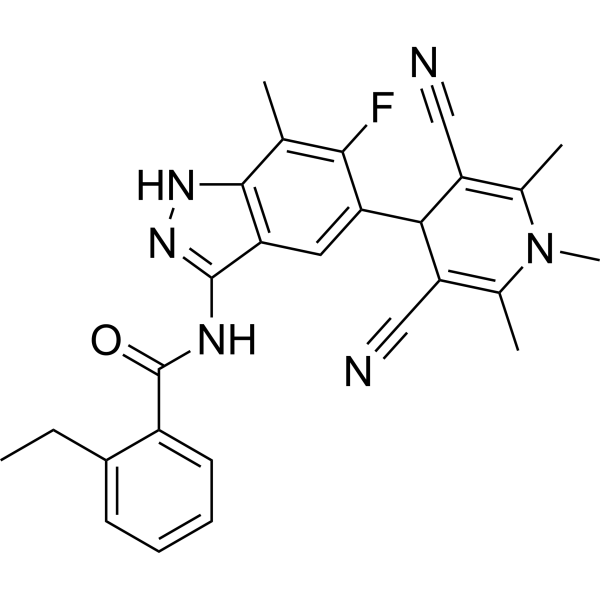
HY-112083
BAY-3827AMPK Inhibitor -
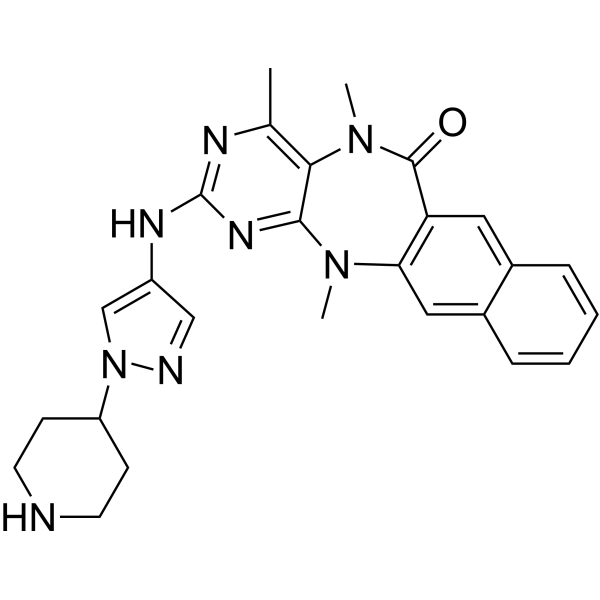
HY-12334
HTH-01-015NUAK1/ARK5 Inhibitor -
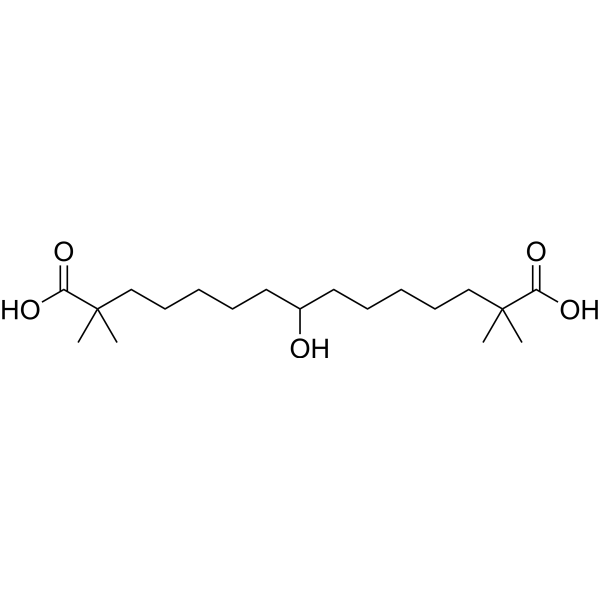
HY-12357
Bempedoic acidACL Inhibitor/AMPK Activator -

HY-13417R
AICAR (Standard)AMPK Activator
Publications Citing Use of MedChemExpress (MCE) GSK621
More- Bone Res. 2025 Feb 14;13(1):23. [Abstract]
- Nat Commun. 2026 Sep 11.
- Cell Death Discov. 2026 Jun 23. [Abstract]
- EMBO J. 2021 Nov 2;40(21):e108028. [Abstract]
- Life Sci. 2025 Aug 1:374:123687. [Abstract]
- Cancers (Basel). 2023 Apr 23;15(9):2427. [Abstract]
- Cell Signal. 2026 Feb:138:112260. [Abstract]
- Mol Biol Rep. 2024 Sep 21;51(1):1003. [Abstract]
- Res Sq. 2026 Jan 28.
- Research Square Preprint. 2024 Dec 22.
 Customer Validation & Images

-
Cell Proliferation/Viability Assay

-
WB

-
Cell Proliferation/Viability Assay

-
WB

-
Cell Imaging/Staining

All AMPK Isoforms
More

Biological Activity
제품 설명
In Vitro
GSK621 (30 μM) induces AMPKα T172, ACC (S79) and ULK1 (S555) phosphorylation[1].
GSK621 (30 μM) induces autophagy and apoptosis[1].
GSK621 treatment also induces PERK phosphorylation, a marker of ER stress, in AML cells[1].
MedChemExpress (MCE) has not independently confirmed the accuracy of these methods. They are for reference only.
-
Cell Line:MV4-11, OCI-AML3, OCI-AML2, HL-60, Kasumi, HEL, UT7, NB4, TF-1, KG1A, Nomo p28, SKM-1, U937, YHP1, MOLM-14, Mo7e, K562, MOLM-13, EOL-1, SET-2 AML cell lines. 0-30 μM.
-
Concentration:0-30 μM.
-
Incubation Time:4 d.
-
Result:IC50 values ranged from 13 to 30 μM.
Reduced the proliferation of all 20 lines and increased apoptosis in 17 (85%) lines.
-
Cell Line:AML cell lines and primary AML samples.
-
Concentration:30 μM.
-
Incubation Time:24 h.
-
Result:Induced the formation of numerous intracytoplasmic vacuoles including autophagosomes.
In Vivo
MedChemExpress (MCE) has not independently confirmed the accuracy of these methods. They are for reference only.
-
Animal Model:MOLM-14 cells xenografted into nude mice[1].
-
Dosage:30 mg/kg.
-
Administration:IP twice daily.
-
Result:Reduced leukemia growth and significantly extended survival compared to vehicle-treated animals or those treated with 10 mg/kg twice daily.
- Kinase activity and phosphorylation assays
- Western Blot
- Detection of Apoptosis
- TUNEL staining for apoptotic DNA fragmentation
- Annexin V plus membrane-impermeant dye apoptosis staining
- Autophagy
- Apoptosis Solutions
- Lysosome and acidic-vesicle live-cell staining
- Protocol for Kinase activity and phosphorylation assays
- Macroautophagy Solutions


Chemical Information
-
CAS No. 1346607-05-3
-
Appearance Solid
-
분자량 489.91
-
화학식 C26H20ClN3O5
-
Color Off-white to light yellow
-
SMILES
O=C1NC2=C(N(C3=CC=C(C4=CC=CC(OC)=C4O)C=C3)C(Cl)=C2)C(N1C5=CC=CC(OC)=C5)=O
-
선적
Room temperature in continental US; may vary elsewhere.
-
보관
Powder -20°C 3 years 4°C 2 years In solvent -80°C 2 years -20°C 1 year


Publications (10)
-
Journal Impact Factor
-
Most Recent
-
Bone Res
Matrix stiffness regulates nucleus pulposus cell glycolysis by MRTF-A-dependent mechanotransduction. [Abstract]2025 Feb 14;13(1):23. PMID: 39952914 -
-
Cell Death Discov
AMPK/ SIRT1 signaling pathway activation acts on PGC-1α/ PPARγ to alleviate sepsis-acquired weakness. [Abstract]2026 Jun 23. PMID: 42337228 -
EMBO J
2021 Nov 2;40(21):e108028. PMID: 34472622
GSK621 purchased from MedChemExpress. Usage Cited in: EMBO J. 2021 Nov 2;40(21):e108028. [Abstract]
The crystal violet assay were performed in 293T cells transfected with shRNAs targeting NTC, CARS, CaMKK2 or AMPKγ2 and further treated with cystine‐deficient medium for 24 h with or without 100 μM PT1 or 30 μM GSK621.
-
Life Sci
GSK621 ameliorates lipid accumulation via AMPK pathways and reduces oxidative stress in hepatocytes in vitro and in obese mice in vivo. [Abstract]2025 Aug 1:374:123687. PMID: 40334907
GSK621 purchased from MedChemExpress. Usage Cited in: Life Sci. 2025 Aug 1:374:123687. [Abstract]
Detection of HepG2 (left) and AML12 (right) cell proliferation under GSK621 stimulation. GSK621 was diluted to 5 μM, 10 μM and 20 μM and treated for 6 hours. Cell proliferation rate was detected by CCK8 assay.
GSK621 purchased from MedChemExpress. Usage Cited in: Life Sci. 2025 Aug 1:374:123687. [Abstract]
Expression of AMPK and p-AMPK at different GSK621 concentrations. HepG2 cells were treated with 5 μM, 10 μM and 20 μM GSK621 for 6 hours, and the expression of AMPK and p-AMPK was detected by Western blot analysis.
GSK621 purchased from MedChemExpress. Usage Cited in: Life Sci. 2025 Aug 1:374:123687. [Abstract]
EdU assay was used to detect HepG2 cell proliferation. The middle column was used to stimulate HepG2 cells with 0.25 μM FFAs for 24 h (10x magnification). The right column was used to stimulate HepG2 cells with 10 μM GSK621 for 6 h before FFA treatment.
-
Cancers (Basel)
High-Dosage NMN Promotes Ferroptosis to Suppress Lung Adenocarcinoma Growth through the NAM-Mediated SIRT1-AMPK-ACC Pathway. [Abstract]2023 Apr 23;15(9):2427. PMID: 37173894
GSK621 purchased from MedChemExpress. Usage Cited in: Cancers (Basel). 2023 Apr 23;15(9):2427. [Abstract]
A549 and SPCA1 cells were treated with the SIRT1 agonist (CAY10602) or inhibitor (Selisistat), AMPK agonist (GSK621: 10 μM) or inhibitor (dorsomorphin), or combinations of the above agents, followed by high-dose NMN treatment for various intervals as indicated. Results of Western blot analysis of NAMPT, SIRT1, p-AMPK, and p-ACC protein expressions.
GSK621 purchased from MedChemExpress. Usage Cited in: Cancers (Basel). 2023 Apr 23;15(9):2427. [Abstract]
AMPK agonist (GSK621: 10 μM). Representative images of colony formation for A549 and SPCA1 cells in indicated groups.
-
Cell Signal
Exercise attenuates hepatic lipid accumulation via VDR/AMPK-mediated autophagy activation in vitamin D-deficient mice. [Abstract]2026 Feb:138:112260. PMID: 41290053 -
Mol Biol Rep
Poricoic acid a ameliorates high glucose-induced podocyte injury by regulating the AMPKα/FUNDC1 pathway. [Abstract]2024 Sep 21;51(1):1003. PMID: 39305364 -
-


용액&용해도
In Vitro:
DMSO : 12.5 mg/mL (25.51 mM; ultrasonic and adjust pH to 1 with HCl; Hygroscopic DMSO has a significant impact on the solubility of product, please use newly opened DMSO)
Please refer to the solubility information to select the appropriate solvent. Once prepared, please aliquot and store the solution to prevent product inactivation from repeated freeze-thaw cycles.
Storage method and period of stock solution: -80°C, 2 years; -20°C, 1 year. When stored at -80°C, please use it within 2 years. When stored at -20°C, please use it within 1 year.
Please refer to the solubility information to select the appropriate solvent. Once prepared, please aliquot and store the solution to prevent product inactivation from repeated freeze-thaw cycles.
Storage method and period of stock solution: -80°C, 2 years; -20°C, 1 year. When stored at -80°C, please use it within 2 years. When stored at -20°C, please use it within 1 year.
Concentration (start) × Volume (start) = Concentration (final) × Volume (final)
In Vivo:
Select the appropriate dissolution method based on your experimental animal and administration route.
- For the following dissolution methods, please ensure to first prepare a clear stock solution using an In Vitro approach and then sequentially add co-solvents:
- To ensure reliable experimental results, the clarified stock solution can be appropriately stored based on storage conditions. As for the working solution for In Vivo experiments, it is recommended to prepare freshly and use it on the same day.
- The percentages shown for the solvents indicate their volumetric ratio in the final prepared solution. If precipitation or phase separation occurs during preparation, heat and/or sonication can be used to aid dissolution.
Add each solvent one by one: 10% DMSO 40% PEG300 5% Tween-80 45% Saline
Solubility: 1.25 mg/mL (2.55 mM); Suspended solution; Need ultrasonic
This protocol yields a suspended solution of 1.25 mg/mL. Suspended solution can be used for oral and intraperitoneal injection.
Taking 1 mL working solution as an example, add 100 μL DMSO stock solution (12.5 mg/mL) to 400 μL PEG300, and mix evenly; then add 50 μL Tween-80 and mix evenly; then add 450 μL Saline to adjust the volume to 1 mL.
Preparation of Saline: Dissolve 0.9 g sodium chloride in ddH₂O and dilute to 100 mL to obtain a clear Saline solution.
Add each solvent one by one: 10% DMSO 90% (20% SBE-β-CD in Saline)
Solubility: ≥ 1.25 mg/mL (2.55 mM); Suspended solution
This protocol yields a suspended solution of ≥ 1.25 mg/mL (saturation unknown). Suspended solution can be used for oral and intraperitoneal injection.
Taking 1 mL working solution as an example, add 100 μL DMSO stock solution (12.5 mg/mL) to 900 μL 20% SBE-β-CD in Saline, and mix evenly.
Preparation of 20% SBE-β-CD in Saline (4°C, storage for one week): 2 g SBE-β-CD powder is dissolved in 10 mL Saline, completely dissolve until clear.
For the following dissolution methods, please prepare the working solution directly:
It is recommended to prepare fresh solutions and use them promptly within a short period of time.
The percentages shown for the solvents indicate their volumetric ratio in the final prepared solution. If precipitation or phase separation occurs during preparation, heat and/or sonication can be used to aid dissolution.
Add each solvent one by one: 50% PEG300 50% Saline
Solubility: 10 mg/mL (20.41 mM); Suspended solution; Need ultrasonic
In Vivo Dissolution Calculator
Please enter the basic information of animal experiments:
-
-
-
-
Recommended: Prepare an additional quantity of animals to account for potential losses during experiments.
Please enter your animal formula composition:
-
%DMSO +
Recommended: Keep the proportion of DMSO in working solution below 2% if your animal is weak.
-
%+
-
+%Tween-80 + +
-
%Saline +
The co-solvents required include: DMSO, . All of co-solvents are available by MedChemExpress (MCE). , Tween 80. All of co-solvents are available by MedChemExpress (MCE).
Working solution concentration: 0.22 mg/mL
Method for preparing stock solution: mg drug dissolved in μL DMSO. Stock solution concentration: mg/mL.
1. Take μL DMSO stock solution;
2. Add μL .
μL , mix evenly;
3. Then add μL Tween 80, mix evenly;
4. Then add μL
Please ensure that the stock solution in the first step is dissolved to a clear state, and add co-solvents in sequence. You can use ultrasonic heating (ultrasonic cleaner, recommended frequency 20-40 kHz), vortexing, etc. to assist dissolution.


순도&문서
-
Data Sheet (281 KB)
-
SDS (393 KB)
- English - EN (393 KB)
- Français - FR (393 KB)
- Deutsch - DE (393 KB)
- Norwegian - NO (393 KB)
- Español - ES (393 KB)
- Swedish - SV (393 KB)
- Italian - IT (393 KB)
- Korean - KR (393 KB)
- Portuguese - PT (393 KB)
-
Handling Instructions (2659 KB)
References


Complete Stock Solution Preparation Table
Please refer to the solubility information to select the appropriate solvent. Once prepared, please aliquot and store the solution to prevent product inactivation from repeated freeze-thaw cycles.
Storage method and period of stock solution: -80°C, 2 years; -20°C, 1 year. When stored at -80°C, please use it within 2 years. When stored at -20°C, please use it within 1 year.
| Optional Solvent | Concentration Solvent Mass | 1 mg | 5 mg | 10 mg | 25 mg |
|---|---|---|---|---|---|
| DMSO | 1 mM | 2.0412 mL | 10.2060 mL | 20.4119 mL | 51.0298 mL |
| 5 mM | 0.4082 mL | 2.0412 mL | 4.0824 mL | 10.2060 mL | |
| 10 mM | 0.2041 mL | 1.0206 mL | 2.0412 mL | 5.1030 mL | |
| 15 mM | 0.1361 mL | 0.6804 mL | 1.3608 mL | 3.4020 mL | |
| 20 mM | 0.1021 mL | 0.5103 mL | 1.0206 mL | 2.5515 mL | |
| 25 mM | 0.0816 mL | 0.4082 mL | 0.8165 mL | 2.0412 mL |


GSK621 Related Classifications
HY-100548 Related Classifications
 Powered by Bioz