



Hydrocotarnine
Based on 2 publication(s) in Google Scholar
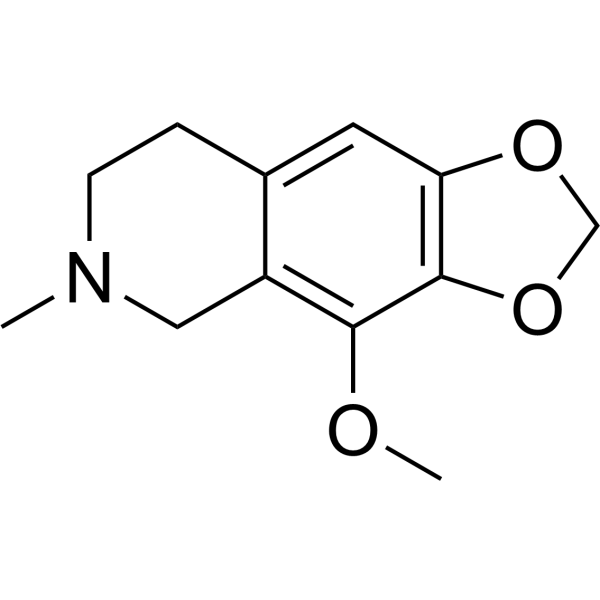
Hydrocotarnine is a Cbl inhibitor, and results in inflammasome-mediated IL-18 secretion in colitis. Hydrocotarnine increases expression of GLUT1 and cellular glucose uptake in glycolytic metabolism. Hydrocotarnine acts as an agent that provides analgesic effect in cancer research.
Nos produits utilisent uniquement pour la recherche. Nous ne vendons pas aux patients.
- Pureté : 99.70%
- CAS No.: 550-10-7
- Formule: C12H15NO3
- Masse moléculaire:221.25
-
Stockage:Powder -20°C, 3 years , 4°C, 2 years ; In solvent -80°C, 6 months , -20°C, 1 month

To place orders, for customer services and technical support, please contact: MedChemExpress USA
Tel: 609-228-6898 E-mail: [email protected] [email protected]


-
 Activité biologique
-
Chemical Information
-
Solvant et solubilité
- Protocole
- Pureté et documentation
- Références
-
 Help & FAQs


-
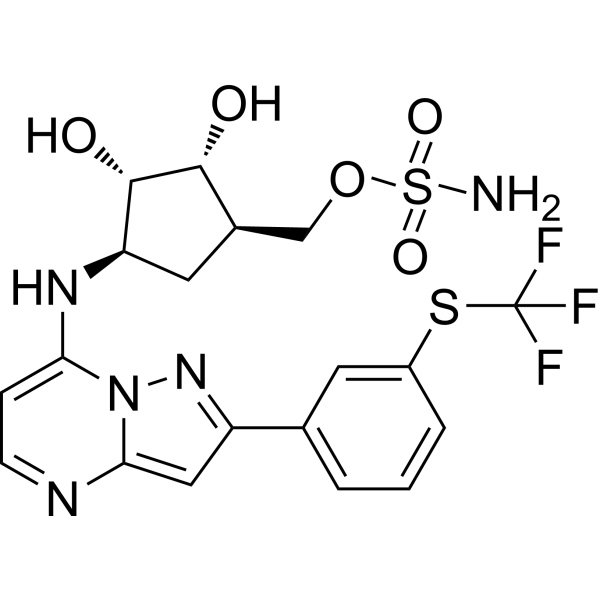
HY-100487
TAK-243UAE/E1 Inhibitor -
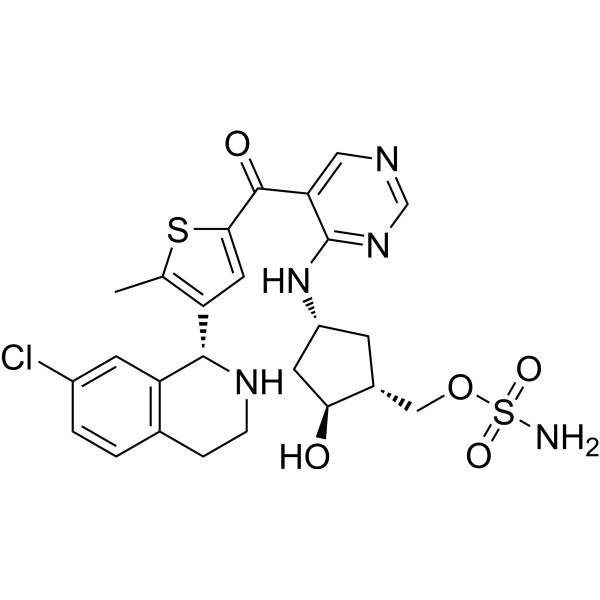
HY-111789
SubasumstatSUMOylation Inhibitor -
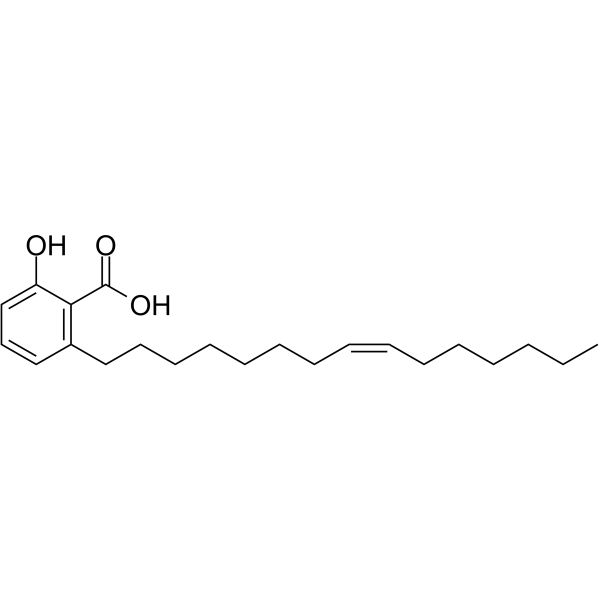
HY-N0077
Ginkgolic acidE1/E2/E3 Enzyme Inhibitor -
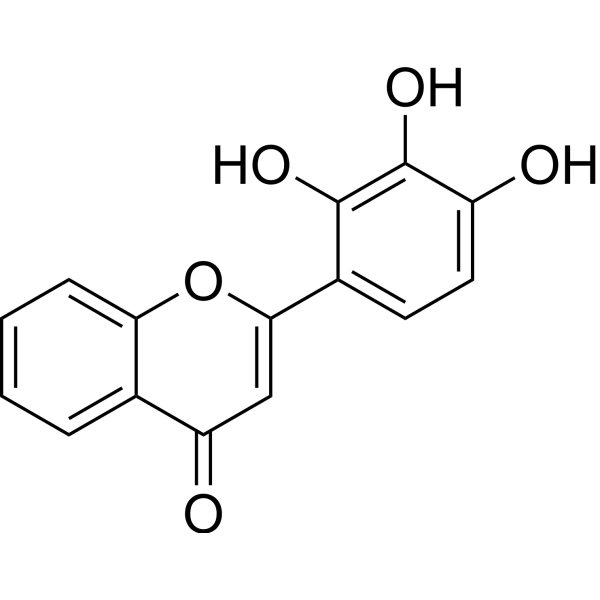
HY-114166
2-D08Sumoylation Inhibitor -
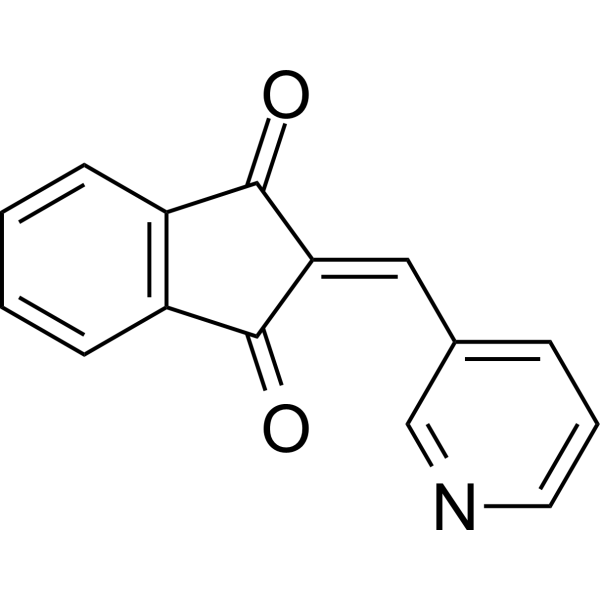
HY-19817
PRT4165E1/E2/E3 Enzyme Inhibitor -
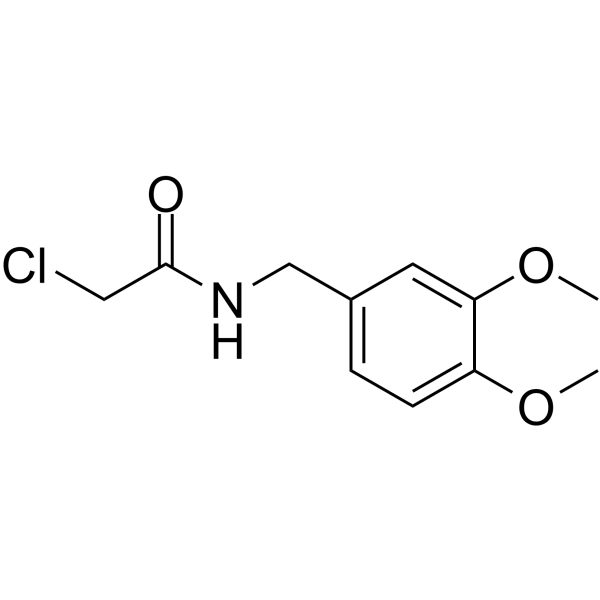
HY-101836
DKM 2-93UBA5 Inhibitor -
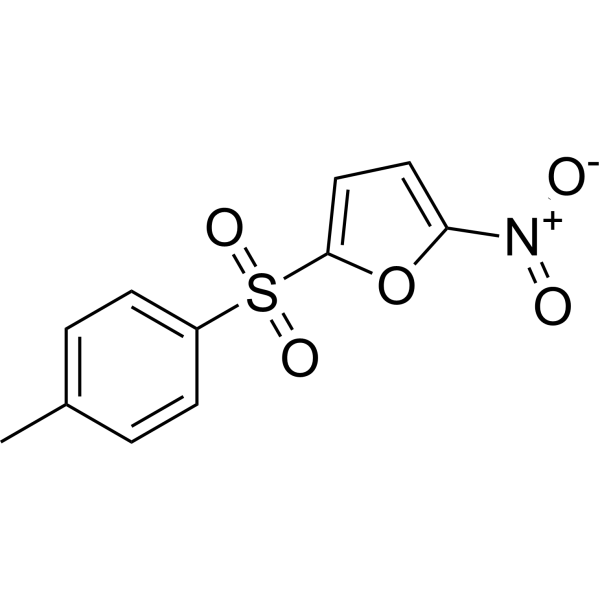
HY-13811
NSC697923UBE2N Inhibitor -
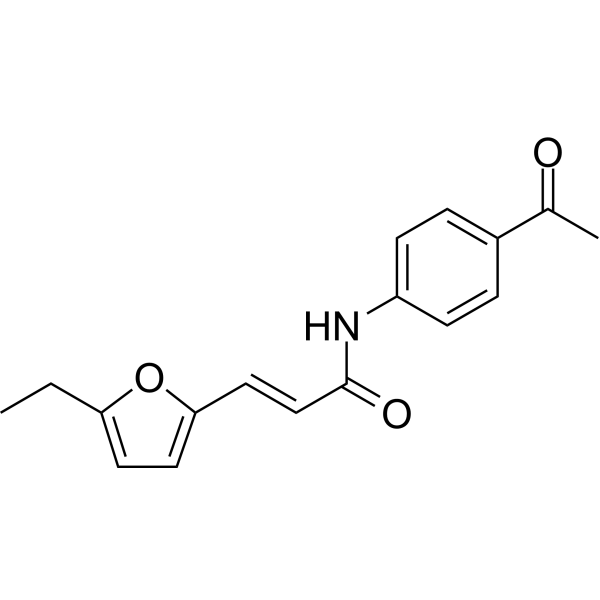
HY-110204
HeclinE1/E2/E3 Enzyme Inhibitor -
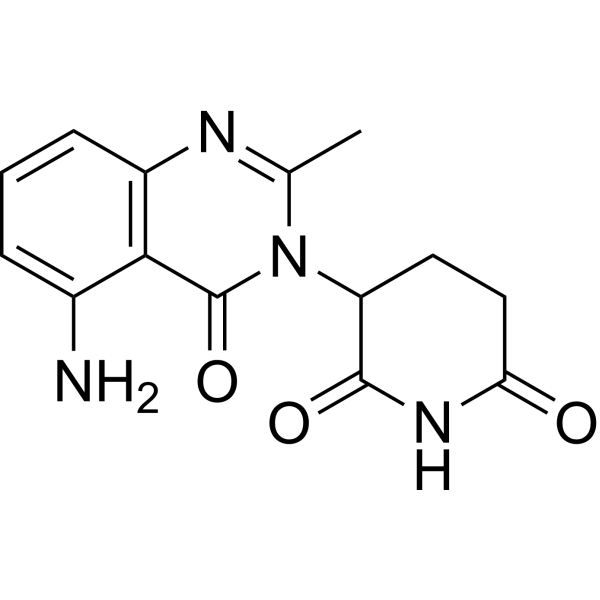
HY-100507
AvadomideCereblon Modulator -
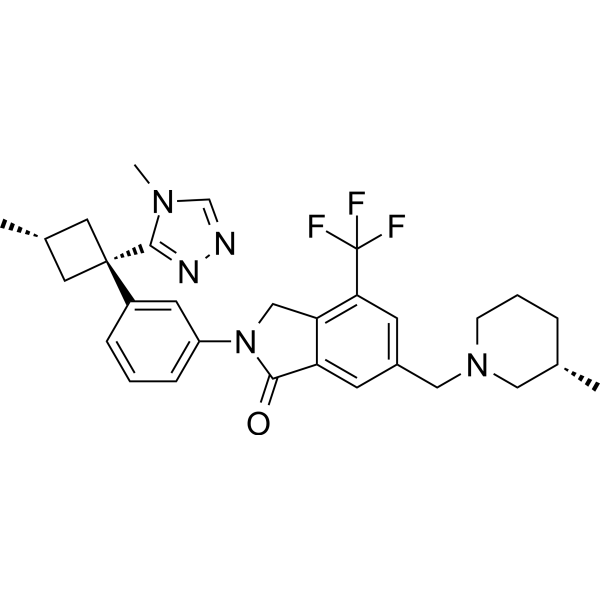
HY-141432
NX-1607Cbl-b Inhibitor -
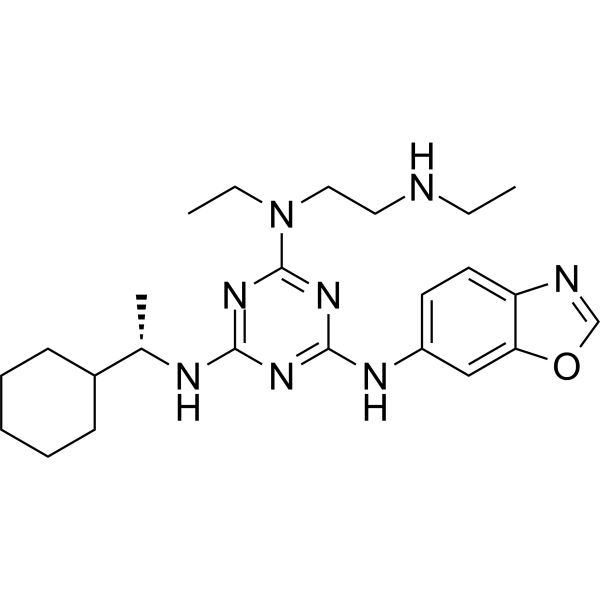
HY-135844
LS-102Synoviolin Inhibitor -
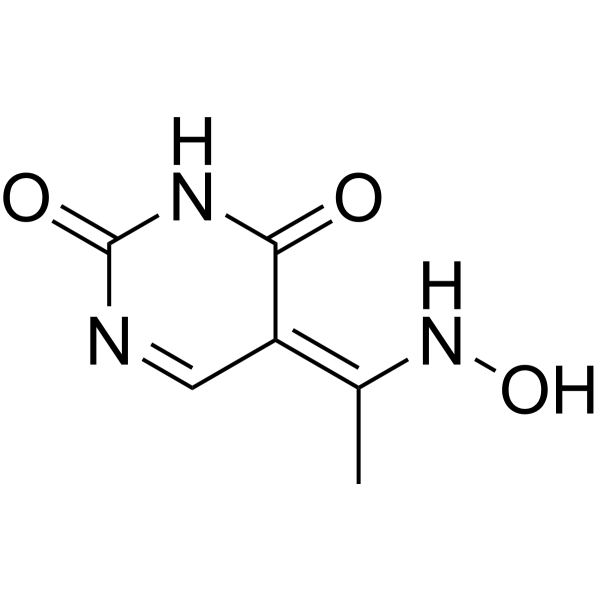
HY-103236
NSC232003UHRF1 Inhibitor
Publications Citing Use of MedChemExpress (MCE) Hydrocotarnine
More

Activité biologique
Description
IC50 & Target
In Vitro
Hydrocotarnine is an analgesic agent (CRIN-2), with the patent ID of WO2011160016A2[1].
Hydrocotarnine (10 μM; 1 h) elevates the secretion of IL-1β and IL-18, and (0.1-10 μM; 1 h) increases the global level of tyrosine-phosphorylated proteins in THP-1 cells[1].
Hydrocotarnine (50 μM; 0-100 min) increases the glycolytic capacity and glycolytic reserve capacity in THP-1-derived macrophages[2].
Hydrocotarnine (50 μM; 16 h) inhibits Cbl and increases the total GLUT1 protein in THP-1-derived macrophages[2].
Hydrocotarnine is known to enhance the analgesic effect of opioids, and alleviates cancer pain[3].
MedChemExpress (MCE) has not independently confirmed the accuracy of these methods. They are for reference only.
-
Cell Line:THP-1 cells
-
Concentration:0.1, 1, 10 μM
-
Incubation Time:1 hour
-
Result:Induced p-Pyk2 loss and increased the level of tyrosine-phosphorylated proteins in a dose-dependent manner.
In Vivo
Hydrocotarnine (10 mg/kg/d; i.p.; 9 d) protects mice from DSS-induced colitis, with low scores of pathological evaluation of inflammation, epithelial defects, and crypt atrophy[1].
MedChemExpress (MCE) has not independently confirmed the accuracy of these methods. They are for reference only.
-
Animal Model:DSS-induced colitis model in C57BL/6 mice (6-9 weeks old)[1]
-
Dosage:10 mg/kg
-
Administration:Intraperitoneal injection; once daily; 9 days while 2.5% DSS treatment began on day 1 and ended on day 7
-
Result:Significantly attenuated the weight loss of DSS-induced colitis mice compared to PBS-treated control mice, indicating that decreasing negative regulation of the NLRP3 inflammasome activation could attenuate colitis in an animal model.


Chemical Information
-
CAS No. 550-10-7
-
Appearance Solid
-
Masse moléculaire 221.25
-
Formule C12H15NO3
-
Color Light yellow to yellow
-
SMILES
CN1CCC2=CC3=C(C(=C2C1)OC)OCO3
-
Livraison
Room temperature in continental US; may vary elsewhere.
-
Stockage
Powder -20°C 3 years 4°C 2 years In solvent -80°C 6 months -20°C 1 month


Publications (2)
-
Journal Impact Factor
-
Most Recent
-
Nat Immunol
Kupffer cell calibration of T cell responses via VSIG4-CD5 interaction promotes tumor evasion. [Abstract]2026 Jun;27(6):1253-1267. PMID: 42056254 -
Cell Rep
Overcoming NK-mediated rejection by anti-3rd-party central memory veto CD8 T cells through downregulation of DNAM-1 on alloreactive NK cells. [Abstract]2025 May 7;44(5):115674. PMID: 40343795


Solvant et solubilité
In Vitro:
DMSO : ≥ 100 mg/mL (451.98 mM; Hygroscopic DMSO has a significant impact on the solubility of product, please use newly opened DMSO)
* "≥" means soluble, but saturation unknown.
Please refer to the solubility information to select the appropriate solvent. Once prepared, please aliquot and store the solution to prevent product inactivation from repeated freeze-thaw cycles.
Storage method and period of stock solution: -80°C, 6 months; -20°C, 1 month. When stored at -80°C, please use it within 6 months. When stored at -20°C, please use it within 1 month.
Please refer to the solubility information to select the appropriate solvent. Once prepared, please aliquot and store the solution to prevent product inactivation from repeated freeze-thaw cycles.
Storage method and period of stock solution: -80°C, 6 months; -20°C, 1 month. When stored at -80°C, please use it within 6 months. When stored at -20°C, please use it within 1 month.
Concentration (start) × Volume (start) = Concentration (final) × Volume (final)
In Vivo:
Select the appropriate dissolution method based on your experimental animal and administration route.
- For the following dissolution methods, please ensure to first prepare a clear stock solution using an In Vitro approach and then sequentially add co-solvents:
- To ensure reliable experimental results, the clarified stock solution can be appropriately stored based on storage conditions. As for the working solution for In Vivo experiments, it is recommended to prepare freshly and use it on the same day.
- The percentages shown for the solvents indicate their volumetric ratio in the final prepared solution. If precipitation or phase separation occurs during preparation, heat and/or sonication can be used to aid dissolution.
Add each solvent one by one: 10% DMSO 40% PEG300 5% Tween-80 45% Saline
Solubility: ≥ 2.5 mg/mL (11.30 mM); Clear solution
This protocol yields a clear solution of ≥ 2.5 mg/mL (saturation unknown).
Taking 1 mL working solution as an example, add 100 μL DMSO stock solution (25.0 mg/mL) to 400 μL PEG300, and mix evenly; then add 50 μL Tween-80 and mix evenly; then add 450 μL Saline to adjust the volume to 1 mL.
Preparation of Saline: Dissolve 0.9 g sodium chloride in ddH₂O and dilute to 100 mL to obtain a clear Saline solution.
Add each solvent one by one: 10% DMSO 90% (20% SBE-β-CD in Saline)
Solubility: ≥ 2.5 mg/mL (11.30 mM); Clear solution
This protocol yields a clear solution of ≥ 2.5 mg/mL (saturation unknown).
Taking 1 mL working solution as an example, add 100 μL DMSO stock solution (25.0 mg/mL) to 900 μL 20% SBE-β-CD in Saline, and mix evenly.
Preparation of 20% SBE-β-CD in Saline (4°C, storage for one week): 2 g SBE-β-CD powder is dissolved in 10 mL Saline, completely dissolve until clear.
In Vivo Dissolution Calculator
Please enter the basic information of animal experiments:
-
-
-
-
Recommended: Prepare an additional quantity of animals to account for potential losses during experiments.
Please enter your animal formula composition:
-
%DMSO +
Recommended: Keep the proportion of DMSO in working solution below 2% if your animal is weak.
-
%+
-
+%Tween-80 + +
-
%Saline +
The co-solvents required include: DMSO, . All of co-solvents are available by MedChemExpress (MCE). , Tween 80. All of co-solvents are available by MedChemExpress (MCE).
Working solution concentration: 0.22 mg/mL
Method for preparing stock solution: mg drug dissolved in μL DMSO. Stock solution concentration: mg/mL.
1. Take μL DMSO stock solution;
2. Add μL .
μL , mix evenly;
3. Then add μL Tween 80, mix evenly;
4. Then add μL
Please ensure that the stock solution in the first step is dissolved to a clear state, and add co-solvents in sequence. You can use ultrasonic heating (ultrasonic cleaner, recommended frequency 20-40 kHz), vortexing, etc. to assist dissolution.


Pureté et documentation
-
Fiche technique (280 KB)
-
SDS (393 KB)
- English - EN (393 KB)
- Français - FR (393 KB)
- Deutsch - DE (393 KB)
- Norwegian - NO (393 KB)
- Español - ES (393 KB)
- Swedish - SV (393 KB)
- Italian - IT (393 KB)
- Korean - KR (393 KB)
- Portuguese - PT (393 KB)
-
Instruction de manipulation (2659 KB)
Références
[1]. Chung IC, et al. Src-family kinase-Cbl axis negatively regulates NLRP3 inflammasome activation. Cell Death Dis. 2018 Oct 31;9(11):1109. [Content Brief]
[2]. Lin HC, et al. Cbl Negatively Regulates NLRP3 Inflammasome Activation through GLUT1-Dependent Glycolysis Inhibition. Int J Mol Sci. 2020 Jul 19;21(14):5104. [Content Brief]
[3]. Kim KU, et al. DITMD-induced mitotic defects and apoptosis in tumor cells by blocking the polo-box domain-dependent functions of polo-like kinase 1. Eur J Pharmacol. 2019 Mar 15;847:113-122. [Content Brief]


Complete Stock Solution Preparation Table
Please refer to the solubility information to select the appropriate solvent. Once prepared, please aliquot and store the solution to prevent product inactivation from repeated freeze-thaw cycles.
Storage method and period of stock solution: -80°C, 6 months; -20°C, 1 month. When stored at -80°C, please use it within 6 months. When stored at -20°C, please use it within 1 month.
| Optional Solvent | Concentration Solvent Mass | 1 mg | 5 mg | 10 mg | 25 mg |
|---|---|---|---|---|---|
| DMSO | 1 mM | 4.5198 mL | 22.5989 mL | 45.1977 mL | 112.9944 mL |
| 5 mM | 0.9040 mL | 4.5198 mL | 9.0395 mL | 22.5989 mL | |
| 10 mM | 0.4520 mL | 2.2599 mL | 4.5198 mL | 11.2994 mL | |
| 15 mM | 0.3013 mL | 1.5066 mL | 3.0132 mL | 7.5330 mL | |
| 20 mM | 0.2260 mL | 1.1299 mL | 2.2599 mL | 5.6497 mL | |
| 25 mM | 0.1808 mL | 0.9040 mL | 1.8079 mL | 4.5198 mL | |
| 30 mM | 0.1507 mL | 0.7533 mL | 1.5066 mL | 3.7665 mL | |
| 40 mM | 0.1130 mL | 0.5650 mL | 1.1299 mL | 2.8249 mL | |
| 50 mM | 0.0904 mL | 0.4520 mL | 0.9040 mL | 2.2599 mL | |
| 60 mM | 0.0753 mL | 0.3766 mL | 0.7533 mL | 1.8832 mL | |
| 80 mM | 0.0565 mL | 0.2825 mL | 0.5650 mL | 1.4124 mL | |
| 100 mM | 0.0452 mL | 0.2260 mL | 0.4520 mL | 1.1299 mL |


Hydrocotarnine Related Classifications
HY-W176629 Related Classifications
 Powered by Bioz