



Nomifensine
Based on 6 publication(s) in Google Scholar
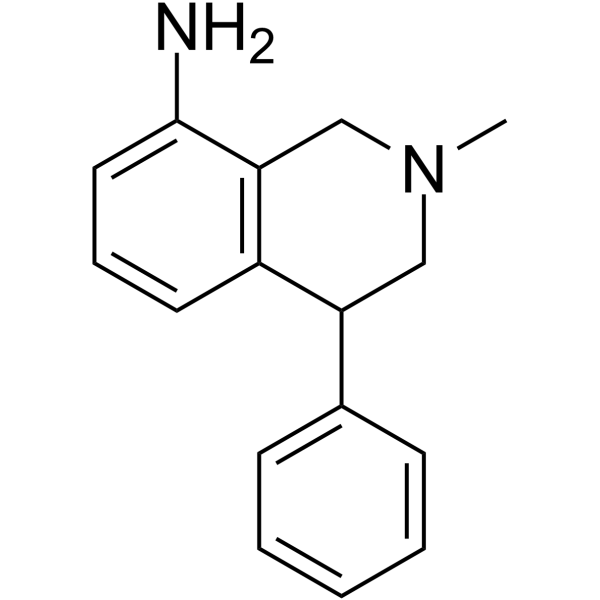
Nomifensine ((±)-Nomifensine) is a potent norepinephrine (NE) and dopamine (DA) reuptake inhibitor. Nomifensine inhibits uptake of NE, DA and 5-HT in rat brain synaptosomes, with IC50 values of 6.6 nM, 48 nM and 830 nM, and Ki values of 4.7 nM, 26 nM and 4000 nM, respectively. Nomifensine has antidepressant and analgesic effects. Nomifensine is used in neurodegenerative diseases, compound addiction, and pain research.
For research use only. We do not sell to patients.
- Purity : 98.05%
- CAS No.: 24526-64-5
- Formula: C16H18N2
- Molecular Weight:238.33
-
Storage:Powder -20°C, 3 years , 4°C, 2 years ; In solvent -80°C, 2 years , -20°C, 1 year

To place orders, for customer services and technical support, please contact: MedChemExpress USA
Tel: 609-228-6898 E-mail: [email protected] [email protected]


-
 Biological Activity
-
Chemical Information
-
Solvent & Solubility
- Purity & Documentation
- References
-
 Help & FAQs


-

HY-B1110R
Nomifensine (Standard)Norepinephrine/Dopamine Reuptake Inhibitor -
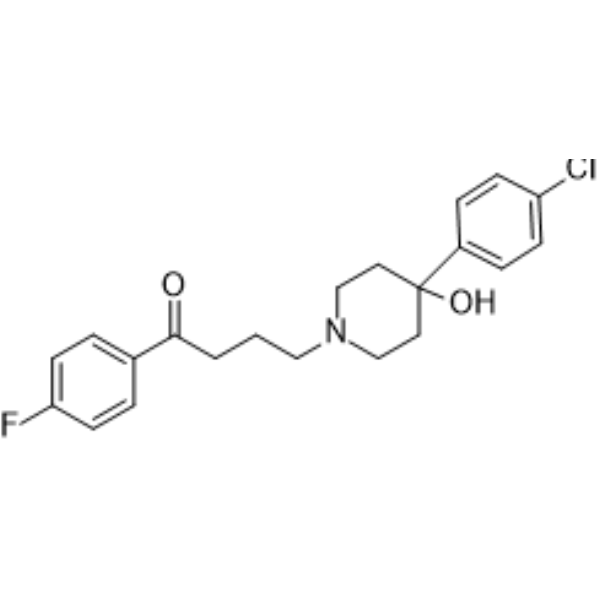
HY-14538
HaloperidolDopamine Receptor Antagonist -
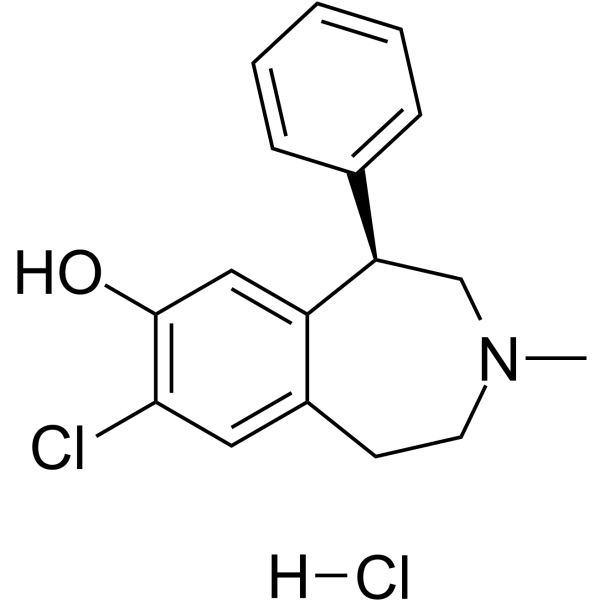
HY-19545A
SCH-23390 hydrochlorideDopamine D1 Receptor Antagonist -
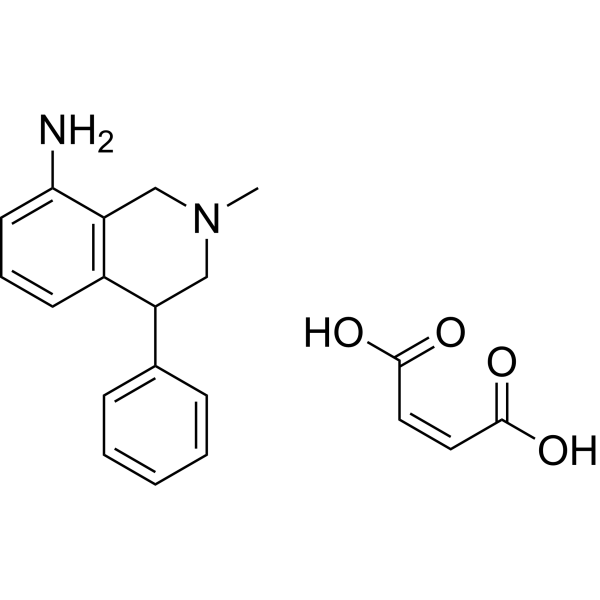
HY-B1110A
Nomifensine maleateNorepinephrine/Dopamine Reuptake Inhibitor -
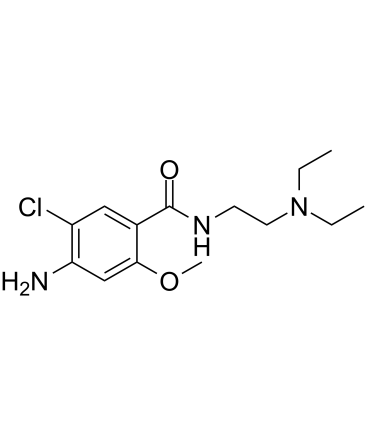
HY-17382
Metoclopramide5-HT3/D2 Receptor Antagonist -
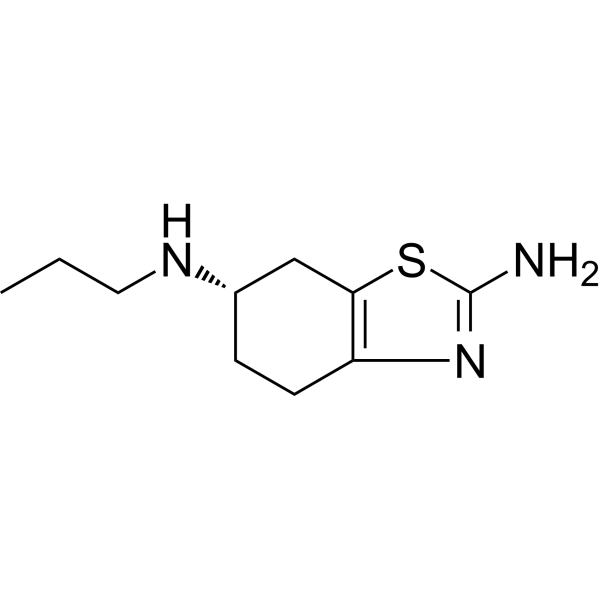
HY-B0410
PramipexoleDopamine Receptor Agonist -
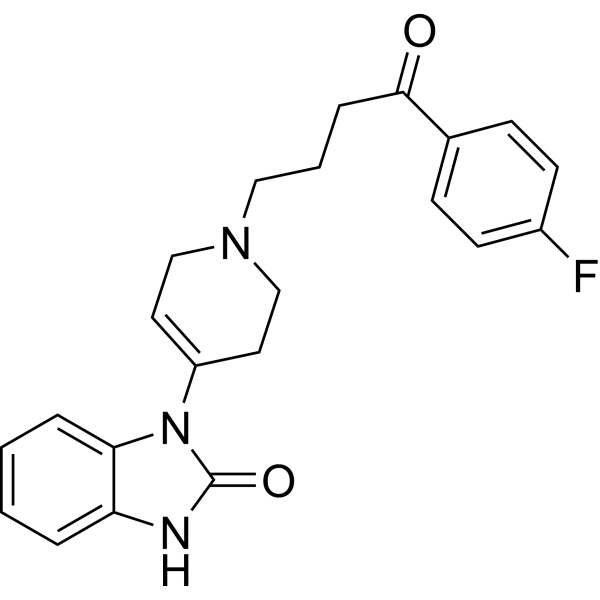
HY-B1240
DroperidolDopamine Receptor Antagonist -
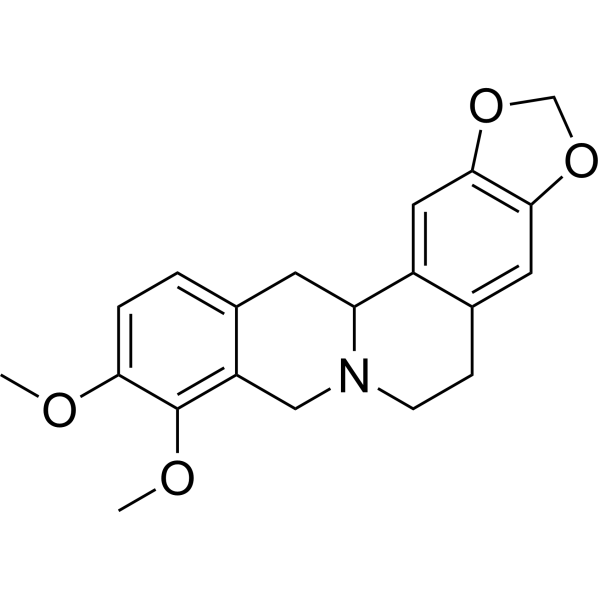
HY-N0925
TetrahydroberberineDopamine Receptor Antagonist -
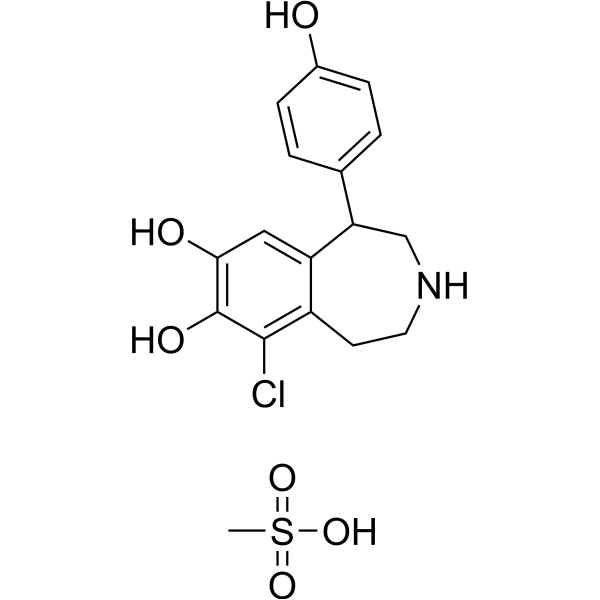
HY-B0735A
Fenoldopam mesylateDopamine DA Receptor Agonist -
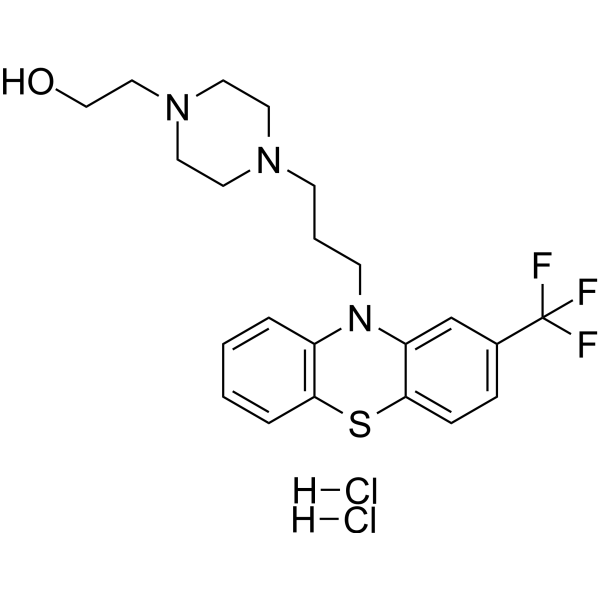
HY-A0081
Fluphenazine dihydrochlorideDopamine Receptor Inhibitor -
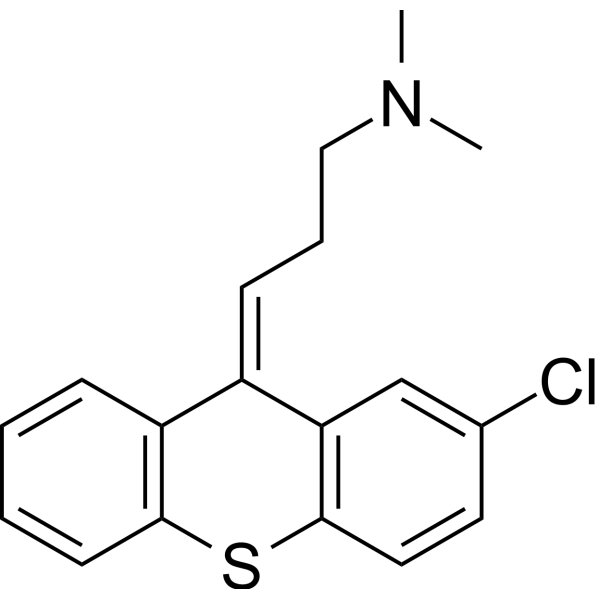
HY-B0274
ChlorprothixeneNeuroprotective Agent -
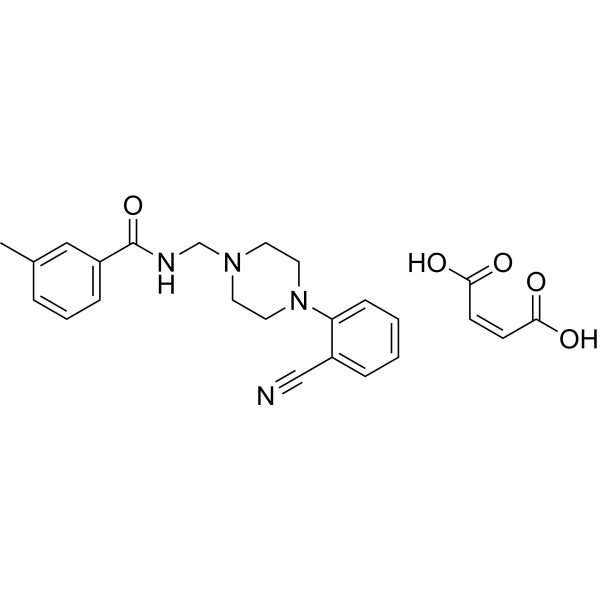
HY-21098A
PD-168077 maleateDopamine Receptor Agonist
Publications Citing Use of MedChemExpress (MCE) Nomifensine
MoreAll Dopamine Receptor Isoforms
MoreAll Adrenergic Receptor Isoforms
More

Biological Activity
Description
Cellular Effect
|
Cell Line

|
Type | Value | Description | References |
|---|---|---|---|---|
| CHO-K1 | IC50 |
30.2 nM
Compound: Nomifensine
|
Inhibition of [3H]dopamine reuptake at human DAT expressed in CHOK1 cells by scintillation counting
Inhibition of [3H]dopamine reuptake at human DAT expressed in CHOK1 cells by scintillation counting
|
[PMID: 21093273] |
| CHO-K1 | IC50 |
>27 μM
Compound: 3
|
Inhibition of human ERG expressed in CHO-K1 cells by electrophysiological assay
Inhibition of human ERG expressed in CHO-K1 cells by electrophysiological assay
|
[PMID: 24900562] |
| Sf21 | IC50 |
>1000 μM
Compound: Nomifensine
|
Inhibition of human BSEP expressed in plasma membrane vesicles of Sf21 cells assessed as inhibition of ATP-dependent [3H]taurocholate uptake
Inhibition of human BSEP expressed in plasma membrane vesicles of Sf21 cells assessed as inhibition of ATP-dependent [3H]taurocholate uptake
|
[PMID: 21965623] |
| Sf21 | IC50 |
>1000 μM
Compound: Nomifensine
|
Inhibition of Sprague-Dawley rat Bsep expressed in plasma membrane vesicles of Sf21 cells assessed as inhibition of ATP-dependent [3H]taurocholate uptake
Inhibition of Sprague-Dawley rat Bsep expressed in plasma membrane vesicles of Sf21 cells assessed as inhibition of ATP-dependent [3H]taurocholate uptake
|
[PMID: 21965623] |
In Vivo
Nomifensine (5 mg/kg/day; s.c. using minipumps; 2-14 days) potently and significantly inhibits dopamine neuronal firing in the ventral tegmental area of SD rats after 2 days, with recovery to normal after 14-day treatment due to D2 autoreceptor desensitization[4].
Nomifensine (0.625-5 mg/kg; s.c.; 30 min before testing) produces analgesia (only in the formaldehyde test) and abolishs the nociceptive behavior induced by 2% formaldehyde in rats[6].
Nomifensine (20 mg/kg; i.p.; once a day; 6 consecutive days) can suppress the neurotoxicity of MPTP (HY-15608) in C57 black mice, inhibiting the long-term depletion of neostriatal DA concentration induced by MPTP[7].
MedChemExpress (MCE) has not independently confirmed the accuracy of these methods. They are for reference only.
-
Animal Model:Wistar Kyoto and Sprague-Dawley rats[3]
-
Dosage:10 mg/kg
-
Administration:i.p.; once; for 12 days
-
Result:Decreased the time Wistar Kyoto, but not Sprague-Dawley, rats spend immobile in the forced swim test.
Increased locomotor activity in the open field test in Wistar Kyoto and Sprague-Dawley rats.


Chemical Information
-
CAS No. 24526-64-5
-
Appearance Solid
-
Molecular Weight 238.33
-
Formula C16H18N2
-
Color Light yellow to yellow
-
SMILES
NC1=CC=CC2=C1CN(C)CC2C3=CC=CC=C3
-
Synonyms
(±)-Nomifensine; Nomifensin
-
Shipping
Room temperature in continental US; may vary elsewhere.
-
Storage
Powder -20°C 3 years 4°C 2 years In solvent -80°C 2 years -20°C 1 year


Publications (6)
-
Journal Impact Factor
-
Most Recent
-
Commun Biol
A memory-driven auditory program ensures selective and precise vocal imitation in zebra finches. [Abstract]2021 Sep 13;4(1):1065. PMID: 34518637 -
Glia
Downregulation of miR-7116-5p in microglia by MPP+ sensitizes TNF-α production to induce dopaminergic neuron damage. [Abstract]2017 Aug;65(8):1251-1263. PMID: 28543680 -
Biotechnol Bioeng
An integrated biomimetic array chip for establishment of collagen-based 3D primary human hepatocyte model for prediction of clinical drug-induced liver injury. [Abstract]2021 Dec;118(12):4687-4698. PMID: 34478150 -
Neurosci Lett
2025 Oct 25:866:138373. PMID: 40912353 -
-


Solvent & Solubility
In Vitro:
DMSO : ≥ 100 mg/mL (419.59 mM; Hygroscopic DMSO has a significant impact on the solubility of product, please use newly opened DMSO)
* "≥" means soluble, but saturation unknown.
Please refer to the solubility information to select the appropriate solvent. Once prepared, please aliquot and store the solution to prevent product inactivation from repeated freeze-thaw cycles.
Storage method and period of stock solution: -80°C, 2 years; -20°C, 1 year. When stored at -80°C, please use it within 2 years. When stored at -20°C, please use it within 1 year.
Please refer to the solubility information to select the appropriate solvent. Once prepared, please aliquot and store the solution to prevent product inactivation from repeated freeze-thaw cycles.
Storage method and period of stock solution: -80°C, 2 years; -20°C, 1 year. When stored at -80°C, please use it within 2 years. When stored at -20°C, please use it within 1 year.
Concentration (start) × Volume (start) = Concentration (final) × Volume (final)
In Vivo:
Select the appropriate dissolution method based on your experimental animal and administration route.
- For the following dissolution methods, please ensure to first prepare a clear stock solution using an In Vitro approach and then sequentially add co-solvents:
- To ensure reliable experimental results, the clarified stock solution can be appropriately stored based on storage conditions. As for the working solution for In Vivo experiments, it is recommended to prepare freshly and use it on the same day.
- The percentages shown for the solvents indicate their volumetric ratio in the final prepared solution. If precipitation or phase separation occurs during preparation, heat and/or sonication can be used to aid dissolution.
Add each solvent one by one: 10% DMSO 40% PEG300 5% Tween-80 45% Saline
Solubility: ≥ 2.5 mg/mL (10.49 mM); Clear solution
This protocol yields a clear solution of ≥ 2.5 mg/mL (saturation unknown).
Taking 1 mL working solution as an example, add 100 μL DMSO stock solution (25.0 mg/mL) to 400 μL PEG300, and mix evenly; then add 50 μL Tween-80 and mix evenly; then add 450 μL Saline to adjust the volume to 1 mL.
Preparation of Saline: Dissolve 0.9 g sodium chloride in ddH₂O and dilute to 100 mL to obtain a clear Saline solution.
Add each solvent one by one: 10% DMSO 90% (20% SBE-β-CD in Saline)
Solubility: ≥ 2.5 mg/mL (10.49 mM); Clear solution
This protocol yields a clear solution of ≥ 2.5 mg/mL (saturation unknown).
Taking 1 mL working solution as an example, add 100 μL DMSO stock solution (25.0 mg/mL) to 900 μL 20% SBE-β-CD in Saline, and mix evenly.
Preparation of 20% SBE-β-CD in Saline (4°C, storage for one week): 2 g SBE-β-CD powder is dissolved in 10 mL Saline, completely dissolve until clear.
In Vivo Dissolution Calculator
Please enter the basic information of animal experiments:
-
-
-
-
Recommended: Prepare an additional quantity of animals to account for potential losses during experiments.
Please enter your animal formula composition:
-
%DMSO +
Recommended: Keep the proportion of DMSO in working solution below 2% if your animal is weak.
-
%+
-
+%Tween-80 + +
-
%Saline +
The co-solvents required include: DMSO, . All of co-solvents are available by MedChemExpress (MCE). , Tween 80. All of co-solvents are available by MedChemExpress (MCE).
Working solution concentration: 0.22 mg/mL
Method for preparing stock solution: mg drug dissolved in μL DMSO. Stock solution concentration: mg/mL.
1. Take μL DMSO stock solution;
2. Add μL .
μL , mix evenly;
3. Then add μL Tween 80, mix evenly;
4. Then add μL
Please ensure that the stock solution in the first step is dissolved to a clear state, and add co-solvents in sequence. You can use ultrasonic heating (ultrasonic cleaner, recommended frequency 20-40 kHz), vortexing, etc. to assist dissolution.


Purity & Documentation
-
Data Sheet (278 KB)
-
SDS (480 KB)
- English - EN (480 KB)
- Français - FR (480 KB)
- Deutsch - DE (480 KB)
- Norwegian - NO (480 KB)
- Español - ES (480 KB)
- Swedish - SV (480 KB)
- Italian - IT (480 KB)
- Korean - KR (480 KB)
- Portuguese - PT (480 KB)
-
Handling Instructions (2659 KB)
References
[1]. Hyttel J, et al. Neurochemical profile of Lu 19-005, a potent inhibitor of uptake of dopamine, noradrenaline, and serotonin. J Neurochem. 1985 May;44(5):1615-22. [Content Brief]
[2]. Tuomisto J. Nomifensine and its derivatives as possible tools for studying amine uptake. Eur J Pharmacol. 1977 Mar 21;42(2):101-6. [Content Brief]
[3]. Tejani-Butt S, et al. Strain-dependent modification of behavior following antidepressant treatment. Prog Neuropsychopharmacol Biol Psychiatry. 2003 Feb;27(1):7-14. [Content Brief]
[4]. Katz NS, et al. Effects of acute and sustained administration of the catecholamine reuptake inhibitor nomifensine on the firing activity of monoaminergic neurons. J Psychopharmacol. 2010 Aug;24(8):1223-35. [Content Brief]
[5]. Kang SH, et al. Transformation of nomifensine using ionizing radiation and exploration of its anticancer effects in MCF-7 cells. Exp Ther Med. 2022 Apr;23(4):306. [Content Brief]
[6]. Gilbert AK, et al. Characterization of the analgesic properties of nomifensine in rats. Pharmacol Biochem Behav. 2001 Apr;68(4):783-7. [Content Brief]
[7]. Melamed E, et al. Suppression of MPTP-induced dopaminergic neurotoxicity in mice by nomifensine and L-DOPA. Brain Res. 1985 Sep 9;342(2):401-4. [Content Brief]


Complete Stock Solution Preparation Table
Please refer to the solubility information to select the appropriate solvent. Once prepared, please aliquot and store the solution to prevent product inactivation from repeated freeze-thaw cycles.
Storage method and period of stock solution: -80°C, 2 years; -20°C, 1 year. When stored at -80°C, please use it within 2 years. When stored at -20°C, please use it within 1 year.
| Optional Solvent | Concentration Solvent Mass | 1 mg | 5 mg | 10 mg | 25 mg |
|---|---|---|---|---|---|
| DMSO | 1 mM | 4.1959 mL | 20.9793 mL | 41.9586 mL | 104.8966 mL |
| 5 mM | 0.8392 mL | 4.1959 mL | 8.3917 mL | 20.9793 mL | |
| 10 mM | 0.4196 mL | 2.0979 mL | 4.1959 mL | 10.4897 mL | |
| 15 mM | 0.2797 mL | 1.3986 mL | 2.7972 mL | 6.9931 mL | |
| 20 mM | 0.2098 mL | 1.0490 mL | 2.0979 mL | 5.2448 mL | |
| 25 mM | 0.1678 mL | 0.8392 mL | 1.6783 mL | 4.1959 mL | |
| 30 mM | 0.1399 mL | 0.6993 mL | 1.3986 mL | 3.4966 mL | |
| 40 mM | 0.1049 mL | 0.5245 mL | 1.0490 mL | 2.6224 mL | |
| 50 mM | 0.0839 mL | 0.4196 mL | 0.8392 mL | 2.0979 mL | |
| 60 mM | 0.0699 mL | 0.3497 mL | 0.6993 mL | 1.7483 mL | |
| 80 mM | 0.0524 mL | 0.2622 mL | 0.5245 mL | 1.3112 mL | |
| 100 mM | 0.0420 mL | 0.2098 mL | 0.4196 mL | 1.0490 mL |


Nomifensine Related Classifications
HY-B1110 Related Classifications
 Powered by Bioz