



Proglumide
Based on 1 publication(s) in Google Scholar
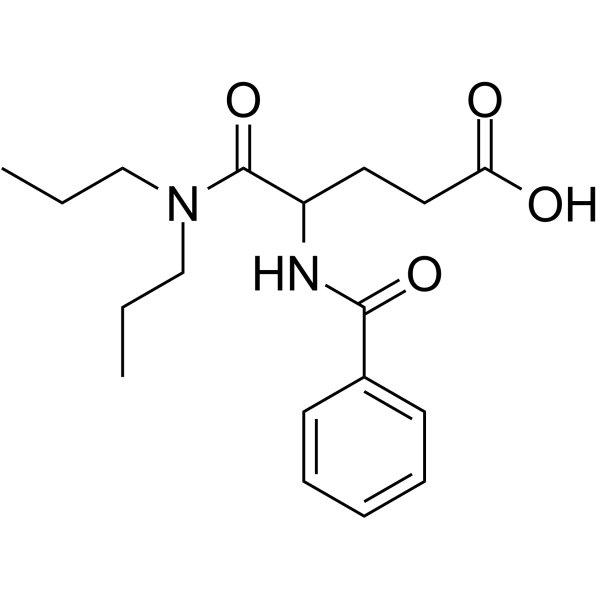
Proglumide is a nonpeptide and orally active cholecystokinin (CCK)-A/B receptors antagonist. Proglumide selective blocks CCK’s effects in the central nervous system (CNS). Proglumide has ability to inhibit gastric secretion and to protect the gastroduodenal mucosa. Proglumide also has antiepileptic and antioxidant activities.
For research use only. We do not sell to patients.
- Purity : 99.84%
- CAS No.: 6620-60-6
- Formula: C18H26N2O4
- Molecular Weight:334.41
-
Storage:Powder -20°C, 3 years , 4°C, 2 years ; In solvent -80°C, 2 years , -20°C, 1 year

To place orders, for customer services and technical support, please contact: MedChemExpress USA
Tel: 609-228-6898 E-mail: [email protected] [email protected]


-
 Biological Activity
-
Chemical Information
-
Solvent & Solubility
- Purity & Documentation
- References
-
 Help & FAQs


-
HY-17617
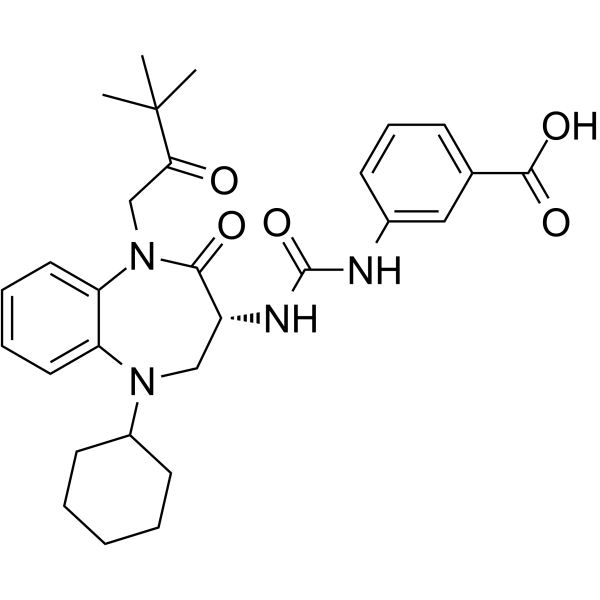
NastorazepideCCK-2 Receptor Antagonist -

HY-B1330R
Proglumide (Standard)CCK-A/B Receptors Antagonist -
HY-B2154
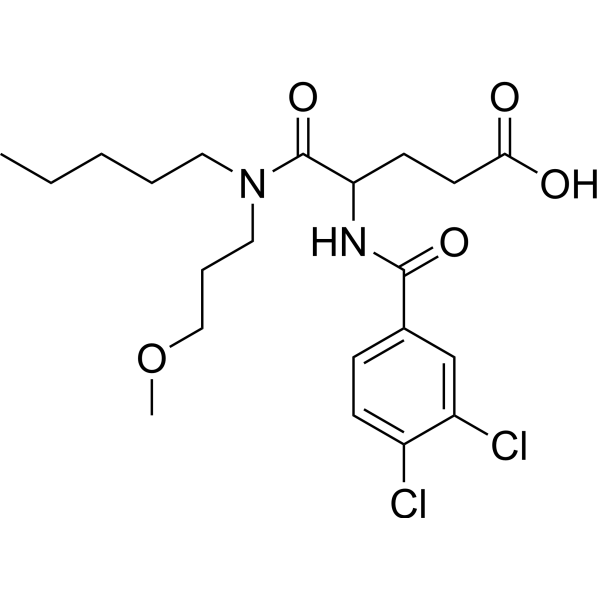
LoxiglumideCholecystokinin Receptor Antagonist -
HY-128878
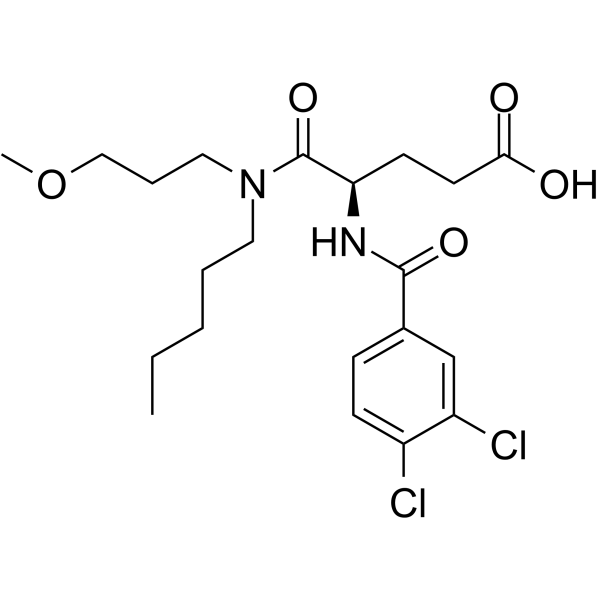
DexloxiglumideCCKR Inhibitor -
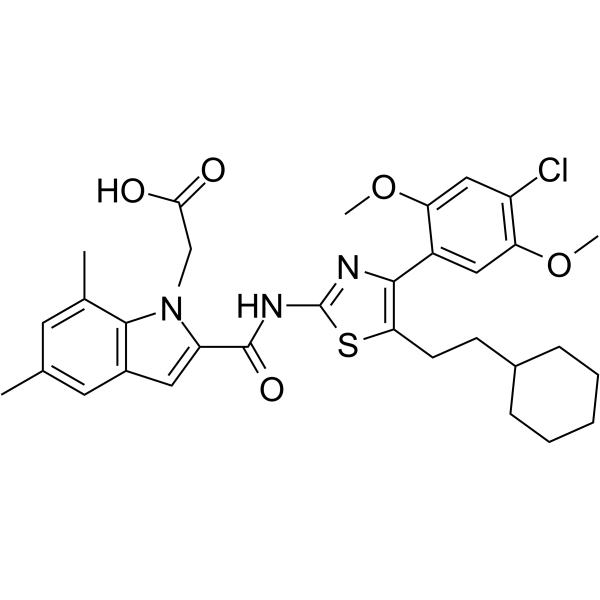
HY-11077
SR 146131Cholecystokinin Receptor Agonist -
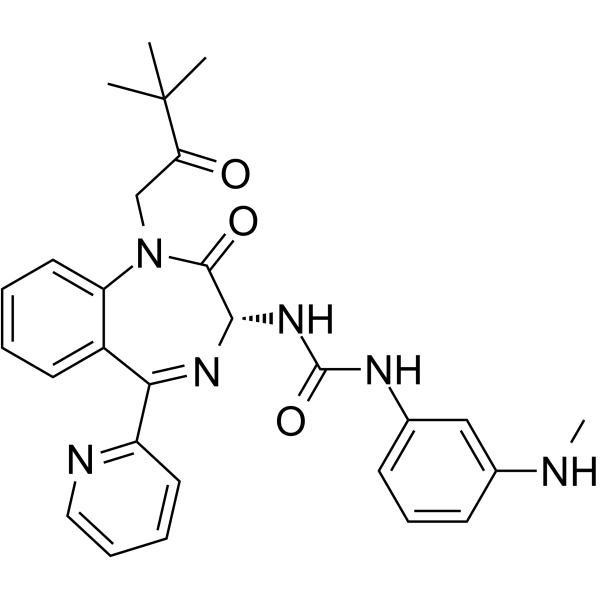
HY-14850
SograzepideGastrin/CCK-B Antagonist -
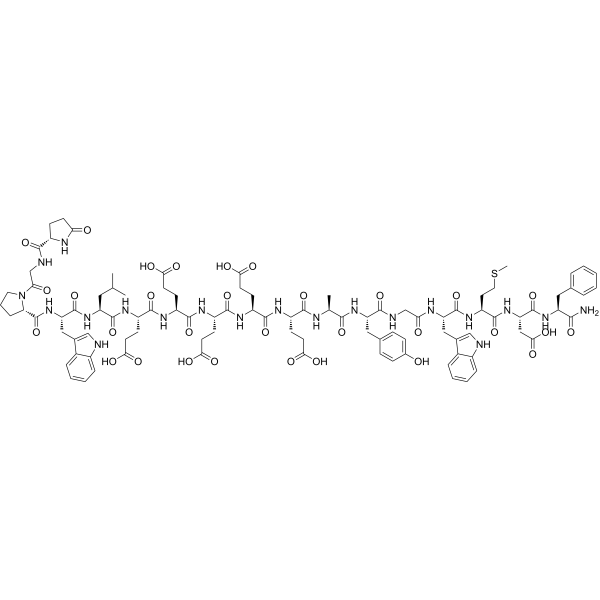
HY-P1097
Gastrin I, humanCCK2 Agonist -
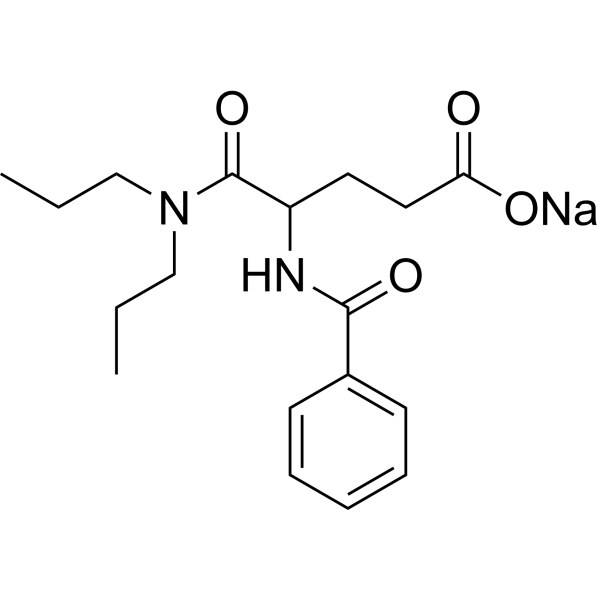
HY-103354
Proglumide sodiumCCK-A/B Receptors Antagonist -
![[Leu15]-Gastrin I (human)](https://file.medchemexpress.com/product_pic/hy-p2671.gif)
HY-P2671
[Leu15]-Gastrin I (human)Peptide Hormone -

HY-128878R
Dexloxiglumide (Standard)CCKR Inhibitor -
HY-B1439B
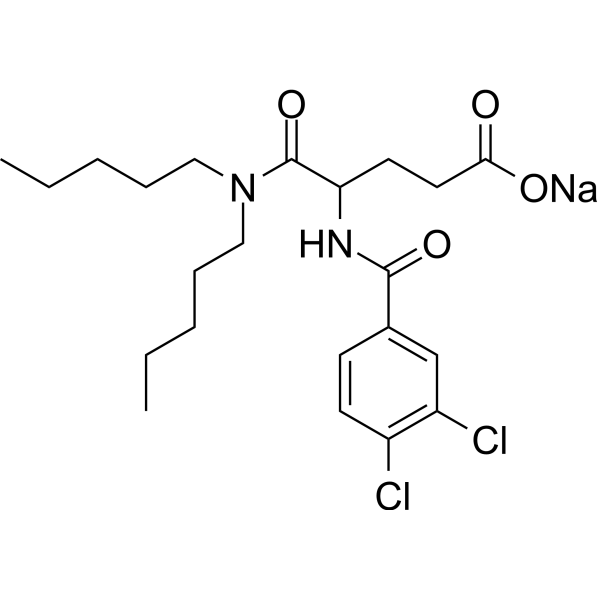
Lorglumide sodiumCholecystokinin Receptor Antagonist -

HY-17617R
Nastorazepide (Standard)CCK-2 Receptor Antagonist
Publications Citing Use of MedChemExpress (MCE) Proglumide
More

Biological Activity
Description
IC50 & Target
In Vitro
In an in vitro study, Proglumide at concentrations between 0.3-10 mM inhibits CCK-stimulated amylase release dose-dependently, while Proglumide does not influence the basal amylase release at concentrations between 0-3 mM. Dose-response curves to CCK for amylase release shifted to the right with increase in Proglumide concentration. This inhibition by Proglumide is reversible. In addition, the effect of Proglumide is selective for CCK and its related peptide[2].
The incubation of HT29 cells with Proglumide significantly reduces the [3H]-thymidine incorporation to HT29 cells in a dose-dependent manner, with an IC50 of 6.5 mM. Proglumide reduces in a dose-dependent manner the percentage of necrosis with a parallel increase of apoptosis up to 70%[3].
MedChemExpress (MCE) has not independently confirmed the accuracy of these methods. They are for reference only.
In Vivo
MedChemExpress (MCE) has not independently confirmed the accuracy of these methods. They are for reference only.
-
Animal Model:Adult male Sprague Dawley rats (200-250 g; 2 months old) are induced status epilepticus (SE)[1]
-
Dosage:250 mg/kg, 500 mg/kg, and 750 mg/kg
-
Administration:Intraperitoneal injection
-
Result:Dose-dependently and significantly increased the latencies to seizure and SE. Significantly and dose-dependently attenuated Li-PC (SE) induced increase in thiobarbituric acid (TBARS) and catalase (CAT), attenuated Li-Pc induced decrease in SOD, and attenuated depletion of GSH and glutathione-S transferase (GST) in the hippocampus and striatum.


Chemical Information
-
CAS No. 6620-60-6
-
Appearance Solid
-
Molecular Weight 334.41
-
Formula C18H26N2O4
-
Color White to off-white
-
SMILES
O=C(O)CCC(NC(C1=CC=CC=C1)=O)C(N(CCC)CCC)=O
-
Shipping
Room temperature in continental US; may vary elsewhere.
-
Storage
Powder -20°C 3 years 4°C 2 years In solvent -80°C 2 years -20°C 1 year


Publications (1)
-
Journal Impact Factor
-
Most Recent
-
Nat Commun
Paraventricular hypothalamic input to anterior cingulate cortex controls food preferences in chronic visceral pain mice. [Abstract]2025 Jul 1;16(1):5943. PMID: 40593837


Solvent & Solubility
In Vitro:
DMSO : ≥ 65 mg/mL (194.37 mM; Hygroscopic DMSO has a significant impact on the solubility of product, please use newly opened DMSO)
* "≥" means soluble, but saturation unknown.
Please refer to the solubility information to select the appropriate solvent. Once prepared, please aliquot and store the solution to prevent product inactivation from repeated freeze-thaw cycles.
Storage method and period of stock solution: -80°C, 2 years; -20°C, 1 year. When stored at -80°C, please use it within 2 years. When stored at -20°C, please use it within 1 year.
Please refer to the solubility information to select the appropriate solvent. Once prepared, please aliquot and store the solution to prevent product inactivation from repeated freeze-thaw cycles.
Storage method and period of stock solution: -80°C, 2 years; -20°C, 1 year. When stored at -80°C, please use it within 2 years. When stored at -20°C, please use it within 1 year.
Concentration (start) × Volume (start) = Concentration (final) × Volume (final)
In Vivo:
Select the appropriate dissolution method based on your experimental animal and administration route.
- For the following dissolution methods, please ensure to first prepare a clear stock solution using an In Vitro approach and then sequentially add co-solvents:
- To ensure reliable experimental results, the clarified stock solution can be appropriately stored based on storage conditions. As for the working solution for In Vivo experiments, it is recommended to prepare freshly and use it on the same day.
- The percentages shown for the solvents indicate their volumetric ratio in the final prepared solution. If precipitation or phase separation occurs during preparation, heat and/or sonication can be used to aid dissolution.
Add each solvent one by one: 10% DMSO 40% PEG300 5% Tween-80 45% Saline
Solubility: ≥ 2.17 mg/mL (6.49 mM); Clear solution
This protocol yields a clear solution of ≥ 2.17 mg/mL (saturation unknown).
Taking 1 mL working solution as an example, add 100 μL DMSO stock solution (21.7 mg/mL) to 400 μL PEG300, and mix evenly; then add 50 μL Tween-80 and mix evenly; then add 450 μL Saline to adjust the volume to 1 mL.
Preparation of Saline: Dissolve 0.9 g sodium chloride in ddH₂O and dilute to 100 mL to obtain a clear Saline solution.
Add each solvent one by one: 10% DMSO 90% (20% SBE-β-CD in Saline)
Solubility: ≥ 2.17 mg/mL (6.49 mM); Clear solution
This protocol yields a clear solution of ≥ 2.17 mg/mL (saturation unknown).
Taking 1 mL working solution as an example, add 100 μL DMSO stock solution (21.7 mg/mL) to 900 μL 20% SBE-β-CD in Saline, and mix evenly.
Preparation of 20% SBE-β-CD in Saline (4°C, storage for one week): 2 g SBE-β-CD powder is dissolved in 10 mL Saline, completely dissolve until clear.
In Vivo Dissolution Calculator
Please enter the basic information of animal experiments:
-
-
-
-
Recommended: Prepare an additional quantity of animals to account for potential losses during experiments.
Please enter your animal formula composition:
-
%DMSO +
Recommended: Keep the proportion of DMSO in working solution below 2% if your animal is weak.
-
%+
-
+%Tween-80 + +
-
%Saline +
The co-solvents required include: DMSO, . All of co-solvents are available by MedChemExpress (MCE). , Tween 80. All of co-solvents are available by MedChemExpress (MCE).
Working solution concentration: 0.22 mg/mL
Method for preparing stock solution: mg drug dissolved in μL DMSO. Stock solution concentration: mg/mL.
1. Take μL DMSO stock solution;
2. Add μL .
μL , mix evenly;
3. Then add μL Tween 80, mix evenly;
4. Then add μL
Please ensure that the stock solution in the first step is dissolved to a clear state, and add co-solvents in sequence. You can use ultrasonic heating (ultrasonic cleaner, recommended frequency 20-40 kHz), vortexing, etc. to assist dissolution.


Purity & Documentation
-
Data Sheet (277 KB)
-
SDS (396 KB)
- English - EN (396 KB)
- Français - FR (396 KB)
- Deutsch - DE (396 KB)
- Norwegian - NO (396 KB)
- Español - ES (396 KB)
- Swedish - SV (396 KB)
- Italian - IT (396 KB)
- Korean - KR (396 KB)
- Portuguese - PT (396 KB)
-
Handling Instructions (2659 KB)
References
[1]. Ahmad M, et al. The effects of quinacrine, proglumide, and pentoxifylline on seizure activity, cognitive deficit, and oxidative stress in rat lithium-pilocarpine model of status epilepticus. Oxid Med Cell Longev. 2014;2014:630509. [Content Brief]
[2]. Iwamoto Y, et al. In vitro and in vivo effect of proglumide on cholecystokinin-stimulated amylase release in mouse pancreatic acini. Gastroenterol Jpn. 1984 Feb;19(1):53-8. [Content Brief]
[3]. González-Puga C, et al. Selective CCK-A but not CCK-B receptor antagonists inhibit HT-29 cell proliferation: synergism with pharmacological levels of melatonin. J Pineal Res. 2005 Oct;39(3):243-50. [Content Brief]
[4]. Bunney BS, et al. Further studies on the specificity of proglumide as a selective cholecystokinin antagonist in the central nervous system. Ann N Y Acad Sci. 1985;448:345-51. [Content Brief]
[5]. Tariq M, et al. Gastric and duodenal antiulcer and cytoprotective effects of proglumide in rats. J Pharmacol Exp Ther. 1987 May;241(2):602-7. [Content Brief]


Complete Stock Solution Preparation Table
Please refer to the solubility information to select the appropriate solvent. Once prepared, please aliquot and store the solution to prevent product inactivation from repeated freeze-thaw cycles.
Storage method and period of stock solution: -80°C, 2 years; -20°C, 1 year. When stored at -80°C, please use it within 2 years. When stored at -20°C, please use it within 1 year.
| Optional Solvent | Concentration Solvent Mass | 1 mg | 5 mg | 10 mg | 25 mg |
|---|---|---|---|---|---|
| DMSO | 1 mM | 2.9903 mL | 14.9517 mL | 29.9034 mL | 74.7585 mL |
| 5 mM | 0.5981 mL | 2.9903 mL | 5.9807 mL | 14.9517 mL | |
| 10 mM | 0.2990 mL | 1.4952 mL | 2.9903 mL | 7.4759 mL | |
| 15 mM | 0.1994 mL | 0.9968 mL | 1.9936 mL | 4.9839 mL | |
| 20 mM | 0.1495 mL | 0.7476 mL | 1.4952 mL | 3.7379 mL | |
| 25 mM | 0.1196 mL | 0.5981 mL | 1.1961 mL | 2.9903 mL | |
| 30 mM | 0.0997 mL | 0.4984 mL | 0.9968 mL | 2.4920 mL | |
| 40 mM | 0.0748 mL | 0.3738 mL | 0.7476 mL | 1.8690 mL | |
| 50 mM | 0.0598 mL | 0.2990 mL | 0.5981 mL | 1.4952 mL | |
| 60 mM | 0.0498 mL | 0.2492 mL | 0.4984 mL | 1.2460 mL | |
| 80 mM | 0.0374 mL | 0.1869 mL | 0.3738 mL | 0.9345 mL | |
| 100 mM | 0.0299 mL | 0.1495 mL | 0.2990 mL | 0.7476 mL |


Proglumide Related Classifications
HY-B1330 Related Classifications
 Powered by Bioz