



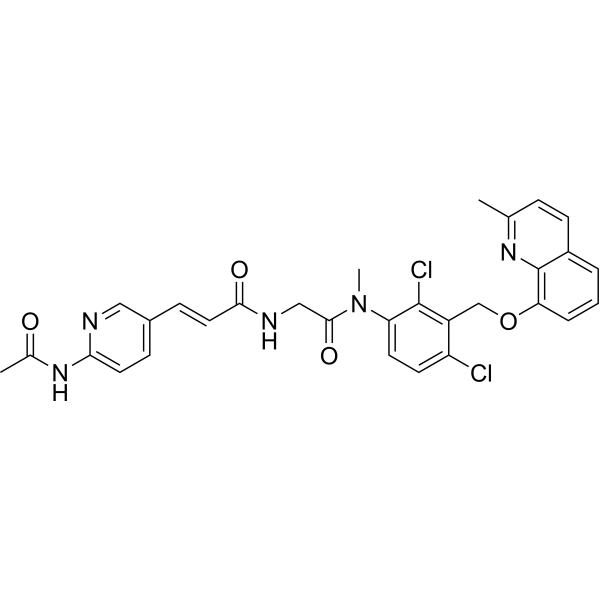
FR173657

Based on 1 Customer Validation
FR173657 (FK-3657) is an orally active, selective bradykinin B2 receptor antagonist. FR173657 induces Apoptosis, G0/G1 phase arrest, and p38 MAPK/p27Kip1 signaling. FR173657 blocks afferent neuron activation, tumor vascular hyperpermeability, tumor angiogenesis/growth, colorectal proliferation, kinin-mediated invasion/migration, and airway plasma extravasation. FR173657 can be used in research on inflammatory pain, asthma, triple-negative breast cancer, psoriasis, pancreatitis, acute cystitis, skin inflammation, sarcoma 180, colorectal liver metastasis, and Carrageenan-induced pleurisy.
For research use only. We do not sell to patients.
- Purity : 99.00%
- CAS No.: 167838-64-4
- Formula: C30H27Cl2N5O4
- Molecular Weight:592.47
-
Storage:Powder -20°C, 3 years , 4°C, 2 years ; In solvent -80°C, 6 months , -20°C, 1 month

To place orders, for customer services and technical support, please contact: MedChemExpress USA
Tel: 609-228-6898 E-mail: [email protected] [email protected]


-
 Biological Activity
-
Chemical Information
-
Solvent & Solubility
- Protocols
- Purity & Documentation
- References
-
 Help & FAQs


All Bradykinin Receptor Isoforms
More

Biological Activity
Description
IC50 & Target
[1]|
Bradykinin B2 Receptor (B2R) |
Cellular Effect
|
Cell Line

|
Type | Value | Description | References |
|---|---|---|---|---|
| IMR-90 | IC50 |
2.9 nM
|
Displacement of [3H]-bradykinin binding to B2 receptors in human foetal lung fibroblast IMR-90 cells after 90 min incubation at room temperature measured by cell-based radioligand binding assay.
Displacement of [3H]-bradykinin binding to B2 receptors in human foetal lung fibroblast IMR-90 cells after 90 min incubation at room temperature measured by cell-based radioligand binding assay.
|
9051299 |
| MDA-MB-231 | IC50 |
20 μM
|
Antiproliferative activity against human MDA-MB-231 cells assessed as viability reduction after 72 hrs by MTT assay.
Antiproliferative activity against human MDA-MB-231 cells assessed as viability reduction after 72 hrs by MTT assay.
|
29515778 |
In Vitro
FR173657 (10 μM; 48 h) reduces the proliferation of MoCR and SW480 colorectal cancer cells[3].
FR173657 (10 μM; 21 h) combined with BK reduces MoCR cell invasion by more than 90%[3].
FR173657 (10 μM; 1 week) inhibits the anchorage-independent growth of MDA-MB-231 cells[6].
FR173657 (10 μM; 0-360 min) activates p38 MAPK in MDA-MB-231 cells over time[6].
The cytostatic activity of FR173657 is attenuated in B2R-knockdown MDA-MB-231 cells[6].
FR173657 (0.1 nM-32 nM; 60 min) is a potent displacer of [3H]-BK binding at the B2 receptor in guinea pig ileum, with an IC50 of 0.56 nM[1].
FR173657 (0.01 nM-0.1 μM; 60 min) displaces [3H]-BK binding at rat uterine B2 receptors with an IC50 of 1.5 nM[1].
FR173657 (1 nM-10 nM; 10 min) is a potent and selective B2 antagonist in guinea pig isolated ileum that antagonizes BK-induced contraction, with an IC50 of 7.9 nM and a pA2 of 9.2[1].
FR173657 binds to hB2R in HEK-293T cells with an IC50 of 37.0 nM[6].
FR173657 (10 μM; 72 h) does not induce senescence in MDA-MB-231 cells[6].
MedChemExpress (MCE) has not independently confirmed the accuracy of these methods. They are for reference only.
-
Cell Line:human SW480 and mouse MoCR colorectal cancer cell lines
-
Concentration:10 μM; with or without BK
-
Incubation Time:48 h
-
Result:Significantly reduced proliferation in both MoCR and SW480 cells.
The reduction in proliferation was the same whether the B2R agonist BK was present or absent.
-
Cell Line:mouse MoCR colorectal cancer cells
-
Concentration:10 μM; with BK
-
Incubation Time:21 h
-
Result:Resulted in over 90% reduction of invasion in MoCR cells when combined with BK.
BK did not restore invasion compared to controls.
In Vivo
FR173657 (15 mg/kg; oral gavage; twice daily; from day 1 to day 21 after tumor induction) reduces tumor angiogenesis by 39% in CBA mice with CRLM, but does not significantly reduce tumor burden, percentage of viable tumor, or apoptosis[3].
FR173657 (30 mg/kg; oral; once daily; days 7-12) inhibits late-stage tumor angiogenesis in S-180 tumor-bearing mice[2].
FR173657 (30 mg/kg; oral; once daily; days 1-6, days 7-12, and days 1-12) reduces VEGF immunoreactivity in the tumor stroma of S-180 tumor-bearing mice[2].
FR173657 (30 mg/kg; oral) blocks bradykinin-induced hypotension in conscious rats for at least 5 h without affecting basal MABP[9].
FR173657 (3-30 mg/kg; intraperitoneal injection; once daily; six consecutive days) alleviates imiquimod-induced psoriasis-like skin inflammation in C57BL/6 mice, reducing PASI scores, keratinocyte proliferation and differentiation markers, immune cell infiltration (including neutrophils, macrophages, CD3+/CD4+/CD8+ T cells), IL-17, γδ T cells, lymphoid organ weight, and improving nesting behavior[8].
FR173657 (15 mg/kg; p.o.; twice, 2 h apart) inhibits tumor vascular hyperpermeability in S-180 tumor-bearing mice, with the most significant effect at the early stage[2].
FR173657 (5-20 mg/kg; oral) dose-dependently reduces bradykinin-induced plasma extravasation in the guinea pig trachea and main bronchi, completely eliminating it at 20 mg/kg[5].
FR173657 (5-20 mg/kg; oral) dose-dependently inhibits antigen-induced plasma extravasation in the trachea and main bronchi of sensitized guinea pigs[5].
FR173657 (30-300 nmol/kg; subcutaneous injection; 50-500 nmol/kg; oral; 1 h before induction) inhibits Caerulein (HY-A0190)-induced pancreatic edema and pancreatic tissue lipase retention in rats, with subcutaneous administration being effective from 30 nmol/kg, and oral administration also being active but with lower potency[10].
FR173657 (0.075 mg/kg (ED50); oral) inhibits BK-induced bronchoconstriction in guinea pigs[1].
FR173657 (1 mg/kg; oral) does not inhibit histamine-induced bronchoconstriction in guinea pigs[1].
FR173657 (0.3-3 µmol/kg; subcutaneous injection; 60 min before the experiment; 0.5-5.0 µmol/kg; oral administration) inhibits bradykinin-induced nociceptive behavioral responses in rats after both subcutaneous injection and oral administration, and the higher subcutaneous doses completely eliminate these responses[4].
MedChemExpress (MCE) has not independently confirmed the accuracy of these methods. They are for reference only.
-
Animal Model:Hartley (male)[1]
-
Dosage:1 mg/kg
-
Administration:oral; after last histamine-induced bronchoconstriction
-
Result:Did not inhibit histamine-induced increases in PIP even at 1 mg/kg; % inhibition was 6.2 (n=5).
-
Animal Model:ICR (male, 5-week-old)[2]
-
Dosage:15 mg/kg per administration (reported as 30 mg/kg/day total)
-
Administration:p.o.; twice, 2 h apart
-
Result:Produced about 60% inhibition of tumor vascular permeability in the early phase (day 5).
Reduced vascular permeability in the late phase (day 10), but the extent of inhibition was much less than that seen in the early phase.
Suppressed vascular permeability at 30 mg/kg/day.
-
Animal Model:ICR (male, 5-week-old)[2]
-
Dosage:30 mg/kg
-
Administration:p.o.; once daily; days 1-6
-
Result:Suppressed angiogenesis and tumor growth in the early phase at 30 mg/kg/day on days 1-6.
-
Animal Model:ICR (male, 5-week-old)[2]
-
Dosage:30 mg/kg
-
Administration:p.o.; once daily; days 7-12
-
Result:Inhibited angiogenesis in the late phase at 30 mg/kg/day on days 7-12.
The relative inhibition was less than that produced by anti-VEGF neutralizing antibody.
-
Animal Model:ICR (male, 5-week-old)[2]
-
Dosage:30 mg/kg
-
Administration:p.o.; once daily; days 1-6, days 7-12, and days 1-12
-
Result:Immunoreactive VEGF in tumor stromata was markedly reduced (30 mg/kg/day once daily on days 1-6, days 7-12, and days 1-12).
-
Animal Model:CBA (male, 6-8 weeks old, body weight 24-28 g)[3]
-
Dosage:15 mg/kg twice daily (total 30 mg/kg/day)
-
Administration:oral gavage; twice daily; starting day 1 post tumor induction until day 21
-
Result:Reduced tumor load and tumor volume compared with control, but reductions were not significant.
The percentage of viable tumor was not reduced compared with control.
Did not increase tumor apoptosis compared with control.
Significantly reduced tumor angiogenesis, with a 39% reduction in vessel density compared to control.
-
Animal Model:Sprague-Dawley (female)[4]
-
Dosage:s.c. 300 nmol kg−1 or 3 µmol kg−1; p.o. 0.5, 1.5, or 5.0 µmol kg−1
-
Administration:s.c.; 60 min before experiment; p.o.; after overnight fasting
-
Result:s.c. 300 nmol kg−1 caused partial inhibition of nociceptive behavioural responses; no score 3 licking or biting occurred (n = 6), and score 1 or 2 responses lasted 486 s (n = 6), observed only during the initial 10 min.
s.c. 3 µmol kg−1 abolished the nociceptive responses altogether.
p.o. 5 µmol kg−1 almost abolished the bradykinin-induced behavioural effects.
p.o. 1.5 µmol kg−1 strongly reduced the effects in 4 out of 8 animals, while the remaining 4 rats showed virtually no effect.
p.o. 0.5 µmol kg−1 was completely ineffective.
-
Animal Model:Sprague-Dawley (female; 200-300 g)[4]
-
Dosage:s.c. 0.3-10 µmol kg−1 (lowest tested dose 300 nmol kg−1; higher doses 1-3 µmol kg−1; highest dose 10 µmol kg−1)
-
Administration:s.c.; after third bradykinin challenge; bradykinin challenges continued for 90 min
-
Result:s.c. inhibited bradykinin-induced hypotensive reflex responses in a dose-dependent manner.
The lowest dose, 300 nmol kg−1, had no effect, while higher doses, 1-3 µmol kg−1, caused a decrease in the responses to bradykinin.
The effect developed over a period of at least 60 min.
The ID50 was 1.1 µmol kg−1 (95% confidence interval 0.2-6.0 µmol kg−1).
The hydrochloric acid-induced hypotensive reflex was unchanged 90 min after administration of 10 µmol kg−1 (731 mmHg; n = 5).
-
Animal Model:Hartley (male, 300-500 g)[5]
-
Dosage:5, 10, and 20 mg/kg
-
Administration:p.o.; 30 min before bradykinin aerosol
-
Result:In the trachea, reduced bradykinin-induced Evans blue extravasation to 70.0, 65.9, and 46.8 ng/mg wet weight (n=5 each).
In the main bronchi, reduced extravasation to 56.2, 47.8, and 34.3 ng/mg wet weight (n=5 each).
Abolished the bradykinin-induced increase in the trachea and main bronchi.
-
Animal Model:Hartley (male, 300-500 g)[5]
-
Dosage:5, 10, and 20 mg/kg
-
Administration:p.o.; 30 min before ovalbumin aerosol
-
Result:In the trachea, produced Evans blue extravasation values of 83.3, 68.9, and 54.8 ng/mg wet weight (n=5 each).
In the main bronchi, produced values of 89.1, 71.7, and 60.1 ng/mg wet weight (n=5 each).
Inhibited ovalbumin-induced plasma extravasation by 77% in the trachea and 65% in the main bronchi.
-
Animal Model:Hartley (male, 300-500 g)[5]
-
Dosage:20 mg/kg
-
Administration:p.o.; 30 min before capsaicin aerosol
-
Result:In the trachea, yielded 59.5 ng/mg wet weight (n=5).
In the main bronchi, yielded 83.3 ng/mg wet weight (n=5).
Did not affect capsaicin-induced plasma extravasation.
-
Animal Model:C57BL/6 wild-type (WT; RRID: MGI:5656552; adult male and female, 8-10 weeks old, 20-25 g)[8]
-
Dosage:3 mg/kg, 10 mg/kg, and 30 mg/kg; 30 mg/kg (selected experiments)
-
Administration:i.p.; once daily 30 min before imiquimod; six consecutive days
-
Result:PASI scores were lower at all doses evaluated compared with the vehicle group.
Mice presented lower cellular infiltration and reduced imiquimod-induced hyperplasia.
At 10 and 30 mg/kg, the number of PCNA-staining keratinocytes was reduced compared with the vehicle group.
At 10 and 30 mg/kg, K14-labelled keratinocytes were decreased compared with the vehicle group.
At 30 mg/kg, Ly6G+ neutrophil accumulation was reduced compared with the vehicle group.
Skin macrophages were depleted and CD11b+ cell accumulation was reduced compared with the vehicle group.
The number of CD3+ T cells was reduced compared with the vehicle group.
The number of CD4+ infiltrating cells in imiquimod-induced psoriatic lesions was also reduced compared with the vehicle group.
The number of CD8+ T cells was diminished compared with the vehicle group.
IL-17 detected in imiquimod psoriatic lesions was decreased compared with the vehicle group.
The γδ T cell subset was reduced in the imiquimod-induced mouse model.
At 30 mg/kg, spleen weight was reduced and a protective effect on axillary and inguinal lymph node weights was shown compared with the vehicle group.
Mice displayed improved nest-building scores compared with the vehicle group.
The higher proliferation rates and faulty differentiation of keratinocytes induced by imiquimod were reduced.
-
Animal Model:Sprague-Dawley (SD) (male, 8 weeks old, specific pathogen free)[9]
-
Dosage:30 mg/kg
-
Administration:p.o.; single administration before i.v. BK/ACh challenges at 1, 2, 3, 5, and 7 h
-
Result:Did not influence basal MABP throughout the experimental period.
Blocked BK-induced hypotensive responses by 95%, 91%, 90%, and 79% at 1, 2, 3, and 5 h after administration, respectively.
ACh-induced hypotension showed no marked changes over the 7 h experimental period.
-
Animal Model:Sprague-Dawley (SD) (male, 8 weeks old, specific pathogen free)[9]
-
Dosage:3, 10, and 30 mg/kg; 30 mg/kg (duration testing)
-
Administration:p.o.; 1 h before intrapleural BK; for duration, 1 to 7 h before BK
-
Result:Intrapleural BK (0.3-10 nmol per rat) caused plasma exudation in a dose-dependent manner.
This exudation was inhibited by 85-97%.
Plasma exudation induced by BK 3 nmol per rat was inhibited, with the maximum effect obtained at 30 mg/kg.
The inhibitory effect persisted for at least 4 h; thereafter, 7 h after BK, the inhibitory effect on plasma exudation became incomplete.
-
Animal Model:Sprague-Dawley (SD) (male, 8 weeks old, specific pathogen free)[9]
-
Dosage:30 mg/kg
-
Administration:p.o.; 1 h before intrapleural histamine
-
Result:Plasma exudation induced by intrapleural histamine (1 mmol per rat) was not affected.
-
Animal Model:Sprague-Dawley (SD) (male, 8 weeks old, specific pathogen free)[9]
-
Dosage:30 mg/kg; 3 and 10 mg/kg
-
Administration:p.o.; 1 h before carrageenin; repeated 3.5 h after carrageenin for 30 mg/kg; additional doses before carrageenin
-
Result:Reduced the volume of exudate 3, 5, and 7 h after carrageenin by 41%, 47%, and 57%, respectively.
With 3 and 10 mg/kg, p.o., the volume of exudate 3 h after carrageenin was 0.70 mL (n=4) and 0.55 mL (n=4), respectively; the effect of the higher dose (10 mg/kg) was statistically significant.
Reduced plasma exudation rates 1, 3, 5, and 7 h after carrageenin by 52%, 53%, 76%, and 67%, respectively.
With 3 and 10 mg/kg, p.o., plasma exudation rates 3 h after carrageenin were 96 mg 20 min^-1 (n=4) and 73 mg 20 min^-1 (n=4), respectively; the effect of the higher dose (10 mg/kg) was statistically significant.
Did not affect plasma HMW or LMW kininogens in rats with carrageenin-induced pleurisy.
Did not affect intrapleural kininogen levels, and HMW kininogen levels were very low in rats.
Reduced intrapleural levels of BK-(1-5) by 59%.
-
Animal Model:Sprague-Dawley (SD) (male, 8 weeks old, specific pathogen free)[9]
-
Dosage:30 mg/kg
-
Administration:p.o.; 1 h before intrapleural compound 48/80
-
Result:Compound 48/80 caused obvious plasma exudation at 20 min.
Did not reduce the plasma exudation at all in this model.
-
Animal Model:Sprague-Dawley (female, 200-250 g)[10]
-
Dosage:10 nmol/kg; 30-300 nmol/kg (s.c.); 50 nmol/kg and above; 500 nmol/kg (p.o.)
-
Administration:s.c. in DMSO, 0.5 mL/kg; p.o. intragastrically in 0.5% methylcellulose, 1 mL/kg; given 1 h before induction
-
Result:Inhibited pancreatic oedema formation dose-dependently after s.c. injection at 30-300 nmol/kg; 10 nmol/kg was ineffective.
After p.o. administration, attenuated oedema at 50 nmol/kg and above; the maximum effect at the highest oral dose (500 nmol/kg) inhibited oedema by about 60%.
The difference between equieffective s.c. and p.o. doses was 0.8-1.2 log units.
Caused dose-dependent reduction of lipase accumulation in pancreatic tissue at s.c. 30-300 nmol/kg.
Also induced dose-dependent increases of lipase activity in blood serum due to improved removal of the enzyme from tissue.
- Human pluripotent stem cell endothelial-cell differentiation
- Vascular/Branching Fractal Analysis
- Annexin V plus membrane-impermeant dye apoptosis staining
- Cell migration
- Protocol for Cell Cycle
- Research Protocol for Inflammation-related Diseases
- Breast Cancer Modeling
- Cell Viability Determination by MTT Colorimetric Assay
- Detection of Apoptosis
- TUNEL staining for apoptotic DNA fragmentation
- Flow cytometric DNA-content cell-cycle staining
- Imiquimod-Induced Psoriasiform Dermatitis
- TPA/Croton Oil Ear Edema and Dermatitis
- Endothelial Tube Formation Assay
- Apoptosis Solutions
- Contact Hypersensitivity Dermatitis
- Cell invasion
- Formalin-Induced Paw Inflammation/Nociceptive Inflammation
- Splenic/Portal-Vein Liver Metastasis Xenograft
- Endothelial Cell Migration/Angiogenic Sprouting Assay
- Orthotopic Cell-Line Xenograft


Chemical Information
-
CAS No. 167838-64-4
-
Appearance Solid
-
Molecular Weight 592.47
-
Formula C30H27Cl2N5O4
-
Color White to off-white
-
SMILES
O=C(NCC(N(C1=CC=C(Cl)C(COC2=C3N=C(C)C=CC3=CC=C2)=C1Cl)C)=O)/C=C/C4=CC=C(NC(C)=O)N=C4
-
Synonyms
FK-3657
-
Shipping
Room temperature in continental US; may vary elsewhere.
-
Storage
Powder -20°C 3 years 4°C 2 years In solvent -80°C 6 months -20°C 1 month


Solvent & Solubility
In Vitro:
DMSO : 33.33 mg/mL (56.26 mM; ultrasonic and warming and heat to 60°C; Hygroscopic DMSO has a significant impact on the solubility of product, please use newly opened DMSO)
Please refer to the solubility information to select the appropriate solvent. Once prepared, please aliquot and store the solution to prevent product inactivation from repeated freeze-thaw cycles.
Storage method and period of stock solution: -80°C, 6 months; -20°C, 1 month. When stored at -80°C, please use it within 6 months. When stored at -20°C, please use it within 1 month.
Please refer to the solubility information to select the appropriate solvent. Once prepared, please aliquot and store the solution to prevent product inactivation from repeated freeze-thaw cycles.
Storage method and period of stock solution: -80°C, 6 months; -20°C, 1 month. When stored at -80°C, please use it within 6 months. When stored at -20°C, please use it within 1 month.
Concentration (start) × Volume (start) = Concentration (final) × Volume (final)
In Vivo:
Select the appropriate dissolution method based on your experimental animal and administration route.
- For the following dissolution methods, please ensure to first prepare a clear stock solution using an In Vitro approach and then sequentially add co-solvents:
- To ensure reliable experimental results, the clarified stock solution can be appropriately stored based on storage conditions. As for the working solution for In Vivo experiments, it is recommended to prepare freshly and use it on the same day.
- The percentages shown for the solvents indicate their volumetric ratio in the final prepared solution. If precipitation or phase separation occurs during preparation, heat and/or sonication can be used to aid dissolution.
Add each solvent one by one: 10% DMSO 40% PEG300 5% Tween-80 45% Saline
Solubility: ≥ 3.33 mg/mL (5.62 mM); Clear solution
This protocol yields a clear solution of ≥ 3.33 mg/mL (saturation unknown).
Taking 1 mL working solution as an example, add 100 μL DMSO stock solution (33.3 mg/mL) to 400 μL PEG300, and mix evenly; then add 50 μL Tween-80 and mix evenly; then add 450 μL Saline to adjust the volume to 1 mL.
Preparation of Saline: Dissolve 0.9 g sodium chloride in ddH₂O and dilute to 100 mL to obtain a clear Saline solution.
In Vivo Dissolution Calculator
Please enter the basic information of animal experiments:
-
-
-
-
Recommended: Prepare an additional quantity of animals to account for potential losses during experiments.
Please enter your animal formula composition:
-
%DMSO +
Recommended: Keep the proportion of DMSO in working solution below 2% if your animal is weak.
-
%+
-
+%Tween-80 + +
-
%Saline +
The co-solvents required include: DMSO, . All of co-solvents are available by MedChemExpress (MCE). , Tween 80. All of co-solvents are available by MedChemExpress (MCE).
Working solution concentration: 0.22 mg/mL
Method for preparing stock solution: mg drug dissolved in μL DMSO. Stock solution concentration: mg/mL.
1. Take μL DMSO stock solution;
2. Add μL .
μL , mix evenly;
3. Then add μL Tween 80, mix evenly;
4. Then add μL
Please ensure that the stock solution in the first step is dissolved to a clear state, and add co-solvents in sequence. You can use ultrasonic heating (ultrasonic cleaner, recommended frequency 20-40 kHz), vortexing, etc. to assist dissolution.


Purity & Documentation
-
Data Sheet (303 KB)
-
SDS (254 KB)
- English - EN (254 KB)
- Français - FR (254 KB)
- Deutsch - DE (254 KB)
- Norwegian - NO (254 KB)
- Español - ES (254 KB)
- Swedish - SV (254 KB)
- Italian - IT (254 KB)
- Korean - KR (254 KB)
- Portuguese - PT (254 KB)
-
Handling Instructions (2659 KB)
References
[1]. Asano M, et al. The identification of an orally active, nonpeptide bradykinin B2 receptor antagonist, FR173657. British journal of pharmacology. 1997 Feb;120(4):617-24. [Content Brief]
[7]. Lesage A, et al. In vitro pharmacological profile of a new small molecule bradykinin B2 receptor antagonist. Frontiers in Pharmacology. 2020 Jun 19;11:916. [Content Brief]


Complete Stock Solution Preparation Table
Please refer to the solubility information to select the appropriate solvent. Once prepared, please aliquot and store the solution to prevent product inactivation from repeated freeze-thaw cycles.
Storage method and period of stock solution: -80°C, 6 months; -20°C, 1 month. When stored at -80°C, please use it within 6 months. When stored at -20°C, please use it within 1 month.
| Optional Solvent | Concentration Solvent Mass | 1 mg | 5 mg | 10 mg | 25 mg |
|---|---|---|---|---|---|
| DMSO | 1 mM | 1.6878 mL | 8.4392 mL | 16.8785 mL | 42.1962 mL |
| 5 mM | 0.3376 mL | 1.6878 mL | 3.3757 mL | 8.4392 mL | |
| 10 mM | 0.1688 mL | 0.8439 mL | 1.6878 mL | 4.2196 mL | |
| 15 mM | 0.1125 mL | 0.5626 mL | 1.1252 mL | 2.8131 mL | |
| 20 mM | 0.0844 mL | 0.4220 mL | 0.8439 mL | 2.1098 mL | |
| 25 mM | 0.0675 mL | 0.3376 mL | 0.6751 mL | 1.6878 mL | |
| 30 mM | 0.0563 mL | 0.2813 mL | 0.5626 mL | 1.4065 mL | |
| 40 mM | 0.0422 mL | 0.2110 mL | 0.4220 mL | 1.0549 mL | |
| 50 mM | 0.0338 mL | 0.1688 mL | 0.3376 mL | 0.8439 mL |


FR173657 Related Classifications
HY-15791 Related Classifications
 Powered by Bioz