



パルミチン酸メチル

Based on 1 Customer Validation
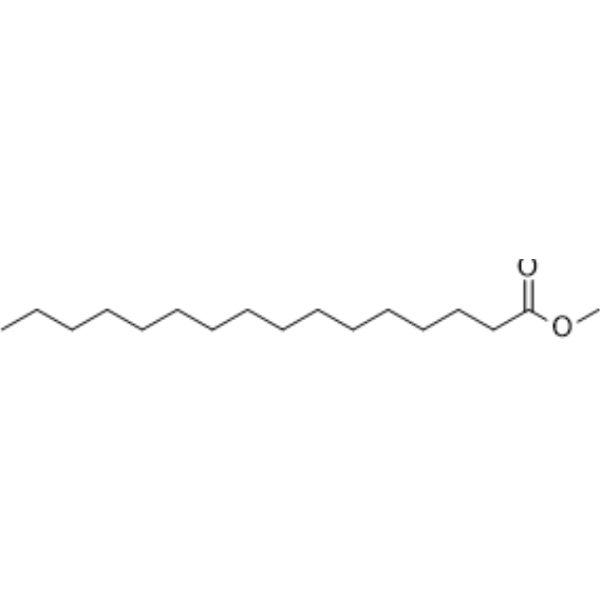
Methyl palmitate is a naturally occurring fatty acid ester. Methyl palmitate is a potent inhibitor of ΙκB phosphorylation. Methyl palmitate modulates macrophage activity and down-regulates pro-inflammatory mediators such as TNF-α and nitric oxide (NO). Methyl palmitate possesses anti-inflammatory and antifibrotic effects. Methyl palmitate can inhibit LPS (HY-D1056)-induced Kupffer cells and rat peritoneal macrophages. Methyl palmitate is able to inhibit the phagocytic function of RAW cells. Methyl palmitate is antagonistic to muscarinic receptors. Methyl palmitate exerts cardioprotective effects against ischemia/reperfusion injury in vivo. Methyl palmitate is highly toxic against adult T. cinnabarinus.
商品は「研究用試薬」です。人や動物の医療用・臨床診断用・食品用の製品ではありません。
研究用途以外に使用した場合、当社は一切の責任を負いかねます。
- 純度 : 98.60%
- CAS 番号: 112-39-0
- 分子式: C17H34O2
- 分子量:270.45
-
保管条件:Pure form -20°C, 3 years , 4°C, 2 years ; In solvent -80°C, 6 months , -20°C, 1 month

To place orders, for customer services and technical support, please contact: MedChemExpress USA
Tel: 609-228-6898 E-mail: [email protected] [email protected]


-
 生物活性
生物活性
-
化学情報
-
溶剤 & 溶解度
- プロトコル
- 純度とドキュメンテーション
- 参考文献
-
 Help & FAQs


-
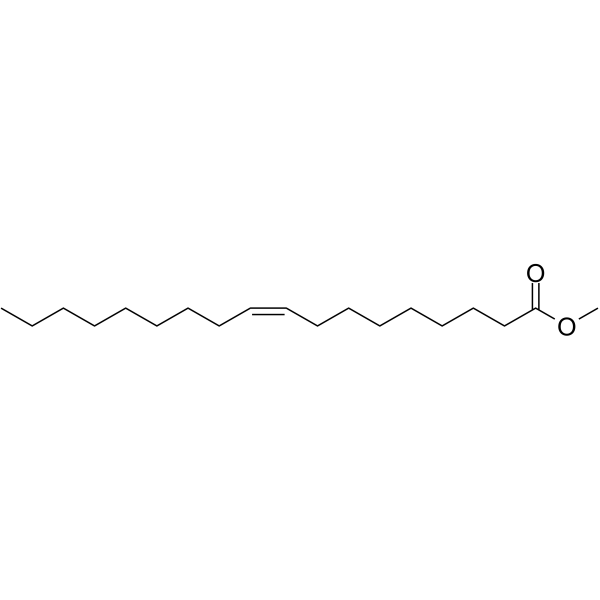
HY-N2598
Methyl oleateFAME -
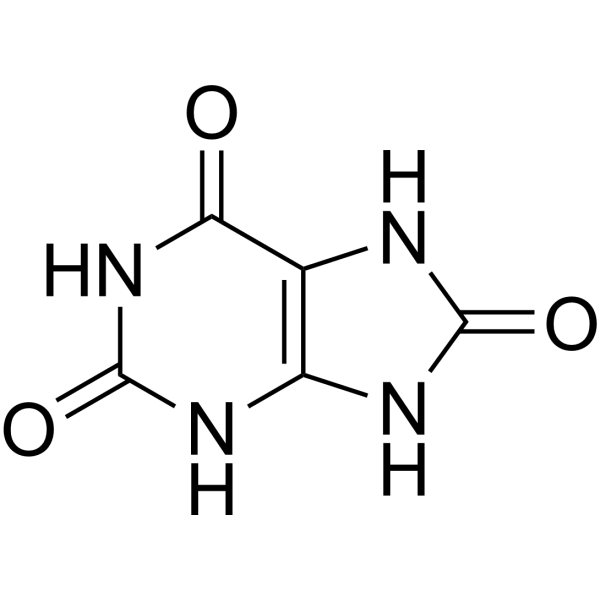
HY-B2130
Uric acidOxygen Radical Scavenger -
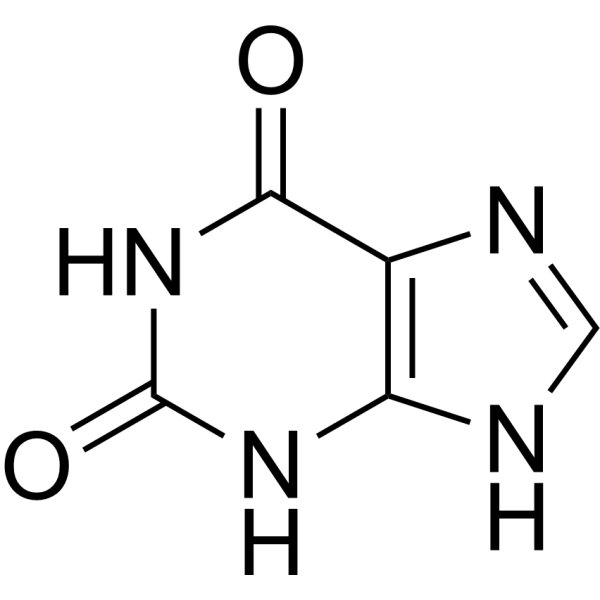
HY-W017389
Xanthine -
HY-103395
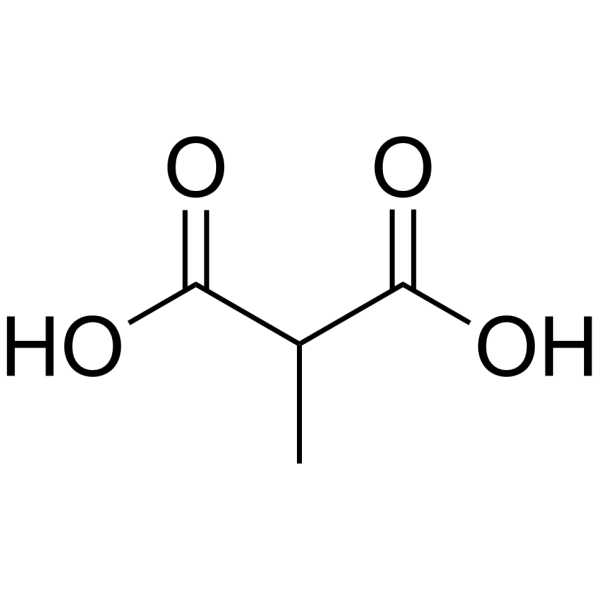
Methylmalonic acidVitamin B12 Indicator -
HY-113294
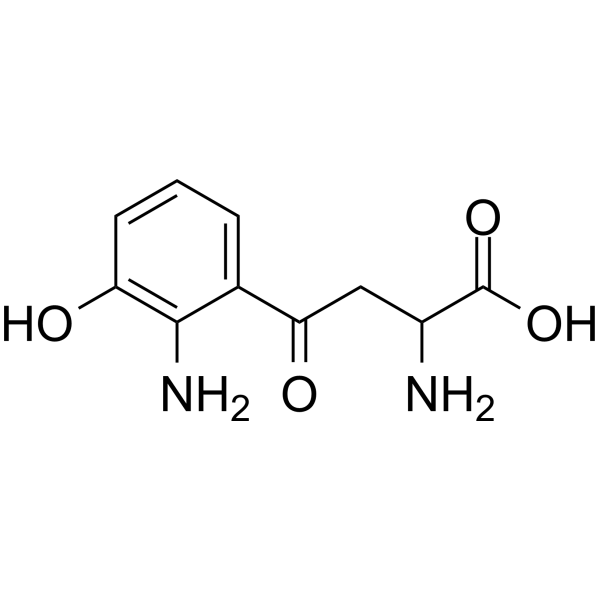
3-HydroxykynurenineEndogenous Neurotoxin -
HY-N1481
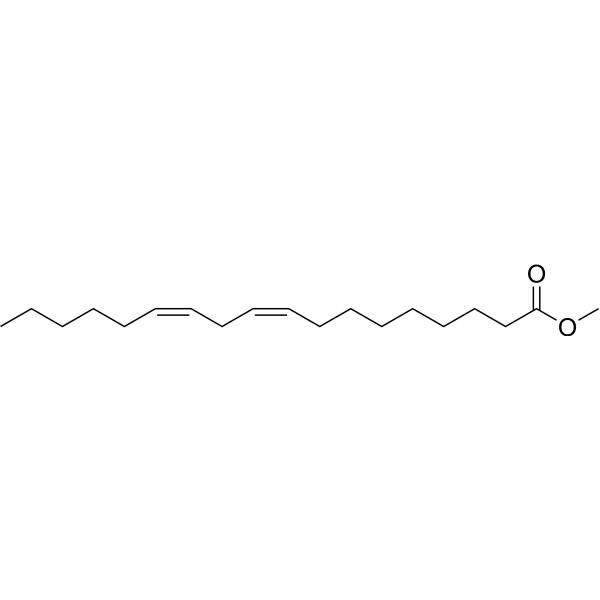
Methyl linoleateMITF Inhibitor -
HY-B1934
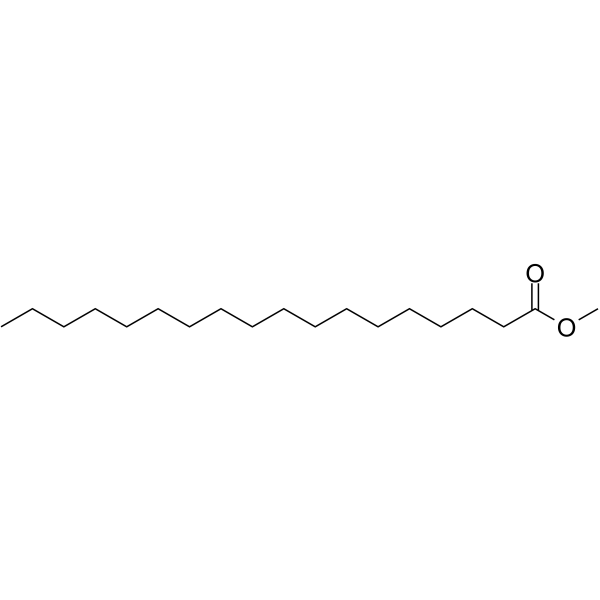
Methyl stearateFatty Acid Methyl Ester -
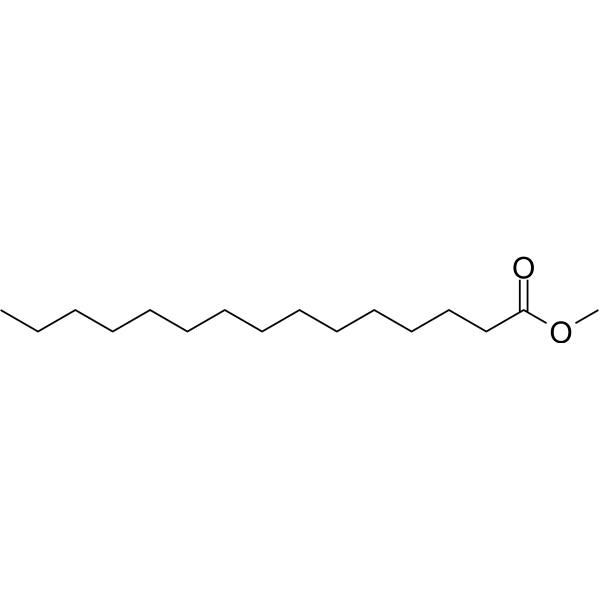
HY-W004289
Methyl pentadecanoateFatty Acid Ester -

HY-N1482R
Methyl palmitate (Standard)Anti-inflammatory Agent -
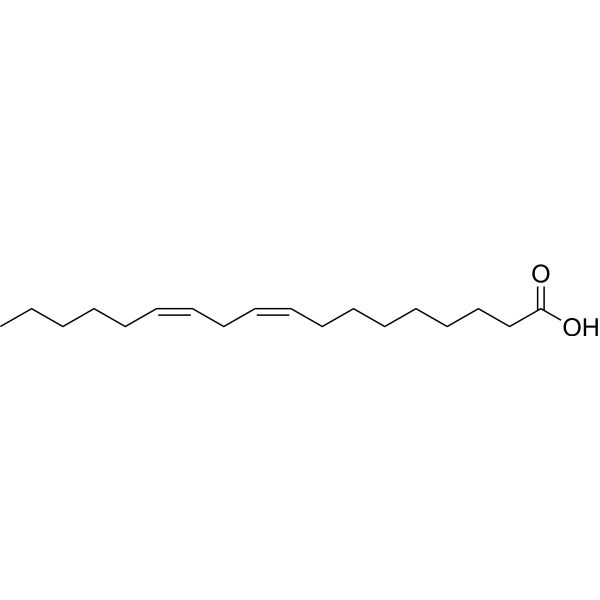
HY-N0729
Linoleic acidHuman Endogenous Metabolite -
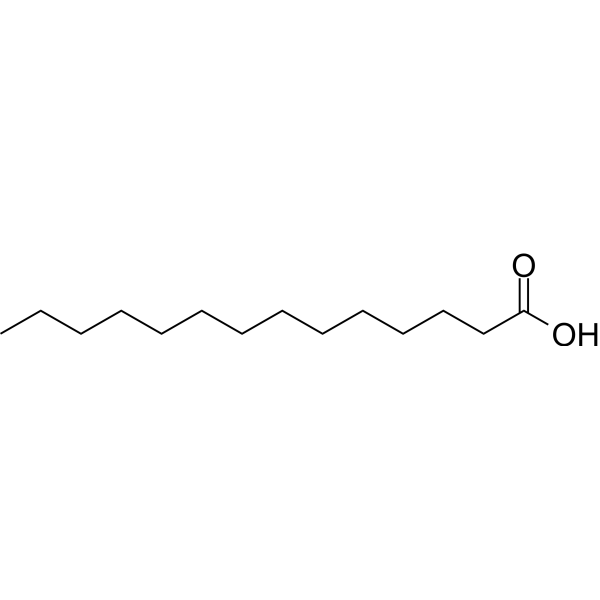
HY-N2041
Myristic acidEndogenous Metabolite -
HY-Y0366
Lauric acidMiddle Chain-free Fatty Acid
Parasite アイソフォーム固有の製品をすべて表示
More

生物活性
製品説明
体外実験
Methyl palmitate (Compound MP) (0.25-1 mM, 24 h) reduces the phagocytic activity and nitrite production dose-dependently in RAW cells[1].
Methyl palmitate (75 μM) significantly reduces the I/R-decreased cell viability in cardiomyocytes and increases the level of p-AKT[5].
MedChemExpress (MCE) has not independently confirmed the accuracy of these methods. They are for reference only.
-
Cell Line:RAW cells
-
Concentration:0.5 mM
-
Incubation Time:24 h
-
Result:Significantly decreased TNF-α release and inhibited the expression of NF-κB.
体内実験
Methyl palmitate (150 mg/kg, i.p., single dose) significantly inhibits IL-6 and TNF-α in Wistar rats[4].
Methyl palmitate (300 mg/kg, i.v., 5 min before reperfusion) attenuates the I/R-induced myocardium infarct size and significantly reduces the level of CK-MB in I/R-injured heart cardiomyocytes of rat model[5].
MedChemExpress (MCE) has not independently confirmed the accuracy of these methods. They are for reference only.


化学情報
-
CAS 番号 112-39-0
-
性状 <32°C Solid,>35°C Liquid
-
分子量 270.45
-
分子式 C17H34O2
-
Color Colorless to off-white
-
SMILES
CCCCCCCCCCCCCCCC(OC)=O
-
別名
Methyl palmitate
-
Structure Classification
-
輸送条件
Room temperature in continental US; may vary elsewhere.
-
保管条件
Pure form -20°C 3 years 4°C 2 years In solvent -80°C 6 months -20°C 1 month


溶剤 & 溶解度
体外:
DMSO : 50 mg/mL (184.88 mM; ultrasonic and warming and heat to 60°C; Hygroscopic DMSO has a significant impact on the solubility of product, please use newly opened DMSO)
Ethanol : 50 mg/mL (184.88 mM; Need ultrasonic)
Please refer to the solubility information to select the appropriate solvent. Once prepared, please aliquot and store the solution to prevent product inactivation from repeated freeze-thaw cycles.
Storage method and period of stock solution: -80°C, 6 months; -20°C, 1 month. When stored at -80°C, please use it within 6 months. When stored at -20°C, please use it within 1 month.
Please refer to the solubility information to select the appropriate solvent. Once prepared, please aliquot and store the solution to prevent product inactivation from repeated freeze-thaw cycles.
Storage method and period of stock solution: -80°C, 6 months; -20°C, 1 month. When stored at -80°C, please use it within 6 months. When stored at -20°C, please use it within 1 month.
濃度 (開始) × 体積 (開始) = 濃度 (終了) × 体積 (終了)
体内:
Select the appropriate dissolution method based on your experimental animal and administration route.
- For the following dissolution methods, please ensure to first prepare a clear stock solution using an In Vitro approach and then sequentially add co-solvents:
- To ensure reliable experimental results, the clarified stock solution can be appropriately stored based on storage conditions. As for the working solution for In Vivo experiments, it is recommended to prepare freshly and use it on the same day.
- The percentages shown for the solvents indicate their volumetric ratio in the final prepared solution. If precipitation or phase separation occurs during preparation, heat and/or sonication can be used to aid dissolution.
Add each solvent one by one: 10% DMSO 90% (20% SBE-β-CD in Saline)
Solubility: 2.5 mg/mL (9.24 mM); Suspended solution; Need ultrasonic
This protocol yields a suspended solution of 2.5 mg/mL. Suspended solution can be used for oral and intraperitoneal injection.
Taking 1 mL working solution as an example, add 100 μL DMSO stock solution (25.0 mg/mL) to 900 μL 20% SBE-β-CD in Saline, and mix evenly.
Preparation of 20% SBE-β-CD in Saline (4°C, storage for one week): 2 g SBE-β-CD powder is dissolved in 10 mL Saline, completely dissolve until clear.
For the following dissolution methods, please prepare the working solution directly:
It is recommended to prepare fresh solutions and use them promptly within a short period of time.
The percentages shown for the solvents indicate their volumetric ratio in the final prepared solution. If precipitation or phase separation occurs during preparation, heat and/or sonication can be used to aid dissolution.
Add each solvent one by one: 50% PEG300 50% Saline
Solubility: 30 mg/mL (110.93 mM); Suspended solution; Need ultrasonic
In Vivo Dissolution Calculator
Please enter the basic information of animal experiments:
-
-
-
-
Recommended: Prepare an additional quantity of animals to account for potential losses during experiments.
Please enter your animal formula composition:
-
%DMSO +
Recommended: Keep the proportion of DMSO in working solution below 2% if your animal is weak.
-
%+
-
+%Tween-80 + +
-
%Saline +
The co-solvents required include: DMSO, . All of co-solvents are available by MedChemExpress (MCE). , Tween 80. All of co-solvents are available by MedChemExpress (MCE).
Working solution concentration: 0.22 mg/mL
Method for preparing stock solution: mg drug dissolved in μL DMSO. Stock solution concentration: mg/mL.
1. Take μL DMSO stock solution;
2. Add μL .
μL , mix evenly;
3. Then add μL Tween 80, mix evenly;
4. Then add μL
Please ensure that the stock solution in the first step is dissolved to a clear state, and add co-solvents in sequence. You can use ultrasonic heating (ultrasonic cleaner, recommended frequency 20-40 kHz), vortexing, etc. to assist dissolution.


純度とドキュメンテーション
-
データシート (272 KB)
-
SDS (396 KB)
- English - EN (396 KB)
- Français - FR (396 KB)
- Deutsch - DE (396 KB)
- Norwegian - NO (396 KB)
- Español - ES (396 KB)
- Swedish - SV (396 KB)
- Italian - IT (396 KB)
- Korean - KR (396 KB)
- Portuguese - PT (396 KB)
-
取扱説明書 (2659 KB)
参考文献
[1]. El-Demerdash E, et al, Anti-inflammatory and antifibrotic effects of methyl palmitate. Toxicol Appl Pharmacol. 2011 Aug 1;254(3):238-44. [Content Brief]
[2]. N. R. Di Luzio, et al. Depression of phagocytic activity and immune response by methyl palmitate. Am J Physiol. 1964 May;206:939-43. [Content Brief]
[4]. Saeed, N. M., et al., (2012). Anti-inflammatory activity of methyl palmitate and ethyl palmitate in different experimental rat models. Toxicology and applied pharmacology, 264(1), 84–93. [Content Brief]
[5]. Shen, Y. J., et al., (2021). Methyl palmitate protects heart against ischemia/reperfusion-induced injury through G-protein coupled receptor 40-mediated activation of the PI3K/AKT pathway. European journal of pharmacology, 905, 174183. [Content Brief]


Complete Stock Solution Preparation Table
Please refer to the solubility information to select the appropriate solvent. Once prepared, please aliquot and store the solution to prevent product inactivation from repeated freeze-thaw cycles.
Storage method and period of stock solution: -80°C, 6 months; -20°C, 1 month. When stored at -80°C, please use it within 6 months. When stored at -20°C, please use it within 1 month.
| Optional Solvent | Concentration Solvent Mass | 1 mg | 5 mg | 10 mg | 25 mg |
|---|---|---|---|---|---|
| DMSO / Ethanol | 1 mM | 3.6975 mL | 18.4877 mL | 36.9754 mL | 92.4385 mL |
| 5 mM | 0.7395 mL | 3.6975 mL | 7.3951 mL | 18.4877 mL | |
| 10 mM | 0.3698 mL | 1.8488 mL | 3.6975 mL | 9.2439 mL | |
| 15 mM | 0.2465 mL | 1.2325 mL | 2.4650 mL | 6.1626 mL | |
| 20 mM | 0.1849 mL | 0.9244 mL | 1.8488 mL | 4.6219 mL | |
| 25 mM | 0.1479 mL | 0.7395 mL | 1.4790 mL | 3.6975 mL | |
| 30 mM | 0.1233 mL | 0.6163 mL | 1.2325 mL | 3.0813 mL | |
| 40 mM | 0.0924 mL | 0.4622 mL | 0.9244 mL | 2.3110 mL | |
| 50 mM | 0.0740 mL | 0.3698 mL | 0.7395 mL | 1.8488 mL | |
| 60 mM | 0.0616 mL | 0.3081 mL | 0.6163 mL | 1.5406 mL | |
| 80 mM | 0.0462 mL | 0.2311 mL | 0.4622 mL | 1.1555 mL | |
| 100 mM | 0.0370 mL | 0.1849 mL | 0.3698 mL | 0.9244 mL |


Methyl palmitate 関連分類
HY-N1482 関連分類
 Powered by Bioz