



Kaempferol 3-O-β-D-glucuronide
Based on 5 publication(s) in Google Scholar
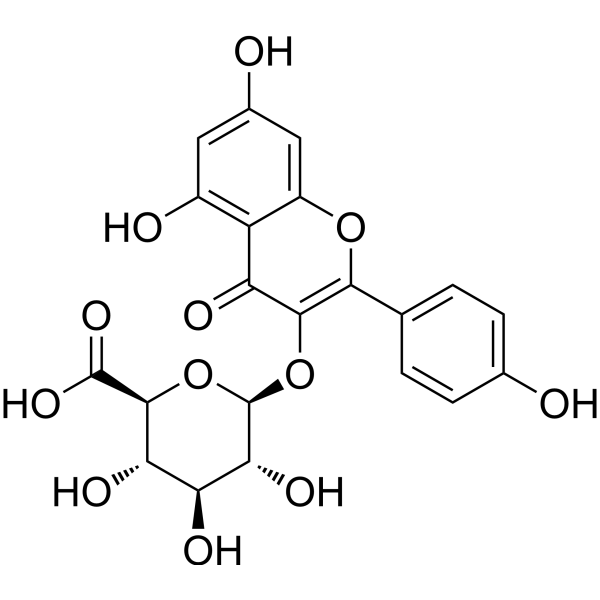
Kaempferol 3-O-β-D-glucuronide (Kaempferol-3-glucuronide) is a metabolite of kaempferol that can be taken orally and has anti-inflammatory properties. Kaempferol 3-O-β-D-glucuronide can activate AKT/GSK3β phosphorylation and improve glucose metabolism.
For research use only. We do not sell to patients.
- Purity : 99.47%
- CAS No.: 22688-78-4
- Formula: C21H18O12
- Molecular Weight:462.36
-
Storage:
4°C, protect from light
* In solvent : -80°C, 6 months; -20°C, 1 month (protect from light)

To place orders, for customer services and technical support, please contact: MedChemExpress USA
Tel: 609-228-6898 E-mail: [email protected] [email protected]


-
 Biological Activity
-
Chemical Information
-
Solvent & Solubility
- Protocols
- Purity & Documentation
- References
-
 Help & FAQs


-
HY-18085
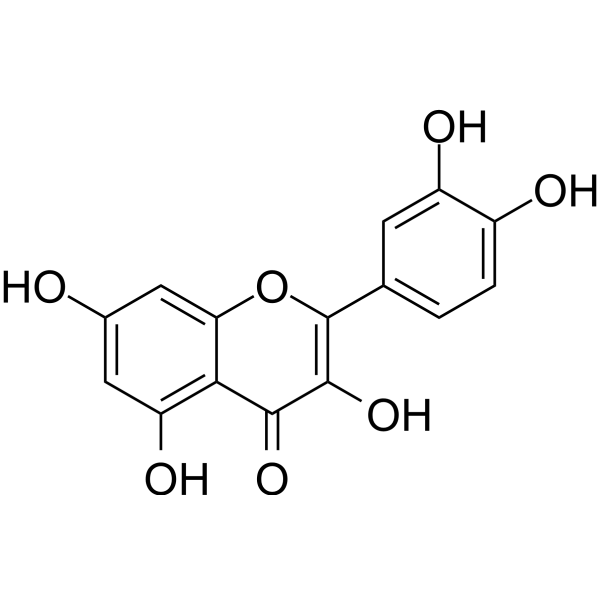
QuercetinFlavonoid Antioxidant -
HY-N0776
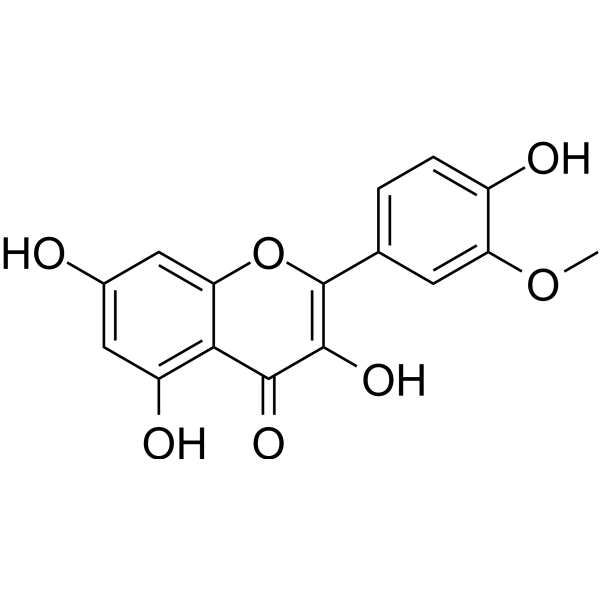
IsorhamnetinEndogenous Metabolite -
HY-N0627
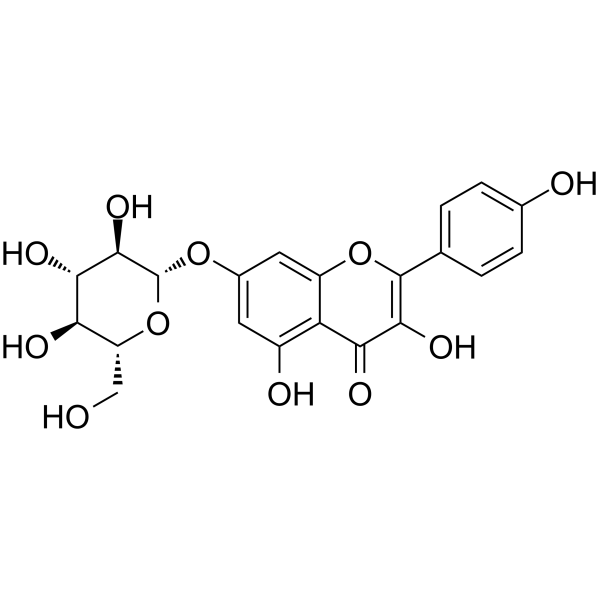
Kaempferol-7-O-β-D-glucopyranosideAntioxidant -
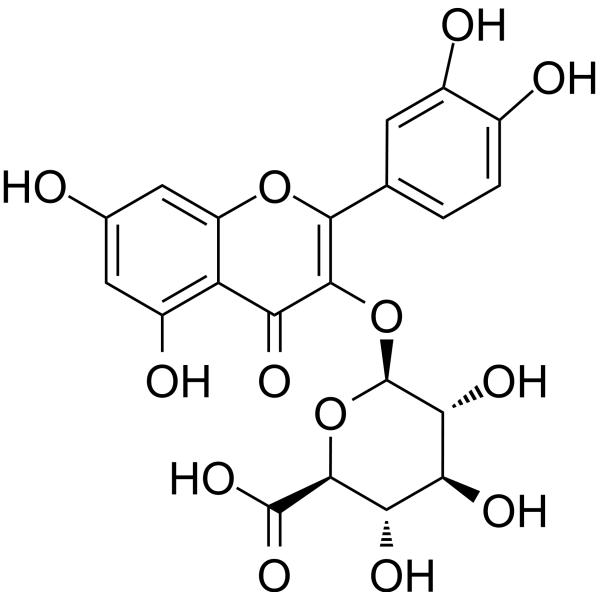
HY-13930
MiquelianinCBR1 Inhibitor -
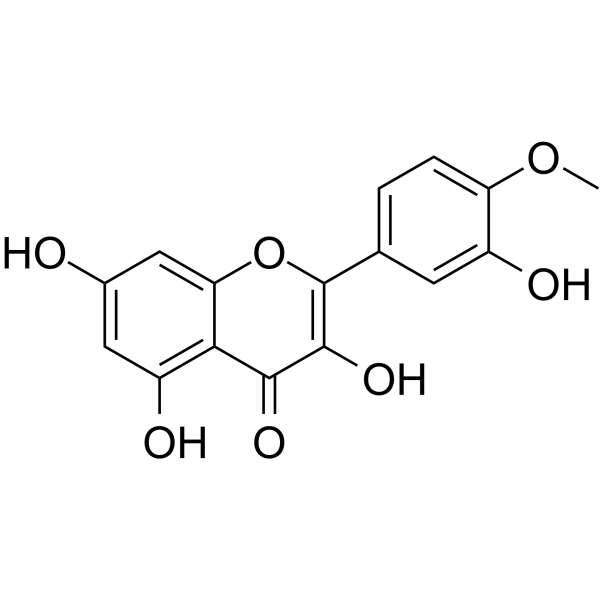
HY-N1181
TamarixetinAnti-inflammatory And Antioxidant -

HY-N7176R
Kaempferol 3-O-β-D-glucuronide (Standard)Interleukin Related Inhibitor -
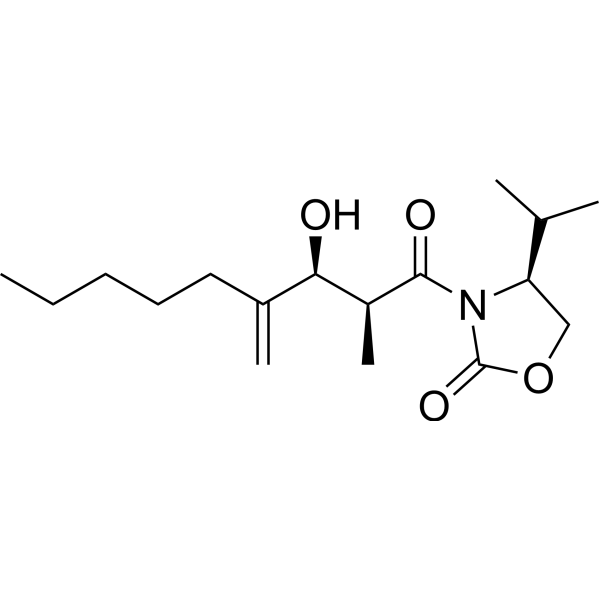
HY-102084
LMT-28IL-6 Inhibitor -
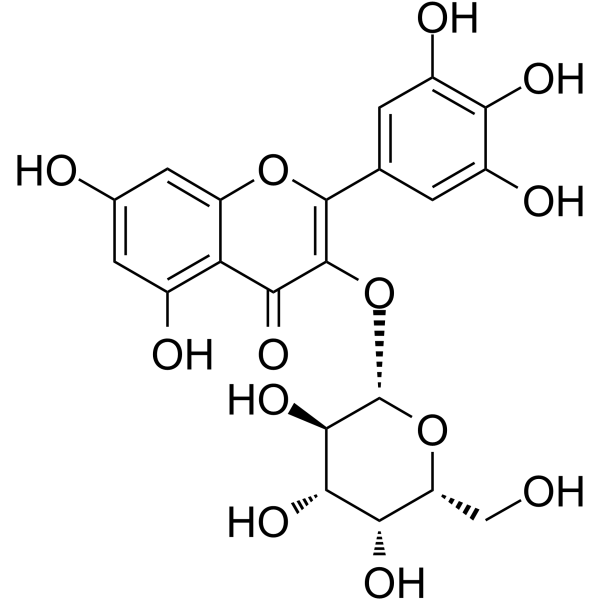
HY-N3220
Myricetin 3-O-galactosideXO Inhibitor -
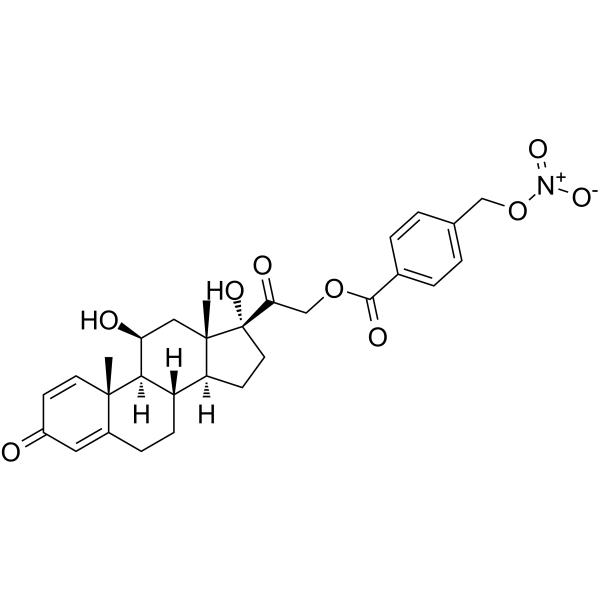
HY-101757
NO-prednisolonePrednisolone Derivative -

HY-W206016
3-Aminosalicylic acidHydroxybenzoic Acid Compound -
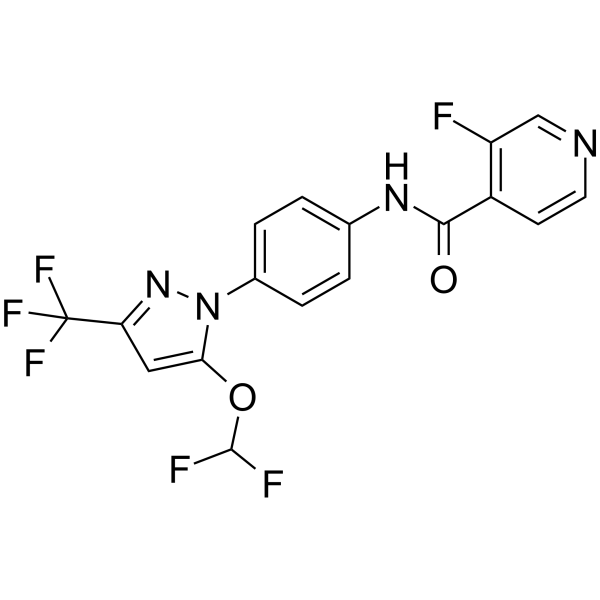
HY-112778
NFAT Transcription Factor Regulator-1Interleukin Related Inhibitor -

HY-W483854
N-Formyl-2-aminophenolAntioxidant Agent
Publications Citing Use of MedChemExpress (MCE) Kaempferol 3-O-β-D-glucuronide
More

Biological Activity
Description
|
IL-1β |
IL-10 |
In Vitro
Kaempferol 3-O-β-D-glucuronide (5-10 μM, 48 h) doesn’t affect the viability of RAW 264.7 cells[1].
Kaempferol 3-O-β-D-glucuronide (5-10 μM, 1 h) can inhibit the expression of RAW264.7 IL-1β, TNF-α, IL-6, increase the expression of IL-10, and inhibit the gene expression of COX-2 and i NOS[1].
Kaempferol 3-O-β-D-glucuronide (5-10 μM, 1 h) inhibits the phosphorylation of NF-κB p65 in RAW264.7 cells[1].
Kaempferol 3-O-β-D-glucuronide reduces the catalytic activity of enzymes encoded by AKR1B1, CLIP4, ATP6V1F, G6PD, and GLA, decreasing tumor occurrence in liver cancer (LIHC), cervical squamous cell carcinoma (CESC), sarcoma, renal papillary cell carcinoma (KRPCC), and skin melanoma (SCM) [2].
Kaempferol 3-O-β-D-glucuronide (0.1-10 μM, 40 s) enhances AKT enzyme activity in mouse liver tissue[3].
Kaempferol 3-O-β-D-glucuronide (0.1-10 μM, 30 min) upregulates the phosphorylation of PAKT and GSK3β, increasing glucose consumption in HepG2 cells[3].
MedChemExpress (MCE) has not independently confirmed the accuracy of these methods. They are for reference only. Further protocols information, click here.
-
Cell Line:RAW264.7 induced by LPS (HY-D1056)
-
Concentration:5, 10 μM
-
Incubation Time:48 h
-
Result:Reduced IL-3β concentration without affecting cell viability.
-
Cell Line:RAW264.7 induced by LPS (HY-D1056)
-
Concentration:5, 10 μM
-
Incubation Time:1 h
-
Result:Inhibited the expression of TNF-α, IL-6, NO, PGE2 and LTB4.
-
Cell Line:RAW264.7 induced by LPS (HY-D1056)
-
Concentration:5, 10 μM
-
Incubation Time:1 h
-
Result:Inhibited the gene expression of COX-2 and iNOS in RAW 264.7 cells.
-
Cell Line:RAW264.7 induced by LPS (HY-D1056)
-
Concentration:5, 10 μM
-
Incubation Time:1 h
-
Result:Inhibited phosphorylation of NF-κB p65.
-
Cell Line:HepG2
-
Concentration:0.1, 1, 10 μM
-
Incubation Time:30 min
-
Result:Upregulated the PAKT, phosphorylation of GSK3β, and increased glucose consumption in HepG2 cells.
In Vivo
MedChemExpress (MCE) has not independently confirmed the accuracy of these methods. They are for reference only.
-
Animal Model:Balb/c mice induced by LPS (HY-D1056), Carrageenan-induced plantar edema[1]
-
Dosage:1, 2, 5 mg/kg, single dose
-
Administration:Intraperitoneal injection (i.p.)
-
Result:Showed the IL-1β value was 173.8 pg/mL at 2 mg/kg and 73.6 pg/mL at 5 mg/kg. Necrosis, vascular junctions, and neutrophil infiltration were normalized.
Showed at a dose of 5 mg/kg, the maximum inhibition rate was 48%.


Chemical Information
-
CAS No. 22688-78-4
-
Appearance Solid
-
Molecular Weight 462.36
-
Formula C21H18O12
-
Color White to yellow
-
SMILES
O[C@H]([C@H]([C@@H]([C@@H](C(O)=O)O1)O)O)[C@@H]1OC2=C(C3=CC=C(O)C=C3)OC4=CC(O)=CC(O)=C4C2=O
-
Synonyms
Kaempferol-3-glucuronide; Kaempferol-3-O-glucuronide
-
Structure Classification
-
Initial Source
-
Shipping
Room temperature in continental US; may vary elsewhere.
-
Storage
4°C, protect from light
* In solvent : -80°C, 6 months; -20°C, 1 month (protect from light)


Publications (5)
-
Journal Impact Factor
-
Most Recent
-
Food Chem
Discovery of novel ascorbic acid derivatives and other metabolites in fruit of Rosa roxburghii Tratt through untargeted metabolomics and feature-based molecular networking. [Abstract]2023 Mar 30;405(Pt A):134807. PMID: 36370576 -
Food Chem
New insights into the influences of baking and storage on the nonvolatile compounds in oolong tea: A nontargeted and targeted metabolomics study. [Abstract]2022 May 1:375:131872. PMID: 34953237 -
J Ethnopharmacol
Integrated metabolomics and proteomics analysis elucidated the therapeutic effect of Huangkui Capsule on tacrolimus-induced chronic nephrotoxicity in rats. [Abstract]2026 Apr 6:360:121196. PMID: 41534748 -
J Agric Food Chem
High-Pressure and Thermal Pasteurization Applied to Smoothies Enhances (Poly)Phenol Bioaccessibility along the Gastrointestinal Tract. [Abstract]2025 Jun 25;73(25):15561-15578. PMID: 40497562 -
Foods
Design of a Plant-Based Smoothie: Exploiting Ingredient Complementarity for a Diversified (Poly)phenolic Profile Quantified by Targeted LC-MS/MS Analysis. [Abstract]2026 Apr 9;15(8):1293. PMID: 42073181


Solvent & Solubility
In Vitro:
DMSO : 100 mg/mL (216.28 mM; Need ultrasonic; Hygroscopic DMSO has a significant impact on the solubility of product, please use newly opened DMSO)
Please refer to the solubility information to select the appropriate solvent. Once prepared, please aliquot and store the solution to prevent product inactivation from repeated freeze-thaw cycles.
Storage method and period of stock solution: -80°C, 6 months; -20°C, 1 month (protect from light). When stored at -80°C, please use it within 6 months. When stored at -20°C, please use it within 1 month.
Please refer to the solubility information to select the appropriate solvent. Once prepared, please aliquot and store the solution to prevent product inactivation from repeated freeze-thaw cycles.
Storage method and period of stock solution: -80°C, 6 months; -20°C, 1 month (protect from light). When stored at -80°C, please use it within 6 months. When stored at -20°C, please use it within 1 month.
Concentration (start) × Volume (start) = Concentration (final) × Volume (final)
In Vivo:
Select the appropriate dissolution method based on your experimental animal and administration route.
- For the following dissolution methods, please ensure to first prepare a clear stock solution using an In Vitro approach and then sequentially add co-solvents:
- To ensure reliable experimental results, the clarified stock solution can be appropriately stored based on storage conditions. As for the working solution for In Vivo experiments, it is recommended to prepare freshly and use it on the same day.
- The percentages shown for the solvents indicate their volumetric ratio in the final prepared solution. If precipitation or phase separation occurs during preparation, heat and/or sonication can be used to aid dissolution.
Add each solvent one by one: 10% DMSO 40% PEG300 5% Tween-80 45% Saline
Solubility: ≥ 2.5 mg/mL (5.41 mM); Clear solution
This protocol yields a clear solution of ≥ 2.5 mg/mL (saturation unknown).
Taking 1 mL working solution as an example, add 100 μL DMSO stock solution (25.0 mg/mL) to 400 μL PEG300, and mix evenly; then add 50 μL Tween-80 and mix evenly; then add 450 μL Saline to adjust the volume to 1 mL.
Preparation of Saline: Dissolve 0.9 g sodium chloride in ddH₂O and dilute to 100 mL to obtain a clear Saline solution.
Add each solvent one by one: 10% DMSO 90% (20% SBE-β-CD in Saline)
Solubility: ≥ 2.5 mg/mL (5.41 mM); Clear solution
This protocol yields a clear solution of ≥ 2.5 mg/mL (saturation unknown).
Taking 1 mL working solution as an example, add 100 μL DMSO stock solution (25.0 mg/mL) to 900 μL 20% SBE-β-CD in Saline, and mix evenly.
Preparation of 20% SBE-β-CD in Saline (4°C, storage for one week): 2 g SBE-β-CD powder is dissolved in 10 mL Saline, completely dissolve until clear.
In Vivo Dissolution Calculator
Please enter the basic information of animal experiments:
-
-
-
-
Recommended: Prepare an additional quantity of animals to account for potential losses during experiments.
Please enter your animal formula composition:
-
%DMSO +
Recommended: Keep the proportion of DMSO in working solution below 2% if your animal is weak.
-
%+
-
+%Tween-80 + +
-
%Saline +
The co-solvents required include: DMSO, . All of co-solvents are available by MedChemExpress (MCE). , Tween 80. All of co-solvents are available by MedChemExpress (MCE).
Working solution concentration: 0.22 mg/mL
Method for preparing stock solution: mg drug dissolved in μL DMSO. Stock solution concentration: mg/mL. * In solvent : -80°C, 6 months; -20°C, 1 month (protect from light)
1. Take μL DMSO stock solution;
2. Add μL .
μL , mix evenly;
3. Then add μL Tween 80, mix evenly;
4. Then add μL
Please ensure that the stock solution in the first step is dissolved to a clear state, and add co-solvents in sequence. You can use ultrasonic heating (ultrasonic cleaner, recommended frequency 20-40 kHz), vortexing, etc. to assist dissolution.

Protocols
-
Kinase activity and phosphorylation assays
Kinase activity assays measure the ability of kinases to transfer phosphate groups from ATP to specific substrates, while phosphorylation assays detect the presence and levels of phosphorylated proteins. Common methods include radiolabeled ATP incorporation (e. g. ,), ADP release detection via bioluminescence (e. g. ,[3]), enzyme-linked immunosorbent assays (ELISA) for phospho-specific epitopes (e. g. ,[6]), and microtiter-based formats for high-throughput screening (e. g. ,[8]). The ADP-Glo assay quantifies kinase activity by measuring ADP produced during phosphorylation using a luciferase-based system. Radiometric assays involve autoradiography or scintillation counting after incorporation of 32P-labeled ATP into substrate proteins. ELISA-based approaches rely on phospho-specific antibodies to detect activated kinases in cell lysates or purified samples.
-
Western Blot
Western blotting (WB) is a commonly used experimental method in molecular biology, biochemistry, and immunogenetics for identifying and quantifying target proteins. It combines gel electrophoresis with immunoassay, enabling researchers to analyze protein expression, post-translational modifications, and molecular weight.
-
Research Protocol for Inflammation-related Diseases
The NLRP3 inflammasome is a cytosolic innate immune signaling platform that integrates priming signals and danger-signal activation to promote caspase-1 activation, maturation of IL-1β and IL-18, and gasdermin D-mediated pyroptotic cell death. The core experimental logic is to determine whether inflammatory disease phenotypes are driven by increased NLRP3 expression, ASC-containing inflammasome assembly, caspase-1 cleavage, GSDMD cleavage, and extracellular release of IL-1β/IL-18 rather than by nonspecific cell injury alone. The pathway is strongly linked to inflammation-related disease phenotypes because monosodium urate crystals activate NALP3/NLRP3 inflammasome signaling in gout-like crystal inflammation, cholesterol crystals activate NLRP3 inflammasomes in atherogenesis models, and DSS-induced intestinal inflammation has been reported to involve NLRP3 inflammasome activity. However, experimental colitis studies also show context-dependent protective effects of NLRP3 inflammasome co
-
Protocol for Kinase activity and phosphorylation assays
Kinase activity assays measure transfer of phosphate from ATP to a protein or peptide substrate, generating phosphorylated substrate, ADP, or incorporated radiolabeled phosphate as the readout; phosphorylation assays measure site-specific phosphorylation in cells or tissues as a proxy for kinase-pathway activation, inhibition, or substrate regulation. Phosphorylation can be detected by phospho-specific Western blot, immunoprecipitation kinase assay, phospho-immunofluorescence, phospho-flow cytometry, luminescent ADP detection, radiolabeled ATP incorporation, or reporter-based pathway assays, and these readouts can be applied to cancer cells, primary neurons, mouse tumors, organoids, inflammatory macrophages, ferroptosis studies, and mitophagy studies when the kinase target is biologically relevant.


Purity & Documentation
-
Data Sheet (287 KB)
-
SDS (393 KB)
- English - EN (393 KB)
- Français - FR (393 KB)
- Deutsch - DE (393 KB)
- Norwegian - NO (393 KB)
- Español - ES (393 KB)
- Swedish - SV (393 KB)
- Italian - IT (393 KB)
- Korean - KR (393 KB)
- Portuguese - PT (393 KB)
-
Handling Instructions (2659 KB)
References


Complete Stock Solution Preparation Table
Please refer to the solubility information to select the appropriate solvent. Once prepared, please aliquot and store the solution to prevent product inactivation from repeated freeze-thaw cycles.
Storage method and period of stock solution: -80°C, 6 months; -20°C, 1 month (protect from light). When stored at -80°C, please use it within 6 months. When stored at -20°C, please use it within 1 month.
| Optional Solvent | Concentration Solvent Mass | 1 mg | 5 mg | 10 mg | 25 mg |
|---|---|---|---|---|---|
| DMSO | 1 mM | 2.1628 mL | 10.8141 mL | 21.6282 mL | 54.0704 mL |
| 5 mM | 0.4326 mL | 2.1628 mL | 4.3256 mL | 10.8141 mL | |
| 10 mM | 0.2163 mL | 1.0814 mL | 2.1628 mL | 5.4070 mL | |
| 15 mM | 0.1442 mL | 0.7209 mL | 1.4419 mL | 3.6047 mL | |
| 20 mM | 0.1081 mL | 0.5407 mL | 1.0814 mL | 2.7035 mL | |
| 25 mM | 0.0865 mL | 0.4326 mL | 0.8651 mL | 2.1628 mL | |
| 30 mM | 0.0721 mL | 0.3605 mL | 0.7209 mL | 1.8023 mL | |
| 40 mM | 0.0541 mL | 0.2704 mL | 0.5407 mL | 1.3518 mL | |
| 50 mM | 0.0433 mL | 0.2163 mL | 0.4326 mL | 1.0814 mL | |
| 60 mM | 0.0360 mL | 0.1802 mL | 0.3605 mL | 0.9012 mL | |
| 80 mM | 0.0270 mL | 0.1352 mL | 0.2704 mL | 0.6759 mL | |
| 100 mM | 0.0216 mL | 0.1081 mL | 0.2163 mL | 0.5407 mL |


Kaempferol 3-O-β-D-glucuronide Related Classifications
HY-N7176 Related Classifications
 Powered by Bioz