



AZ10397767
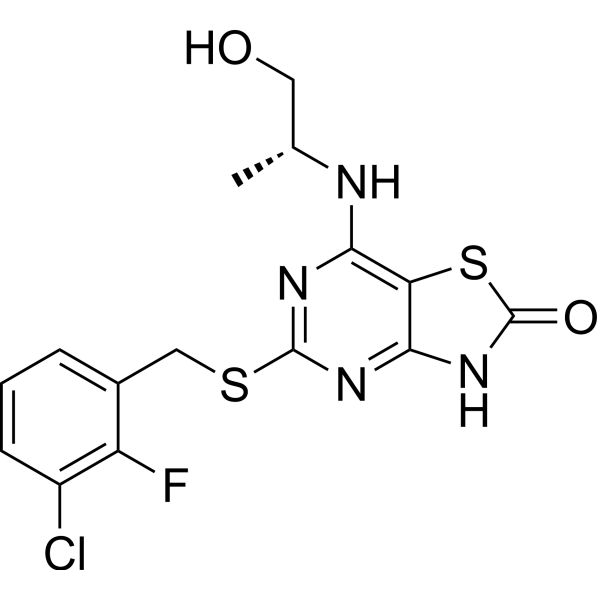
AZ10397767 is an orally active, selective CXCR2 receptor antagonist with an IC50 of 1 nM. AZ10397767 attenuates the Oxaliplatin (HY-17371)-induced NF-κB transcriptional activity and potentiates Oxaliplatin-induced apoptosis in androgen-independent prostate cancer (AIPC) cells. AZ10397767 significantly inhibits neutrophil recruitment into tumors which then adversely affects tumor growth in vitro and in vivo.
연구목적의 판매만을 진행합니다. 환자를 대상으로 한 판매는 하지 않습니다.
- CAS No.: 333742-63-5
- 화학식: C15H14ClFN4O2S2
- 분자량:400.88
-
보관:
Please store the product under the recommended conditions in the Certificate of Analysis.

To place orders, for customer services and technical support, please contact: MedChemExpress USA
Tel: 609-228-6898 E-mail: [email protected] [email protected]


-
 Biological Activity
-
Chemical Information
- Protocol
- 순도&문서
- References
-
 Help & FAQs


-
HY-P1102
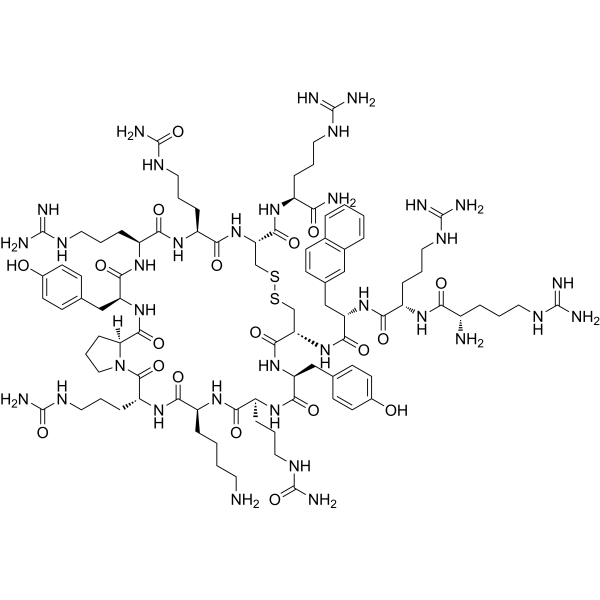
TC14012CXCR4 Antagonist -
HY-110269
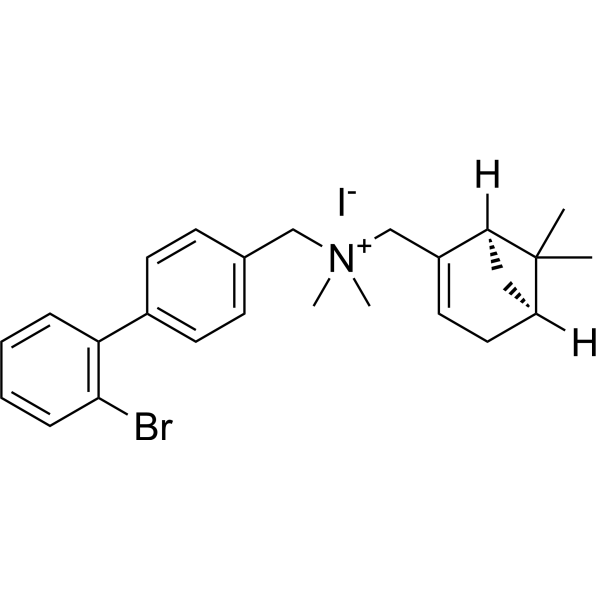
VUF 11222CXCR3 Agonist -
HY-10046
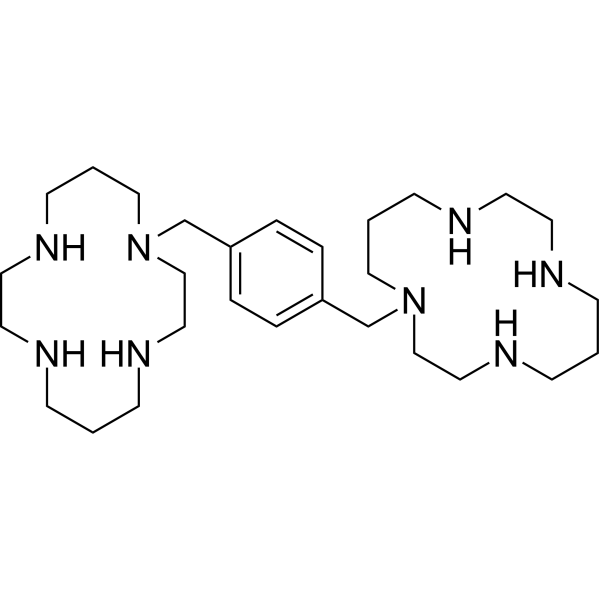
PlerixaforCXCR4 Antagonist -
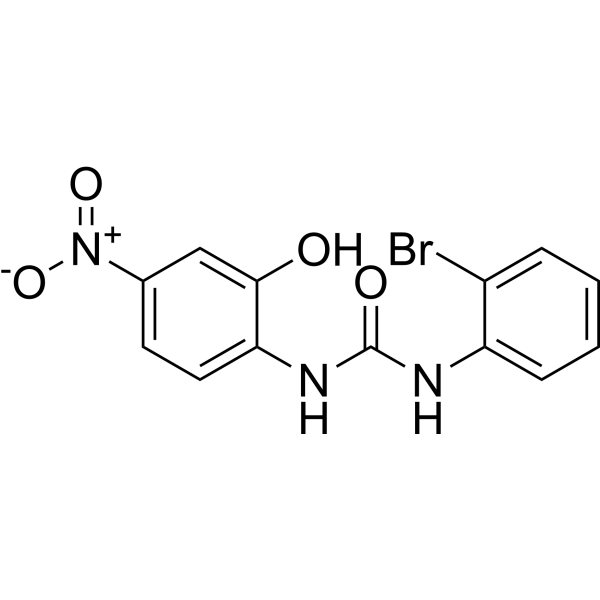
HY-16711
SB225002CXCR2 Antagonist -
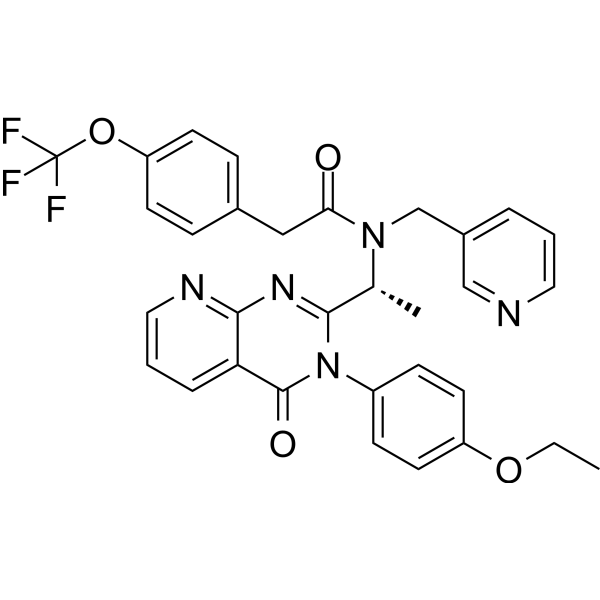
HY-15319
AMG 487CXCR3 Antagonist -
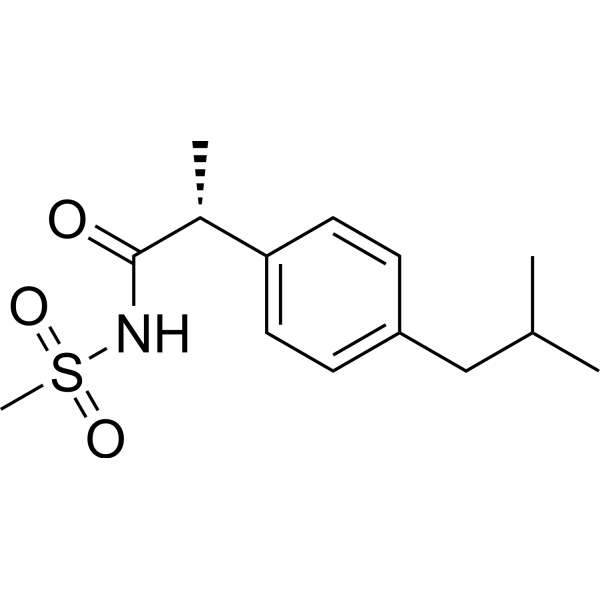
HY-15251
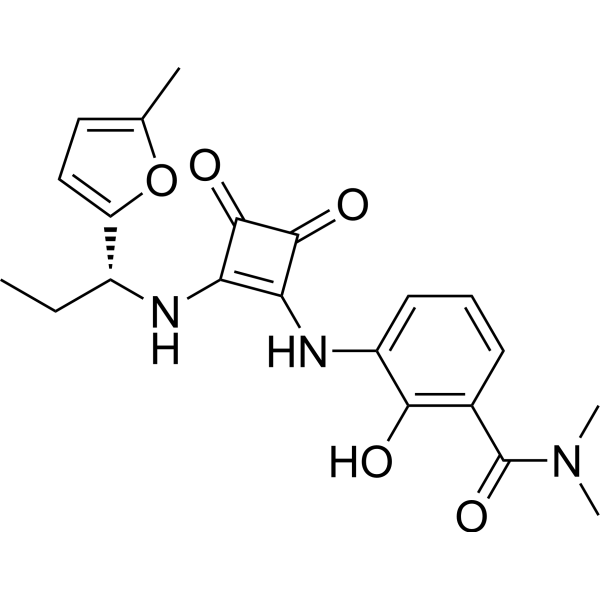
ReparixinCXCR1/2 Inhibitor -
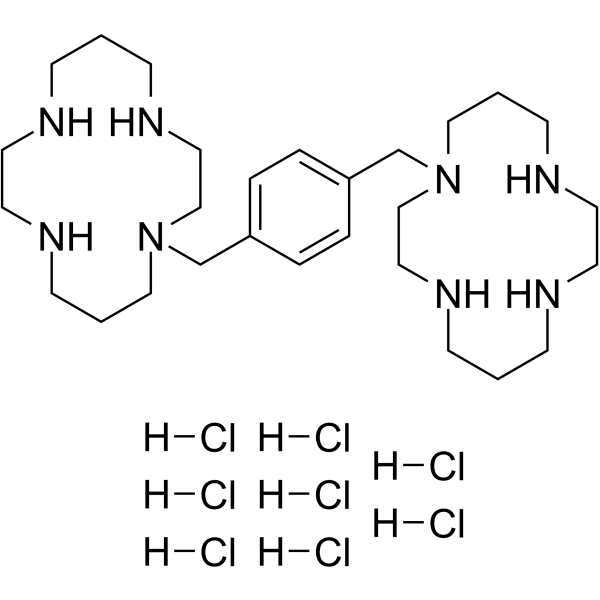
HY-50912
Plerixafor octahydrochlorideCXCR4 Antagonist -
HY-10198
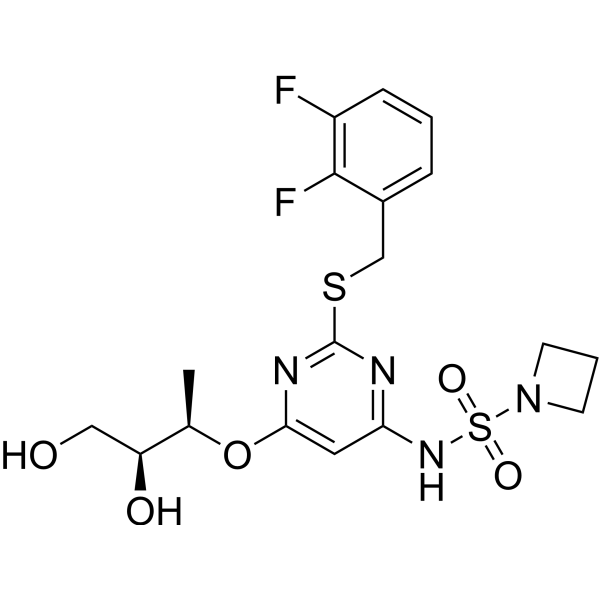
NavarixinCXCR1/2 Antagonist -
HY-19855
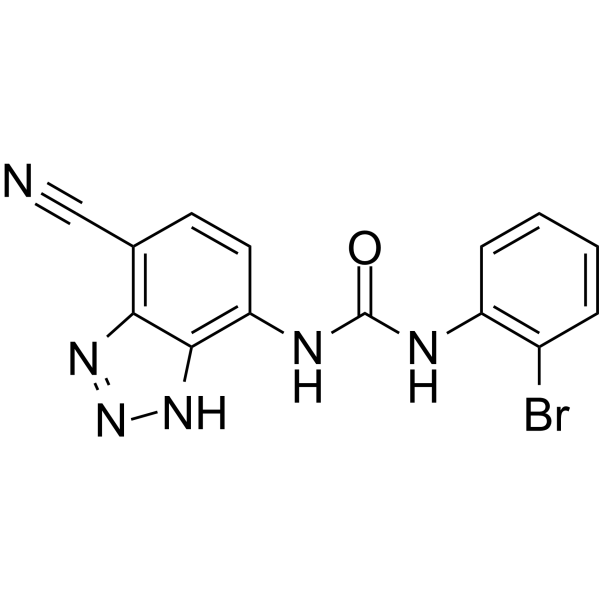
AZD-5069CXCR2 Antagonist -
HY-50688
SB-265610CXCR2 Antagonist -
HY-50101
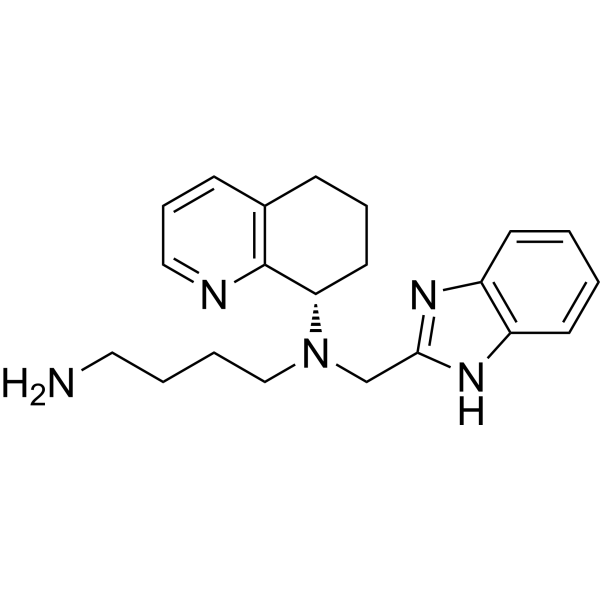
MavorixaforCXCR4 Antagonist -
HY-15252
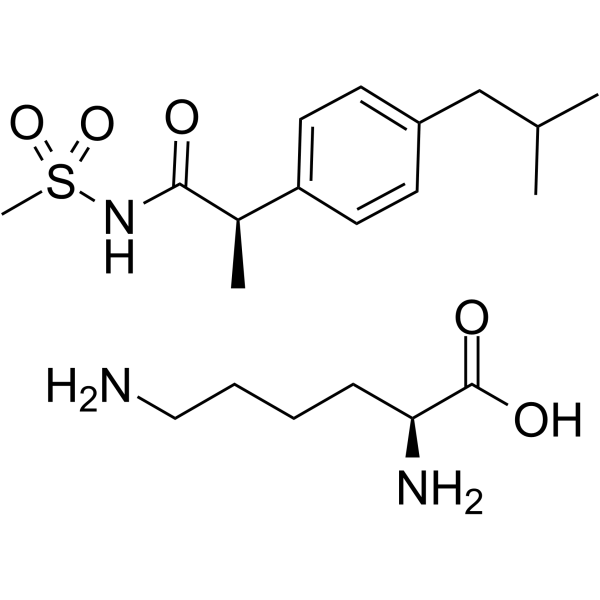
Reparixin L-lysine saltCXCR Inhibitor


Biological Activity
제품 설명
IC50 & Target
[1]|
CXCR2 1 nM (IC50) |
Cellular Effect
|
Cell Line

|
Type | Value | Description | References |
|---|---|---|---|---|
| HEK293 | IC50 |
1 nM
Compound: 30a
|
Displacement of [125I]IL8 from human recombinant CXCR2 expressed in HEK293 cells by SPA assay
Displacement of [125I]IL8 from human recombinant CXCR2 expressed in HEK293 cells by SPA assay
|
[PMID: 18240390] |
In Vitro
AZ10397767 (20 nM; 48 h) abrogates the IL-8-induced (3 nM) increase in proliferation, reducing cell number to below basal levels[2].
AZ10397767 (20 nM; 72 h) increases Oxaliplatin (HY-17371) cytotoxicity, and potentiates Oxaliplatin-induced apoptosis in AIPC cells. AZ10397767 by itself fails to induce apoptosis in either PC3 or DU145 cells[3].
AZ10397767 (20 nM; 24 h) attenuates the Oxaliplatin-induced NF-κB transcriptional activity and the increases in mRNA transcript levels for each of the CXC-chemokines (CXCL8 and CXCL1) and antiapoptotic genes (Bcl-2 and survivin) in the PC3 and DU145 cells[3].
MedChemExpress (MCE) has not independently confirmed the accuracy of these methods. They are for reference only.
-
Cell Line:LNCaP cells and 22Rv1 cells
-
Concentration:20 nM
-
Incubation Time:48 h
-
Result:Abrogated the IL-8-induced (3 nM) increase in proliferation, reducing cell number to below basal levels.
-
Cell Line:PC3 or DU145 cells
-
Concentration:20 nM
-
Incubation Time:72 h
-
Result:Coadministration with 0.1 or 1 μM Oxaliplatin resulted in a marked increase in the sub-G0/G1 cell population in either cell line.
Potentiates Oxaliplatin-induced apoptosis in AIPC cells.
-
Cell Line:PC3 or DU145 cells
-
Concentration:20 nM
-
Incubation Time:24 h
-
Result:Attenuated the Oxaliplatin (1 μM)-induced NF-κB transcriptional activity and the increases in mRNA transcript levels for each of the CXC-chemokines (CXCL8 and CXCL1) and antiapoptotic genes (Bcl-2 and survivin) in the PC3 and DU145 cells.
In Vivo
AZ10397767 (compound 30a) has a CL of 4 ml/min/kg in rat[1].
MedChemExpress (MCE) has not independently confirmed the accuracy of these methods. They are for reference only.
-
Animal Model:SCID mice with A549 cells[4]
-
Dosage:100 mg/kg
-
Administration:Orally; twice daily; for 22 days
-
Result:Tumors were 36% smaller than their control counterparts.
Significantly (p < 0.01) reduced the number of tumor-infiltrating neutrophils compared to mice receiving vehicle control.
- Annexin V plus membrane-impermeant dye apoptosis staining
- Zymosan-Induced Peritonitis
- Patient-Derived Orthotopic Xenograft (PDOX)
- Research Protocol for Inflammation-related Diseases
- Phagocytosis Functional Assay
- Dual Luciferin reporter gene assay
- Detection of Apoptosis
- TUNEL staining for apoptotic DNA fragmentation
- Research Protocol for Endocrine Diseases
- Patient-Derived Xenograft (PDX)
- Apoptosis Solutions
- Subcutaneous Cell-Line-Derived Xenograft
- Orthotopic Cell-Line Xenograft


Chemical Information
-
CAS No. 333742-63-5
-
분자량 400.88
-
화학식 C15H14ClFN4O2S2
-
SMILES
O=C1SC2=C(N[C@H](C)CO)N=C(SCC3=CC=CC(Cl)=C3F)N=C2N1
-
선적
Room temperature in continental US; may vary elsewhere.
-
보관
Please store the product under the recommended conditions in the Certificate of Analysis.


순도&문서
References
[1]. Iain Walters, et al. Evaluation of a series of bicyclic CXCR2 antagonists. Bioorg Med Chem Lett. 2008 Jan 15;18(2):798-803. [Content Brief]
[2]. Angela Seaton, et al. Interleukin-8 signaling promotes androgen-independent proliferation of prostate cancer cells via induction of androgen receptor expression and activation. Carcinogenesis. 2008 Jun;29(6):1148-56. [Content Brief]
[3]. Catherine Wilson, et al. Chemotherapy-induced CXC-chemokine/CXC-chemokine receptor signaling in metastatic prostate cancer cells confers resistance to oxaliplatin through potentiation of nuclear factor-kappaB transcription and evasion of apoptosis. J Pharmacol Exp Ther. 2008 Dec;327(3):746-59. [Content Brief]
[4]. Simon Tazzyman, et al. Inhibition of neutrophil infiltration into A549 lung tumors in vitro and in vivo using a CXCR2-specific antagonist is associated with reduced tumor growth. Int J Cancer. 2011 Aug 15;129(4):847-58. [Content Brief]

Calculators
Concentration (start) × Volume (start) = Concentration (final) × Volume (final)


AZ10397767 Related Classifications
HY-124056 Related Classifications
 Powered by Bioz