



MAP4K4-IN-3
Based on 1 publication(s) in Google Scholar
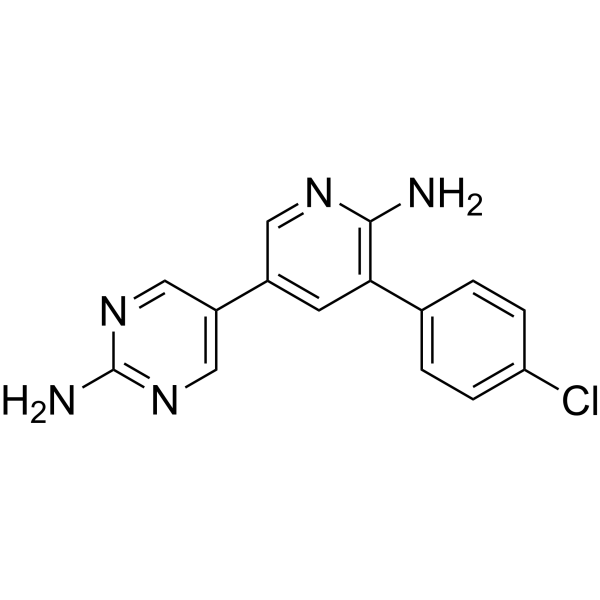
MAP4K4-IN-3 (Compound 17) is a potent and selective MAP4K4 inhibitor with an IC50 of 14.9 nM in kinase assay, an IC50 of 470 nM in cell assay. Antidiabetic agent.
연구목적의 판매만을 진행합니다. 환자를 대상으로 한 판매는 하지 않습니다.
- Purity : 99.77%
- CAS No.: 1811510-58-3
- 화학식: C15H12ClN5
- 분자량:297.74
-
보관:
4°C, protect from light
* In solvent : -80°C, 6 months; -20°C, 1 month (protect from light)

To place orders, for customer services and technical support, please contact: MedChemExpress USA
Tel: 609-228-6898 E-mail: [email protected] [email protected]


-
 Biological Activity
-
Chemical Information
-
용액&용해도
- Protocol
- 순도&문서
- References
-
 Help & FAQs


-
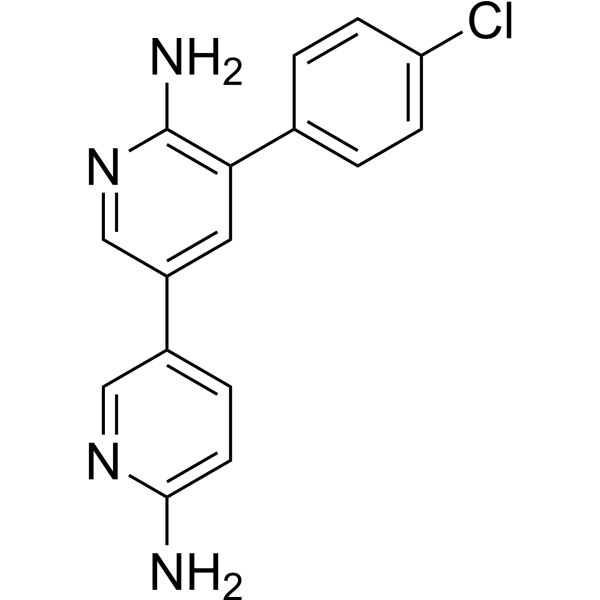
HY-19562
PF-06260933MAP4K4 Inhibitor -
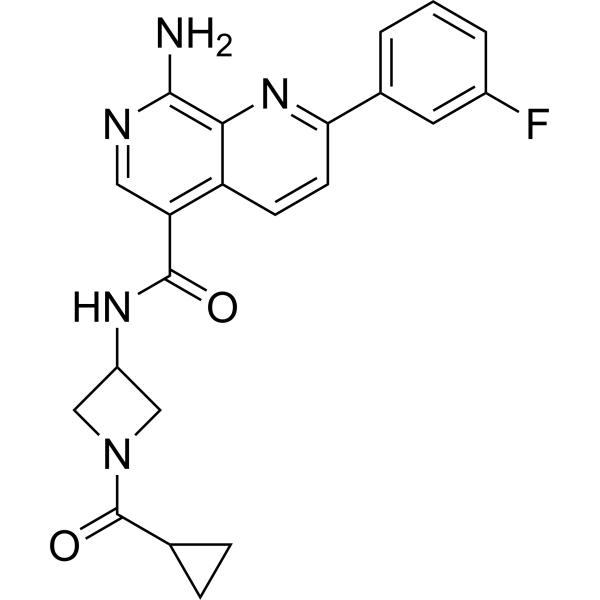
HY-100343
GNE-495MAP4K4 Inhibitor -
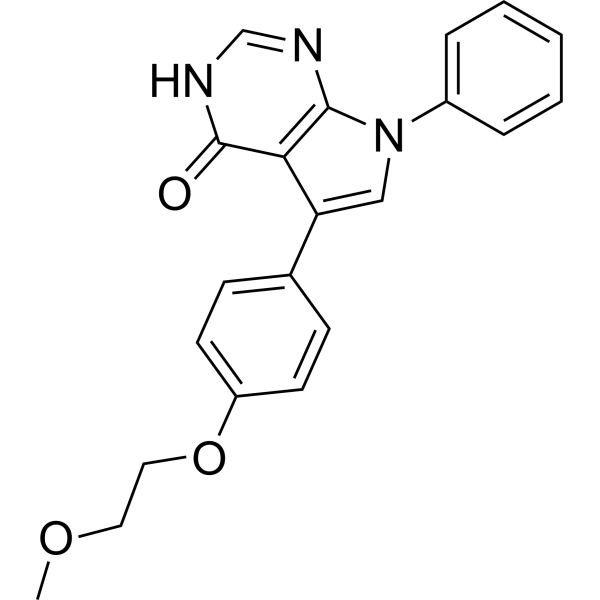
HY-111754
DMX-5804MAP4K4 Inhibitor -
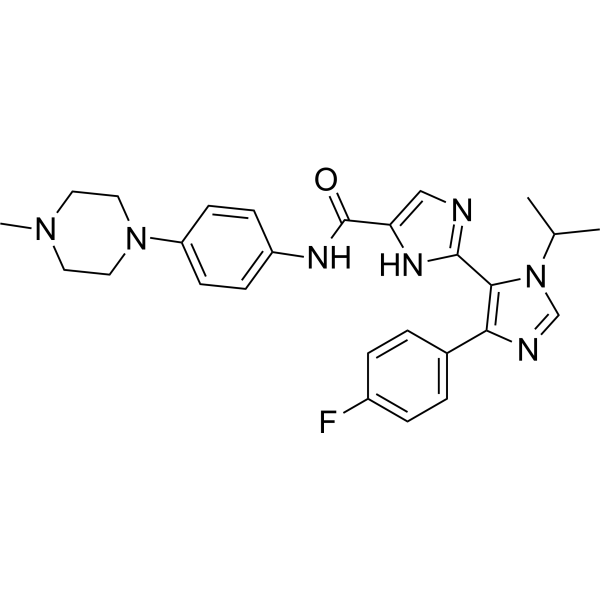
HY-160623
RentosertibTNIK/MAP4K4 Inhibitor -
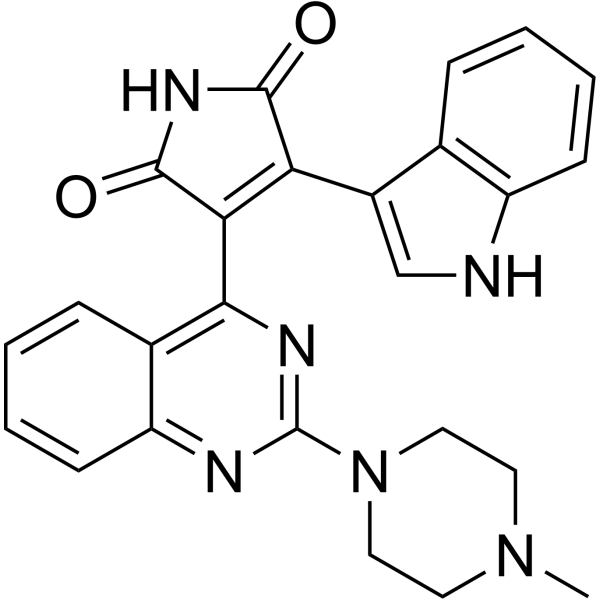
HY-10343
SotrastaurinPan-PKC Inhibitor -
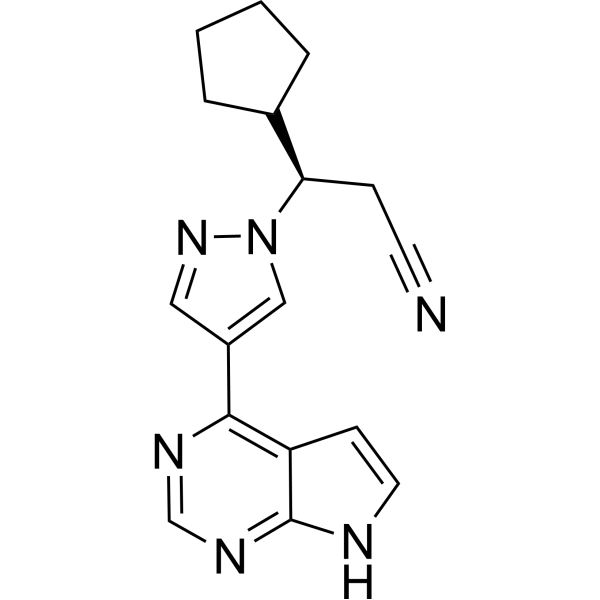
HY-50856
RuxolitinibJAK1/2 Inhibitor -
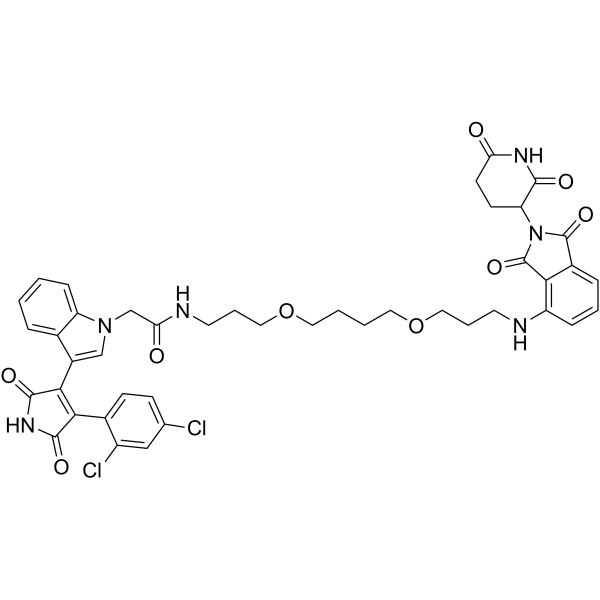
HY-149845
PROTAC GSK-3β Degrader-1GSK-3β Degrader -
HY-138742
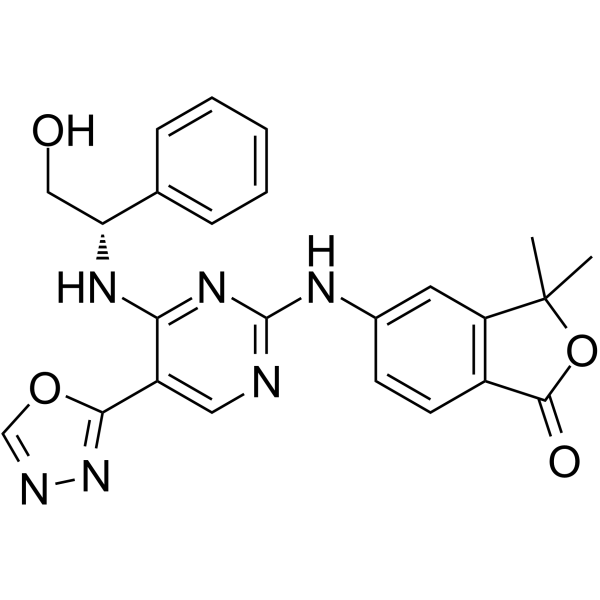
HPK1-IN-7HPK1 Inhibitor -
HY-10158
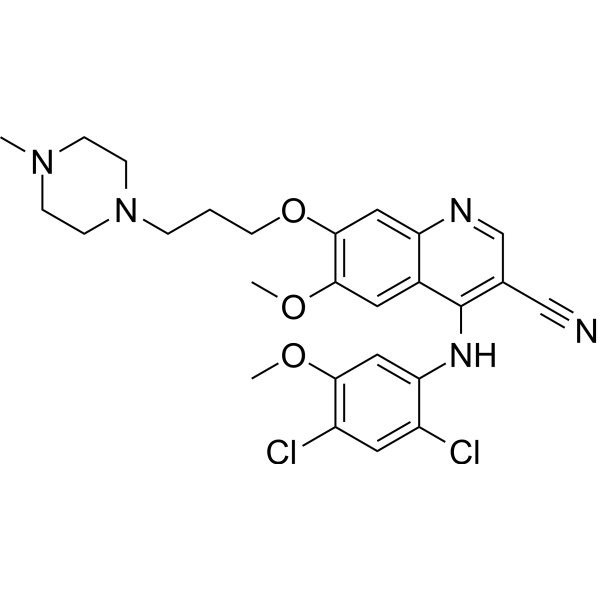
BosutinibSrc/Abl Inhibitor -

HY-160769
NIBR-LTSiLATS Inhibitor -

HY-108841
RaleukinIL-1R Antagonist -
HY-100830
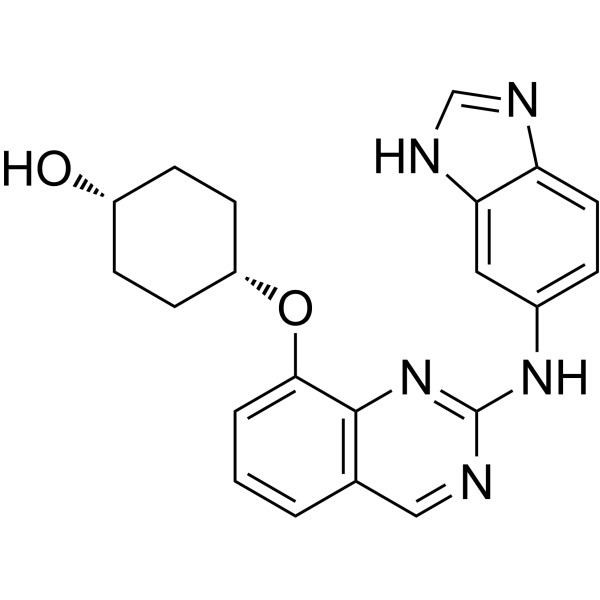
NCB-0846TRAF2- and NCK-interacting Inhibitor
Publications Citing Use of MedChemExpress (MCE) MAP4K4-IN-3
MoreAll MAP4K Isoforms
More

Biological Activity
제품 설명
IC50 & Target
[1]|
MAP4K4 14.9 nM (IC50) |
Cellular Effect
|
Cell Line

|
Type | Value | Description | References |
|---|---|---|---|---|
| Epithelial cell | IC50 |
>300 μM
Compound: 17
|
Cytotoxicity against human liver epithelial cells
Cytotoxicity against human liver epithelial cells
|
[PMID: 26617966] |
| HEK293 | IC50 |
>10 μM
Compound: 17
|
Inhibition of human ERG transfected in HEK293 cells
Inhibition of human ERG transfected in HEK293 cells
|
[PMID: 26617966] |
In Vitro
MAP4K4, a serine/threonine protein kinase may be a viable target for antidiabetic agents[1].
MedChemExpress (MCE) has not independently confirmed the accuracy of these methods. They are for reference only.
In Vivo
MedChemExpress (MCE) has not independently confirmed the accuracy of these methods. They are for reference only.


Chemical Information
-
CAS No. 1811510-58-3
-
Appearance Solid
-
분자량 297.74
-
화학식 C15H12ClN5
-
Color Off-white to light yellow
-
SMILES
NC1=NC=C(C2=CC(C3=CC=C(Cl)C=C3)=C(N)N=C2)C=N1
-
선적
Room temperature in continental US; may vary elsewhere.
-
보관
4°C, protect from light
* In solvent : -80°C, 6 months; -20°C, 1 month (protect from light)


Publications (1)
-
Journal Impact Factor
-
Most Recent


용액&용해도
In Vitro:
DMSO : 10 mg/mL (33.59 mM; ultrasonic and warming and heat to 60°C; Hygroscopic DMSO has a significant impact on the solubility of product, please use newly opened DMSO)
Please refer to the solubility information to select the appropriate solvent. Once prepared, please aliquot and store the solution to prevent product inactivation from repeated freeze-thaw cycles.
Storage method and period of stock solution: -80°C, 6 months; -20°C, 1 month (protect from light). When stored at -80°C, please use it within 6 months. When stored at -20°C, please use it within 1 month.
Please refer to the solubility information to select the appropriate solvent. Once prepared, please aliquot and store the solution to prevent product inactivation from repeated freeze-thaw cycles.
Storage method and period of stock solution: -80°C, 6 months; -20°C, 1 month (protect from light). When stored at -80°C, please use it within 6 months. When stored at -20°C, please use it within 1 month.
Concentration (start) × Volume (start) = Concentration (final) × Volume (final)


순도&문서
-
Data Sheet (271 KB)
-
SDS (393 KB)
- English - EN (393 KB)
- Français - FR (393 KB)
- Deutsch - DE (393 KB)
- Norwegian - NO (393 KB)
- Español - ES (393 KB)
- Swedish - SV (393 KB)
- Italian - IT (393 KB)
- Korean - KR (393 KB)
- Portuguese - PT (393 KB)
-
Handling Instructions (2659 KB)
References
[1]. Ammirati M, et al. Discovery of an in Vivo Tool to Establish Proof-of-Concept for MAP4K4-Based AntidiabeticTreatment. ACS Med Chem Lett. 2015 Oct 6;6(11):1128-33. [Content Brief]
[2]. Dow RL, et al. 2-Aminopyridine-Based Mitogen-Activated Protein Kinase Kinase Kinase Kinase 4 (MAP4K4) Inhibitors: Assessment of Mechanism-Based Safety. J Med Chem. 2018 Apr 12;61(7):3114-3125. [Content Brief]


Complete Stock Solution Preparation Table
Please refer to the solubility information to select the appropriate solvent. Once prepared, please aliquot and store the solution to prevent product inactivation from repeated freeze-thaw cycles.
Storage method and period of stock solution: -80°C, 6 months; -20°C, 1 month (protect from light). When stored at -80°C, please use it within 6 months. When stored at -20°C, please use it within 1 month.
| Optional Solvent | Concentration Solvent Mass | 1 mg | 5 mg | 10 mg | 25 mg |
|---|---|---|---|---|---|
| DMSO | 1 mM | 3.3586 mL | 16.7932 mL | 33.5864 mL | 83.9659 mL |
| 5 mM | 0.6717 mL | 3.3586 mL | 6.7173 mL | 16.7932 mL | |
| 10 mM | 0.3359 mL | 1.6793 mL | 3.3586 mL | 8.3966 mL | |
| 15 mM | 0.2239 mL | 1.1195 mL | 2.2391 mL | 5.5977 mL | |
| 20 mM | 0.1679 mL | 0.8397 mL | 1.6793 mL | 4.1983 mL | |
| 25 mM | 0.1343 mL | 0.6717 mL | 1.3435 mL | 3.3586 mL | |
| 30 mM | 0.1120 mL | 0.5598 mL | 1.1195 mL | 2.7989 mL |


MAP4K4-IN-3 Related Classifications
HY-125012 Related Classifications
 Powered by Bioz