



Leronlimab

Based on 1 Customer Validation
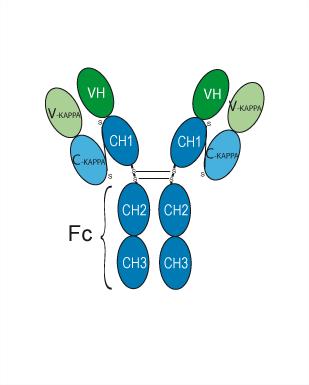
Leronlimab (PRO 140) is a humanized IgG4 anti-CCR5 monoclonal antibody. Leronlimab inhibits CCR5-mediated HIV-1 viral and lung metastasis in mouse tumor models. Leronlimab can be used for the research of HIV nonalcoholic steatohepatitis (NASH) and cancer.
For research use only. We do not sell to patients.
- Purity : 98.91%
- CAS No.: 674782-26-4
- Molecular Weight:146.7 kDa
-
Storage:
Please store the product under the recommended conditions in the Certificate of Analysis.


To place orders, for customer services and technical support, please contact: MedChemExpress USA
Tel: 609-228-6898 E-mail: [email protected] [email protected]


-
 Biological Activity
-
Chemical Information
- Protocols
- Purity & Documentation
- References
-
 Help & FAQs


-

HY-P99781
PlozalizumabCCR2 Antagonist -
HY-13004
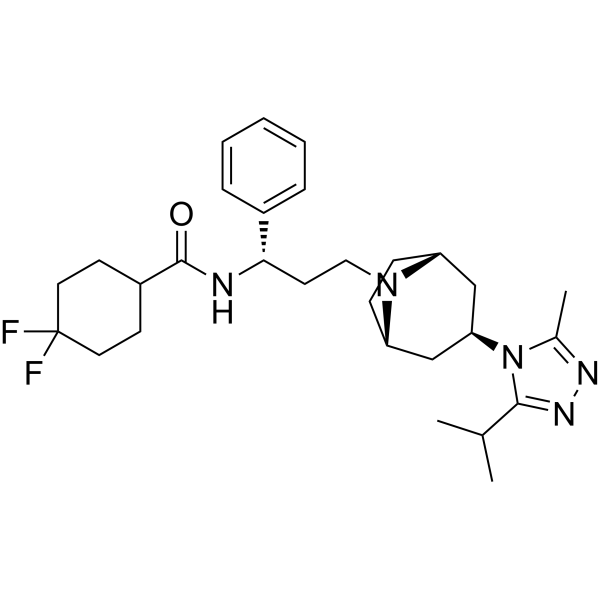
MaravirocCCR5 Antagonist -

HY-P99188
CarlumabAnti-CCL2 Antibody -

HY-P99253
MogamulizumabAnti-CCR4 MAb -

HY-15418
RS 504393CCR2 Antagonist -

HY-12080
BX471CCR1 Antagonist -

HY-B0498
BindaritMCP/CCL Inhibitor -

HY-50674
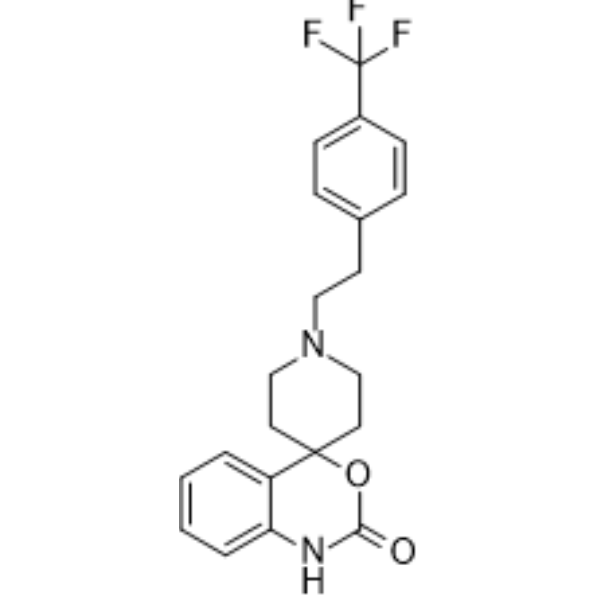
INCB3344CCR2 Antagonis -
HY-18611A
AbaucinCCR Antagonist -

HY-15724
VercirnonCCR9 Antagonist -
HY-13245
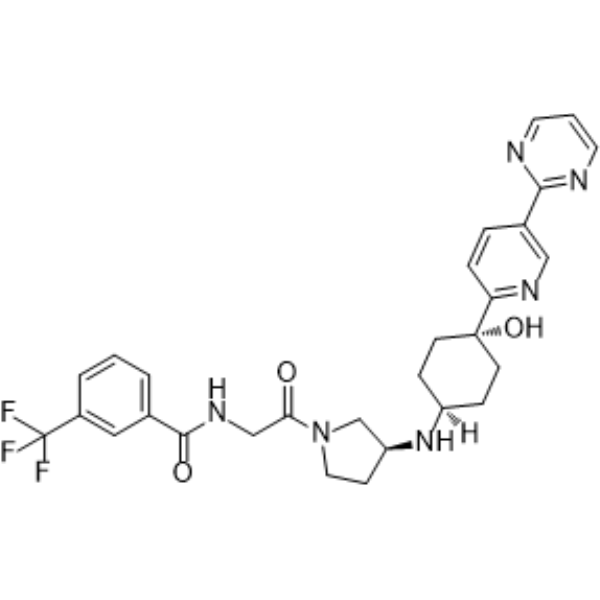
PF-4136309CCR2 Antagonist -

HY-12080A
BX471 hydrochlorideCCR Antagonist


Biological Activity
Description
Isotype
Human IgG4 kappa
Recommend Isotype Controls
Species Reactivity
Human
IC50 & Target
CCR5/CD195
In Vitro
Leronlimab (1-140 mg/mL) binds to CCR5-positive cells up to 98%[1]. Leronlimab (80-1750 μg/mL) blocks CCL5, CCL3, and CCL4-induced calcium responses in MDA-MB-231-CCR5 cells[1]. Leronlimab (175 and 350 mg/mL) blocks MDA-MB-231 cell invasion[1]. Leronlimab (10 μg/mL; 72 hours) enhances the cytotoxicity of doxorubicin for MDA-MB-231 cells[1].
MedChemExpress (MCE) has not independently confirmed the accuracy of these methods. They are for reference only. Further protocols information, click here.
-
Cell Line:MDA-MB-231 cell line
-
Concentration:10 μg/mL
-
Incubation Time:72 hours
-
Result:Increased the cells killing effect induced by doxorubicin.
In Vivo
MedChemExpress (MCE) has not independently confirmed the accuracy of these methods. They are for reference only.
-
Animal Model:Female NCI Athymic nu/nu nude mice with MB-MDA-231 cells expressing Luc2-eGFP injection[1]
-
Dosage:2 mg
-
Administration:Intraperitoneal injection; 2 mg, twice a week
-
Result:Reduced the volume of pulmonary metastases at 8 weeks.
Clinical Trial
| NCT Number | Sponsor | Condition | Start Date |
Phase

|
|---|---|---|---|---|
| NCT01329991 | Plexxikon| | 2011-05 | PHASE1 |
Gene ID
Accession
Conjugated
Unconjugated
Reconsititution
The product can be reconstituted/diluted with sterile PBS or saline.
Format
-
Human IgG4 kappa
Application
ELISA, FACS, Functional assay
Verified Bioactivity
-
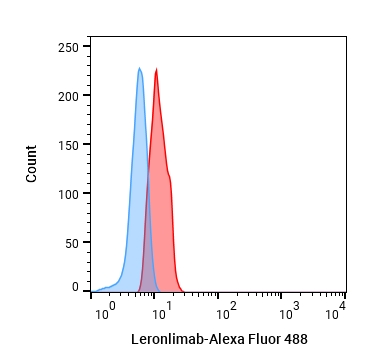 Flow cytometric analysis of 1.5×10⁶ THP-1 cells with Leronlimab (HY-P99697, red). Cells were fixed with 4% paraformaldehyde and permeabilised with 90% methanol. Then stained with the primary antibody at 1/200 dilution for an hour at 4℃. Alexa Goat Anti-Human IgG H&L (AF488) (HY-P83776) was used as the secondary antibody at 1/1,000 dilution for 30 minutes at 4℃. Human IgG4 (S228P) kappa Isotype Control (HY-P99003, blue) was used as the isotype control, cells without incubation with primary antibody were used as the unlabeled control (black).


Chemical Information
-
CAS No. 674782-26-4
-
Appearance Liquid
-
Molecular Weight 146.7 kDa
-
Color Colorless to light yellow
-
SMILES
[Leronlimab]
-
Synonyms
PRO 140
-
Shipping
Shipping with dry ice.
-
Formulation
Please refer to the lot-specific COA for specific buffer information.
-
Storage
Please store the product under the recommended conditions in the Certificate of Analysis.

Protocols
-
Tail-Vein Experimental Metastasis Xenograft
Tail-vein experimental metastasis xenograft models assess the ability of injected tumor cells to survive circulation, arrest in vascular beds, extravasate, and colonize distant organs, most commonly lung after lateral tail-vein injection; this model bypasses primary-tumor formation, local invasion, and intravasation, so the readout reflects late metastatic colonization rather than the full metastatic cascade. The main readouts are metastatic burden measured by bioluminescence imaging, gross metastatic nodules, histology, organ weight, survival, or ex vivo tumor-cell quantification; luciferase-labeled tumor cells permit longitudinal noninvasive monitoring, while histology confirms organ colonization and tissue localization.
-
Orthotopic Cell-Line Xenograft
Orthotopic cell-line xenograft models involve implantation of human cancer cell lines into the anatomically corresponding organ of immunodeficient mice to reproduce tumor growth within a native microenvironment, enabling more clinically relevant tumor behavior compared with subcutaneous models. These models are widely used because orthotopic placement better recapitulates tumor progression, including invasion and metastatic spread, which are often underrepresented in heterotopic implantation systems. Compared with conventional xenografts, orthotopic implantation is described as more technically complex but provides improved simulation of tumor-microenvironment interactions and metastatic behavior, making it particularly valuable for translational oncology research. Surgical orthotopic implantation approaches have been emphasized as enabling faithful reproduction of clinical cancer features, including metastasis and disease progression patterns that align with the tumor’s organ of origi


Purity & Documentation
-
Data Sheet (259 KB)
-
SDS (251 KB)
- English - EN (251 KB)
- Français - FR (251 KB)
- Deutsch - DE (251 KB)
- Norwegian - NO (251 KB)
- Español - ES (251 KB)
- Swedish - SV (251 KB)
- Italian - IT (251 KB)
- Korean - KR (251 KB)
- Portuguese - PT (251 KB)
-
Inhibitory Antibodies User Guide (603 KB)
References

Calculators
Concentration (start) × Volume (start) = Concentration (final) × Volume (final)


Leronlimab Related Classifications
HY-P99697 Related Classifications
 Powered by Bioz