



Lixumistat acetate
Based on 1 publication(s) in Google Scholar
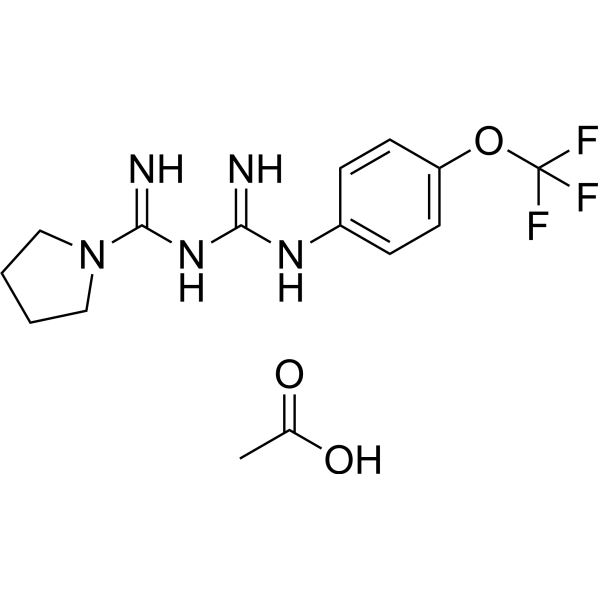
Lixumistat (IM156) acetate is a potent and orally active AMPK activator and OXPHOS inhibitor. Lixumistat acetate strongly activates AMPK, while it lacks the systemic metabolic regulatory effects of classic metformin, such as hypoglycemic and weight-lowering activities. Lixumistat acetate exhibits significant therapeutic effects on cognitive decline associated with brain aging and pulmonary fibrosis.
For research use only. We do not sell to patients.
- Purity : 99.88%
- CAS No.: 1422365-94-3
- Formula: C15H20F3N5O3
- Molecular Weight:375.35
-
Storage:
4°C, sealed storage, away from moisture and light
* In solvent : -80°C, 6 months; -20°C, 1 month (sealed storage, away from moisture and light)

To place orders, for customer services and technical support, please contact: MedChemExpress USA
Tel: 609-228-6898 E-mail: [email protected] [email protected]


-
 Biological Activity
-
Chemical Information
-
Solvent & Solubility
- Protocols
- Purity & Documentation
- References
-
 Help & FAQs


-
HY-136447
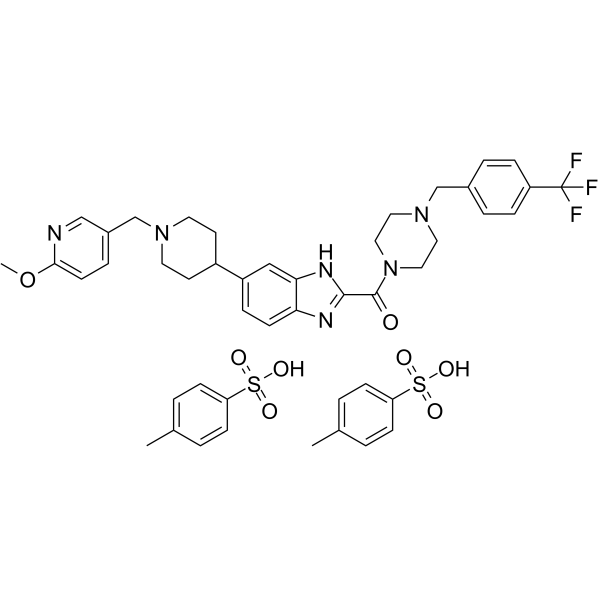
ASP4132AMPK Activator -
HY-12248
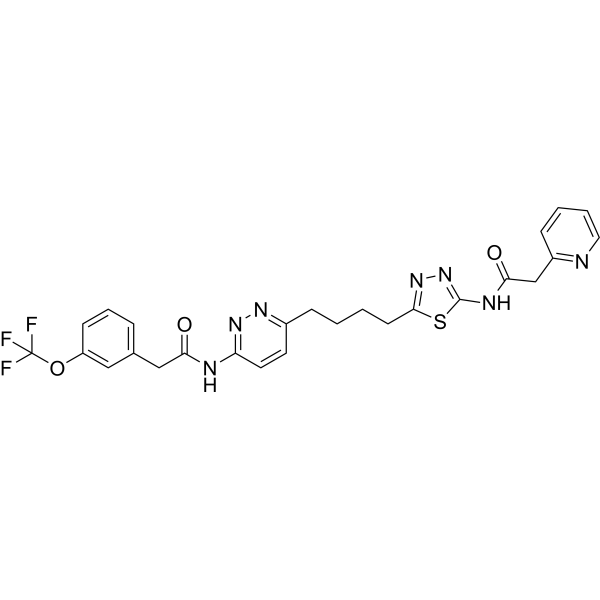
TelaglenastatGLS1 Inhibitor -
HY-13418A
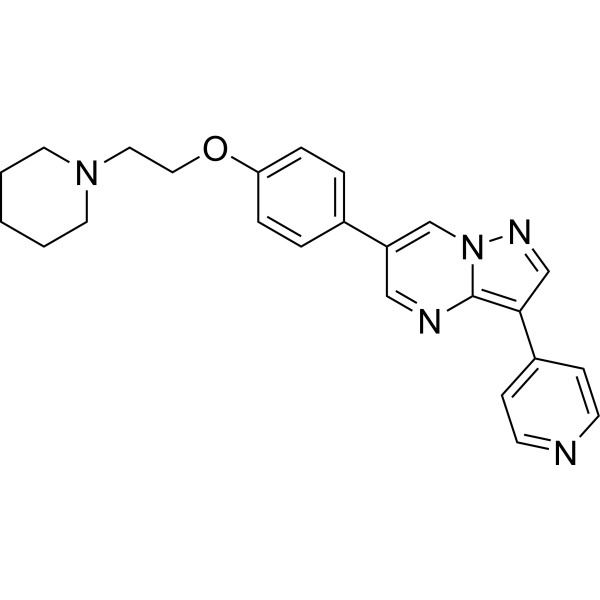
DorsomorphinAMPK Inhibitor -
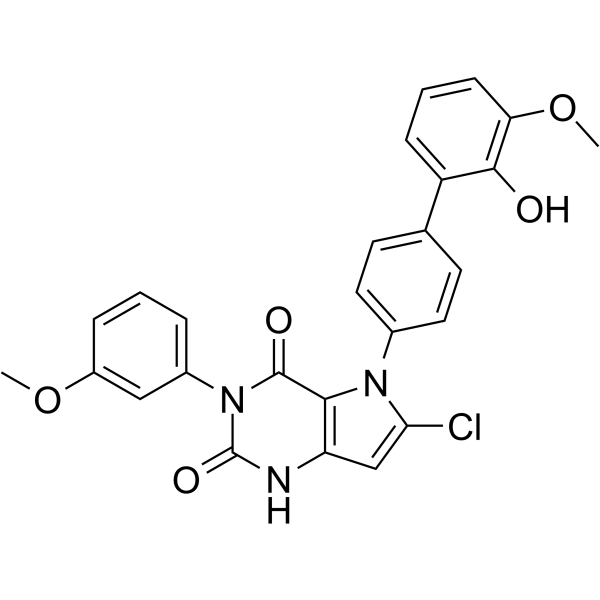
HY-100548
GSK621AMPK Activator -
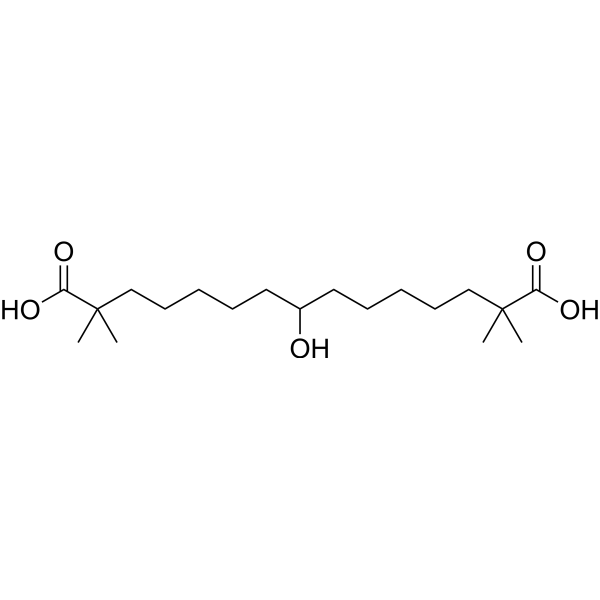
HY-12357
Bempedoic acidACL Inhibitor/AMPK Activator -
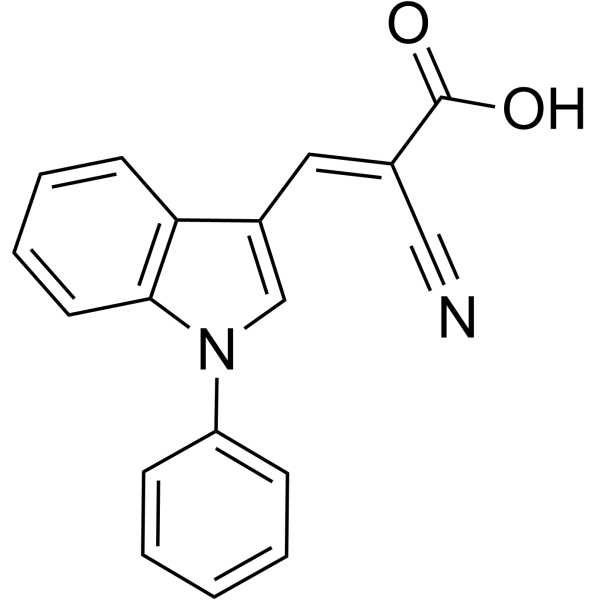
HY-15475
UK-5099Mitochondrial Pyruvate Carrier Inhibitor -
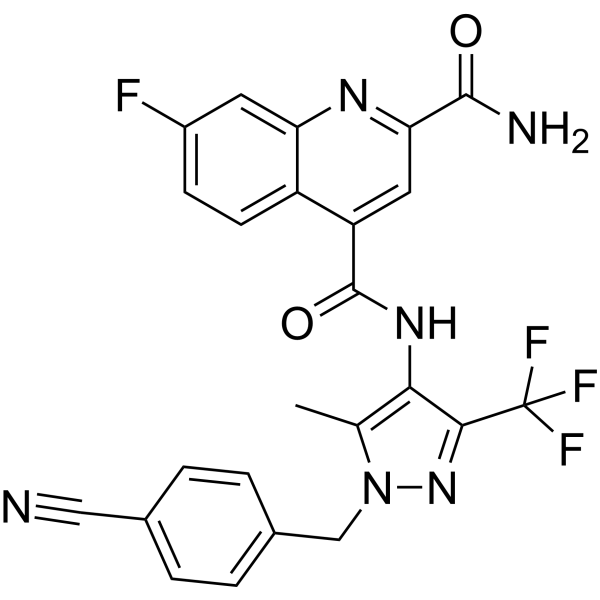
HY-100017
BAY-876GLUT1 Inhibitor -
HY-50662
A-769662AMPK Activator -
HY-112233
O-304AMPK Activator -
HY-13418
Dorsomorphin dihydrochlorideAMPK Inhibitor -
HY-16397A
Phenformin hydrochlorideAMP-activated protein kinase Activator -
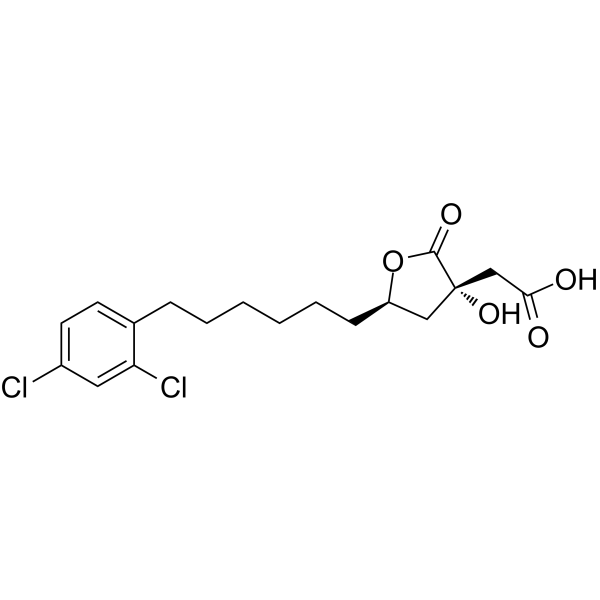
HY-16450
SB 204990ATP Citrate Lyase Inhibitor
Publications Citing Use of MedChemExpress (MCE) Lixumistat acetate
MoreAll AMPK Isoforms
More

Biological Activity
Description
IC50 & Target
In Vitro
Lixumistat (15 μM; 26 h) acetate potently inhibits TGFβ1-induced mitochondrial oxidative phosphorylation reprogramming in WI-38 human embryonic lung fibroblasts, with an IC50 of 14.7 μM, and does not alter TGFβ1-induced glycolytic changes[2].
Lixumistat (7.5-30 μM; 26-48 h) acetate inhibits TGFβ1-induced myofibroblast differentiation (α-SMA expression, IC50 = 21.3 μM) and collagen deposition (IC50 = 13.2 μM) in a dose-dependent manner in WI-38 human embryonic lung fibroblasts without reducing cell viability[2].
Lixumistat (0.31-10 μM; 2-8 h) acetate potently and rapidly induces the phosphorylation of AMPK at the Thr172 site in NIH3T3 mouse fibroblasts[3].
Lixumistat (10 μM; 0-4 h) acetate promotes the proteasome-dependent degradation of PER2 and CRY1 proteins in NIH3T3 mouse fibroblasts when co-incubated with Cycloheximide (HY-12320)[3].
MedChemExpress (MCE) has not independently confirmed the accuracy of these methods. They are for reference only. Further protocols information, click here.
-
Cell Line:NIH3T3 cells
-
Concentration:0.31, 0.62, 1.25, 2.5, 5, 10 μM (dose-response); 10 μM (time-course)
-
Incubation Time:4 h (dose-response); 2, 4, 8 h (time-course)
-
Result:Dose-dependently stimulated AMPK phosphorylation, with significant increases observed at concentrations ≥ 1.25 μM after 4 h incubation.
Increased AMPK phosphorylation in a time-dependent manner, with significant elevations detected as early as 2 h after treatment with 10 μM.
In Vivo
Lixumistat (10-30 mg/kg; i.g.; once daily for 14 consecutive days) acetate dose-dependently alleviates pulmonary fibrosis and inflammatory responses in male C57BL/6 mice[2].
MedChemExpress (MCE) has not independently confirmed the accuracy of these methods. They are for reference only.
-
Animal Model:C57BL/6J (male and female, 20~22 months of age)[1]
-
Dosage:50 mg/kg
-
Administration:p.o.; daily; 2 months
-
Result:Significantly improved age-related cognitive decline in aged C57BL/6J mice, with a 23.2% increase in novel object recognition discrimination ratio, 27.4% increase in spatial working memory %SAP, 47.3% increase in contextual fear memory freezing level, and 91.6% increase in hippocampal pAMPK relative intensity compared to controls
-
Animal Model:C57BL/6 (male, 6-7 weeks of age, bleomycin-induced pulmonary fibrosis)[2]
-
Dosage:10 mg/kg; 30 mg/kg
-
Administration:i.g.; daily; 14 days
-
Result:Attenuated body weight loss, with significant improvements observed on study days 19 and 21.
Reduced bleomycin-induced increases in lung weight at both doses, with greater efficacy at 30 mg/kg.
Significantly reduced modified Ashcroft fibrosis scores.
Clinical Trial
| NCT Number | Sponsor | Condition | Start Date |
Phase

|
|---|---|---|---|---|
| NCT01329991 | Plexxikon| | 2011-05 | PHASE1 |


Chemical Information
-
CAS No. 1422365-94-3
-
Appearance Solid
-
Molecular Weight 375.35
-
Formula C15H20F3N5O3
-
Color White to off-white
-
SMILES
N=C(N1CCCC1)NC(NC2=CC=C(OC(F)(F)F)C=C2)=N.CC(O)=O
-
Synonyms
IM156; HL156A; HL271 acetate
-
Shipping
Room temperature in continental US; may vary elsewhere.
-
Storage
4°C, sealed storage, away from moisture and light
* In solvent : -80°C, 6 months; -20°C, 1 month (sealed storage, away from moisture and light)


Publications (1)
-
Journal Impact Factor
-
Most Recent
-
Cell Death Discov
Long-term adaptation of lymphoma cell lines to hypoxia is mediated by diverse molecular mechanisms that are targetable with specific inhibitors. [Abstract]2025 Feb 18;11(1):65. PMID: 39966387


Solvent & Solubility
In Vitro:
DMSO : 50 mg/mL (133.21 mM; ultrasonic and warming and heat to 60°C; Hygroscopic DMSO has a significant impact on the solubility of product, please use newly opened DMSO)
Please refer to the solubility information to select the appropriate solvent. Once prepared, please aliquot and store the solution to prevent product inactivation from repeated freeze-thaw cycles.
Storage method and period of stock solution: -80°C, 6 months; -20°C, 1 month (sealed storage, away from moisture and light). When stored at -80°C, please use it within 6 months. When stored at -20°C, please use it within 1 month.
Please refer to the solubility information to select the appropriate solvent. Once prepared, please aliquot and store the solution to prevent product inactivation from repeated freeze-thaw cycles.
Storage method and period of stock solution: -80°C, 6 months; -20°C, 1 month (sealed storage, away from moisture and light). When stored at -80°C, please use it within 6 months. When stored at -20°C, please use it within 1 month.
Concentration (start) × Volume (start) = Concentration (final) × Volume (final)
In Vivo:
Select the appropriate dissolution method based on your experimental animal and administration route.
- For the following dissolution methods, please ensure to first prepare a clear stock solution using an In Vitro approach and then sequentially add co-solvents:
- To ensure reliable experimental results, the clarified stock solution can be appropriately stored based on storage conditions. As for the working solution for In Vivo experiments, it is recommended to prepare freshly and use it on the same day.
- The percentages shown for the solvents indicate their volumetric ratio in the final prepared solution. If precipitation or phase separation occurs during preparation, heat and/or sonication can be used to aid dissolution.
Add each solvent one by one: 10% DMSO 40% PEG300 5% Tween-80 45% Saline
Solubility: ≥ 2.5 mg/mL (6.66 mM); Clear solution
This protocol yields a clear solution of ≥ 2.5 mg/mL (saturation unknown).
Taking 1 mL working solution as an example, add 100 μL DMSO stock solution (25.0 mg/mL) to 400 μL PEG300, and mix evenly; then add 50 μL Tween-80 and mix evenly; then add 450 μL Saline to adjust the volume to 1 mL.
Preparation of Saline: Dissolve 0.9 g sodium chloride in ddH₂O and dilute to 100 mL to obtain a clear Saline solution.
Add each solvent one by one: 10% DMSO 90% (20% SBE-β-CD in Saline)
Solubility: ≥ 2.5 mg/mL (6.66 mM); Clear solution
This protocol yields a clear solution of ≥ 2.5 mg/mL (saturation unknown).
Taking 1 mL working solution as an example, add 100 μL DMSO stock solution (25.0 mg/mL) to 900 μL 20% SBE-β-CD in Saline, and mix evenly.
Preparation of 20% SBE-β-CD in Saline (4°C, storage for one week): 2 g SBE-β-CD powder is dissolved in 10 mL Saline, completely dissolve until clear.
In Vivo Dissolution Calculator
Please enter the basic information of animal experiments:
-
-
-
-
Recommended: Prepare an additional quantity of animals to account for potential losses during experiments.
Please enter your animal formula composition:
-
%DMSO +
Recommended: Keep the proportion of DMSO in working solution below 2% if your animal is weak.
-
%+
-
+%Tween-80 + +
-
%Saline +
The co-solvents required include: DMSO, . All of co-solvents are available by MedChemExpress (MCE). , Tween 80. All of co-solvents are available by MedChemExpress (MCE).
Working solution concentration: 0.22 mg/mL
Method for preparing stock solution: mg drug dissolved in μL DMSO. Stock solution concentration: mg/mL. * In solvent : -80°C, 6 months; -20°C, 1 month (sealed storage, away from moisture and light)
1. Take μL DMSO stock solution;
2. Add μL .
μL , mix evenly;
3. Then add μL Tween 80, mix evenly;
4. Then add μL
Please ensure that the stock solution in the first step is dissolved to a clear state, and add co-solvents in sequence. You can use ultrasonic heating (ultrasonic cleaner, recommended frequency 20-40 kHz), vortexing, etc. to assist dissolution.

Protocols
-
Fibrosis/Collagen Morphometry
Fibrosis and collagen morphometry is based on the quantitative visualization of fibrillar collagen deposition in tissue sections using histochemical stains such as Sirius Red (Picrosirius Red) or Masson's trichrome, followed by image-based or polarization-enhanced analysis to estimate collagen proportional area as a surrogate of extracellular matrix accumulation during fibrotic remodeling. Sirius Red combined with polarized light microscopy enhances detection of collagen fibers due to birefringence properties, enabling more specific visualization of collagen type I and III fibrils compared to conventional bright-field histology, while whole-section or region-restricted digital morphometry reduces field-selection bias in fibrosis assessment. Alternative quantitative approaches include second harmonic generation (SHG) and two-photon excited fluorescence microscopy, which enable label-free detection of fibrillar collagen and have been validated against histological staining and biochemica
-
Collagen: Sirius Red Staining
Sirius Red or picrosirius red staining is a histochemical method for visualizing collagen-rich extracellular matrix in tissue sections, and collagen fibers are detected as red-stained structures under bright-field microscopy with enhanced birefringence under polarized light. Picrosirius red is useful for assessing total collagen organization, distribution, and fibrosis burden, but polarized color should not be interpreted as a definitive collagen type I versus type III readout because color is affected by fiber orientation, thickness, and packing.
-
Connective Tissue: Masson's Trichrome/Collagen Trichrome Staining
Masson’s Trichrome (collagen/trichrome staining) is a histological technique that differentially stains tissue compartments using sequential acidic dyes to distinguish collagen from muscle and cytoplasmic components based on dye affinity and tissue permeability differences, enabling visualization of fibrosis and connective tissue architecture in histological sections. The classical formulation typically uses Weigert's iron hematoxylin for nuclear staining, Biebrich scarlet-acid fuchsin for cytoplasm and muscle, and aniline blue (or light green variants) for collagen, producing a characteristic blue/green collagen signal contrasted against red cytoplasm and dark nuclei. The staining principle relies on selective displacement of smaller dye molecules by larger anionic dyes in collagen-rich regions under controlled acidified conditions, which enhances collagen-specific dye retention. This property makes the method widely used for fibrosis assessment in organs such as heart, liver, lung, a


Purity & Documentation
-
Data Sheet (279 KB)
-
SDS (393 KB)
- English - EN (393 KB)
- Français - FR (393 KB)
- Deutsch - DE (393 KB)
- Norwegian - NO (393 KB)
- Español - ES (393 KB)
- Swedish - SV (393 KB)
- Italian - IT (393 KB)
- Korean - KR (393 KB)
- Portuguese - PT (393 KB)
-
Handling Instructions (2659 KB)
References
[1]. Bang E, et al. The Improving Effect of HL271, a Chemical Derivative of Metformin, a Popular Drug for Type II Diabetes Mellitus, on Aging-induced Cognitive Decline. Exp Neurobiol. 2018;27(1):45-56. [Content Brief]
[2]. Willette RN, et al. Modulation of Oxidative Phosphorylation with IM156 Attenuates Mitochondrial Metabolic Reprogramming and Inhibits Pulmonary Fibrosis. J Pharmacol Exp Ther. 2021;379(3):290-300. [Content Brief]
[3]. Row H, et al. HL271, a novel chemical compound derived from metformin, differs from metformin in its effects on the circadian clock and metabolism. Biochem Biophys Res Commun. 2016;469(3):783-789. [Content Brief]


Complete Stock Solution Preparation Table
Please refer to the solubility information to select the appropriate solvent. Once prepared, please aliquot and store the solution to prevent product inactivation from repeated freeze-thaw cycles.
Storage method and period of stock solution: -80°C, 6 months; -20°C, 1 month (sealed storage, away from moisture and light). When stored at -80°C, please use it within 6 months. When stored at -20°C, please use it within 1 month.
| Optional Solvent | Concentration Solvent Mass | 1 mg | 5 mg | 10 mg | 25 mg |
|---|---|---|---|---|---|
| DMSO | 1 mM | 2.6642 mL | 13.3209 mL | 26.6418 mL | 66.6045 mL |
| 5 mM | 0.5328 mL | 2.6642 mL | 5.3284 mL | 13.3209 mL | |
| 10 mM | 0.2664 mL | 1.3321 mL | 2.6642 mL | 6.6605 mL | |
| 15 mM | 0.1776 mL | 0.8881 mL | 1.7761 mL | 4.4403 mL | |
| 20 mM | 0.1332 mL | 0.6660 mL | 1.3321 mL | 3.3302 mL | |
| 25 mM | 0.1066 mL | 0.5328 mL | 1.0657 mL | 2.6642 mL | |
| 30 mM | 0.0888 mL | 0.4440 mL | 0.8881 mL | 2.2202 mL | |
| 40 mM | 0.0666 mL | 0.3330 mL | 0.6660 mL | 1.6651 mL | |
| 50 mM | 0.0533 mL | 0.2664 mL | 0.5328 mL | 1.3321 mL | |
| 60 mM | 0.0444 mL | 0.2220 mL | 0.4440 mL | 1.1101 mL | |
| 80 mM | 0.0333 mL | 0.1665 mL | 0.3330 mL | 0.8326 mL | |
| 100 mM | 0.0266 mL | 0.1332 mL | 0.2664 mL | 0.6660 mL |


Lixumistat acetate Related Classifications
HY-136093A Related Classifications
 Powered by Bioz