



LY2389575 hydrochloride (Standard)
LY2389575 hydrochloride (Standard) is the analytical standard of LY2389575 (hydrochloride) (HY-107509). This product is intended for research and analytical applications. LY2389575 hydrochloride is a selective and noncompetitive mGlu3 negative allosteric modulator (NAM), with an IC50 value of 190 nM. LY2389575 hydrochloride induces an increase in Mrc1 levels. LY2389575 hydrochloride also independently amplifies Amyloid beta (Aβ) toxicity and can be used in study of Alzheimer's disease.
For research use only. We do not sell to patients.
- CAS No.: 885104-09-6
- Formula: C15H16BrCl3N4
- Molecular Weight:438.58
-
Storage:
Please store the product under the recommended conditions in the Certificate of Analysis.


To place orders, for customer services and technical support, please contact: MedChemExpress USA
Tel: 609-228-6898 E-mail: [email protected] [email protected]


-
 Biological Activity
-
Chemical Information
- Protocols
- Purity & Documentation
- References
-
 Help & FAQs


-
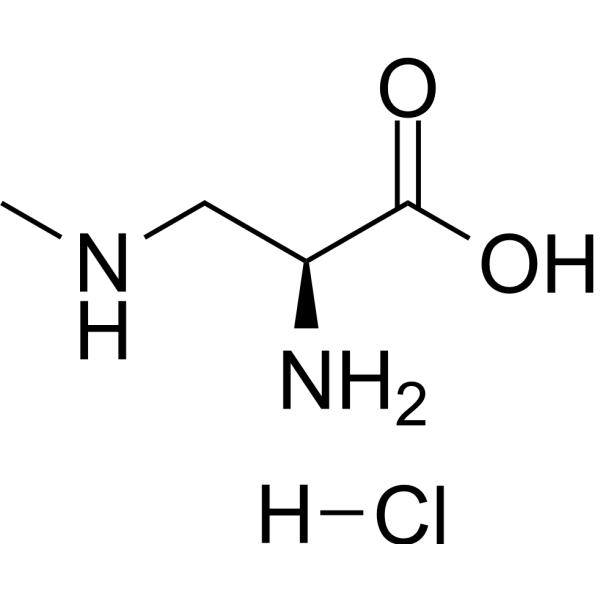
HY-W015546
β-N-methylamino-L-alanine hydrochlorideNeurotoxin -
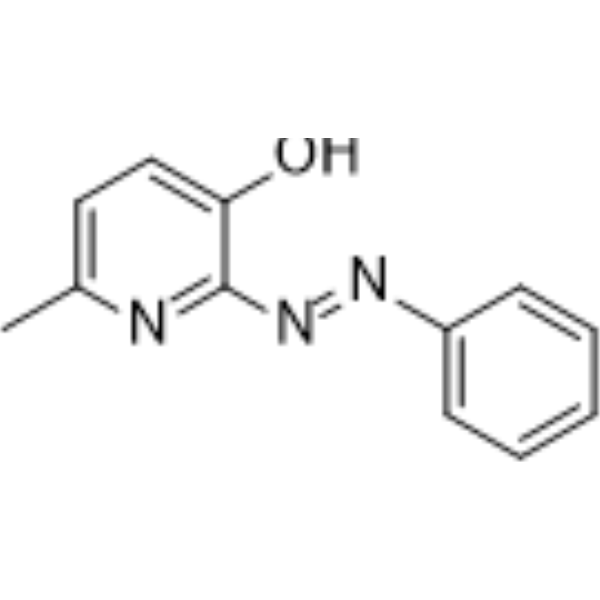
HY-102095
SIB-1757mGluR5 antagonist -
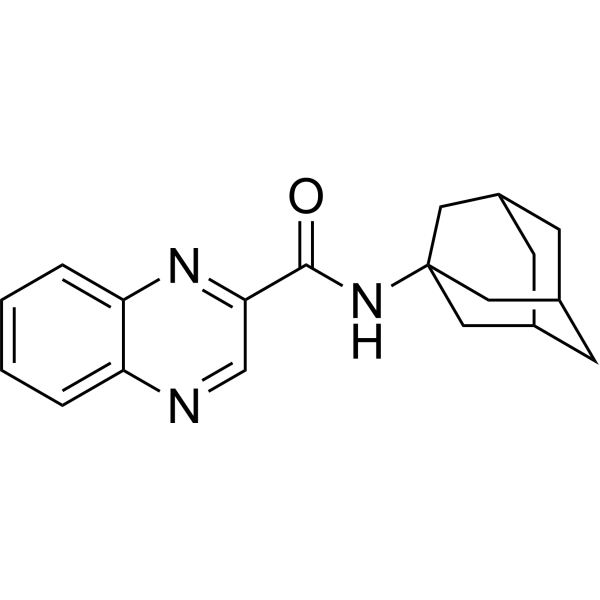
HY-11095
NPS 2390CaSR/mGluR1/5 Allosteric Antagonist -
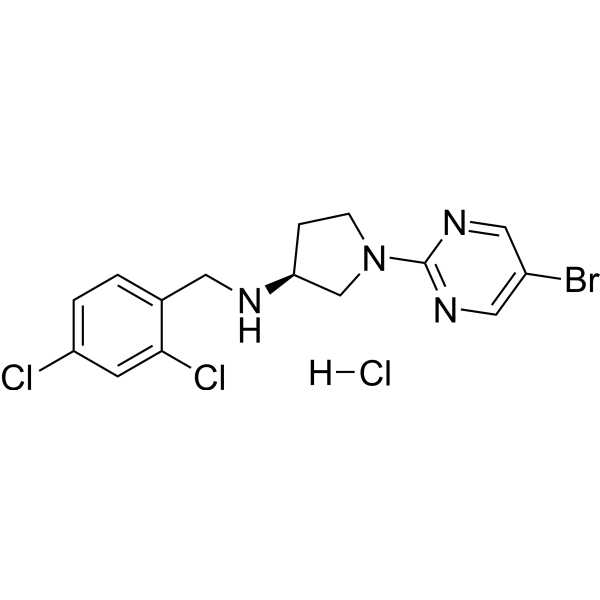
HY-107509
LY2389575 hydrochloridemGlu3 NAM -
HY-W011417
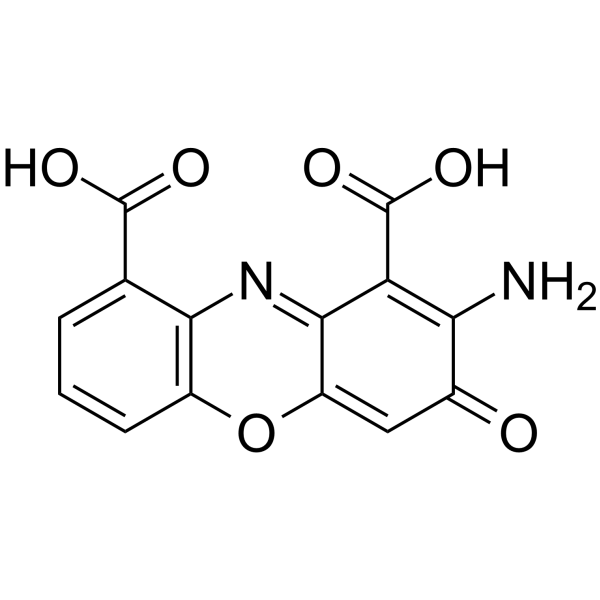
Cinnabarinic acidmGlu4 Agonist -
HY-14609
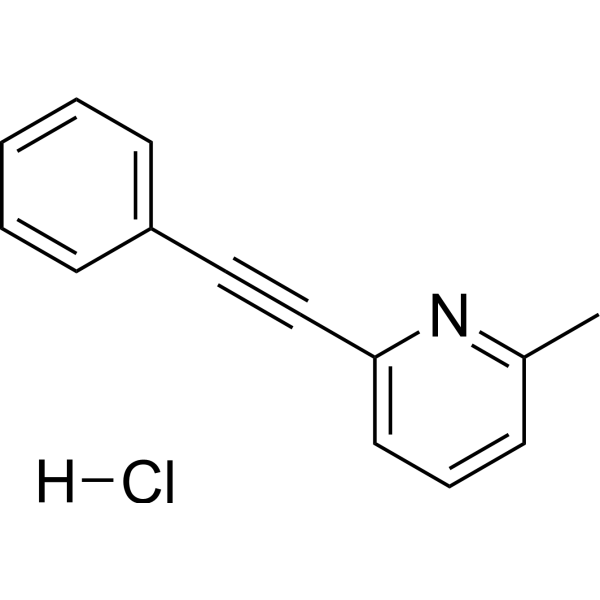
MPEP HydrochloridemGlu5 Receptor Antagonist -
HY-100786
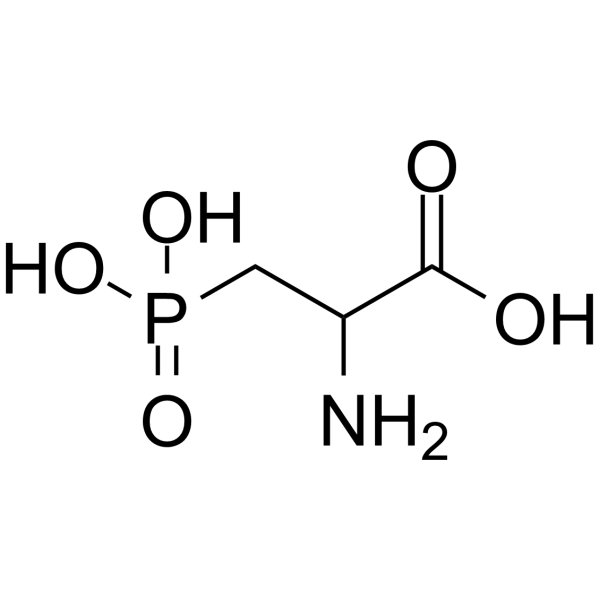
DL-AP3mGluR1 Antagonist -

HY-102095R
SIB-1757 (Standard)Reference Standard -
HY-100804
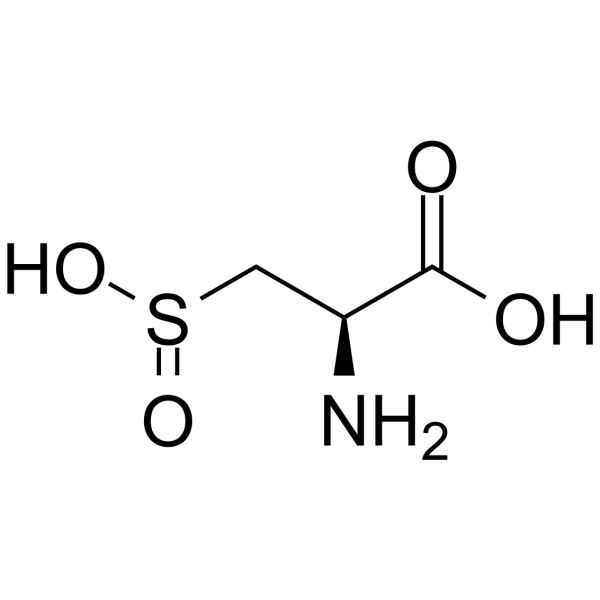
L-Cysteinesulfinic acidmGluR Agonist -

HY-W015546R
β-N-methylamino-L-alanine hydrochloride (Standard)Neurotoxin -
HY-130553
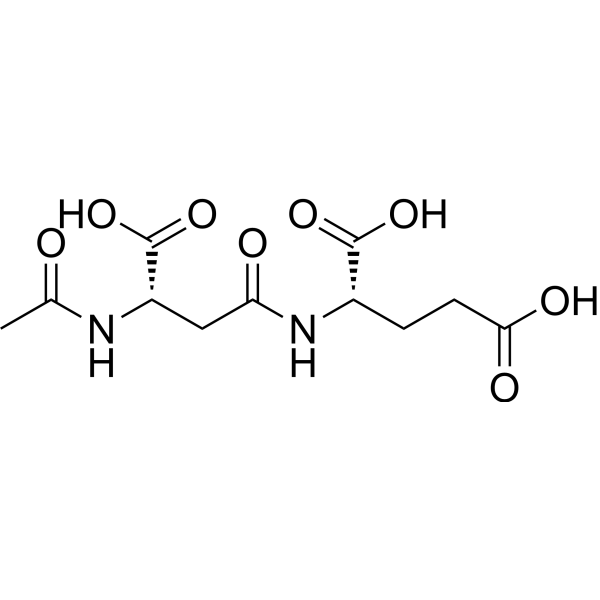
β-Spaglumic acidNAAG Peptidase Inhibitor -

HY-100804R
L-Cysteinesulfinic acid (Standard)mGluR Agonist


Biological Activity
Description


Chemical Information
-
CAS No. 885104-09-6
-
Molecular Weight 438.58
-
Formula C15H16BrCl3N4
-
SMILES
ClC1=CC=C(CN[C@@H]2CN(C3=NC=C(Br)C=N3)CC2)C(Cl)=C1.[H]Cl
-
Shipping
Room temperature in continental US; may vary elsewhere.
-
Storage
Please store the product under the recommended conditions in the Certificate of Analysis.

Protocols
-
Cell Cytotoxicity Assay
Cytotoxicity assays are usually based on the assessment of cell membrane damage, which can also be indirectly detected by measuring cell viability. Detection methods include MTT assay, CKK-8 assay, LDH assay and ATP assay, etc.
-
Amyloid: Congo Red Amyloid Staining
Congo red amyloid staining is a histochemical method used to detect extracellular amyloid deposits in tissue sections based on the affinity of Congo red dye for β-pleated sheet-rich protein aggregates. When bound to amyloid, Congo red produces characteristic apple-green birefringence under polarized light microscopy, which is widely regarded as a diagnostic feature of amyloid deposition in histopathology. The diagnostic principle relies on the combination of dye binding (congophilia) and optical anisotropy under polarized illumination, which distinguishes amyloid from most non-amyloid eosinophilic extracellular deposits in routine histological evaluation. Amyloid identification by Congo red staining remains a cornerstone in diagnostic pathology despite the availability of adjunct methods such as immunohistochemistry and mass spectrometry, particularly because of its ability to localize deposits directly within tissue architecture. The specificity of Congo red-positive deposits is incre
-
Alzheimer’s Disease Modeling
Alzheimer’s Disease (AD) is a neurodegenerative disorder characterized by a progressive decline in cognitive functions and loss of specific types of neurons and synapses. Alzheimer's symptoms can be simulated in mice by injecting drugs (such as Aβ) or genetically modified.


Purity & Documentation
References
[1]. Caraci F, et al. Targeting group II metabotropic glutamate (mGlu) receptors for the treatment of psychosis associated with Alzheimer's disease: selective activation of mGlu2 receptors amplifies beta-amyloid toxicity in cultured neurons, whereas dual activation of mGlu2 and mGlu3 receptors is neuroprotective. Mol Pharmacol. 2011 Mar;79(3):618-26. [Content Brief]
[2]. Zinni M, et al. mGlu3 receptor regulates microglial cell reactivity in neonatal rats. J Neuroinflammation. 2021 Jan 6;18(1):13. [Content Brief]
[3]. Srivastava A, et al. Metabotropic Glutamate Receptors in Alzheimer's Disease Synaptic Dysfunction: Therapeutic Opportunities and Hope for the Future. J Alzheimers Dis. 2020;78(4):1345-1361. [Content Brief]

Calculators
Concentration (start) × Volume (start) = Concentration (final) × Volume (final)


LY2389575 hydrochloride (Standard) Related Classifications
HY-107509R Related Classifications
 Powered by Bioz