



Nerolidol,98%(isomers mixture)
Based on 2 publication(s) in Google Scholar
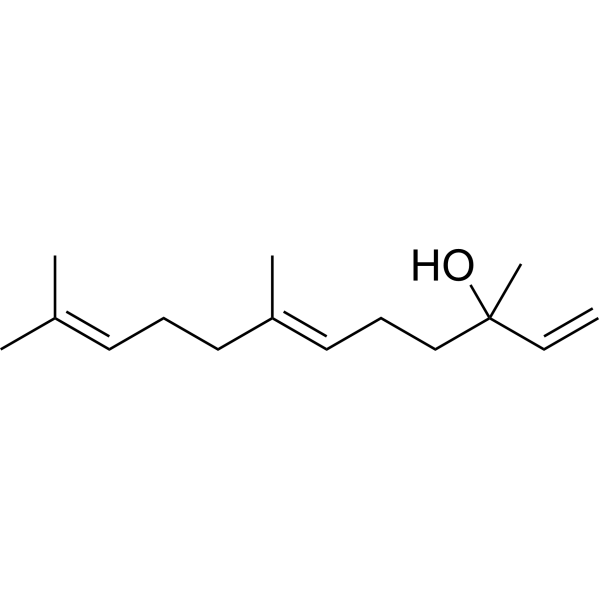
Nerolidol has multiple natural membrane activities, possesses anti-cancer, anti-inflammatory, antibacterial and anti-insect activity. Nerolidol Suppresses parasitic activity, suppresses bloodsucking diseases, bloodworm diseases, and other diseases. Nerolidol can protect the cells from lipid and protein properties, damage to DNA, and protect the cells from damage.
For research use only. We do not sell to patients.
- Purity : 98.0%
- CAS No.: 7212-44-4
- Formula: C15H26O
- Molecular Weight:222.37
-
Storage:
-20°C, protect from light
* In solvent : -80°C, 6 months; -20°C, 1 month (protect from light)

To place orders, for customer services and technical support, please contact: MedChemExpress USA
Tel: 609-228-6898 E-mail: [email protected] [email protected]


-
 Biological Activity
-
Chemical Information
-
Solvent & Solubility
- Protocols
- Purity & Documentation
- References
-
 Help & FAQs


-
HY-N2259
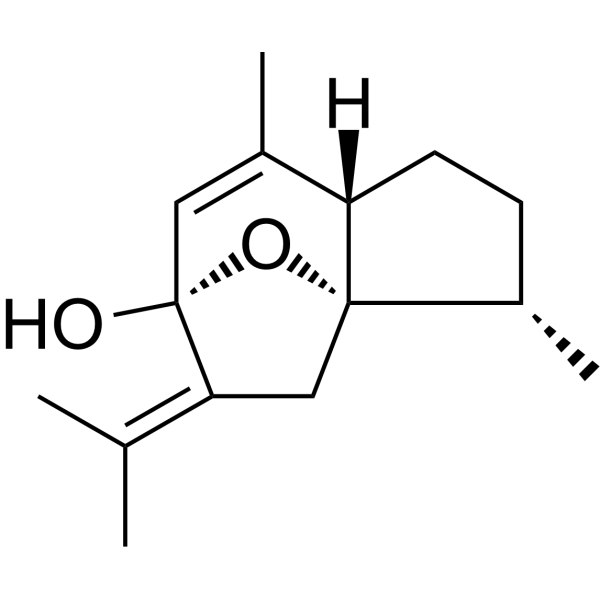
CurcumenolCYP3A4 Inhibitor -

HY-N1944R
Nerolidol (Standard)Bacterial Inhibitor -
HY-N0176
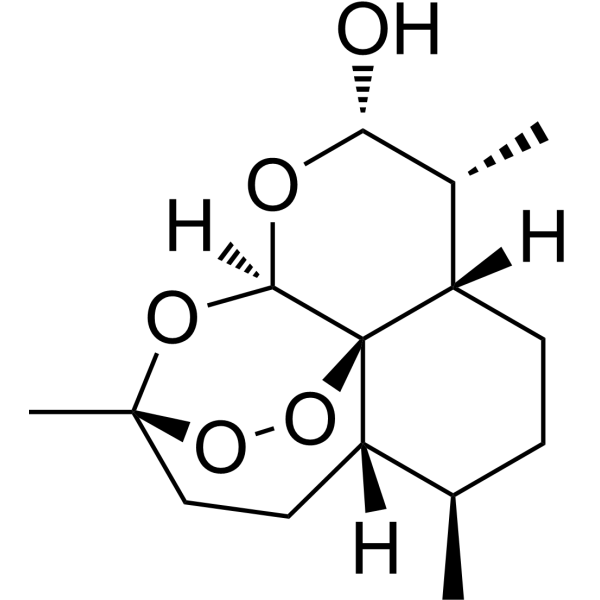
DihydroartemisininAntimalarial Agent -
HY-17595
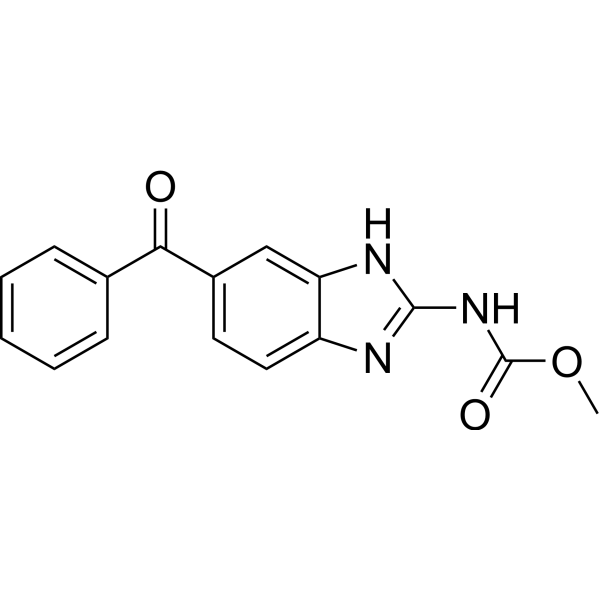
MebendazoleApoptosis Inducer -
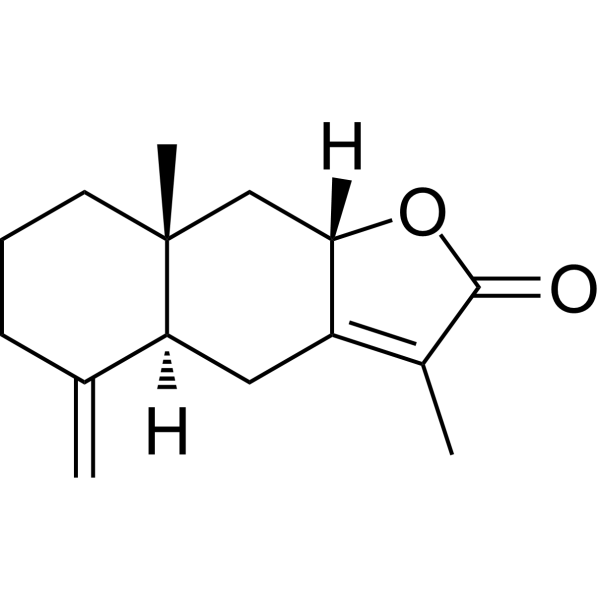
HY-N0202
Atractylenolide IIApoptosis Inducer -
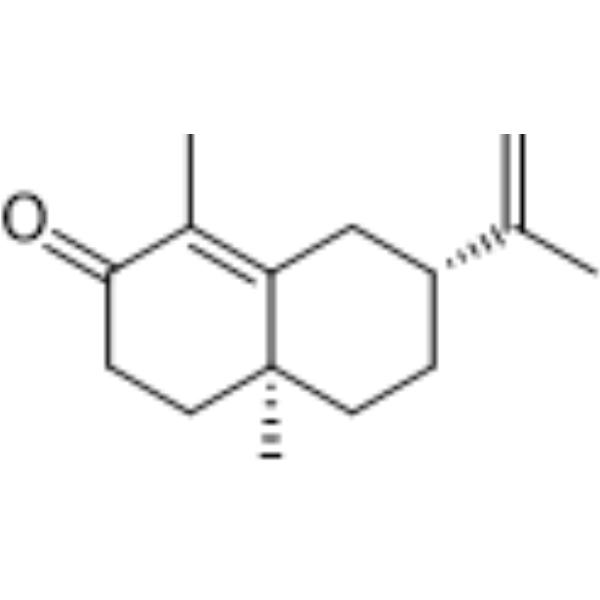
HY-N0710
alpha-CyperoneCOX Inhibitor -
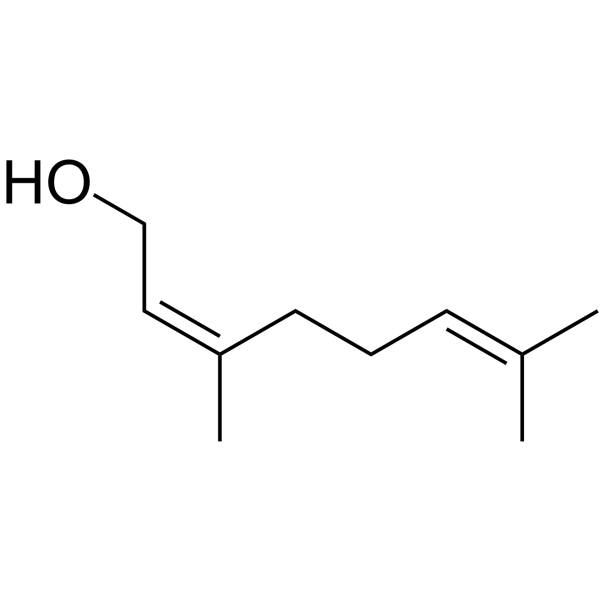
HY-N7063
NerolROS Activator -
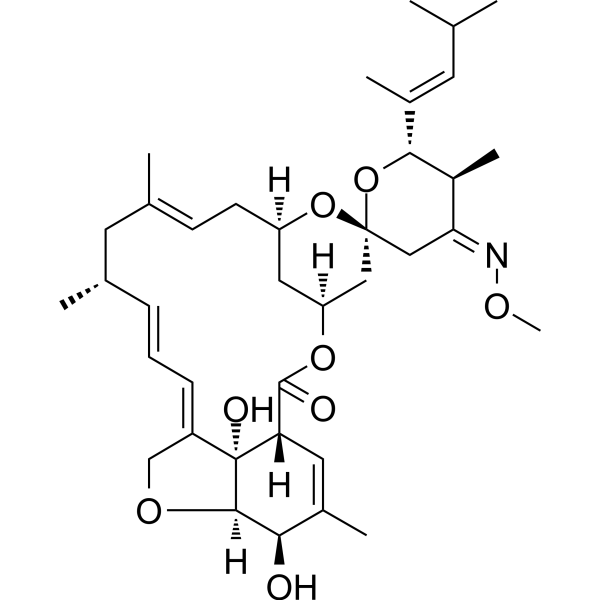
HY-B0777
MoxidectinAnthelmintic Agent -

HY-N0176R
Dihydroartemisinin (Standard)Reference Standard -
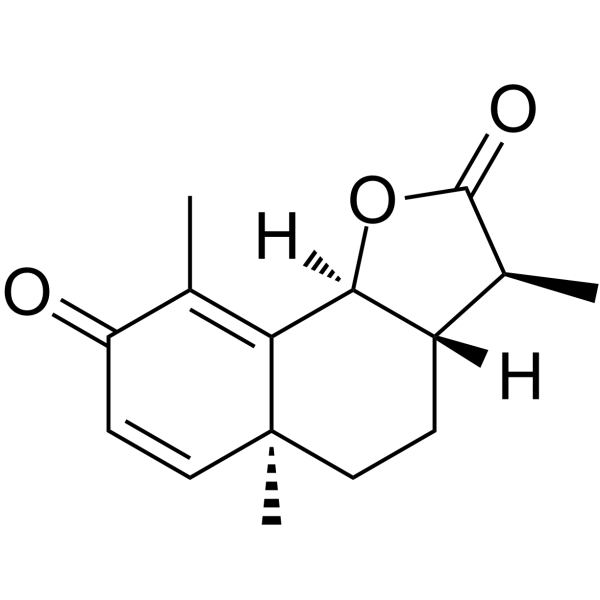
HY-B1761
SantoninParasite Inhibitor -
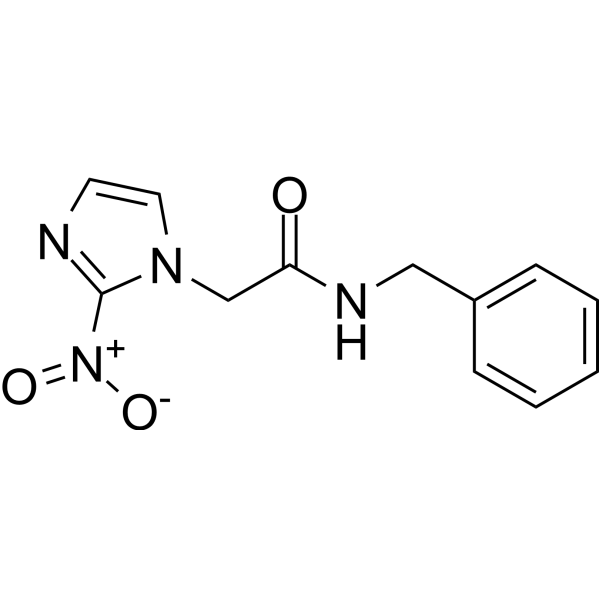
HY-B1548
BenznidazoleAntibiotic -
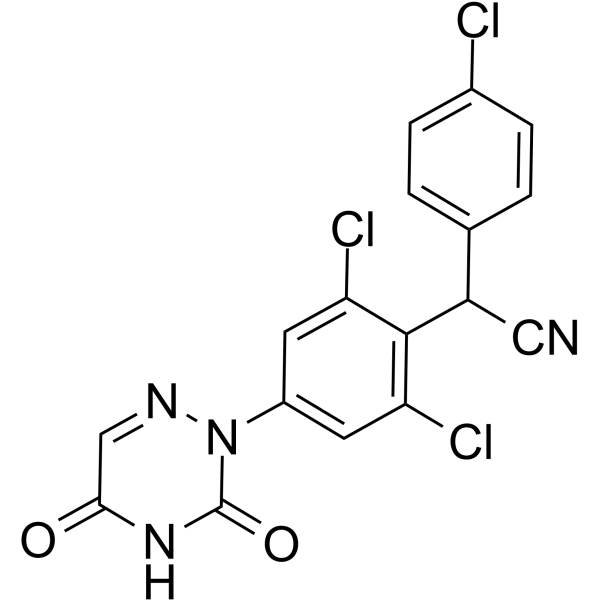
HY-B0357
DiclazurilAnticoccidial Agent
Publications Citing Use of MedChemExpress (MCE) Nerolidol,98%(isomers mixture)
MoreAll Endogenous Metabolite Isoforms
MoreAll Parasite Isoforms
More

Biological Activity
Description
Cellular Effect
|
Cell Line

|
Type | Value | Description | References |
|---|---|---|---|---|
| BMDC | IC50 |
2.02 μM
Compound: 20
|
Antiinflammatory activity in C57BL/6 mouse BMDCs assessed as inhibition of LPS-stimulated TNF-alpha production treated 1 hr before LPS challenge measured 18 hrs post stimulation by ELISA
Antiinflammatory activity in C57BL/6 mouse BMDCs assessed as inhibition of LPS-stimulated TNF-alpha production treated 1 hr before LPS challenge measured 18 hrs post stimulation by ELISA
|
[PMID: 23484668] |
| BMDC | IC50 |
20.19 μM
Compound: 20
|
Antiinflammatory activity in C57BL/6 mouse BMDCs assessed as inhibition of LPS-stimulated IL12 production treated 1 hr before LPS challenge measured 18 hrs post stimulation by ELISA
Antiinflammatory activity in C57BL/6 mouse BMDCs assessed as inhibition of LPS-stimulated IL12 production treated 1 hr before LPS challenge measured 18 hrs post stimulation by ELISA
|
[PMID: 23484668] |
| BMDC | IC50 |
7.57 μM
Compound: 20
|
Antiinflammatory activity in C57BL/6 mouse BMDCs assessed as inhibition of LPS-stimulated IL-12p40 production treated 1 hr before LPS challenge measured 18 hrs post stimulation by ELISA
Antiinflammatory activity in C57BL/6 mouse BMDCs assessed as inhibition of LPS-stimulated IL-12p40 production treated 1 hr before LPS challenge measured 18 hrs post stimulation by ELISA
|
[PMID: 23484668] |
In Vitro
Nerolidol exhibits potent antioxidant properties in counterbalancing the effect of ROS by protecting the cells against oxidative damage to lipids, proteins and DNA[2].
Nerolidol exhibits potent antimicrobial activity against Staphylococcus aureus FDA 209P, 14 strains of methicillin-susceptible S. aureus (MSSA) and 20 strains of methicillin-resistant S. aureus (MRSA) with MIC values ranging from 512 to over 1024 μg/mL[2].
Nerolidol exhibits anti-biofilm activity against a number of pathogens[2].
MedChemExpress (MCE) has not independently confirmed the accuracy of these methods. They are for reference only. Further protocols information, click here.
In Vivo
Nerolidol (25-75 mg/kg; ip; single dose) shows neuroprotective effects in mice hippocampus against oxidative stress in neuronal cells[3].
MedChemExpress (MCE) has not independently confirmed the accuracy of these methods. They are for reference only.


Chemical Information
-
CAS No. 7212-44-4
-
Appearance Liquid (Density: 0.875 g/cm3)
-
Molecular Weight 222.37
-
Formula C15H26O
-
Color Colorless to light yellow
-
SMILES
C=CC(O)(C)CC/C=C(C)/CC/C=C(C)/C
-
Structure Classification
-
Initial Source
-
Shipping
Room temperature in continental US; may vary elsewhere.
-
Storage
-20°C, protect from light
* In solvent : -80°C, 6 months; -20°C, 1 month (protect from light)


Publications (2)
-
Journal Impact Factor
-
Most Recent
-
PLoS Biol
2024 Jun 27;22(6):e3002672. PMID: 38935621 -
bioRxiv
An efficient behavioral screening platform classifies natural products and other chemical cues according to their chemosensory valence in C. elegans. [Abstract]2024 Apr 3:2023.06.02.542933. PMID: 37333363


Solvent & Solubility
In Vitro:
DMSO : 100 mg/mL (449.70 mM; Need ultrasonic; Hygroscopic DMSO has a significant impact on the solubility of product, please use newly opened DMSO)
Please refer to the solubility information to select the appropriate solvent. Once prepared, please aliquot and store the solution to prevent product inactivation from repeated freeze-thaw cycles.
Storage method and period of stock solution: -80°C, 6 months; -20°C, 1 month (protect from light). When stored at -80°C, please use it within 6 months. When stored at -20°C, please use it within 1 month.
Please refer to the solubility information to select the appropriate solvent. Once prepared, please aliquot and store the solution to prevent product inactivation from repeated freeze-thaw cycles.
Storage method and period of stock solution: -80°C, 6 months; -20°C, 1 month (protect from light). When stored at -80°C, please use it within 6 months. When stored at -20°C, please use it within 1 month.
Concentration (start) × Volume (start) = Concentration (final) × Volume (final)
In Vivo:
Select the appropriate dissolution method based on your experimental animal and administration route.
- For the following dissolution methods, please ensure to first prepare a clear stock solution using an In Vitro approach and then sequentially add co-solvents:
- To ensure reliable experimental results, the clarified stock solution can be appropriately stored based on storage conditions. As for the working solution for In Vivo experiments, it is recommended to prepare freshly and use it on the same day.
- The percentages shown for the solvents indicate their volumetric ratio in the final prepared solution. If precipitation or phase separation occurs during preparation, heat and/or sonication can be used to aid dissolution.
Add each solvent one by one: 10% DMSO 40% PEG300 5% Tween-80 45% Saline
Solubility: ≥ 2.5 mg/mL (11.24 mM); Clear solution
This protocol yields a clear solution of ≥ 2.5 mg/mL (saturation unknown).
Taking 1 mL working solution as an example, add 100 μL DMSO stock solution (25.0 mg/mL) to 400 μL PEG300, and mix evenly; then add 50 μL Tween-80 and mix evenly; then add 450 μL Saline to adjust the volume to 1 mL.
Preparation of Saline: Dissolve 0.9 g sodium chloride in ddH₂O and dilute to 100 mL to obtain a clear Saline solution.
Add each solvent one by one: 10% DMSO 90% (20% SBE-β-CD in Saline)
Solubility: ≥ 2.5 mg/mL (11.24 mM); Clear solution
This protocol yields a clear solution of ≥ 2.5 mg/mL (saturation unknown).
Taking 1 mL working solution as an example, add 100 μL DMSO stock solution (25.0 mg/mL) to 900 μL 20% SBE-β-CD in Saline, and mix evenly.
Preparation of 20% SBE-β-CD in Saline (4°C, storage for one week): 2 g SBE-β-CD powder is dissolved in 10 mL Saline, completely dissolve until clear.
In Vivo Dissolution Calculator
Please enter the basic information of animal experiments:
-
-
-
-
Recommended: Prepare an additional quantity of animals to account for potential losses during experiments.
Please enter your animal formula composition:
-
%DMSO +
Recommended: Keep the proportion of DMSO in working solution below 2% if your animal is weak.
-
%+
-
+%Tween-80 + +
-
%Saline +
The co-solvents required include: DMSO, . All of co-solvents are available by MedChemExpress (MCE). , Tween 80. All of co-solvents are available by MedChemExpress (MCE).
Working solution concentration: 0.22 mg/mL
Method for preparing stock solution: mg drug dissolved in μL DMSO. Stock solution concentration: mg/mL. * In solvent : -80°C, 6 months; -20°C, 1 month (protect from light)
1. Take μL DMSO stock solution;
2. Add μL .
μL , mix evenly;
3. Then add μL Tween 80, mix evenly;
4. Then add μL
Please ensure that the stock solution in the first step is dissolved to a clear state, and add co-solvents in sequence. You can use ultrasonic heating (ultrasonic cleaner, recommended frequency 20-40 kHz), vortexing, etc. to assist dissolution.

Protocols
-
Research Protocol for Infectious Diseases
Infectious-disease experiments test how pathogens interact with host barriers, innate immune receptors, inflammatory signaling, pathogen replication, and tissue injury; pattern-recognition receptors such as TLRs, RIG-I-like receptors, NOD-like receptors, and inflammasomes detect microbial molecules and activate NF-κB, interferon, and cytokine responses. The central hypothesis is that infection severity reflects the balance between pathogen burden and host response: protective inflammation restricts pathogen growth, whereas excessive or mislocalized inflammation contributes to tissue damage and disease phenotype. Unresolved questions include which host pathways are protective versus pathogenic, why some infection models fail to translate to human disease, and which combined readouts best predict clinically relevant infection outcomes.
-
Research Protocol for Inflammation-related Diseases
The NLRP3 inflammasome is a cytosolic innate immune signaling platform that integrates priming signals and danger-signal activation to promote caspase-1 activation, maturation of IL-1β and IL-18, and gasdermin D-mediated pyroptotic cell death. The core experimental logic is to determine whether inflammatory disease phenotypes are driven by increased NLRP3 expression, ASC-containing inflammasome assembly, caspase-1 cleavage, GSDMD cleavage, and extracellular release of IL-1β/IL-18 rather than by nonspecific cell injury alone. The pathway is strongly linked to inflammation-related disease phenotypes because monosodium urate crystals activate NALP3/NLRP3 inflammasome signaling in gout-like crystal inflammation, cholesterol crystals activate NLRP3 inflammasomes in atherogenesis models, and DSS-induced intestinal inflammation has been reported to involve NLRP3 inflammasome activity. However, experimental colitis studies also show context-dependent protective effects of NLRP3 inflammasome co


Purity & Documentation
-
Data Sheet (271 KB)
-
SDS (597 KB)
- English - EN (597 KB)
- Français - FR (597 KB)
- Deutsch - DE (597 KB)
- Norwegian - NO (597 KB)
- Español - ES (597 KB)
- Swedish - SV (597 KB)
- Italian - IT (597 KB)
- Korean - KR (597 KB)
- Portuguese - PT (597 KB)
-
Handling Instructions (2659 KB)
References
[1]. Nerolidol, et al. In vitro antileishmanial and cytotoxic activities of nerolidol are associated with changes in plasma membrane dynamics. Biochim Biophys Acta Biomembr. 2019 Jun 1;1861(6):1049-1056. [Content Brief]
[2]. Chan WK, et al. Nerolidol: A Sesquiterpene Alcohol with Multi-Faceted Pharmacological and Biological Activities. Molecules. 2016 Apr 28;21(5):529. [Content Brief]
[3]. Nogueira Neto JD, et al. Antioxidant effects of nerolidol in mice hippocampus after open field test. Neurochem Res. 2013 Sep;38(9):1861-70. [Content Brief]


Complete Stock Solution Preparation Table
Please refer to the solubility information to select the appropriate solvent. Once prepared, please aliquot and store the solution to prevent product inactivation from repeated freeze-thaw cycles.
Storage method and period of stock solution: -80°C, 6 months; -20°C, 1 month (protect from light). When stored at -80°C, please use it within 6 months. When stored at -20°C, please use it within 1 month.
| Optional Solvent | Concentration Solvent Mass | 1 mg | 5 mg | 10 mg | 25 mg |
|---|---|---|---|---|---|
| DMSO | 1 mM | 4.4970 mL | 22.4850 mL | 44.9701 mL | 112.4252 mL |
| 5 mM | 0.8994 mL | 4.4970 mL | 8.9940 mL | 22.4850 mL | |
| 10 mM | 0.4497 mL | 2.2485 mL | 4.4970 mL | 11.2425 mL | |
| 15 mM | 0.2998 mL | 1.4990 mL | 2.9980 mL | 7.4950 mL | |
| 20 mM | 0.2249 mL | 1.1243 mL | 2.2485 mL | 5.6213 mL | |
| 25 mM | 0.1799 mL | 0.8994 mL | 1.7988 mL | 4.4970 mL | |
| 30 mM | 0.1499 mL | 0.7495 mL | 1.4990 mL | 3.7475 mL | |
| 40 mM | 0.1124 mL | 0.5621 mL | 1.1243 mL | 2.8106 mL | |
| 50 mM | 0.0899 mL | 0.4497 mL | 0.8994 mL | 2.2485 mL | |
| 60 mM | 0.0750 mL | 0.3748 mL | 0.7495 mL | 1.8738 mL | |
| 80 mM | 0.0562 mL | 0.2811 mL | 0.5621 mL | 1.4053 mL | |
| 100 mM | 0.0450 mL | 0.2249 mL | 0.4497 mL | 1.1243 mL |


Nerolidol,98%(isomers mixture) Related Classifications
HY-N1944 Related Classifications
 Powered by Bioz