



Amelenodor
Based on 2 publication(s) in Google Scholar
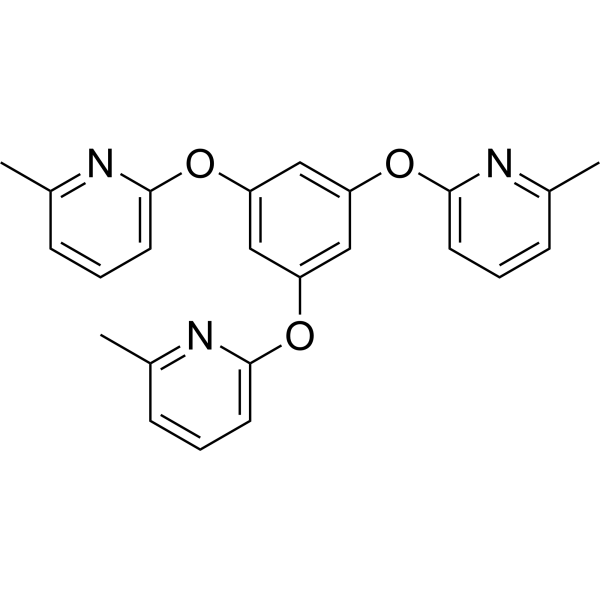
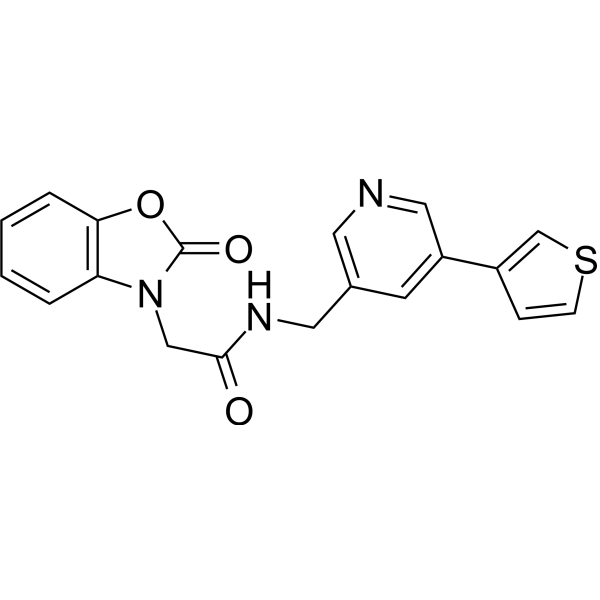
NX-13 is a first-in-class, orally active and gut-restricted agent that selectively targets and activates the NLRX1 pathway to induce immunometabolic changes. NX-13 results in lower inflammation and responses in inflammatory bowel disease. NX-13 can be used for the research of crohn's disease and ulcerative colitis.
Para uso exclusivo en investigación. No vendemos a pacientes.
- No. CAS: 2389235-01-0
- Fòrmula: C24H21N3O3
- Peso molecular:399.44
-
Almacenamiento:Pure form -20°C, 3 years , 4°C, 2 years ; In solvent -80°C, 6 months , -20°C, 1 month

To place orders, for customer services and technical support, please contact: MedChemExpress USA
Tel: 609-228-6898 E-mail: [email protected] [email protected]


-
 Actividad biológica
-
Chemical Information
-
Solvente y solubilidad
- Protocolo
- Pureza y Documentación
- Referencias
-
 Help & FAQs


-
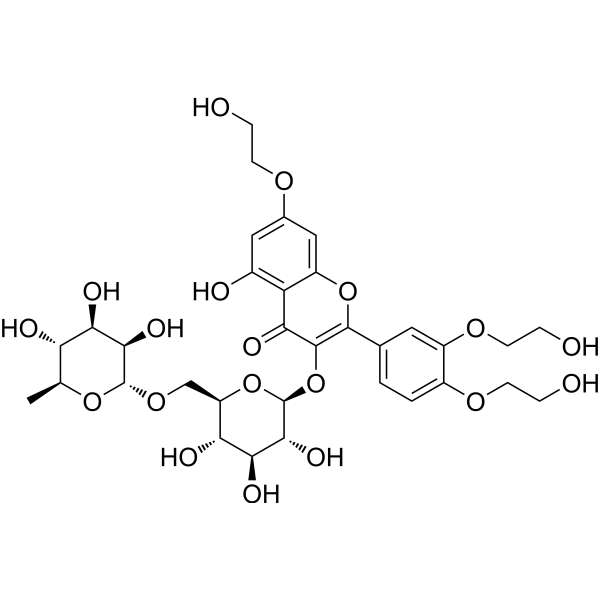
HY-N0139
TroxerutinNOD-like Receptor (NLR) Inhibitor -
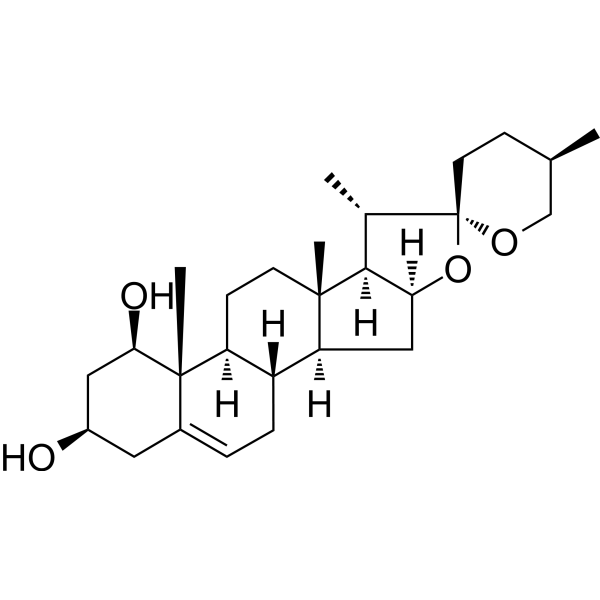
HY-N0496
RuscogeninNOD-like Receptor (NLR) Inhibitor -
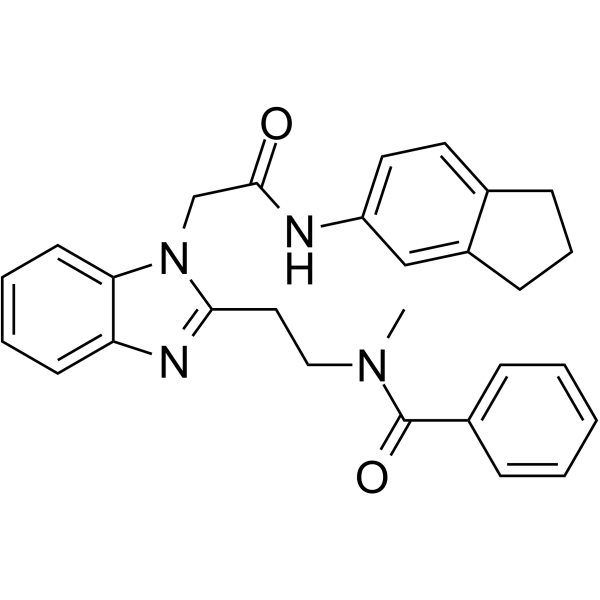
HY-136555
GSK717NOD2 Inhibitor -
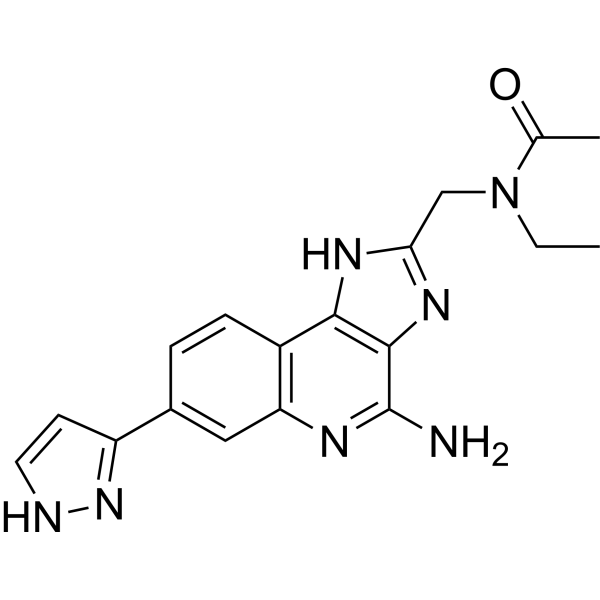
HY-139396
BMS-986299NLRP3 Agonist -
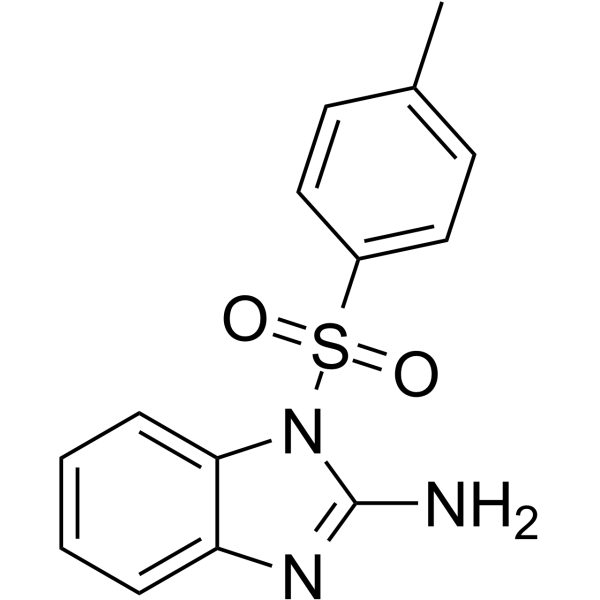
HY-18639
Nodinitib-1NOD-like Receptor (NLR) Inhibitor -
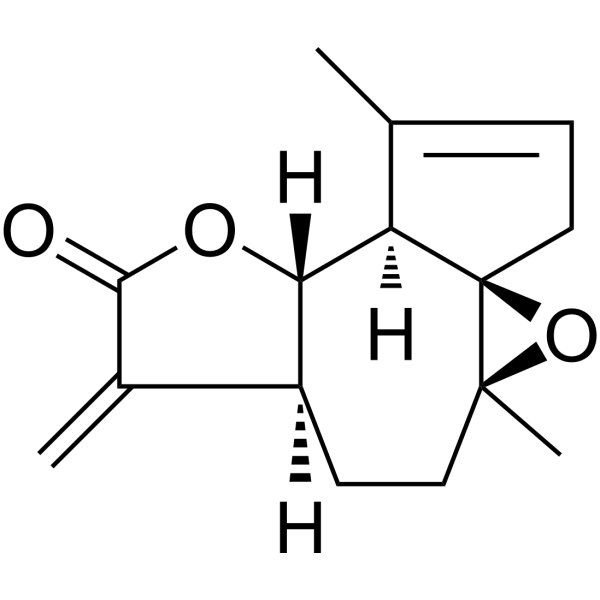
HY-16059
ArglabinNLRP3 Inflammasome Inhibitor -
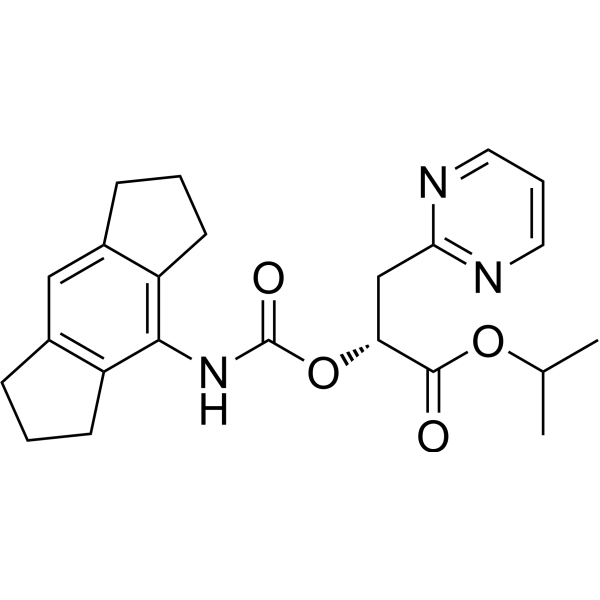
HY-156438
RuvonoflastNLRP3 Inhibitor -
HY-132831
SelnoflastNLRP3 Inhibitor -
HY-156798
ADS032NLRP1/3 Inhibitor -
HY-152670
JC2-11Inflammatory Corpuscles Inhibitor -
HY-100691
NOD-IN-1NLR Inhibitor -
HY-150206
NLRP3-IN-13NLRP3 Inhibitor
Publications Citing Use of MedChemExpress (MCE) Amelenodor
More

Actividad biológica
Descripciòn
IC50 & Target
NLRX1[1]
In Vivo
NX-13 (1 and 10 mg/kg; oral gavage; 0~24 hours) reaches the distal gastrointestinal tract[2].
MedChemExpress (MCE) has not independently confirmed the accuracy of these methods. They are for reference only.
-
Animal Model:Sprague Dawley rats (six weeks age)[2]
-
Dosage:0, 500, or 1000 mg/kg
-
Administration:Oral gavage; 7 days
-
Result:ALP in rats given the 1000 mg/kg dose level was lower than that in rats given 500 mg/kg.
-
Animal Model:Male C57BL/6J mice (8-10 weeks age)[2]
-
Dosage:1 and 10 mg/kg (Pharmacokinetics analysis)
-
Administration:Oral gavage; 24 hours
-
Result:Reached the distal gastrointestinal tract.
Ensayo clínico
| NCT Number | Sponsor | Condition | Start Date |
Phase

|
|---|---|---|---|---|
| NCT01329991 | 2011-05 | PHASE1 |


Chemical Information
-
No. CAS 2389235-01-0
-
Appearance Viscous Liquid
-
Peso molecular 399.44
-
Fòrmula C24H21N3O3
-
Color Colorless to light yellow
-
SMILES
CC1=NC(OC2=CC(OC3=CC=CC(C)=N3)=CC(OC4=CC=CC(C)=N4)=C2)=CC=C1
-
Synonyms
NX-13
-
Envío
Room temperature in continental US; may vary elsewhere.
-
Almacenamiento
Pure form -20°C 3 years 4°C 2 years In solvent -80°C 6 months -20°C 1 month


Publications (2)
-
Journal Impact Factor
-
Most Recent
-
Respir Res
2025 Nov 7;26(1):311. PMID: 41204207 -
Clin Immunol
NLRX1 deficiency exacerbates skin inflammation in atopic dermatitis by disrupting mitophagy. [Abstract]2025 Mar:272:110442. PMID: 39884322


Solvente y solubilidad
In Vitro:
DMSO : 135 mg/mL (337.97 mM; Need ultrasonic and warming; Hygroscopic DMSO has a significant impact on the solubility of product, please use newly opened DMSO)
Please refer to the solubility information to select the appropriate solvent. Once prepared, please aliquot and store the solution to prevent product inactivation from repeated freeze-thaw cycles.
Storage method and period of stock solution: -80°C, 6 months; -20°C, 1 month. When stored at -80°C, please use it within 6 months. When stored at -20°C, please use it within 1 month.
Please refer to the solubility information to select the appropriate solvent. Once prepared, please aliquot and store the solution to prevent product inactivation from repeated freeze-thaw cycles.
Storage method and period of stock solution: -80°C, 6 months; -20°C, 1 month. When stored at -80°C, please use it within 6 months. When stored at -20°C, please use it within 1 month.
Concentration (start) × Volume (start) = Concentration (final) × Volume (final)
In Vivo:
Select the appropriate dissolution method based on your experimental animal and administration route.
- For the following dissolution methods, please ensure to first prepare a clear stock solution using an In Vitro approach and then sequentially add co-solvents:
- To ensure reliable experimental results, the clarified stock solution can be appropriately stored based on storage conditions. As for the working solution for In Vivo experiments, it is recommended to prepare freshly and use it on the same day.
- The percentages shown for the solvents indicate their volumetric ratio in the final prepared solution. If precipitation or phase separation occurs during preparation, heat and/or sonication can be used to aid dissolution.
Add each solvent one by one: 10% DMSO 40% PEG300 5% Tween-80 45% Saline
Solubility: ≥ 6.75 mg/mL (16.90 mM); Clear solution
This protocol yields a clear solution of ≥ 6.75 mg/mL (saturation unknown).
Taking 1 mL working solution as an example, add 100 μL DMSO stock solution (67.5 mg/mL) to 400 μL PEG300, and mix evenly; then add 50 μL Tween-80 and mix evenly; then add 450 μL Saline to adjust the volume to 1 mL.
Preparation of Saline: Dissolve 0.9 g sodium chloride in ddH₂O and dilute to 100 mL to obtain a clear Saline solution.
Add each solvent one by one: 10% DMSO 90% (20% SBE-β-CD in Saline)
Solubility: ≥ 6.75 mg/mL (16.90 mM); Clear solution
This protocol yields a clear solution of ≥ 6.75 mg/mL (saturation unknown).
Taking 1 mL working solution as an example, add 100 μL DMSO stock solution (67.5 mg/mL) to 900 μL 20% SBE-β-CD in Saline, and mix evenly.
Preparation of 20% SBE-β-CD in Saline (4°C, storage for one week): 2 g SBE-β-CD powder is dissolved in 10 mL Saline, completely dissolve until clear.
In Vivo Dissolution Calculator
Please enter the basic information of animal experiments:
-
-
-
-
Recommended: Prepare an additional quantity of animals to account for potential losses during experiments.
Please enter your animal formula composition:
-
%DMSO +
Recommended: Keep the proportion of DMSO in working solution below 2% if your animal is weak.
-
%+
-
+%Tween-80 + +
-
%Saline +
The co-solvents required include: DMSO, . All of co-solvents are available by MedChemExpress (MCE). , Tween 80. All of co-solvents are available by MedChemExpress (MCE).
Working solution concentration: 0.22 mg/mL
Method for preparing stock solution: mg drug dissolved in μL DMSO. Stock solution concentration: mg/mL.
1. Take μL DMSO stock solution;
2. Add μL .
μL , mix evenly;
3. Then add μL Tween 80, mix evenly;
4. Then add μL
Please ensure that the stock solution in the first step is dissolved to a clear state, and add co-solvents in sequence. You can use ultrasonic heating (ultrasonic cleaner, recommended frequency 20-40 kHz), vortexing, etc. to assist dissolution.


Pureza y Documentación
-
Ficha de datos (275 KB)
-
SDS (252 KB)
- English - EN (252 KB)
- Français - FR (252 KB)
- Deutsch - DE (252 KB)
- Norwegian - NO (252 KB)
- Español - ES (252 KB)
- Swedish - SV (252 KB)
- Italian - IT (252 KB)
- Korean - KR (252 KB)
- Portuguese - PT (252 KB)
-
Instrucciones de manejo (2659 KB)
Referencias
[1]. Leber A, et al. Activation of NLRX1 by NX-13 Alleviates Inflammatory Bowel Disease through Immunometabolic Mechanisms in CD4+ T Cells. J Immunol. 2019;203(12):3407-3415. [Content Brief]
[2]. Leber A, et.al. Exploratory studies with NX-13: oral toxicity and pharmacokinetics in rodents of an orally active, gut-restricted first-in-class therapeutic for IBD that targets NLRX1 [published online ahead of print, 2019 Oct 25]. Drug Chem Toxicol. 2019;1-6. [Content Brief]


Complete Stock Solution Preparation Table
Please refer to the solubility information to select the appropriate solvent. Once prepared, please aliquot and store the solution to prevent product inactivation from repeated freeze-thaw cycles.
Storage method and period of stock solution: -80°C, 6 months; -20°C, 1 month. When stored at -80°C, please use it within 6 months. When stored at -20°C, please use it within 1 month.
| Optional Solvent | Concentration Solvent Mass | 1 mg | 5 mg | 10 mg | 25 mg |
|---|---|---|---|---|---|
| DMSO | 1 mM | 2.5035 mL | 12.5175 mL | 25.0350 mL | 62.5876 mL |
| 5 mM | 0.5007 mL | 2.5035 mL | 5.0070 mL | 12.5175 mL | |
| 10 mM | 0.2504 mL | 1.2518 mL | 2.5035 mL | 6.2588 mL | |
| 15 mM | 0.1669 mL | 0.8345 mL | 1.6690 mL | 4.1725 mL | |
| 20 mM | 0.1252 mL | 0.6259 mL | 1.2518 mL | 3.1294 mL | |
| 25 mM | 0.1001 mL | 0.5007 mL | 1.0014 mL | 2.5035 mL | |
| 30 mM | 0.0835 mL | 0.4173 mL | 0.8345 mL | 2.0863 mL | |
| 40 mM | 0.0626 mL | 0.3129 mL | 0.6259 mL | 1.5647 mL | |
| 50 mM | 0.0501 mL | 0.2504 mL | 0.5007 mL | 1.2518 mL | |
| 60 mM | 0.0417 mL | 0.2086 mL | 0.4173 mL | 1.0431 mL | |
| 80 mM | 0.0313 mL | 0.1565 mL | 0.3129 mL | 0.7823 mL | |
| 100 mM | 0.0250 mL | 0.1252 mL | 0.2504 mL | 0.6259 mL |


Amelenodor Related Classifications
HY-141521 Related Classifications
 Powered by Bioz