



IL-23 Protein, Human (HEK293, His)
Based on 1 Customer Validation
IL-23 and IL12B together constitute the pro-inflammatory cytokine IL-23, which is crucial in innate and adaptive immunity. IL-23 is released by antigen-presenting cells such as dendritic cells or macrophages, binds to IL12RB1 and IL23R, and activates JAK2 and TYK2. IL-23 Protein, Human (HEK293, His) is a recombinant protein dimer complex containing human-derived IL-23 alpha & IL-12 beta, expressed by HEK293 , with C-His labeled tag.
- Species: Human
- Source: HEK293
-
Storage:Stored at -20°C for 2 years from date of receipt. After reconstitution, it is stable at 4°C for 1 week or -20°C for longer (with carrier protein). It is recommended to freeze aliquots at -20°C or -80°C for extended storage.


To place orders, for customer services and technical support, please contact: MedChemExpress USA
Tel: 609-228-6898 E-mail: [email protected] [email protected]


-
 Biological Activity
-
Technical Parameters
-
Product Properties
- Documentation
- Help & FAQs


-

HY-P7044
IL-6 Protein, Human -
HY-P7028
IL-1 beta Protein, Human -
HY-P7118
TGF beta 1/TGFB1 Protein, Human (CHO) -
HY-P7032
IL-12 Protein, Human (HEK293) -
HY-P70543
TGF beta 1/TGFB1 Protein, Human (HEK293) -
HY-90006
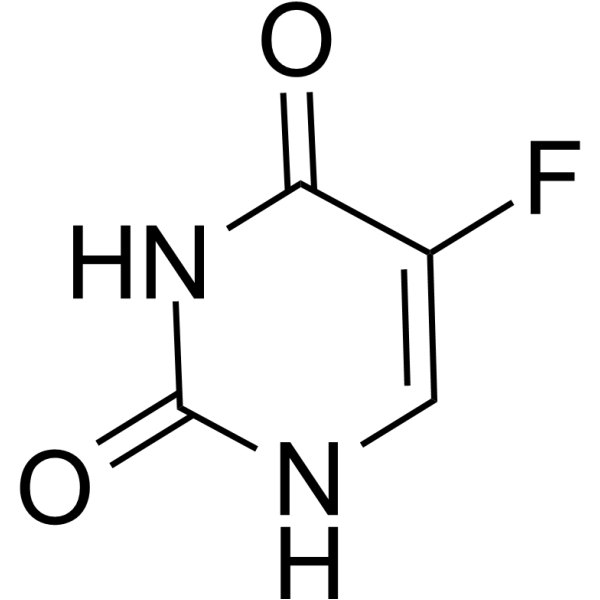
5-FluorouracilThymidylate Synthase Inhibitor -
HY-18739
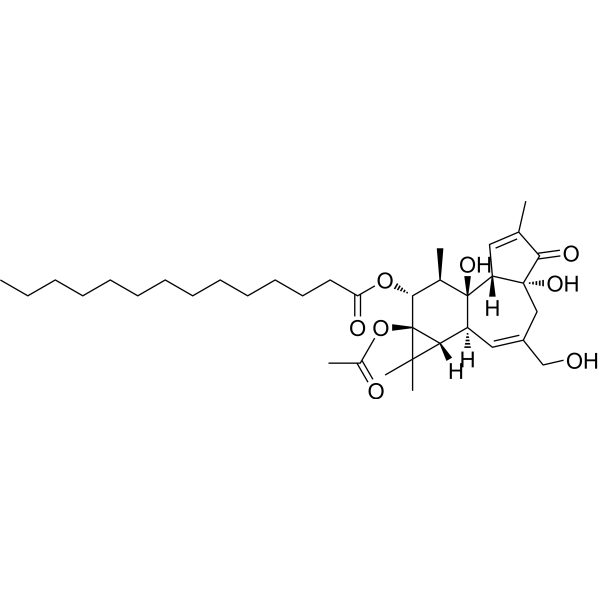
Phorbol 12-myristate 13-acetatePKC Activator -
HY-16592
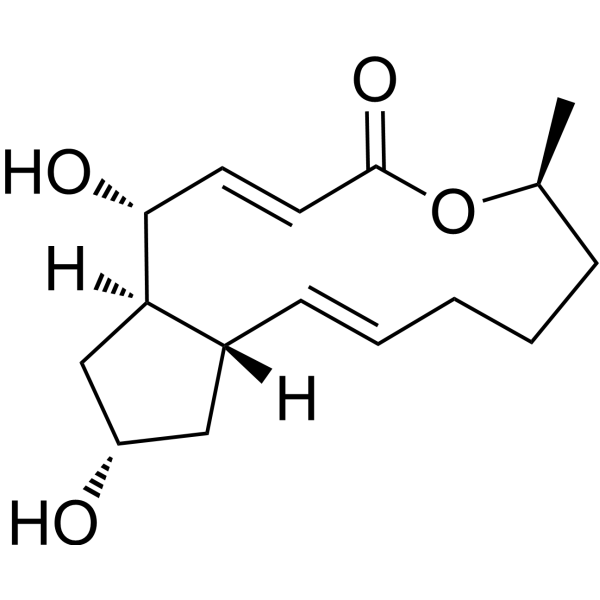
Brefeldin AProtein Transport Inhibitor -
HY-13434
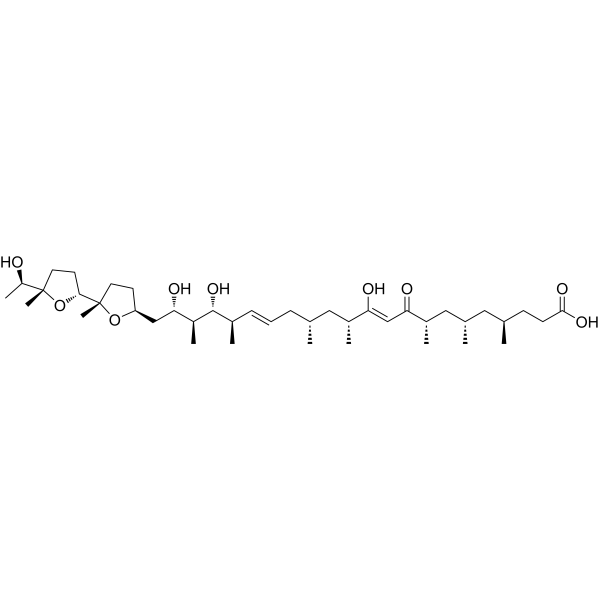
IonomycinCalcium Ionophore -
HY-10431
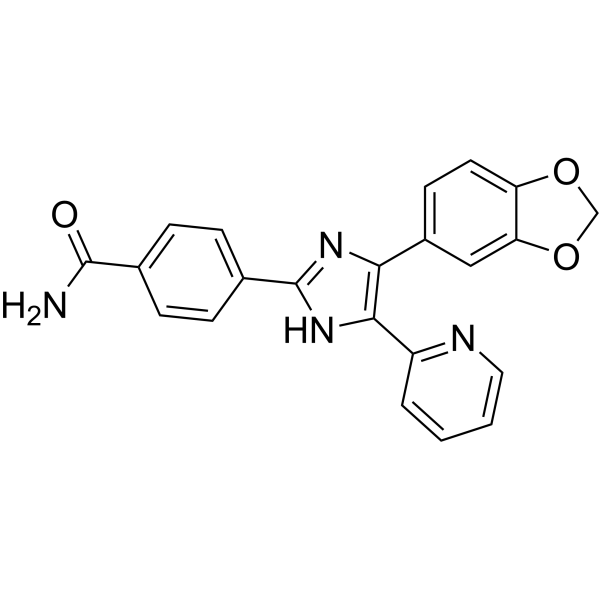
SB-431542TGF-β Receptor Kinase Inhibitor -
HY-100579
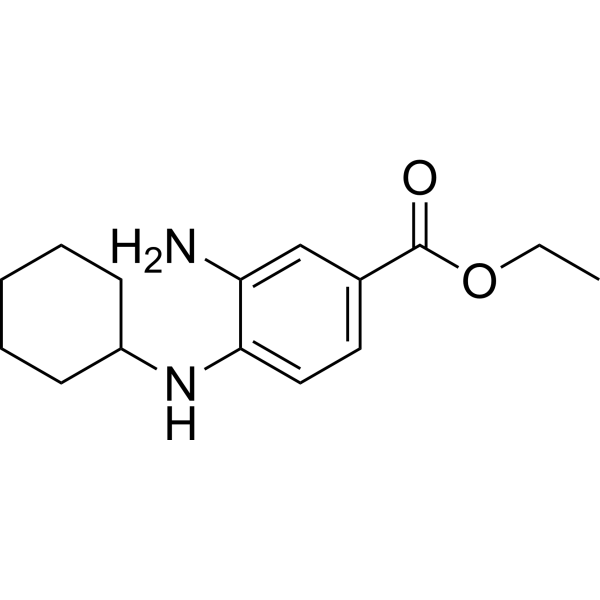
Ferrostatin-1Ferroptosis Inhibitor -
HY-40354
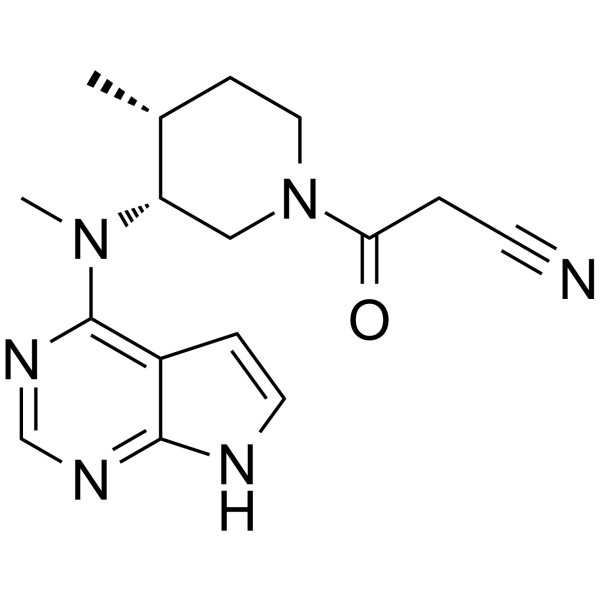
TofacitinibJAK1/JAK3 Inhibitor


Biological Activity
Description
IL-23 and IL12B together constitute the pro-inflammatory cytokine IL-23, which is crucial in innate and adaptive immunity. IL-23 is released by antigen-presenting cells such as dendritic cells or macrophages, binds to IL12RB1 and IL23R, and activates JAK2 and TYK2. IL-23 Protein, Human (HEK293, His) is a recombinant protein dimer complex containing human-derived IL-23 alpha & IL-12 beta, expressed by HEK293 , with C-His labeled tag.
Background
IL-23, in collaboration with IL12B, forms the pro-inflammatory cytokine IL-23, playing diverse roles in both innate and adaptive immunity. Released by antigen-presenting cells such as dendritic cells or macrophages, IL-23 binds to a heterodimeric receptor complex comprising IL12RB1 and IL23R, initiating a cascade involving JAK2 and TYK2 activation. These kinases phosphorylate the receptor, creating a docking site for the subsequent phosphorylation of STAT3 and STAT4. This process activates multiple pathways, including p38 MAPK or NF-kappa-B, fostering the production of pro-inflammatory cytokines, such as interleukin-17A/IL17A. Additionally, IL-23 actively participates in the early and effective clearance of intracellular bacteria. Notably, IL-23 promotes the expansion and survival of T-helper 17 cells, a CD4-positive helper T-cell subset known for producing IL-17, alongside other IL-17-producing cells. The heterodimeric association of IL-23 with IL12B, known as interleukin IL-23, is disulfide-linked. Furthermore, IL-23 interacts with IL23R, facilitating the recruitment of IL12RB1.
Verified Bioactivity
1.Measured by its ability to induce IL-17 secretion by CTLL-2 cells. The ED50 for this effect is 14.92 ng/mL, corresponding to a specific activity is 6.7×10⁴ U/mg.
2.Measured by its binding ability in a functional ELISA. Immobilized Human IL23R (HY-P70680) at 2 μg/mL (100 μL/well) can bind Human IL-23 alpha & IL-12 beta Heterodimer Protein. The ED50 for this effect is 120-300 ng/mL.
3.Measured by its ability to induce STAT reporter activity in 293F human embryonic kidney cells. The ED50 for this effect is 70-210 ng/mL.
Results
-
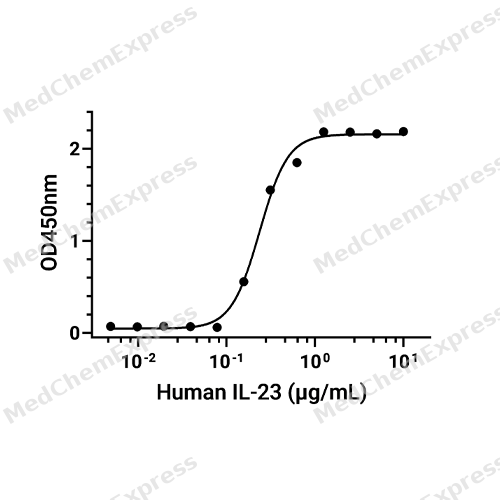 Measured by its binding ability in a functional ELISA. Immobilized IL-23R at 2 μg/mL (100 μL/well) can bind Human IL-23 alpha & IL-12 beta Heterodimer Protein. The ED50 for this effect is 257.4 ng/mL.
MCE Validation Data
-
Purity - SDS-PAGE
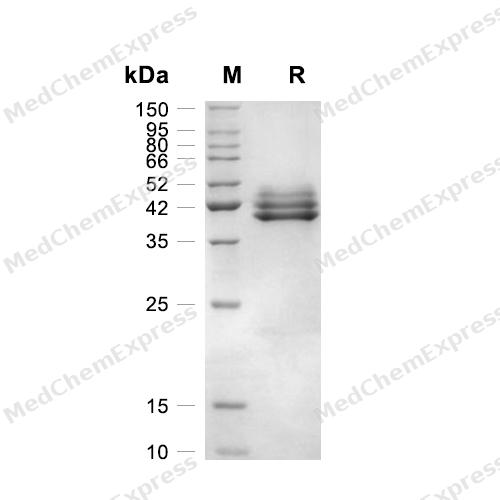
Purity - SDS-PAGE
-
Bioactivity - ELISA
Bioactivity - ELISA
-
Biological Activity
Biological Activity


Technical Parameters
-
Species Human
-
Source HEK293
-
Tag C-His
-
Synonyms
IL23A; Interleukin 23, Alpha Subunit P19; Interleukin 23 Subunit Alpha; Interleukin-23 Subunit Alpha; SGRF; Interleukin-23 Subunit P19; IL23P19; IL-23 Subunit Alpha; IL-23A; IL-23p19; IL-23; IL-23-A; P19; JKA3 Induced Upon T-Cell Activation; Interleukin-S
-
AA Sequence
IL-23alpha:
RAVPGGSSPAWTQCQQLSQKLCTLAWSAHPLVGHMDLREEGDEETTNDVPHIQCGDGCDPQGLRDNSQFCLQRIHQGLIFYEKLLGSDIFTGEPSLLPDSPVGQLHASLLGLSQLLQPEGHHWETQQIPSLSPSQPWQRLLLRFKILRSLQAFVAVAARVFAHGAATLSP
IL-12beta:
IWELKKDVYVVELDWYPDAPGEMVVLTCDTPEEDGITWTLDQSSEVLGSGKTLTIQVKEFGDAGQYTCHKGGEVLSHSLLLLHKKEDGIWSTDILKDQKEPKNKTFLRCEAKNYSGRFTCWWLTTISTDLTFSVKSSRGSSDPQGVTCGAATLSAERVRGDNKEYEYSVECQEDSACPAAEESLPIEVMVDAVHKLKYENYTSSFFIRDIIKPDPPKNLQLKPLKNSRQVEVSWEYPDTWSTPHSYFSLTFCVQVQGKSKREKKDRVFTDKTSATVICRKNASISVRAQDRYYSSSWSEWASVPCS -
Predicted Molecular Mass
20 kDa & 36 kDa
-
Molecular Weight
Approximately 19-22 kDa & 40-60 kDa, based on SDS-PAGE under reducing conditions, due to the glycosylation.
-
Glycosylation
Yes
-
Purity
≥ 90%, as determined by reducing SDS-PAGE.


Product Properties
Lyophilized powder
1.Lyophilized from a 0.22 μm filtered solution of 20 mM PB, 150 mM NaCl, pH 7.4.
2.Lyophilized from a 0.22 μm filtered solution of PBS, pH 7.4, 8% trehalose.
3.Lyophilized from a 0.22 μm filtered solution of 20 mM PB, 200 mM trehalose, 4% mannitol, 50 mM NaCl, 0.02% Tween 80, pH 7.5.
Please refer to the lot-specific COA for specific buffer information.
<1 EU/μg, determined by LAL method.
It is not recommended to reconstitute to a concentration less than 100 μg/mL in ddH2O. For long term storage it is recommended to add a carrier protein (0.1% BSA, 5% HSA, 10% FBS or 5% Trehalose).
Stored at -20°C for 2 years from date of receipt. After reconstitution, it is stable at 4°C for 1 week or -20°C for longer (with carrier protein). It is recommended to freeze aliquots at -20°C or -80°C for extended storage.
Room temperature in continental US; may vary elsewhere.


Documentation
-
Data Sheet (240 KB)
-
SDS (252 KB)
- English - EN (252 KB)
- Français - FR (252 KB)
- Deutsch - DE (252 KB)
- Norwegian - NO (252 KB)
- Español - ES (252 KB)
- Swedish - SV (252 KB)
- Italian - IT (252 KB)
- Korean - KR (252 KB)
- Portuguese - PT (252 KB)
-
Handling Instructions (2659 KB)

Calculators
Concentration (start) × Volume (start) = Concentration (final) × Volume (final)


 Powered by Bioz

