



(S)-Hydroxychloroquine sulfate
(S)-Hydroxychloroquine ((S)-HCQ) sulfate is an isomer of Hydroxychloroquine (HY-W031727). (S)-Hydroxychloroquine sulfate (2.5-20 mg/mL) reduces the rate of insulin degradation in liver homogenates isolated from non-diabetic and diabetic rats. Formulations containing Hydroxychloroquine have been used in the study of malaria, rheumatoid arthritis, and systemic lupus erythematosus.
For research use only. We do not sell to patients.
- CAS No.: 155204-09-4
- Formula: C18H28ClN3O5S
- Molecular Weight:433.95
-
Storage:
Please store the product under the recommended conditions in the Certificate of Analysis.


To place orders, for customer services and technical support, please contact: MedChemExpress USA
Tel: 609-228-6898 E-mail: [email protected] [email protected]


-
 Biological Activity
-
Chemical Information
- Protocols
- Purity & Documentation
- References
-
 Help & FAQs


-

HY-B1370E
(R)-Hydroxychloroquine phosphate(R)-isomer of Hydroxychloroquine -
HY-N0326S7
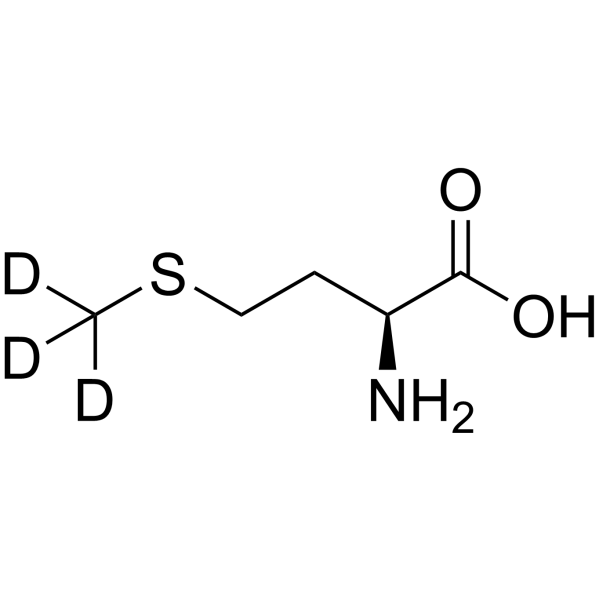
L-Methionine-d3Stable Isotope -
HY-124373
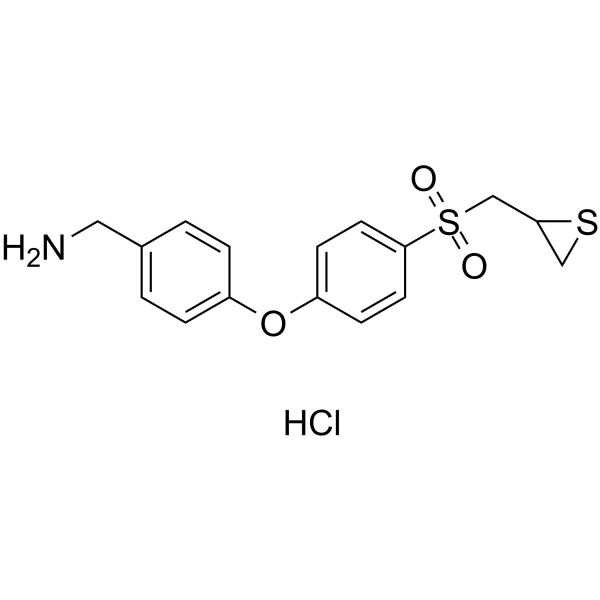
ND-336MMP Inhibitor -

HY-Y1624
1,1'-(Azodicarbonyl)-dipiperidineBiochemical Assay Reagents -

HY-158650
10-OAHSAFAHFA -
HY-113631
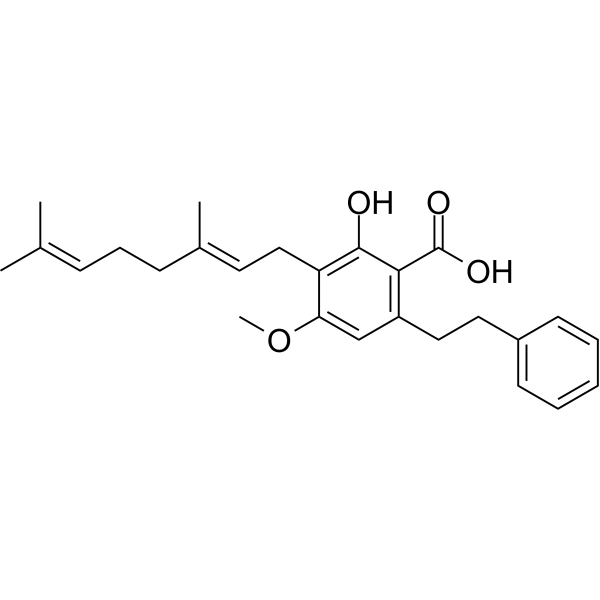
Amorfrutin BPPARγ agonist -
HY-N6181
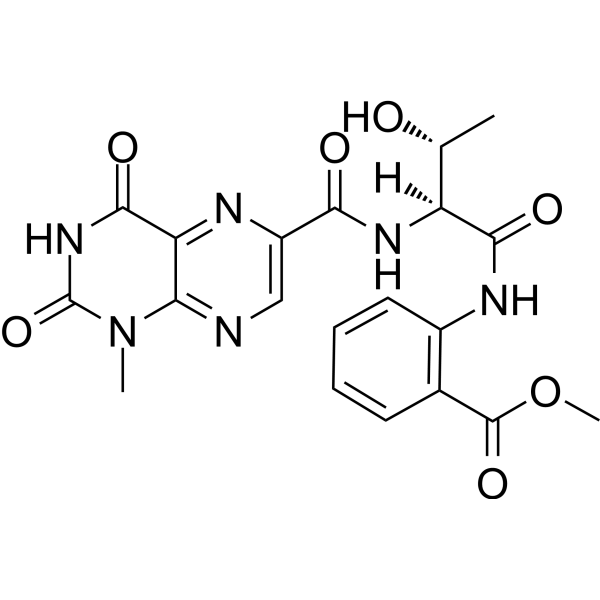
Terrelumamide A -

HY-158651
10-SAHSAEndogenous Lipid -

HY-158625
10(R)-PAHSAEndogenous Lipid -

HY-158626
10(S)-PAHSAEndogenous Lipid
All Parasite Isoforms
More

Biological Activity
Description


Chemical Information
-
CAS No. 155204-09-4
-
Molecular Weight 433.95
-
Formula C18H28ClN3O5S
-
SMILES
O=S(O)(O)=O.OCCN(CC)CCC[C@H](C)NC1=CC=NC2=C1C=CC(Cl)=C2
-
Synonyms
(S)-HCQ sulfate
-
Shipping
Room temperature in continental US; may vary elsewhere.
-
Storage
Please store the product under the recommended conditions in the Certificate of Analysis.

Protocols
-
Collagen-Induced Arthritis
Collagen-induced arthritis (CIA) is an autoimmune murine model of rheumatoid arthritis in which immunization with type II collagen (CII) emulsified in an adjuvant induces a T cell- and autoantibody-driven inflammatory arthritis characterized by synovial hyperplasia, immune cell infiltration, and joint destruction. The model typically relies on genetically susceptible mouse strains (e. g. , DBA/1) and reproduces key features of human rheumatoid arthritis, including anti-collagen immune responses and progressive joint inflammation. Disease onset generally occurs within ~3-4 weeks after immunization, depending on antigen/adjuvant combinations and protocol variation. The immunopathology is driven by adaptive immune activation against CII, leading to systemic and local joint inflammation mediated by pro-inflammatory cytokines and effector immune cells, making CIA a standard preclinical platform for evaluating immunomodulatory and anti-arthritic interventions.
-
Research Protocol for Endocrine Diseases
Endocrine diseases often arise from disrupted hormone production, hormone signaling, or target-tissue responsiveness; for diabetes-focused endocrine disease models, insulin signaling regulates glucose uptake, hepatic glucose output, lipid metabolism, and β-cell compensation. Type 2 diabetes develops through interacting defects in insulin resistance, β-cell dysfunction, adipose inflammation, hepatic glucose overproduction, altered incretin signaling, and ectopic lipid metabolism. A major unresolved question is whether endocrine dysfunction is driven primarily by target-tissue insulin resistance, intrinsic β-cell failure, immune/inflammatory stress, or combined multi-organ failure that differs by disease stage.


Purity & Documentation
References

Calculators
Concentration (start) × Volume (start) = Concentration (final) × Volume (final)


(S)-Hydroxychloroquine sulfate Related Classifications
HY-145530 Related Classifications
 Powered by Bioz