



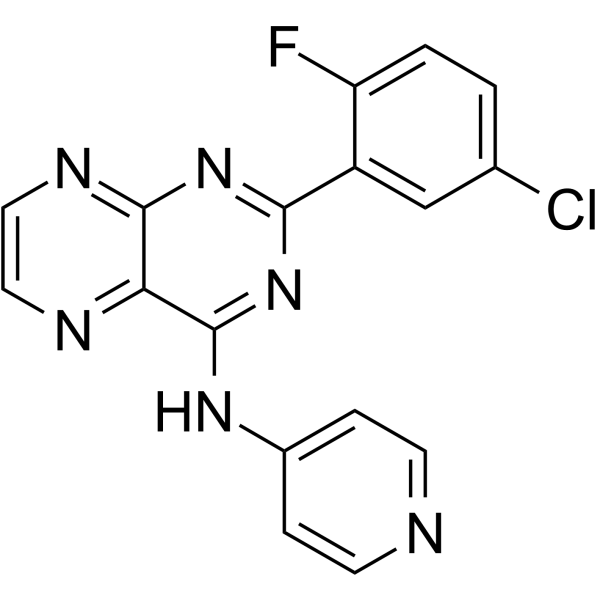
SD-208 (GMP) is SD-208 (HY-13227) produced by using GMP guidelines. GMP small molecules works appropriately as an auxiliary reagent for cell therapy manufacture. SD-208 is a selective TGF-βRI (ALK5) inhibitor with IC50 of 48 nM, and > 100-fold selectivity over TGF-βRII.
For research use only. We do not sell to patients.
- CAS No.: 627536-09-8
- Formula: C17H10ClFN6
- Molecular Weight:352.75
-
Storage:
Please store the product under the recommended conditions in the Certificate of Analysis.


To place orders, for customer services and technical support, please contact: MedChemExpress USA
Tel: 609-228-6898 E-mail: [email protected] [email protected]


-
 Biological Activity
-
Chemical Information
- Purity & Documentation
- References
-
 Help & FAQs


-
HY-13227
SD-208TGF-β Receptor Inhibitor -
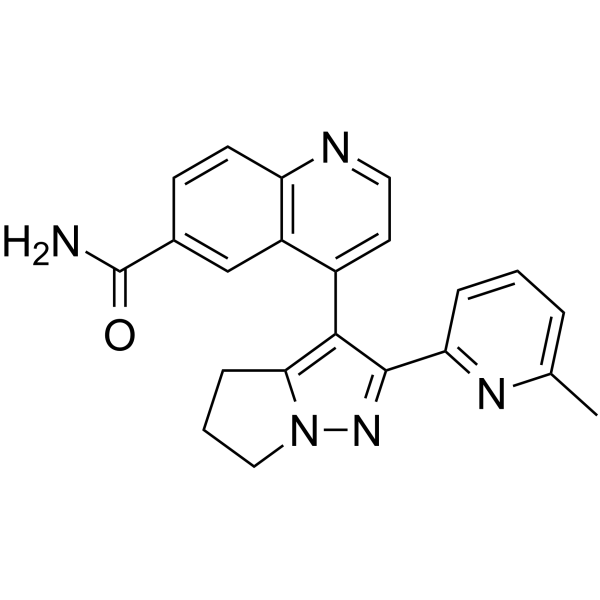
HY-13226
GalunisertibTGFβRI Inhibitor -
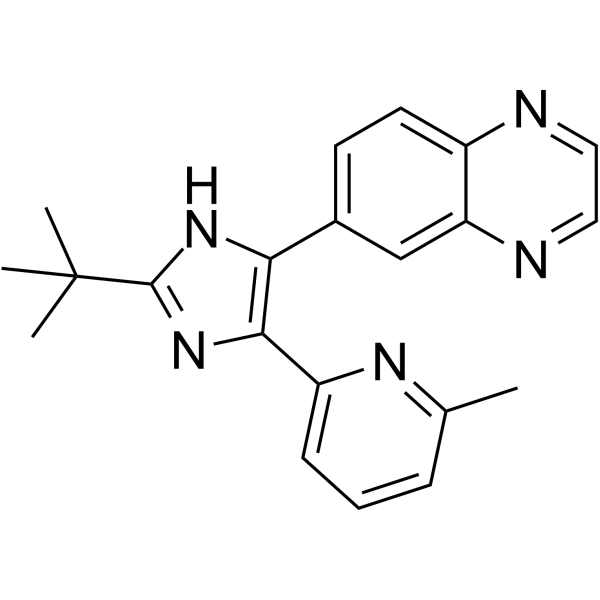
HY-12043
SB 525334ALK5 Inhibitor -
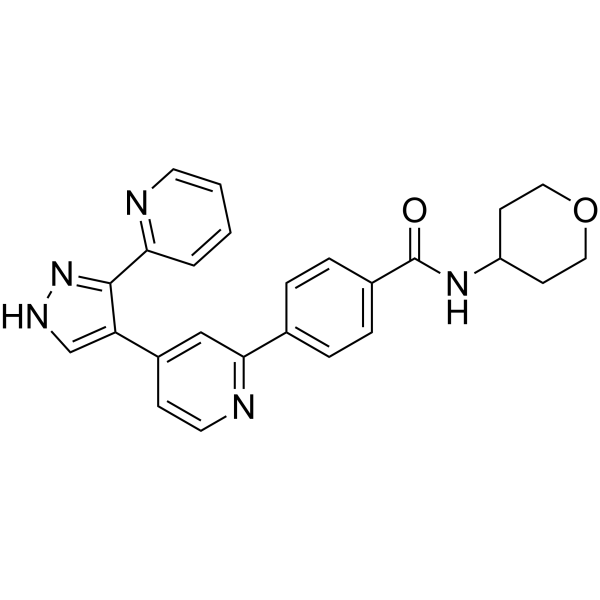
HY-10326
GW788388ALK5 Inhibitor -
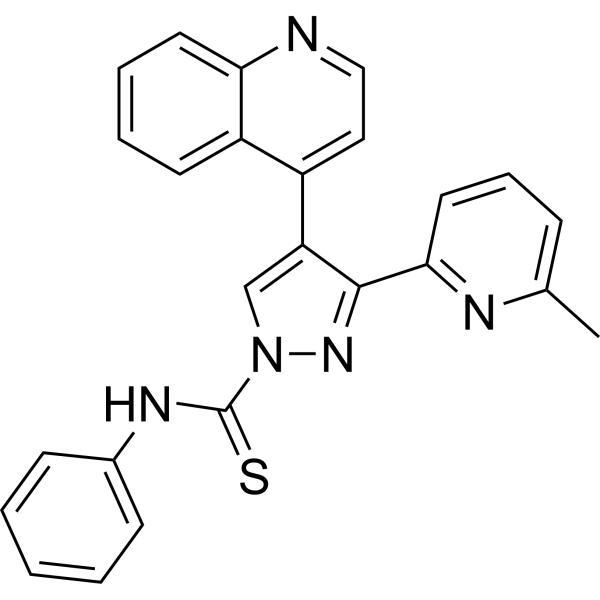
HY-10432
A 83-01ALK4/5/7 Inhibitor -
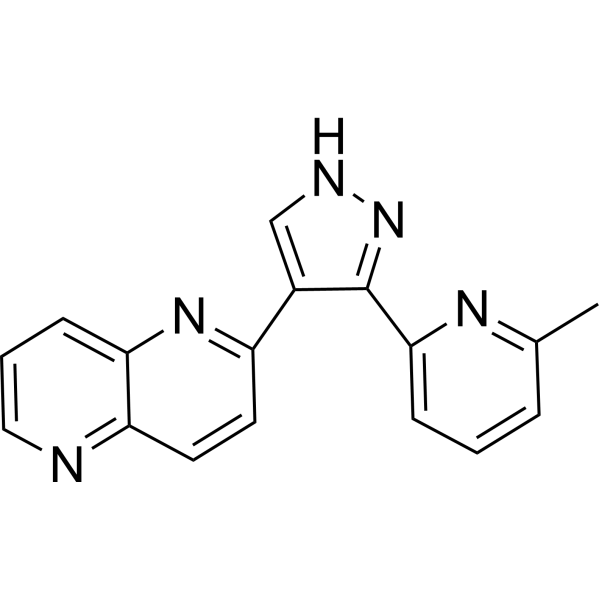
HY-13012
RepSoxTGFβR-1/ALK5 Inhibitor -
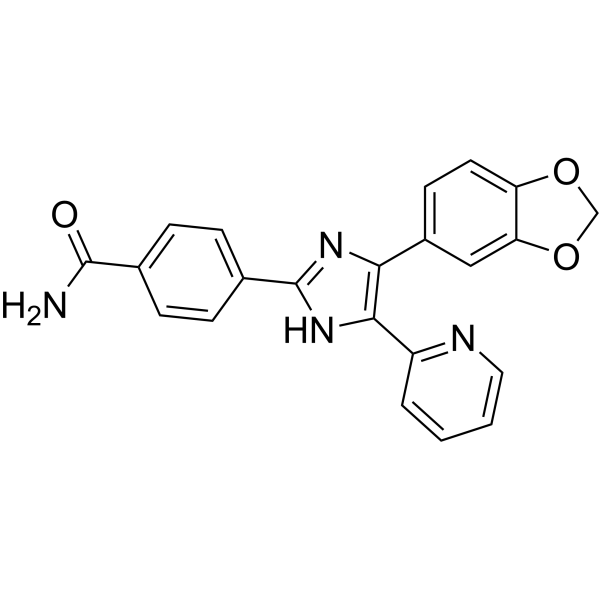
HY-10431
SB-431542TGF-β Receptor Kinase Inhibitor -

HY-13226R
Galunisertib (Standard)TGFβRI Inhibitor -
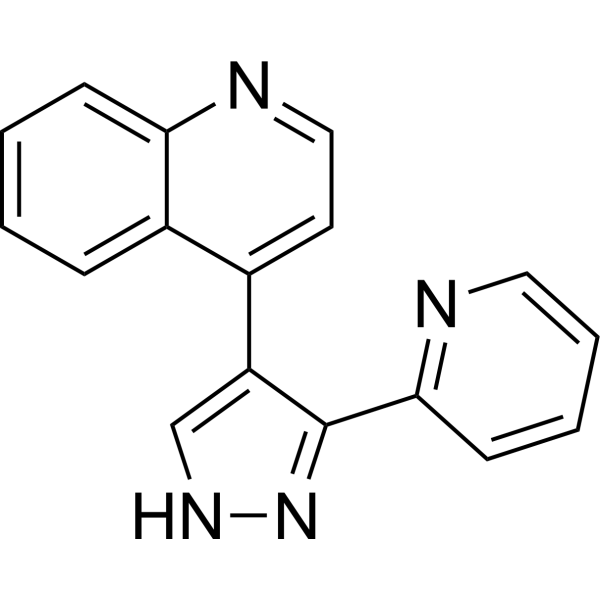
HY-13462
LY-364947TGFβR-I Inhibitor -
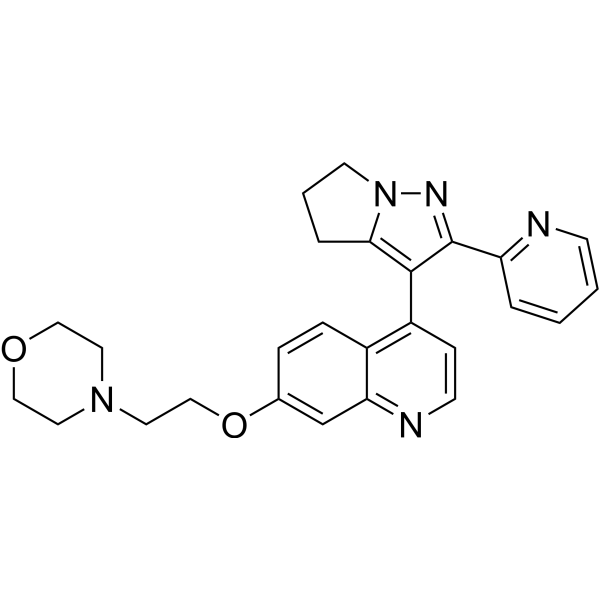
HY-12075
LY2109761TGF-βR I/II Inhibitor -
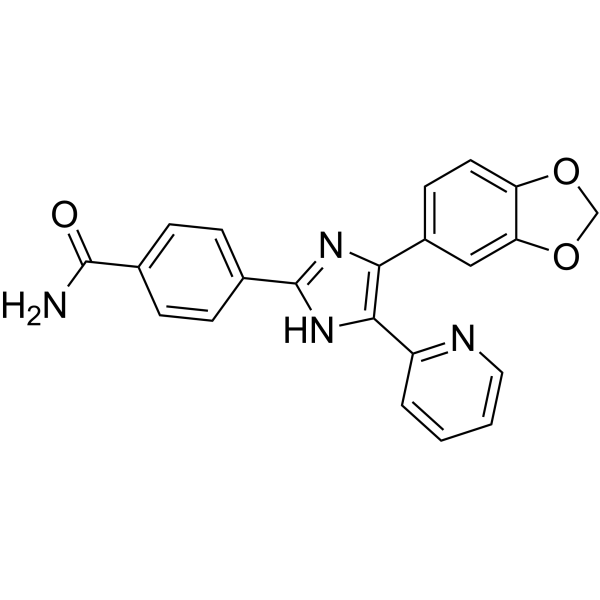
HY-10431G
SB-431542 (GMP)TGF-β Receptor Kinase Inhibitor -
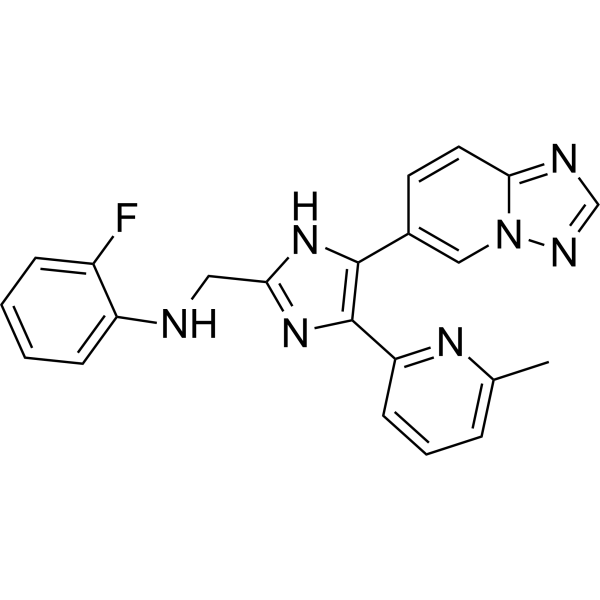
HY-19928
VactosertibALK5 Inhibitor


Biological Activity
Description
In Vitro
SD-208 (GMP) inhibits the cell growth and constitutive and TGF-beta-evoked migration and invasion, and enhances immunogenicity in murine SMA-560 and human LN-308 glioma cells[1].
SD-208 (GMP) blocks TGF-beta-induced phosphorylation of the receptor-associated Smads, Smad2 and Smad3, and stimulates epithelial-to-mesenchymal transdifferentiation, migration, and invasiveness into Matrigel in vitro[2].
SD-208 (GMP) also abolishes the promoting effect of TGF-β on neointimal smooth muscle-like cell (SMLC) proliferation and migration in vitro[3].
MedChemExpress (MCE) has not independently confirmed the accuracy of these methods. They are for reference only.
In Vivo
In syngeneic 129S1 mice, SD-208 (GMP) (60 mg/kg/d, p.o.) inhibits primary R3T tumor growth, and reduces the number and the size of lung metastases[2].
In the murine aortic allograft model, SD-208 (GMP) effectively reduces the formation of intimal hyperplasia of transplant arteriosclerosis (TA)[3].
MedChemExpress (MCE) has not independently confirmed the accuracy of these methods. They are for reference only.


Chemical Information
-
CAS No. 627536-09-8
-
Molecular Weight 352.75
-
Formula C17H10ClFN6
-
SMILES
FC1=CC=C(Cl)C=C1C2=NC3=NC=CN=C3C(NC4=CC=NC=C4)=N2
-
Shipping
Room temperature in continental US; may vary elsewhere.
-
Storage
Please store the product under the recommended conditions in the Certificate of Analysis.


Purity & Documentation
References
[1]. Uhl M, et al. SD-208, a novel transforming growth factor beta receptor I kinase inhibitor, inhibits growth and invasiveness and enhances immunogenicity of murine and human glioma cells in vitro and in vivo. Cancer Res. 2004 Nov 1;64(21):7954-61. [Content Brief]
[2]. Ge R, et al. Inhibition of growth and metastasis of mouse mammary carcinoma by selective inhibitor of transforming growth factor-beta type I receptor kinase in vivo. Clin Cancer Res. 2006 Jul 15;12(14 Pt 1):4315-30. [Content Brief]
[3]. Sun Y, et al. Inhibition of intimal hyperplasia in murine aortic allografts by the oral administration of the transforming growth factor-beta receptor I kinase inhibitor SD-208. J Heart Lung Transplant. 2014 Jun;33(6):654-61. [Content Brief]

Calculators
Concentration (start) × Volume (start) = Concentration (final) × Volume (final)


SD-208 (GMP) Related Classifications
HY-13227G Related Classifications
 Powered by Bioz