



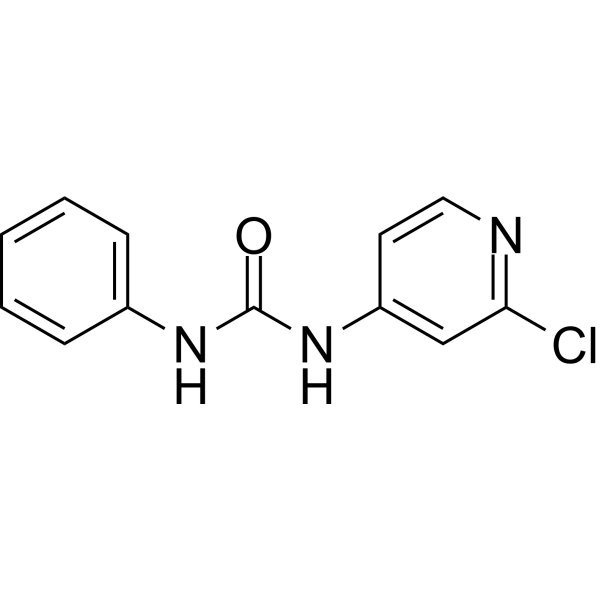
Forchlorfenuron

Based on 1 Customer Validation
Forchlorfenuron is plant growth regulator and cytokinin; can be used to increase fruit size of fruits, such as kiwi fruit and grapes.
For research use only. We do not sell to patients.
- Purity : 99.45%
- CAS No.: 68157-60-8
- Formula: C12H10ClN3O
- Molecular Weight:247.68
-
Storage:Powder -20°C, 3 years , 4°C, 2 years ; In solvent -80°C, 2 years , -20°C, 1 year

To place orders, for customer services and technical support, please contact: MedChemExpress USA
Tel: 609-228-6898 E-mail: [email protected] [email protected]


-
 Biological Activity
-
Chemical Information
-
Solvent & Solubility
- Purity & Documentation
- References
-
 Help & FAQs


-
HY-N0186
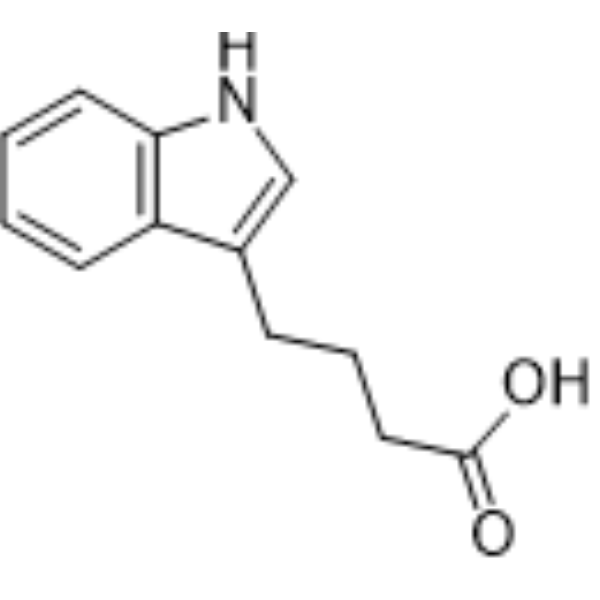
Indole-3-butyric acidEndogenous Metabolite -
HY-N0160
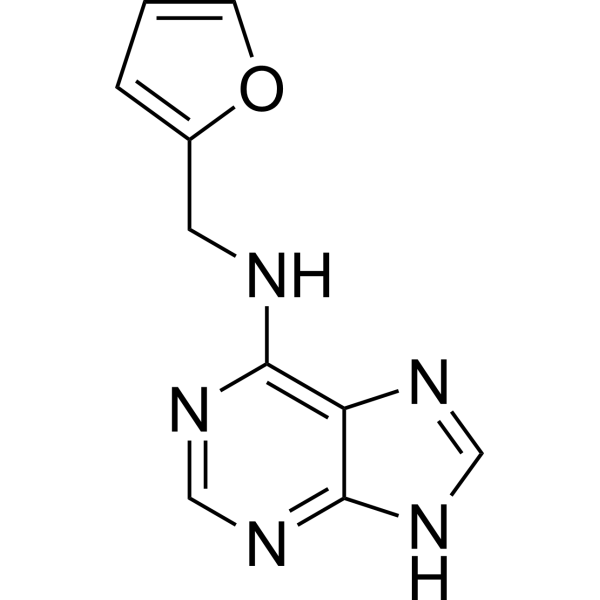
KinetinPlant Hormone -

HY-N0186R
Indole-3-butyric acid (Standard)Endogenous Metabolite -
HY-W131845
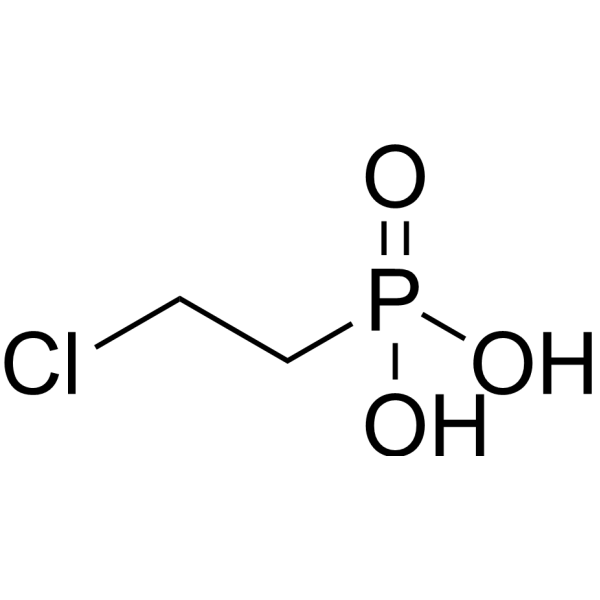
EthephonPlant Growth Regulator -
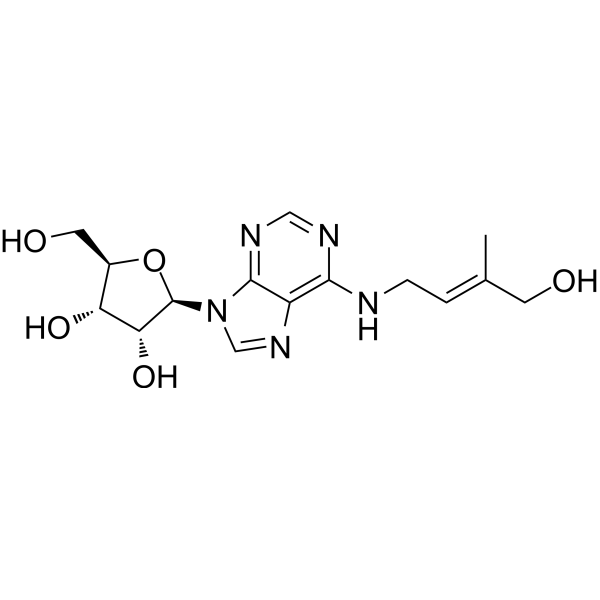
HY-W011151
trans-ZeatinribosidePlant Growth Regulator -
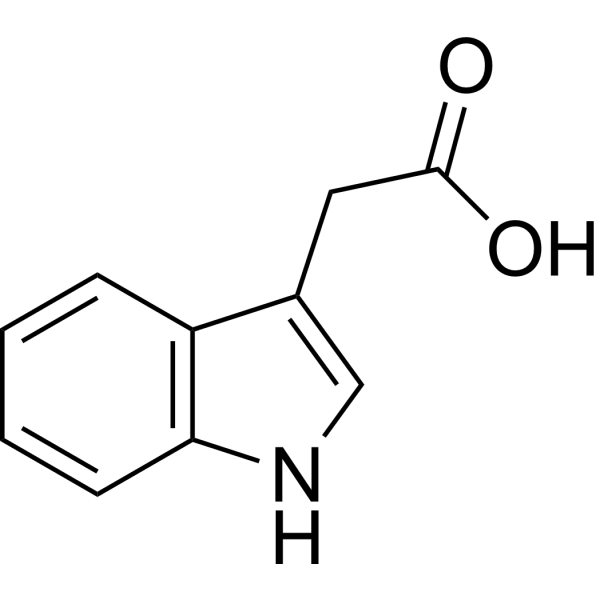
HY-18569
3-Indoleacetic acidPlant Growth Regulator -

HY-B1841R
Forchlorfenuron (Standard)Plant Growth Regulator -

HY-W131845R
Ethephon (Standard)Plant Growth Regulator -
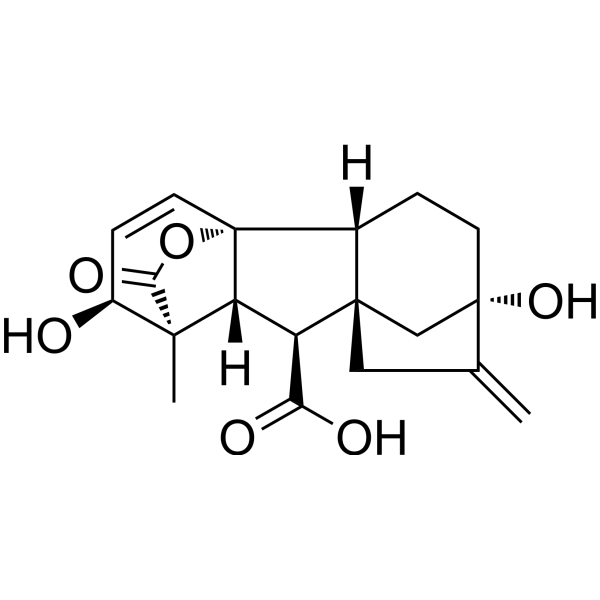
HY-N1964
Gibberellic acidGrowth Regulator -
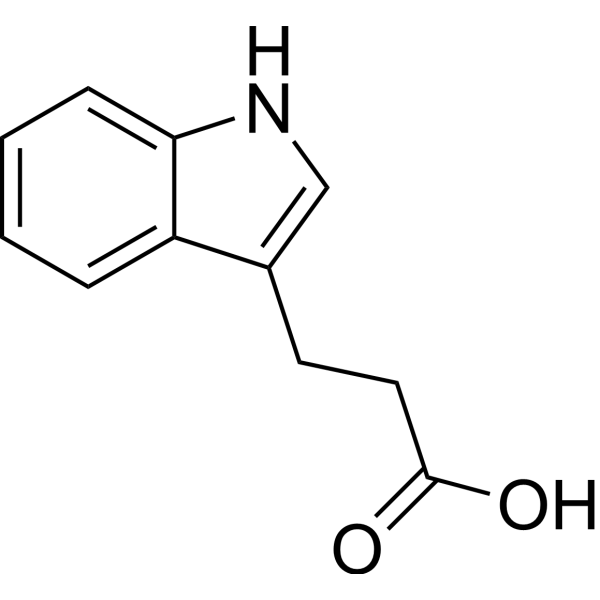
HY-W015229
3-Indolepropionic acid -
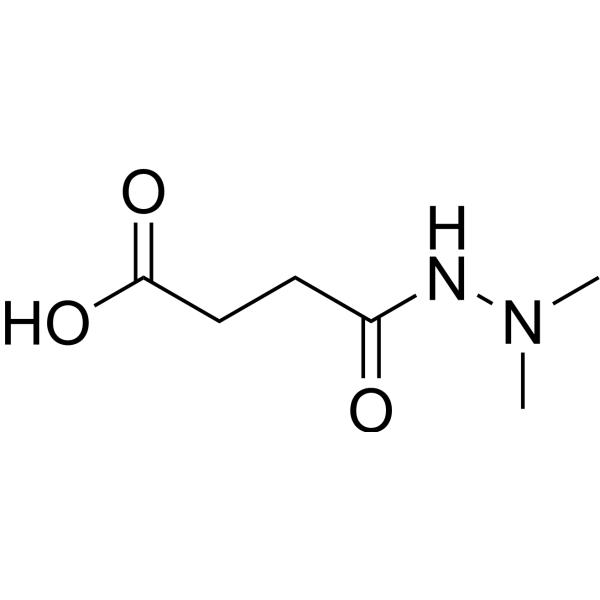
HY-13643
DaminozideKDM2/7 Inhibitor -
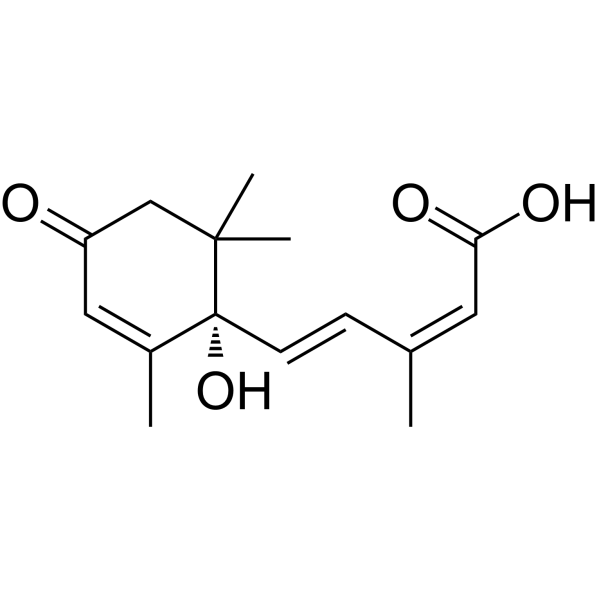
HY-100560
Abscisic acidPlant Hormone
All Phytohormone Isoforms
More

Biological Activity
Description
In Vitro
Forchlorfenuron is a plant growth regulator, applied extensively to increase kiwifruit size and weight. Cytotoxicity of forchlorfenuron and its metabolites are tested through Sulforhodamine B assays against CHO cells. Forchlorfenuron exhibits significant cytotoxicity against CHO cells with an IC50 of 12.12±2.14 μM[1]. The half-lives offorchlorfenuron were 15.8-23.0 days, the final residues of forchlorfenuron in pulp were all ≤0.002 mg/kg, and most of the residues were concentrated in the peel. The risk assessment revealed that no significant potential health risk would be induced by forchlorfenuron in citrus fruits. Therefore, it could be safe to apply forchlorfenuron in citrus fruits[2].
MedChemExpress (MCE) has not independently confirmed the accuracy of these methods. They are for reference only. .


Chemical Information
-
CAS No. 68157-60-8
-
Appearance Solid
-
Molecular Weight 247.68
-
Formula C12H10ClN3O
-
Color White to off-white
-
SMILES
O=C(NC1=CC=CC=C1)NC2=CC(Cl)=NC=C2
-
Initial Source
-
Shipping
Room temperature in continental US; may vary elsewhere.
-
Storage
Powder -20°C 3 years 4°C 2 years In solvent -80°C 2 years -20°C 1 year


Solvent & Solubility
In Vitro:
DMSO : ≥ 100 mg/mL (403.75 mM; Hygroscopic DMSO has a significant impact on the solubility of product, please use newly opened DMSO)
* "≥" means soluble, but saturation unknown.
Please refer to the solubility information to select the appropriate solvent. Once prepared, please aliquot and store the solution to prevent product inactivation from repeated freeze-thaw cycles.
Storage method and period of stock solution: -80°C, 2 years; -20°C, 1 year. When stored at -80°C, please use it within 2 years. When stored at -20°C, please use it within 1 year.
Please refer to the solubility information to select the appropriate solvent. Once prepared, please aliquot and store the solution to prevent product inactivation from repeated freeze-thaw cycles.
Storage method and period of stock solution: -80°C, 2 years; -20°C, 1 year. When stored at -80°C, please use it within 2 years. When stored at -20°C, please use it within 1 year.
Concentration (start) × Volume (start) = Concentration (final) × Volume (final)
In Vivo:
Select the appropriate dissolution method based on your experimental animal and administration route.
- For the following dissolution methods, please ensure to first prepare a clear stock solution using an In Vitro approach and then sequentially add co-solvents:
- To ensure reliable experimental results, the clarified stock solution can be appropriately stored based on storage conditions. As for the working solution for In Vivo experiments, it is recommended to prepare freshly and use it on the same day.
- The percentages shown for the solvents indicate their volumetric ratio in the final prepared solution. If precipitation or phase separation occurs during preparation, heat and/or sonication can be used to aid dissolution.
Add each solvent one by one: 10% DMSO 40% PEG300 5% Tween-80 45% Saline
Solubility: ≥ 2.5 mg/mL (10.09 mM); Clear solution
This protocol yields a clear solution of ≥ 2.5 mg/mL (saturation unknown).
Taking 1 mL working solution as an example, add 100 μL DMSO stock solution (25.0 mg/mL) to 400 μL PEG300, and mix evenly; then add 50 μL Tween-80 and mix evenly; then add 450 μL Saline to adjust the volume to 1 mL.
Preparation of Saline: Dissolve 0.9 g sodium chloride in ddH₂O and dilute to 100 mL to obtain a clear Saline solution.
Add each solvent one by one: 10% DMSO 90% (20% SBE-β-CD in Saline)
Solubility: ≥ 2.5 mg/mL (10.09 mM); Clear solution
This protocol yields a clear solution of ≥ 2.5 mg/mL (saturation unknown).
Taking 1 mL working solution as an example, add 100 μL DMSO stock solution (25.0 mg/mL) to 900 μL 20% SBE-β-CD in Saline, and mix evenly.
Preparation of 20% SBE-β-CD in Saline (4°C, storage for one week): 2 g SBE-β-CD powder is dissolved in 10 mL Saline, completely dissolve until clear.
In Vivo Dissolution Calculator
Please enter the basic information of animal experiments:
-
-
-
-
Recommended: Prepare an additional quantity of animals to account for potential losses during experiments.
Please enter your animal formula composition:
-
%DMSO +
Recommended: Keep the proportion of DMSO in working solution below 2% if your animal is weak.
-
%+
-
+%Tween-80 + +
-
%Saline +
The co-solvents required include: DMSO, . All of co-solvents are available by MedChemExpress (MCE). , Tween 80. All of co-solvents are available by MedChemExpress (MCE).
Working solution concentration: 0.22 mg/mL
Method for preparing stock solution: mg drug dissolved in μL DMSO. Stock solution concentration: mg/mL.
1. Take μL DMSO stock solution;
2. Add μL .
μL , mix evenly;
3. Then add μL Tween 80, mix evenly;
4. Then add μL
Please ensure that the stock solution in the first step is dissolved to a clear state, and add co-solvents in sequence. You can use ultrasonic heating (ultrasonic cleaner, recommended frequency 20-40 kHz), vortexing, etc. to assist dissolution.


Purity & Documentation
-
Data Sheet (272 KB)
-
SDS (396 KB)
- English - EN (396 KB)
- Français - FR (396 KB)
- Deutsch - DE (396 KB)
- Norwegian - NO (396 KB)
- Español - ES (396 KB)
- Swedish - SV (396 KB)
- Italian - IT (396 KB)
- Korean - KR (396 KB)
- Portuguese - PT (396 KB)
-
Handling Instructions (2659 KB)
References
[1]. Zhang Z, et al. Identification, synthesis, and safety assessment of forchlorfenuron (1-(2-chloro-4-pyridyl)-3-phenylurea) and its metabolites in kiwifruits. J Agric Food Chem. 2015 Mar 25;63(11):3059-66. [Content Brief]
[2]. Chen W, et al. Dissipation and residue of forchlorfenuron in citrus fruits. Bull Environ Contam Toxicol. 2013 Jun;90(6):756-60. [Content Brief]


Complete Stock Solution Preparation Table
Please refer to the solubility information to select the appropriate solvent. Once prepared, please aliquot and store the solution to prevent product inactivation from repeated freeze-thaw cycles.
Storage method and period of stock solution: -80°C, 2 years; -20°C, 1 year. When stored at -80°C, please use it within 2 years. When stored at -20°C, please use it within 1 year.
| Optional Solvent | Concentration Solvent Mass | 1 mg | 5 mg | 10 mg | 25 mg |
|---|---|---|---|---|---|
| DMSO | 1 mM | 4.0375 mL | 20.1873 mL | 40.3747 mL | 100.9367 mL |
| 5 mM | 0.8075 mL | 4.0375 mL | 8.0749 mL | 20.1873 mL | |
| 10 mM | 0.4037 mL | 2.0187 mL | 4.0375 mL | 10.0937 mL | |
| 15 mM | 0.2692 mL | 1.3458 mL | 2.6916 mL | 6.7291 mL | |
| 20 mM | 0.2019 mL | 1.0094 mL | 2.0187 mL | 5.0468 mL | |
| 25 mM | 0.1615 mL | 0.8075 mL | 1.6150 mL | 4.0375 mL | |
| 30 mM | 0.1346 mL | 0.6729 mL | 1.3458 mL | 3.3646 mL | |
| 40 mM | 0.1009 mL | 0.5047 mL | 1.0094 mL | 2.5234 mL | |
| 50 mM | 0.0807 mL | 0.4037 mL | 0.8075 mL | 2.0187 mL | |
| 60 mM | 0.0673 mL | 0.3365 mL | 0.6729 mL | 1.6823 mL | |
| 80 mM | 0.0505 mL | 0.2523 mL | 0.5047 mL | 1.2617 mL | |
| 100 mM | 0.0404 mL | 0.2019 mL | 0.4037 mL | 1.0094 mL |


Forchlorfenuron Related Classifications
HY-B1841 Related Classifications
 Powered by Bioz