



Chicanine
Based on 1 publication(s) in Google Scholar
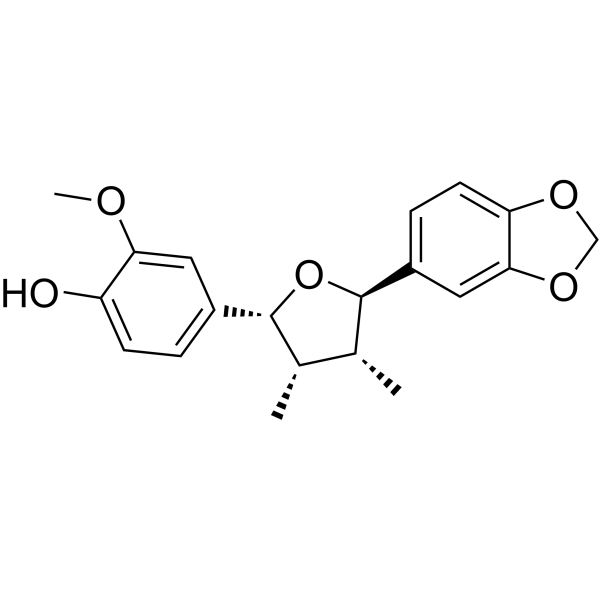
Chicanine is a lignan compound of Schisandra chinesis, inhibits LPS-induced phosphorylation of p38 MAPK, ERK 1/2 and IκB-α, with anti-inflammatory activity.
For research use only. We do not sell to patients.
- Purity : 99.96%
- CAS No.: 78919-28-5
- Formula: C20H22O5
- Molecular Weight:342.39
-
Storage:
4°C, protect from light
* In solvent : -80°C, 6 months; -20°C, 1 month (protect from light)

To place orders, for customer services and technical support, please contact: MedChemExpress USA
Tel: 609-228-6898 E-mail: [email protected] [email protected]


-
 Biological Activity
-
Chemical Information
-
Solvent & Solubility
- Protocols
- Purity & Documentation
- References
-
 Help & FAQs


-
HY-10519
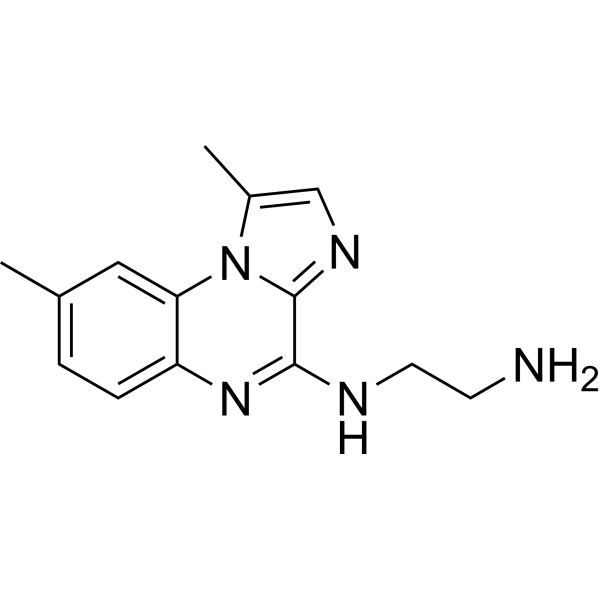
BMS-345541IKK-1/IKK-2 Inhibitor -
HY-B0713
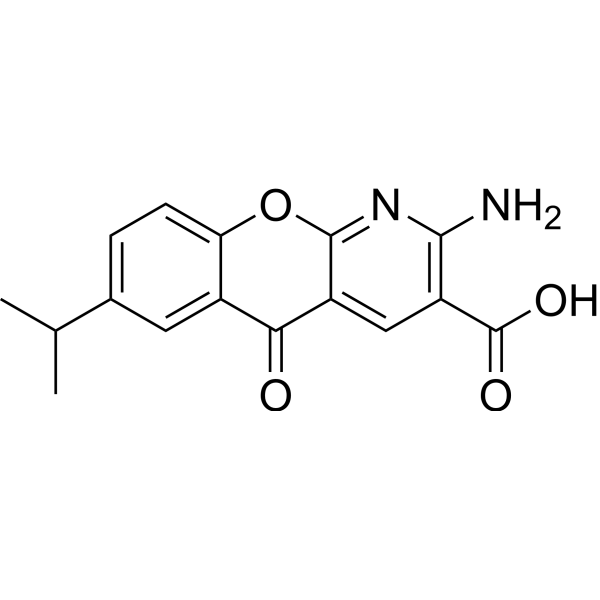
AmlexanoxIKK Inhibitor -
HY-10172
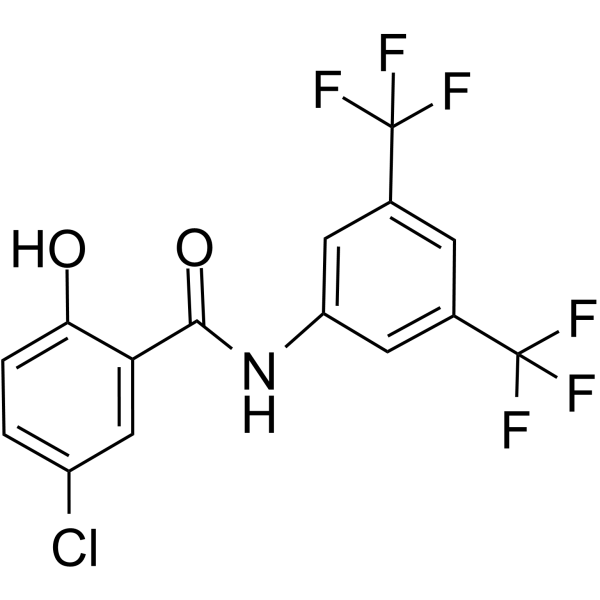
IMD-0354IKKβ Inhibitor -
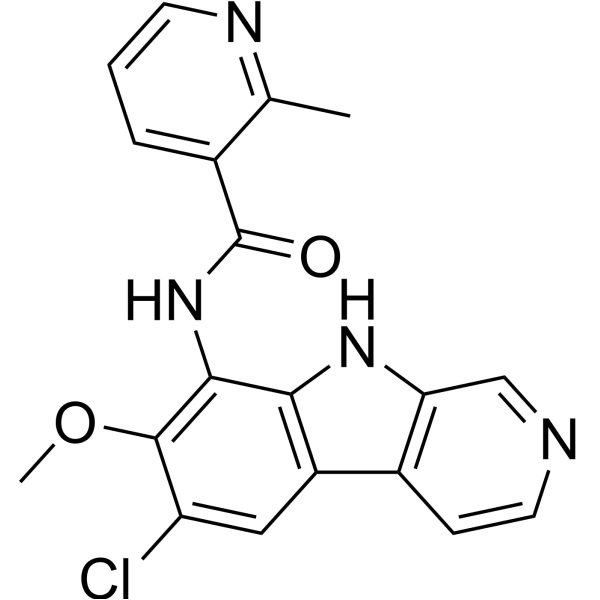
HY-15473
MLN120BIKKβ Inhibitor -
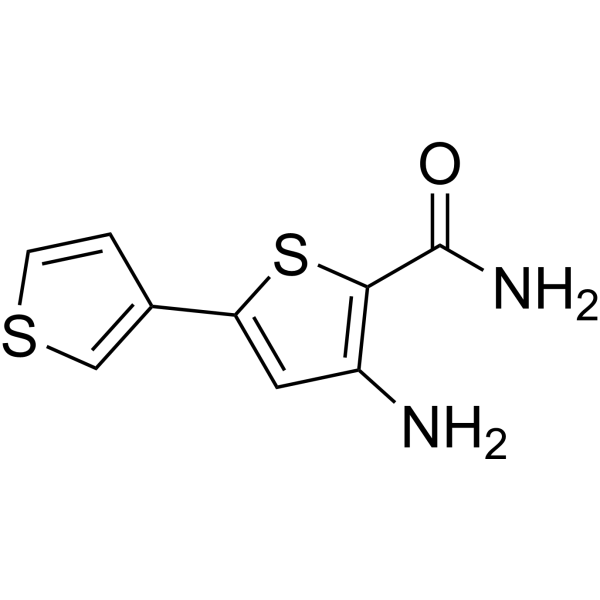
HY-13802
SC-514IKK Inhibitor -
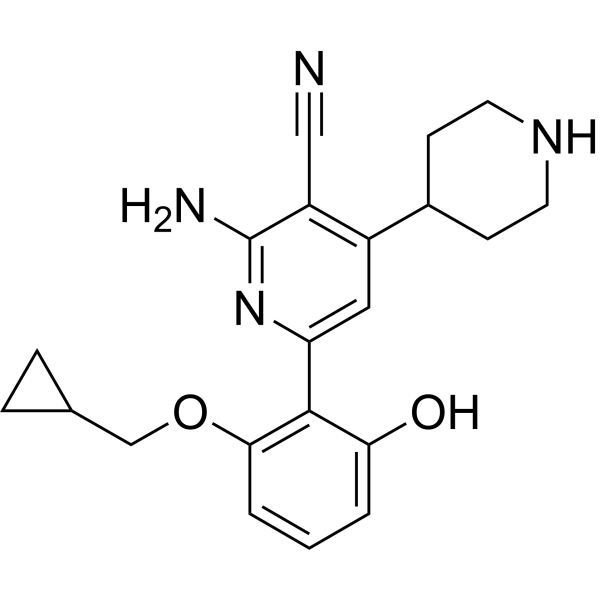
HY-107592
ACHPIKK/STAT3 Dual Inhibitor -
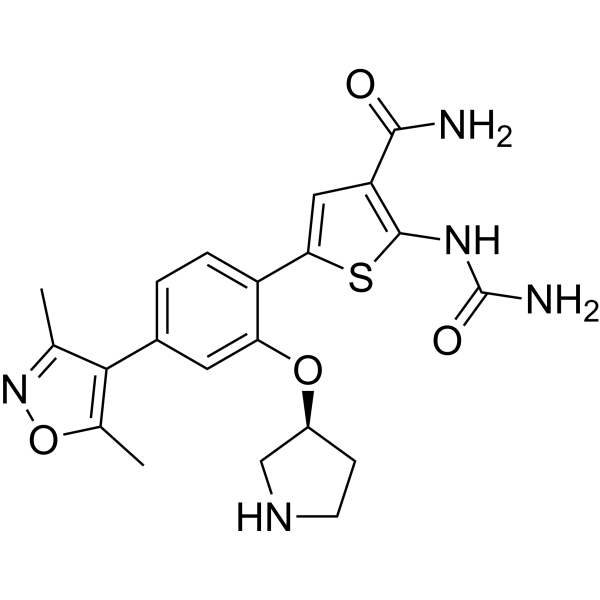
HY-19362
AZD3264IKK2 Inhibitor -
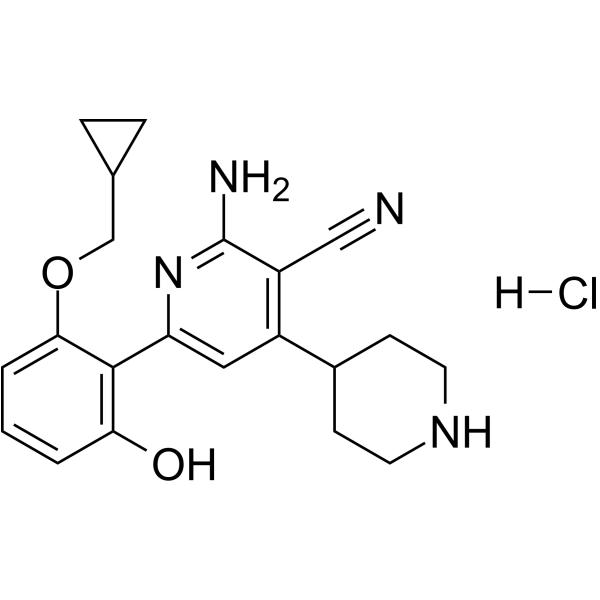
HY-13060
ACHP HydrochlorideIKKβ Inhibitor -
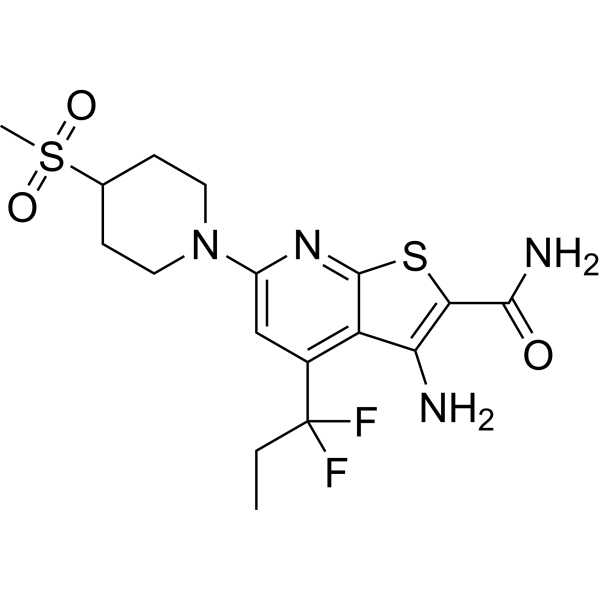
HY-13019
BI605906IKK Inhibitor -
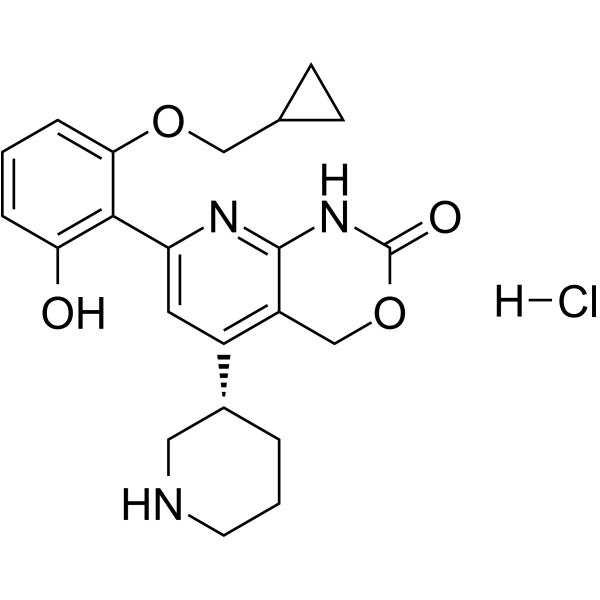
HY-50948
Bay 65-1942 hydrochlorideIKK Inhibitor -

HY-B0713R
Amlexanox (Standard)IKK Inhibitor -
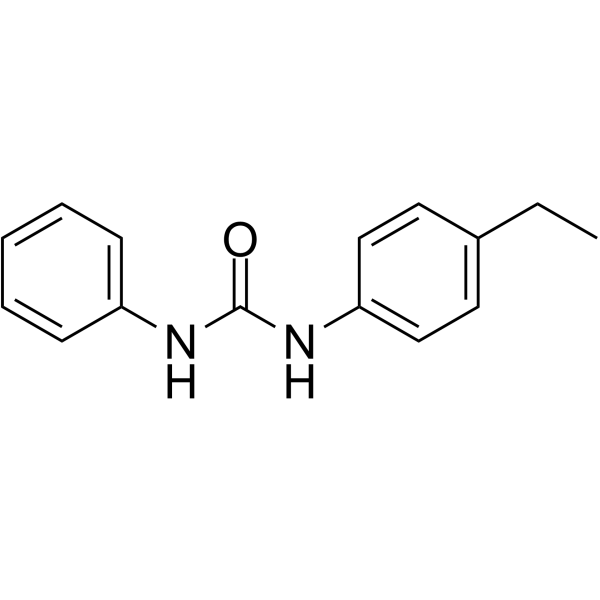
HY-114454
INH14IKKα/IKKβ Inhibitor
Publications Citing Use of MedChemExpress (MCE) Chicanine
More

Biological Activity
Description


Chemical Information
-
CAS No. 78919-28-5
-
Appearance Solid
-
Molecular Weight 342.39
-
Formula C20H22O5
-
Color White to off-white
-
SMILES
OC1=CC=C([C@@H]2O[C@@H](C3=CC=C(OCO4)C4=C3)[C@H](C)[C@@H]2C)C=C1OC
-
Structure Classification
-
Initial Source
-
Shipping
Room temperature in continental US; may vary elsewhere.
-
Storage
4°C, protect from light
* In solvent : -80°C, 6 months; -20°C, 1 month (protect from light)


Publications (1)
-
Journal Impact Factor
-
Most Recent
-
Hum Exp Toxicol
Androgen receptor suppresses inflammatory response of airway epithelial cells in allergic asthma through MAPK1 and MAPK14. [Abstract]2022 Jan-Dec;41:9603271221121320. PMID: 35982617


Solvent & Solubility
In Vitro:
DMSO : 18 mg/mL (52.57 mM; Need ultrasonic and warming; Hygroscopic DMSO has a significant impact on the solubility of product, please use newly opened DMSO)
Please refer to the solubility information to select the appropriate solvent. Once prepared, please aliquot and store the solution to prevent product inactivation from repeated freeze-thaw cycles.
Storage method and period of stock solution: -80°C, 6 months; -20°C, 1 month (protect from light). When stored at -80°C, please use it within 6 months. When stored at -20°C, please use it within 1 month.
Please refer to the solubility information to select the appropriate solvent. Once prepared, please aliquot and store the solution to prevent product inactivation from repeated freeze-thaw cycles.
Storage method and period of stock solution: -80°C, 6 months; -20°C, 1 month (protect from light). When stored at -80°C, please use it within 6 months. When stored at -20°C, please use it within 1 month.
Concentration (start) × Volume (start) = Concentration (final) × Volume (final)


Purity & Documentation
-
Data Sheet (273 KB)
-
SDS (251 KB)
- English - EN (251 KB)
- Français - FR (251 KB)
- Deutsch - DE (251 KB)
- Norwegian - NO (251 KB)
- Español - ES (251 KB)
- Swedish - SV (251 KB)
- Italian - IT (251 KB)
- Korean - KR (251 KB)
- Portuguese - PT (251 KB)
-
Handling Instructions (2659 KB)
References


Complete Stock Solution Preparation Table
Please refer to the solubility information to select the appropriate solvent. Once prepared, please aliquot and store the solution to prevent product inactivation from repeated freeze-thaw cycles.
Storage method and period of stock solution: -80°C, 6 months; -20°C, 1 month (protect from light). When stored at -80°C, please use it within 6 months. When stored at -20°C, please use it within 1 month.
| Optional Solvent | Concentration Solvent Mass | 1 mg | 5 mg | 10 mg | 25 mg |
|---|---|---|---|---|---|
| DMSO | 1 mM | 2.9206 mL | 14.6032 mL | 29.2065 mL | 73.0161 mL |
| 5 mM | 0.5841 mL | 2.9206 mL | 5.8413 mL | 14.6032 mL | |
| 10 mM | 0.2921 mL | 1.4603 mL | 2.9206 mL | 7.3016 mL | |
| 15 mM | 0.1947 mL | 0.9735 mL | 1.9471 mL | 4.8677 mL | |
| 20 mM | 0.1460 mL | 0.7302 mL | 1.4603 mL | 3.6508 mL | |
| 25 mM | 0.1168 mL | 0.5841 mL | 1.1683 mL | 2.9206 mL | |
| 30 mM | 0.0974 mL | 0.4868 mL | 0.9735 mL | 2.4339 mL | |
| 40 mM | 0.0730 mL | 0.3651 mL | 0.7302 mL | 1.8254 mL | |
| 50 mM | 0.0584 mL | 0.2921 mL | 0.5841 mL | 1.4603 mL |


Chicanine Related Classifications
HY-N2270 Related Classifications
 Powered by Bioz